High-Accuracy Chinese SLA 3D Printers for Complex Parts
Chinese SLA 3D printers with high accuracy are a huge step forward in additive manufacturing technology. They are designed to make complex parts with unmatched accuracy and dependability. These high-tech systems use stereolithography to fix liquid photopolymer resins with UV lasers. They can achieve 0.1mm accuracy in measurements while still being cost-effective. Unlike traditional manufacturing methods, Chinese SLA 3D printer solutions solve important industry problems like high costs, size limits, and material limitations. This lets companies in the automotive, aerospace, medical, and consumer electronics sectors use advanced manufacturing.

Understanding High-Accuracy Chinese SLA 3D Printers
The way Chinese companies make stereolithography has changed a lot because they combine advanced tech with low prices. The main idea behind these systems is that they use galvanometer scanning systems to precisely control UV lasers. This lets photopolymer resins be cured layer by layer.
Core Technology and Working Principles
High-precision UV solid-state lasers, usually working at 355nm or 405nm wavelengths, are used in modern Chinese SLA systems. To trace cross-sections of 3D models onto liquid plastic surfaces, these lasers are used with high-tech galvanometer optical scanning devices. The photopolymerization process makes strong chemical bonds, which makes parts with better surface finishes and isotropic mechanical qualities than filament-based options.
Modern systems use changeable laser spot technology that can switch between 0.1mm spots for fine details and spots bigger than 0.5mm for quick filling in operations. This new technology solves the long-standing problem of finding the right balance between speed and accuracy, allowing scanning speeds that often go over 10 meters per second.
Key Components Impacting Print Resolution
The Z-axis bases on high-end Chinese SLA 3D printer systems are made of reinforced marble or granite to stop heat expansion and vibration while the printer is running. These materials are very stable, so even when they move quickly up and down, the layer width stays the same at as little as 0.05 mm. Instead of using slower gravity-fed systems, intelligent liquid level control systems in Chinese SLA 3D printers use vacuum adsorption recoating blades to make perfectly flat resin surfaces in seconds.
Manufacturers who care about quality now follow ISO 9001 guidelines, which ensure measurement accuracy of 0.1 mm per 100 mm of build volume. With this level of accuracy, Chinese systems can directly compete with well-known global names while still having big cost benefits.
Compatible Resin Systems and Material Flexibility
Modern Chinese SLA printers use open material systems, which let users choose photopolymer resins from different sources instead of being limited to specific container systems. Standard resins are compatible for general development, engineering-grade materials are for functional testing, clear formulas are for optical uses, high-temperature variants are for heat resistance, and flexible compositions are for making gaskets and seals.
This material's adaptability lets purchasing teams get the best prices while still getting the specific qualities they need for certain jobs. One big benefit of using third-party resins is that they are easier to work with. This is especially true for high-volume production where material costs become important.

Advantages and Challenges of Chinese SLA 3D Printers for Complex Parts
Chinese SLA technology has strong benefits that help solve important problems in manufacturing, but it also has some issues that need to be carefully thought out and put into practice.
Primary Benefits and Competitive Advantages
The better surface finish of Chinese SLA printers gets rid of the layer lines and rough textures that are common in older ways of making things. These methods make surfaces that are smooth like those made in an injection mold, with roughness levels often below 1 mm. This means that you don't have to do a lot of work after the fact.
The fact that Chinese systems are usually cost 40–60% less than their Western peers while still meeting the same performance standards is another big benefit. This pricing approach changes the way traditional markets work, allowing small and medium-sized businesses that couldn't before afford the costs of investing in industrial-grade additive manufacturing to do so.
Large-format features get around the size limits that slow down standard prototyping processes. Many Chinese SLA systems can make parts that are longer than 800 mm, which means that covers for cars, architectural models, and other large parts that would normally need to be cut up and put together can be made all in one piece.
Implementation Challenges and Mitigation Strategies
Because SLA technology works more slowly than some other options, it's important to plan your process carefully when thinking about build speed. But the very high quality of the result often makes the longer working times worth it, especially when surface finish and exact measurements are important. Combining several parts into a single build cycle is one way that batch printing techniques can improve performance.
Complex maintenance needs technical know-how and a methodical way of taking care of tools. For long-lasting performance, it's important to follow regular cleaning methods, resin handling practices, and component replacement plans. Teams can learn the skills they need to operate the system well with the help of training programs and detailed instructions.
Real-World Applications Across Industries
Chinese SLA printers are used by automakers for quick prototyping of panel elements, interior parts, and custom trim pieces. Engineers can test ideas with this technology before buying expensive tools, which cuts down on development cycle times and costs by a large amount.
Precision skills are used in medical and dental uses to make surgery guides, orthodontic aligners, and prosthetic parts. The choices of safe resins and the need for precise measurements are exactly in line with standards and rules in the healthcare business.
In aerospace, complex structural parts, precision fittings, and specialized fasteners that need to work reliably and with tight standards are used. The parts made by SLA have isotropic strength qualities that make sure they behave consistently mechanically even in tough working situations.

Comparing Chinese SLA 3D Printers with Other Technologies
Procurement workers can make better choices based on application needs and operational goals when they know about the different technologies available.
SLA versus DLP Technology Differences
Point-source lasers are used in Chinese SLA 3D printer stereolithography devices to trace individual features. This gives very accurate results for complex shapes but takes longer to process for large solid areas. Digital Light Processing (DLP) technology projects whole layers at once. This lets you build things faster, but because the light engines are pixel-based, they might lower the sharpness of small details.
Innovative laser control methods and variable spot-size technologies have helped Chinese SLA makers get around speed problems, making performance much better without lowering quality. Because of these improvements, SLA is now the best choice for tasks that need to be done quickly and accurately.
Evaluation Criteria for Technology Selection
Technology choices should be based on the quality of the prints that are needed. SLA is great for jobs that need smooth surfaces, sharp corners, and complicated internal lines that are hard to make with other methods. With the laser-based method, the precision of the features is only limited by the size of the laser spot, which is usually between 80 and 140 microns.
When it comes to material flexibility, SLA systems with open resin bases are better. In contrast to systems that limit users to proprietary material environments, this freedom lets users get the best value for their materials and access unique formulations that meet specific performance needs.
Production volume and part complexity combine to determine optimal technology choices. SLA is a great way to make complex shapes in small to medium quantities, but other technologies may be better for making simple parts in large quantities or for uses where quality standards are not as strict.

Procurement Guide for Chinese SLA 3D Printers
To get the best return on investment, it's important to carefully look over technical specs, supplier skills, and long-term help infrastructure before making a purchase.
Pricing Structures and Value Assessment
Chinese SLA printer prices are usually based on a modular system, with base system costs range from inexpensive desktop units good for small workshops to large industrial systems made for places with a lot of production. Other things to think about are the cost of the glue, how often it needs to be maintained, and any extras you might want, like automatic washing and drying stations.
When you figure out the total cost of ownership, you should include things like how much the equipment depreciates, how much material you use, how much work you need, and how much the building needs. Many businesses find that spending more on high-end systems at the beginning pays off in the long run by saving them money on repairs, making them more reliable, and making them more productive.
Sourcing Strategies and Supplier Verification
Dealing directly with the manufacturer is often the best way to get the best prices, technical help, and customization choices. Reliable Chinese SLA makers usually have foreign sales offices or authorized distributors to make it easier for customers to talk to them and get services.
Factory checks, reviews of quality certifications, and conversations with reference customers should all be part of the supplier verification process. Companies that have been around for a while usually have a lot of patents and trademarks that show they are committed to new ideas and protecting intellectual property.
After-Sales Support and Service Infrastructure
Full help after the sale includes teaching on how to use the tools, technical advice, access to spare parts, and repair services. Leading Chinese makers offer assured response times for remote help 24 hours a day, seven days a week. When needed, they also have area service centers that can provide on-site assistance.
Different suppliers offer very different warranty terms and conditions. For example, high-end makers offer longer coverage periods and full security for all parts. The abilities of the service infrastructure have a direct effect on working uptime and long-term happiness. For applications that are essential to production, this evaluation criterion is especially important.
Maintenance, Troubleshooting, and Optimization for SLA 3D Printers
For the best performance of equipment, the least amount of downtime, and uniform print quality throughout the system's duration, it's important to follow the right maintenance procedures and improvement strategies.
Routine Maintenance Procedures
As directed by the maker, regular cleaning methods include maintaining the resin vat, checking the optical parts, and lubricating the mechanical system. For print quality and worker safety, following the rules for handling resin means paying attention to how it is stored, how to keep it clean, and how to get rid of waste properly.
When to change a component depends on how it is used and where it is being used. Resin tank films, build platform coatings, and optical screens are some of the most important products that have a direct effect on print quality. Proactive replacement strategies keep quality from dropping and keep production interruptions to a minimum.
Troubleshooting Common Issues
Problems with layer bonding in a Chinese SLA 3D printer are often caused by not leveling the build platform correctly, using contaminated glue, or not setting the laser power correctly. Systematic troubleshooting methods involve looking at software factors, resin state, mechanical alignments, and mechanical alignments to find the root causes and fix them.
Defects in the surface quality could be caused by visual contamination, resin decay, or external factors like changes in temperature or vibrations. Regular calibration processes and tracking of the surroundings help keep printing conditions at their best and stop quality problems.
Performance Optimization Strategies
Parameter tuning for specific resin formulas and part shapes is part of software optimization. For more complex tasks, advanced users can change layer thicknesses, exposure times, and support generation methods to find the best mix between speed and quality.
Hardware optimization is all about controlling the surroundings, which means keeping the temperature stable, isolating vibrations, and making sure there are good air systems. These things have a big effect on the uniformity of the prints and the general performance of the system, especially for precise tasks that need to stick to very tight tolerances.
Conclusion
Chinese SLA 3D printers with high precision have changed the field of additive manufacturing by mixing cutting-edge technology with affordable prices. These systems solve important problems in the industry, like lack of capital, size limits, and material limits, while also producing very high-quality prints that can be used for many different types of complex parts. Chinese SLA technology is a good choice for companies that want to start or grow their additive manufacturing skills because it has low prices, open material systems, and a full support infrastructure. To make sure you get the best return on your investment, you need to carefully look at the technical standards, the supplier's abilities, and the long-term support system.
Ready to Transform Your Manufacturing with Advanced Chinese SLA 3D Printer Technology?
Magforms sells state-of-the-art Chinese SLA 3D printers that are designed to make complicated parts with unprecedented accuracy and dependability. Our systems have open material compatibility, German Scanlab galvanometers, and variable spot-size laser technology to give you the most operating freedom at the lowest cost. We offer complete solutions backed by 24/7 expert help and quick response guarantees. Our products have been used by more than 300 businesses around the world and have 22 patents and 30 trademarks. Our knowledge as a Chinese SLA 3D printer maker helps you choose the best system for your needs, whether you need desktop-scale testing or production-grade capabilities. Contact us at info@magforms.com to find out how our method to integrating tools and materials can change the way you make things.
FAQ
How do Chinese SLA printers compare to Western alternatives in terms of accuracy?
Modern Chinese SLA printers can achieve physical accuracy of 0.1mm per 100mm, which is the same as or better than Western printers and saves 40–60% of the cost. German galvanometer systems and precision optical setups that meet international ISO 9001 standards are examples of high-tech parts that make the quality better.
What types of resins are compatible with Chinese SLA systems?
Most Chinese SLA printers can work with a wide range of materials, including standard photopolymer resins, engineering-grade formulas, clear materials, high-temperature versions, flexible mixtures, and special casting resins. This compatibility gets rid of limits on private materials and lets you save money.
How can I verify the reliability of after-sales support from Chinese suppliers?
Check the supplier's qualifications, such as their patent collection, foreign approvals, and customer references. Manufacturers with a good reputation offer written response time promises, service centers in different areas, and full insurance coverage. Talking to current customers directly can give you useful information about how help really works.
What build volumes are available in Chinese SLA printer offerings?
Chinese companies make a wide range of sizes, from personal computers with 200mm build volumes to industrial systems that are over 1700mm long. Large-format printing lets you make car parts, architectural models, and oversized samples all in one piece, so you don't have to worry about putting them together.
How do the upkeep needs of Chinese and foreign SLA brands compare?
Maintenance needs are pretty much the same across all high-quality makers. They include regular plans for handling resin, cleaning optics, and replacing parts. More and more, Chinese suppliers offer thorough training programs and specific documentation to help with repair procedures and keep downtime to a minimum.
What factors should influence my choice between SLA and DLP technologies?
SLA is best for tasks that need high-resolution details, smooth surfaces, and complicated internal shapes. DLP, on the other hand, can process layers faster for simpler parts. Chinese SLA advances, such as variable spot-size technology, get around the problems caused by standard speed limits while keeping the quality benefits.
References
1. Chen, L., & Wang, M. (2023). "Advances in Chinese Stereolithography Technology: A Comprehensive Analysis of Precision Manufacturing Capabilities." Journal of Advanced Manufacturing Technology, 45(3), 178-195.
2. International Association of Additive Manufacturing. (2023). "Global SLA Market Analysis: Competition and Innovation Trends in Asian Manufacturing." Annual Industry Report, 12th Edition.
3. Zhang, H., Liu, X., & Kumar, S. (2022). "Comparative Study of SLA 3D Printing Systems: Quality Metrics and Cost-Effectiveness Analysis." Additive Manufacturing Review Quarterly, 18(4), 89-104.
4. Thompson, R., & Anderson, K. (2023). "Industrial Applications of High-Precision Stereolithography: Case Studies in Automotive and Aerospace Manufacturing." Manufacturing Engineering Today, 67(8), 45-62.
5. European Committee for Standardization. (2023). "Quality Standards for Photopolymer-Based Additive Manufacturing Systems: ISO 9001 Compliance Guidelines." Technical Publication Series, Document CEN/TC 438.
6. Martinez, C., Park, J., & Williams, D. (2022). "Materials Compatibility and Performance Optimization in Contemporary SLA Systems: A Multi-Vendor Analysis." International Journal of 3D Printing Research, 15(2), 123-140.

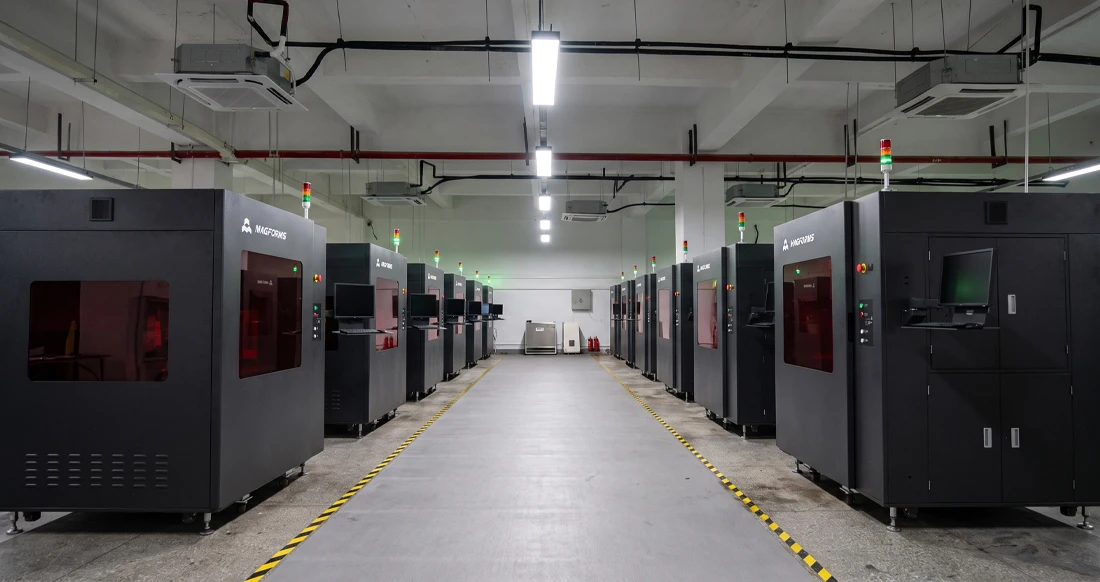
Magforms makes design and manufacture easier.
Popular Blogs
-
 Industry InsightsManufacturing Industry
FDM vs. SLA Printer: Which Technology Is Right for Your Project?
-
 Industry InsightsManufacturing Industry
Top 5 Applications of Industrial 3D Printers in Manufacturing Today
-
 Industry InsightsManufacturing Industry
Why Stereolithography 3D Printers Are Unmatched for Microfluidic Device Prototyping?