High Resolution 3D Printer for Custom Parts Manufacturing
High-resolution 3D printers have become essential tools for precision manufacturing and custom part production. Layer heights of up to 10 microns and XY resolutions of 19 to 50 microns are possible with this advanced additive manufacturing technology. This lets companies make complex parts with tiny details. These machines get rid of traditional manufacturing problems by giving dimensions that are accurate to within ±0.05mm and surface finishes that are similar to injection molding. This is true whether you're manufacturing aerospace components, medical devices, or automotive prototypes. The introduction of industrial SLA systems, LCD resin printers, and DLP photopolymerization technologies has significantly improved the manufacturing efficiency and precision of custom parts.
Introduction
High-resolution 3D printing has transformed how many businesses produce unique parts. The necessity for unrivaled precision and accuracy drives procurement decisions in airplane parts and specialized medical implants. Professional systems can quickly prototype and produce small batches with precision for B2B applications, unlike consumer-grade machines.
Global providers have responded to changing needs by developing robust technologies with extensive after-sales support. Companies that used this method state that research and development were shortened, material waste was reduced, and parts operated better. As the market has grown, it now provides alternatives for small design studios and large factories, with each set of requirements tailored to production volume and precision.
This guide covers the most crucial considerations for professional buyers when selecting technology, suppliers, and purchasing tactics. We'll discuss how printing technologies compare, what accuracy criteria are required for various activities, and how to choose the correct tools to maximize ROI. Whether you're a technical director evaluating sample testing or a buying manager balancing cost and performance, you need these principles to make business-friendly decisions.
Understanding High Resolution 3D Printing Technology
Core Technologies Driving Precision Manufacturing
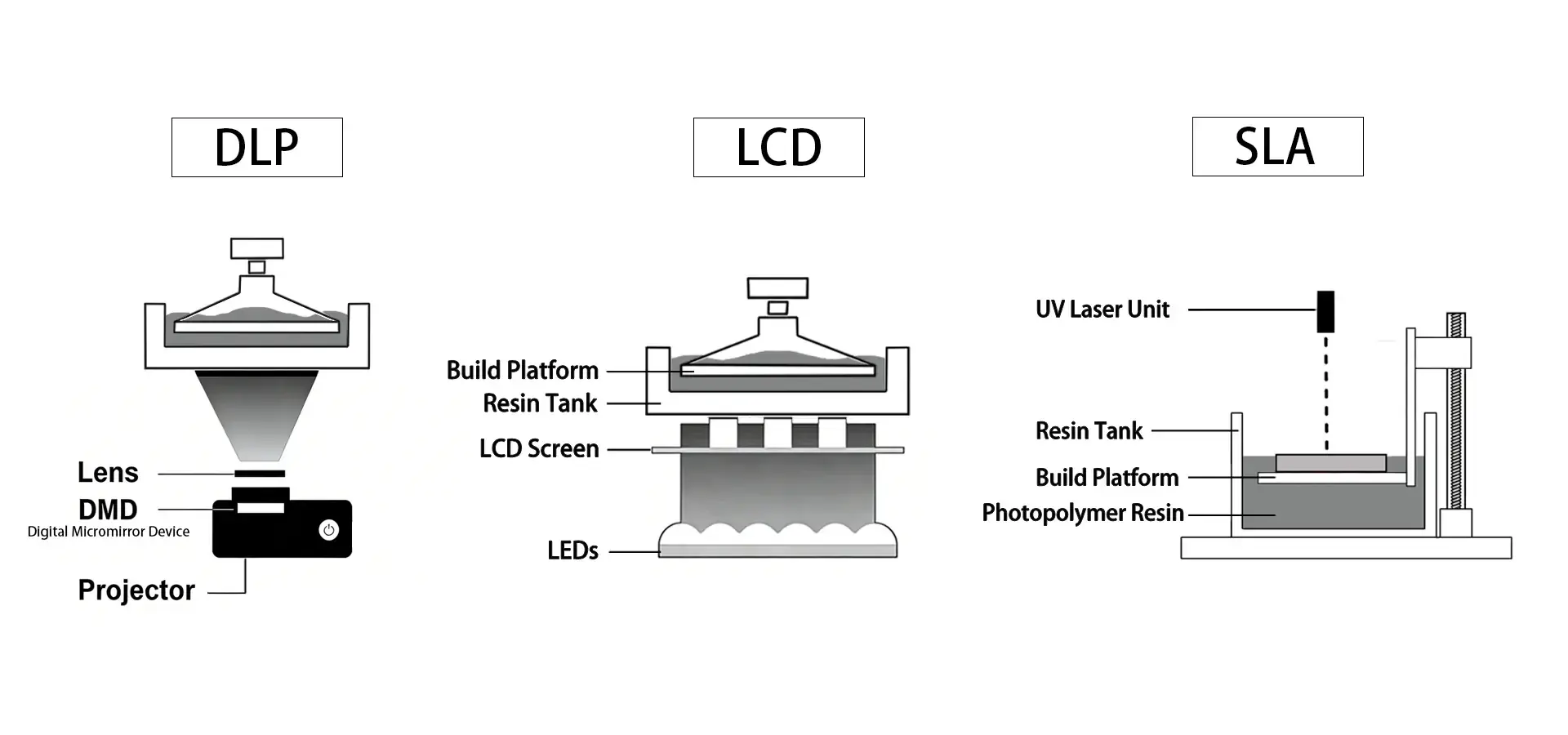
Three main methods underpin high-resolution 3D printer technology. Lasers cure liquid photopolymer resin layer by layer in stereolithography (SLA). Precise laser spot control allows delicate detailing. DLP projects an entire layer simultaneously using a digital light engine, enabling faster layer exposure and consistent production efficiency for small precision parts.
Compared with filament-based FDM technologies, resin photopolymerization systems generally provide finer surface quality, higher feature resolution, and better small-detail reproduction. They provide smoother surfaces with Roughness Average (Ra) scores near injection molding. Pixel size or laser spot width determines XY resolution. Fine surface textures, embossed details, and micro-channels can be accurately reproduced at 19–50 micron resolutions. Precision lead screws regulate Z-axis movement and layer positioning accuracy, allowing layers to cure every 10–25 microns.
In good systems, high-end systems maintain light uniformity across more than 90% of the build platform. With this arrangement, polymerization is consistent from edge to center. This approach prevents twisting and size changes with older instruments. Collimated light generated by COB LED arrays and Fresnel lens systems helps reduce light bleed and improves exposure uniformity.
Material Science and Application Suitability
Choosing the correct material affects part performance beyond appearance. Engineering-grade resins can achieve tensile strengths around 50 MPa, while specialized high-temperature formulations may reach heat deflection temperatures above 200°C after optimized post-curing. Transparent resins are commonly used for visual prototypes, fluidic devices, and light-transmission applications after polishing and post-processing. Flexible versions can resemble elastomers for gaskets and seals, and high-temperature versions can withstand car engine conditions.
Biocompatible materials fulfill ISO 10993 criteria for dentistry and medicine, enabling their use in validated dental and medical workflows where biocompatibility is required. Investment casting applications require castable resins that can burn out cleanly with minimal ash residue during the casting process. Ceramic-filled composites are wear-resistant and stable for tooling. To avoid separation force during the peel cycle, they need chemically resistant vat materials like PFA or nFEP films.
Following quality standards is crucial in regulated businesses. ISO/ASTM 52900 standardizes terminologies, and additional validation standards help verify photopolymerization consistency and material performance. Medical industries often require batch stability and traceability certificates. When buying, teams understand how these materials and technologies interact, they may avoid interface issues that cause failed prints and waste resources.
Accuracy Benchmarks and Defect Troubleshooting
It takes more than buying good equipment to meet ratings. Maintaining ±2°C temperature stability and 40–60% humidity management prevents resin viscosity fluctuations that affect cure depth. Mechanical stability from two linear rails prevents Z-axis wobble and aligns layers within microns. The correct calibration processes ensure that printed test shapes match CAD shapes across the build volume.
Increasing resolution helps reduce the stair-stepping effect on curved surfaces, but not post-processing. Warping is usually caused by thermal expansion or unequal support placement, requiring clever guidance and support-generation algorithms. Tacky surfaces or measurement errors indicate insufficient curing or incomplete post-processing caused by inadequate exposure settings, expired resin, or insufficient UV post-curing. To fix these issues, you require expertise beyond basic functioning. This emphasizes the necessity of comprehensive training.
Choosing the Right High Resolution 3D Printer for Your Manufacturing Needs
Balancing Technical Specifications with Operational Requirements
To choose the best tools, you must consider many variables. Speed dictates how much work you can complete quickly, while resolution determines how much information you can view. A 25-micron XY resolution resin printer may require longer exposure and processing times for highly detailed dental or jewelry applications compared with 50-micron production settings. Material compatibility expands usage. Machines that use specific resins make cost control and formula testing tougher.
There's more to consider when building space than fitting massive items. Optimizing space by layering components lowers part costs. Desktop units with 153x77x160mm work surfaces are suitable for jewelry and dentistry. For aircraft brackets and vehicle interior parts, industrial systems have 300x300x300 mm or larger workspaces. The operating footprint includes the printer, cleaning stations, curing equipment, and post-processing rooms.
When calculating cost-effectiveness, you must consider all ownership costs, not simply the purchase price. Operating expenses depend on resin, part availability, and energy utilization. Locked material systems can treble the cost of consumables. Warranty coverage, service response times, and spare parts availability are crucial during production planning when downtime affects income.
Resin-Based Systems Versus Filament Technologies
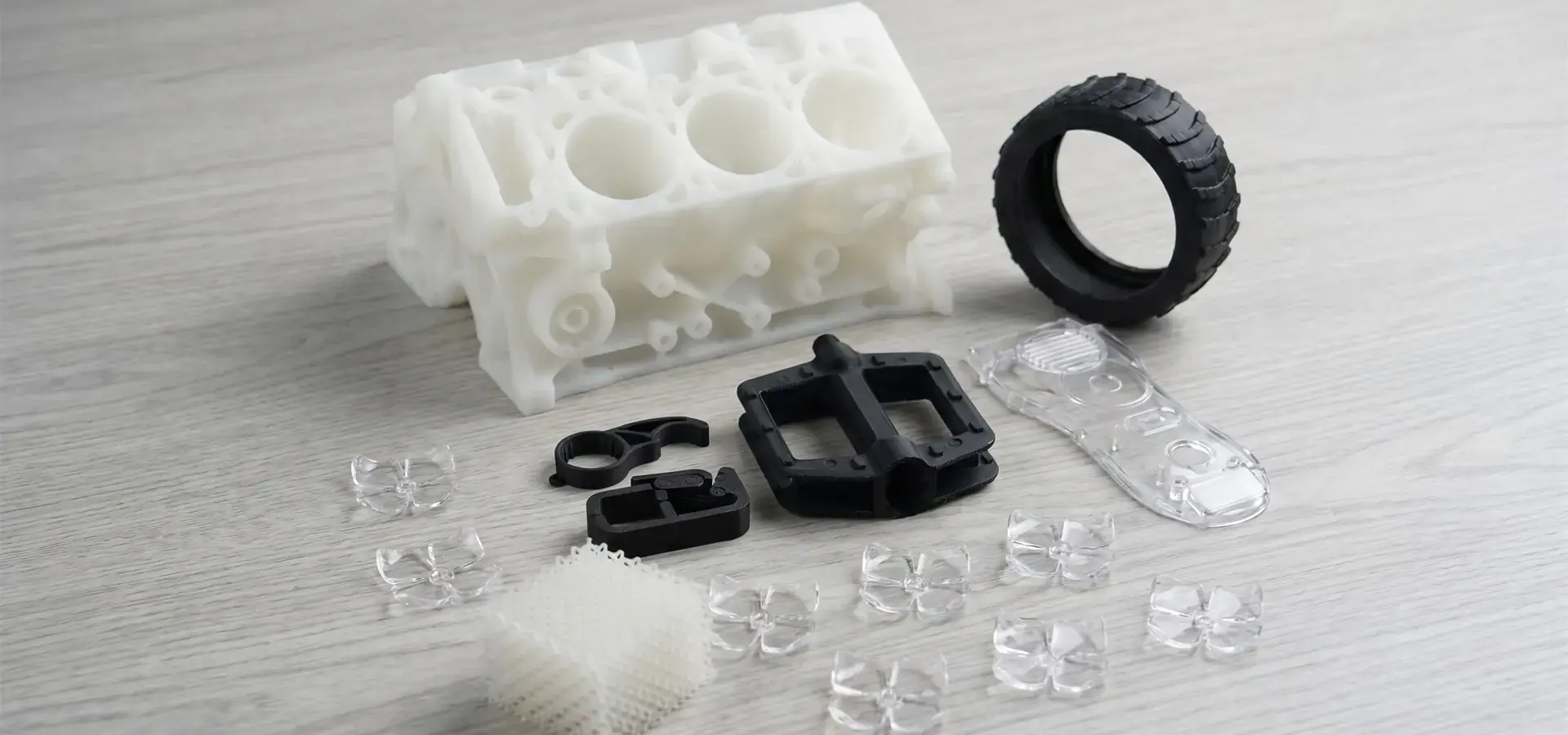
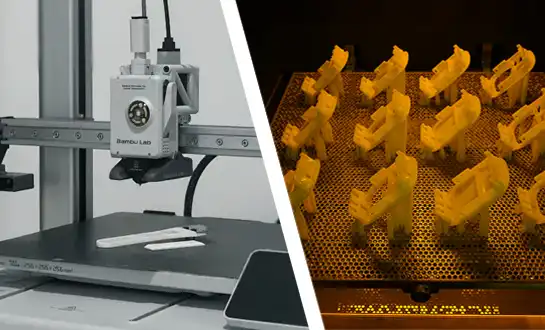
The fundamental difference between resin and filament-based printing technologies affects their suitability for different applications. Resin systems are well suited for minute details, smooth surfaces, and intricate geometries, although properly designed support structures are still essential for successful printing. They can create complicated grid structures for medical supports and microfluidic routes smaller than 100 microns, unlike filament nozzles. UV-cured resin parts typically exhibit more uniform mechanical properties than FDM prints because they are formed through photopolymerization rather than extruded filament deposition, although some anisotropy still exists depending on print orientation and curing conditions. In contrast, multilayer filament deposition has limitations that rely on deposit orientation.
Post-processing workflows vary per platform. Resin prints are typically cleaned using isopropyl alcohol (IPA) or dedicated resin-cleaning solutions or a specific cleaner to remove uncured resin. For complete mechanical properties, they must be UV-cured. This takes 20–40 minutes per batch. For filament printing, eliminating supports is usually enough. Resin parts generally require less surface finishing than FDM prints, although polishing or coating may still be needed for optical or cosmetic applications. Resin systems require chemical handling, which requires ventilation and safety gear. Such handling raises building problems.
Different material loss patterns exist. Resin prints only lose the material and support structures when they fail. In filament printing, support rafts utilize a lot of material. However, resin vats retain useless material that may degrade and need to be replaced or filtered. Knowing these variances helps match technology to how people operate and what the building can achieve.
Matching Printer Capabilities to Industry Applications
To produce car parts, you must make many and employ engineering-grade materials that can withstand mechanical stress and fluctuating temperatures. Before buying tools, design teams might use high-resolution systems to assess fit and smoothness. Making functioning samples in days instead of weeks speeds up specialized automobile and custom interior part development.
Dimensional stability and material approval are crucial for aerospace. Even when heated and cooled repeatedly from -40°C to 85°C, parts must meet criteria and be consistent between batches. Printing lightweight lattice structures and topology-optimized geometries makes things lighter and stronger. Small quantities of precision connections and odd-shaped pieces are cheaper to create than standard cutting.
Medical and dental applications may be the hardest. Each patient's operation guide must match within fractions of a millimeter to properly place the implant. Orthodontic aligner production workflows often require validated biocompatible materials and regulated manufacturing processes to ensure medical device compliance, and the surface finish affects patient comfort. Biocompatible and validated printed parts with micron-level accuracy support patient-specific treatment workflows in modern digital dentistry and medical manufacturing. Digital dentistry technologies like intraoral scanning and crown models demonstrate precise printing in real life.
Consumer product development can be iterated quickly via overnight prototyping. For button systems and sensor locations, wearable device housings must be described. Internal structure parts must fit snugly for snap-fit assembly. Consumer markets credit people who can quickly and cheaply explore many design alternatives. Because items are updated constantly.
Top High Resolution 3D Printers and Brands for Custom Parts in 2026
Leading Brands and Their Market Positioning
Many well-known companies use precise additive manufacturing. Each has its own tech and audience. Formlabs makes easy-to-use SLA systems with professional functionality at affordable prices. Dental clinics and small design firms enjoy them because of this. Their Form 3+ and Form 3L models are reliable, feature huge material libraries, and have simple operations. Prusa Research, known for its open-source FDM advancements, has gone into resin printing with systems for prosumers upgrading from hobby equipment.
Creality and Anycubic supply entry-level machines for budget-conscious shoppers, although materials and after-sales support vary. These brands make precision printing accessible to everyone, helping small firms test alternative uses before upgrading to industrial systems. Higher-level producers prioritize continuous production and consistent batches. Industrial-grade parts, advanced monitoring systems, and automated resin handling systems support continuous 24/7 production workflows.
Magforms is a popular alternative for corporations seeking unified high-resolution 3D printer solutions without connectivity concerns. Magforms manufactures and sells materials and equipment. By carefully matching resin formulas to optical systems and curing parameters, they can maximize performance. Vertical integration solves the exposure standards issue that plagues third-party materials' measurements and printing.
Desktop Versus Industrial-Grade Equipment
Most desktop systems fit on a desk less than one square meter, making them suitable for small workshops and businesses. They can produce small parts in modest quantities, given their construction size of 153x77x160mm. Easy-to-use screens and automatic calibration make these devices easier for beginners. The reduced resin requirement per job lowers material costs, and the ability to pause and restart prints facilitates multitasking environments.
Every measurement is larger when using industrial gear. Build platforms can accommodate several pieces in a batch or large assemblies with 400 mm or longer sides. Mechanical systems use closed-loop stepper motors and precision linear guides to maintain accuracy over thousands of hours. Advanced features include automated resin loading, real-time process monitoring, and production tracking with factory execution tools. These features cost around $15,000 to over $100,000 for top models.
Which category to utilize depends on part count and complexity. Desktop systems may work for a dental lab that works on 20 models per day, but a service center that handles orders from various industries needs industrial output. Some companies use desktop and industrial systems for flexibility and cost savings. Desktops are utilized for design review and industrial systems for manufacturing.
Performance Benchmarks Across Price Tiers
Entry-level resin printers under $5,000 can achieve approximately 50-micron XY resolution and 25-micron layer heights for basic engineering models and jewelry prototypes. Overnight group processing is possible with print speeds of 20–30 mm per hour. Monochrome LCD screens typically provide operational lifespans ranging from approximately 2,000 to 4,000 hours depending on exposure intensity and maintenance conditions. Cheaper models use plastic frames and parts, resulting in less precise mechanics.
Systems between $5,000 and $15,000 contain metal frames and precise motion parts for mechanical stability. Because light is more evenly distributed, XY values approach 35–47 microns, and edge-to-center disparity decreases. Improved optical systems use collimating lenses to highlight features. Handling and detecting resin automatically reduces operator work, improving production efficiency. Open platforms and extensive resin libraries increase material compatibility.
Advanced industrial SLA systems with optimized laser scanning strategies and variable spot control can improve production efficiency compared with conventional laser-scanning architectures. They have 25-micron XY precision. These machines undergo many certification exams to prove they can work for thousands of hours. Redundant parts and predictive maintenance algorithms reduce equipment failure rates and unplanned downtime. Support contracts offer timely responses to equipment failures to keep production operating smoothly.
Procurement Strategies for High Resolution 3D Printers
Evaluating Supplier Credibility and Support Infrastructure
Consider more than technical parameters when picking a supplier. Consider the relationship's long-term viability. Renowned corporations exhibit their passion by putting up global service networks that give local technical support in addition to online aid. Ten-year-old companies have survived economic downturns and technological advancements, indicating their longevity. Patent portfolios demonstrate fresh ideas, not contract maker rebranding.
Customer referrals from similar firms can tell you how well a high-resolution 3D printer functions in real life. Visit existing locations to see how equipment functions after long-term use in production. Marketing brochures typically do not cover machine uptime percentages, reaction times, and material uniformity. Suppliers who provide failure modes and update paths are confident in their products.
Magforms protects its technologies with 30 trademarks and 22 filed patents. Working with over 300 enterprises in dozens of countries, the company has been successful. Attending European and Asian industry fairs indicates you're still engaged in the market and technology transfer projects for Belt and Road countries. With a global presence, help is available wherever the system is.
Purchase Channel Considerations and Risk Mitigation
Directly from the manufacturer, you may obtain lower rates and guarantees, but you may not get local service. Local authorized dealers may offer test units so you can trial before you buy. Online markets offer additional alternatives, but you must be vigilant to verify that merchants are authentic and will meet their promises. Gray-market goods may lack warranties or software updates, making long-term support harder.
Seller warranties vary greatly. Projectors and motion systems are covered for one year under basic coverage. LCD screens aren't covered. Extended warranties or service contracts help you budget for repairs. Some manufacturers claim accuracy or uptime and solutions to rectify issues if they're not met.
Companies that want to use the latest technology while saving money are leasing more. Operating leases make equipment an expense rather than a capital asset, simplifying budgeting. Technology update agreements enable you to receive newer models during the contract to keep existing ones useful. However, leasing costs frequently exceed buy prices; thus, tax ramifications and lost opportunities must be considered.
International Logistics and Installation Support
International tool purchases are more complicated than domestic purchases. Tools can cost 10–25% more due to import fees and taxes in different countries. Customs documentation must designate tools with HS codes to avoid delays or fines. Fragile optical parts must be packed to prevent vibration and temperature changes during delivery, especially air freight.
Professional installation services get everything set up and calibrated right away. Manufacturers normally include installation in the purchase price. Their trained experts ensure all systems work properly. To ensure proper temperature, humidity, and airflow, check the environment. User instructions on fundamental troubleshooting, safety, and maintenance maximize tool utilization from the outset.
Magforms fixes these concerns by supporting foreign customers' shipping. Years of exporting and managing regulatory parameters simplify the buying process. Technical training programs help operators learn quickly, while seminars help them adapt to changing operations. This complete support reduces production risk with new technology.
Maximizing ROI and Long-Term Value with High Resolution 3D Printing
Industry-Specific Applications Driving Value Creation
Complex shapes that regular machining can't manufacture are useful when creating aircraft parts. Topology-optimized aerospace components can significantly reduce part weight while maintaining structural performance. Additive manufacturing and cutting have significant cost differences. Five-axis milling parts can be printed for under 100 units. Major aircraft manufacturers are now certifying materials and processes for flight-critical parts, opening up new certification options for printed parts.
Healthcare uses include diagnostic tools, surgical plans, and patient-specific implants. CT scan-printed anatomical models let surgeons practice challenging procedures. This reduces operating room time and enhances results. Custom implant guides ensure orthopedic hardware placement fits the pre-surgery plan within a millimeter. The dental industry, worth billions, increasingly utilizes digital technology to create crowns, bridges, and aligners.
Jewelry manufacturing illustrates how accurate printing can transform traditional crafts. Master patterns constructed of castable plastic speed up design-to-production by weeks by reducing wax carving time. Making intricate filigree and micro-pave settings that would challenge expert artisans enhances creativity. Printed masters for investment casting provide metal parts that need little finishing. This reduces labor expenses and allows bulk customization.
Maintenance Protocols and Operational Excellence
Preventive maintenance schedules improve accuracy and technology lifespan. Daily tasks may include cleaning work platforms and inspecting resin vats for contamination or damaged films. Weekly optical part cleaning with the correct chemicals and lint-free materials is required. Test models are utilized monthly to ensure machine dimensions are accurate across the build volume. Annually, mechanical parts are tested for wear, lubricant is changed, and the system is checked.
Resin management affects print quality and cost. Store resin in sealed, UV-resistant containers at stable temperatures to avoid premature polymerization. Filtering resin between uses removes hardened particles that ruin prints. Monitor resin age and contact history to avoid utilizing old, damaged material that won't meet mechanical properties. First-in, first-out reduces old product waste.
Magforms' combined material-equipment solution simplifies maintenance by eliminating compatibility concerns. Their self-developed materials, which work with certain optical systems, reduce print errors. AI-assisted scanning optimization and exposure parameter management can improve printing efficiency and reduce unnecessary motion paths in industrial SLA workflows. Continuous operation testing for thousands of hours indicates greater dependability than the market offers. This minimizes high-resolution 3D printer downtime and manufacturing expenses.
Emerging Trends Shaping Future Capabilities
New material breakthroughs enable new uses. Ceramic- or metal-filled polymers offer properties similar to ordinary materials. Multi-material printing creates gradient structures in one portion. Soft-touch sections can be integrated inside stiff housings. Bioactive materials that combine tissues expand regenerative medicine and implanted device possibilities.
Automation turns 3D printing into a production cell. Robotic post-processing and part removal reduce labor and enable lights-out output. Machine vision systems inspect parts and mark size differences before moving them on. Real-time production tracking and supply replacement are possible with ERP and PLM integration.
AI optimization extends beyond the shortest pathways. It also involves building supports, selecting orientations, and fine-tuning parameters. Machine learning algorithms recommend optimized print parameters from thousands of successful prints. This reduces trial-and-error when creating complex parts. Predictive maintenance systems monitor working parameters to predict part failures so servicing can be scheduled during planned downtime instead of being called out.
Conclusion
High-resolution 3D printing has changed from a new way to make prototypes to a way to make things in large quantities. Before deciding to use these systems, you should carefully look at their technical skills, how reliable the suppliers are, and how much they will cost you in total. Companies that use precision additive manufacturing well say that their development processes are shorter, their tooling costs are lower, and they have more design freedom. The technology keeps getting better with better materials, faster processing, and smarter automation. This means it will play a bigger role in more fields that need flexibility and complexity at high production rates. Businesses can take advantage of these benefits by strategically choosing equipment that fits their needs and avoids common production issues such as uneven light exposure, dimensional inconsistency, and insufficient technical support.
FAQ
What resolution specifications should I target for different custom part applications?
Most prototypes for consumer products and automotive applications work well with an XY resolution of 47 to 50 microns and a layer height of 50 microns. This gives enough detail for trying how well the parts fit together and confirming the design. Tighter specs are needed for medical and dental uses. 25–35 micron XY resolution and 25-micron layer settings are commonly used in dental and medical workflows that require highly detailed surface reproduction and tight dimensional tolerances. Master jewelry casters use the highest resolutions (19–25 microns) to catch small details that will hold up during the investment casting process.
Can high-resolution 3D printers produce final-use parts or only prototypes?
Modern methods that use engineering-grade materials can make parts that can be used in a wide range of situations. Final uses are often met by dental surgery guides, custom orthotics, and low-volume production parts like specialty connectors. Picking the right material is very important—normal prototype resins aren't strong enough or stable enough for harsh settings. Certified materials that meet industry-specific standards can be used in production, but safety-critical uses need to be thoroughly tested and often get regulatory permission.
How do I ensure material compatibility with existing workflows?
Open-platform machines give you the most options because they can use third-party materials once the exposure settings are perfect. Closed systems limit your choices, but they offer libraries of approved materials that are sure to work. Checking the accuracy of measurements with precise measuring tools, making sure the mechanical properties are correct with standard tests, and checking the stability of the process across multiple builds should all be part of the testing procedure. Concerns about compatibility are taken care of by Magforms' integrated development of materials and tools. This gets rid of the need for trial-and-error parameter optimization while still allowing for flexibility for specific uses.
Partner with Magforms for advanced high-resolution 3D printer solutions.
Magforms offers complete additive manufacturing solutions that include their own materials and high-precision tools that are designed to work with each other without any problems. Our vertically integrated method gets rid of common problems in the industry, like part quality issues that vary from batch to batch, mismatched resins that cause measurement errors, and unexpected downtime due to equipment-material conflicts. Our systems are engineered for high-speed industrial resin printing through optimized laser control, exposure management, and efficient scanning strategies. They maintain high dimensional consistency suitable for precision industrial, dental, and prototyping applications.
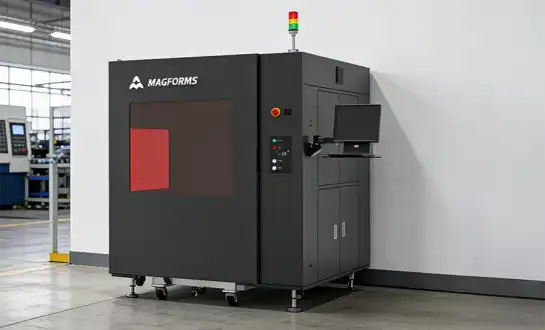
Our range includes affordable entry-level 3D printers and large-format industrial printers like the P600 and P800 models. This means that we have something for everyone, from new 3D printing service providers to well-known aerospace manufacturers. We help you succeed by giving you thorough technical training, quick and helpful repair service, and regular software updates. Magforms is ready to help you make better custom parts. We have 22 patents covering our ideas and have worked with more than 300 businesses around the world to show that they work. Contact our team at info@magforms.com to talk to one of our application engineers about your particular needs and get equipment suggestions from a reputable high-resolution 3D printer maker.
References
1. Gibson, I., Rosen, D., Stucker, B., & Khorasani, M. (2021). Additive Manufacturing Technologies, 3rd Edition. Springer International Publishing.
2. Wohlers, T. & Gornet, T. (2023). Wohlers Report 2023: 3D Printing and Additive Manufacturing: Global State of the Industry. Wohlers Associates.
3. ISO/ASTM International. (2021). ISO/ASTM 52900:2021 - manufacturing: General principles, fundamentals,damentals and vocabulary. International Organization for Standardization.
4. Ligon, S.C., Liska, R., Stampfl, J., Gurr, M., & Mülhaupt, R. (2017). Polymers for 3D Printing and Customized Additive Manufacturing. Chemical Reviews, 117(15), 10212-10290.
5. Stansbury, J.W. & Idacavage, M.J. (2016). 3D printing with polymers: Challenges among expanding options and opportunities. Dental Materials, 32(1), 54-64.
6. Quan, H., Zhang, T., Xu, H., Luo, S., Nie, J., & Zhu, X. (2020). Photo-curing 3D printing techniques and their challenges. Bioactive Materials, 5(1), 110-115.

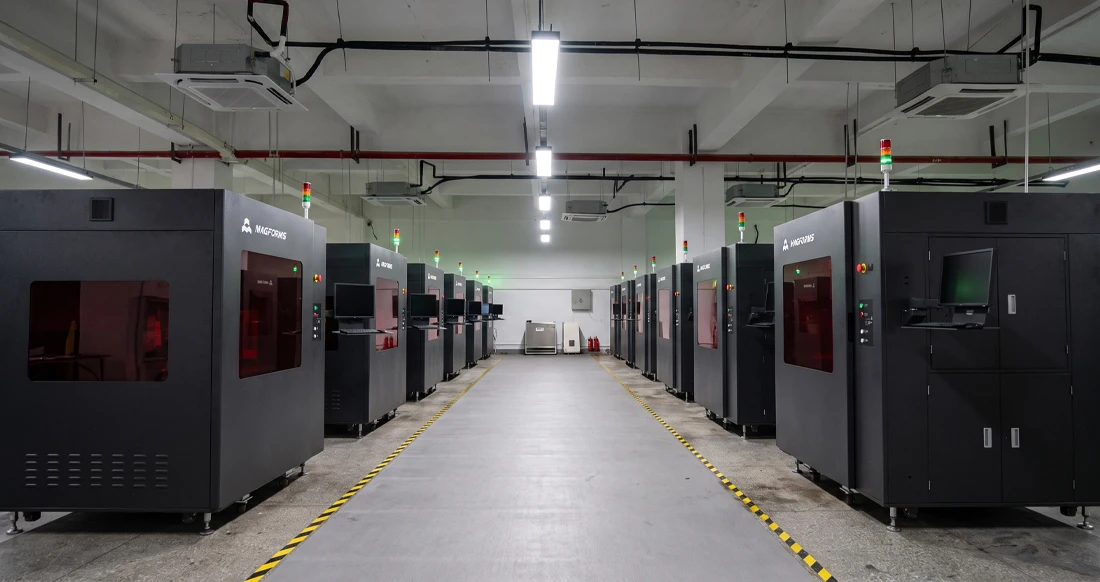
Magforms makes design and manufacture easier.
Popular Blogs
-
 Industry InsightsManufacturing Industry
FDM vs. SLA Printer: Which Technology Is Right for Your Project?
-
 Industry InsightsManufacturing Industry
Top 5 Applications of Industrial 3D Printers in Manufacturing Today
-
 Industry InsightsManufacturing Industry
Why Stereolithography 3D Printers Are Unmatched for Microfluidic Device Prototyping?