Shoe 3D Printer Accuracy: Can It Match Foot Scans Perfectly?
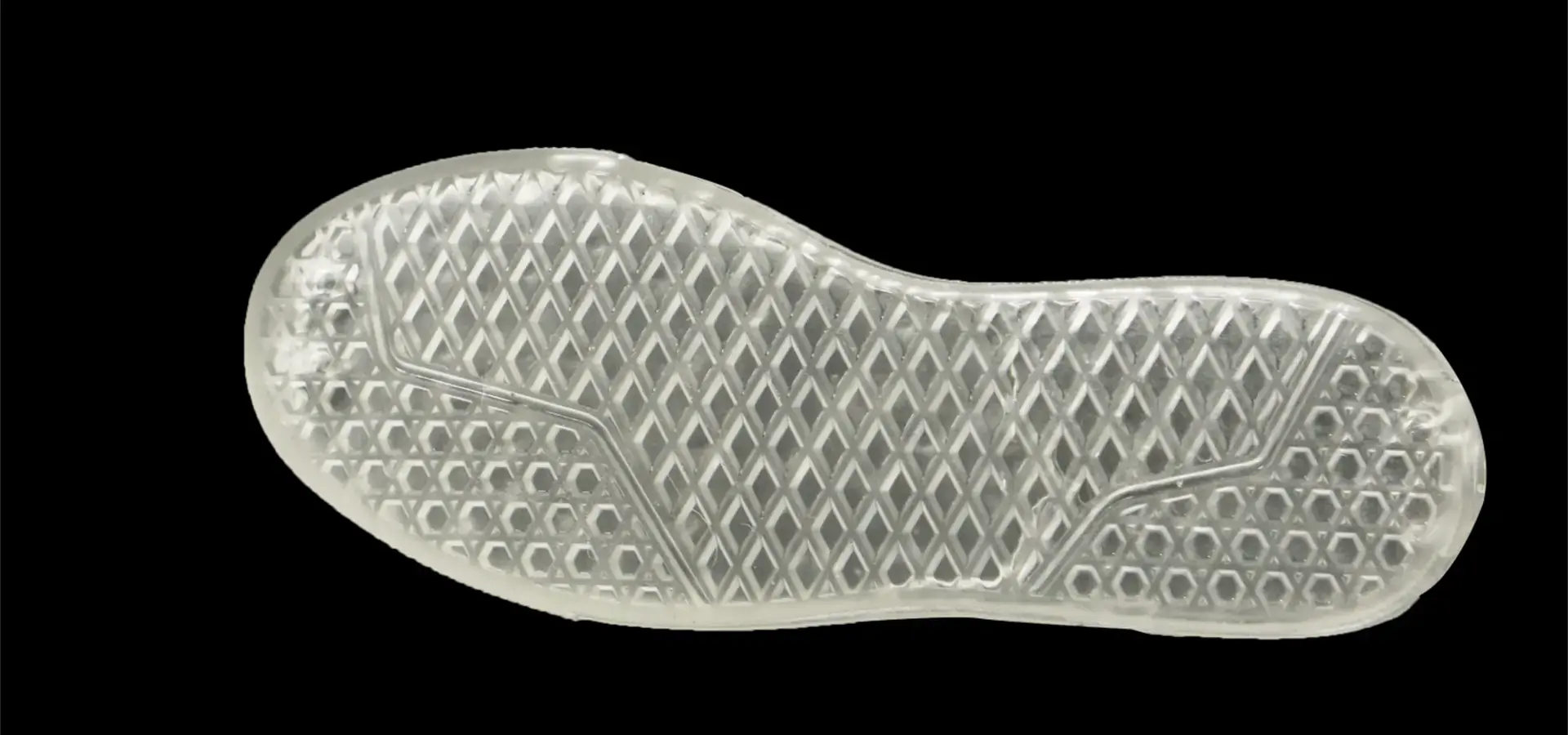
A big question for modern shoemakers is whether or not advanced additive manufacturing systems can copy the exact measurements taken by foot scanning technology. The answer is becoming more and more positive. Industrial-grade shoe 3D printer systems today achieve high dimensional accuracy that closely fits the dimensional data from 3D foot scans, thanks primarily to industrial stereolithography (SLA) technology, which offers high dimensional precision, smooth surface quality, and reliable reproduction of complex footwear geometries. These systems can create complex shapes, such as adjustable lattice designs and specially designed midsoles, with dimensional deviations typically below 0.2 mm when they are accurately measured and used with engineering-grade flexible photopolymer resins developed for footwear prototyping and customized orthotic applications. With this feature, the idea of making custom orthotics and unique sports shoes can become a reality.
Understanding Shoe 3D Printer Accuracy and Foot Scan Integration
The connection between 3D printing and foot scanning technology is what makes custom shoes possible today. Knowing this link helps procurement managers figure out if the current powers of additive manufacturing meet their needs for accuracy.
How Does Foot Scanning Technology Capture Morphological Data?
More advanced foot scanners use structured light, laser triangulation, or photogrammetry to collect thousands of data points across the surface of the foot. With resolutions of 0.1mm to 0.5mm, these scanners make a digital point cloud that records every curve, arch height, and pressure zone. The generated STL or OBJ file serves as a guide for future manufacturing processes. It is critical to have good scans because any mistakes at this step affect the whole process and the fit and comfort of the end product.
The Scan-to-Print Workflow and Critical Accuracy Factors
The process of transforming scan data into real shoe parts involves several steps, where one can either maintain or lose accuracy. Meshing optimizes the digital model by eliminating noise and filling in holes after scans. Then, design software makes shoe parts like insoles, midsoles, or full uppers that include the scanned shape along with useful features like support structures or padding zones. This file is broken up into layers, and the accuracy of the dimensions is directly affected by things like layer height, exposure time, laser energy settings, and scanning consistency. If the industrial SLA system is properly calibrated, it will keep these specs the whole time it's building. Final sizes are also affected by how much the material shrinks, how much it expands when heated, and by steps like washing and drying that happen after the process. When these real effects are accounted for in software, systems are more accurate.
Materials and Printing Technologies for High-Fidelity Footwear
Different additive production methods offer varying levels of accuracy and types of materials. Stereolithography (SLA) printers excel at producing fine details and smooth surfaces, making them suitable for creating hard shoe lasts or artistic components. Industrial SLA systems are widely used for footwear prototyping and custom orthotic production because they can reproduce fine details, smooth surfaces, and accurate anatomical geometries directly from scan data. This makes useful midsoles with excellent mechanical qualities and stable dimensions. Advanced industrial SLA production systems improve manufacturing efficiency while maintaining the surface smoothness and dimensional consistency required for customized footwear applications. Choosing the right material has a big effect on accuracy. Flexible and toughened photopolymer resins are designed to withstand repeated bending while maintaining dimensional stability over time, and certain resins are resistant to breakdown and UV light. The final part's ability to match the original foot scan within acceptable limits depends on how well the printer and material work together.
The integration of these elements establishes a manufacturing pathway where precision at each step contributes to the final product. If a company wants to add or improve its additive manufacturing skills, it needs to check how well each system part—the scanner, software, printer, and material—works with the others to keep the 3D shape from the digital scan to the finished shoe.
Evaluating the Accuracy: Can Shoe 3D Printers Match Foot Scans Perfectly?
It is still difficult to get perfect dimensional matching between scanned foot data and printed shoe parts, but recent technology improvements have made this gap a lot smaller. Identifying issues and solutions can help people make smart tool purchases.
Common Sources of Dimensional Deviation
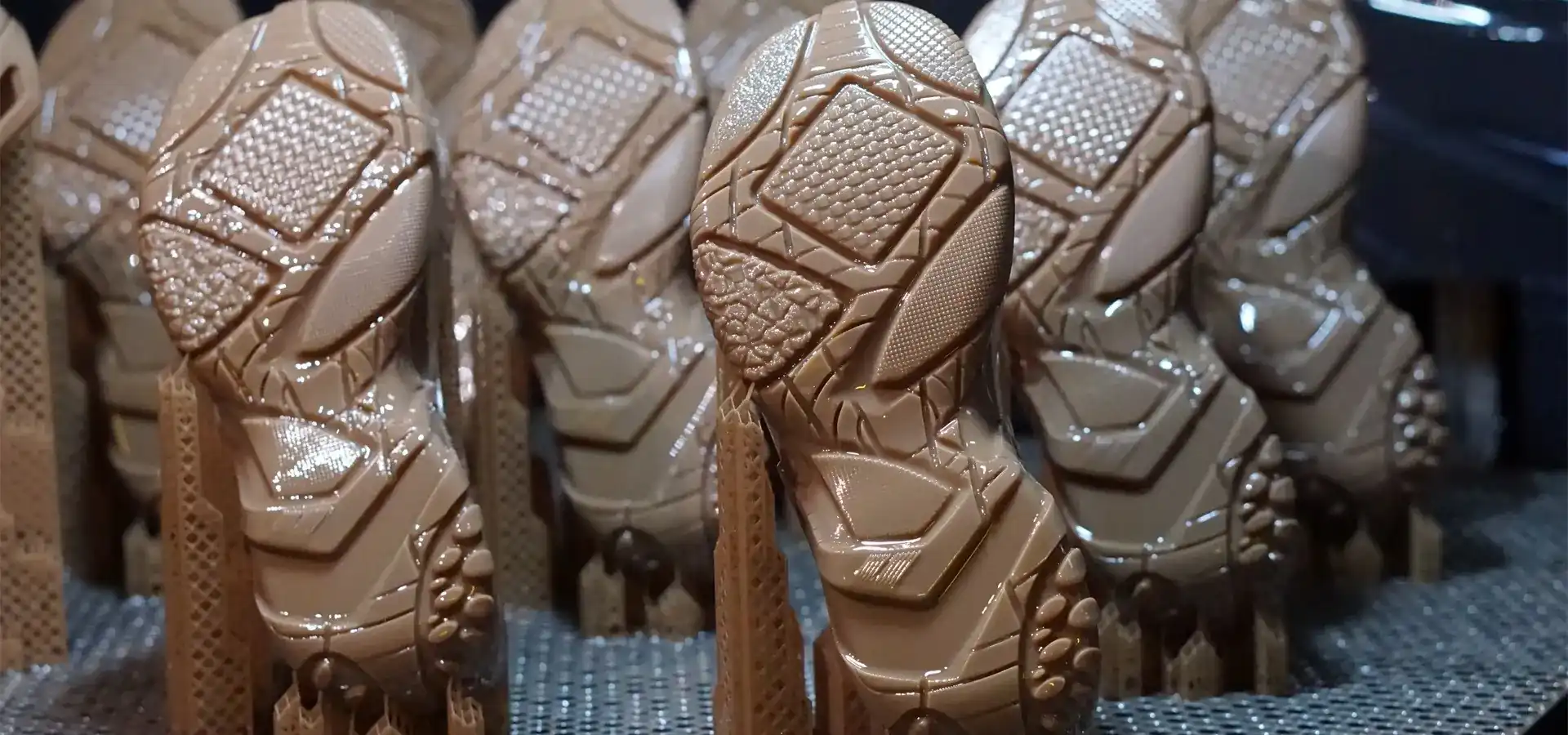
There are several things that can go wrong between the scan and the end result. Scanners' limited clarity may result in the loss or slight visibility of small surface details. When meshes are fixed or files are converted, data processing mistakes can happen, which could change important measurements by 0.5mm to 2mm. Mechanical placement mistakes, variations in laser exposure consistency, and uneven curing of the material cause differences in the printer. A study of how factory shoes are made found that the average dimensional deviations across a full midsole was between 1.5 mm and 3 mm, with differences up to 5 mm in areas with complex lattices. These differences are affecting comfort, support, and effectiveness. The way materials behave during printing makes things more complicated. For example, photopolymer resins may experience controlled curing shrinkage during post-processing, which is typically compensated for through calibrated print settings and software correction. Changes in temperature in the build room cause big parts to warp, which means that their measurements are not exactly as planned.
Advances Closing the Accuracy Gap
Modern equipment uses more than one method to keep these variations to a minimum. To get accuracy of less than 50 microns, complex calibration procedures check and change the mechanical positioning systems. Predictive compensation algorithms are now built into software solutions. These algorithms change design files based on known material shrinking rates and heat behaviors. Some high-end industrial printers incorporate process monitoring and calibration functions to improve dimensional repeatability throughout the printing process. This lets improvements be made in the middle of the build. Automated calibration and compensation technologies continue to improve dimensional consistency in industrial SLA workflows; these systems measure the real size of the part while it's being printed or right afterward, and they automatically change the settings for future builds. Quality control methods have also changed over time. Now, makers use structured light scans and automatic optical inspection to compare finished parts to the original CAD files. Leading shoe brands say that these combined methods allow them to get measurement accuracy of within ±0.3 mm on key fit areas, which is good enough for most custom orthotic and performance shoe uses.
Real-World Performance and Quality Benchmarks
Case studies from the business world show the level of accuracy that is currently possible with the technology we have. A company that makes medical devices used industrial SLA systems to manufacture custom foot orthotics. They found that the average deviation in dimensions across arch shapes was 0.4 mm, and 95% of readings were within 0.6 mm of the goal dimensions. When a sports shoe company used industrial SLA platforms to produce lightweight lattice footwear components, they were able to achieve reliability with dimensional deviations below 0.3 mm across production runs. This meant that the shoes' biomechanical performance was always the same. These outcomes come from systems that are fully linked and work together to optimize the printer, the material, and the process. Standard testing methods based on ISO 20344 and ASTM D412 let you compare different systems in a fair way. Teams in charge of buying things should ask for validation samples that are right for their needs, along with measurement inspection reports that were made with coordinate measuring machines or high-resolution scans.
The progression toward perfect scan-to-print accuracy continues, driven by refinements in hardware precision, material science, and computer correction methods. Even though the ideal is still hard to reach, the current industrial SLA systems can satisfy the dimensional and surface-quality requirements of most customized footwear applications.
Comparison of Shoe 3D Printing Accuracy with Traditional Manufacturing
To make good purchasing choices, you need to know how the quality of additive manufacturing compares to traditional production methods. Both ways have their own benefits, which depend on the amount being made, the level of customization needed, and the level of accuracy needed.
Precision Capabilities: Injection Molding vs. Additive Manufacturing
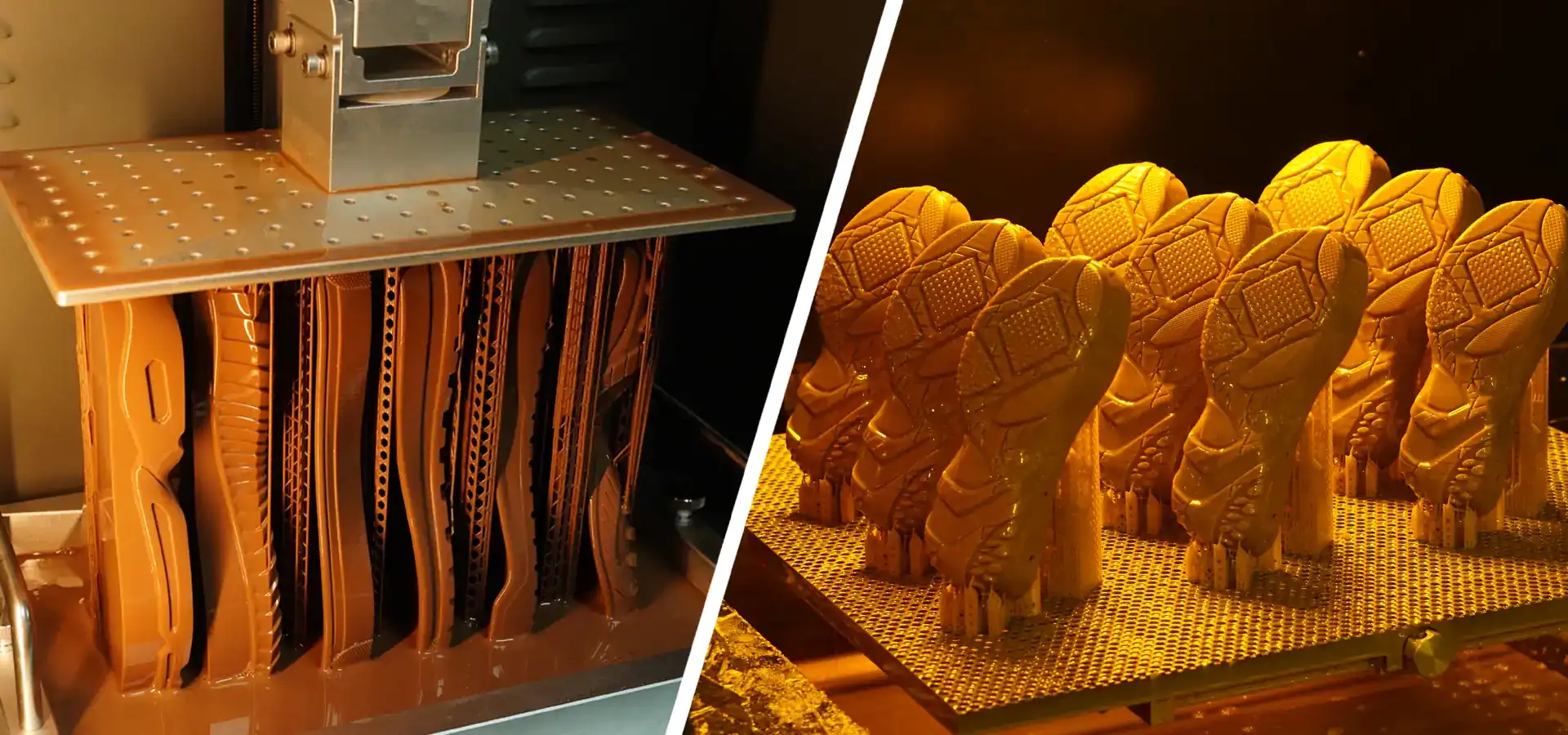
Traditional injection molding is very good at keeping dimensions consistent, usually within ±0.1mm to ±0.3mm for parts that aren't cosmetic. This level of accuracy comes from rigid metal tools that are made to within a few microns and process factors that are tightly controlled. Once the molds are confirmed to be accurate, compression casting for EVA midsoles also gives consistent sizes. Flexibility is limited because each change to the design needs new tools that cost thousands to tens of thousands of dollars and take weeks to make. Different trade-offs are presented by a shoe 3D printer. Industrial SLA systems typically achieve dimensional tolerances in the range of ±0.2 mm to ±0.5 mm depending on geometry, resin behavior, and post-processing conditions. The system doesn't need any tools and can quickly switch between different designs. This means that additive manufacturing can be used for small amounts, special orders, and fast prototyping, where other methods would be too expensive.
Desktop vs. Industrial Additive Systems
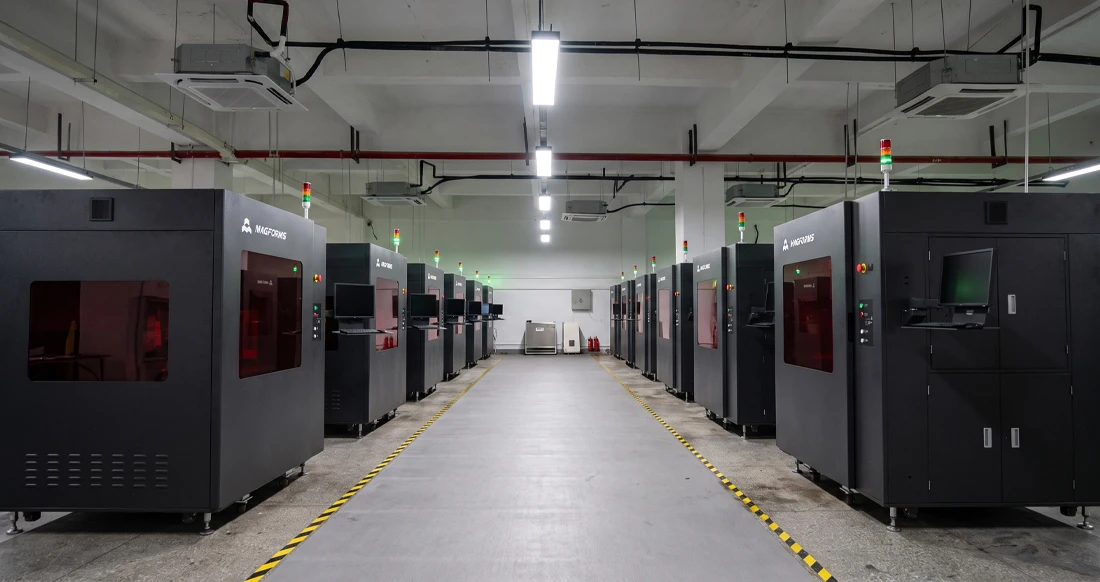
Not every piece of 3D printing equipment is as accurate as the others. Most desktop or hobbyist-level tools can make layers that are 100 to 300 microns thick and place them accurately within 100 to 200 microns. These methods work well for conceptual prototypes and models that don't do anything, but they rarely meet the size standards for shoes that people can wear. Advanced 3D printer platforms for industrial shoe production have precision galvanometer laser systems, temperature-controlled build environments, and precise linear motion systems that can make layers as thin as 25 to 50 microns and XY positioning accuracy below 50 microns. Processing materials is also different. Industrial SLA systems maintain tightly controlled resin temperatures and exposure conditions, which keeps the mechanical qualities and measurements constant. Entry-level desktop resin printers, on the other hand, often have environmental fluctuations that can reduce dimensional consistency. Another difference is the build volume. Smaller-format build volumes can usually only fit on desktop machines, so they can only be used for small shoe parts or insoles. Industrial systems can support full-size midsoles and multi-part batch production at once.
Application-Specific Technology Selection
The best way to make something relies on the needs of the company. When cost per unit and greatest accuracy in dimensions are the most important factors, traditional molding methods are still the best way to make a lot of the same design. Injection molding gives a brand of running shoes that makes 100,000 identical pairs a year, the lowest cost and the tightest standards. On the other hand, a medical orthotic provider who makes products that are specific to each patient can benefit from the freedom of additive manufacturing, even though tolerances are a bit less strict. Athletic performance footwear is in the middle. More and more brands are using a mix of methods, where 3D printing is used to make unique heel structures and traditional methods are used to make standard uppers and outsoles. A number of businesses now run micro-factories that use both technologies. They send orders to the right production method based on the amount of tailoring, the volume, and the time frame. To find the best technology balance, procurement managers have to look at their unique product mix, customization needs, and volume patterns.
By understanding these factors of comparative success, you can make smart investment choices. Instead of seeing technologies as alternatives that can't be used together, top makers see them as skills that can be used together as part of a diversified production strategy.
Selecting the Right Shoe 3D Printer for Accurate Foot Scan Replication
To pick the right additive manufacturing tools, you need to carefully look at the technical specs, the needs of the business, and the vendor's abilities. The standard of the production, the speed of the process, and the return on investment are all directly affected by the choice you make.
Critical Technical Specifications
Several factors decide if a system meets the accuracy standards for making shoes. XY plane resolution and Z-axis layer height are both part of the resolution standards. XY plane resolution is usually based on laser spot size or pixel measurement. Aim for an XY resolution of less than 75 microns and layer heights of 25 to 100 microns, based on the application, for an accurate foot scan copy. The build room needs to be big enough to hold your biggest parts, plus extra space for support structures or builds with more than one part. For footwear uses, the minimum build envelope size is usually 250 mm x 250 mm x 250 mm. Larger amounts allow for more efficient batch production. Material fit is just as important. Check that the Shoe 3D printer can handle materials that have the Shore hardness range, tensile strength, elongation at break, and wear resistance that you need. Open-material systems give you options and help you keep costs down, while closed systems offer proven material-printer efficiency. Print speed affects the costs of production. Modern industrial SLA systems continue to improve throughput through optimized scanning strategies, automated resin handling, and faster layer transition systems. This means they can be used for production purposes other than testing.
Software Integration and Workflow Efficiency
Scan-to-print processes that work well together depend on the tools. Check to see if the printer maker offers or works with design software that can import common scan file types, fix mesh automatically, create lattice structures, and account for material shrinkage in advance. Some systems work directly with common foot scanning hardware, which speeds up data sharing and lowers the chance of file corruption or measurement mistakes. Build preparation software should let you fine-tune many parameters, such as layer height, exposure settings, and support generation methods, so that it can work best with certain shapes and materials. Tracking production adds value. More advanced systems offer remote build tracking, automated failure spotting, and production analytics that find ways to improve things. There are big differences in how long it takes to learn how to use these tools. Manufacturers with easy-to-use platforms and thorough training programs make it faster and easier to get regular production quality.
Vendor Evaluation and After-Sales Support
You can only get part of the picture from technical specs. Long-term success depends a lot on the image of the vendor and the infrastructure for assistance. Look into how well makers have done in the past with footwear uses. Companies that have experience in this area can give you information that general 3D printer companies can't. Ask for references from customers who are making similar apps and ask about their operating experiences. Structure for after-sales help is very important. Check to see if there are any local repair techs available, how long it usually takes for technical help to respond, and where the spare parts are kept. Unexpected downtime has a direct effect on production plans because additive manufacturing equipment is high-precision capital equipment. These risks can be lessened by having thorough service agreements, preventative repair programs, and technical training for workers. The total cost of ownership is more than just the price of the tools themselves. Think about how much the products cost, especially if they are private and cost more. Figure out how much it costs to replace the build platform, the plastic tanks, and the post-processing supplies. A full cost study takes into account things like how much energy is used, what the building needs (like air or environmental controls), and how long it takes to train new operators.
By carefully looking at these factors, procurement teams can choose equipment that meets both short-term budget needs and long-term working needs and growth potential. Before making a final commitment, it's very helpful to ask for training programs or a sample part production that uses your unique scan data.
Future Trends Impacting Shoe 3D Printing Accuracy
The footwear additive manufacturing landscape continues to evolve rapidly. New technologies offer even better scan-to-print accuracy while also making more uses possible and making output cheaper.
Artificial Intelligence and Machine Learning Applications
In the additive manufacturing process, accuracy problems are starting to be fixed by solutions driven by AI. Machine learning algorithms look at scan data to find and fix common capture mistakes automatically. This makes the quality of the input files better. During design preparation, neural networks that have been trained on thousands of successful prints suggest the best places to put supports, how they should be oriented, and the sets of parameters that will reduce deviations in dimensions for certain shapes. Computer vision is used by real-time process tracking systems to find print flaws as they happen. To avoid waste, these systems automatically change settings or stop builds. Predictive maintenance algorithms look at sensor data from printer parts to predict mechanical breakdowns before they affect accuracy. This lets repairs be done before they happen. Some experimental systems now use automated calibration and process compensation technologies, which means that measurements taken in situ are used to change the layers below, actively making up for any differences that are found. As AI-assisted manufacturing technologies continue to mature and are sold to the public, they will make high-precision additive manufacturing much easier for people who aren't experts in the field.
Material Science Innovations
The problems with modern photopolymers and thermoplastics are fixed by next-generation materials. Shape-memory materials are being worked on by researchers so that printed parts can adjust to the shape of the foot during the first wear, fixing any small differences in size. Advances in resin chemistry are enabling improved flexibility, durability, and long-term dimensional stability. These developments allow printed footwear components to incorporate varying mechanical properties within a single design, like hard support structures and soft cushioning zones, which more closely mimic how the foot works naturally. Post-processing shrinkage is now less than 2% thanks to better dimensional stability formulas. This means that fewer correction calculations are needed to get accurate output. Concerns about sustainability can be met with bio-based and recovered materials that still work well. Some modern composites have carbon fiber or glass fiber reinforcements that make them stronger and lighter while also making them last longer and keep their shape over time.
Hybrid Manufacturing Approaches
More and more, experts in the industry are realizing that combining additive and standard production makes both more accurate and more efficient. Shoe 3D printer systems can be used to make complicated, unique midsole lattice structures, and traditional cutting and stitching can be used for the uppers in hybrid processes that take advantage of each technology's advantages. Some systems combine SLA printing with conventional finishing and assembly workflows. This approach improves tolerance control in functional connection areas and mechanically critical features that need tighter limits than printing alone can provide. This method works especially well for useful interfaces like mounting points, clip attachments, or link features with exact measurements. More improvements are made to accuracy and throughput with automated post-processing equipment that includes washing, curing, surface finishing, and quality checking in rooms that work together. The next step for these hybrid methods is to fully combine digital manufacturing environments so that design, production, and quality control all work through a single data platform.
Industry Adoption and Competitive Implications
Major makers of sports shoes have moved on from making prototypes for experiments to using additive manufacturing on a large scale for production. As premium products, a number of companies now offer personalized midsoles made with 3D printing. Some of these companies even have sites for customers to submit foot scans and receive customized products. This proof from the market drives both the need for correct methods and investments in making technology better. These skills are also used in the medical and orthotic fields. Making unique insoles is one of the fastest-growing uses of additive manufacturing. Forward-thinking makers are strongly encouraged to be among the first to adopt this technology because it gives them a competitive edge by allowing real mass customization, or personalization at scale that is also cost-effective. As technology improves and prices go down, customization options will probably go from being a high-end way to set your shoes apart to being something that everyone expects. This will change how the footwear business competes.
As these trends come together, the question will no longer be "Can printers match foot scans?" But "How can we optimize biomechanical performance using perfect dimensional correspondence?" This is something that procurement strategies should think about, making sure that they balance the current production needs with the platform's ability to add new features as they become commercially available.
Conclusion
The goal of matching the dimensions of foot scans to 3D-printed shoe parts has moved from a pipe dream to a real possibility. When properly calibrated and run, modern industrial systems show levels of accuracy good enough for most business uses, with errors usually being less than 0.5 mm on key fit surfaces. Even though perfect duplication is still a goal, the gap is getting smaller thanks to improvements in technology accuracy, material science, and ways to make computers compensate for errors. When people are thinking about using additive manufacturing to make shoes, they should look at how well the whole system works instead of just looking at individual specs. This is because accuracy comes from improving scanning, software, printing, materials, and quality control. As AI-driven process control and next-generation materials get better, it will be common to be able to exactly match foot scan data. This will completely change the costs of custom footwear and make mass customization possible on a large scale.
FAQ
What accuracy levels can current shoe 3D printers achieve?
Industrial-grade systems typically deliver dimensional accuracy within ±0.3mm to ±0.6mm on critical fit surfaces when properly calibrated, with some high-end platforms achieving ±0.2mm. This precision proves adequate for most custom orthotic and performance footwear applications. Actual accuracy depends on printer technology, material selection, part geometry, and workflow optimization.
How does print orientation affect dimensional accuracy in footwear components?
Part orientation significantly impacts accuracy because additive manufacturing exhibits anisotropic properties—different dimensional precision in the XY plane versus the Z-axis. Orienting critical fit surfaces parallel to the build platform typically minimizes layer line effects and achieves tighter tolerances. Software tools often have direction optimization features that find the best mix between accuracy, the needs of the support structure, and the time it takes to print.
Can desktop 3D printers produce accurate custom insoles?
Desktop systems suit conceptual prototypes but rarely achieve the dimensional accuracy, material properties, and durability required for functional footwear. Professional applications typically require industrial platforms offering controlled environmental chambers, precision motion systems, and validated materials specifically formulated for repeated mechanical loading and foot contact.
Partner with Magforms for Precision Footwear Manufacturing Solutions
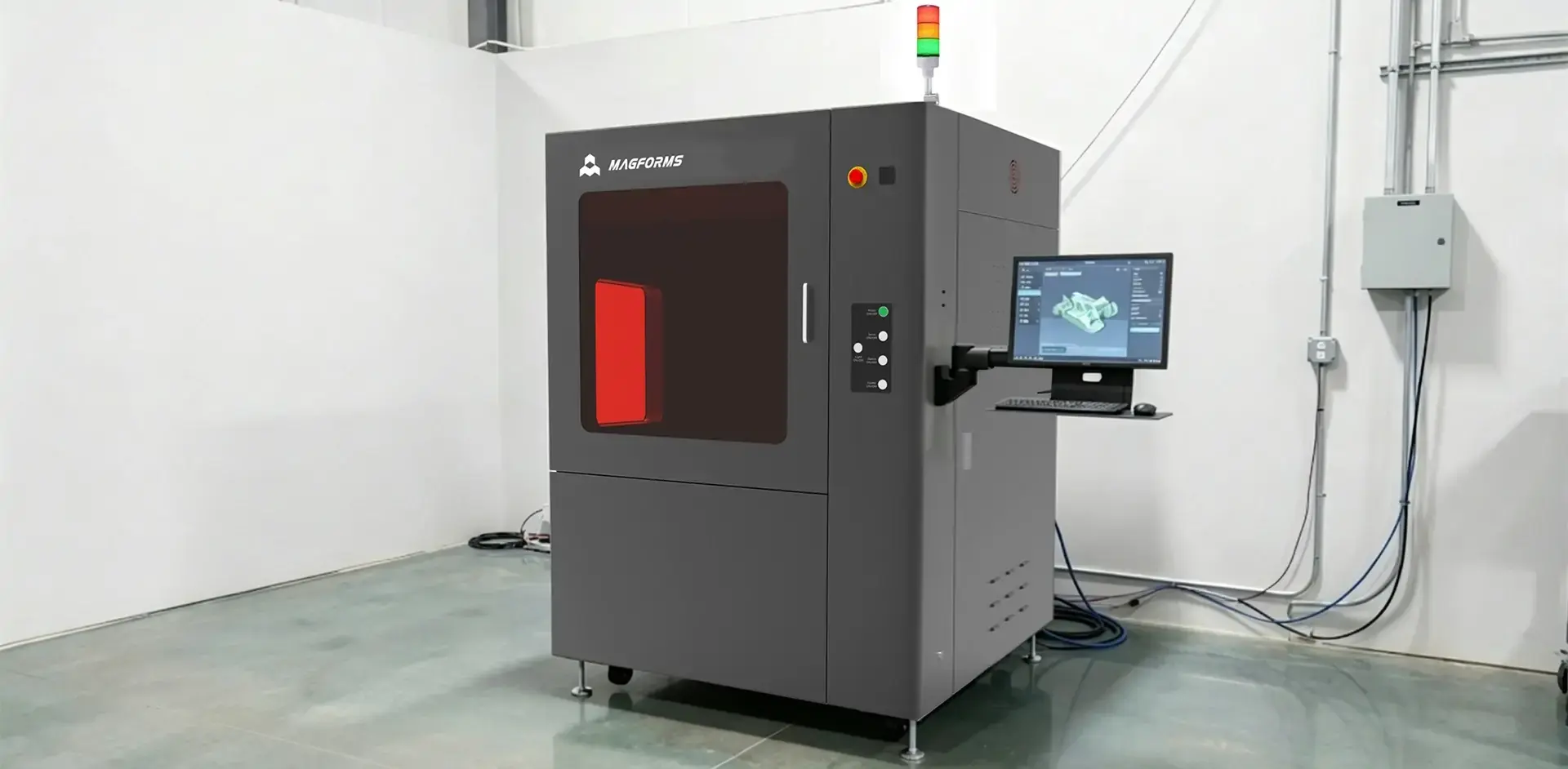
Consistent scan-to-print accuracy requires more than just good tools. It also needs materials that work well together, workflows that are optimized, and technical help that is quick to respond. Magforms offers this complete answer through our advanced industrial additive manufacturing tools that have been tested and proven to work in footwear. Our industrial SLA platforms are engineered to deliver high dimensional consistency, fine surface detail, and stable reproduction of customized footwear geometries. This makes print speeds over 30% faster than industry standards while keeping the same dimensions. Unlike companies that only sell equipment, we offer fully combined material-equipment systems. These systems use our own-developed elastomeric resins that are perfectly matched to printer settings, so there are no compatibility-related differences in size. Our professional team has decades of experience in the field and works with over 300 companies in the aircraft, medical, and footwear industries. They provide full training, quick support, and ongoing advice on how to improve workflow. Contact our experts at info@magforms.com to talk about your specific accuracy needs and to ask for validation samples made from your foot scan data. You can also look into relationships with providers of customized shoe 3D printers that can speed up your path to making custom shoes on a large scale.
References
1. Gibson, I., Rosen, D., & Stucker, B. (2021). "Additive Manufacturing Technologies: 3D Printing, Rapid Prototyping, and Direct Digital Manufacturing" (3rd Edition). Springer International Publishing.
2. Thompson, M.K., et al. (2020). "Design for Additive Manufacturing: Trends, Opportunities, Considerations, and Constraints." CIRP Annals - Manufacturing Technology, Vol. 65, pp. 737-760.
3. Salmi, M. (2021). "Additive Manufacturing Processes in Medical Applications." Materials, Vol. 14(1), Article 191.
4. Ligon, S.C., et al. (2019). "Polymers for 3D Printing and Customized Additive Manufacturing." Chemical Reviews, Vol. 117(15), pp. 10212-10290.
5. Javaid, M. & Haleem, A. (2020). "Current Status and Applications of Additive Manufacturing in Dentistry: A Literature-Based Review." Journal of Oral Biology and Craniofacial Research, Vol. 9(3), pp. 179-185.
6. Dilberoglu, U.M., et al. (2017). "The Role of Additive Manufacturing in the Era of Industry 4.0." Procedia Manufacturing, Vol. 11, pp. 545-554.

Magforms makes design and manufacture easier.
Popular Blogs
-
 Industry InsightsManufacturing Industry
FDM vs. SLA Printer: Which Technology Is Right for Your Project?
-
 Industry InsightsManufacturing Industry
Top 5 Applications of Industrial 3D Printers in Manufacturing Today
-
 Industry InsightsManufacturing Industry
Why Stereolithography 3D Printers Are Unmatched for Microfluidic Device Prototyping?