High-Resolution Resin Printers That Boost Product Detail
High-resolution resin printers are a huge step forward in additive manufacturing. They can print with incredible detail and quality on the surface that regular FDM printers can't match. A resin printer uses modern vat polymerization technologies, like SLA, DLP, and LCD systems, to fix liquid photopolymer resins one layer at a time, down to the micron level. Instead of using heat extrusion like filament-based systems do, these high-tech machines use UV light sources to chemically cross-link photosensitive materials. This gets rid of obvious layer lines and makes surfaces that are good enough for injection molding. The result is parts with surface finishes that meet the strict requirements of aircraft, medical device manufacturing, jewelry production, and precision engineering. Dimensional errors can be as low as 0.011 mm.

Understanding High-Resolution Resin Printers: Technology and Benefits
Modern high-resolution plastic printing technologies have changed the way many businesses make things more precisely. The main benefit is that these systems change the way layers are formed and materials cure, which makes it possible to reproduce details that weren't possible with traditional manufacturing methods.
Core Technologies Driving Precision
Stereolithography (SLA) systems use laser beams that are carefully controlled to specifically harden liquid resin, which lets them make parts with XY levels as low as 25 microns. Digital Light Processing (DLP) printers use digital lasers to fix multiple layers at once, and masked stereolithography (mSLA) systems use LCD screens to control light exposure very evenly. Depending on the needs of the output and the shape of the part, each technique has its own benefits. The visual accuracy of these systems comes from their ability to keep the light level the same across the whole build platform. More than 95% of the light in premium models is evenly distributed, so polymerization is the same from center to edge. This precision directly leads to accurate measurements and a smooth surface that stays the same no matter where the part is placed on the build plate.
Material Science Advantages
Photopolymer resins from a resin printer have better mechanical qualities than a lot of other materials used in production. Chemical bonding makes parts that are isotropic, which means they are strong in all directions. This is different from FDM prints, which are weak along the layer lines. This quality is very important for working samples and parts that will be used and put under mechanical stress. Modern industrial materials can be used for more than just testing. They can also be used in production. High-temperature resins keep structures strong at high temperatures, and bendable formulas make it possible to make gaskets and seals. During investment casting, castable resins burn off fully, leaving no ash behind for metal pours that are free of flaws.

Optimizing Resin Printer Settings for Superior Detail and Efficiency
To get regular, high-quality results, you need to optimize a lot of factors that are all connected. The quality of the details and the speed of production are both affected by the link between layer height, exposure time, and print speed.
Critical Parameter Optimization
Choosing the layer height is the main thing that affects both the quality of the details and the length of the print. 50-micron layers are a great compromise between speed and quality, but 25-micron layers are better for tasks that need the most detail. But lowering the layer height makes the exposure area bigger and the print time longer by the same amount. The exposure time needs to be adjusted for each type of glue and the temperature of the environment. Under-exposure leads to failed prints and wrong measurements, while over-exposure loses details and makes the material more fragile. Temperature-controlled build rooms keep the resin's thickness at the right level, so exposure results are always the same, even when the environment changes.
Maintenance Protocols for Consistent Performance
Regular repair plans guarantee accuracy and dependability for a long time. Every day, cleaning tasks include checking the resin vat, cleaning the build plate, and making sure all the optical parts are working. Every week, calibrations are done to check the accuracy of the Z-axis placement and the leveling of the platform. This keeps the dimensions from moving during long production runs. Professional-level systems have built-in automatic tracking features that keep an eye on the intensity of the exposure lamp and the degradation of the LCD screen. These systems give you tips for preventative maintenance, so you can change parts before they cause problems with quality. This kind of tracking is necessary in work settings where consistency has a direct effect on profits.
Choosing the Right High-Resolution Resin Printer for Your Business Needs
To choose the best resin printing method, you need to carefully consider how much production you need, how well the materials will work together, and how much it will cost to run in the long run. The framework for making decisions needs to find a balance between the original investment and the gains in quality and productivity.
Procurement Criteria Framework
The amount of work that needs to be done directly affects the choice of method and how well it works. Large-format printers make it possible to make a lot of different parts at once, or single parts that are too big for their surroundings. This lowers the cost of each part by increasing output. But if optical systems don't grow appropriately, larger build volumes may hurt resolution. Material fit is an important thing to think about when buying something. Open-source systems can use plastics from other companies, which gives you more control over costs and more material choices. Most of the time, proprietary systems offer better performance by integrating material and hardware compatibility. However, they limit operating freedom and raise long-term costs.
Technology Comparison Analysis
When you need the most detail and the best surface finish, SLA methods are the best choice. The exact laser control makes it possible to make shapes and details that are hard for other technologies to do. SLA systems, on the other hand, usually have lower build numbers and need more upkeep than other methods. DLP and LCD systems can cure layers faster by exposing multiple layers at the same time, which boosts productivity in batch production situations. These technologies work great for dental labs, jewelry casting businesses, and other places that need a lot of similar parts. The trade-off is that response times might be slower than with premium SLA solutions.

Procurement Strategies and Where to Buy High-Resolution Resin Printers
For strategic buying to work, the total cost of ownership, source reliability, and the quality of the support ecosystem must all be carefully looked at. The original buying price is only a small part of the costs of running the business in the long term.
Market Analysis and Pricing Frameworks
Professional systems for beginners cost between $3,000 and $15,000 and are designed for small-batch production and testing. Mid-range industrial systems cost between $15,000 and $50,000 and have better stability, higher build numbers, and more advanced automation features. Premium systems cost more than $50,000 and offer the highest level of accuracy, automation, and longevity suitable for production. Warranty terms and service agreements for a resin printer have a big effect on the total cost of ownership. Full service should include replacing optical parts, keeping software up to date, and being able to get expert help. Longer warranties are especially helpful in work settings where delays directly affect making money.
Supplier Evaluation Criteria
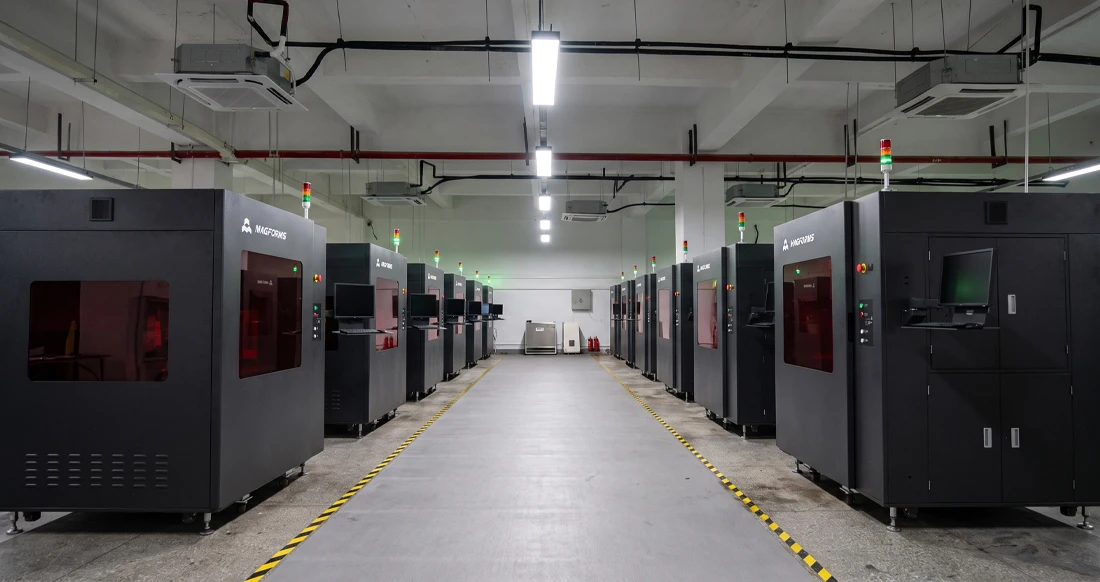
Magforms is a great example of the unified method that today's makers need. Their systems use German Scanlab galvanometers along with AOC lasers and Panasonic servo motors to make sure that the parts are of the highest quality and will last for a long time. The variable spot-size laser technology increases speed by 30 to 50 percent while clever scanning systems keep accuracy high. Concerns about vendor lock-in are taken care of by the company's open-source material compatibility. Their 22 patents and world presence across 300+ businesses show that they are a technology leader and that the market accepts them. Having these kinds of credentials gives procurement workers faith in long-term help and new ideas.
Ensuring Long-Term Success with High-Resolution Resin Printing
Achieving successful integration involves more than just buying new tools. It also involves improving processes, putting in place quality systems, and making plans for the future. The spending needs to fit in with larger growth and manufacturing plans.
Workflow Integration Best Practices
The production schedule needs to include steps like washing, UV drying, and support removal that need to be done after the product is made. Post-processing equipment that is automated cuts down on labor costs and improves accuracy, which is especially important for high-volume uses. To make sure that specifications are met, quality control methods should include checking measurements and testing the material's properties. Staff training programs make sure that the system is used correctly and that operating mistakes are kept to a minimum. Safety rules, how to handle materials, how to fix problems, and regular upkeep chores should all be covered in thorough training. Operators stay up to date on software changes and process improvements by going to regular refresher classes.
Future Technology Considerations
As printer speed, clarity, and material science continue to improve, more and more uses are being found for them. Slicing algorithms that use AI to improve print settings automatically improve print quality, and new resin formulas allow uses in electronics, optics, and biology. Sustainability factors are becoming more and more important in purchasing decisions. Resins that can be recycled, systems that use less energy, and responsible dumping programs all help companies meet their environmental goals while cutting costs. Procurement plans that are ready for the future look ahead to these trends to get the most out of investments.
Conclusion
High-resolution resin printers have changed the ways in which businesses that need accuracy, detail, and high-quality surfaces can make things. Because the technology can achieve accuracy down to the nano level while still being efficient, it is essential for modern industry. To do a good job of buying, you need to carefully look at the technical skills, compatibility of materials, and quality of seller support. Magforms' combined approach, which combines high-quality parts with new technologies and a global support network, is the kind of quality and dependability that procurement professionals look for in order to be successful in the long run.

FAQ
What resolution should I target for my specific application?
The resolution you need depends on the quality guidelines and end-use program. Most dental models and jewelry castings need XY precision of 25 to 50 microns, while most engineering samples work well with 50 to 100 microns. When deciding how much information you need, you should think about both the XY precision and the layer height.
How do I balance build volume against detail quality?
Larger build sizes make batch production more efficient, but they may limit the highest quality that can be used. To find the best build envelope, look at your usual part shapes and output numbers. Sometimes having several smaller printers gives you more options than having one large-format machine.
What maintenance schedule ensures consistent performance?
Cleaning and checking the resin every day keeps it from getting dirty and the optics from breaking down. Every week, calibration checks the accuracy of the dimensions, and once a month, deep cleaning keeps everything running at its best. Professional systems usually have automated tracking that figures out when to do a repair based on how the system is actually used.
Transform Your Manufacturing Precision with Magforms Resin Printer Solutions
Magforms changes the way precision manufacturing is done by offering combined material and equipment options that get rid of problems with compatibility and boost performance. With German Scanlab galvanometers and full global support, our variable spot-size laser technology improves speed by 30–50%, which is the fastest in the business, without affecting the quality of the details. As a reliable resin printer maker that works with more than 300 businesses around the world, we offer technical help 24 hours a day, seven days a week, with guaranteed response times. Our open-source design philosophy also allows for a wide range of material compatibility. Get in touch with our purchasing experts at info@magforms.com to find unique solutions that will help you make more things and gain a competitive edge faster.
References
1. Gibson, I., Rosen, D., & Stucker, B. "Additive Manufacturing Technologies: 3D Printing, Rapid Prototyping, and Direct Digital Manufacturing, Second Edition." Springer Publishing, the year 2021.
2. There is a 2020 Biomaterials Research Quarterly article by Melchels, F. P., Feijen, J., and Grijpma, D. W. called "A Review on Stereolithography and Its Applications in Biomedical Engineering."
3. "Photo-curing 3D Printing Technique and Its Challenges." Bioactive Materials Journal, 2020. Quan, H., Zhang, T., Xu, H., Luo, S., Nie, J., & Zhu, X.
4. You can read about it in Acta Biomaterialia (2018). Chartrain, N. A., Williams, C. B., & Whittington, A. R. "A Review on Fabricating Tissue Scaffolds Using Vat Photopolymerization."
5. E. MacDonald and R. Wicker wrote an article in 2016 called "Multiprocess 3D Printing for Increasing Component Functionality."
6. In the 2016 Dental Materials Research Annual, Stansbury, J. W., and Idacavage, M. J. wrote about "3D Printing with Polymers: Challenges Among Expanding Options and Opportunities."

Magforms makes design and manufacture easier.
Popular Blogs
-
 Industry InsightsManufacturing Industry
FDM vs. SLA Printer: Which Technology Is Right for Your Project?
-
 Industry InsightsManufacturing Industry
Top 5 Applications of Industrial 3D Printers in Manufacturing Today
-
 Industry InsightsManufacturing Industry
Why Stereolithography 3D Printers Are Unmatched for Microfluidic Device Prototyping?