How 3D Printing Services Help Small Businesses Bring Ideas to Life
3D printing services have become the link between abstract ideas and real goods when it comes to making new ideas come to life. A 3D printer for small businesses gives them access to fast prototyping, customisation, and on-demand manufacturing in ways that have never been possible before, even though they may be on a tight budget and be competing in a tough market. This technology gets rid of the usual problems caused by expensive tools and long production times. This lets entrepreneurs and technical teams quickly test designs, respond to customer feedback, and confidently launch goods. Additive manufacturing gives you the speed and accuracy you need to succeed in today's fast-paced market, whether you're prototyping auto parts, making custom medical devices, or making consumer electronics.
Understanding 3D Printing for Small Businesses: What You Need to Know
Additive manufacturing represents a fundamental shift in how we approach production. Rather than cutting away material or waiting for costly molds, this process builds objects layer by layer directly from digital files. Understanding the core mechanics behind 3D printing for small business applications helps procurement managers and technical directors evaluate whether this technology aligns with their operational goals.
Core Mechanics and Technology Types
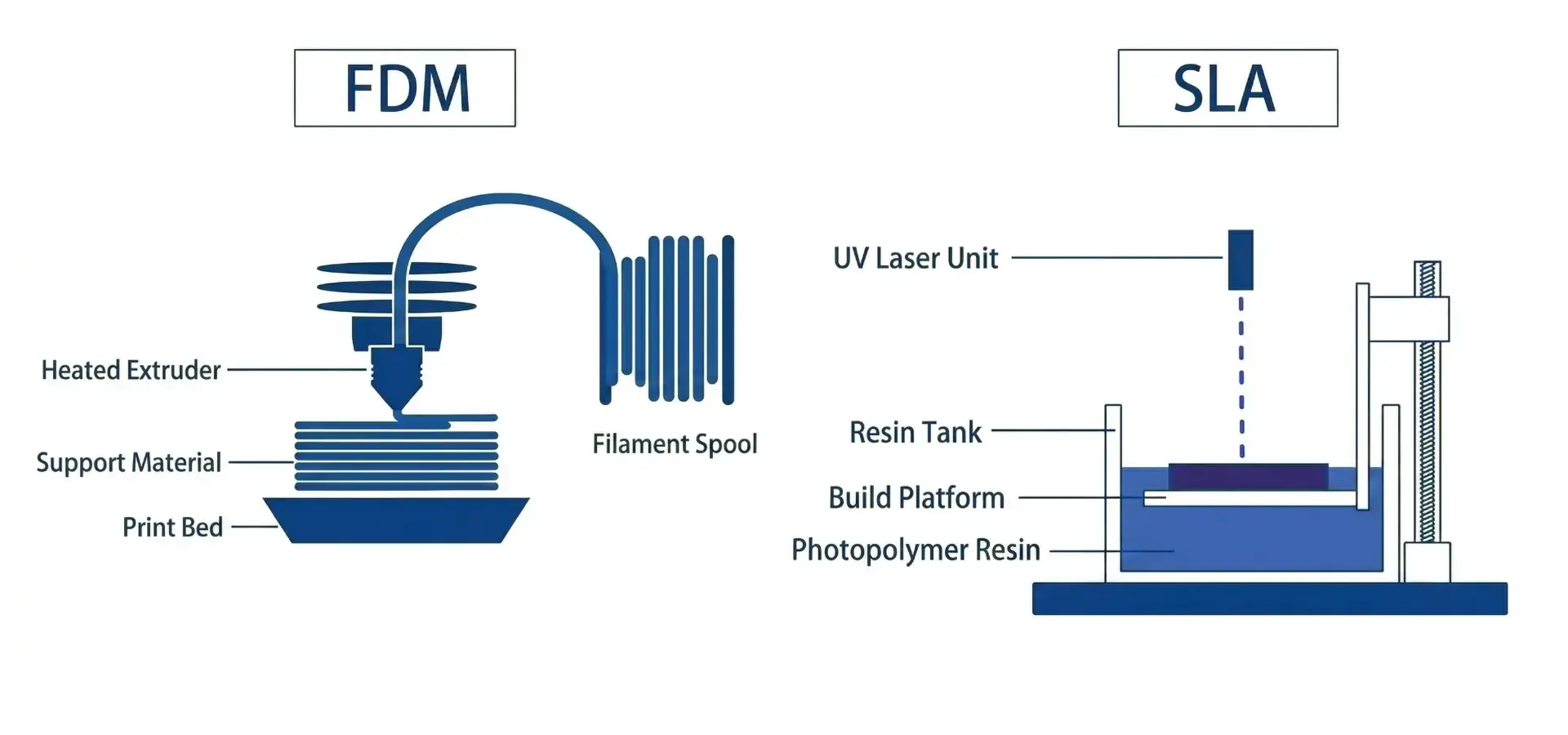
Most of the needs of small businesses can be met by Fused Deposition Modelling (FDM) and Stereolithography (SLA). Parts are built from the bottom up with FDM systems, which push hot thermoplastic filaments out of heated nozzles. These machines are great at making jigs, fixtures, useful mechanical parts, and long-lasting finished goods. In SLA systems, a UV laser selectively cures liquid resin into solid cross-sections, producing high-resolution parts with smooth surfaces ideal for dental models, jewellery patterns, and precision visual prototypes. Modern FDM systems may use CoreXY kinematics or IDEX configurations to improve motion efficiency and throughput, with some high-speed models exceeding 600mm/s under optimized conditions. When working with engineering-grade thermoplastics such as ABS, ASA, Nylon, or Polycarbonate, heated build chambers in FDM systems help maintain thermal stability between 60°C and 110°C to reduce warping and improve layer adhesion. Because of these capabilities, FDM and SLA systems can replace traditional manufacturing methods for low-volume and short-run production.
Key Benefits Driving Adoption
Rapid development is one of the most significant advantages of additive manufacturing. Design teams can make multiple versions in days instead of weeks, which speeds up the innovation process and cuts down on the time it takes to get a product to market. This speed lets startups get early feedback from users, improve product features, and make sure the market fits before investing in expensive mass production tools. The cost-effectiveness of this method is clear when you look at how much money is needed to set up injection moulds or CNC machines. A well-selected industrial 3D printing system eliminates these upfront tooling costs, which makes small-batch output affordable. Businesses only pay for the materials they use and the time the machine runs, so they don't have to meet the minimum order quantities that standard manufacturers require. Customisation opens up new ways to make money. Medical gadget companies make surgical guides that are specific to each patient, and shoe companies make custom shoe moulds based on scans of each person's feet. This level of customisation would be too expensive to make with traditional methods, but additive processes make it possible and profitable to do so.
Common Challenges and Practical Solutions
Picking the right material needs a lot of 3D printing for a small business 3D printer. Open-system printers allow the use of third-party filaments (typically $20–$35 per kilogram), compared to proprietary materials that can cost $60–$120 per kilogram. Technical leaders have to weigh the savings in costs against the time workers have to spend fixing problems caused by incompatible materials or failed prints. Another thing to think about is maintenance. Professional-grade tools need to be oiled, their belts tightened, and their nozzles changed on a frequent basis. To keep downtime to a minimum, businesses should keep extra materials like hotends, extruder gears, and build plates on hand. Service agreements with equipment providers (typically defined as SLAs in maintenance contracts) usually promise to repair a part within 24 to 48 hours, which keeps production going. The accuracy of measurements varies between technologies and price points. Most industrial 3D printers for small businesses keep their tolerances within ±0.1mm or ±0.2% of the nominal dimensions. This is good enough for working prototypes and a lot of other end-use situations. Parts requiring tighter tolerances may require post-processing, secondary machining, or alternative manufacturing methods to meet regulatory or engineering standards.
Choosing the Right 3D Printing Solution for Your Small Business
Selecting appropriate equipment involves evaluating technical specifications against operational requirements and budget constraints. Procurement professionals must consider multiple factors beyond initial purchase price to ensure long-term value and production reliability.
Technology Comparison: FDM versus SLA
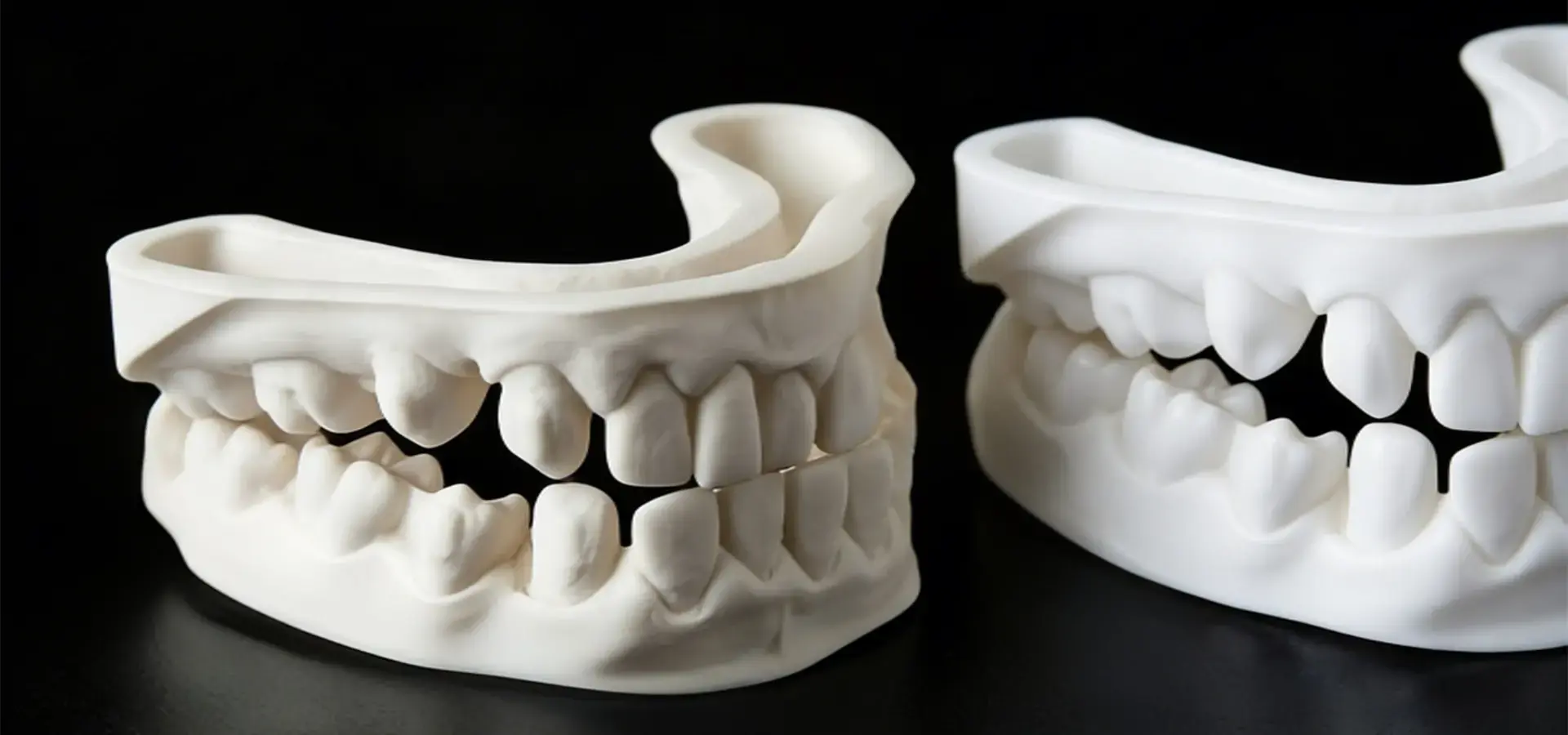
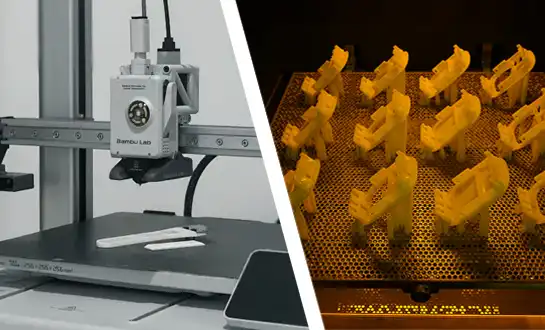
Businesses that want mechanical strength, higher build volumes, and lower running costs should use FDM technology. These methods work well with engineering polymers and can make parts that can handle stress, heat, and chemicals. The auto industry uses FDM 3D printers for small businesses to make useful test fixtures, custom tools, and low-volume production parts. SLA systems have better resolution and surface quality, which makes them perfect for uses where looks or small details are important. Dental labs use SLA printers to make exact models and bases for aligners, and jewellery makers use them to make patterns for investment casting that have lots of different textures. But SLA materials usually cost more than FDM filaments, and after processing, parts need to be cleaned in rubbing alcohol and cured in a UV light.
Critical Selection Criteria
The maximum part size or the number of parts that can be printed at the same time is set by the build volume. Small design companies might be fine with 250x250x300mm chambers, but service bureaus that work on a variety of client projects would do better with 330x330x600mm chambers. Larger volumes mean that parts don't have to be cut up into smaller pieces, and smaller things can be made in batches. Print speed has a direct effect on throughput and return on investment. Advanced FDM systems can achieve speeds exceeding 600mm/s through optimized motion control systems, while SLA technologies improve throughput via enhanced laser scanning strategies and exposure optimization. This has cut the time it takes to make a prototype from days to hours. When looking at 3D printers for small businesses, you should figure out how much you need to make each year to see if the faster features are worth the extra money. Material compatibility affects operating flexibility and cost control. Businesses can find filaments at lower prices thanks to open-system designs, which lower the cost of each part by a large amount. To get consistent quality across different brands of material, you need to know how to change print parameters like temperatures, speeds, and cooling rates through repeated testing. Energy efficiency affects long-term operating costs, especially for businesses that run multiple machines all the time. Modern units have heated rooms that are better insulated and have better power management, so they use 30–40% less electricity than older models while still keeping the printing environments stable.
Evaluating Leading Solutions
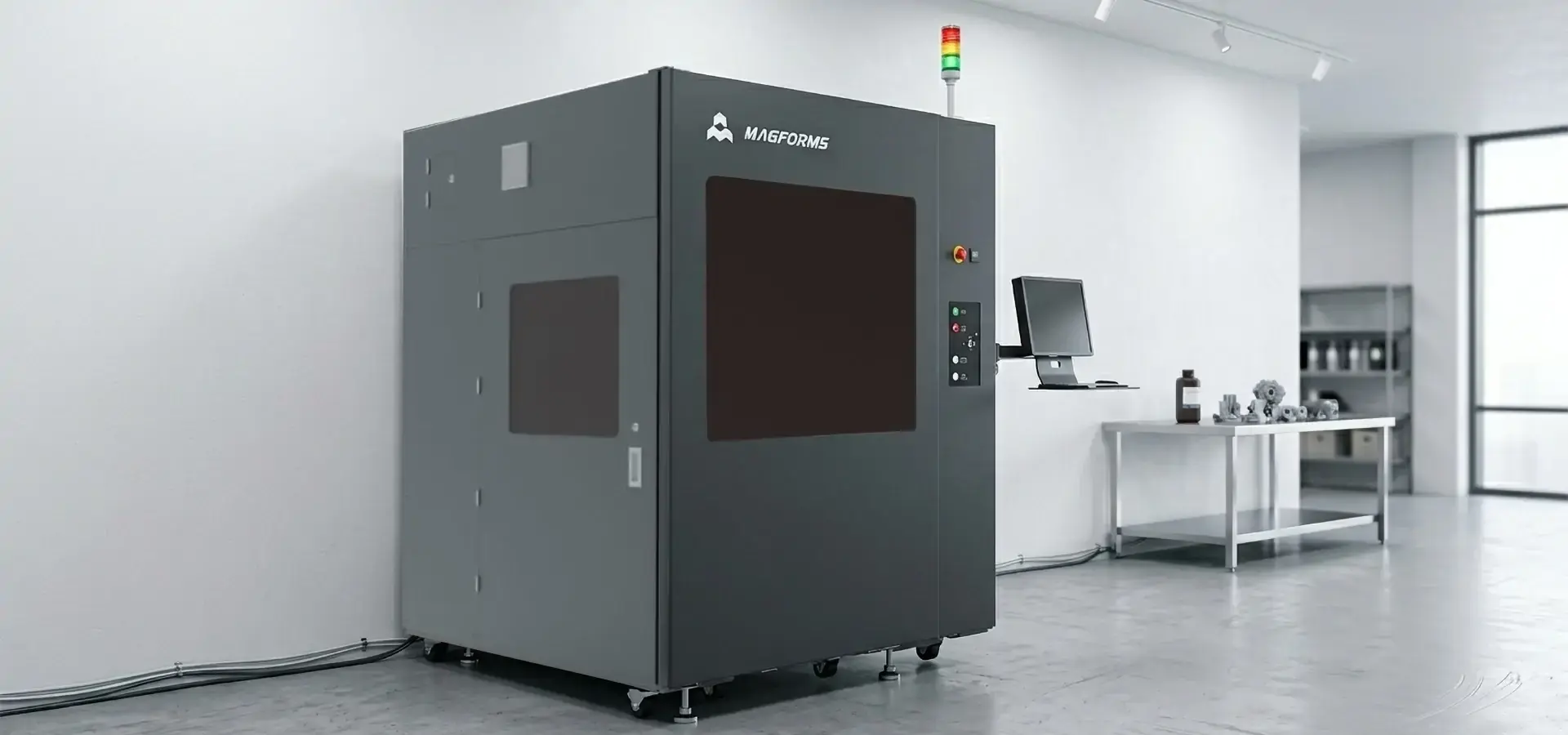
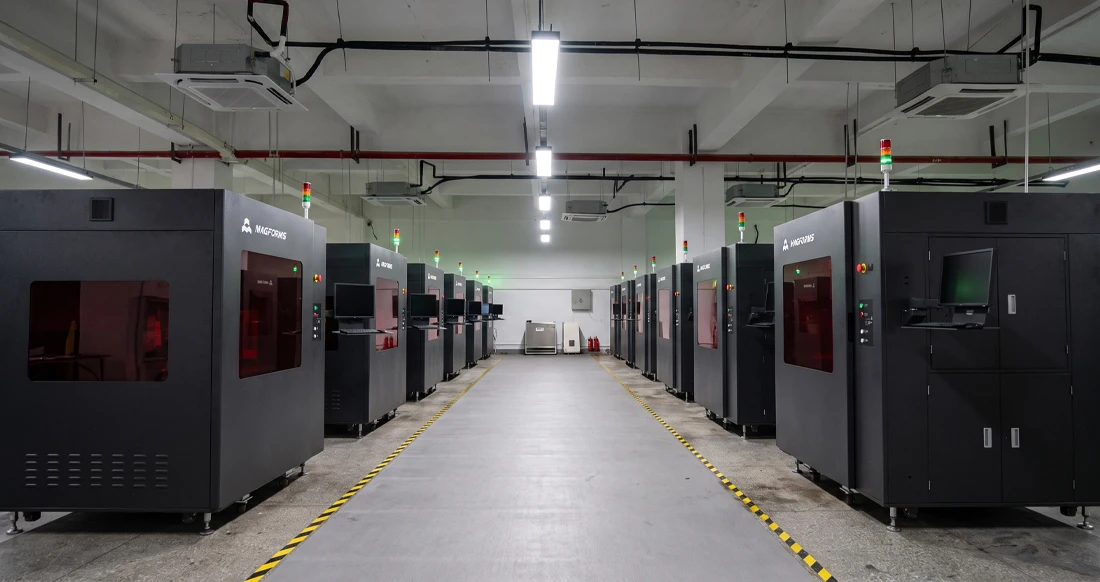
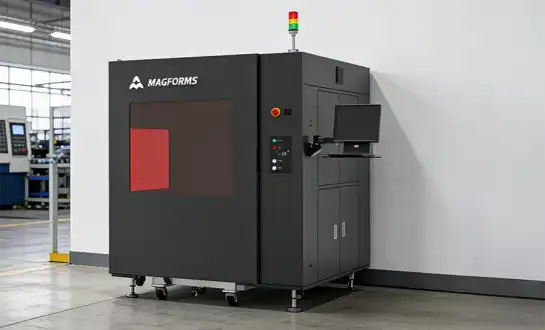
Industrial 3D printing equipment for small business applications has matured considerably. Systems like the Magforms Helios series demonstrate how integrated hardware and material development deliver reliable performance. These units achieve micron-level accuracy through precisely calibrated laser systems and thermally stable build platforms, addressing common pain points like warping, layer adhesion failures, and dimensional drift during extended print jobs. Connectivity features matter in professional settings. Cloud-based fleet management allows workshop supervisors to monitor multiple machines remotely, queue jobs efficiently, and receive maintenance alerts before failures occur. LAN connectivity enables seamless integration with existing IT infrastructure, supporting collaborative workflows across design, engineering, and production teams. Safety certifications ensure compliance with workplace regulations. Look for units equipped with HEPA and activated carbon filtration systems that capture ultrafine particles and volatile organic compounds (VOCs) emitted during printing. This protection becomes essential when operating resin-based SLA systems in enclosed or shared environments, where volatile organic compounds (VOCs) may be generated during curing and post-processing.
How 3D Printing Services Accelerate Product Development and Innovation
Shortening development cycles provides 3D printers for small businesses with competitive advantages that translate directly to revenue and market position. 3D printing services for small businesses enable rapid iteration, allowing teams to test assumptions, identify design flaws, and incorporate improvements before committing to production tooling.
Rapid Prototyping Process
The journey from concept to physical prototype begins with CAD modeling. Design engineers create digital representations incorporating functional features, assembly interfaces, and aesthetic details. Modern CAD software includes built-in printability analysis, flagging potential issues like overhangs requiring support structures or wall thicknesses prone to failure. Slicing software prepares the CAD file for printing by generating layer-by-layer toolpaths. Engineers adjust parameters—layer height, infill density, support placement—to balance print time against structural requirements. A 3D printer for small businesses with advanced slicing profiles automates many of these decisions, reducing the learning curve for new operators. Printing typically completes within several hours for moderately complex parts, depending on layer height, geometry, and SLA system performance. Post-processing varies by technology and application. FDM parts may require support removal, surface sanding, or vapor smoothing to achieve the desired aesthetics. SLA components need cleaning, curing, and sometimes painting. The ability to perform these steps in-house accelerates feedback loops, as designers can evaluate physical prototypes and initiate design revisions within the same workday.
Success Stories Across Industries
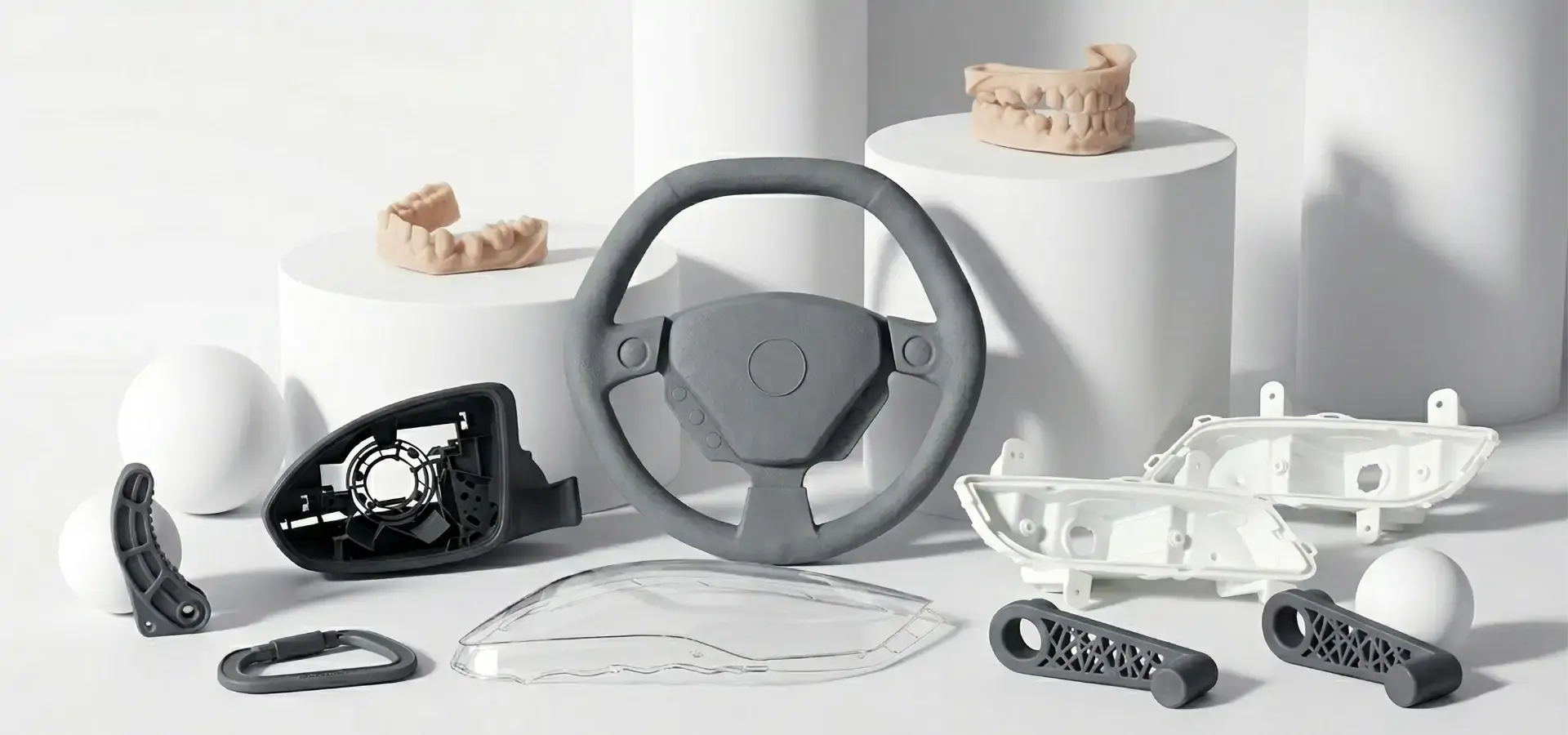
Additive manufacturing for small businesses is used by consumer electronics companies to make prototypes of the housings for wearable devices. These prototypes are then tested for usability and user interface before the final designs are made. One company that makes headphones cut the time it took to make new models from 16 weeks to 4 weeks by printing different housings every week, testing comfort with focus groups, and using feedback right away. On-demand manufacturing is used by automotive companies to make custom interior parts for niche markets of vehicles. These businesses make money while they wait for injection mould tooling to be made, which can take 12 to 16 weeks. They do this by making 500 units of specialised brackets or trim pieces. This ability to build bridges increases cash flow and confirms market demand before big investments in capital are made. Medical device makers make surgery guides that are tailored to each patient. These guides make procedures more accurate and cut down on the time spent in the operating room. A company specializing in spinal surgery devices uses CT scans to produce drill guides using biocompatible SLA resins, enabling submillimeter surgical accuracy. Customisation like this would not be possible with standard manufacturing methods, but small businesses can easily do it with 3D printing.
On-Demand Manufacturing and Customization
Digital inventory management changes the economy of the supply chain. Instead of keeping physical parts in stock, service bureaus and repair shops keep libraries of printable part files. They only make replacement parts when someone buys them. This method gets rid of the need for storage space, frees up working capital that would otherwise be used for inventory, and lets companies keep supporting older product lines without having to keep old parts on hand. Businesses can serve niche markets successfully with small-batch customisation. Companies in footwear development use SLA and other additive technologies to prototype and validate custom midsoles tailored to individual biomechanics, and companies that do architecture make scale models that are made to fit the needs of each client. The costs of using a 3D printer for small businesses make these specialised services possible, creating new ways to make money that wouldn't be possible with traditional manufacturing. When you consider subtractive machining, where 60–90% of the raw material is wasted, additive processes waste much less because they use materials more efficiently. Printing only puts down material where it's needed, which is in line with environmental goals and cuts down on the cost of materials. Procurement teams that look at the total cost of ownership and business environmental commitments will like this efficiency.
Future Trends and Opportunities in 3D Printing for Small Businesses
Staying informed about emerging technologies helps businesses position themselves to capitalize on competitive advantages as the industry evolves. Several developments promise to expand capabilities and reduce barriers for 3D printing in small business applications.
Emerging Technologies Driving Evolution
Multi-material printing systems enable the creation of parts with varying mechanical properties, colors, or functional characteristics in a single build. Imagine printing a consumer product with rigid structural elements and soft-touch grip surfaces simultaneously, eliminating assembly steps. These capabilities, currently available in high-end systems, are migrating toward more affordable equipment accessible to small businesses within the next two years. Automation integration reduces labor requirements and enables lights-out manufacturing. Robotic part removal systems, automated build plate changing, and automated material handling systems allow 3D printers for small businesses to operate unattended for extended periods. This productivity multiplication effectively increases capacity without proportional increases in facility space or staffing. AI-enhanced workflow optimization analyzes print parameters, failure patterns, and material performance to recommend optimal settings. Machine learning algorithms predict and prevent failures before they occur, reducing material waste and operator intervention. Early implementations show 25-30% improvements in first-time-right print success rates, directly impacting production economics. Speed improvements continue advancing through hardware and software innovations. Volumetric printing technologies that cure entire layers simultaneously rather than point-by-point promise 10-100x speed increases, though these remain in development stages. Incremental improvements in conventional systems—faster laser scanning, higher extrusion rates, optimized 3D printer for small business motion planning—deliver measurable productivity gains annually.
Sustainable Practices and Eco-Friendly Materials
Environmental responsibility aligns with cost control as energy-efficient equipment reduces operating expenses. Next-generation heating systems recover and reuse thermal energy, cutting electricity consumption by 40-50% compared to current models. These efficiency improvements pay for themselves through reduced utility bills while supporting corporate sustainability commitments. Bio-based and recycled materials offer alternatives to petroleum-derived polymers. PLA filament made from corn starch provides acceptable mechanical properties for many applications at a lower environmental cost. Recycled PETG incorporates post-consumer plastic waste, supporting circular economy principles. As material science advances, 3D printing materials for small businesses will increasingly balance performance with ecological impact. Material recycling systems allow businesses to reclaim and reprocess failed prints and support structures. Filament extruders convert ground-up scrap into usable feedstock, recovering 70-80% of material value. While these systems require additional capital investment, businesses producing significant scrap volumes achieve positive returns within two years while reducing landfill waste.
Strategic Recommendations for Small Business Growth
Investing in scalable solutions positions businesses to expand capabilities as demand grows. Modular equipment designs allow automation modules, material systems, and multi-material capabilities to be added incrementally rather than requiring complete system replacement. This approach protects initial investments while enabling organic growth aligned with revenue and production volume increases. Partnerships with established industry leaders provide access to proven technologies, extensive material libraries, and technical support infrastructure. Collaborating with 3D printer manufacturers for small business applications like Magforms, which holds 22 patents and serves over 300 enterprises globally, reduces implementation risk and accelerates time-to-productivity. Their integrated material and equipment approach eliminates compatibility issues that plague businesses mixing components from multiple suppliers. Participation in innovation hubs and industry associations keeps businesses informed about technological developments, material innovations, and application best practices. These networks facilitate knowledge exchange, collaborative problem-solving, and partnership opportunities that individual small businesses might not discover independently. The collective expertise available through professional communities accelerates learning and helps avoid costly mistakes others have already encountered.
Conclusion
The transformative potential of industrial SLA and additive manufacturing for small businesses extends far beyond simple prototyping. This technology fundamentally reshapes product development economics, enabling rapid iteration, mass customization, and on-demand manufacturing previously accessible only to large corporations with substantial capital resources. By eliminating expensive tooling requirements and reducing lead times from weeks to days, additive manufacturing levels the competitive playing field. Small businesses that strategically integrate these capabilities gain agility to respond to market opportunities, customize offerings for niche segments, and validate concepts before major investments. The key to success lies in carefully evaluating equipment options against specific operational needs, establishing relationships with reliable suppliers offering comprehensive support, and continuously adapting to technological advances that improve speed, precision, and material capabilities.
FAQ
1. What type of 3D printer best suits my small business needs?
The optimal choice depends on your application requirements. FDM systems excel at producing functional mechanical parts, jigs, and fixtures using engineering-grade thermoplastics. These machines offer larger build volumes and lower operating costs, making them ideal for automotive, aerospace, and general manufacturing applications. SLA technology delivers superior surface finish and fine detail resolution, preferred for dental models, jewelry patterns, and visual prototypes where aesthetics matter. Evaluate your primary use cases—structural strength versus visual quality—to guide technology selection.
2. How does 3D printing reduce product development costs?
Additive manufacturing eliminates expensive injection mold tooling that can cost $5,000-$100,000 per design. Businesses can produce 1-1000 units economically without these capital investments. Rapid iteration reduces the number of design cycles needed to reach production-ready specifications, cutting engineering time by 30-50%. On-demand production eliminates inventory carrying costs and reduces working capital tied up in stock. Material efficiency—using only what's needed rather than machining away 60-90% as scrap—further reduces costs. Most small businesses achieve ROI on a 3D printer for small business investments within 3-6 months, when previously outsourcing prototypes.
3. What maintenance requirements should I expect?
Professional-grade equipment requires regular attention to maintain consistent performance. Monthly tasks include lubricating linear rails and lead screws, checking belt tension, and cleaning build surfaces. Nozzles wear gradually and need replacement every 500-1000 hours, depending on the material's abrasiveness. FDM systems benefit from periodic extruder gear inspection and replacement of PTFE tubing. SLA units require resin tank replacement every 1-2 liters of processed material and optical window cleaning. Maintaining spare consumables—nozzles, build plates, extruder components—minimizes downtime when replacements become necessary. Many suppliers offer preventive maintenance contracts providing scheduled service and priority support.
Partner with Magforms for Reliable 3D Printing Solutions
Small businesses seeking dependable 3D printers for small business solutions benefit from partnering with established manufacturers offering integrated equipment and materials. Magforms delivers comprehensive systems backed by 22 patents and extensive global experience serving over 300 enterprises. Our synchronized material and hardware development eliminates compatibility issues that cause dimensional inaccuracies, print failures, and unplanned downtime. Variable spot-size laser control and AI-optimized scan path strategies improve exposure efficiency and increase printing throughput by over 30% while maintaining micron-level precision required for demanding applications. We support technical teams through structured training programs, responsive technical support, and comprehensive after-sales service, including maintenance, software updates, and troubleshooting assistance. Whether you're establishing initial prototyping capabilities or scaling production capacity, our specialists help identify optimal configurations matching your operational requirements and budget constraints. Contact us at info@magforms.com to discuss a custom 3D printer for small business solutions tailored to your industry needs, request equipment demonstrations, or explore flexible financing options supporting your growth objectives.
References
1. Wohlers, T. (2023). Wohlers Report 2023: 3D Printing and Additive Manufacturing Global State of the Industry. Wohlers Associates, Inc.
2. Gibson, I., Rosen, D., Stucker, B., & Khorasani, M. (2021). Additive Manufacturing Technologies (3rd ed.). Springer International Publishing.
3. Sculpteo. (2023). The State of 3D Printing 2023: Business and Industry Trends. Sculpteo Industry Report Series.
4. Redwood, B., Schöffer, F., & Garret, B. (2022). The 3D Printing Handbook: Technologies, Design, and Applications for Practitioners. 3D Hubs B.V.
5. ASTM International. (2021). Standard Terminology for Additive Manufacturing Technologies (ASTM F2792-12a). ASTM Committee F42 on Additive Manufacturing Technologies.
6. Attaran, M. (2021). Additive Manufacturing: The Strategic Technology for Small Businesses and Entrepreneurs. Journal of Manufacturing Technology Management, 32(6), 1245-1271.

Magforms makes design and manufacture easier.
Popular Blogs
-
 Industry InsightsManufacturing Industry
FDM vs. SLA Printer: Which Technology Is Right for Your Project?
-
 Industry InsightsManufacturing Industry
Top 5 Applications of Industrial 3D Printers in Manufacturing Today
-
 Industry InsightsManufacturing Industry
Why Stereolithography 3D Printers Are Unmatched for Microfluidic Device Prototyping?