How a 3D Printer Can Skyrocket Your Small Business Sales?
A 3D printer can skyrocket your small business sales by eliminating expensive tooling costs, enabling rapid prototyping, and providing geometric freedom that traditional manufacturing cannot achieve. This additive manufacturing technology allows businesses to create customized products on-demand, significantly reducing lead times from weeks to hours while offering unprecedented design flexibility. With the ability to produce complex internal structures and eliminate the need for costly molds, small businesses can now compete with larger enterprises by delivering personalized solutions at competitive prices, ultimately driving revenue growth and customer satisfaction.
Understanding the Impact of 3D Printing on Small Business Sales
Small businesses that work in business-to-business (B2B) markets often face big problems that make it harder for them to grow and stay competitive. Traditional ways of making things often have very high minimum order numbers, long wait times, and too high tooling costs, which can make it hard for a company to quickly adjust to market needs or look for new product possibilities.
Long wait times are one of the biggest problems that businesses today have to deal with. Using traditional methods of manufacturing, it can take weeks or months to make samples or small runs of products. This can cause missed chances and angry customers. Companies that can't adapt their manufacturing methods quickly often lose contracts to competitors who can meet clients' needs more quickly for special parts or samples.
Traditional ways of making things have high production costs that make things harder for small businesses. For example, expensive equipment and setup costs make small-batch production economically impossible with injection casting, machining, and other common methods. Because of these tight budgets, many businesses have to turn down profitable chances or settle for lower profit rates that hurt their long-term viability.
Few customization choices make it even harder for small businesses to stand out in areas with a lot of competition. Traditional production is great at making a lot of similar parts, but it's not so good at making parts that are more complicated geometrically or that are customized to fit the needs of each customer. Because of this limitation, companies can't provide the customized solutions that a 3D printer can help with, which could enable them to charge higher prices and build better ties with their customers.

These basic problems can be solved directly by additive manufacturing technology, which lets companies make complicated shapes without having to buy expensive tools. Companies can now make working prototypes in just one night, which speeds up the development process and gets new goods to market faster. Businesses can now make single units or small batches more cheaply since minimum order quantities are no longer required. This opens up new income streams that weren't possible before.
Sales are growing because 3D printing makes the supply chain easier to manage and helps businesses respond better to customer needs. By doing their own production, companies can cut down on their reliance on outside providers and offer faster delivery times, which gives them a competitive edge. Digital warehousing ideas let businesses keep huge stores of products without having to keep real stock. This cuts down on costs while letting them offer more services.
Companies that make things say that using additive manufacturing has made it much easier for them to get new contracts and keep old ones. Because the technology allows for on-demand production, companies can offer same-day prototyping and quick customization that their standard competitors can't match. This leads to measured increases in both the number of new customers and the number of customers who stay with the company.
Exploring Different Types of 3D Printers for Business Needs
There are a lot of different technologies in the field of additive manufacturing. Each one has its own benefits that make it better for different business uses and production needs. When procurement professionals understand these differences, they can choose technology that fits their business goals and budget while also getting the best return on investment.
Fused Deposition Modeling Technology
Fused Deposition Modeling (FDM) is the most popular 3D printing method. It uses heated thermoplastic fibers that are formed one layer at a time to make three-dimensional things. This method is great for making working prototypes and end-use parts with great mechanical qualities. This makes it perfect for companies that need long-lasting parts for testing and validation.
FDM systems can work with a wide range of materials, such as engineering-grade thermoplastics like ABS, Nylon, Polycarbonate, and carbon fiber composites. Because these materials have similar mechanical qualities to injection-molded parts, they let companies make working samples that are exact copies of the parts that will be made in mass production. Because the technology can work with materials that are very hot, it is useful for car and aerospace uses that need parts that can last in harsh circumstances.
Stereolithography and Resin Technologies
Stereolithography (SLA) and Digital Light Processing (DLP) both use photopolymer plastics that are sealed by precise lasers or light sources to make parts with very good surface quality and accurate measurements. These systems work great for tasks that need to see fine details and have smooth surfaces. This makes them perfect for jewelry, dental work, and making detailed models of buildings.
Because resin-based systems have better precision, they can make parts with complex internal structures and complicated shapes that would not be possible with traditional manufacturing methods. Professional SLA tools can make layers as thin as 10 microns, which makes it possible to make parts with surfaces that are so good that they don't need to be finished in a later step.
Selective Laser Sintering Systems
Selective Laser Sintering (SLS) technology uses laser energy to join powdered materials together to make parts with great mechanical qualities and a lot of different shapes. With this technology, support structures are not needed, so complicated assemblies and devices that lock together can be made in a single print process.
SLS systems can work with many different kinds of materials, like Nylon, glass-filled plastics, and metal powders, which makes them useful for many different types of business needs. Because the technology can make parts with isotropic strength qualities, it is useful for practical testing and low-volume production where the performance of the parts is important.
Businesses should think about a number of important factors when comparing different printer technologies. These include the required sharpness, the compatibility of the materials, the production rate, and the total cost of ownership. The resolution has a direct effect on the quality of the final parts and may even get rid of the need for extra processing. The range of uses the system can handle is limited by the materials it can work with. The amount of work that needs to be done also affects the choice between desktop and industrial-grade tools.
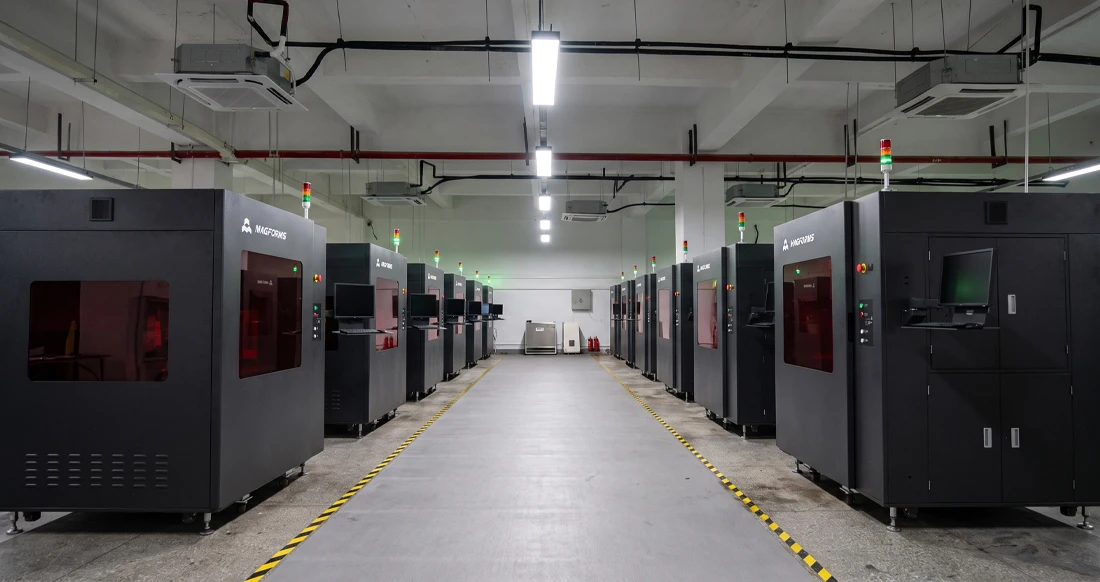
Manufacturers you can trust, like Magforms, have made advanced SLA systems with German Scanlab galvanometers and AOC lasers that provide outstanding printing performance and dependability. These high-end hardware setups make sure consistent results and reduce downtime, which are very important for companies that count on additive manufacturing to send goods to customers.
Leveraging 3D Printing Materials and Software for Optimal Sales
The choice of material is very important for the success of additive manufacturing because different uses need different mechanical, thermal, and aesthetic qualities to meet performance and customer standards. By learning about the properties and uses of different materials in a 3D printer, companies can offer more services and look for new market possibilities.
Thermoplastic Material Properties and Applications
PLA (Polylactic Acid) is a great starting point for businesses that are new to additive manufacturing because it is easy to print on and recyclable, which appeals to customers who care about the environment. Even though PLA doesn't hold up well against high temperatures, its smooth surface and low tendency to bend make it a good choice for building models, prototypes, and market goods that don't need to be very strong.
ABS (Acrylonitrile Butadiene Styrene) has better mechanical properties and temperature resistance than PLA. This means that it can be used for working samples and end-use parts that will be subjected to mild stress. Because it is highly resistant to impact and doesn't react with chemicals, the material is useful for making durable tools, electrical casings, and parts for cars.
Engineering-grade materials, like Nylon, Polycarbonate, and PEEK, have great mechanical qualities that make them ideal for tough jobs in the medical, aerospace, and industrial fields. Businesses can fight for contracts that need approved materials and strict performance standards because these materials have high strength-to-weight ratios, great chemical resistance, and temperature stability.

Photopolymer Resin Characteristics
Standard photopolymer plastics are great for projects that need fine details and smooth surfaces. This makes them perfect for jewelry, dental models, and architectural visualization projects. When these materials dry, they leave behind a hard, brittle finish that can be painted or treated in other ways. This lets businesses make models that look good for clients to look over and approve.
Tough and bendable resin mixtures have rubber-like qualities that work well for seals, grips, and other uses that need elastomeric behavior. Businesses can use these specialized materials for a wider range of tasks while still getting the benefits of photopolymer technology's high clarity and surface quality.
Businesses can get into the jewelry and metal parts markets by using castable materials to make designs for investment casting processes. During casting, these materials burn off completely, leaving no residue that could affect the quality of the final part.
Design Software Solutions for Business Applications
Professional CAD tools like SolidWorks, Fusion 360, and Inventor can be used for complicated engineering tasks because they have a lot of design features. These tools can do parametric modeling, which lets you make quick changes to designs and make them work best with the limitations of additive printing.
Accessible design tools, like Tinkercad and SketchUp, offer basic features that can be used for visualizing architecture and making simple products. With these tools, businesses can offer design services to customers who might not have their own CAD software, which opens up new ways to make money.
Businesses can use specialized software for topological optimization and generative design to make parts that are light, strong, and show off the unique features of additive manufacturing. These tools can make shapes that use less material while still being strong, which is attractive to customers who want to save money and help the environment.
To get the same results from different print jobs, quality control methods need uniform calibration steps and environmental controls. Monitoring systems for temperature and humidity help keep the printing conditions at their best, and regular calibration checks make sure that the accuracy of the dimensions meets customer needs. Documenting printing conditions and being able to track down materials gives quality assurance records that controlled industries are asking for more and more.

Strategic Procurement and Cost Management in 3D Printing
To use additive manufacturing technology effectively, you need to think about how to buy things, how to work with suppliers, and the total cost of ownership, which includes more than just the price of buying the tools. Businesses need to look at a number of different acquisition methods and supplier choices in order to get the most out of their investment and make sure they have solid help for the whole lifecycle of their equipment.
Supplier Selection and Support Considerations
Suppliers with a good reputation offer comprehensive warranties and quick technical help that keep operations running smoothly and ensure consistent output capabilities. When businesses look at possible providers, they should give more weight to those that offer quick responses to technology issues, thorough training programs, and local service that can fix problems quickly without long periods of downtime.
Magforms is a great example of a supply relationship that helps additive manufacturing work well. They offer online technical advice 24 hours a day, seven days a week, and promise reaction times of one hour and solutions within four hours. This level of support makes sure that production plans stay on track and that customer promises are always kept, which are both important for keeping a business's image and helping it grow.
Another important thing to think about when choosing an equipment provider is how easy it is to get real replacement parts and refills. Businesses can more accurately predict their running costs and avoid unexpected cost spikes that could hurt their profits if their vendors keep enough supplies on hand and offer clear prices for everyday consumables.
Financial Models and Investment Analysis
Bulk buying deals often offer big savings on costs for companies that want to get several systems or build up their additive manufacturing capabilities all around. Volume savings can lower the cost per unit while making sure that all of the equipment is the same. This makes it easier for everyone in the company to get trained and keep the equipment in good shape.
Leasing models offer different ways to buy things that can help businesses save money for other investments while still giving them access to the latest technology. Maintenance and support services are often included in these deals, which makes operations easier. However, businesses should carefully compare the total costs over the loan time to the costs of buying the equipment outright.
When figuring out the costs and benefits of using additive manufacturing, you need to look at both the straight savings and the new ways that the technology can help you make money. Direct saves include lower equipment costs, no longer having to meet minimum order amounts, and less need for inventory. New income sources may include fast development services, the ability to customize products, and on-demand production.
When manufacturing companies use additive manufacturing, they usually get their money back in 12 to 24 months, but this depends on the types of applications they use and how often they use them. Businesses that focus on high-value tasks, like aerospace prototyping or medical device development, often see faster payback times. This is because these markets are willing to pay more for quick return and the ability to make changes as needed.
Businesses on a budget can start using additive manufacturing with desktop systems that cost less than $500. However, these entry-level systems have limits on the number of parts they can make, the materials they can use, and how fast they can make them. Before buying more powerful tools, these systems work well as testing grounds that help companies get better at what they do and find specific uses for their existing systems.
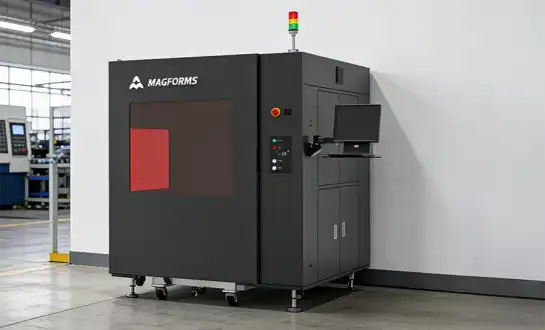
Industrial-grade systems cost a lot, but they offer the dependability, speed, and material flexibility needed for production tasks and meeting customer support obligations. With its stable marble base and 0.1 mm printing accuracy, Magforms' Lab300 model shows the level of power that can be found in professional-grade tools made for tough business tasks.
Future Trends and Maximizing ROI with 3D Printing
The additive manufacturing industry is still changing very quickly. New 3D printer technologies are expected to make these systems even more useful and useful to businesses. Understanding new trends helps businesses make smart financial choices and put themselves in a good situation for how the market will change in the future.
Technological Advancement Trajectories
Variable spot-size laser technology is a big step forward that solves the problem of having to choose between writing quickly and clearly. Large laser spots are used for fast internal filling, and fine spots are used for precise outlines and fine details. This makes advanced systems 30–50% faster than traditional methods.

Deep learning systems are getting better at finding the best printer settings and scanning paths to keep quality high while also being as efficient as possible. These smart systems can change how they print depending on the shape of the part and the qualities of the material. This can increase speed by about 20% while lowering the level of technical knowledge needed for the best results.
The ability to combine multiple materials lets you make complicated parts with different mechanical features in just one print job. This new technology gets rid of the need for building and makes it possible to make goods with flexible hinges, sealed joints, and embedded parts that would not be possible with old methods.
As materials get better, additive manufacturing can be used for more things. For example, new formulations offer higher strength, resistance to high temperatures, and special qualities for certain businesses. Biocompatible materials for medical uses, flame-retardant formulations for flight parts, and food-safe materials for consumer goods are all growing markets that give businesses new chances to make money.
Supply Chain Transformation Implications
With on-demand production, businesses can keep digital inventory instead of real stock, which completely changes the way standard supply chains work. This change lowers the cost of keeping inventory, gets rid of the risk of items becoming obsolete, and lets businesses respond quickly to changing market needs without the financial risk that comes with standard inventory management.
Localized production through distributed additive manufacturing networks cuts down on shipping costs and delivery times. It also supports green efforts that are becoming more important to customers when they are shopping. Companies can move their production facilities closer to their customers, which gives them an edge in markets where fast service is valuable.
Businesses can offer huge product stores without having to buy a lot of goods thanks to digital warehousing ideas. Products can be made on-demand as orders come in. This lets small businesses compete with bigger ones by giving the same range of products without having to spend a lot of money on working capital.
When adding additive manufacturing to current business models, it's important to think about how to improve speed and how to train staff. To make sure things run smoothly and results are always the same, businesses should come up with clear rules for managing design files, checking for quality, and talking to customers.
Long-term benefits go beyond instant cost savings. For example, better customization options and faster response times can make customers happier. All of these things help to keep customers coming back and spread the word, which is a natural way for a business to grow without spending more on marketing.
Some strategic suggestions for people who make decisions are to start with test programs that show they work before committing to large-scale projects. This method helps companies become experts, find the best uses, and gain customer trust while lowering the risks of the original investment. As the technology gets better and business knowledge grows, successful test projects lay the groundwork for more features and a bigger share of the market.
Conclusion
It is possible for small businesses to drastically improve their competitive situation and speed up their sales growth by strategically utilizing 3D printing technology. Additive manufacturing gets rid of traditional manufacturing problems like needing expensive tools and minimum order quantities. This lets companies offer fast prototyping, mass customization, and on-demand production, which gives them big advantages in the market. Businesses can take advantage of opportunities that traditional manufacturing methods can't afford because the technology can make complicated shapes and turn them around the same day. When a 3D printer is used with the right buying strategies, material selection, and supplier partnerships, it usually pays for itself in 12 to 24 months. This is because it creates new income streams, boosts customer happiness, and helps the business succeed in the long term.
FAQ
What ROI timeline should small businesses expect from 3D printer investments?
Payback times for most small businesses that use additive manufacturing are between 12 and 24 months, but this depends on the types of applications they use and how often they use them. Companies that focus on high-value uses like rapid prototyping services or custom product development often see shorter payback times because these markets can support higher prices. When you figure out the ROI, you should include both the direct cost savings from getting rid of tools and the lower inventory needs, as well as the new revenue possibilities from being able to offer more services.
What are the common pitfalls when purchasing 3D printers for business purposes?
The biggest mistake people make is choosing equipment based only on its original purchase price, without taking into account the total cost of ownership, which includes things like supplies, upkeep, and technical support needs. A lot of companies don't realize how important it is to have good relationships with their suppliers and get help after the sale. This can cause technology problems to last longer when they happen. Another common mistake is picking systems that don't work well with a lot of different materials. This limits the systems' uses in the future and raises their long-term prices.
How does 3D printing enhance customization capabilities for B2B clients?
Additive manufacturing gets rid of the need for expensive tools that make customization expensive in traditional manufacturing. This lets companies sell customized goods at reasonable prices. The technology allows complicated shapes and internal structures that can't be made with traditional methods. This lets companies make one-of-a-kind solutions that meet the needs of each customer. Digital file storage makes it easy to make copies of custom designs quickly without having to keep real copies on hand, which helps streamline the customization process.
Transform Your Business with Magforms Industrial 3D Printing Solutions
Magforms delivers cutting-edge industrial SLA systems designed specifically for businesses requiring high-precision, reliable additive manufacturing capabilities. Our integrated approach combines proprietary photopolymer materials with advanced hardware featuring German Scanlab galvanometers and variable spot-size laser technology, achieving 30-50% faster printing speeds while maintaining exceptional accuracy of 0.1mm. As a leading 3D printer manufacturer with 22 patents and proven experience serving over 300 enterprises worldwide, we provide comprehensive technical support, including 24/7 remote consultation and rapid on-site service when needed. Contact our team at info@magforms.com to discuss customized solutions for your specific applications.
References
1. Gibson, Ian. "Additive Manufacturing Technologies: 3D Printing, Rapid Prototyping, and Direct Digital Manufacturing." Springer Series in Materials Science, 2021.
2. Wohlers, Terry. "Wohlers Report 2023: 3D Printing and Additive Manufacturing Global State of the Industry." Wohlers Associates, 2023.
3. Campbell, Thomas. "Could 3D Printing Change the World? Technologies, Potential, and Implications of Additive Manufacturing." Atlantic Council Strategic Foresight Report, 2022.
4. Ford, Simon. "Additive Manufacturing and Sustainability: An Exploratory Study of the Advantages and Challenges." Journal of Cleaner Production, Volume 298, 2023.
5. Jiang, Rui. "Support Structures for Additive Manufacturing: A Review." Journal of Manufacturing and Materials Processing, Volume 6, Issue 4, 2022.
6. Niaki, Mohammad Khajavi. "Additive Manufacturing Management: A Review and Future Research Agenda." International Journal of Production Research, Volume 60, Issue 14, 2022.

Magforms makes design and manufacture easier.
Popular Blogs
-
 Industry InsightsManufacturing Industry
FDM vs. SLA Printer: Which Technology Is Right for Your Project?
-
 Industry InsightsManufacturing Industry
Top 5 Applications of Industrial 3D Printers in Manufacturing Today
-
 Industry InsightsManufacturing Industry
Why Stereolithography 3D Printers Are Unmatched for Microfluidic Device Prototyping?