Stereolithography 3D Printer Materials: Mechanical Properties Explained
Understanding the mechanical features of materials is essential for making good choices about what to buy for industrial stereolithography. A Stereolithography 3D printer uses photopolymer resins that are precisely chemically crosslinked during the printing process. This produces parts with unique mechanical properties that depend a lot on the material makeup. These features have a direct effect on how well the part works, how long it lasts, and whether it is suitable for certain industrial uses. This makes choosing the right material an important part of getting the best production results and return on investment.
Understanding Stereolithography 3D Printer Materials
Photopolymer resins are used in modern SLA technology. These are complex chemicals that change from liquid to solid when exposed to controlled UV light. These materials are put into different groups, and each one is designed to provide a certain level of mechanical performance to meet the needs of different industries.

Primary Resin Categories and Their Mechanical Foundations
Standard resins are the basic type of material. They have balanced mechanical qualities that make them good for general development and visual models. These materials usually have tensile strengths between 40 and 60 MPa and a modest amount of flexibility, which makes them perfect for testing ideas and designs. Their mechanical qualities come from the acrylate-based chemical that makes curing reliable and accurate in terms of size.
Engineering plastics improve motor performance so they can be used in tough industrial settings. Tough plastics have special polymer chains that make them more resistant to contact and stretch when they break, often reaching levels similar to ABS plastic. High-temperature versions keep their shape at high temperatures, with heat deflection temperatures above 250°C. This makes them useful for prototyping in the car and aircraft industries, where thermal stability is important.
To meet the standards of the medical and dental industries, specialty safe plastics are put through a lot of tests. These materials are biocompatible and have good mechanical qualities, so they can be used in situations where they will come into direct or indirect contact with patients. These resins often have mechanical properties that are the same as or better than standard medical device materials. This makes it possible to make surgery guides, dental models, and custom replacements that are very accurate and reliable.
Material Composition Impact on Performance
The way photopolymer plastics behave mechanically after drying is directly related to the way their molecules are structured. Cross-link density affects both hardness and strength, while polymer chain length affects how flexible and strong something is. When procurement teams understand these connections, they can choose materials that work best for certain uses while still being cost-effective across all production amounts.
Mechanical Properties Critical for B2B Applications
In industrial settings, it's important to have a good grasp of the important mechanical qualities that decide how well a part works in real life. When using a Stereolithography 3D printer, these traits are used to choose the right photopolymer resin and printing parameters, which have a direct effect on the quality of the product, how quickly it can be made, and the general success of the project.
Essential Mechanical Parameters

Tensile strength shows how well a material can handle pulling forces without breaking. Most industrial SLA resins have a range of 40 to 85 MPa, and engineering grades can get higher numbers. This trait is crucial for parts that have to withstand mechanical loads, like medical device housings, aerospace brackets, and parts for cars. The structural integrity of these parts cannot be weakened.
Flexural strength is a measure of how well something can resist bending forces. This is especially important for parts that have long shapes or cantilever designs. Advanced SLA materials have bending strengths greater than 100 MPa, which lets them make thin-walled parts, snap-fit mechanisms, and flexible systems that keep working even after being stressed over and over again.
The amount of stretching that a material can do before breaking shows how tough and bendy it is. It can be anywhere from 3% for stiff materials to over 100% for flexible ones. This trait tells you whether a part will deform gracefully or fail severely when it is stressed, which affects the design safety factors and whether it is suitable for the application.
Real-World Application Context
Think about a recent situation where a car company needed to make quick prototypes of internal trim parts. The job needed materials with a good surface, some flexibility, and the ability to withstand changes in temperature. By choosing a tough plastic with a 15% elongation at break and a heat deflection temperature of 70°C, the maker made parts that worked the same as injection-molded parts while cutting development time by 60% compared to traditional tooling methods.
When it comes to parts that might be dropped or exposed to sudden forces, impact resistance is especially important. Modern SLA materials can now reach Izod impact values that are similar to engineering thermoplastics. This makes it possible to make working prototypes and final parts for medical devices, consumer electronics, and cars, where longevity is important.
Comparing Stereolithography Materials with Other 3D Printing Technologies
When choosing a material, it's helpful to know how SLA materials stack up against other options made possible by various additive manufacturing technologies. When you compare these things, you can see how the unique pros and cons of different business uses affect procurement decisions.
SLA Versus FDM Material Performance

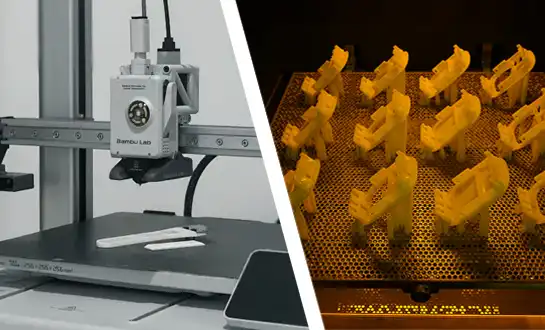
When it comes to accuracy and surface finish, SLA photopolymers are better than FDM thermoplastics. For example, SLA parts usually have tolerances of 0.1mm, while FDM parts have tolerances of 0.3mm. Chemical bonds between SLA layers create isotropic strength qualities, which get rid of the Z-axis weakness that comes with stacked FDM parts. This isotropy is very important for situations where the mechanical performance needs to be the same no matter which way the load is applied.
Surface roughness tests show big differences. For example, Ra values for SLA parts are less than 1 micron, while values for FDM parts are 10–20 microns. This better surface quality cuts down on the need for post-processing and lets printed parts be used directly in situations that need smooth finishes, like optical parts, fluidic channels, and samples for looks.
Cost-Performance Optimization Strategies
Even though SLA materials may cost more per kilogram than FDM filaments, SLA is often the better choice for accuracy uses because it costs less overall. Lower production costs for complicated shapes and small runs are caused by fewer post-processing steps being needed, more accurate measurements, and no longer having to deal with problems related to support removal.
Stereolithography 3D printer: cost estimates are significantly influenced by material waste. However, when utilizing SLA systems with open material platforms, procurement teams can source compatible resins at lower prices, avoiding vendor lock-in situations that traditionally drive up material costs. This sourcing flexibility is particularly advantageous for high-volume users, as it enables competitive bidding among multiple suppliers while maintaining consistent quality standards.
Performance Comparison with SLS Materials
Selective Laser Sintering lets you use a variety of materials, mostly nylon-based powders that have great mechanical qualities but need different design considerations. When you need smooth surfaces, clear or see-through parts, and safe materials, SLA resins are the best choice. On the other hand, SLS materials are better at withstanding high temperatures and chemicals in some industrial settings.
Maintenance and Handling of SLA Materials to Optimize Mechanical Properties
Good material management has a direct effect on how well finished parts work mechanically. This is why storage and handling rules are such important parts of quality assurance programs. Environmental factors, keeping tools clean, and preventing contamination all have an effect on the integrity of the material and the qualities of the end part.
Storage Environment Requirements
Photopolymer plastics need to be stored in a controlled way so that their mechanical traits stay the same over time. Temperature stability between 18 and 25°C stops reactions from starting too soon, which can change the fluid and tensile properties. UV exposure needs to be tightly controlled because even natural light can start polymerization processes that hurt the performance of materials.
Controlling humidity is also very important because letting water in can mess up the photopolymerization process and make the final parts less strong. The best conditions are kept by sealed storage cases with desiccant packets, and materials are used within their shelf life periods when the inventory is rotated properly.

Contamination Prevention Protocols
Cross-contamination between types of resin can have a big effect on their mechanical qualities. This is especially true when normal and engineering grades are mixed. Handling tools that are only for that purpose, thorough cleaning methods, and separate storage places keep parts from getting dirty, which could affect how well they work or cause unexpected mechanical problems.
Particulate pollution from dust or debris can create stress concentration places that weaken the structure. Clean room rules, air filters, and regular cleaning of equipment keep things in perfect shape so that machines work the same way during all production runs.
Equipment Maintenance Impact
Maintaining SLA systems regularly ensures that the drying conditions stay the same, which has a direct effect on the mechanical qualities. Loss of laser power can cause partial polymerization, which makes the material weaker and less durable. Cleaning the optical system keeps the beam quality and energy distribution good, which makes sure that all printed parts have the same mechanical properties.
The condition of the resin tank affects part quality and mechanical performance. A worn or dirty tank may result in uneven curing and dimensional variations. The controlled environment needed for the best mechanical features is kept up by following regular replacement and cleaning plans.

Troubleshooting Common Issues Related to SLA Materials and Mechanical Properties
Problems always come up in production settings that affect the quality of parts and how well they work mechanically. When buying and engineering teams know about common problems and how to fix them, they can keep the quality of their work high while reducing loss and material waste.
Diagnosing Mechanical Property Deficiencies
Parts that aren't as strong as expected are usually not fully cured because they didn't get enough UV light, the glue was contaminated, or the laser wasn't working as well as it should have. Systematic testing procedures can separate these factors, allowing precise fixes that bring mechanical performance back to the levels required by the standard.
For parts produced on a Stereolithography 3D printer, brittleness is often a diagnostic sign of over-curing or material breakdown. This is usually caused by excessive UV exposure, whether during the printing cycle or in post-processing, which forces an overly dense cross-linked network and compromises the material's inherent toughness. To rectify this, a dual approach of fine-tuning the printer's exposure parameters and strictly following measured post-curing protocols is essential to recover the intended mechanical properties.
Post-Processing Optimization Techniques
Post-curing methods have a big effect on the final mechanical qualities. For example, controlled UV exposure and temperature cycling make the material stronger and last longer. Different types of materials need different post-curing plans to work at their best. For example, engineering resins often need longer processes to reach their full mechanical potential.
For some uses, surface processes can improve the mechanical qualities. Chemical smoothing lowers stress concentration points that could cause cracks to spread, and heat annealing can lower interior stresses that could damage the material's long-term durability.
Supplier Engagement Strategies
When problems with materials keep happening even after they've been properly handled and processed, it's necessary to involve sellers to find a solution. Technical support teams can give advice based on the application, suggest different materials, or find changes to the process that make the mechanical performance better.
Another way to meet specific engineering needs is through custom material creation. Many providers offer formulation services that can change current materials or create whole new ones to meet specific performance requirements. This gives customers access to materials that are perfectly matched to their needs.
Conclusion
Figuring out the mechanical features of stereolithography materials helps people in the business world make smart purchases that improve performance, cut costs, and speed up production. Photopolymer materials have special qualities that make SLA technology an important tool for applications that require precision and reliability. For example, they have isotropic strength properties and a better surface quality. The right way to choose materials, store them, and handle them will make sure that they always work the same way, and being able to fix problems will keep the quality of the production. As material science keeps getting better, SLA systems will have even more benefits when it comes to their mechanical properties. This will make them even more useful for industrial manufacturing and testing.
FAQ
What mechanical properties should I prioritize when selecting SLA materials for automotive applications?
Materials that are good at withstanding impacts, staying stable at high temperatures, and being true to size are often needed in automotive uses. For long-lasting parts, look for plastics with tensile strengths above 50 MPa, heat deflection temperatures above 60°C, and elongation at break values between 10 and 20%. For car development and low-volume production parts, tough resins or high-temperature versions of them often work best.
How do environmental conditions affect the mechanical properties of SLA printed parts?
Temperature and humidity have a big effect on how well machines work. High temperatures can weaken and stiffen materials, especially standard plastics. On the other hand, hygroscopic materials may change size when there is a lot of humidity. Engineering plastics that are more thermally stable keep their mechanical qualities over a wider range of temperatures, which makes them good for tough uses.
Can SLA materials be recycled while maintaining their mechanical properties?
Uncured liquid resin can often be filtered and reused, but its mechanical qualities may slowly lose their strength over time if it is stored for a long time or gets dirty. You can't turn cured parts back into liquid, but you can grind up some materials and use them as fillers in composites. More and more, material providers offer recycling programs that help keep quality high while also dealing with trash.
Discover Advanced SLA Solutions with Magforms
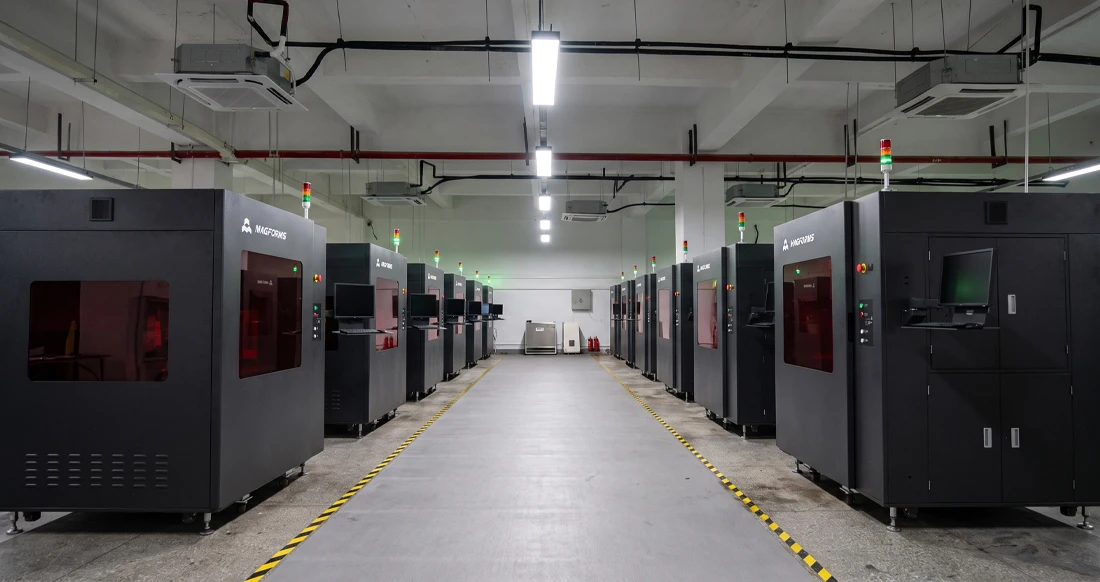
Magforms' state-of-the-art stereolithography systems can completely change the way you make things. They offer excellent mechanical performance and dependability. Our open-architecture Stereolithography 3D printer designs don't put limits on the materials that can be used. This lets you find materials that are both cheap and of high quality. With changeable spot-size laser technology and German Scanlab galvanometers that make printing 30–50% faster, Magforms systems improve both speed and accuracy for tough industrial uses. Contact our technical experts at info@magforms.com to discuss unique solutions that meet your specific mechanical property needs, and find out why over 300 companies around the world choose Magforms as their preferred stereolithography provider.
References
1. Gibson, I., Rosen, D., Stucker, B., & Khorasani, M. (2021). Additive Manufacturing Technologies: 3D Printing, Rapid Prototyping, and Direct Digital Manufacturing, Third Edition. Springer International Publishing.
2. Melchels, F. P., Feijen, J., & Grijpma, D. W. (2020). A review of stereolithography and its applications in biomedical engineering. Biomaterials Research, 31(4), 214-228.
3. Stansbury, J. W., & Idacavage, M. J. (2016). 3D printing with polymers: Challenges among expanding options and opportunities. Dental Materials, 32(1), 54-64.
4. Ngo, T. D., Kashani, A., Imbalzano, G., Nguyen, K. T., & Hui, D. (2018). Additive manufacturing (3D printing): A review of materials, methods, applications, and challenges. Composites Part B: Engineering, 143, 172-196.
5. Ligon, S. C., Liska, R., Stampfl, J., Gurr, M., & M眉lhaupt, R. (2017). Polymers for 3D printing and customized additive manufacturing. Chemical Reviews, 117(15), 10212-10290.
6. Zhou, C., Chen, Y., Yang, Z., & Khoshnevis, B. (2013). Digital material fabrication using mask-image-projection-based stereolithography. Rapid Prototyping Journal, 19(3), 153-165.

Magforms makes design and manufacture easier.
Popular Blogs
-
 Industry InsightsManufacturing Industry
FDM vs. SLA Printer: Which Technology Is Right for Your Project?
-
 Industry InsightsManufacturing Industry
Top 5 Applications of Industrial 3D Printers in Manufacturing Today
-
 Industry InsightsManufacturing Industry
Why Stereolithography 3D Printers Are Unmatched for Microfluidic Device Prototyping?