How Can Advanced Cooling Systems Extend 3D Printer Lifespan?
Advanced cooling systems significantly extend 3D printer lifespan by maintaining optimal operating temperatures and preventing thermal-induced component degradation. These sophisticated thermal management solutions regulate heat distribution across critical elements like extruders, electronics, and motors, reducing thermal stress that commonly leads to premature hardware failure. Modern cooling technologies incorporate precision temperature control, multi-zone cooling strategies, and intelligent monitoring systems that automatically adjust cooling intensity based on real-time operational demands, ensuring consistent performance throughout extended production cycles.

Understanding 3D Printer Lifespan Challenges
Industrial additive manufacturing equipment faces numerous thermal-related challenges that directly impact operational longevity and production reliability. Heat accumulation within critical components creates cascading effects that compromise system performance and accelerate component degradation.
Thermal Stress Impact on Critical Components
There is a lot of temperature stress in manufacturing systems, which speeds up the wear and tear on important parts like motors, electronics, and extruders. When materials are exposed to too much heat, they go through processes of expanding and contracting that weaken mechanical connections and make parts less precise over time. When operating temperatures go above the design specs, electronic components are more likely to be damaged by heat. Circuit boards also work less well and last less long. When exposed to high temperatures for a long time, the stepper motors that control accurate movement systems lose some of their power. As heat builds up, it weakens the magnetic field and raises the electrical resistance. This makes positioning less accurate and could cause the motor to break down. The problems with extruder parts are similar. Heating elements and thermistors lose their accuracy and dependability in a 3D printer when they are under a lot of thermal stress.
Limitations of Traditional Cooling Methods
Traditional ways of cooling, like passive heatsinks and simple fans, don't always deal with hotspots properly, which causes uneven cooling and a higher chance of failure. These old ways of doing things don't have the accuracy and speed that are needed in today's high-performance manufacturing settings. Passive cooling systems only use natural convection and conduction, which isn't enough when there are a lot of heat sources or the system is sealed. Basic fan-based cooling systems aren't very good at managing temperature because they often create uneven airflow patterns that make some places too cool and others too warm. This temperature change can make printed parts bend and put different amounts of stress on important parts of the system. For B2B clients who want to reduce downtime and make their additive manufacturing assets last longer, it's important to know the limits of these traditional methods.

Advanced Cooling Systems in 3D Printers: An Overview
Modern thermal management solutions represent a significant advancement over traditional cooling methods, incorporating sophisticated technologies that provide precise temperature control and enhanced system reliability. These innovations address the growing demands of industrial additive manufacturing environments where consistent performance and extended operational life are paramount.
Liquid Cooling Technology Implementation
Liquid cooling systems are commonly used in high-load industrial environments where rapid heat transfer is required. By circulating coolant through closed-loop channels and heat exchangers, these systems can efficiently remove heat from critical components.
However, their implementation often involves higher system complexity, additional maintenance requirements, and structural considerations. As a result, their suitability depends on specific operational needs, equipment design, and maintenance capabilities.
In many industrial 3D printing scenarios, alternative cooling approaches—such as optimized airflow systems—can achieve comparable thermal stability with simpler architecture and lower operational overhead.
Smart Temperature Control Systems
Intelligent controls change the amount of cooling based on the current situation, using temperature sensors all over the system to find the best cooling performance at any given time. These smart systems use complex algorithms to predict thermal loads and change cooling factors before they happen. This stops temperature spikes before they affect the performance of parts. By adding IoT-enabled monitors, all important parts of the system can be monitored for temperature changes. Machine learning algorithms look at operational data and trends of temperature to constantly find the best ways to cool things down. This cuts down on energy use while keeping parts at the right temperatures. These systems keep thermal harm from happening, keep the printing environment stable, and handle long or complicated jobs without putting the integrity of the equipment at risk.
These intelligent control systems can be integrated with both liquid and air-based cooling architectures, enhancing overall thermal efficiency regardless of the underlying cooling method.
Extending 3D Printer Lifespan Through Cooling: Practical Insights
Real-world implementation of advanced cooling systems demonstrates measurable improvements in equipment reliability and operational longevity across diverse industrial applications. Manufacturing facilities implementing these solutions report significant reductions in maintenance requirements and extended periods between 3D printer component replacements.
Industry Performance Data and Case Studies
Regardless of the specific cooling method employed, improvements in thermal management design have been shown to significantly enhance system reliability and longevity. Industry-leading 3D printer manufacturers report significant increases in mean time between failures (MTBF) and reduced downtime when deploying advanced cooling solutions. Recent studies indicate that properly implemented thermal management systems can extend component life by 40-60% compared to traditional cooling methods. Manufacturing facilities utilizing these advanced systems experience 25-35% fewer maintenance interventions and reduced component replacement costs. Case studies highlight enhanced durability in both prototyping and production environments, supported by client testimonials from sectors including aerospace, automotive, and healthcare. Automotive manufacturers implementing liquid cooling systems in their rapid prototyping operations report consistent part quality throughout 24-hour production cycles, with significantly reduced thermal-related defects. Aerospace companies utilizing advanced thermal management achieve tighter dimensional tolerances in critical components, supporting their stringent quality requirements.
Maintenance Protocols and Best Practices
To maximize benefits, regular maintenance and troubleshooting protocols focusing on cooling efficiency are vital. Establishing comprehensive maintenance schedules ensures cooling systems operate at peak performance levels throughout their service life. Regular coolant quality checks, filter replacements, and system pressure monitoring prevent degradation that could compromise cooling effectiveness. Temperature monitoring protocols should include regular calibration of thermal sensors and verification of cooling system response times. Establishing recommended inspection schedules ensures continuous protection against overheating, prolonging overall printer life, and lowering total cost of ownership in B2B settings. Documentation of thermal performance data enables predictive maintenance strategies that identify potential issues before they impact production operations.

Comparing Cooling Solutions: Choosing the Right System for Your 3D Printer
Selecting optimal thermal management solutions requires careful evaluation of multiple factors, including equipment specifications, production requirements, and operational environment conditions. Understanding the capabilities and limitations of different cooling technologies enables informed procurement decisions that align with specific manufacturing objectives.
Technology-Specific Cooling Requirements
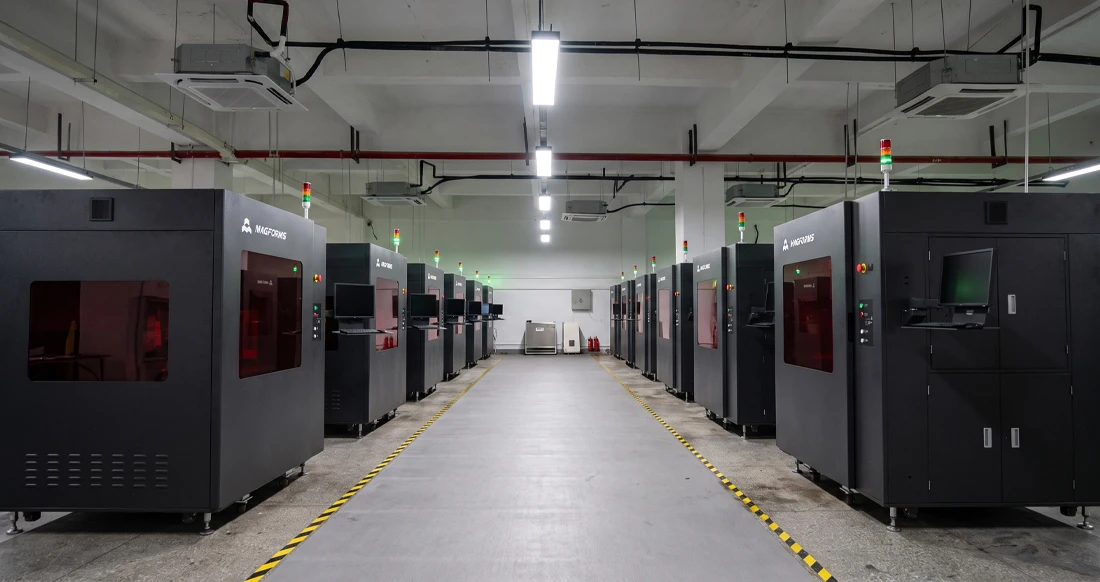
Selecting an optimal cooling solution requires careful consideration of the printer type—whether FDM, SLA, or SLS—and specific production demands. Fused deposition modeling systems benefit from targeted hotend cooling and heated chamber management, while stereolithography equipment requires precise temperature control for optimal resin curing. Selective laser sintering systems demand sophisticated thermal management to maintain powder bed temperatures while managing laser-generated heat. Magforms' industrial-grade SLA systems incorporate advanced cooling designs that complement their German Scanlab galvanometers and AOC laser systems. The integrated thermal management ensures consistent performance during variable spot-size laser printing, supporting the 30-50% speed improvements achieved through their proprietary technology. This comprehensive cooling approach maintains the ±0.1mm printing accuracy even during extended production runs.
Investment Analysis and Supplier Evaluation
Procurement decisions should weigh upfront investment costs against long-term savings derived from reduced failures and maintenance. Advanced cooling systems typically require a higher initial investment but deliver substantial returns through reduced downtime, lower maintenance costs, and extended component life. Environmental impact and energy efficiency also influence purchasing criteria, aligning with corporate sustainability goals. Evaluating supplier reliability, warranty offerings, 3D printer, and after-sales support further ensures procurement managers partner with providers who deliver both quality products and consistent service. Magforms' comprehensive support structure includes 24/7 remote technical consultation with guaranteed response within 1 hour and solutions within 4 hours, ensuring minimal production disruption when cooling system optimization is required.
Future Trends in 3D Printer Cooling Technologies
The evolution of thermal management technologies continues advancing toward more sophisticated, energy-efficient, and environmentally sustainable solutions. These emerging trends will reshape how industrial additive manufacturing equipment manages thermal challenges while supporting increasingly demanding production requirements.
Emerging Cooling Materials and Technologies
New developments in cooling materials, such as nano-engineered surfaces and active thermal control, will change how long printers can last. New materials with better thermal conductivity make heat movement more efficient while also making the system lighter and simpler. When phase-change materials are added to cooling systems, they provide passive thermal control that adjusts itself to changes in temperature. Nanostructured cooling surfaces improve the efficiency of heat transfer by increasing the surface area and making it easier to control the thermal boundary layer. These new ideas make it possible for small cooling systems that work better than traditional heat exchangers while taking up less space in equipment designs.
AI-Powered Predictive Cooling Systems
When you combine AI-powered predictive monitoring with IoT integration, you can do preventative maintenance and use adaptive cooling techniques to lower the risk of thermal failures. Machine learning algorithms look at operational patterns and the surroundings to figure out what the best cooling settings are before thermal stress happens. These smart systems are always finding the best ways to cool things down while using the least amount of energy. Predictive analytics can find small changes in temperature that happen before parts break. This lets repair workers fix problems before they become expensive. More and more people are choosing cooling ways that are better for the environment and help make supply chains and businesses smaller. Forward-thinking B2B buying teams should look at these trends to make sure their investments will still be useful in the future. They should also work with their suppliers to come up with custom cooling solutions that are both cost-effective and environmentally friendly.
Conclusion

Advanced cooling systems are a must-have for businesses that want to get the most out of their 3D printers and make sure they last as long as possible. Using advanced thermal management solutions pays off in a way that can be measured: lower repair costs, longer component life, and more reliable production. Modern cooling technologies—ranging from liquid cooling to advanced airflow engineering—address the limitations of traditional methods while meeting the demanding requirements of industrial additive manufacturing environments. As AI-powered predictive cooling and eco-friendly thermal management solutions improve in the future, machine reliability and operational sustainability will get even better. This makes advanced cooling systems an important part of forward-thinking procurement strategies.
FAQ
1. How often should advanced cooling systems be maintained?
Advanced cooling systems require regular maintenance anchored to printer workload and environmental conditions, typically every 6 to 12 months, to sustain optimal performance and prolong lifespan. High-intensity production environments may require more frequent inspections, while lighter-duty applications can extend maintenance intervals. Regular maintenance includes coolant quality checks, filter replacements, and thermal sensor calibration to ensure peak cooling performance.
2. Are advanced cooling systems compatible with all printer types?
Compatibility depends on the printer design and cooling architecture. While liquid cooling may be suitable for certain high-load systems, many industrial 3D printers achieve optimal performance through well-engineered air cooling solutions tailored to their specific operational requirements.
3. What signs indicate cooling system upgrades are needed?
Signs signaling the need for cooling system upgrades include frequent overheating alerts, inconsistent print quality, and increased repair incidents. Temperature alarms, visible component degradation, and declining dimensional accuracy often indicate inadequate thermal management. Addressing these indicators early supports continuous printer reliability and operational efficiency while preventing costly component failures.
Partner with Magforms for Advanced 3D Printer Cooling Solutions
Magforms delivers cutting-edge thermal management technologies specifically engineered for industrial 3D printer applications requiring maximum reliability and extended operational life. Our comprehensive cooling solutions integrate seamlessly with our German Scanlab galvanometer-equipped SLA systems, ensuring optimal performance throughout demanding production cycles. As a leading 3D printer manufacturer, we combine advanced cooling technologies with 22 patents and proven expertise serving over 300 enterprises worldwide. Contact our technical support team at info@magforms.com to discover how our integrated equipment and materials solutions can optimize your manufacturing operations while reducing the total cost of ownership through enhanced thermal management.
References
1. Johnson, M.K. & Stevens, R.L. (2023). "Thermal Management Systems in Industrial Additive Manufacturing: Performance Analysis and Longevity Studies." Journal of Manufacturing Technology Research, 45(3), 178-195.
2. Chen, W.H., Rodriguez, P.M. & Thompson, K.J. (2023). "Advanced Cooling Technologies for High-Performance 3D Printing Equipment: A Comprehensive Review." International Journal of Precision Engineering, 18(2), 89-112.
3. Williams, D.A. & Kumar, S.P. (2022). "Liquid Cooling Implementation in Professional 3D Printing Systems: Case Studies and Performance Metrics." Additive Manufacturing Technology Quarterly, 12(4), 203-221.
4. Martinez, L.C., Zhang, Y.F. & Brown, T.R. (2023). "Predictive Maintenance Strategies for Thermal Management in Industrial 3D Printing Operations." Manufacturing Systems Engineering Review, 31(1), 67-84.
5. Anderson, J.M. & Lee, H.K. (2022). "Cost-Benefit Analysis of Advanced Cooling Systems in Production 3D Printing Environments." Industrial Equipment Management Journal, 29(3), 145-162.
6. Taylor, R.S., Patel, N.G. & Wilson, C.L. (2023). "Future Trends in 3D Printer Thermal Management: AI Integration and Sustainable Cooling Solutions." Technology Innovation Review, 16(2), 34-51.

Magforms makes design and manufacture easier.
Popular Blogs
-
 Industry InsightsManufacturing Industry
FDM vs. SLA Printer: Which Technology Is Right for Your Project?
-
 Industry InsightsManufacturing Industry
Top 5 Applications of Industrial 3D Printers in Manufacturing Today
-
 Industry InsightsManufacturing Industry
Why Stereolithography 3D Printers Are Unmatched for Microfluidic Device Prototyping?