How Do Designers Use High-Precision SLA Printers for Complex Models?
Through stereolithography's advanced photopolymerization process, designers use SLA printer technology to turn complicated digital ideas into exact physical models. High-precision SLA printers use focused UV laser beams to cure liquid photopolymer resins one layer at a time. This lets them make complicated shapes with very good surface quality and accurate measurements. Stereolithography is an important tool for modern design processes because it lets designers make prototypes, functional parts, and artistic models with a level of detail that would be impossible or too expensive to make using traditional methods.

Understanding High-Precision SLA Printing Technology
The Core Process of Stereolithography
One of the most advanced additive manufacturing methods we have today is stereolithography. The process starts with a vat of liquid photopolymer resin. In this vat, a carefully controlled UV laser beam makes the design of each layer's cross-section. Once the laser energy hits the resin, it starts a chemical process that turns the liquid into a solid polymer structure. By adding layers one at a time, this method lets you make features with a lot of detail and internal shapes that are very complicated. Modern SLA printers are very accurate because they use high-tech visual parts and motion control systems. German Scanlab galvanometers and AOC lasers work together to provide the best beam quality and setting accuracy. These parts make sure that every layer sticks to the one below it correctly. This makes isotropic parts that have the same mechanical properties along all axes.
Material Varieties and Applications
Stereolithography can be used with more than just regular materials; it can also be used with specially made mixtures made for certain tasks. Engineering-grade resins have better mechanical qualities, and biocompatible materials can be used in dentistry and medicine. It is great for making jewellery and precise metal parts because castable materials burn out cleanly during investment casting. Formulations that are resistant to heat can handle temperatures above 200°C, making them good for making useful prototypes and short-run tools. Flexible resins can be used to make gaskets and seals that work like rubber, and clear materials can be used to make optical experiments and light-guiding devices. This variety of materials lets creators choose the resin chemistry that works best for their needs.
Advantages Over Alternative Technologies
When compared to fused deposition modelling (FDM) or selective laser sintering (SLS), stereolithography gives a better surface finish. Because SLA printers make smooth surfaces, they usually don't need much post-processing, which cuts down on production time and cost. The strong layer adhesion in stereolithography makes parts with isotropic mechanical SLA printer qualities. This gets rid of the weak Z-axis orientation that happens a lot with filament-based printing. The technology is also very good at getting measurements right; for important traits, it can get tolerances within ±0.05mm. This precision level makes it possible to make working assemblies with many parts that need to fit together with very little space between them. Also, being able to print small features and thin walls gives designers options that aren't possible with other types of additive manufacturing.

Why Designers Prefer High-Precision SLA Printers for Complex Models
Superior Resolution for Intricate Details
Modern stereolithography systems are the best choice for designers working on complicated models because they can resolve details very well. Lasers with spot sizes as small as 0.18 to 0.2 mm can print fine textures, delicate features, and tiny details that other printing methods would miss. This level of accuracy is very important for making things like tiny figures, architectural models, and mechanical parts with complicated insides. An important step forward in SLA printer powers is variable spot-size technology. Large laser spots make it faster to print solid areas, while small spots make sure that edges are clearly defined and details are reproduced. This smart method speeds up printing by 30 to 50 per cent compared to traditional methods while still keeping high-quality standards.
Case Studies in Professional Applications
Digital dentistry shows how high-precision stereolithography can change work settings for the better. Specialised biocompatible resins are used in dental labs to make surgery guides, orthodontic devices, and temporary restorations. Tolerances of less than 50 microns are needed for accurate measurements so that the patient can fit properly. This can only be done with advanced stereolithography tools. Jewellery makers love stereolithography because it lets them make master patterns that aren't possible with other methods. You can print intricate filigree work, hollow structures, and stacked assemblies as single pieces, which means you don't have to put them together and worry about where they might break. Castable resins have clean burnout qualities that make sure the final precious metal castings keep all the fine details without any holes or surface flaws. Engineers in the aerospace and car industries use SLA printers to make quick prototypes of complicated parts. Wind tunnel models need surfaces that are very smooth so that they don't create fake turbulence that would change the accuracy of the test data. Stereolithography can make surfaces that are better than those made with other methods, so they don't need as much post-processing. This cuts down on the time and money needed to make prototypes.

Efficiency in Complex Geometry Production
Stereolithography makes it easy to make things with complicated shapes that are hard to make with other methods. You can make internal channels, undercuts, and stacked assemblies without having to deal with the support removal problems that come up with powder-based printing. The climate of liquid resin lets uncured material drain from inside holes, SLA printer making hollow structures that would not be possible with other additive technologies. Being able to print several complicated parts at once increases the efficiency of production. In advanced industrial systems, built platforms can hold a lot of small parts or big structures that are all one piece, up to 800 mm x 800 mm x 500 mm. This gives creators the freedom to choose the best batch sizes based on the needs of the project and the time frame for delivery.
Practical Guide: Integrating SLA Printers into the Design Workflow
Model Preparation and Optimisation
Successful stereolithography begins with proper model preparation and orientation selection. Part orientation affects surface quality, dimensional accuracy, and support requirements. Angled surfaces perpendicular to the build platform minimise layer lines, while overhanging features require careful support placement to prevent deformation during printing. Slicing software plays a crucial role in optimising print parameters for complex models. Layer thickness selection balances print speed with surface quality requirements. Thinner layers produce smoother surfaces but increase print time, while thicker layers accelerate production at the cost of resolution. Advanced algorithms analyse model geometry to recommend optimal settings automatically. Support generation algorithms have evolved to minimise material waste and post-processing time. Tree-like support structures reduce contact points with the model surface, preserving finish quality while providing necessary structural support. Hollow structures require strategic drain holes to allow uncured resin removal, positioned to maintain structural integrity while enabling complete material evacuation.
Print Settings Optimisation
Print parameter optimisation depends on model complexity and material selection. Exposure time, laser power, and layer thickness must be calibrated for each resin type to achieve optimal mechanical properties and dimensional accuracy. Under-curing results in weak layer bonds and dimensional instability, while over-curing causes feature swelling and reduced detail resolution. Modern SLA printer systems incorporate deep learning algorithms that analyse print patterns and automatically adjust parameters for optimal results. These intelligent systems reduce setup time and minimise the risk of print failures, particularly important for complex models with long print durations. Adaptive slicing adjusts layer thickness based on model geometry, using thinner layers for detailed areas and thicker layers for solid sections. Temperature control throughout the printing process ensures consistent resin properties and cure characteristics. Heated build chambers maintain optimal viscosity, while temperature monitoring prevents thermal gradients that could cause warping or delamination. Environmental controls also regulate humidity levels to prevent moisture absorption that could affect resin performance.
Post-Processing and Finishing
Post-processing procedures significantly impact final part quality and dimensional accuracy. Proper washing removes uncured resin that could cause skin irritation or compromise surface finish. Isopropyl alcohol or specialised cleaning solutions dissolve excess resin without attacking the cured polymer structure. Ultrasonic cleaning enhances surface quality by removing resin from fine details and internal channels.UV post-curing completes the polymerisation process and maximises mechanical properties. Controlled UV exposure under a nitrogen atmosphere prevents oxygen inhibition that could leave surfaces tacky or incompletely cured. Proper curing schedules vary by material type and part thickness, with monitoring systems ensuring complete polymerisation throughout the component. Support removal requires careful technique to avoid damaging delicate features. Sharp cutting tools remove bulk support material, while sanding and polishing eliminate support contact marks. Chemical smoothing techniques using vapour treatments can eliminate layer lines and achieve injection-moulded surface quality when required.

Procurement Considerations for B2B Clients: Selecting the Best High-Precision SLA Printer
Key Technical Specifications
Procurement decisions for stereolithography systems should prioritise technical specifications that directly impact production capabilities and part quality. Build volume determines the maximum part size and batch production capacity. Large format systems enable monolithic component production and higher throughput for small parts, reducing per-unit costs and assembly requirements. Laser specifications, including power output, beam quality, and wavelength compatibility, affect printing speed and material options. Higher power lasers enable faster exposure times and thicker layer printing, while superior beam quality ensures consistent spot size and energy distribution across the build area. Wavelength compatibility determines the range of available resin formulations for specific applications. Motion system precision directly affects dimensional accuracy and repeatability. High-quality galvanometer scanners and SLA printers with closed-loop feedback systems maintain positioning accuracy throughout extended print cycles. Z-axis precision using ball screw drives rather than lead screw mechanisms eliminates periodic banding and ensures consistent layer thickness across the entire build height.
Material Compatibility and Cost Considerations
Open-source resin compatibility provides significant advantages in material selection and cost control. Systems that accept third-party resins offer greater flexibility in material sourcing and reduce long-term operating costs. Proprietary material requirements can substantially increase per-part costs and limit application flexibility, particularly important for high-volume production scenarios. Material handling systems, including automated resin dispensing and level monitoring, reduce operator intervention and improve consistency. Heated resin tanks maintain optimal viscosity for challenging materials, while filtration systems remove contamination that could affect print quality. Waste reduction features, including resin recycling capabilities, minimise environmental impact and operating costs. The total cost of ownership extends beyond initial equipment purchase to include consumables, maintenance, and support costs. Resin consumption rates, replacement part availability, and service requirements significantly impact long-term operating expenses. Comprehensive warranty coverage and responsive technical support minimise downtime costs critical for production environments.
Vendor Selection and Support Services
Vendor selection criteria should emphasise technical expertise, global support capabilities, and a proven track record in industrial applications. Companies with extensive patent portfolios and registered trademarks demonstrate sustained innovation and intellectual property protection. International market presence indicates established distribution networks and local support availability. Technical support responsiveness becomes critical when production schedules depend on equipment availability. Remote diagnostic capabilities enable rapid troubleshooting, while on-site service guarantees minimise extended downtime. Training programs ensure operators maximise equipment capabilities while maintaining optimal print quality and safety standards. Quality certifications, including ISO 9001 compliance and safety standards verification, assure manufacturing consistency and regulatory compliance. Equipment designed to industrial standards with premium components from established suppliers offers superior reliability and longevity compared with consumer-grade alternatives adapted for professional use.

Conclusion
High-precision stereolithography has revolutionised how designers approach complex model creation, offering unprecedented accuracy and surface quality impossible with traditional manufacturing methods. The technology's ability to produce intricate geometries, fine details, and functional prototypes makes it indispensable across industries from aerospace to medical devices. As SLA printer systems continue advancing with intelligent algorithms and enhanced materials, designers gain even greater capabilities for innovation and rapid iteration. The strategic selection of professional-grade equipment with comprehensive support ensures optimal productivity and long-term value for design teams committed to excellence in additive manufacturing.
FAQ
1. What distinguishes SLA from DLP and MSLA printing technologies?
Stereolithography uses a focused laser beam that traces each layer pattern sequentially, while DLP projects entire layer images simultaneously using digital micromirror arrays. MSLA technology combines masked exposure with LED arrays for faster printing speeds. Each approach offers different advantages in resolution, speed, and build volume capabilities.
2. How should I maintain my stereolithography system for optimal performance?
Regular maintenance includes laser power calibration, galvanometer alignment verification, and resin tank film replacement. Clean optical components monthly using appropriate solvents, calibrate the Z-axis positioning quarterly, and perform preventive maintenance according to manufacturer schedules. Proper environmental controls, including temperature and humidity monitoring, extend equipment life and maintain print quality.
3. Which resin types work best for highly detailed jewellery models?
Castable wax resins specifically formulated for investment casting provide the cleanest burnout characteristics essential for precious metal casting. These materials maintain fine detail reproduction while completely vaporising during the burnout cycle without leaving ash residue that could compromise final metal quality.
Partner with Magforms for Professional SLA Solutions
Magforms stands at the forefront of SLA printer innovation, delivering integrated solutions that combine cutting-edge hardware with optimised material systems. Our industrial-grade systems feature German Scanlab galvanometers, AOC lasers, and Panasonic servo motors, ensuring exceptional reliability and precision for complex model production. With variable spot-size technology and AI-optimised scanning paths, our equipment achieves 30-50% faster printing speeds while maintaining micron-level accuracy. As a trusted SLA printer manufacturer with 22 patents and global presence across dozens of countries, we provide comprehensive technical support, including 24/7 remote consultation and rapid on-site service. Contact our experts at info@magforms.com to discover how our proven stereolithography solutions can enhance your design capabilities and accelerate your innovation timeline.
References
1. Gibson, Ian, David Rosen, and Brent Stucker. "Additive Manufacturing Technologies: 3D Printing, Rapid Prototyping, and Direct Digital Manufacturing." 2nd Edition, Springer, 2015.
2. Jacobs, Paul F. "Rapid Prototyping and Manufacturing: Fundamentals of Stereolithography." Society of Manufacturing Engineers, 1992.
3. Melchels, Ferry P.W., Jan Feijen, and Dirk W. Grijpma. "A Review on Stereolithography and its Applications in Biomedical Engineering." Biomaterials Journal, Vol. 31, 2010.
4. Chartrain, Nicholas A., Christopher B. Williams, and Timothy E. Long. "A Review on Fabrication and Applications of Stereolithography-Based 3D Printed Polymers." Progress in Polymer Science, Vol. 93, 2019.
5. Stansbury, Jeffrey W. and Mike J. Idacavage. "3D Printing with Polymers: Challenges among Expanding Options and Opportunities." Dental Materials, Vol. 32, 2016.
6. Ligon, S. Christian, Robert Liska, Jürgen Stampfl, Matthias Gurr und Rolf Mülhaupt. "Polymers for 3D Printing and Customized Additive Manufacturing." Chemical Reviews, Vol. 117, 2017.

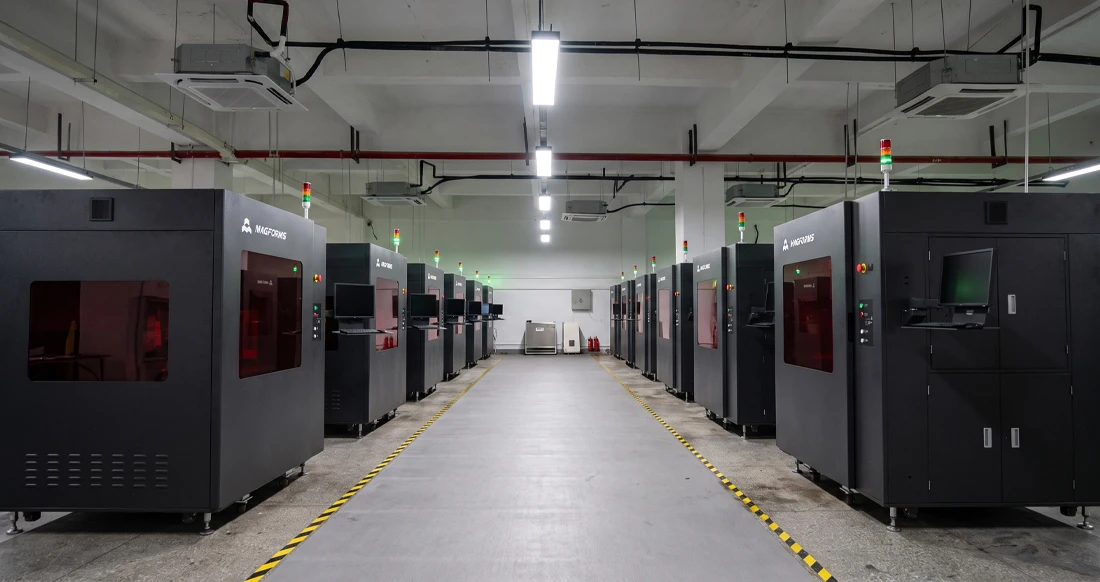
Magforms makes design and manufacture easier.
Popular Blogs
-
 Industry InsightsManufacturing Industry
FDM vs. SLA Printer: Which Technology Is Right for Your Project?
-
 Industry InsightsManufacturing Industry
Top 5 Applications of Industrial 3D Printers in Manufacturing Today
-
 Industry InsightsManufacturing Industry
Why Stereolithography 3D Printers Are Unmatched for Microfluidic Device Prototyping?