How Do Industrial SLA 3D Printers Reduce Prototyping Bottlenecks?
Industrial SLA 3D printers reduce prototyping bottlenecks by producing highly accurate parts from laser-cured photopolymer resin within hours instead of weeks. Unlike traditional casting or machining, these systems allow for rapid design iterations with high-resolution feature reproduction, excellent dimensional accuracy, and smooth surface finishes. Industrial SLA technology helps engineering teams accelerate design validation and product development workflows, cut down on waste, and speed up product development timelines in the medical, automotive, and consumer electronics industries by getting rid of outsourcing delays and tooling costs.
Understanding Industrial SLA 3D Printing Technology
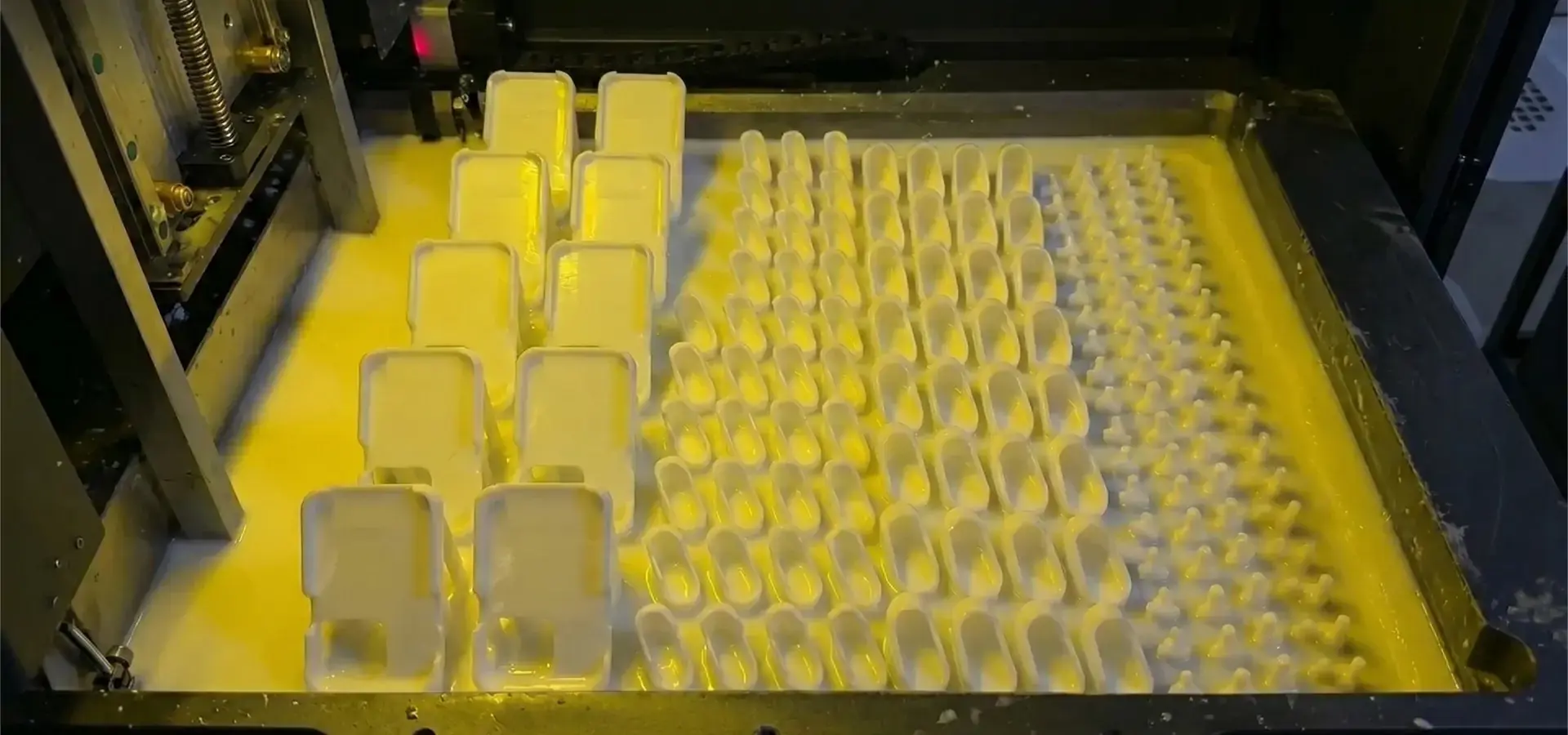
An industrial SLA 3D printer is a vat photopolymerization system that uses a high-precision ultraviolet laser to selectively cure liquid resin layer by layer, transforming CAD models into highly accurate physical parts. This method is very different from filament-based ones because each layer chemically links to the one below it through photopolymerization. This process creates stronger interlayer adhesion and more isotropic mechanical properties compared with filament-based technologies such as FDM.
How Photopolymerization Creates Precision Parts
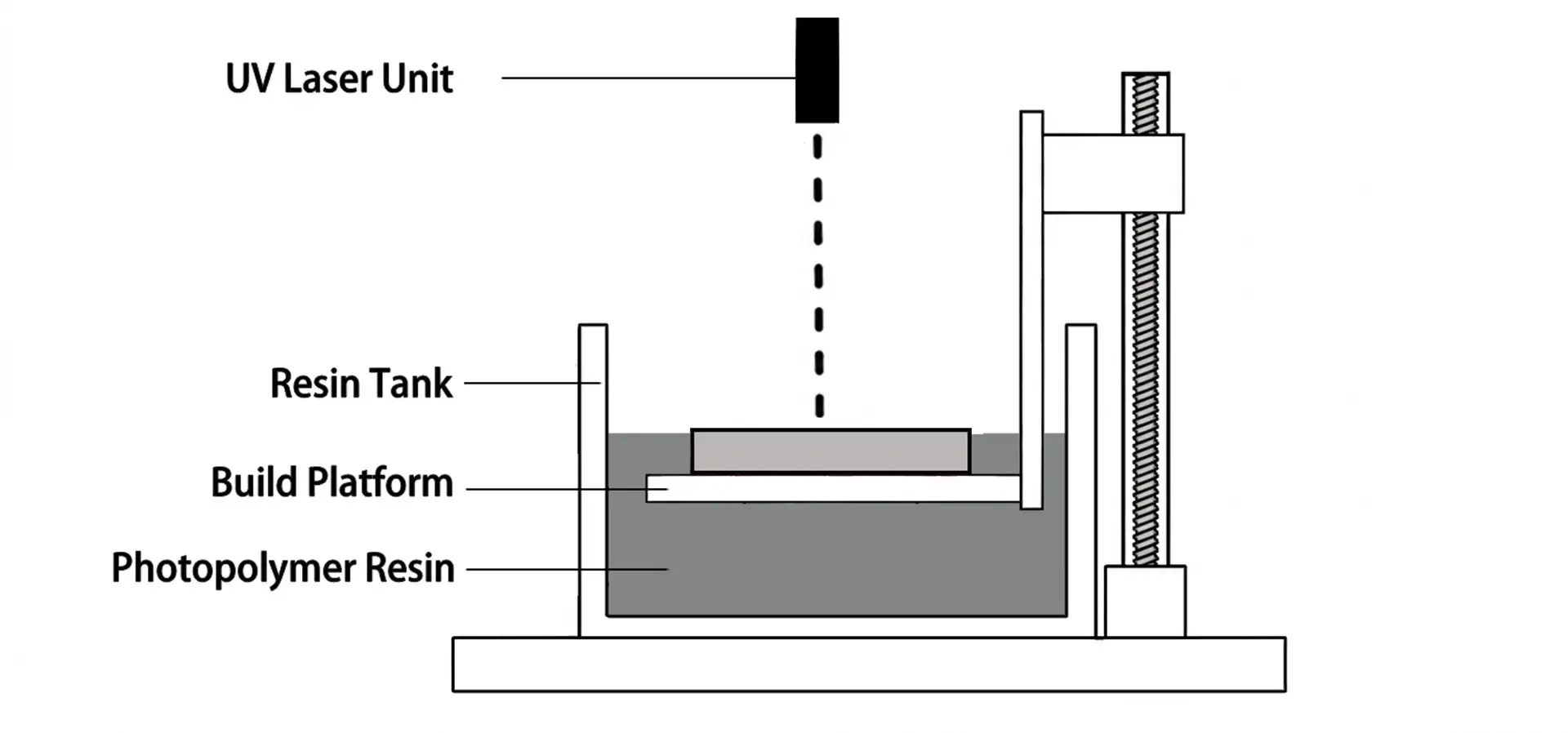
Industrial SLA systems typically use laser spot sizes ranging from 50 to 120 microns, enabling highly accurate feature reproduction and smooth surface finishes. When exposed to UV wavelengths around 355 nm, photoinitiators in the liquid resin trigger polymerization reactions that solidify the material. When a layer is done, the build base moves down by 25 to 100 microns, and a new layer of resin covers the surface of the previous layer. This process repeats until the complete part is fully formed.
Material Versatility Expands Application Possibilities
Today's industrial SLA 3D printers can work with a wide range of resin formulas, not just standard materials. Engineering-grade resins have qualities that are similar to ABS and polypropylene, and high-temperature resins can withstand repeated thermal cycling and elevated operating temperatures. Flexible resins can be used to prototype gaskets, seals, and elastomer-like components, and castable resins burn out smoothly for jewelry investment casting. Biocompatible resin formulations can comply with ISO 10993 and other medical safety standards for applications such as dental models and surgical guides. During the prototyping phase, this material ecosystem allows procurement and engineering teams to match resin properties to end-use requirements.
Common Prototyping Bottlenecks Addressed by Industrial SLA Printers
In the past, prototypes took too long to make because they needed to be machined by outside shops, there weren't enough materials, and there were quality problems that meant they had to be fixed more than once. Because it can be used for in-house production and consistently high-quality output, the industrial SLA 3D printer directly addresses these problems.
Eliminating Outsourcing Lead Times
In the old way of making prototypes, you had to send your plans to outside sellers, wait days or weeks for quotes, and then deal with delays in fabrication and shipping. Industrial SLA 3D printers shorten this time frame by letting you print the same day. Feedback loops can be cut down from weeks to hours so that engineering teams can start building before lunch and test the finished product by afternoon. In fast-paced industries like consumer electronics, where product lifecycles are measured in months, this speed is very important for quickly validating designs.
Achieving Injection-Mold Surface Quality Without Tooling
CNC cutting and FDM printing leave tool marks or layer lines that need a lot of work to be done afterward. Industrial SLA systems are known for producing exceptionally smooth surfaces that require minimal finishing compared with extrusion-based technologies. Smooth finishes cut down on the work of grinding by hand and allow for accurate evaluations of how things look during design reviews. With SLA, transparent resin parts can even be used to evaluate transparent prototype designs, light diffusion behavior, and fluid visualization applications, which is not possible with extruded filament technologies.
Comparing Industrial SLA with Other 3D Printing Technologies for Prototyping
When purchasing managers look at additive manufacturing choices, they come across different technologies, each with its own pros and cons. Industrial SLA technology offers a balanced combination of precision, surface quality, and production flexibility.
SLA Versus FDM: Accuracy and Surface Finish
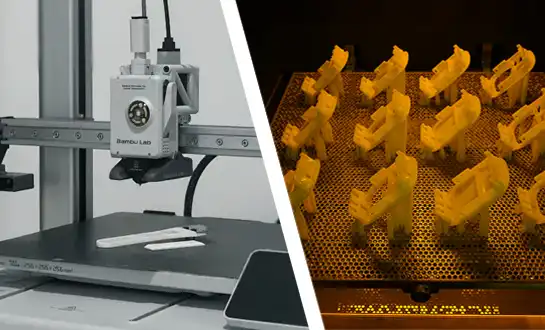
Fused deposition modeling (FDM) remains widely adopted because of its accessibility and relatively low operating cost. However, FDM parts often exhibit visible layer lines and anisotropic mechanical properties, especially along the Z-axis. Industrial SLA parts generally exhibit more uniform mechanical properties and better layer adhesion than FDM components. When you compare finished parts, you can see right away the difference in surface quality: FDM samples usually need primer and cleaning, while SLA parts come almost ready to paint or put together.
SLA Versus DLP: How Speed and Resolution Change
DLP systems use a digital projector to cure entire layers simultaneously, while LCD systems rely on masked LCD panels combined with UV backlighting, and they can often print faster than laser-based SLA. DLP resolution is influenced by projector pixel density and optical scaling, which can affect fine feature reproduction on larger build areas. In MSLA systems, LCD panels gradually degrade under prolonged UV exposure and require periodic replacement. Industrial stereolithography 3D printers use a focused laser beam to carefully trace outlines, making curved surfaces smoother and finer features. Advanced industrial SLA platforms may support dynamic laser spot adjustment, balancing fine-detail resolution with higher scanning efficiency.
Selecting the Best Industrial Stereolithography 3D Printer for Your Business Needs
To pick the right industrial stereolithography 3D printer, you have to weigh the technical specs against the needs of the business and the dependability of the seller. Instead of trying to meet the highest standards in every area, procurement teams should focus on factors that have a direct effect on production goals.
Critical Technical Parameters to Evaluate
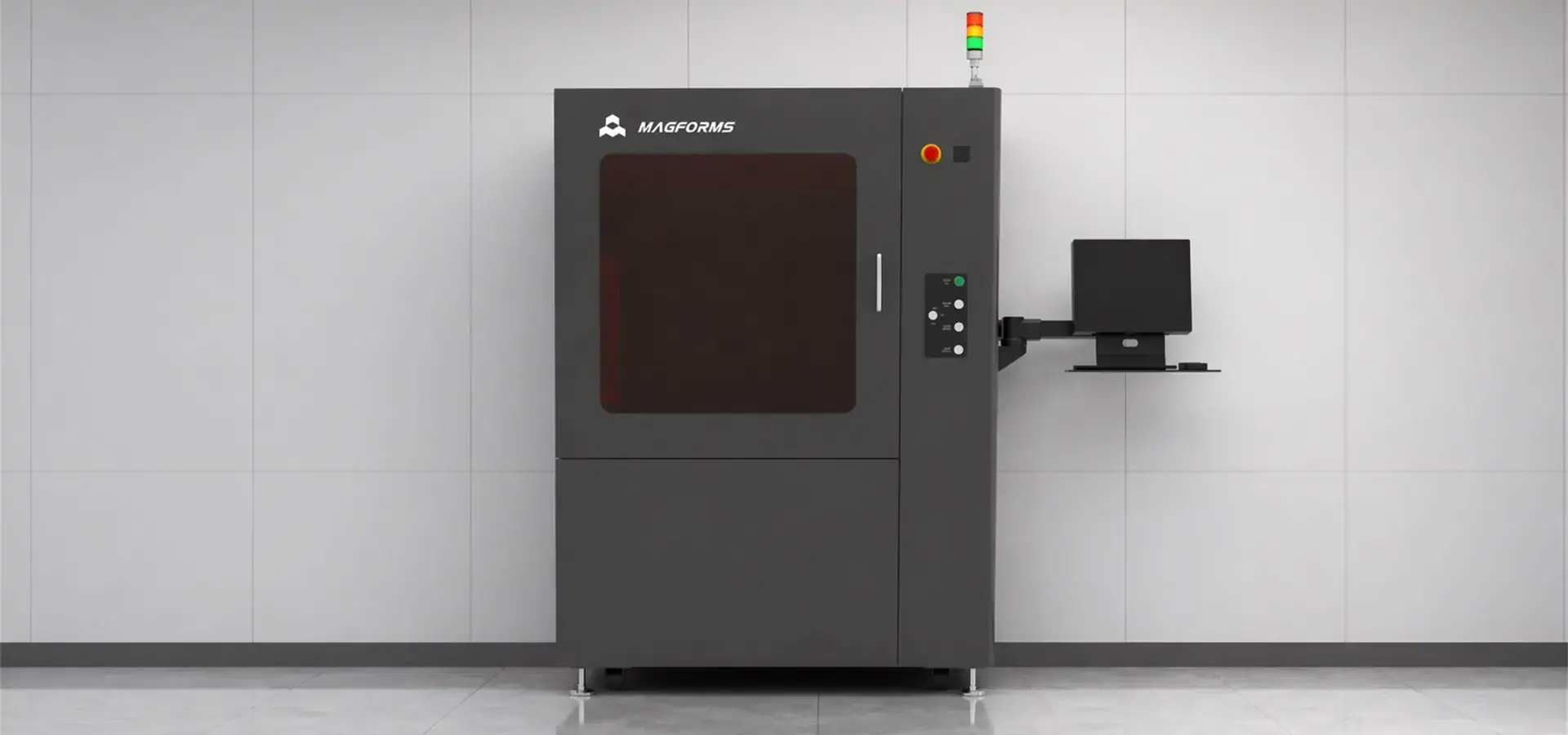
Build volume tells you the biggest part that can be printed in a single step. Prototypes of interior trim for cars might need 200 mm platforms, but dental and medical applications may prioritize throughput and fine-detail accuracy over large-format build capacity. Fine detail reproduction is controlled by XY resolution, and 50-micron XY resolution enables the reproduction of intricate patterns and fine text details. Layer thickness along the Z-axis can typically be adjusted from 25 to 100 microns, which lets users find the best mix between speed and surface smoothness. Printing speed depends on how the technology is used. For example, ystems with variable laser spot sizes and optimized scanning strategies can cut build times by more than 30% compared to regular systems.
Material fit is an important strategy factor. Open systems let you use resins from other companies, which gives you cost options and the freedom to do experiments. Proprietary platforms limit the materials that can be used, but they usually come with optimized parameter sets that make sure results are reliable even without a lot of testing. When engineering teams are developing useful parts, they can use engineering resins that have better mechanical qualities, such as being resistant to impact or stable at high temperatures.
Maximizing SLA Printer Performance to Eliminate Prototyping Delays
Buying useful tools is only the first step; operational success is what decides whether businesses achieve their planned efficiency gains. Industrial stereolithography 3D printer systems always work as well as they can when organized processes and maintenance routines are put in place.
Proper Setup and Calibration Protocols
The first time the machine is set up sets the standard for all future prints. Leveling the build platform ensures consistent layer thickness across the entire build area. Dimensional mistakes and failed prints can be caused by even small tilt angles. Laser spot calibration checks that the beam's focus and strength meet the needs of the object. A lot of mistakes that are blamed on "equipment problems" are really caused by installation steps that weren't followed for tuning. Setting up things in a methodical way will save you weeks of frustrating rework later on.
Streamlining Post-Processing Workflows
SLA parts initially emerge in a partially cured “green state,” requiring washing and UV post-curing to achieve final mechanical properties. Parts are typically cleaned using isopropyl alcohol (IPA) or tripropylene glycol monomethyl ether (TPM) solutions to remove uncured resin residue. After UV post-curing, the polymerization process is finished, which improves mechanical performance and dimensional stability. When businesses buy automated wash-cure machines, they cut down on the time it takes to handle things and get more regular results than when they do it by hand. Setting up special places for post-processing with enough air flow and PPE is another way to meet safety standards for liquid photopolymers.
Preventive Maintenance That Protects Production Schedules
Repeated exposure cycles and recoating movements gradually wear critical optical and resin-handling components over time. Print problems in the middle of a job can be avoided by replacing it. Clean optical lenses and protective windows help maintain consistent laser performance. Material performance is kept up by checking the state of the resin and screening out particles. These maintenance jobs only take minutes a week, but they save hours of downtime and materials that would have been lost.
Continuous tracking of performance helps find patterns of decline before they lead to catastrophic failures. Tracking print success rates, checking for measurement accuracy, and visual inspections can show when parts are getting close to the end of their useful life. Quick problem-solving skills also help keep things running smoothly when problems do happen. Incomplete curing, support failure, and dimensional deviation are more common SLA-related print issues. Teams can fix many problems without having to call vendor support when technicians go through training programs that help them become better at diagnosing problems.
Conclusion
By bringing precision resin printing in-house, industrial stereolithography 3D printer technology changes the costs of development in a big way. high-resolution feature accuracy, fast iteration cycles, and a wide range of material choices directly address common problems with lead times, surface quality, and the cost of design validation. Companies in the automobile, aerospace, medical, and consumer goods industries can gain a competitive edge by shortening the time it takes to create new products and relying less on outside vendors. When choosing equipment, you have to weigh the technical capabilities, source dependability, and total cost of ownership. To make sure systems offer long-term performance gains that support investment choices, you need to ensure operating excellence through good processes and upkeep.
FAQ
1. How does an industrial SLA system differ from DLP and MSLA resin printers?
Both technologies use photopolymer resin curing processes, but the industrial stereolithography 3D printer uses a focused laser beam to follow the shape of each layer, making the curves smoother and the power delivery more uniform. MSLA systems cure entire layers simultaneously through masked LCD panels, while DLP systems project each layer using a digital light projector. This layer-based exposure approach can improve printing speed, although feature resolution is still influenced by projector or LCD pixel density. With the laser method, advanced SLA systems may support dynamic laser spot adjustment to balance feature resolution and printing efficiency.
2. What are the post-processing requirements for SLA parts?
Parts initially emerge in a partially cured “green state”, which needs two important steps. It takes 10 to 20 minutes of active cleaning in isopropyl alcohol or TPM to get rid of sticky, uncured resin from surfaces. Post-curing with UV light and heat finishes polymerization, making the material as strong and stable as possible. If you skip these steps, the parts will be sticky and not work well. FDM filaments cool right away into their final shape, but liquid photopolymer chemistry needs the right post-processing steps to get the right material qualities.
3. Can industrial SLA systems produce functional snap-fit assemblies?
Standard resins tend to be brittle, but industrial formulas are made to meet special mechanical needs. "Tough" or "Durable" resins have a lower modulus of elasticity and a higher extension at break, which means they can be loaded and unloaded many times without breaking. Because these materials have the same qualities as ABS or polypropylene, they can be used for snap-fit features, live hinges, and threaded connections. Choosing the right material has a direct effect on how well it works, so it's important to match the qualities of the resin to the needs of the application during the prototyping process.
Partner with Magforms for Industrial SLA 3D Printing Solutions
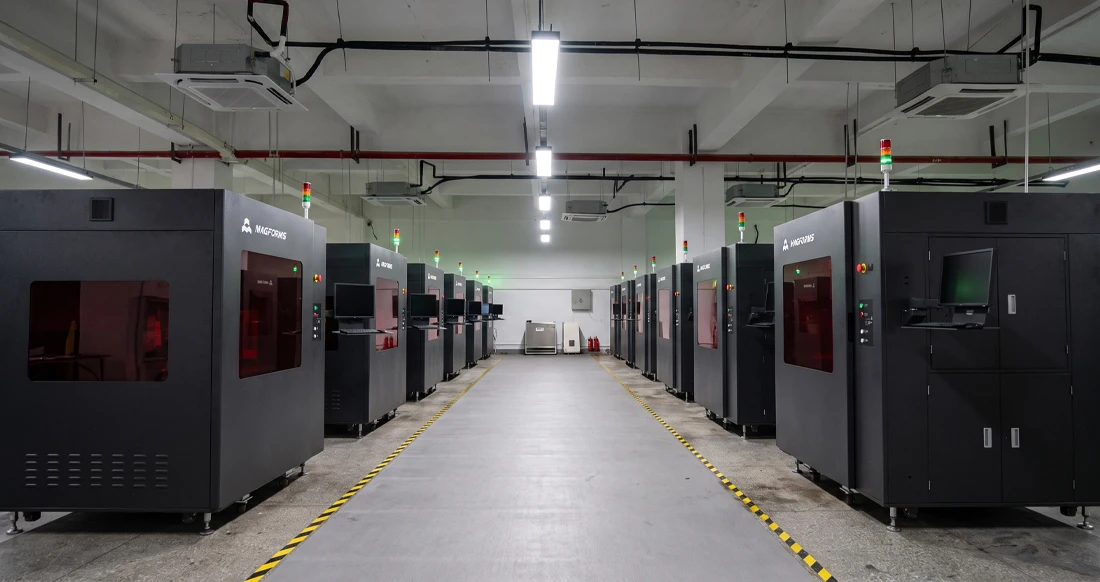
Magforms' integrated method takes into account common buying worries about compatibility, performance, and support, making it a good choice for companies looking for reliable industrial stereolithography 3D printer technology. Magforms validates its proprietary hardware, resin formulations, and process parameters through extensive application testing to ensure dimensional consistency and stable printing performance. Variable spot-size laser technology and AI-assisted scanning optimization and advanced galvanometer control help improve printing efficiency while maintaining micron-level precision. We know how important stability is in large production settings because we've worked with over 300 companies in the aerospace, medical, automobile, and consumer electronics industries. Your teams can get the most out of their tools by getting thorough technical training, quick access to help channels, and parts that can be shipped anywhere in the world. Please email our engineering team at info@magforms.com to talk about custom solutions, bulk buying options, or to set up sample tests that will show that our industrial stereolithography 3D printer supplier can meet your prototyping needs.
References
1. Gibson, I., Rosen, D., and Stucker, B. Additive Manufacturing Technologies: 3D Printing, Rapid Prototyping, and Direct Digital Manufacturing. Springer, 2015.
2. Hull, C. W. Apparatus for Production of Three-Dimensional Objects by Stereolithography. United States Patent 4,575,330, 1986.
3. Jacobs, P. F. Rapid Prototyping and Manufacturing: Fundamentals of Stereolithography. Society of Manufacturing Engineers, 1992.
4. Melchels, F. P. W., Feijen, J., and Grijpma, D. W. "A Review on Stereolithography and Its Applications in Biomedical Engineering." Biomaterials, vol. 31, no. 24, 2010, pp. 6121-6130.
5. Stansbury, J. W., and Idacavage, M. J. "3D Printing with Polymers: Challenges Among Expanding Options and Opportunities." Dental Materials, vol. 32, no. 1, 2016, pp. 54-64.
6. Wohlers, T., and Gornet, T. Wohlers Report 2023: 3D Printing and Additive Manufacturing Global State of the Industry. Wohlers Associates, 2023.

Magforms makes design and manufacture easier.
Popular Blogs
-
 Industry InsightsManufacturing Industry
FDM vs. SLA Printer: Which Technology Is Right for Your Project?
-
 Industry InsightsManufacturing Industry
Top 5 Applications of Industrial 3D Printers in Manufacturing Today
-
 Industry InsightsManufacturing Industry
Why Stereolithography 3D Printers Are Unmatched for Microfluidic Device Prototyping?