How Do Industrial SLA 3D Printer Recoater Blades Affect Print Quality?
Recoater blades directly influence print quality in stereolithography additive manufacturing by controlling resin layer uniformity across the build platform. When an Industrial SLA 3D Printer operates, the recoater blade moves across the resin surface to redistribute fresh photopolymer resin and establish a consistent resin layer before the next laser exposure. Blade edge precision, material composition, and surface condition can affect resin distribution and contribute to surface defects such as streaking or uneven layer formation. Dimensional accuracy suffers when worn or contaminated blades fail to distribute resin evenly, causing layer height inconsistencies that compound throughout tall builds. Procurement teams evaluating high-precision equipment must scrutinize recoater blade design as a fundamental quality driver impacting production yield and part accuracy.
👉 To understand how recoating fits into the complete stereolithography process, see our guide to SLA 3D printing technology.
Common Issues Related to Recoater Blades and Their Effect on Print Outcomes
Degradation of recoater blades shows up in predictable ways that hurt print quality and make operations less efficient. Being aware of these problems lets you plan repairs ahead of time and gives you information for judging vendors when you're buying tools.
Blade Wear and Edge Degradation

Recoater blades can wear over time through repeated operation, contact with cured or partially cured material, accidental collisions, and exposure to resin or cleaning chemicals. A worn blade may no longer distribute resin evenly across the build area. Instead, a damaged or contaminated blade can redistribute partially cured material or debris across the resin surface, contributing to streaks, uneven layers, or localized surface defects. These defects can affect dimensional consistency and make assembly or fit verification more difficult in precision applications. Depending on blade material and resin formulation, highly filled resins, elevated temperatures, or incompatible cleaning chemicals can accelerate blade wear, shortening maintenance intervals and increasing operating costs. For manufacturers using an Industrial SLA 3D Printer, maintaining blade condition is essential to consistent print quality and dimensional accuracy.
Resin Contamination and Buildup
When photopolymer resin receives sufficient exposure from the 355 nm laser used by many industrial SLA systems, localized photopolymerization occurs. Small amounts of partially cured resin or debris may accumulate on recoater blade surfaces over time, creating deposits that interfere with consistent resin distribution. Contaminated blades can distribute resin unevenly, creating thin or incomplete layers that may lead to missing features, surface defects, or dimensional deviations in subsequent layers. Contamination can be particularly problematic when producing transparent resin parts because particles, partially cured resin, surface roughness, and other defects can reduce optical clarity. Some industrial SLA systems use resin temperature control to maintain viscosity within a specified processing range. Stable viscosity can improve resin flow and recoating consistency, particularly when ambient temperature changes affect resin behavior.
Alignment and Mechanical Drift
Precision linear guides, servo-driven motion systems, and position feedback mechanisms are commonly used in industrial SLA recoater systems. Misalignment of the blades happens when they wear out or aren't calibrated properly. This can cause the blade to maintain an inconsistent position across the build area, resulting in uneven resin layer thickness. Parts made under these conditions have measurement errors that get worse as the build height goes up. This is especially important for tall parts or large batch builds where layer consistency must be maintained across a wide build area. High-quality linear guides and motion components can improve recoater positioning stability and repeatability, helping maintain consistent resin distribution during large-format or tall builds. Preventive maintenance plans, like checking the blades often, cleaning them with solvents that work with them, and replacing them based on the number of hours they've been used, are better than fixing problems after they happen. To cut down on unplanned downtime, procurement teams should give priority to suppliers who offer thorough maintenance training and quick technical support.

Comparing Recoater Blades Across Different Industrial SLA 3D Printer Brands
There are different ways to use recoater blade technology in the additive manufacturing industry, which is a reflection of the different engineering philosophies and target market groups. Knowing about these differences helps buyers match the skills of tools with the needs of operations.
👉 For an overview of different machine configurations and build sizes, explore our Industrial SLA 3D Printers types and solutions.
Design Philosophy: Rigid versus Flexible Blades
Leading manufacturers have different preferences for blade stiffness depending on what they want to use them for. Rigid blades can provide stable and repeatable resin distribution in systems designed around controlled blade geometry, platform flatness, and resin-level management. Their suitability depends on the resin, recoating mechanism, and overall machine configuration. Flexible polymer blades can provide greater mechanical compliance and may be useful in systems where controlled contact with the resin surface or printed features is required. Their suitability depends on blade stiffness, geometry, resin viscosity, and the specific recoating mechanism. Magforms integrates its experience in additive manufacturing system development with components such as Scanlab galvanometers and AOC laser systems where the recoater performance goes hand in hand with the optical excellence. Variable laser spot strategies can optimize scanning efficiency by using larger spot sizes for bulk exposure and smaller spot sizes for contour regions, balancing speed and surface quality. When coordinated with stable recoating, these scanning strategies can help maintain consistent layer formation while improving overall printing efficiency. Coordinating laser scanning strategies with recoating performance can help balance print speed, layer uniformity, and surface quality in industrial SLA production.
Software Integration and Adaptive Control
Some modern Industrial SLA 3D Printer systems use software-controlled recoating parameters that can be configured according to part geometry, resin properties, and production requirements. Some systems allow recoating speed and related process parameters to be adjusted according to resin behavior, layer geometry, and production requirements. Advanced scanning systems can use optimized toolpath strategies and process data to improve scanning efficiency and repeatability. This can improve process efficiency by optimizing scanning paths and recoating sequences based on production data. These control strategies depend on accurate position feedback and coordinated communication between motion-control components. This shows how important it is to look at how the whole system works instead of just individual parts. The iBuild 2.0 control software provides an interface for print preparation, parameter management, and build operation. It has clear graphics and smooth operation that make changing complex parameters easier. The open material system design supports most 355 nm wavelength photopolymers without any proprietary locks or encryption keys. Depending on the machine configuration, operators may be able to adjust recoating speed, layer delay, exposure parameters, and other process settings when qualifying new resin formulations.
Material Compatibility and Chemical Resistance
The materials used in recoater blades need to withstand prolonged exposure to photopolymer resins and cleaning agents. Depending on the resin formulation, chemical exposure can cause swelling, surface degradation, or loss of mechanical properties in unsuitable blade materials. Chemicals can cause blades to swell, surfaces to wear down, or to fail early, which lowers the quality of prints and raises the cost of upkeep. It is important for procurement specifications to make it clear that the equipment will be compatible with all the resins that will be used in production. Procurement teams should ask equipment vendors for resin compatibility information, recommended cleaning procedures, and, where available, documented compatibility data for blade materials. When you compare these factors—blade design philosophy, software integration depth, and material compatibility breadth—you can make an informed decision that matches the equipment's capabilities with the production needs in areas like medical device manufacturing, consumer electronics development, aerospace component validation, and automotive prototyping.

Optimizing Print Quality Through Recoater Blade Selection and Usage
To get consistently good print results, you need to carefully choose blades that are right for the job and follow strict maintenance procedures that keep the blades working well for as long as they are useful.
Matching Blade Types to Resin Properties
Resin viscosity has a significant effect on recoating behavior and can influence the selection of blade configuration and process parameters. Low-viscosity resins generally flow more easily during recoating, which may allow higher recoating speeds depending on blade geometry, resin temperature, layer thickness, and machine configuration. For higher-viscosity or highly filled engineering photopolymer resins, recoating parameters may need to be adjusted to allow sufficient resin flow and leveling before laser exposure. Depending on the machine design, this may involve changes to recoater speed, blade configuration, or resin temperature. Temperature control can help reduce viscosity variations caused by changes in ambient conditions, supporting more consistent resin flow and recoating behavior. Transparent resin parts present additional challenges because optical clarity can be affected by bubbles, contamination, surface roughness, internal defects, and post-processing conditions. For clear resin printing, maintaining clean blade surfaces and consistent recoating conditions can help minimize defects that affect optical clarity. Replacement intervals should follow the blade condition, resin formulation, and equipment manufacturer's recommendations. Systems that work well with clear formulations and have high success rates show better recoater design and process control, giving them an edge in dental model making, optical prototyping, and medical device uses.
Operational Best Practices for Extended Blade Life
Structured maintenance routines can help extend usable blade life and maintain more consistent print quality. Where recommended by the resin and equipment manufacturer, resin can be filtered to remove cured particles or other debris before reuse. By keeping track of when blades need to be replaced and matching them with print numbers, data-driven replacement schedules can be set up that work best for each production setting instead of random time intervals. Controlling the printing environment, particularly temperature, can help maintain stable resin viscosity and process conditions. Humidity requirements should follow the resin manufacturer's recommendations. Temperature control can reduce variations in resin viscosity caused by environmental temperature changes, helping maintain more consistent recoating conditions. Keeping the build and optical areas protected from dust and external contamination can help reduce the risk of particles entering the resin system or affecting critical machine components.
Emerging Technologies: Self-Cleaning Coatings and Predictive Maintenance
Recoater blade technology keeps getting better thanks to new surface processes and built-in tracking features. Advanced low-surface-energy coatings are being explored to reduce resin adhesion and simplify blade cleaning. These monitoring approaches may help detect abnormal resistance, obstructions, or motion deviations before they contribute to print failures. When effectively implemented, these technologies may help reduce maintenance requirements and improve process consistency, potentially lowering operating costs. When looking at cutting-edge Industrial SLA 3D Printer equipment, procurement teams should find out if there are any plans to add predictive maintenance features and if the seller is committed to regular software changes that use machine learning to make processes run more efficiently all the time.
Procurement Insights: Evaluating Industrial SLA 3D Printers Based on Recoater Blade Performance
The quality of the recoater blade has a big effect on the total cost of ownership because it changes the print yield, the amount of upkeep needed, and the operating flexibility. Recoater evaluation is a part of comprehensive vendor evaluation frameworks that are used in strategic procurement processes.
Critical Questions for Equipment Suppliers
Professionals in charge of buying things should ask for detailed technical specifications that include the materials used to make the recoater blades, how to replace them, how long they should last under normal operating conditions, and whether they will work with the resins they want to use. The warranty should clearly cover blade parts and make it clear whether worn-out parts can be replaced under normal conditions or need their own separate deals for buying consumables. Service level agreements need to spell out the quickest times that problems with blades can be fixed and the difference between factory servicing needs and parts that can be replaced in the field. During vendor demonstrations, recoater blade inspection and replacement procedures should be shown. This way, the complexity of the process and the level of technician skill needed can be judged. Simple blade swap methods that don't require any tools cut down on downtime and the need for specialized service staff. This is especially helpful for production facilities that are spread out geographically or in areas with poor technical support infrastructure.
Balancing Initial Investment Against Operational Efficiency
Premium recoater systems may involve higher upfront costs, but their value should be assessed based on measurable benefits such as print yield, maintenance requirements, material compatibility, and downtime. The total cost of ownership should be modeled over the expected service life of the equipment. This should include estimated costs for consumables, repair labor, and lost opportunities due to production downtime. When comparing lease vs. purchase options, equipment with better recoater reliability may be more advantageous when risk-adjusted cash flows and production schedule certainty are taken into account. Magforms combines well-known component brands, like AOC lasers, German Scanlab galvanometers, Panasonic servo motors, Schneider electrical components, and Philips UV curing components, with its own system integration expertise to make systems designed for stable and repeatable operation in demanding production environments, supporting demanding production environments where long operating cycles and process stability are important. When combined with professional after-sales support that answers customer questions within 24 hours, this strategy for choosing components directly addresses procurement pain points related to equipment reliability and service responsiveness that can have a big effect on production schedules if they are ignored.
Aligning Technology Capabilities with Production Requirements
When comparing printing equipment, different industries put different levels of importance on different performance factors. High-throughput recoater systems are very important for automotive rapid prototyping because it needs to print quickly and make a lot of parts, like dashboard mock-ups or full-size lighting assemblies. For wind tunnel models or engine part prototypes, aerospace uses put a high value on surface finish and accurate measurements. They also need very exact blade positioning and little variation between layers. Precision and biocompatibility of materials are important in the medical and dental fields. This means that recoater systems must be able to work with biocompatible resins validated according to applicable regulatory requirements. The open material system design lets users test out new resin mixes and adapt to changing application needs without having to worry about tools becoming obsolete or being locked into a single provider. This flexibility is especially helpful for 3D printing service companies that work with clients from the automobile, aircraft, medical, consumer electronics, and cultural and artistic industries, where material needs are very different from one project to the next.
👉 See how Industrial SLA 3D printing is applied in real production environments across automotive, aerospace, medical, and other industries.

Conclusion
In stereolithography additive manufacturing, the performance of the recoater blade has a big impact on the quality of the prints, how efficiently they are run, and the total cost of ownership. The quality of the surface finish, the accuracy of the dimensions, and the uniformity of the layers are all directly affected by the geometry of the blades, the choice of material, and the level of mechanical precision. Procurement professionals should evaluate recoater systems as part of the complete process chain in an Industrial SLA 3D Printer, including optical performance, motion control accuracy, resin management, software algorithms, and maintenance requirements. They need to look at the philosophy behind blade design, the amount of maintenance needed, and how well they work with planned resin portfolios. In industrial stereolithography, recoater performance should be evaluated together with laser stability, motion accuracy, resin management, and process-control software, since these subsystems collectively determine print consistency and production reliability. Strategically choosing a vendor that puts recoater performance, laser performance, material compatibility, and quick technical support at the top of the list sets up manufacturing operations for long-term success in demanding industries like aerospace, medical, electronics, creative, and automotive.
FAQ
How often should recoater blades be replaced in industrial SLA printers?
How often you need to replace them depends on how much you use them, the type of resin you use, and the composition of the blade material. In high-volume production settings, blade service life varies depending on resin type, build volume, operating conditions, and manufacturer recommendations. Polymer blades, on the other hand, may need to be changed more often, every 200 to 400 hours, especially when working with resins that are full of abrasives. Instead of just using time-based intervals, set replacement schedules that are based on data by keeping an eye on print quality indicators like surface roughness and dimensional consistency.
Can using third-party recoater blades void equipment warranties?
In their guarantee terms, many equipment makers list acceptable blade sources. If you use a different blade, you might not be covered by the warranty. However, systems with open architecture plans often make it clear that third-party products are allowed. When negotiating a contract, procurement teams should be clear about how to get blades and ask for written confirmation of what this means for warranties before committing to specific suppliers.
What blade characteristics most impact transparent resin printing success?
For clear plastics, the blade edges should remain clean and free from contamination to maintain uniform resin layers, which is particularly important when producing optically clear parts. It is very important that the blade material is chemically compatible with optical-grade resins and that it can be precisely placed mechanically while keeping the layer thickness constant. The best equipment for working with clear resin usually has high-quality blades, temperature control systems, and a lot of automatic cleaning processes.
How does blade geometry affect print speed capabilities?
Sharp blade edges and the best attack angles reduce the resistance to resin movement, which lets you move faster without affecting the evenness of the layers. Maximum safe speeds are also affected by the width of the blades and how the contact pressure is distributed. Narrower blades require less total force but may wear out faster. Modern systems change the speed of the blades based on real-time analysis of the print shape. This balances speed with quality maintenance.
Transform Your Production Efficiency with Magforms Industrial SLA 3D Printer Solutions
Magforms offers unified material and equipment solutions that are designed to get rid of the problems with incompatibility, inconsistent dimensions, and unplanned downtime that commonly happen in additive manufacturing processes. Our Industrial SLA 3D Printer systems use German Scanlab galvanometers, AOC laser stability, and Panasonic servo motor reliability, along with precision recoater mechanisms designed to support high dimensional consistency across large-format builds. Magforms states that its variable laser beam strategy can increase printing speed by 30–50% compared with conventional approaches. The open material system is designed to support most 355 nm photopolymer resins without proprietary material restrictions. This lets your team find the best material costs and try new uses in areas like medical device customization, consumer electronics development, automotive prototyping, and special manufacturing needs. Our professional after-sales team makes sure that your production plans don't get messed up by providing full technical help within 24 hours and drawing on their experience working with over 300 businesses around the world. Contact our purchasing agents at info@magforms.com right away to talk about how Magforms Industrial SLA 3D Printer manufacturer capabilities can meet your specific needs for accuracy, throughput, and material compatibility.
References
1. Gibson, I., Rosen, D., & Stucker, B. (2021). Additive Manufacturing Technologies: 3D Printing, Rapid Prototyping, and Direct Digital Manufacturing (3rd ed.). Springer.
2. Jacobs, P. F. (2019). Stereolithography and Other RP&M Technologies: From Rapid Prototyping to Rapid Tooling. Society of Manufacturing Engineers.
3. Lipson, H., & Kurman, M. (2020). Fabricated: The New World of 3D Printing. John Wiley & Sons.
4. Quan, Z., Wu, A., Keefe, M., Qin, X., Yu, J., Suhr, J., Byun, J. H., Kim, B. S., & Chou, T. W. (2022). Additive manufacturing of multi-directional preforms for composites: Opportunities and challenges. Materials Today, 38, 75-93.
5. Stansbury, J. W., & Idacavage, M. J. (2021). 3D printing with polymers: Challenges among expanding options and opportunities. Dental Materials, 37(1), 168-178.
6. Wendel, B., Rietzel, D., Kühnlein, F., Feulner, R., Hülder, G., & Schmachtenberg, E. (2018). Additive processing of polymers. Macromolecular Materials and Engineering, 293(10), 799-809.

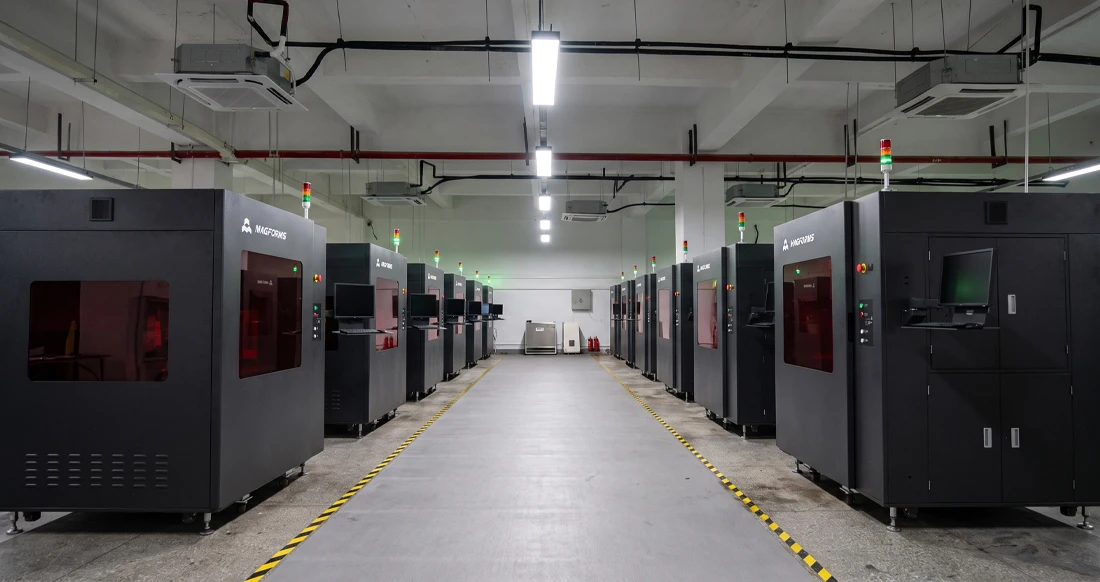
Magforms makes design and manufacture easier.
Popular Blogs
-
 Industry InsightsManufacturing Industry
FDM vs. SLA Printer: Which Technology Is Right for Your Project?
-
 Industry InsightsManufacturing Industry
Top 5 Applications of Industrial 3D Printers in Manufacturing Today
-
 Industry InsightsManufacturing Industry
Why Stereolithography 3D Printers Are Unmatched for Microfluidic Device Prototyping?