What Post-Curing Systems Pair Best with Industrial SLA 3D Printers?
When investing in stereolithography equipment, pairing your Industrial SLA 3D Printer with the right post-curing system is just as critical as the printer itself. Post-curing provides additional light and, for some resin formulations, heat to help the printed part reach its intended mechanical, thermal, and dimensional performance. The appropriate system should be selected according to the resin manufacturer's validated curing parameters, part geometry, production volume, resin portfolio, and quality requirements. Understanding your workflow requirements ensures you maximize the return on both your printer and curing investments while avoiding compatibility pitfalls that lead to material waste and production delays.
👉 What is SLA 3D printing technology

Criteria for Selecting the Best Post-Curing Systems for Industrial SLA Printers
Selecting a post-curing system requires balancing technical performance with operational requirements. Procurement managers must consider upfront capital costs, energy consumption, available floor space, and compatibility with existing printer fleets. A suitable system can help reduce process variability, material waste, and avoidable production delays when its curing conditions are properly validated.
Performance Metrics That Drive Quality
The most important consideration is matching the curing process to the resin manufacturer's validated requirements, including wavelength, irradiance, exposure time, and temperature. Because photopolymer formulations differ, curing wavelength should be selected according to the resin chemistry rather than assumed solely from the printer's exposure wavelength. Traditional mercury-vapor systems can provide broad-spectrum UV output, but they generally generate more heat and require more lamp maintenance than LED-based systems. Lamp replacement intervals depend on the lamp type, operating conditions, and equipment manufacturer's specifications. Industrial post-curing systems may provide more precise temperature control, larger curing volumes, and greater process automation than typical desktop units, depending on the equipment. Controlled heating can be valuable for resin systems whose validated curing process includes elevated temperatures. The actual reduction in curing cycle time depends on the resin formulation, part geometry, UV dose, and target temperature. A suitable system should provide controlled and repeatable temperature distribution throughout the curing chamber. Consistent temperature distribution helps minimize localized overheating that could cause warping or dimensional changes, particularly when curing large or delicate parts. Temperature uniformity becomes particularly important when an Industrial SLA 3D Printer is used to produce large parts, such as automotive dashboard prototypes, instrument-panel housings, or aircraft interior components. Manual workflows require operators to monitor cure times, reposition parts for more uniform exposure, and track material-specific settings. Automated post-curing systems can store material-specific cure profiles and guide operators through the appropriate curing sequence, reducing manual errors and improving process consistency.
Operational and Compatibility Factors
Post-curing decisions are affected by the Industrial SLA 3D Printer ecosystem you already have. However, closed material ecosystems can limit third-party material selection and may increase procurement constraints over time. Universal post-curing systems give printer fleets that use more than one brand more options and help businesses plan for future equipment growth. Custom cure profiles can be developed and validated for third-party resins, provided that the curing system can meet the material manufacturer's requirements. This flexibility can be particularly useful for R&D teams and 3D printing service bureaus working with diverse material requirements. Total cost of ownership should also include energy consumption, maintenance requirements, curing throughput, and equipment utilization. Energy consumption varies significantly by chamber size, light source, heating requirements, and operating conditions. When comparing systems, evaluate power consumption together with curing throughput and batch capacity rather than looking at rated wattage alone.
👉 Industrial SLA 3D Printer types and solutions
Top Post-Curing Technologies Compatible with Industrial SLA 3D Printers
For industrial SLA workflows, post-curing systems can generally be grouped into three practical categories: UV-only chambers, heat-assisted systems, and hybrid UV-thermal systems. Knowing what technologies are good at helps you choose the right ones for your needs.
UV Chamber Systems
UV chamber systems use UV LEDs or other UV light sources to expose printed parts to controlled ultraviolet radiation. UV chamber systems can be suitable for many standard and engineering photopolymer formulations when their curing requirements can be met without elevated-temperature processing. Modern LED curing chambers can provide controlled and repeatable irradiance across the curing volume. However, the required irradiance depends on the resin formulation, wavelength, part geometry, and validated curing process, so irradiance should be evaluated together with exposure time rather than as an isolated specification. Compared with systems that rely heavily on heating, LED-based curing systems can reduce energy consumption when the resin does not require elevated-temperature curing. This can be useful for thin-walled parts that may be sensitive to elevated temperatures, such as electronics housings. LED light sources generally require less frequent replacement than conventional lamps, although irradiance should still be monitored periodically to detect output degradation. The limitation becomes more relevant when a resin formulation requires elevated-temperature curing. Some flexible or high-temperature resin formulations may require elevated-temperature curing, with the target temperature specified by the resin manufacturer. For materials that require elevated-temperature curing or higher process control, a basic UV chamber may not provide sufficient control over the validated curing conditions.

Heat-Assisted Post-Curing Units
Heat-assisted post-curing systems combine UV exposure with controlled heating to support resin formulations whose validated curing process includes elevated temperatures. For resin systems designed for heat-assisted post-curing, elevated temperature can improve polymer conversion and help the material reach its specified mechanical and thermal performance. The magnitude of the improvement varies significantly by resin formulation and curing conditions. Because heat-assisted systems use additional heating and thermal-control components, their energy consumption and maintenance requirements can be higher than those of UV-only systems. Companies should evaluate these operating costs against the potential gains in mechanical, thermal, and dimensional performance for their specific applications.
👉 Explore how Industrial SLA technology is applied in real production environments through our Industrial SLA 3D printing application cases.
Hybrid Systems Combining UV and Thermal Technologies
Hybrid post-curing systems can provide programmable control of light exposure, temperature, and curing time, with the exact control range depending on the equipment. These platforms can support a broader range of resin systems when their controllable curing conditions match the requirements specified by the resin manufacturer. Hybrid systems can be valuable for applications where material-specific curing control and process repeatability are critical. When equipped with closed-loop monitoring and programmable controls, these systems can improve curing repeatability by maintaining specified light and temperature conditions throughout the cycle. Combining controlled post-curing with the Magforms SL800 Industrial SLA 3D Printer can provide a more repeatable production workflow for demanding precision-manufacturing applications where the material and process have been appropriately validated. Because hybrid systems generally require greater investment and infrastructure, they are best evaluated against the value of the applications they support, including production volume, material requirements, and quality-control needs.
Should You Choose a Brand-Specific or Universal Post-Curing System
Post-curing equipment compatibility varies a lot between printer manufacturers. This is because different printer manufacturers use different resin formulations, software ecosystems, and recommended workflows. Matching the curing system to your printer ecosystem can simplify workflow integration and help ensure that appropriate processing parameters are available for the materials you use.
Brand-Specific Optimized Systems
Some printer manufacturers offer dedicated post-curing systems with material-specific curing profiles for their own resin portfolios. These systems can simplify process qualification and reduce the need for users to develop curing parameters from scratch. Proprietary ecosystems may limit the use of third-party materials and increase procurement constraints, while open-material platforms provide greater flexibility when evaluating alternative resin suppliers.
Universal Solutions for Multi-Brand Operations
Universal post-curing platforms can be useful for 3D printing service centers, R&D teams, and manufacturers operating multi-brand printer fleets. These systems can support custom cure profiles developed through material testing, making them suitable for a wider range of 355 nm photopolymer materials from different suppliers, provided that the required curing conditions can be met. Universal systems require users to develop and validate curing profiles for each material. Although this adds material-testing and process-qualification work, it provides greater flexibility when evaluating alternative resin suppliers and managing long-term material costs. This approach can be particularly useful for manufacturers using open-material Industrial SLA 3D Printers because it provides greater flexibility when evaluating materials and curing workflows.
Best Practices and Tips to Maximize Post-Curing Efficiency and Quality
A standardized post-curing workflow helps make production results more consistent and repeatable. Even advanced curing systems cannot deliver consistent results without validated procedures, routine verification, and preventive maintenance.
Optimizing Cure Parameters for Different Resins
Different engineering resin formulations can respond very differently to UV dose and temperature, while clear materials may require carefully controlled exposure to balance conversion, optical properties, and discoloration. Maintaining a documented library of material-specific cure profiles reduces trial-and-error and supports more consistent production. The test method is also important when validating curing conditions. Standardized specimens should be used to compare curing conditions under controlled test procedures. ASTM D638 can be used to evaluate tensile properties, while ASTM D790 provides a standard method for measuring flexural properties of applicable plastics. Hardness can also be monitored using an appropriate Shore durometer scale for the material being evaluated. When establishing post-curing parameters for an Industrial SLA 3D Printer, consider the exposure conditions used during printing as part of the overall process history. However, post-curing time, irradiance, and temperature should be validated experimentally for each resin rather than assuming that higher printing exposure automatically requires a lower post-curing dose. This interaction becomes particularly important for large parts, where thermal exposure during printing and post-curing can contribute to dimensional changes.
Workflow Integration and Quality Control

A well-controlled post-curing workflow improves traceability across production runs while minimizing unnecessary handling steps. Wash parts promptly after printing to remove residual resin before post-curing, particularly from recessed or complex features. After washing, transfer parts to the curing chamber promptly to minimize uncontrolled exposure to ambient light. Batch processing should balance part quality with curing throughput. Grouping parts by resin type and similar geometry can help simplify batch-specific curing profiles and improve process consistency. Overloading the curing chamber can also create shadowing, where parts block UV exposure to nearby surfaces. Maintain sufficient spacing between parts to minimize mutual shadowing and allow adequate light exposure around critical surfaces. The required spacing should be determined by the curing chamber's light distribution, part geometry, and loading configuration. Rotating platforms can reduce shadowing but cannot eliminate it when the curing chamber is overloaded.
Maintenance Protocols for Long-Term Reliability
Preventive maintenance is essential for maintaining consistent post-curing performance. UV light sources can experience output degradation over time, so irradiance should be verified periodically according to equipment usage, manufacturer recommendations, and application requirements. Measurements at multiple chamber locations can help identify changes in spatial uniformity. If irradiance deviates from the validated baseline, corrective action may include cleaning, recalibration, component replacement, or revalidation of curing parameters. Chamber windows, reflectors, and diffusers should also be inspected regularly for resin contamination or damage that could reduce UV uniformity.
Conclusion
The best post-curing system is not determined by curing technology alone. Manufacturers should match wavelength, irradiance, exposure time, temperature, chamber capacity, material compatibility, and workflow requirements to the resin manufacturer's validated process. For operations using multiple materials or open-material Industrial SLA 3D Printers, flexibility in developing and validating material-specific curing profiles can be especially valuable.
FAQ
Why is post-curing essential for parts from stereolithography printers?
When parts come out of an Industrial SLA 3D Printer, the polymerization reaction may not be fully complete, depending on the resin formulation and printing conditions. Post-curing provides additional light and, for some materials, heat to complete the material's intended conversion and achieve its specified mechanical and thermal properties. Post-curing promotes additional cross-linking, which can increase strength, stiffness, hardness, temperature resistance, and dimensional stability depending on the resin formulation and curing process. For materials that require or benefit from post-curing, skipping the validated curing process can prevent the part from reaching its intended mechanical, thermal, or dimensional performance.
Can one post-curing system handle multiple resin types?
Universal post-curing systems can support multiple resin chemistries when they provide sufficient control over the curing parameters required by each material. Different resin formulations may require different combinations of wavelength, irradiance, exposure time, and temperature. Validated profiles should therefore be established for each material rather than applying one generic cure cycle across different formulations.
How do I verify that my post-curing system maintains proper calibration?
Regular verification helps detect calibration drift before it affects production quality. Establish a calibration and verification schedule based on equipment usage, process criticality, manufacturer recommendations, and your quality-management system. Use calibrated radiometers to monitor UV output at representative locations, and verify temperature sensors against traceable reference equipment at an interval appropriate for the process. For production-critical applications, companies can also establish periodic verification programs in which standardized test specimens are cured and mechanically tested to monitor process stability over time. This verification helps identify curing-system drift before it affects production parts.
Partner with Magforms for Complete Industrial SLA 3D Printer Solutions
Magforms provides stereolithography printing, materials, and technical solutions to customers in more than 100 countries and regions. Our Industrial SLA 3D Printers integrate AOC lasers, German Scanlab galvanometers, and Panasonic servo motors to support precise and stable laser scanning for industrial production. The open-material architecture allows users to evaluate compatible 355 nm photopolymer materials from different suppliers without proprietary material locking, subject to resin-specific process validation. This gives users greater flexibility when evaluating compatible resin suppliers and post-curing workflows. Our engineering team has experience working with a wide range of photopolymer materials and can support customers in evaluating suitable post-curing parameters for specific applications. With support that includes training, maintenance, and troubleshooting, as well as response times 24 hours a day, 7 days a week, you get more than just equipment. Get in touch with us at info@magforms.com to discuss your Industrial SLA 3D Printer requirements and explore a suitable production solution.
References
1. Gibson, I., Rosen, D., Stucker, B., & Khorasani, M. (2021). Additive Manufacturing Technologies: 3D Printing, Rapid Prototyping, and Direct Digital Manufacturing (3rd ed.). Springer.
2. Jacobs, P. F. (1996). Stereolithography and Other RP&M Technologies: From Rapid Prototyping to Rapid Tooling. Society of Manufacturing Engineers.
3. Stansbury, J. W., & Idacavage, M. J. (2016). "3D Printing with Polymers: Challenges Among Expanding Options and Opportunities." Dental Materials, 32(1), 54-64.
4. Ligon, S. C., Liska, R., Stampfl, J., Gurr, M., & Mülhaupt, R. (2017). "Polymers for 3D Printing and Customized Additive Manufacturing." Chemical Reviews, 117(15), 10212-10290.
5. Piedra-Cascón, W., Krishnamurthy, V. R., Att, W., & Revilla-León, M. (2021). "3D Printing Parameters, Supporting Structures, Slicing, and Post-Processing Procedures of Vat-Polymerization Additive Manufacturing Technologies: A Narrative Review." Journal of Dentistry, 109, 103630.

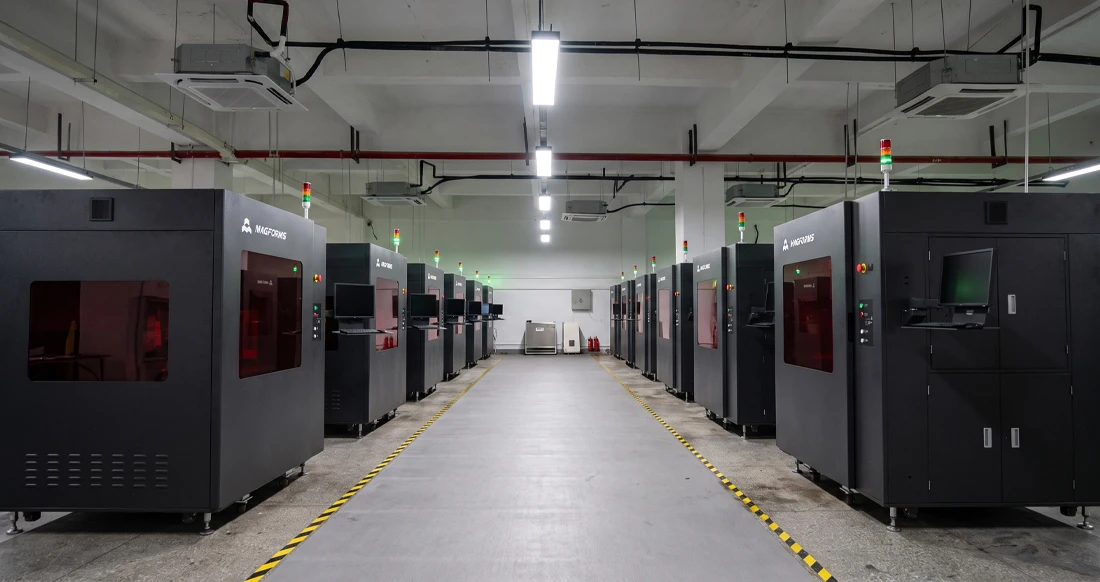
Magforms makes design and manufacture easier.
Popular Blogs
-
 Industry InsightsManufacturing Industry
FDM vs. SLA Printer: Which Technology Is Right for Your Project?
-
 Industry InsightsManufacturing Industry
Top 5 Applications of Industrial 3D Printers in Manufacturing Today
-
 Industry InsightsManufacturing Industry
Why Stereolithography 3D Printers Are Unmatched for Microfluidic Device Prototyping?