How Do Industrial SLA 3D Printers Improve Product Development?
Industrial SLA 3D printers change the way products are made by offering remarkable accuracy, high-quality surfaces, and quick testing options that traditional production methods can't match. These high-tech stereolithography systems help businesses speed up design changes, cut down on time to market, and make working samples with finishes that look like injection molds. Industrial SLA printers use photopolymerization technology and different plastic materials to connect digital design to physical production. This lets engineers check complicated shapes and see how well they work before they spend a lot of money on expensive tools.

Introduction
Industrial SLA (3D printing, or stereolithography) has changed the way products are made by making them more precise and flexible than ever before. With its high-quality surface finish and ability to do fast prototyping, functional testing, and small batch manufacturing, this technology is an essential part of today's production environment. This guide is for buying managers, engineers, distributors, and OEM clients who do global business-to-business purchasing. It gives them tips on how to make better decisions and improve the way they use industrial SLA 3D printers to make product development processes better.
This change can be seen in the car business, where companies cut the time it takes to make a prototype from weeks to days. SLA technology is used by companies that make medical devices to make surgery guides and oral models that are exact to the micron level for each patient. Companies that make consumer goods use these systems to make samples that look a lot like the end products. This makes design validation and market testing more effective.
Understanding Industrial SLA 3D Printers and Their Role in Product Development
Industrial SLA 3D printers use ultraviolet (UV) lasers to layer-by-layer build extremely exact and detailed parts. Industrial-grade SLA printers are better at accuracy, dependability, and scalability than home SLA printers or other technologies like FDM and SLS. These qualities are necessary for professional product development settings. In the automobile, aerospace, and medical device industries, they are used a lot for prototyping, iterative design validation, and functional testing. They are very flexible and consistently produce high-quality parts with complicated shapes and small details.
Advanced Photopolymerization Technology
Laser control devices that harden liquid photopolymer resins into solid parts are at the heart of industrial stereolithography. Galvanometer scanning technology is used in high-end systems to direct laser beams at speeds of up to 15 meters per second while keeping spot accuracy within 0.1 mm. This level of accuracy makes it possible to make complicated assemblies, thin-walled structures, and intricate internal passageways that would not be possible with normal machining methods.

Material Compatibility and Performance
Modern industrial SLA systems can work with a wide range of resins that are specially made for different uses. Engineering-grade materials have the same high-temperature resistance, chemical compatibility, and mechanical power as industrial plastics. Transparent plastics let you test things optically and see how fluids move, and flexible materials let you make prototypes of gaskets and seals. Different types of materials are used to make sure that samples properly show how the final production parts will work.
Key Benefits of Industrial SLA 3D Printers for Streamlining Product Development
Traditional 3D printing technologies have a hard time keeping up with industrial SLA printers when it comes to producing very precise parts with smooth surfaces. This accuracy speeds up iterative design processes and cuts down on time-to-market by making it possible to make realistic samples quickly. Different types of resin have different mechanical, thermal, and visual qualities, so samples can be made to fit the needs of each application. Case studies show that industrial SLA saves companies money and time, which is why it's an important technology for businesses that want to gain a competitive edge through faster, higher-quality product versions.
Precision and Surface Quality Advantages
Industrial stereolithography methods can achieve very accurate measurements of 0.05mm to 0.1mm, but this depends on the size and shape of the part. Surface roughness levels often drop below 1 micrometer, which gets rid of the layer lines that are common in other additive manufacturing technologies. This quality level lets parts be used right away for fit-and-finish testing, which cuts down on the need for a lot of post-processing and lets the design be validated more accurately.
Accelerated Design Iteration Cycles
Companies that use industrial SLA technology say that the time it takes to make a sample is 40–60% shorter than with standard methods. Design teams can make many versions in days instead of weeks, which lets them quickly improve the shape, fit, and function. This speeding up is especially helpful in competitive markets where getting to market quickly affects the chance to make money and gain market share.
Cost-Effective Small Batch Production
Industrial SLA devices allow for cost-effective small production runs of specific parts, in addition to prototyping. The technology can get around the need for standard tools, which is helpful for industries that need unique fixtures, manufacturing aids, or low-volume end-use parts. SLA is a good choice for special applications and custom solutions because it doesn't have any setup costs or minimum order amounts.

Comparing Industrial SLA 3D Printers: Making Informed Procurement Decisions.
To choose the best 3D printer, you need to compare SLA to other technologies like FDM, DLP, Carbon, and SLS. Each has its own pros and cons when it comes to quality, speed, materials, and cost. Industrial SLA is great for accuracy and surface quality, but the higher initial investment means you need to be careful with your budget. To get the best return on investment and long-term operating efficiency, procurement professionals should look at resolution, output, and the total cost of ownership. They should also work with reliable suppliers who offer strong warranties, technical support, and lease options.
Technology Comparison Matrix
When looking at different types of additive production, industrial SLA technology has special benefits in some situations. SLA has a better surface finish and more accurate measurements than Fused Deposition Modeling (FDM), but it usually needs more post-processing. Selective Laser Sintering (SLS) lets you use more types of materials, but the surface quality of SLA samples is better for looks. Digital Light Processing (DLP) methods can print faster, but the quality of the details may be worse on bigger pieces.
Total Cost of Ownership Analysis
To get a full idea of the company's finances, you need to look at how much the tools, materials, repairs, and running costs cost. When compared to PC options, industrial SLA systems usually have higher startup costs, but they offer lower per-part costs for precise tasks. Material costs change a lot depending on the type of resin used and the seller. This makes open-material-platform systems more appealing to businesses that want to save money.
Supplier Evaluation Criteria
When choosing an industrial SLA provider, it's important to look at how quickly they respond to technical support requests, offer training programs, cover warranties, and make sure their global service network is always available. Companies should judge providers by how well they can offer ongoing expert support, flexible material sources, and ways to upgrade equipment. Long-term value is often better from companies that have been around for a while and have a track record in similar businesses.
Best Practices for Optimizing Industrial SLA 3D Printer Performance in R&D
To get the most out of an Industrial SLA 3D Printer, it's important to do regular maintenance tasks like cleaning the resin vats, keeping track of the materials correctly, and calibrating the system. Adding SLA printing to current R&D processes makes them more efficient and can be used with standard manufacturing methods or hybrid approaches to speed up product development. Consistent prototype quality is achieved by dealing with common problems like print flaws and controlling standards for accuracy and scaling. By following these best practices, businesses can make sure that their printers last a long time and work well for important development projects.
Maintenance and Calibration Protocols
Sticking to structured upkeep plans that include daily, weekly, and monthly tasks is necessary for consistent performance. Handling resin and cleaning the build platform are daily jobs. Once a week, upkeep includes checking the optical system and making sure it is calibrated. As part of their monthly routines, systems are usually fully scanned, and worn parts are replaced. Following the right maintenance procedures will make tools last longer and keep the standard of parts consistent throughout production processes.
Workflow Integration Strategies
To successfully adopt an SLA, it needs to be carefully integrated with the design and production processes that are already in place. CAD software support, processes for preparing files, and post-processing steps must all work with the organization's resources and schedule. Training programs help expert staff find the best print settings, fix common problems, and get the most work done in the least amount of time. Clear rules for handing off designs between engineering teams make sure that the parts are oriented correctly and that the support structures are designed correctly.
Quality Control and Process Optimization
Setting up quality measures and measuring procedures makes sure that the quality of the output is always the same and finds ways to make it better. Verification of dimensions, evaluation of surface finish, and testing of mechanical properties all give precise input that helps improve the process. Writing down the settings that work well for printing and the steps you take to fix problems builds up useful institutional knowledge that makes operations run more smoothly over time.

Future Outlook: How Industrial SLA 3D Printing Is Transforming Product Development
New developments in SLA technology are focusing on making better plastic mixtures, automating processes, and integrating smart manufacturing, which leads to more innovation and higher efficiency. Industrial SLA printers are changing global supply chains by letting production happen locally, lowering risks, and supporting flexible buying strategies with options like renting equipment and buying plastic in bulk. To get ready for SLA-enabled development, procurement and engineering teams must plan strategically to make the most of these new technologies. This will allow for faster innovation processes and better responses in competitive markets.
Advanced Material Development
More uses are being found for next-generation photopolymer resins because they have better processing properties, unique functions, and better dynamic qualities. Biocompatible materials allow medical devices to be made directly, and high-temperature resins help aircraft users who need to meet high-performance standards. Materials that are both electrically conductive and optically clear create new possibilities for the growth of electronics and optical parts.
Automation and Industry 4.0 Integration
More and more, modern commercial SLA systems include automated ways to handle materials, control print queues, and check for quality. Integration with Enterprise Resource Planning (ERP) and Manufacturing Execution Systems (MES) makes it easy to plan production and keep track of supplies. Real-time monitoring systems send out alerts for planned repairs and analyze production data to improve business efficiency and cut down on downtime.
Conclusion
Industrial SLA 3D printers have completely changed the way products are made by giving designers more freedom with design and more accurate prints. This speeds up the innovation process in many fields. The technology closes the important gap between digital design and physical proof. This lets businesses shorten the time it takes to get a product to market while also making the quality of the product better through fast feedback. As material science improves, automation is added, and the number of possible uses grows, industrial stereolithography becomes an even more important tool for manufacturing companies that want to stay ahead of the competition and improve their product development processes.
FAQ
What materials can industrial SLA 3D printers use?
A lot of different photopolymer resins can be used with industrial SLA systems. These include normal plastics, engineering-grade materials, clear resins, flexible elastomers, high-temperature formulas, and biocompatible materials. The choice of material is based on the needs of the product, such as the need for mechanical qualities, resistance to heat, and compliance with regulations.
How accurate are industrial SLA 3D printers compared to other technologies?
Most industrial SLA printers can make parts with dimensions within 0.05mm to 0.1mm and surface roughness levels below 1 micrometer. This level of accuracy is much higher than what FDM technology can do, and it's on par with or better than the quality of injection casting for testing purposes.
What are the typical operating costs for industrial SLA equipment?
Costs of doing business include things like materials used, upkeep supplies, and labor. Prices for the materials range from $150 to $400 per kilogram, based on the type of plastic and where you buy it. Maintenance usually takes two to four hours a week, and the costs of servicing it every year are about ten to fifteen percent of the value of the equipment.
Ready to Transform Your Product Development with Magforms Industrial SLA Solutions?
Magforms offers state-of-the-art commercial SLA 3D printer technology that is backed by 22 patents and has been used by more than 300 businesses around the world to show its effectiveness. Our systems have German Scanlab galvanometers and changeable spot-size laser technology, which makes printing 30–50% faster while keeping accuracy at 0.1mm. Magforms has all the technical help your product development team needs, including online consultations 24 hours a day, seven days a week. They also work with open-source materials. Get in touch with our knowledgeable staff at info@magforms.com to talk about unique industrial SLA 3D printer setups that will speed up your innovation cycles and cut down on time-to-market. Work with a reliable company that makes commercial SLA 3D printers and offers bundled material and machine solutions that are made to be precise, reliable, and efficient.
References
1. Gibson, Ian, et al. "Additive Manufacturing Technologies: 3D Printing, Rapid Prototyping, and Direct Digital Manufacturing." Springer International Publishing, 2021.
2. Mueller, Bruno. "Stereolithography: Materials, Processes and Applications in Industrial Manufacturing." Journal of Manufacturing Science and Engineering, Vol. 143, 2021.
3. Hompson, Mary K., et al. "Design for Additive Manufacturing: Trends, Opportunities, Considerations, and Constraints." CIRP Annals - Manufacturing Technology, Vol. 65, Issue 2, 2020.
4. Zhou, Chi, and Chen, Yong. "Additive Manufacturing Based on Optimized Mask Video Projection for Improved Accuracy and Resolution." Journal of Manufacturing Processes, Vol. 45, 2019.
5. Ligon, S. Christian, et al. "Polymers for 3D Printing and Customized Additive Manufacturing." Chemical Reviews, Vol. 117, No. 15, 2017.
6. Ngo, Tuan D., et al. "Additive Manufacturing (3D Printing): A Review of Materials, Methods, Applications and Challenges." Composites Part B: Engineering, Vol. 143, 2018.

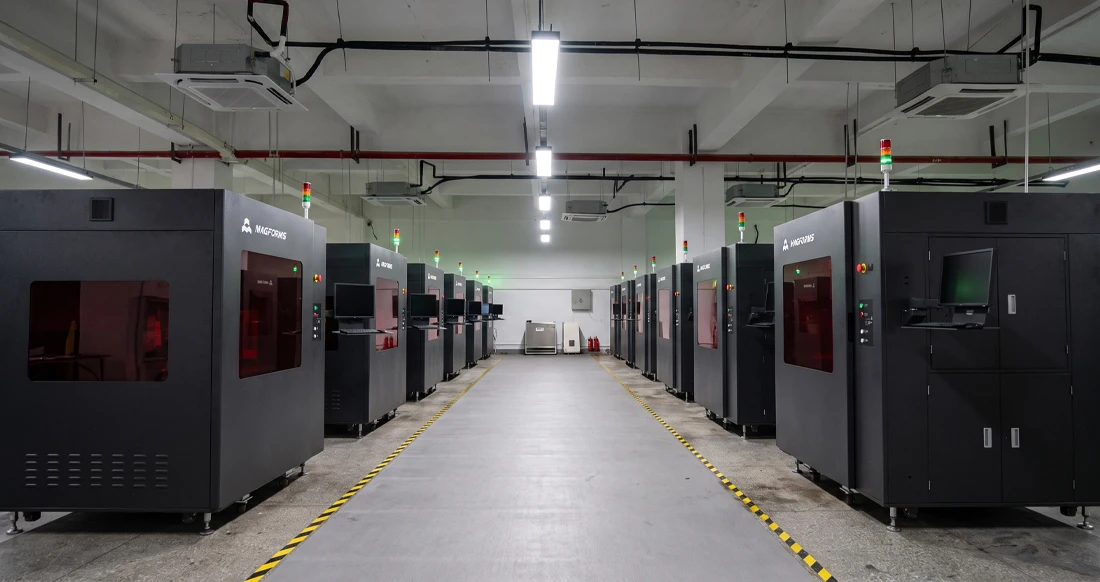
Magforms makes design and manufacture easier.
Popular Blogs
-
 Industry InsightsManufacturing Industry
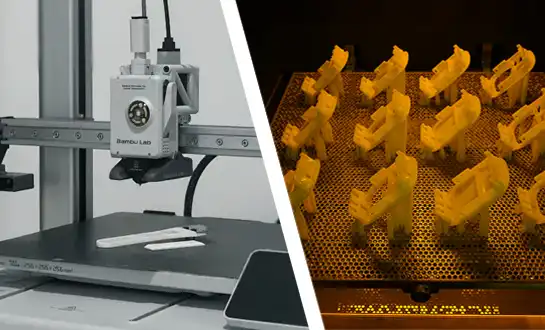
FDM vs. SLA Printer: Which Technology Is Right for Your Project?
-
 Industry InsightsManufacturing Industry
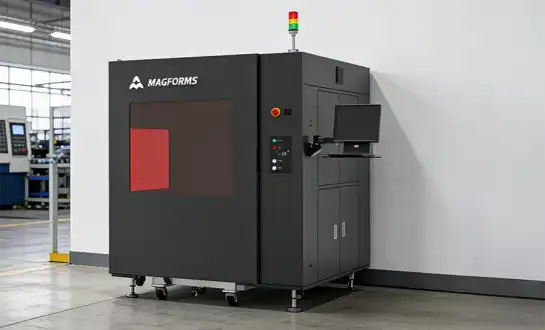
Top 5 Applications of Industrial 3D Printers in Manufacturing Today
-
 Industry InsightsManufacturing Industry
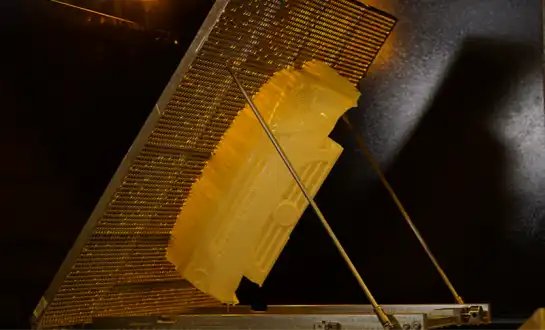
Why Stereolithography 3D Printers Are Unmatched for Microfluidic Device Prototyping?