Post-Processing Resin Prints: From Washing to Perfect Curing
Post-processing Resin printers transform raw, uncured parts into professional-grade components ready for industrial applications. When you remove a part from your resin printer, the journey to achieving optimal quality has just begun. This critical phase involves systematic washing to eliminate uncured photopolymer, followed by precise UV curing that solidifies the molecular structure. Proper post-processing directly impacts dimensional accuracy, surface finish, and mechanical properties essential for aerospace, medical device manufacturing, and precision prototyping applications.
Understanding the Importance of Resin Print Post-Processing
Resin print post-processing represents the bridge between raw 3D printed parts and production-ready components. This phase determines whether your investment in advanced SLA technology delivers the precision and reliability your manufacturing operations demand.

Why Post-Processing Cannot Be Overlooked?
The photopolymerization handle in SLA printing makes parts with uncured gum buildup that compromises both security and execution. Uncured photopolymer remains poisonous and shabby, making dealing with dangers while corrupting dimensional precision over time. Without legitimate washing, these buildups proceed polymerizing capriciously, leading to distorting and surface defects that render parts unusable for basic applications.
Professional fabricating situations require reliable, repeatable comes about. Aviation components request micron-level accuracy, whereas restorative applications require biocompatible surfaces free from defilement. Post-processing guarantees each portion meets these exacting prerequisites by stabilizing the polymer framework and accomplishing the planned mechanical properties.
Impact on End-Use Functionality
Surface quality specifically connects with portion execution in useful applications. Car models require smooth wraps up for streamlined testing, whereas dental models require exact surfaces for precise fitting. Legitimate post-processing disposes of layer lines, decreases surface harshness, and guarantees dimensional steadiness pivotal for these demanding applications.
The curing handle too enacts the full quality potential of photopolymer tars. Building tars accomplish their evaluated malleable quality and warm avoidance temperatures as it were through total UV presentation. Fragmented curing comes about in fragile, frail parts that come up short beneath ordinary working conditions.
Step-by-Step Post-Processing Workflow for Resin Prints
Achieving professional-grade results requires a systematic approach that addresses each stage of the post-processing workflow. Modern industrial operations demand consistent, repeatable processes that minimize variables while maximizing throughput.
Pre-Washing Preparation and Safety Protocols

Proper planning, Resin printers have recently expelling parts from the construct stage. Guarantee satisfactory ventilation and wear fitting individual defensive gear counting nitrile gloves, security glasses, and defensive clothing. UV-sensitive gums respond to encompassing light, making provoking handling fundamental for keeping up dimensional accuracy.
Remove back structures carefully to maintain a strategic distance from harming fragile highlights. Utilize flush cutters and needle records planned for accuracy work. Archive any obvious absconds at this organization, as they may show upstream printing issues requiring alteration of presentation parameters or bolster arrangement strategies.
Washing Techniques and Equipment Selection
Effective washing evacuates uncured tar while protecting fine surface subtle elements. Isopropyl alcohol remains the standard cleaning solvent for most photopolymers, in spite of the fact that specialized solvents offer advantages for particular gum details. The washing process requires two stages: starting with cleaning to expel bulk buildup, followed by the last cleaning in a new solvent.
Ultrasonic cleaners give predominant cleaning productivity compared to manual tumult strategies. The cavitation impact comes to complex geometries and inside channels that manual cleaning cannot get to successfully. Industrial-grade ultrasonic frameworks offer programmable cycles and temperature control that optimize cleaning parameters for distinctive tar types.
Automated wash stations streamline group preparation while guaranteeing reliable comes about. These frameworks control dissolvable temperature, turbulence concentration, and cycle length to eliminate human factors that can compromise portion quality. For high-volume operations, mechanized frameworks decrease labor costs whereas progressing prepare reliability.
Drying and UV Curing Optimization
Complete dissolvable evacuation avoids abandons amid the curing stage. Constrained drying at controlled temperatures expels isopropyl liquor without causing warm stretch in touchy geometries. Permit satisfactory drying time based on portion complexity and divider thickness to avoid dissolvable entrapment.
UV curing enacts the last polymerization that accomplishes full mechanical properties. LED-based curing frameworks give exact wavelength control and uniform introduction that conventional fluorescent frameworks cannot coordinate. The curing time changes by tar detailing and portion thickness, ordinarily extending from 10 to 60 minutes for most applications.
Temperature control amid curing avoids warm corruption while guaranteeing total polymerization. Mechanical curing stoves keep up exact temperature profiles that optimize both speed and quality. Overcuring can cause brittleness, whereas undercuring clears out parts delicate and dimensionally unstable.
Maintenance and Troubleshooting Tips for Post-Processing Equipment
Consistent post-processing results depend on well-maintained equipment operating within specified parameters. Preventive maintenance schedules minimize unplanned downtime while ensuring optimal performance throughout the equipment lifecycle.
Preventive Maintenance Strategies
Regular dissolvable substitution keeps up cleaning adequacy while avoiding defilement buildup. Screen dissolvable clarity and replace when discoloration shows immersion with uncured gum. Sullied solvents can redeposit buildup onto clean parts, nullifying the washing process.
Ultrasonic transducers require occasional assessment and substitution to keep up cavitation concentrated. Debased transducers decrease cleaning viability, leading to fragmented tar expulsion and consequent curing abandonment. Proficient ultrasonic frameworks incorporate observing capabilities that track transducer execution and alert administrators to upkeep needs.
UV light yield degrades over time, influencing curing consistency and length requirements. Degree UV concentrated frequently utilizing calibrated radiometers and supplemental lights when yield falls underneath indicated edges. Driven frameworks regularly offer longer benefit life and more steady yield compared to conventional UV lamps.
Common Defect Analysis and Resolution
Sticky surfaces after Resin printers' inadequate washing or inadequate UV introduction. Look at the washing handle for satisfactory length and dissolvable quality. Increment UV curing time or confirm light yield to guarantee total polymerization. Natural components such as stickiness and temperature can moreover influence curing efficiency.
Warping and dimensional changes recommend uneven curing or warm stretch amid handling. Confirm uniform UV presentation over the curing chamber and guarantee satisfactory warm administration. Huge, thin-walled parts are especially vulnerable to warm mutilation and may require altered curing profiles.
Surface abandons such as cloudiness or discoloration frequently result from sullied solvents or excessive UV introduction. Actualize appropriate dissolvable administration strategies and optimize curing parameters based on gum producer details. A few designing gums are especially delicate to overexposure and require exact control of curing conditions.
Selecting the Right Resin Printer and Materials for Efficient Post-Processing
The choice of printing technology and materials significantly influences post-processing requirements and achievable quality levels. Understanding these relationships enables informed procurement decisions that optimize both initial investment and operational efficiency.
Technology Comparison and Selection Criteria

SLA printers utilizing galvanometer-based laser filtering give predominant accuracy and surface finish compared to LCD-based frameworks. The centered laser spot accomplishes better points of interest and smoother surfaces that require negligible post-processing. Be that as it may, LCD printers offer quicker group generation for less demanding applications where direct surface unpleasantness is acceptable.
Modern SLA frameworks consolidate variable spot-size innovation, adjust speed, and accuracy by utilizing bigger spots for inside fills and smaller spots for surface points of interest. This approach decreases print time by 30-50% whereas keeping up dimensional exactness within ±0.1 mm resistances required for accurate fabrication applications.
Large-format SLA frameworks empower single-build generation of larger-than-average components that would something else require gathering from different parts. This capability kills joint interfacing and diminishes post-processing complexity while improving portion quality and dimensional consistency.
Material Selection and Compatibility Considerations
Standard gums offer great surface wrap-up and dimensional precision for common prototyping applications. These materials remedy promptly with standard UV introduction and work with routine post-processing gear. In any case, they may need the mechanical properties required for utilitarian testing or end-use applications.
Engineering gums give improved mechanical properties counting higher quality, temperature resistance, and chemical compatibility. These definitions frequently require altered post-processing parameters counting specialized solvents and expanded curing cycles. The extra handling complexity is legitimized by prevalent execution in requesting applications.
Open-source printer plans empower fabric adaptability that decreases operational costs and avoids vendor lock-in. Acquirement supervisors benefit from competitive fabric sourcing while keeping up compatibility with existing post-processing hardware. This adaptability becomes especially important for high-volume operations where fabric costs essentially affect venture economics.
Company Introduction and Our Resin Printing Solutions
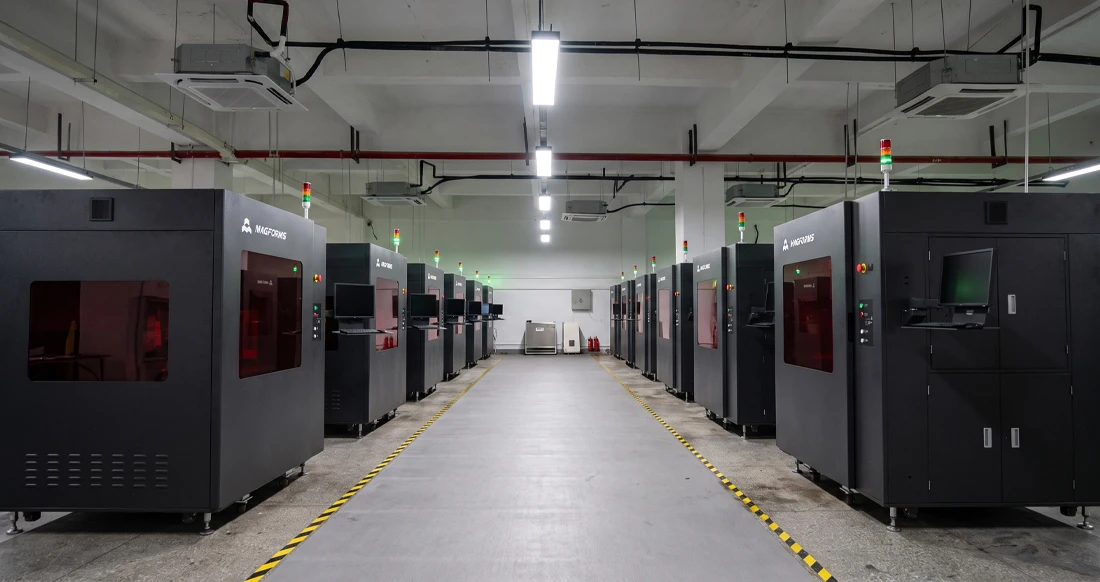
Magforms specializes in delivering advanced SLA printing technologies that streamline post-processing workflows while achieving industrial-grade quality standards. Our comprehensive solutions address the complete printing ecosystem from initial design through final part delivery.
Advanced Hardware Configuration and Performance
Our SLA systems incorporate premium components, including German Scanlab galvanometers, AOC lasers, and Panasonic AC servo motors that ensure exceptional reliability and precision. The Lab300 model features a stable marble base construction that achieves ±0.1 mm printing accuracy across the full build volume. This foundation enables consistent dimensional control that simplifies post-processing by reducing the need for corrective finishing operations.
Variable spot-size laser technology represents a breakthrough in SLA printing efficiency. Our systems automatically adjust laser spot size from 0.18-0.2 mm for fine details to 0.5-0.6 mm for internal fills. This intelligent approach increases printing speed by 30-50% compared to conventional single-spot systems while maintaining surface quality that minimizes post-processing requirements.
Deep learning algorithms optimize scanning paths in real-time, providing an additional 20% speed improvement over traditional pattern generation. Faster printing reduces per-part costs while maintaining the precision required for aerospace, medical, and automotive applications.

Integrated Materials and Equipment Solutions
Magforms breaks industry conventions by providing integrated materials and equipment solutions that eliminate compatibility issues common with third-party combinations. Our self-developed Resin printers undergo extensive optimization with our printing systems to ensure reliable, repeatable results across diverse applications.
This integration approach eliminates dimensional deviations, print defects, and unplanned downtime caused by material-equipment incompatibilities. Post-processing parameters are pre-validated for each material combination, reducing setup time and improving process reliability. Manufacturing operations benefit from predictable workflows that support just-in-time production schedules.
Our comprehensive material portfolio spans standard prototyping resins through high-performance engineering formulations. Each material includes detailed post-processing guidelines optimized for our equipment, enabling consistent results regardless of operator experience level.
Global Support and Technical Expertise
With 22 patents and 30 registered trademarks, Magforms maintains a strong intellectual property foundation that drives continuous innovation. Our products serve over 300 enterprises across dozens of countries, providing extensive real-world validation of our technology and support capabilities.
Our technical support team provides 24/7 remote consultation with guaranteed response within one hour and resolution within four hours. This rapid response capability minimizes production disruptions while ensuring optimal equipment performance. On-site support is available for complex issues that require hands-on intervention.
Regular training programs and workshops keep customers current with evolving best practices and new capabilities. These educational initiatives support technology adoption and help manufacturing teams achieve maximum value from their 3D printing investments.
Conclusion
Post-processing represents the critical final phase that transforms raw Resin printers into professional-grade components meeting industrial quality standards. Success requires systematic approaches to washing, curing, and quality control that address the specific requirements of each application and material combination. Modern SLA systems with integrated materials solutions streamline these workflows while achieving the precision and consistency demanded by aerospace, medical, automotive, and other demanding industries. Proper equipment selection, maintenance, and operator training ensure reliable results that justify the investment in advanced additive manufacturing capabilities.
FAQ
How long should I wash resin prints to ensure complete cleaning?
Washing duration depends on part complexity and resin type, typically requiring 5-15 minutes in each of two cleaning stages. Dense, complex geometries with internal channels may need extended washing times up to 30 minutes. Monitor solvent clarity and part tackiness to determine when cleaning is complete.
What happens if I cure parts incorrectly?
Undercuring results in soft, tacky surfaces that remain dimensionally unstable and potentially toxic. Overcuring can cause brittleness and discoloration that compromise mechanical properties. Both conditions may require part rejection and reprinting, emphasizing the importance of validated curing parameters.
What safety equipment do I need for post-processing operations?
Essential safety equipment includes nitrile gloves resistant to solvents, safety glasses with side shields, and protective clothing covering exposed skin. Ensure adequate ventilation to prevent solvent vapor accumulation. Keep emergency eyewash stations and spill cleanup materials readily accessible.
Can I reuse washing solvents?
Yes, but monitor the solvent condition carefully. Replace isopropyl alcohol when it becomes visibly cloudy or discolored, indicating saturation with uncured resin. Distillation systems can extend solvent life in high-volume operations, though fresh solvent should always be used for final cleaning stages.
How do I prevent warping during post-processing?
Minimize thermal stress by controlling temperatures during drying and curing phases. Support thin-walled parts during processing and ensure uniform UV exposure. Gradual temperature changes prevent thermal shock that can cause warping in sensitive geometries.
Partner with Magforms for Superior Resin Printing Solutions
Magforms stands ready to elevate your post-processing capabilities with our advanced SLA systems and comprehensive support services. Our integrated approach combining precision hardware, optimized materials, and expert technical guidance ensures consistent, professional results that meet the most demanding industrial requirements. Contact our team at info@magforms.com to discuss your specific post-processing challenges and discover how our resin printer manufacturer expertise can streamline your operations. We offer detailed equipment evaluations, material compatibility testing, and customized training programs that maximize your return on investment while achieving superior part quality.
References
1. Gibson, Ian, David Rosen, and Brent Stucker. "Additive Manufacturing Technologies: 3D Printing, Rapid Prototyping, and Direct Digital Manufacturing." Second Edition, Springer, 2015.
2. Jacobs, Paul F. "Rapid Prototyping and Manufacturing: Fundamentals of Stereolithography." Society of Manufacturing Engineers, 1992.
3. Melchels, Ferry P.W., Jan Feijen, and Dirk W. Grijpma. "A Review on Stereolithography and Its Applications in Biomedical Engineering." Biomaterials Journal, Volume 31, 2010.
4. Chartrain, Nicholas A., Christopher B. Williams, and Timothy E. Long. "A Review on Fabricating Tissue Scaffolds Using Vat Photopolymerization." Acta Biomaterialia, Volume 74, 2018.
5. Ligon, S. Christian, Robert Liska, Jürgen Stampfl, Miriam Gurr und Rolf Mülhaupt. "Polymers for 3D Printing and Customized Additive Manufacturing." Chemical Reviews, Volume 117, 2017.
6. Stansbury, Jeffrey W., and Mike J. Idacavage. "3D Printing with Polymers: Challenges among Expanding Options and Opportunities." Dental Materials, Volume 32, 2016.

Magforms makes design and manufacture easier.
Popular Blogs
-
 Industry InsightsManufacturing Industry
FDM vs. SLA Printer: Which Technology Is Right for Your Project?
-
 Industry InsightsManufacturing Industry
Top 5 Applications of Industrial 3D Printers in Manufacturing Today
-
 Industry InsightsManufacturing Industry
Why Stereolithography 3D Printers Are Unmatched for Microfluidic Device Prototyping?