How Does Ambient Humidity Impact an Industrial SLA 3D Printer?
Ambient humidity significantly impacts an Industrial SLA 3D Printer by influencing resin viscosity, curing behavior, and surface finish quality. When moisture levels deviate from recommended production conditions—commonly controlled around 35% to 40% relative humidity in industrial environments—photopolymer resins may experience changes in flow behavior and curing consistency, which can affect dimensional accuracy, surface quality, and layer adhesion. These environmental factors are particularly important for aerospace, medical device, and other precision manufacturing applications. Understanding and controlling humidity is essential for maintaining consistent print quality and maximizing operational uptime.
Understanding Ambient Humidity and Its Effects on Industrial SLA 3D Printing
Defining Ambient Humidity in Manufacturing Environments
The amount of water vapor in the air inside a production facility is called its "ambient humidity." There are two main ways to measure this: absolute humidity (the mass of water vapor per unit volume of air) and relative humidity (the percentage of water vapor present in the air relative to the maximum amount the air can hold at a given temperature). Industrial-grade hygrometers and digital humidity sensors can monitor environmental conditions in real time, allowing factory teams to track humidity changes throughout the production cycle of an Industrial SLA 3D Printer.
How Moisture Interacts with Photosensitive Resins
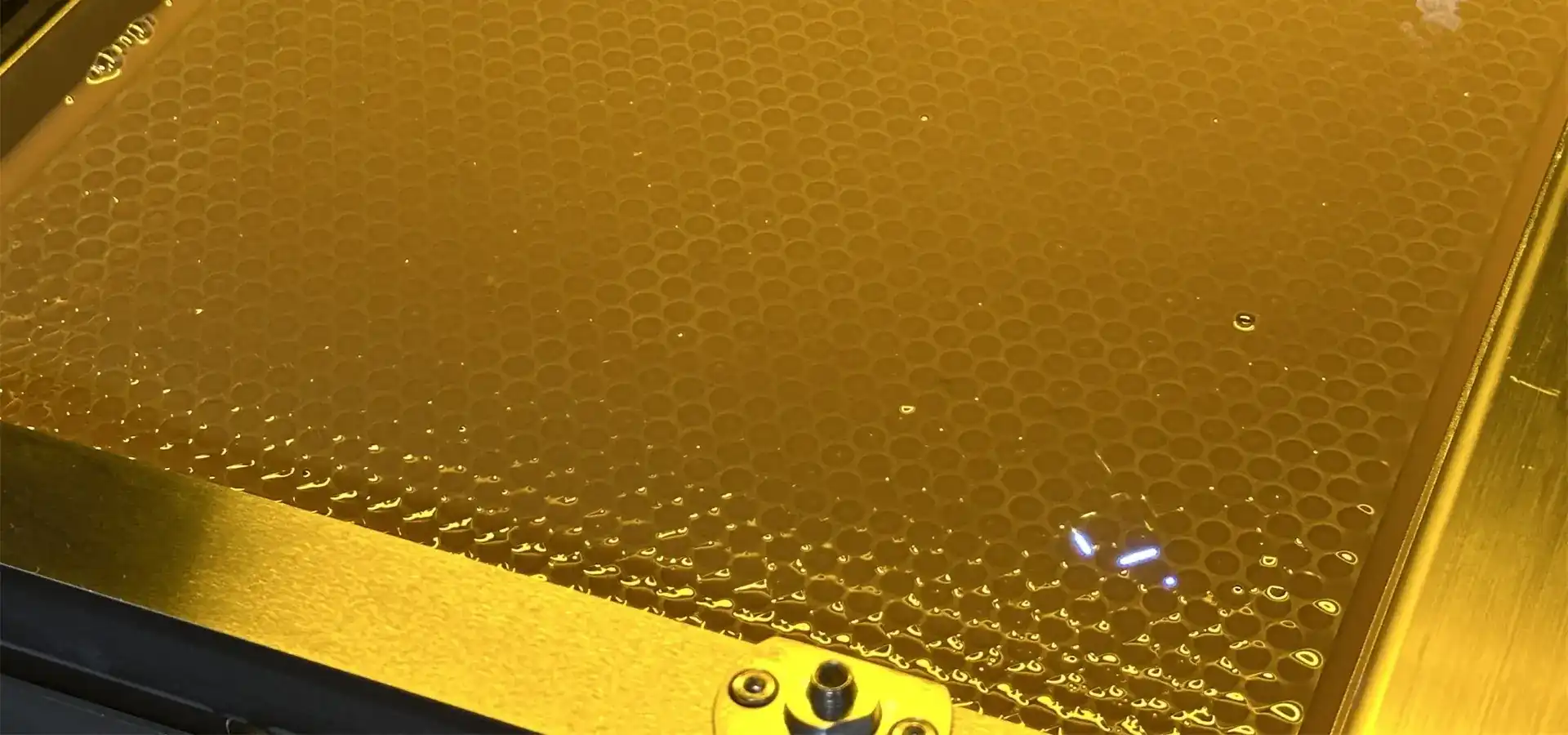
Photopolymer resins used in stereolithography are formulated with reactive monomers, oligomers, and photoinitiators that respond to UV laser exposure during the curing process. Under high humidity conditions, some photopolymer resins may interact with moisture in the environment, potentially affecting viscosity stability, recoating performance, and curing consistency. Moisture variation may influence resin viscosity and flow behavior, which can affect the efficiency and consistency of the recoating process during long printing cycles. For moisture-sensitive photopolymer formulations, prolonged exposure to elevated humidity can interfere with curing behavior and may affect conversion, mechanical properties, or dimensional stability. Advanced systems like those with AOC lasers and German Scanlab galvanometers need to keep the laser energy supply precise. Significant changes in resin behavior caused by environmental moisture may influence curing consistency and repeatability across the build volume, particularly during long printing cycles.
👉 Understand how stereolithography works
Impact on Dimensional Accuracy and Surface Quality
Significant humidity fluctuations can contribute to dimensional variation, particularly in large-format builds where longer printing times increase exposure to changing environmental conditions. Surface texture can also be affected when humidity conditions fall outside the recommended operating range. Excessive moisture or contamination can contribute to surface defects and curing inconsistencies, potentially increasing surface roughness and post-processing requirements. These variations can be particularly important in applications where manufacturers require tightly controlled dimensional tolerances and high-quality surfaces. Actual accuracy and surface-finish requirements depend on the part geometry, resin, printing parameters, post-processing workflow, and application.
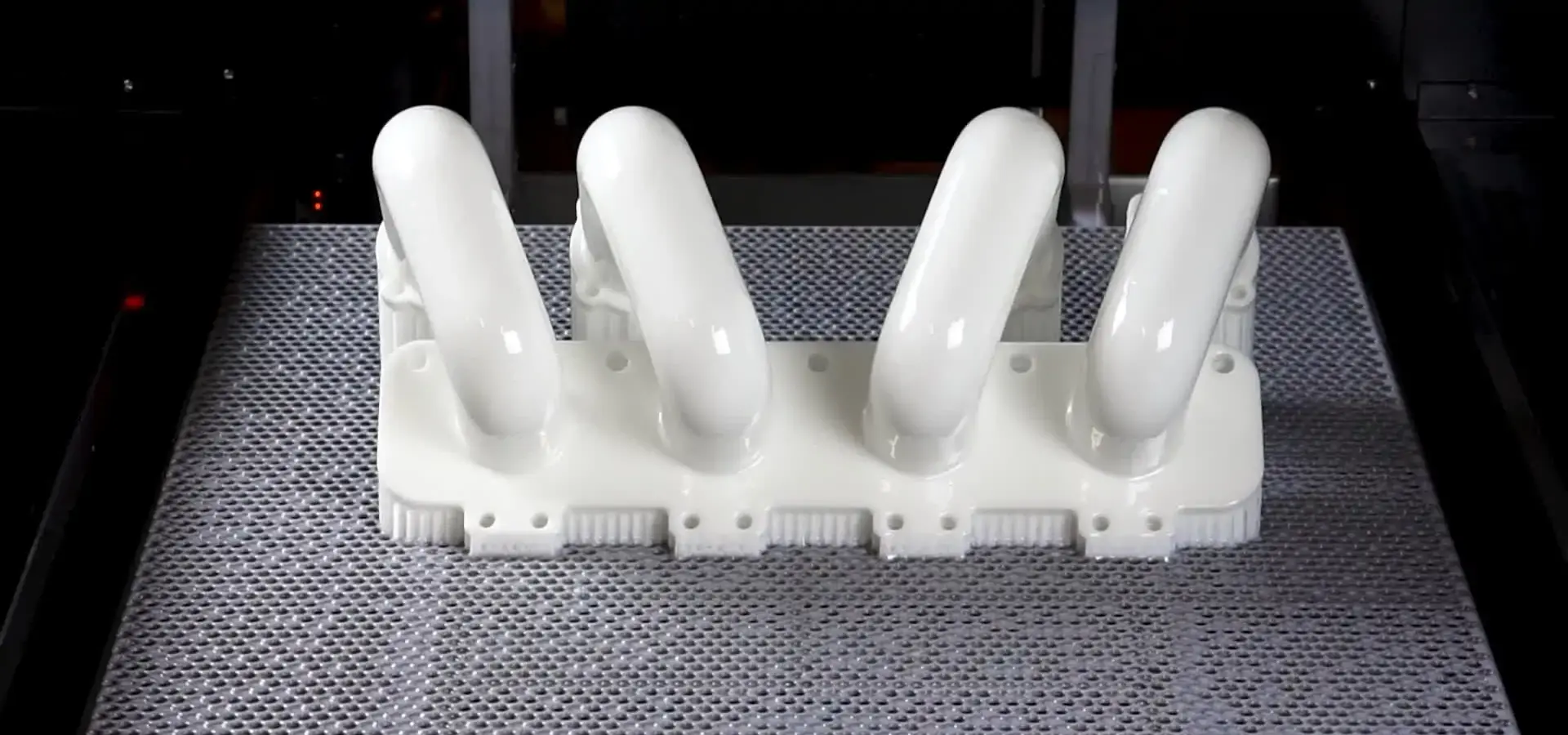
Industrial SLA 3D Printer Operation Under Varying Humidity Conditions
Critical Phases Where Humidity Affects Print Success
Several stages of the stereolithography process can be influenced by environmental humidity. If stored or handled incorrectly, moisture-sensitive photopolymer resins may be exposed to excessive humidity during resin loading and vat preparation. During long printing cycles, repeated exposure of the resin surface to ambient air can increase the importance of maintaining stable environmental conditions, particularly when using moisture-sensitive formulations. Environmental moisture can also affect the handling and post-processing behavior of some resin formulations. However, color stability and mechanical performance after post-curing depend primarily on the resin formulation, exposure history, and post-curing conditions. Industrial SLA 3D Printer systems with resin temperature control can help maintain more consistent resin viscosity and flow behavior, reducing the impact of environmental temperature fluctuations during long printing cycles.
Common Problems Linked to Inappropriate Humidity
Mismanagement of humidity is a common cause of specific flaws in manufacturing sites. Resin contamination may appear as cloudiness, cured particles, or other visible changes in the vat. Regular resin filtration, vat inspection, and proper material handling can help reduce these risks. Potential print issues include insufficient layer adhesion, delamination during handling, and warping in large parts. These problems can result from multiple factors, including resin condition, curing parameters, mechanical stress, and environmental stability. In production environments, the impact of humidity varies by resin chemistry, machine design, facility conditions, and process parameters. For this reason, manufacturers should establish environmental limits based on validated resin and equipment requirements rather than applying a single humidity threshold to every SLA application.
Environmental Control Strategies for Industrial SLA Production
Industrial manufacturers can improve process repeatability by combining environmental monitoring, controlled production spaces, stable resin conditions, and consistent printing parameters. For precision applications, these measures should be validated together rather than treating humidity as an isolated process variable.
👉 Explore real-world industrial SLA printing applications through our production case studies.
Best Practices for Managing Ambient Humidity in Industrial SLA 3D Printing Facilities
Recommended Humidity Ranges for Different Resin Types
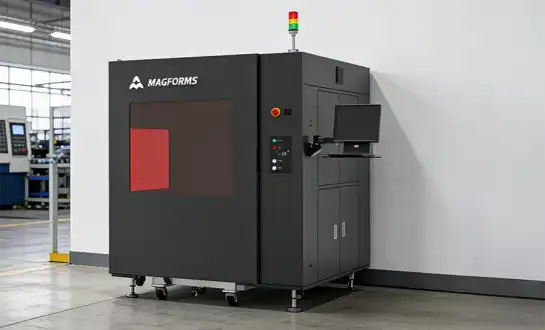
The appropriate humidity range depends on the resin formulation, printing system, facility conditions, and application requirements. Many standard acrylate-based resins are commonly processed in environments maintained around 35% to 40% relative humidity, although the optimal range depends on resin formulation and manufacturer recommendations. Engineering-grade resins, including ABS-like and high-temperature formulations, may have different environmental requirements depending on their chemistry and supplier specifications. Manufacturers should follow the resin supplier's validated storage and printing conditions rather than assuming that all engineering resins tolerate the same humidity range. Transparent resin applications can also require tighter process control because optical clarity depends on resin formulation, curing conditions, surface quality, and post-processing. The recommended environmental range should therefore be established according to the specific resin and application. Maintaining stable environmental conditions helps ensure that advanced scanning technologies, including variable laser spot systems, can perform consistently during long production cycles. The SL800's variable laser spot technology uses approximately 0.15–0.2 mm spot diameters for fine details, supports, and contours, while larger 0.5–0.6 mm spots can be used for faster area scanning and efficient resin curing over larger sections.
👉 Explore Magforms SL800 Industrial SLA 3D Printer
Implementing Environmental Control Systems
To manage humidity well, you need an HVAC system that works with additive manufacturing and is fully integrated. Commercial-grade dehumidifiers should be selected according to room size, climate conditions, HVAC design, and required humidity targets. Real-time monitoring systems with IoT-enabled sensors send out alerts when conditions change too much, which stops batch failures before they happen. Where appropriate, controlled airflow and positive-pressure systems can help limit the ingress of uncontrolled air from adjacent spaces, but the facility design should be based on the site's HVAC and environmental requirements, and Industrial SLA 3D Printer equipment should be placed away from exterior walls, where temperature changes happen the most. In robust systems, the 2 mm-thick metal enclosure and low-expansion marble platform contribute to structural and thermal stability during long print runs, while environmental humidity should be managed through appropriate facility-level controls.
Maintenance Protocols for Humidity-Affected Components
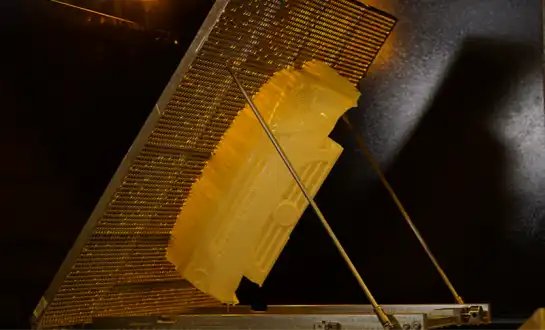
How you store resin correctly is the first step in controlling dampness. Unopened resin should remain sealed and be stored according to the resin manufacturer's specified temperature, humidity, and light-exposure requirements. Once opened, resin should be used within the manufacturer's recommended shelf-life or pot-life window, depending on the formulation, and should be resealed promptly after each use. The recoater blade, vat surfaces, and optical screens must be cleaned regularly so that moisture-related residue doesn't build up. Scanlab galvanometers and AOC laser optics should be inspected and maintained according to the equipment manufacturer's recommended service schedule. Supported platforms with angled drainage rods and other user-friendly design features make it easier to clean up between jobs, keeping moisture-trapped resin from getting into later builds.
Comparing Industrial SLA 3D Printers: Environmental Stability and Related Features
Technology Comparison: SLA Versus SLS and FDM
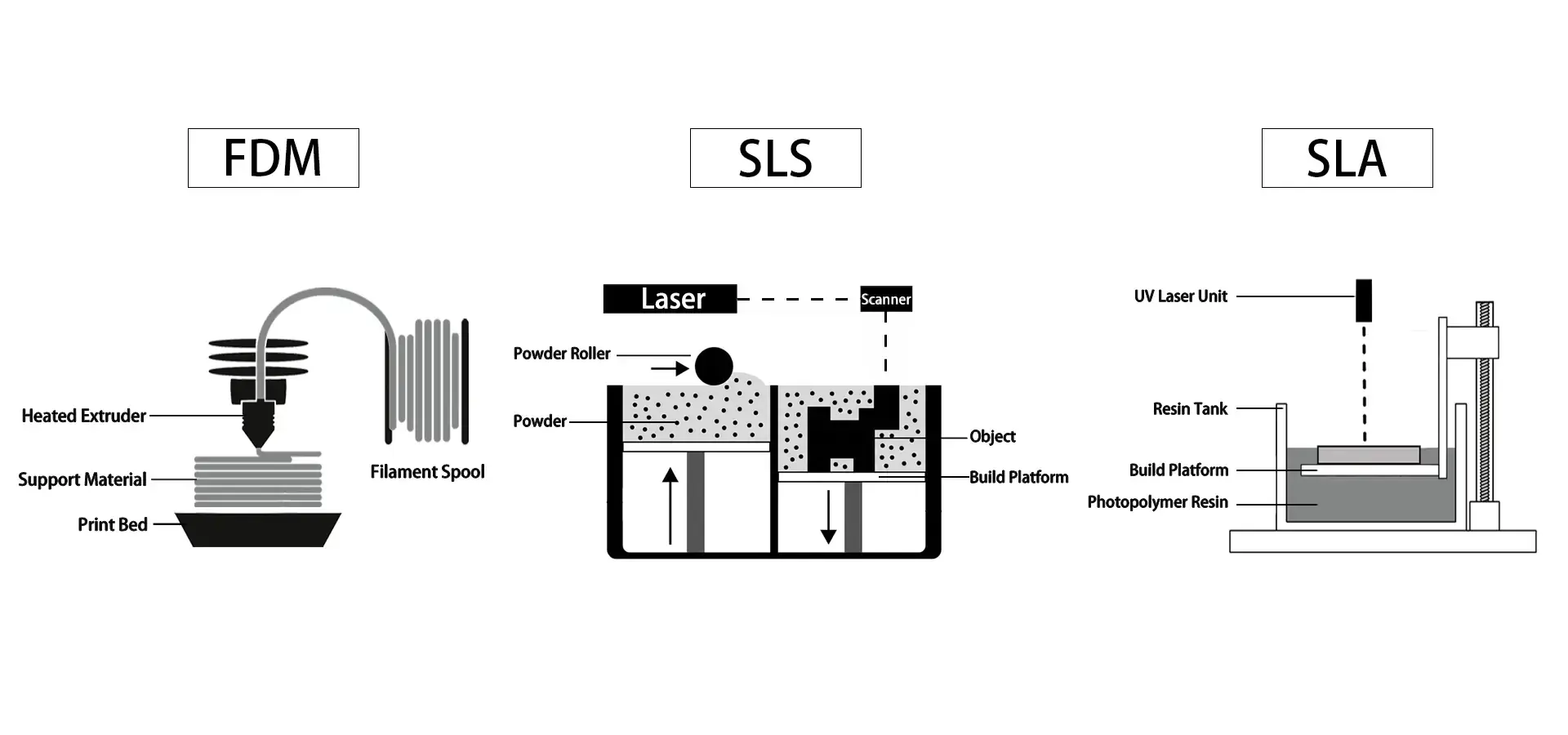
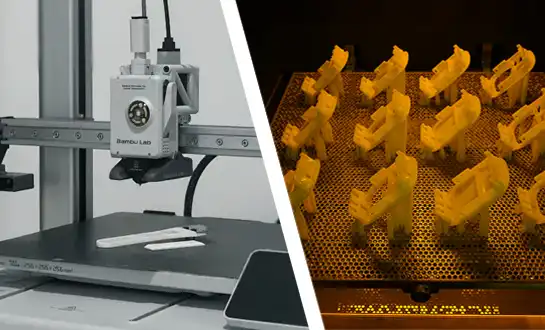
Different types of additive manufacturing are sensitive to damp in different ways. Selective laser sintering (SLS) with polymer powders also requires careful moisture and powder management, while specific chamber-atmosphere requirements vary by material and machine design. Fused deposition modeling (FDM) is particularly sensitive to moisture in hygroscopic filaments such as nylon and PVA, making proper drying and storage important both before and during production. Each additive manufacturing technology has different environmental considerations. SLA mainly depends on resin condition, optical stability, and curing consistency, while FDM is more sensitive to filament moisture absorption and thermal control, and SLS requires careful powder handling and chamber management. Some Industrial SLA 3D Printer models are compatible with open material systems, which lets manufacturers choose resins that are made with moisture-resistant additives. This gives them operational flexibility that isn't possible with proprietary material systems.
Leading Models with Advanced Humidity Management
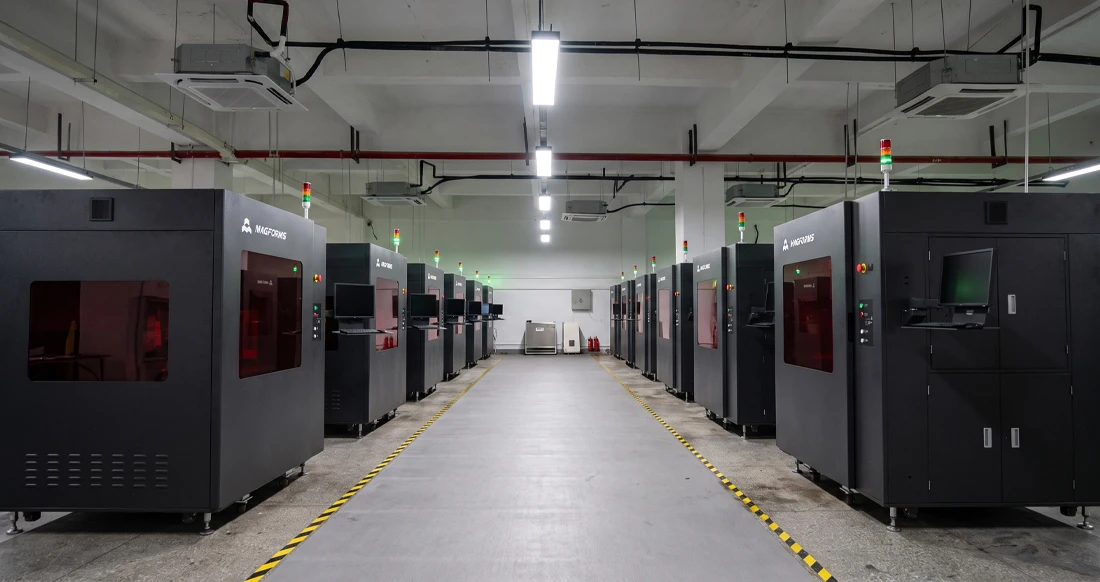
Several industrial printer architectures incorporate enclosed build areas, environmental monitoring, or temperature management to improve process stability under changing facility conditions. Systems with enclosed build chambers and environmental management features can help maintain more stable internal operating conditions despite changes in facility environments. Laser optics and galvanometer mirrors are sensitive precision components, so protective optical enclosures can help reduce exposure to dust, resin contamination, and uncontrolled environmental conditions. Magforms has developed machine architectures that help improve process stability under changing environmental conditions. For example, the built-in temperature control keeps the resin's fluidity at its best in a range of conditions, and the sealed optical section and protective enclosure help reduce contamination risks and maintain stable optical conditions during long-term operation. Precision components such as HIWIN linear guides require proper protection and maintenance to maintain positioning accuracy in different environmental conditions.
Cost-Benefit Analysis of Humidity-Resilient Equipment
The business case for environmental control depends on the resin, facility conditions, production volume, and cost of failed parts. Procurement teams should evaluate environmental-control infrastructure alongside printer capabilities, resin requirements, maintenance costs, and expected scrap rates when calculating total cost of ownership. For high-volume production, even modest improvements in process stability can reduce material waste, rework, and unplanned downtime.
Future Trends and Technological Developments Addressing Ambient Humidity Challenges
Innovations in Moisture-Resistant Resin Chemistry
Research into moisture-resistant photopolymer formulations continues to explore hydrophobic components and modified polymer structures that can improve resistance to environmental moisture while maintaining the required mechanical and processing properties. For industrial SLA development, material chemistry and hardware design increasingly need to be considered together. These developments may work alongside variable spot-size scanning and process-monitoring technologies to improve overall process stability and productivity.
Next-Generation Hardware with Climate Control
Some next-generation Industrial SLA 3D Printer designs incorporate enclosed work areas, environmental monitoring, or active temperature management to improve process stability. Some advanced systems integrate environmental sensors and monitoring functions to help operators maintain more stable temperature and humidity conditions during production. Certain prototypes have desiccant-based air conditioning that removes moisture from the inside environment all the time during print jobs that last several days. When this type of environmental control is combined with high-speed scanning systems, such as the Scanlab galvanometer used in the SL800 with scanning speeds of up to 12 m/s, it can support more consistent process control in high-volume production environments.
IoT Integration and Predictive Maintenance
Industry 4.0 technologies are changing how companies track and react to changes in their surroundings. Smart sensor networks constantly measure humidity along with temperature, vibration, and other factors. They then send this information to machine learning algorithms that figure out the best conditions for operation. Advanced monitoring systems can track environmental conditions and provide data for process optimization, helping operators maintain stable printing parameters and identify potential quality risks earlier. This approach can help operators identify environmental deviations earlier and make informed adjustments before they affect production quality. Cloud-connected monitoring lets you do diagnostics and get help from afar. Cloud-connected monitoring can also support remote diagnostics and faster technical communication between manufacturers and service teams. This lets production managers check on the environment and print status from anywhere in the building.
Conclusion
Humidity in the production environment can influence how well an Industrial SLA 3D Printer performs, affecting resin stability, curing consistency, and final part quality. Manufacturers in the aerospace, medical, automobile, and consumer electronics industries need to come up with complete strategies for managing humidity that include controlling the climate, choosing the right tools, and following strict maintenance procedures. Integrated solutions with built-in climate control, moisture-resistant materials, and smart monitoring systems will become more and more important for additive manufacturing to stay ahead of the competition. Understanding these changes in humidity and spending money on the right ways to stop them helps procurement teams get the most out of their equipment while still meeting the exact measurements and high-quality surfaces needed for tough jobs.
FAQ
1. How severely does humidity affect print quality in vat photopolymerization systems?
The severity of humidity-related effects depends on the resin formulation, environmental stability, printer design, and process parameters. Significant or prolonged deviations from the recommended conditions can affect resin handling, curing consistency, and surface quality, particularly during long industrial print jobs. Uncontrolled humidity has the biggest effect on quality in fields that need to work with tight standards, like aircraft parts or dental prosthetics produced by an Industrial SLA 3D Printer.
2. Can typical manufacturing facilities achieve adequate humidity control without specialized infrastructure?
Standard HVAC systems may not provide sufficient environmental control for some high-precision stereolithography applications. Dehumidification equipment is usually needed in places that are humid, like the Southeast United States or tropical areas. A dedicated additive manufacturing space should be evaluated based on room size, local climate, HVAC capacity, air exchange, insulation, and the required humidity setpoint. Dehumidification capacity should be selected accordingly rather than using a fixed capacity based only on floor area.
3. Which resin types perform best in variable humidity environments?
Resin performance under variable humidity depends more on the specific formulation than on whether a material is classified as standard or engineering-grade. Manufacturers should compare the resin supplier's recommended storage conditions, pot life, viscosity behavior, curing characteristics, and environmental requirements when selecting materials for variable-humidity environments.
Transform Your Production with Humidity-Resilient Industrial SLA 3D Printer Solutions from Magforms
Magforms makes complete stereolithography systems that are designed to work in environments with problems that lower print quality and make operations less efficient. Our Industrial SLA 3D Printer systems incorporate precision components from suppliers such as Scanlab, Panasonic, and HIWIN, together with temperature management and protective machine architecture designed to support stable long-term operation. By combining equipment development with material expertise, we offer matched resin and hardware solutions that get rid of the compatibility problems that come up with setups that use more than one vendor. Our professional after-sales team answers questions within 24 hours, so problems with the environment or technology don't cause production delays. Magforms has worked with more than 300 businesses across dozens of countries and can help manufacturing facilities that need high-precision, high-stability additive manufacturing for uses in automotive, aerospace, medicine, or consumer electronics. You can email info@magforms.com to get personalized advice on how our environmentally controlled SLA printing solutions can help your particular workflow needs and to read through detailed technical resources that will help you make smart purchasing decisions.
References
1. Chen, W., & Roberts, M. (2022). Environmental Controls in Additive Manufacturing: Humidity Management for Photopolymer Systems. Journal of Manufacturing Science and Engineering, 144(8), 081005.
2. Gibson, I., Rosen, D., & Stucker, B. (2021). Additive Manufacturing Technologies (3rd ed.). New York: Springer International Publishing.
3. Jacobs, P. F. (2020). Stereolithography and Other RP&M Technologies: From Rapid Prototyping to Rapid Tooling. New York: Society of Manufacturing Engineers.
4. Kumar, S., & Kruth, J. P. (2023). Material-Process Interactions in Vat Photopolymerization: The Role of Environmental Factors. Additive Manufacturing, 67, 103485.
5. Stansbury, J. W., & Idacavage, M. J. (2021). 3D Printing with Polymers: Challenges Among Expanding Options and Opportunities. Dental Materials, 37(1), 37-52.
6. Wohlers, T., & Campbell, I. (2023). Wohlers Report 2023: 3D Printing and Additive Manufacturing Global State of the Industry. Fort Collins: Wohlers Associates.

Magforms makes design and manufacture easier.
Popular Blogs
-
 Industry InsightsManufacturing Industry
FDM vs. SLA Printer: Which Technology Is Right for Your Project?
-
 Industry InsightsManufacturing Industry
Top 5 Applications of Industrial 3D Printers in Manufacturing Today
-
 Industry InsightsManufacturing Industry
Why Stereolithography 3D Printers Are Unmatched for Microfluidic Device Prototyping?