How Matrix Light Source Technology Redefines Resin Printer Precision and Quality?
Matrix light source technology revolutionizes the capabilities of a modern resin printer by employing an optimized LED array with enhanced uniformity and zonal intensity control. This innovation cures photopolymer resins with unprecedented precision. Unlike conventional backlight systems, matrix-optimized designs improve light distribution consistency across the entire build platform. This enables an industrial resin printer to achieve superior dimensional accuracy, smoother surface finishes, and significantly faster print speeds while maintaining exceptional detail resolution for demanding engineering applications.
Introduction to Matrix Light Source Technology in Resin Printing
Traditional LCD-based resin printers use standard LED backlight systems combined with an LCD masking layer to cure photopolymer resins layer by layer. While these techniques laid the groundwork for modern additive manufacturing, they introduce optical inconsistencies that limit precision and manufacturing efficiency.
One of the main problems with traditional light sources is uneven exposure across large building areas. Variations in backlight uniformity lead to inconsistent cure depths and dimensional inaccuracies. Standard resin printer backlights often suffer from uneven light distribution and edge distortion, lowering the quality of printed parts—especially in critical sectors like medical devices or aerospace prototypes. Matrix light source technology represents a major leap forward in controlling photopolymerization.
This method uses a high-density LED array with improved optical calibration, enabling consistent energy distribution across the build platform. Instead of treating light exposure as a simple on/off switch, matrix technology allows engineers to fine-tune how curing energy is spread. Combined with a stable backlight, this pixel-level uniformity leads to better part quality, reduced post-processing, and higher reliability in industrial settings.

Limitations of Traditional Backlights and the Rise of Matrix Technology
Standard resin printer systems face challenges in maintaining uniform exposure across complex physical geometries. This often translates to edge distortion effects, where measurements around the perimeter of the build platform drift. Uneven light distribution alters the cure depth across layers, manifesting as warping, layer delamination, and surface flaws that require extensive post-processing or result in scrapped parts.
Furthermore, thermal accumulation during prolonged operations can introduce drift effects that degrade dimensional stability over long print jobs. Matrix light source technology emerged from advancements in high-resolution display optics to solve these thermal and optical inconsistencies.
By utilizing high-density LED arrays combined with refined optical lenses, engineers developed light sources that provide high-frequency exposure control and stable output. Each light element is calibrated to deliver the exact amount of energy to the resin vat. The outcome is a highly parallel photopolymerization process that eliminates the fundamental optical flaws of older methods, opening new doors for advanced manufacturing.
Core Benefits of Matrix Lighting for Resin Printer Quality

Implementing matrix light source technology delivers measurable improvements across multiple quality metrics that directly impact manufacturing outcomes.The benefits of adopting matrix light source technology extend across multiple performance dimensions. These advantages address longstanding challenges in additive manufacturing while enabling new possibilities for precision production:
- Superior Surface Quality: Matrix arrays reduce exposure non-uniformity artifacts and minimize layer line visibility through uniform energy distribution. This setup helps the resin printer achieve surface roughness values below 1.5 micrometers without heavy post-processing.
- Enhanced Dimensional Accuracy: Zonal exposure control minimizes thermal stress and curing-induced shrinkage. This improves dimensional consistency across the entire build area under optimized conditions, which is crucial for tight-tolerance assemblies.
- Accelerated Production Speed: In many process-optimized scenarios, improved light efficiency and parallel processing allow for shorter exposure times per layer compared to traditional resin printer setups—all without sacrificing detail.
- Improved Material Compatibility: A more stable energy distribution supports optimization for diverse resin formulations. This includes high-temperature, flexible, elastomeric, and biocompatible materials.
These technological advantages translate into tangible operational benefits for manufacturing environments. Production throughput increases significantly while maintaining or improving quality standards, reducing per-part costs, and enabling competitive pricing for custom manufacturing services. The enhanced precision capabilities of the LCD printer also expands the range of manufacturable geometries, allowing designers greater freedom in creating complex assemblies and functional prototypes. Case studies from automotive prototyping applications demonstrate dimensional accuracy improvements of up to 35% when comparing matrix-equipped systems to conventional alternatives. Medical device manufacturers report similar gains, with surgical guide tolerances achieving clinical requirements without secondary machining operations.

Implementation Considerations for B2B Procurement Managers
Procurement professionals evaluating a resin printer must assess multiple performance criteria to ensure optimal technology selection for their specific applications. Print quality metrics represent the primary evaluation focus, encompassing dimensional accuracy, surface finish quality, and feature resolution capabilities. These specifications directly influence downstream processing requirements and final part acceptability rates. Operational efficiency considerations extend beyond basic print speed measurements to include material utilization rates, post-processing requirements, and overall equipment effectiveness.
A matrix-equipped resin printer typically demonstrates superior material efficiency when properly calibrated and matched with suitable resin systems due to reduced support structure requirements and minimized resin waste from failed prints. The enhanced reliability also translates to higher equipment uptime and more predictable production schedules. Cost-benefit analysis must weigh initial capital investment against long-term operational savings and revenue enhancement opportunities. While matrix-equipped systems command premium pricing compared to conventional alternatives, the improved quality capabilities often enable access to higher-value applications and markets. Manufacturing service providers frequently report 25-40% increases in billable rates for parts produced using advanced matrix technology. Supply chain security represents another critical evaluation criterion, particularly for organizations serving regulated industries or export markets.
Established manufacturers with proven track records in European and North American markets provide greater assurance of continued support, spare parts availability, and software update reliability. Partnership agreements with distributors should include provisions for local technical support and training services to minimize operational disruptions. The evaluation process should also consider compatibility with existing workflows and software systems. Matrix technology requires specialized control software and potentially modified file preparation procedures. Organizations must budget for training programs and workflow optimization to fully realize the technology's benefits.

Troubleshooting and Maintenance Tips for Matrix Systems
To maintain peak uptime with a high-performance resin printer, operators must understand the maintenance needs of advanced optical systems.
- Daily Optical Cleaning: Photopolymer resin spills should be cleaned from optical interfaces immediately using manufacturer-approved solvents and lint-free materials.
- Weekly Calibration Checks: Weekly checks ensure that exposure remains uniform and powerful across the whole build platform.
- Firmware and Data Backups: Software updates frequently optimize exposure algorithms and material compatibility settings. Consistently backup your custom material profiles.
Environmental stability is also critical. To maintain precision, temperature stability, humidity control, and vibration isolation may need to be strictly regulated within the print laboratory.
Conclusion
Matrix light source technology represents a transformative advancement in stereolithography. By addressing the fundamental limitations of traditional backlights, it drives new levels of precision and throughput. The investment in a matrix-equipped resin printer provides long-term value through improved part quality, expanded application possibilities, and enhanced manufacturing flexibility—positioning organizations for scalable growth in evolving markets.
FAQ
1. How does matrix light source technology compare to standard LCD curing?
Matrix technology provides superior light uniformity and collimation (parallel light beams). Standard LED arrays can scatter light, leading to soft edges. A matrix array focuses the light directly upward through the LCD, reducing light bleed and sharpening features.
2. Which resin types work best with matrix light source curing technology?
Matrix systems demonstrate exceptional compatibility with engineering-grade resins, including ceramic-filled composites, high-temperature formulations, and biocompatible materials. The technology also excels with transparent resins, where uniform exposure prevents internal cloudiness and optical distortions.
3. Is this technology suitable for dental and jewelry manufacturing?
Yes. Dental labs rely on the dimensional stability of matrix systems for accurate surgical guides and dental arches. Jewelry manufacturers benefit from the ultra-smooth surface finishes that reduce manual polishing on intricate filigree designs.
Call to Action: Upgrade Your Production with Magforms
Matrix light source technology opens unprecedented opportunities for precision manufacturing. Magforms delivers cutting-edge, industrial resin printer systems that integrate advanced matrix technology with industrial-grade stability.Our open-source design philosophy eliminates material restrictions while our comprehensive support team provides 24/7 technical assistance. As a leading additive manufacturing equipment provider, we combine innovative matrix technology with robust engineering to meet the most demanding production requirements. Contact our procurement specialists at info@magforms.com to explore tailored solutions and discover how our advanced printing capabilities can elevate your manufacturing operations through enhanced precision, reliability, and operational efficiency.
References
1. Advanced Photopolymerization Technologies in Additive Manufacturing: Principles and Applications. Journal of Manufacturing Science and Engineering, 2023.
2. Matrix Light Source Development for High-Precision Stereolithography Systems. International Conference on Additive Manufacturing Technologies, 2024.
3. Comparative Analysis of Light Sources in Industrial SLA Printing Applications. Materials Processing Technology Review, 2023.
4. Pixel-Level Exposure Control in Stereolithography: Technical Implementation and Performance Metrics. Additive Manufacturing Research Quarterly, 2024.
5. Industrial Applications of Advanced Matrix Light Source Technology in Precision Manufacturing. Manufacturing Technology International, 2023.
6. Quality Assessment Methods for Matrix-Enhanced SLA Printing Systems in Production Environments. Precision Manufacturing Engineering, 2024.

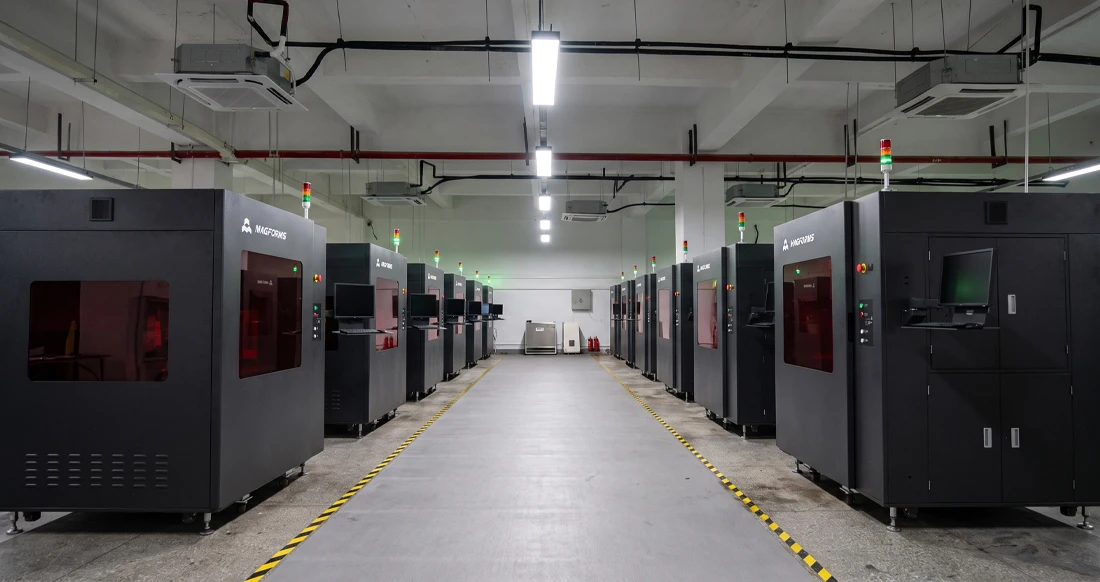
Magforms makes design and manufacture easier.
Popular Blogs
-
 Industry InsightsManufacturing Industry
FDM vs. SLA Printer: Which Technology Is Right for Your Project?
-
 Industry InsightsManufacturing Industry
Top 5 Applications of Industrial 3D Printers in Manufacturing Today
-
 Industry InsightsManufacturing Industry
Why Stereolithography 3D Printers Are Unmatched for Microfluidic Device Prototyping?