How to Choose the Best Big Format SLA 3D Printer for You?
You need to carefully think about your production needs, technical needs, Big format SLA 3D printer, and long-term operating goals in order to choose the right Big format SLA 3D printer. Heavy-duty stereolithography systems with bigger build areas provide the best accuracy and surface quality for making on a large scale. To get the best return on your investment, you need to know what your application needs, look at the technical specs, check to see if the materials will work together, and choose a dependable source with a full range of support services.
Understanding Big Format SLA 3D Printers
It is important to note that big-format SLA (3D printers) are a big step forward in additive manufacturing technology. They were designed for industrial uses that need to be able to produce large amounts of things very precisely. High-power UV lasers, usually 355nm solid-state units, are used in these high-tech systems to cure liquid photopolymer resins layer by layer. This makes parts with better surface finishes and more accurate measurements.

What Sets Large Format SLA Systems Apart
On the other hand, industrial big format systems can stretch over 600 mm x 600 mm x 400 mm. Some of the best ones can be as long, wide, and tall as 2 meters. The best thing about these systems is that they can print out very large parts all at once. This gets rid of the mechanical flaws and mistakes caused by tolerance building that happen with segmented assembly. These high-tech systems have precision galvanometer scanners and changeable beam spot technology built in to make sure quality stays the same over large areas. Because the laser spot can be changed, you can get the best speed and fine balance. For instance, you can use bigger spots to quickly fill in the inside of an object and fine spots to make accurate shapes and features.
Industrial Applications and Market Demand
In the car business, large-format stereolithography is often used to test full-size versions of things like instrument panels, grilles, and aerodynamic parts that will be tested in a wind tunnel. It is used by investment casting foundries to make spare master models out of special resins that can be cast. It cuts lead times from months to days and gets rid of the need to use wax tools. Medical device businesses use big format skills to make full-body anatomical models, surgery planning tools, and a lot of clear aligners. The aeroplane business benefits from being able to make precise joints and parts with a lot of moving parts that meet very high standards for accuracy while still remaining structurally sound.
Key Criteria for Choosing the Best Big Format SLA 3D Printer
To choose the best large-format stereolithography system, you need to carefully consider a lot of technical and practical factors that have a direct effect on how quickly and well the parts are made. When procurement teams understand these criteria, they can make choices that are in line with their unique manufacturing needs.
Build Volume and Resolution Specifications
The basic limitation that determines which parts can be made in a single print run, a Big format SLA 3D printer, and which ones need to be segmented is the build volume. When comparing systems, you should look at both the largest dimensions and the printing area that will actually fit. This is because some makers list areas that can't be printed in their specs. The resolution needs to be right for your application. Most systems have layer heights between 0.05mm and 0.2mm and XY resolutions between 0.1mm and 0.3mm. Advanced systems use several laser settings and dynamic stitching algorithms to cover large scan areas without seam lines. This makes sure that the surface roughness stays below 1ჺm right off the printer. This feature is very important for apps that need to be used right away without a lot of post-processing.

Speed and Throughput Considerations
Both printing speed and output improvement affect how well a product is made. Variable spot-size technology is built into modern big format systems, which makes them 30–50% faster than older ways. The smart spot-size design uses bigger beams for filling inside while keeping the fine detail resolution for complex shapes and surface features. With batch production, you can print several smaller parts at the same time, making the most of the big build volume. This method works especially well for service companies and makers that need to make a lot of small, precise parts.
Material Compatibility and Cost Management
Cost control and practical freedom are two big benefits of open-source material compatibility. Many private systems only let users use expensive brand-name plastics, which limits the materials they can use and raises the costs of doing business. Systems that work with photopolymer resins from other companies let you save money on materials while still meeting quality standards. Check out the variety of materials that can be used together, such as industrial resins, clear formulas, high-temperature choices, and flexible materials. Take into account the prices and availability of consumables in your area, as material costs make up a big part of running costs over the lifetime of a system.
Reliability and Maintenance Requirements
For industrial uses, uptime must be consistent, and repair plans must be known ahead of time. Systems with strong mechanical structures, like heavy-duty steel frames and Z-axis modules made of granite, reduce vibrations better and stay stable over time. Automated resin processing systems that can sense resin levels and recirculate the material keep its qualities stable over long print runs. Real-time tracking, automatic testing systems, and predictive maintenance are some of the quality control features that help keep unplanned downtime to a minimum. These features come in handy, especially in places where a lot of things need to be made and where broken equipment costs a lot.
Comparing Big Format SLA Printers with Other 3D Printing Technologies
Getting buying teams to understand the pros and cons of various additive manufacturing technologies helps them choose the best option for their needs. There are some places where big-format SLA systems really shine, while other solutions might work better for other needs.
Surface Quality and Precision Comparison
When compared to FDM (Fused Deposition Modeling) and SLS (Selective Laser Sintering) systems, stereolithography technology gives better surface finishes. Layer-by-layer photopolymerization makes smooth surfaces with little post-processing needed. This makes SLA perfect for visual prototypes, investment casting patterns, and final parts that need to look great. The surface quality of DLP (Digital Light Processing) systems is similar, but they usually have smaller build sizes and different speed properties. When compared to point-by-point exposure methods, SLA systems' constant curing process makes the mechanical features more uniform across big parts.
Material Properties and Performance
When it comes to clarity, biocompatibility, Big format SLA 3D printer, and reproducing surface details, SLA photopolymer resins are the best. Castable resins let you use direct investment casting, and flexible versions give you rubber-like qualities that you can't get with powder-based technologies. But thermoplastics used in FDM and SLS methods might be better for structural uses because they have better mechanical qualities.As the market for high-performance industrial resins for SLA keeps growing, new formulations are getting closer to having the mechanical properties of thermoplastics that are injected into molds, while still having the benefits of photopolymerization technology for precision and surface quality.

Operational Costs and Scalability
The initial costs of big-format SLA systems are usually higher than those of similar FDM units, but they are still about the same as those of industrial SLS systems. The cost of materials per unit varies a lot depending on the use and type of resin chosen. When the quality of the part supports the higher cost of the materials, SLA methods work great. When thinking about scalability, you need to think about things like how to handle materials, how to do post-processing, and how skilled the operators need to be. Because they work with liquid resin, SLA systems need more detailed safety rules, but once they are set up correctly, they give more reliable results with less work from the user.
Evaluating Top Big Format SLA 3D Printers and Brands
There are a number of well-known companies in the industrial big-format SLA market that make systems with different features, support structures, and value offers. To evaluate these choices, you need to know about both the technical details and the long-term relationship issues.
Leading Manufacturers and Technology Innovation
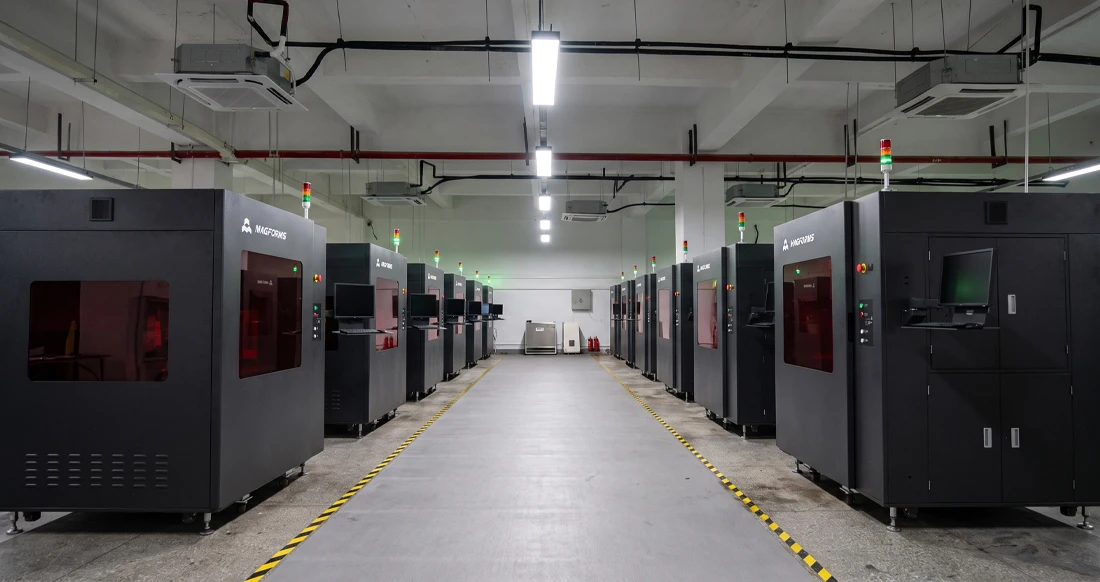
Magforms has become a major player in the big-format SLA market by introducing important new technologies and offering a wide range of support services. The business has a strong intellectual property base, as shown by its 22 patents and 30 registered brands, which allow it to keep developing new products and growing its market. Magforms' method focuses on integrating solutions that combine the best tools and materials. Their varying spot-size laser technology and AI-optimized scanning tracks make it possible to print at speeds over 30% faster than the industry average while still being accurate to the micron level. This technological edge solves the problem that businesses have always had: how to balance speed and accuracy.
Technical Specifications and Performance Metrics
Modern big-format SLA systems have a number of important technical parts that affect how well they work generally. German Scanlab galvanometers allow exact control of lasers, and AOC lasers maintain a steady power output over long periods of time. When making a lot of things, Panasonic AC servo motors make sure that everything is placed correctly and the same way every time. The Helios-P800 model is a great example of advanced engineering because it has a stable marble base and can print things up to 100 mm long with an accuracy of 0.1 mm. This level of accuracy lets you make working prototypes and finished parts that meet strict tolerance standards in the medical, military, and automobile fields.
Support Infrastructure and Service Capabilities
For business additive manufacturing processes to work, they need a lot of technical help. Magforms offers remote technical support 24 hours a day, seven days a week. They promise a reaction time of one hour and a solution delivery time of four hours. This ability to respond quickly keeps operations running smoothly and limits interruptions to output as much as possible. The company has a foothold in more than 30 countries around the world and works with more than 300 businesses to provide established marketing networks and local support. Operators stay up-to-date on new technology and improve production processes through regular technical training programs and professional classes.
Material Integration and Compatibility
Magforms solves a major problem in the business, the Big format SLA 3D printer, by combining their methods for making materials and tools work together. Third-party materials and traditional systems don't always work well together, which can cause problems with measurements, print errors, and unplanned downtime. These problems are solved by the company's matching material and technology optimization, which also lets open-source users choose which materials to use. This unified method has measured advantages, such as lower failure rates, better accuracy in measurements, and higher output reliability. When you combine private optimization with open material compatibility, you get better speed and more control over costs.

Practical Tips for Procurement and Long-Term Use
For big-format SLA systems to be put in place successfully, they need to be planned strategically, including decisions about what to buy, how to run the systems most efficiently, and how to keep them in good shape over time. These things make sure that you get the most out of your investment and that you can keep making things.
Procurement Planning and Vendor Selection
To make a complete procurement strategy, you must first clearly define the application needs, output numbers, and quality standards. Make thorough technical specs that include the build volume, resolution, material compatibility, and output that you expect. This paperwork makes it possible to compare vendors accurately and ensures that proposals meet real practical needs. Check the vendor's financial security, their technical help skills, and the areas they serve. Think about the overall cost of ownership, which includes the cost of the equipment itself, the cost of materials, the cost of upkeep, and the cost of training operators. Ask for demonstrations or sample parts to check the performance claims and make sure they will work with your unique uses.
Installation and Operational Optimization
For installation to go smoothly, the building needs to be properly prepared with the right air systems, temperature controls, and safety gear for handling glue. Make sure there is enough room to store materials, use post-processing equipment, and get to upkeep areas. Plan for the utilities you will need, like enough electricity, compressed air, and methods for dealing with waste. Training programs for operators should teach both basic operations and more advanced ways to improve efficiency. Understanding how to handle material, how to optimize print parameters, and how to fix problems is important for making sure that the system works well and meets safety standards. Operators stay up to date on new technology and best practices by getting training updates on a regular basis.
Maintenance and Long-Term Performance
Schedules for preventive repair cut down on unplanned downtime and make machinery last longer. Regular calibration methods keep accuracy levels high, and repair plans for parts keep them from breaking down when they're least expected. Make sure you have enough extra parts for important parts like laser modules, galvanometer systems, and plastic handling parts. As part of quality control, coordinate measuring tools or 3D laser scanning systems should be used to check measurements on a frequent basis. To keep the quality of the parts constant, keep an eye on the laser's power output, the features of the resin, and the surroundings. Keep track of maintenance tasks and success indicators to find patterns and make maintenance plans work better.
Conclusion

To choose the best Big format SLA 3D printer, you need to weigh the technical specs against the needs of the business and your long-term strategic goals. The most important ones are the build volume requirements, the accuracy of the printing, the compatibility of the materials, and the full help from the seller. Advanced systems with varying spot-size technology and built-in material optimization offer big improvements in both quality and economy. To get the most out of your investment and keep your manufacturing competitive, you need to carefully plan your purchases, make sure they are installed correctly, and make sure that the upkeep is Big format SLA 3D printer always being optimized.
FAQ
1. What build volume should I consider for my application?
The number of parts you need to build depends on how many batches you plan to make. Systems with build areas bigger than 600mm x 600mm x 400mm can make big solid parts while making the most of batch efficiency for smaller parts. When looking at build volume specs, you should think about both your current needs and your goals to grow in the future.
2. How do material costs compare between different SLA systems?
The prices of materials are very different between closed and open source platforms. Proprietary systems may limit the materials you can use and raise your continued costs. On the other hand, open-source support lets you choose a resin from a third party, which lowers costs. When figuring out the total cost of operations, you should look at both the original cost of the plastic and how much it will be used over time.
3. What post-processing requirements should I plan for?
For the best mechanical qualities, SLA parts usually need to be washed in ethyl alcohol or a special cleaning solution and then cured in UV light. Make sure you have enough post-processing tools, like wash stations, curing rooms, and the right safety gear. When making a lot of things, you might want to think about automatic choices.
4. How important is local technical support?
In industrial settings where downtime has a direct effect on production schedules, local expert help is very important. Check out the reaction times, service areas, and spare parts available in your area. Think about what the seller can do for remote diagnostics and on-site help for problems with tools that can't be fixed remotely.
Partner with Magforms for Your Big Format SLA 3D Printer Solutions
Magforms can help you reach your goals for additive manufacturing Big format SLA 3D printer with their top-of-the-line Big format SLA 3D printer technology and wide range of service options. Our unified method, which combines advanced gear with specially designed materials, leads to noticeable gains in speed, accuracy, and dependability. We have the knowledge and tools for successful industrial application, with 22 patents, global distribution networks, and professional help available 24 hours a day, 7 days a week. Get in touch with us at info@magforms.com to talk about your unique needs and find out how our big-format SLA 3D printer options can help you make more things. As a reputable company that makes Big format SLA 3D printers, we offer reasonable prices, thorough training programs, and ongoing technical support to make sure that your equipment works at its best for as long as it lasts.
References
1. Gibson, Ian, David Rosen, and Brent Stucker. "Additive Manufacturing Technologies: 3D Printing, Rapid Prototyping, and Direct Digital Manufacturing, Second Edition." Springer Press, 2015.
2. For Jacobs, Paul F. This paper from the Society of Manufacturing Engineers in 1996 is called "Stereolithography and Other RP&M Technologies: From Rapid Prototyping to Rapid Manufacturing."
3. It was written by Melchels, Ferry P.W., Jan Feijen, and Dirk W. Grijpma. A look at stereolithography and how it can be used in biomedical engineering. Biomaterials 31, no. 24 (2010): 6121-6130.
4. There are Ian Cooperstein and Shlomo Magdassi. "3D printing of micrometer-sized clear ceramics with optical gain properties that can be changed on demand." Advanced Materials Technologies 5, no. 1 (2020): 1900974.
5. Nicholas A. Chartrain, Christopher B. Williams, and Timothy E. Long. "A review on fabricating tissue scaffolds using vat photopolymerization." Acta Biomaterialia 74 (2018): 90–111.
6. They are Quan, Huan, Tao Zhang, Hua Xu, Sheng Luo, Jun Nie, and Xiaoqun Zhu. Bioactive Materials 5, no. 1 (2020): 110–115. "Photo-curing 3D printing technique and its challenges."

Magforms makes design and manufacture easier.
Popular Blogs
-
 Industry InsightsManufacturing Industry
FDM vs. SLA Printer: Which Technology Is Right for Your Project?
-
 Industry InsightsManufacturing Industry
Top 5 Applications of Industrial 3D Printers in Manufacturing Today
-
 Industry InsightsManufacturing Industry
Why Stereolithography 3D Printers Are Unmatched for Microfluidic Device Prototyping?