How Does the P7 Pro Desktop 3D Printer Reduce Development Time?
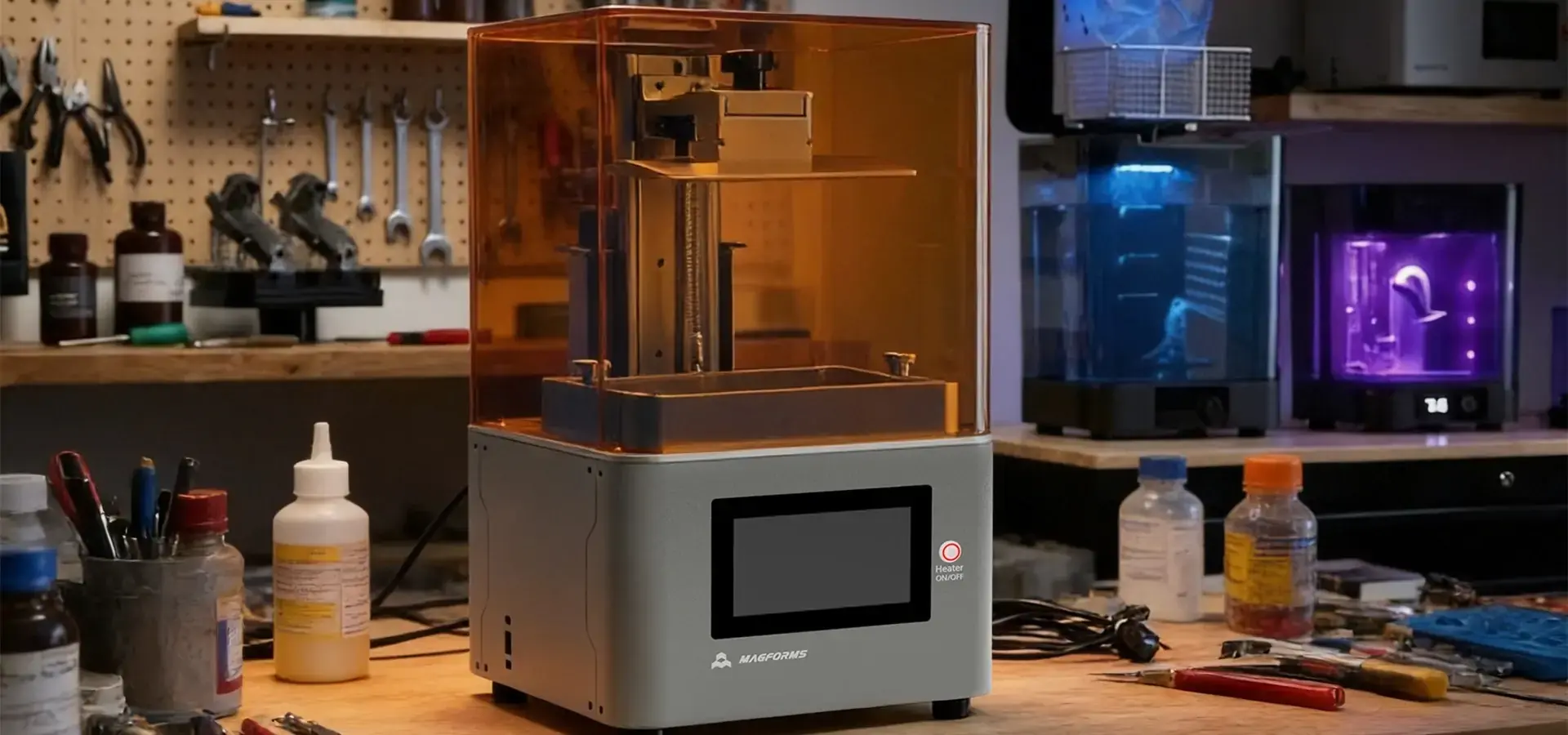
By combining a 9-micron XY precision, clever temperature control that keeps the room at 30°C, and a 9K monochrome LCD screen, the P7 Pro desktop 3D printer changes the time it takes to make things. These new ideas get rid of the delays and problems with uniformity that come with old testing methods. The system achieves dimensional accuracy of up to ±0.02 mm through advanced grayscale optimization algorithms and P-grade industrial linear rails. Its imaging performance approaches that of many industrial DLP-based systems while maintaining a compact desktop footprint. This LCD-based photopolymer desktop 3D printer workflow lets you make things quickly and over and over again, which is very important for industries that need to be done quickly, like jewellery, dentistry, and precision manufacturing.
Assessing Development Bottlenecks Caused by Traditional Prototyping Methods
Development teams face mounting pressure to deliver prototypes faster without compromising precision. Traditional approaches create substantial friction in modern workflows.
Extended Lead Times From Outsourcing
When you hire specialised shops to do your testing, you have to deal with extra contact costs, shipping delays, and review cycles that add weeks to your project plan. Engineering teams lose control over how fast iterations happen, which leads to factors that slow down the launch of the whole product. Changes that need another round-trip cycle add to the total time it takes to complete multiple planning stages. External service providers often work on multiple projects for different clients at the same time. This means that pressing requests have to fight for limited production capacity.
Material Waste and Quality Inconsistencies
Manual modelling methods use too much material because they are based on trial and error. Batch-to-batch quality differences are caused by weather factors, operator method changes, and mixing amounts that aren't always the same. These differences make validation testing less useful. Parts with measurement shift or surface flaws need to be reprinted, which adds to the time lost. When equipment needs to be recalibrated often, it creates uncertainty that makes it hard to stick to output schedules and plan resources.
Performance Limitations of Subpar Equipment
Many entry-level desktop 3D printer systems face challenges when processing temperature-sensitive photopolymer resins in cold environments. Low ambient temperatures can increase resin viscosity and negatively affect curing consistency, leading to print failures or reduced dimensional accuracy. Because the precision is so low (often 50 microns or less), it can't show fine surface features that are needed for dental or jewellery casting models. Downtime caused by things like jammed print heads, uneven light sources, or repair needs adds up to secret costs that build up over the duration of an operation. Teams have to pick between speed and quality because of these restrictions, which is not a fair trade-off in markets where competition is high.
When buying managers and technical leaders are aware of these bottlenecks, they can judge equipment based on how it will actually affect workflow instead of just looking at the specs. To save time that can be measured, solutions must deal with all of the problems that come up with prototyping.
The P7 Pro Desktop 3D Printer: Core Innovations Accelerating Development
Magforms engineered the P7 Pro to eliminate prototyping delays through targeted technological advances that address real production constraints.
Advanced Imaging Precision Through Grayscale Optimization
Many entry-level desktop 3D printer systems struggle with temperature-sensitive resins and often lack sufficient XY precision (typically 50 microns), limiting fine surface feature reproduction for dental or jewellery applications. Downtime from jammed print heads or uneven light sources further reduces workflow efficiency, forcing teams to compromise between speed and quality—a trade-off that is unacceptable in competitive markets.
When buying managers and technical leaders are aware of these bottlenecks, they can judge equipment based on how it will actually affect workflow instead of just looking at the specs. To save time that can be measured, solutions must deal with all of the problems that come up with prototyping.
Intelligent Temperature Management System
The P7 Pro leverages the Imadjust grayscale exposure optimization tool to enhance edge definition and fine feature reproduction. Coupled with its 9K monochrome LCD, the system achieves effective XY resolution of up to 9 μm, comparable to industrial DLP machines for fine-feature prototyping, while maintaining a compact desktop footprint. With an 8520 × 4320 resolution display and an 18 × 18-micron pixel pitch, this ultra-fine pixel control makes it possible to reproduce skin pores, thread patterns, and tiny jewellery details that show the designer's purpose without using physical tools.
The 6.8-inch 9K monochrome LCD screen has better light consistency than RGB options, so the whole 153.36 × 77.76 × 160 mm build space will cure at the same rate. Additionally, monochrome LCD panels generally provide higher light transmittance and longer service life than RGB LCD screens, enabling shorter exposure times while maintaining consistent print quality.
Industrial-Grade Mechanical Foundation
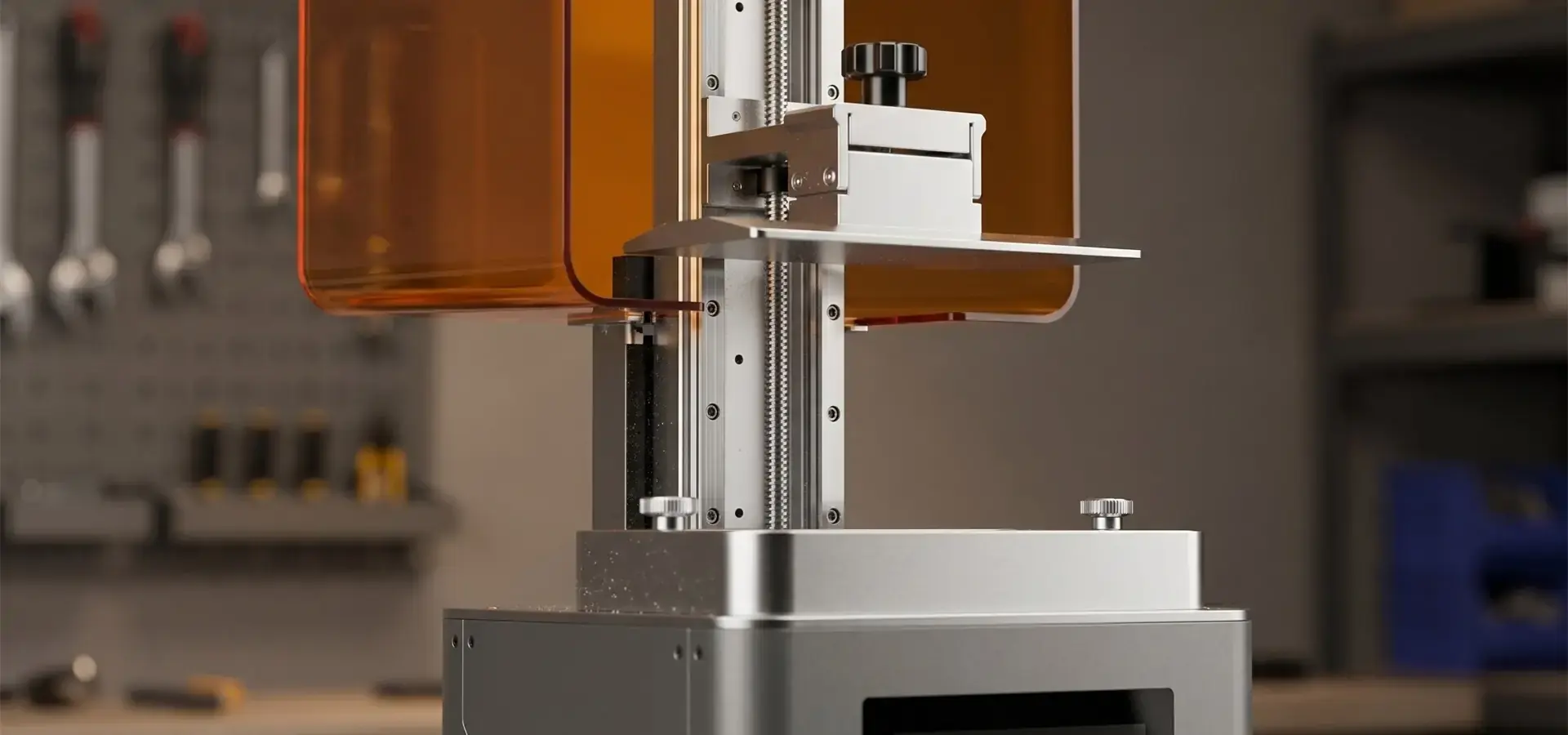
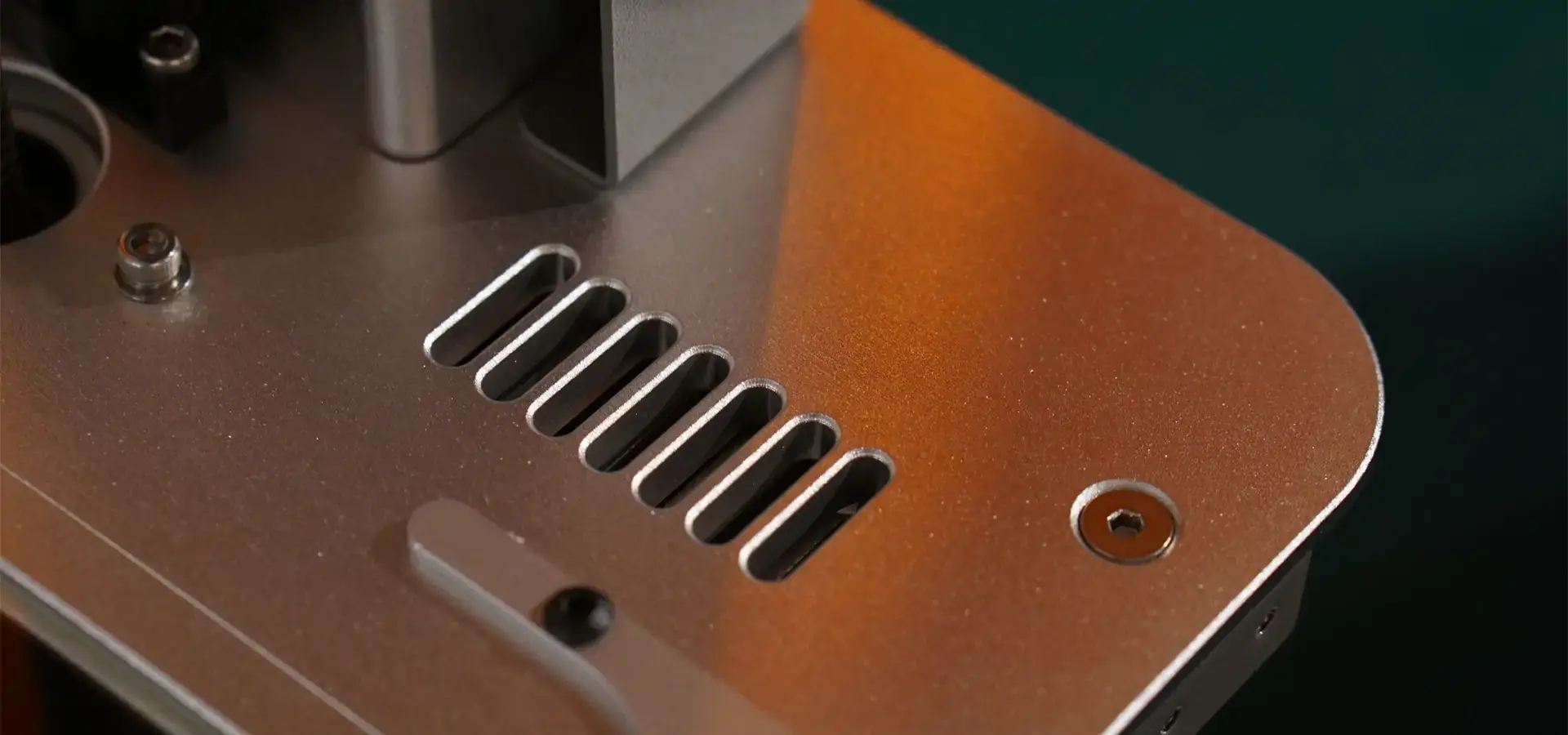
P-grade precision linear rails give you the hard motion base you need to get micron-level accuracy over and over again in thousands of print cycles. When compared to consumer-grade systems that use simple lead screws or belt-driven Z-axes, these industrial parts reduce the amount of slack and positioning shift that happens during long print jobs. The full-metal base design reduces vibrations and keeps the machine's shape stable even when it's running nonstop, which is very important for overnight batch runs.
Layer thickness can be changed from 25 microns to 150 microns, which lets you find the best balance between speed and surface finish for your sample. Functional testing models can be printed at 100-micron layers to cut down on cycle times. Presentation samples or casting masters, on the other hand, can be printed at 25-micron layers for surfaces that are as smooth as glass and need little post-processing.
Workflow-Centric Software Integration
The built-in 5-inch tablet with a customised user interface lets you change settings in real time while a print is running. Engineers can change exposure times, lift speeds, or layer thickness without stopping jobs. This is a level of freedom that isn't possible with systems that need to restart jobs completely when settings are changed. When dialling in new materials or complex shapes, this adaptable control cuts down on the number of times that experiments need to be done.
Setup time for new projects is cut down by automated calibration processes, and the UV-resistant glass flip-up cover lets you see how things are going without stopping work or risking resin pre-cure from exposure to ambient light. These small changes to how things are done add up to big time savings over the course of dozens of monthly print jobs.
With these main improvements, the P7 Pro is more than just a small step up from other home resin 3D printers; it's a big step forward in the ease of access to high-precision manufacturing.
Implementation Strategies: How the P7 Pro Optimizes Development Processes
Deploying the P7 Pro within established workflows requires strategic integration that maximizes its time-reduction capabilities.
Accelerating Iteration Cycles in Automotive and Aerospace Applications
Usually, it takes several weeks of hiring for each design change when making an interior part for an automobile. With the P7 Pro, tech teams can do prototypes in-house, which cuts down on this time frame to just one day. Complex shapes like air grilles, mounting frames, or trim pieces can be printed overnight, checked the next morning, and changed based on fit testing. This means that the process can be repeated several times a week instead of once a month.
The dimensional accuracy of up to ±0.02 mm under optimized operating conditions standard is useful for aerospace uses that need very tight limits and complicated internal structures. Before starting to machine, samples of connector housings, fluid channels, and bracket shapes can be checked to make sure they meet the required dimensions. Being able to make functional test pieces quickly speeds up certification steps that would normally take months.
Jewelry and Dental Production Workflow Integration
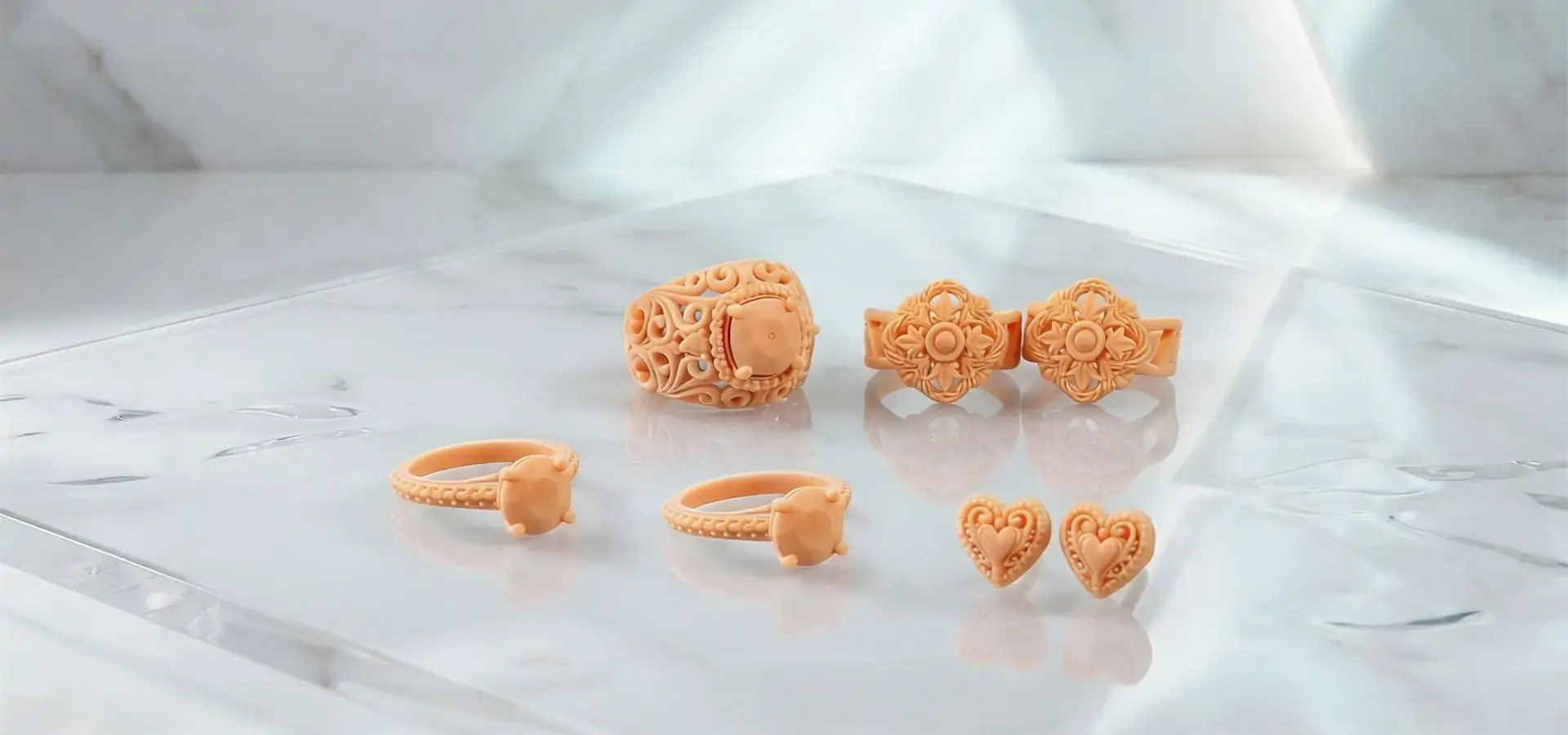
In the jewellery business, casting masters are needed that can accurately record every etching line and surface roughness. Investment casting standards are met by the P7 Pro desktop 3D printer's 9-micron precision and 25-micron minimum layer thickness. It can make burnout-ready patterns straight from CAD models. In many jewelry prototyping workflows, in-house LCD resin printing can significantly shorten the design-to-casting cycle by eliminating outsourcing delays and enabling rapid iteration directly from CAD models. This means that clients can see models of the jewellery instead of drawings.
For orthodontic aligner bases, surgery guide templates, and crown models, dental labs have to meet the same high standards for accuracy. The smart heating system makes sure that the results are the same across batch runs of patient-specific shapes, and the small build volume makes the best use of plastic for small, valuable parts. Depending on workflow and post-processing procedures, laboratories can significantly reduce turnaround times for urgent cases. This is a substantial improvement compared with traditional outsourced production methods.
Minimizing Downtime Through Predictive Diagnostics
Built-in system diagnostics help operators monitor key machine status information and maintenance schedules, reducing the risk of unexpected downtime caused by wear, calibration drift, or consumable degradation. This predictive approach prevents mid-job failures that waste hours of print time and expensive specialized resins. Maintenance guidance through the touchscreen interface walks operators through servicing procedures without requiring technician callouts for routine tasks.
Remote support capabilities allow Magforms technical staff to troubleshoot unusual issues via network connectivity, resolving problems through software updates or parameter adjustments rather than equipment downtime awaiting parts shipment. This responsiveness maintains operational continuity critical for deadline-driven projects.
These implementation strategies convert technical specifications into tangible workflow improvements that directly impact project timelines and resource utilization.
Comparative Advantage: Why Choose the P7 Pro Over Other Desktop 3D Printers
Procurement decisions require clear differentiation between alternatives across price points and capability tiers.
Superior Precision Versus Traditional Desktop Resin Systems
Standard resin 3D printers typically offer 50-micron XY resolution—adequate for general prototyping but insufficient for jewelry casting, dental appliances, or microfluidic devices. The P7 Pro's 9-micron capability with grayscale optimization places it in a performance category previously requiring industrial DLP machines costing $15,000-$40,000. This democratization of precision enables small workshops and research institutions to produce professional-grade output without capital equipment budgets that strain operational finances.
Surface finish quality directly impacts post-processing requirements. Parts from the P7 Pro exhibit minimal layer lines even at standard 50-micron settings, often requiring only light sanding before painting or assembly. Competitor devices at similar price points produce visible stepping that necessitates extensive finishing work, adding labor hours that negate initial cost savings.
Cost-Effectiveness Compared to Industrial Solutions
While industrial SLA or DLP systems offer larger build volumes and slightly faster print speeds, their operational costs extend beyond purchase price. Proprietary resin requirements lock users into single-vendor supply chains with markups exceeding 200% over generic photopolymer formulations. The P7 Pro maintains compatibility with open-material ecosystems, allowing procurement teams to source resins competitively based on application requirements rather than vendor restrictions. Facility requirements also differ substantially. Industrial machines often demand dedicated climate-controlled spaces with ventilation systems and reinforced flooring for multi-ton equipment weights. The P7 Pro's desktop footprint and standard electrical requirements permit installation in existing office or laboratory spaces without costly infrastructure modifications.
Operational Efficiency and Work Environment Impact
Noise levels matter in shared workspaces. The P7 Pro operates at conversational volume levels, unlike FDM systems with audible stepper motors and cooling fans that disrupt adjacent work areas. Quiet operation enables placement in design studios or R&D offices where immediate access accelerates collaboration between engineers and physical prototypes. Energy consumption directly affects operational budgets for high-utilization environments. Efficient LED light sources and optimized curing cycles reduce power draw compared to laser-scanning SLA systems, lowering per-part energy costs across thousands of annual prints.
These comparative advantages support rational procurement decisions that balance upfront investment against total cost of ownership and operational flexibility over multi-year planning horizons.
Procurement Considerations for B2B Clients: Maximizing ROI with the P7 Pro
Strategic equipment acquisition requires understanding total lifecycle value beyond specification comparisons.
Flexible Acquisition Models for Different Organization Scales
Small design studios and startup 3D printing service providers benefit from transparent pricing without hidden costs in mandatory service contracts or material lock-in. Magforms offers volume discounts for multi-unit purchases, enabling service bureaus to scale capacity incrementally as client demand grows. Bulk material procurement at reduced rates further improves per-part economics for high-throughput operations.
Research institutions and university laboratories using a desktop 3D printer appreciate leasing options that align equipment costs with grant funding cycles, preserving capital budgets for other instrumentation needs. Educational pricing programs make advanced photopolymer technology accessible for training next-generation additive manufacturing specialists.
Comprehensive Support Infrastructure
Extended warranty coverage beyond standard terms protects against unexpected repair costs during critical production periods. Magforms' support network provides responsive technical assistance via email and remote diagnostics, minimizing downtime that disrupts client commitments. Replacement part availability with expedited shipping ensures machines return to service within days rather than weeks when component failures occur.
Training resources including video tutorials, material optimization guides, and application-specific parameter libraries accelerate onboarding for new operators. This knowledge transfer reduces the experimentation period typically required when adopting unfamiliar technology, shortening time to productive output.
Accessory Ecosystem for Evolving Needs
As applications expand, ancillary equipment enhances capability without replacing core systems. Resin heating units maintain optimal material viscosity during winter operation, while automated washing and curing stations streamline post-processing workflows. Build platform options accommodating different attachment methods (mechanical clamps, magnetic bases, flexible plates) optimize material usage and ease-of-removal for various part geometries.
Material selection guidance helps procurement teams match resin properties to application requirements—tensile strength for functional prototypes, high-temperature resistance for tooling, biocompatibility for medical devices, or castability for jewelry production. Magforms' materials-equipment integration eliminates compatibility guesswork that leads to failed prints and wasted resources.
Demo program opportunities allow evaluation with actual production parts before purchase commitment, reducing adoption risk for teams transitioning from outsourced prototyping to in-house capabilities. Distributor networks provide local support for international clients, ensuring consistent service quality across global operations.
These procurement considerations empower technical directors and purchasing managers to confidently specify the P7 Pro as a strategic capability investment rather than a transactional equipment purchase.
Conclusion
Development time reduction stems from eliminating workflow friction through precision, reliability, and operational flexibility. The P7 Pro desktop 3D printer achieves this through 9-micron imaging resolution, intelligent thermal management, and industrial-grade mechanical components packaged in an accessible desktop format. By addressing traditional prototyping bottlenecks—outsourcing delays, quality inconsistencies, and equipment limitations—it enables same-day iteration cycles previously requiring weeks. Industries spanning jewelry manufacturing, dental laboratories, automotive design, and precision engineering gain competitive advantages through accelerated concept-to-validation timelines. Strategic procurement decisions considering total operational value position the P7 Pro as a catalyst for innovation velocity in time-compressed markets.
FAQ
How does temperature control specifically reduce development time?
Consistent 30°C chamber temperature prevents cold-weather print failures that force complete job restarts. Layer separation or incomplete curing are typically discovered only after multi-hour prints waste both time and specialized resins costing $150-$300 per liter. Reliable first-print success eliminates these do-over cycles, maintaining schedule predictability.
Can the P7 Pro handle engineering-grade resins for functional testing?
The intelligent heating system expands material compatibility beyond standard photopolymers to include high-temperature, flexible, and tough engineering resins. This versatility allows functional prototype testing under load conditions, validating designs mechanically without waiting for machined samples—saving weeks in development schedules.
What post-processing time should I expect compared to other systems?
The combination of a 9 μm pixel size, optimized grayscale exposure control, and stable motion mechanics helps produce smooth surface finishes that reduce post-processing requirements. Parts often need only isopropyl alcohol washing and UV curing, versus extensive sanding and priming required for lower-resolution outputs. This reduces finishing labor from hours to minutes per component.
How does the P7 Pro maintain accuracy over thousands of print cycles?
P-grade industrial linear rails resist wear and maintain positional precision through extended use. Predictive diagnostics alert to maintenance needs before degradation affects output quality, while the full-metal chassis prevents thermal expansion or mechanical drift common in plastic-framed consumer units.
Partner With a Reliable Desktop 3D Printer Manufacturer to Accelerate Your Development Timeline
Magforms combines 22 patents and three decades of additive manufacturing expertise to deliver integrated material-equipment solutions that eliminate compatibility issues plaguing multi-vendor approaches. Our P7 Pro desktop 3D printer represents this philosophy—engineered specifically to address real prototyping bottlenecks through 9-micron resolution, intelligent thermal control, and industrial-grade reliability in a compact footprint. Teams across automotive, aerospace, medical, and jewelry sectors achieve measurable development cycle reductions through in-house capability previously requiring industrial equipment investments. Volume pricing and flexible acquisition terms make precision accessible for organizations at any scale. Our technical support team provides responsive assistance via info@magforms.com, backed by comprehensive training resources and global distributor networks. Evaluate the P7 Pro with your actual production parts through our demo program—experience how precision desktop resin 3D printing transforms concepts into validated prototypes within hours instead of weeks.
References
1. Gibson, I., Rosen, D., & Stucker, B. (2021). Additive Manufacturing Technologies: 3D Printing, Rapid Prototyping, and Direct Digital Manufacturing (3rd ed.). Springer International Publishing.
2. Jacobs, P. F. (2020). Stereolithography and Other RP&M Technologies: From Rapid Prototyping to Rapid Tooling. Society of Manufacturing Engineers.
3. Lipson, H., & Kurman, M. (2019). Fabricated: The New World of 3D Printing. John Wiley & Sons.
4. Ngo, T. D., Kashani, A., Imbalzano, G., Nguyen, K. T., & Hui, D. (2018). "Additive Manufacturing for Precision Medicine: Current Applications and Future Perspectives." Composites Part B: Engineering, 143, 161-173.
5. Stansbury, J. W., & Idacavage, M. J. (2019). "3D Printing with Polymers: Challenges Among Expanding Options and Opportunities." Dental Materials, 32(1), 54-64.
6. Wohlers, T., & Gornet, T. (2022). Wohlers Report 2022: 3D Printing and Additive Manufacturing Global State of the Industry. Wohlers Associates, Inc.

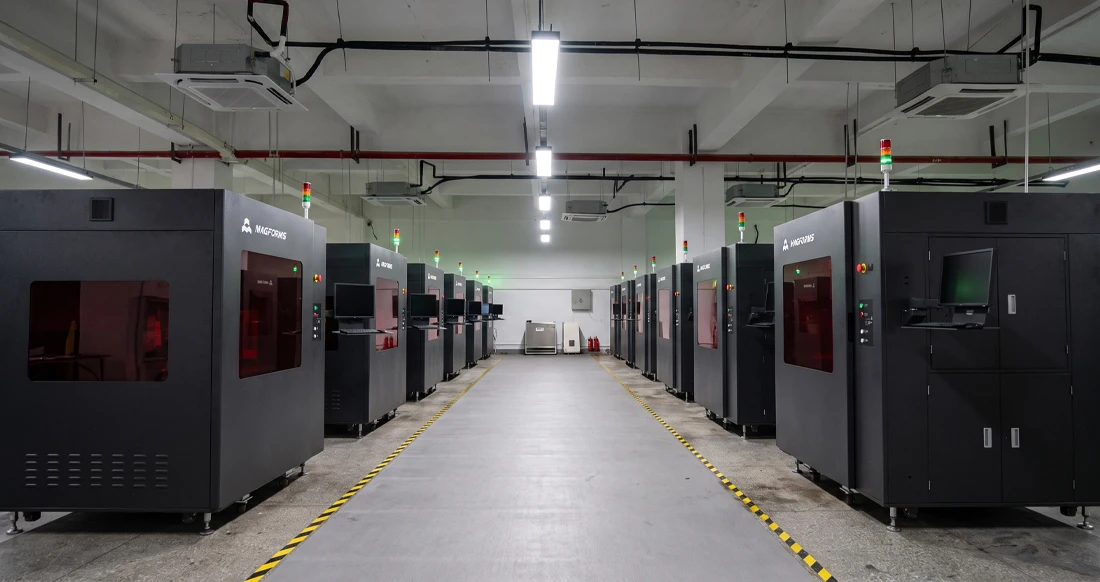
Magforms makes design and manufacture easier.
Popular Blogs
-
 Industry InsightsManufacturing Industry
FDM vs. SLA Printer: Which Technology Is Right for Your Project?
-
 Industry InsightsManufacturing Industry
Top 5 Applications of Industrial 3D Printers in Manufacturing Today
-
 Industry InsightsManufacturing Industry
Why Stereolithography 3D Printers Are Unmatched for Microfluidic Device Prototyping?