P13 Pro 3D Printing Machine for Faster Concept-to-Product Cycles
When turning thoughts into real things, speed is important. The P13 Pro 3D printing machine speeds up the process by combining large-format printing with precise LCD-based stereolithography engineering. This lets companies in the medical, aircraft, consumer electronics, and car industries cut development times by a large amount. This LCD-based additive manufacturing solution solves the ongoing problem of how to balance speed, accuracy, and dependability in professional production settings. It has a build volume of 302.4×161.98×380mm and advanced dual heating systems.
Understanding the P13 Pro and 3D Printing Technology
How the P13 Pro Operates
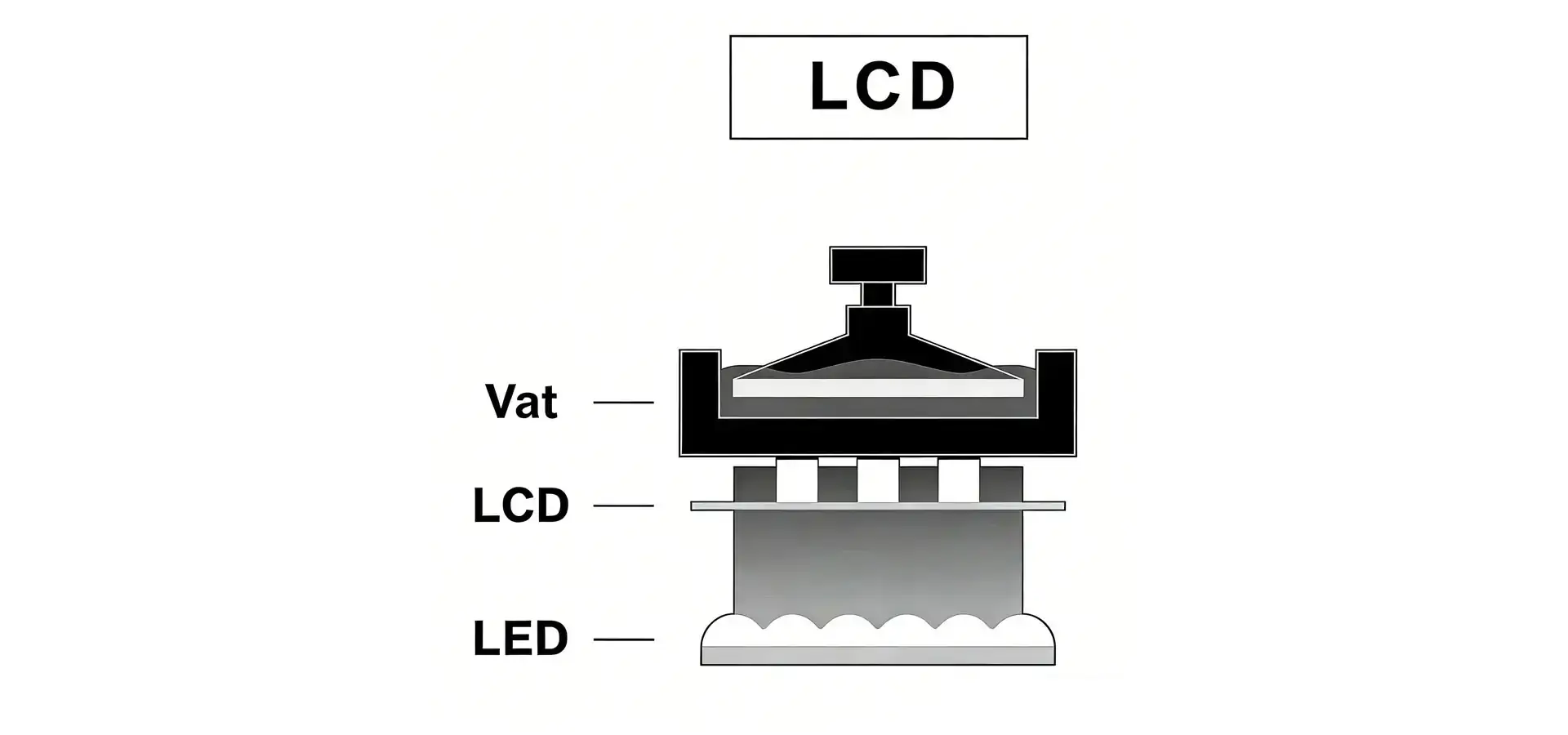
The P13 Pro uses LCD-based masked stereolithography (mSLA) technology, a form of vat photopolymerization optimized for large-format production. Unlike many standard desktop 3D printers, it employs a high-resolution monochrome LCD to cure each layer with micron-level precision while achieving print speeds over 30% faster than similar machines in its class. The machine's process starts with preparing the digital file. Next, liquid resin is photopolymerised layer by layer. Finally, automatic post-processing routines finish the job with less need for human input.
Positioning Within the Additive Manufacturing Ecosystem
Compared with FDM printers, which use filament, and powder-bed fusion systems used for metal or plastic parts, the P13 Pro occupies a mid-range position in additive manufacturing, delivering injection-mould-like surface finish without the need for expensive tooling. It can hold three standard shoe moulds at the same time or single parts up to 380 mm long, so it can be used for both batch development and small-series production. This adaptability solves a common problem in procurement: should companies buy a bunch of different specialised machines or just one base that can be used for many things?
Material Compatibility and Performance
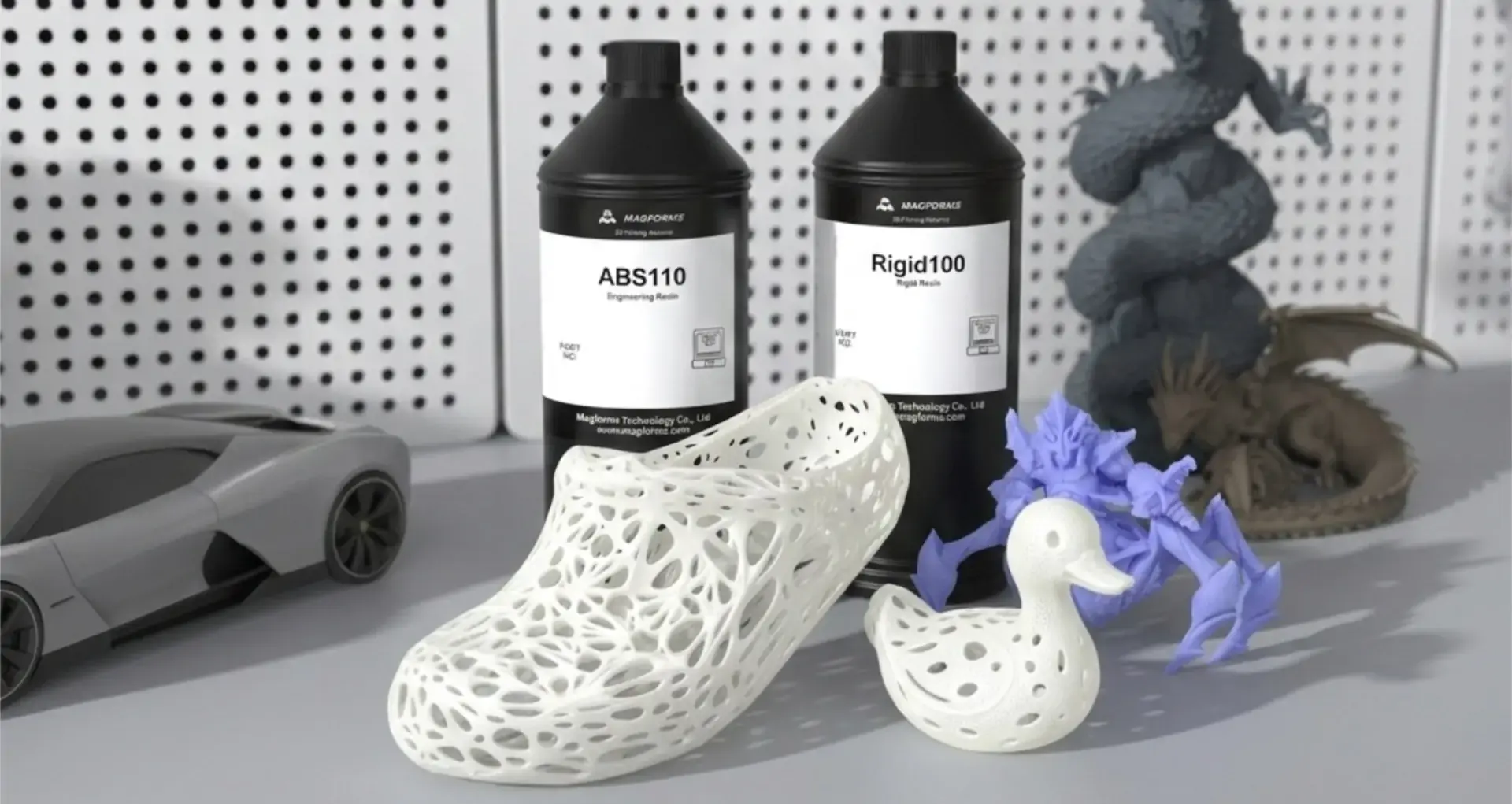
The P13 Pro works with engineering-grade photopolymer resins, including clear, high-temperature, flexible, and ABS-like formulations optimised for professional applications. Magforms' combined supply model makes sure that special resins and hardware are perfectly calibrated. This gets rid of the problems with measurement errors and compatibility that come up with setups that use more than one provider. Material features stay the same from one production run to the next. This is very important for companies that make medical devices that need to be able to repeat their work in a way that is FDA-compliant and for aerospace makers that have to follow AS9100 standards.
Why Fast Concept-to-Product Cycles Matter in Modern Industry
Traditional Manufacturing Bottlenecks
Before cutting the first chip, CNC machining needs a lot of programming and setting up of the fixtures. Making a mould for injection moulding takes weeks of work and costs tens of thousands of dollars. These limits drive businesses to buy in bulk in order to cover the cost of the tools they need, which increases the risk of stock-outs and limits the freedom of their designs. When a car client wants fifteen versions of a sample inner part, the old ways of doing things can't be afforded.
Quantifiable Time Reductions
The P13 Pro significantly shortens the time it takes to build a product. Design approval can be done in 48 hours instead of two weeks by a dental lab that makes custom aligner bases. The time it takes for consumer electronics companies to go from idea to real sample for smart devices is cut from twelve days to three. These changes directly give you a competitive edge: you can get into new markets earlier, respond to customer feedback more quickly, and lower the cost of holding on to old stock.
Economic Impact on B2B Procurement
The cost-effectiveness of a 3D printing machine is more than just the price of buying a machine. When you don't have to pay for tools, you can make batches as small as fifty units economically. Changes to the design no longer cause costly delays in retooling. Companies don't lose a lot of money on old stock because they only make parts when they are needed instead of keeping big safety stocks. The financial model changes from upfront investments that require a lot of cash to prices that change based on how much production is needed.
Evaluating the P13 Pro Against Other 3D Printing Solutions
Comparative Analysis Framework
When looking at different pieces of equipment, people who work in procurement need clear criteria. The evaluation grid should look at the ability to build a lot of things, the accuracy of the layer resolution, the operating dependability measured by the average time between failures, the total cost of ownership that includes supplies and upkeep, and how quickly the provider can help. The P13 Pro stands out because it has a dual heating constant-temperature system that keeps the print area at a constant temperature throughout. This lowers the chance of failure even when temperatures change outside.
Precision and Speed Trade-offs
A lot of different methods make users pick between speed and accuracy. When it comes to surface finish quality, high-throughput machines often fall short, while ultra-precise equipment moves at slow speeds. The P13 Pro's LCD layer exposure optimisation maintains accuracy within tight error margins suitable for validating aerospace components, and it completes standard builds 30% faster than industry standards. This balance is especially important for service bureaus that have to meet the needs of a lot of different clients at the same time.
Maintenance Requirements and Downtime Considerations
Industrial clients can't afford for machines to be down for long periods of time. The P13 Pro's flexible component design lets worn-out parts be quickly replaced without having to wait for an expert to come out. Built-in storage makes printing possible when you're not connected to the internet, so pre-loaded jobs can keep running even when the network goes down. The auto-adjusting UV LED system ensures consistent resin curing rates, preventing premature polymerisation and reducing material waste caused by accidental exposure. When compared to equipment that needs constant human attention, these technical details add up to a lot more effective service.
Optimising Performance and Maintenance of the P13 Pro for Reliable Output
Routine Calibration Protocols
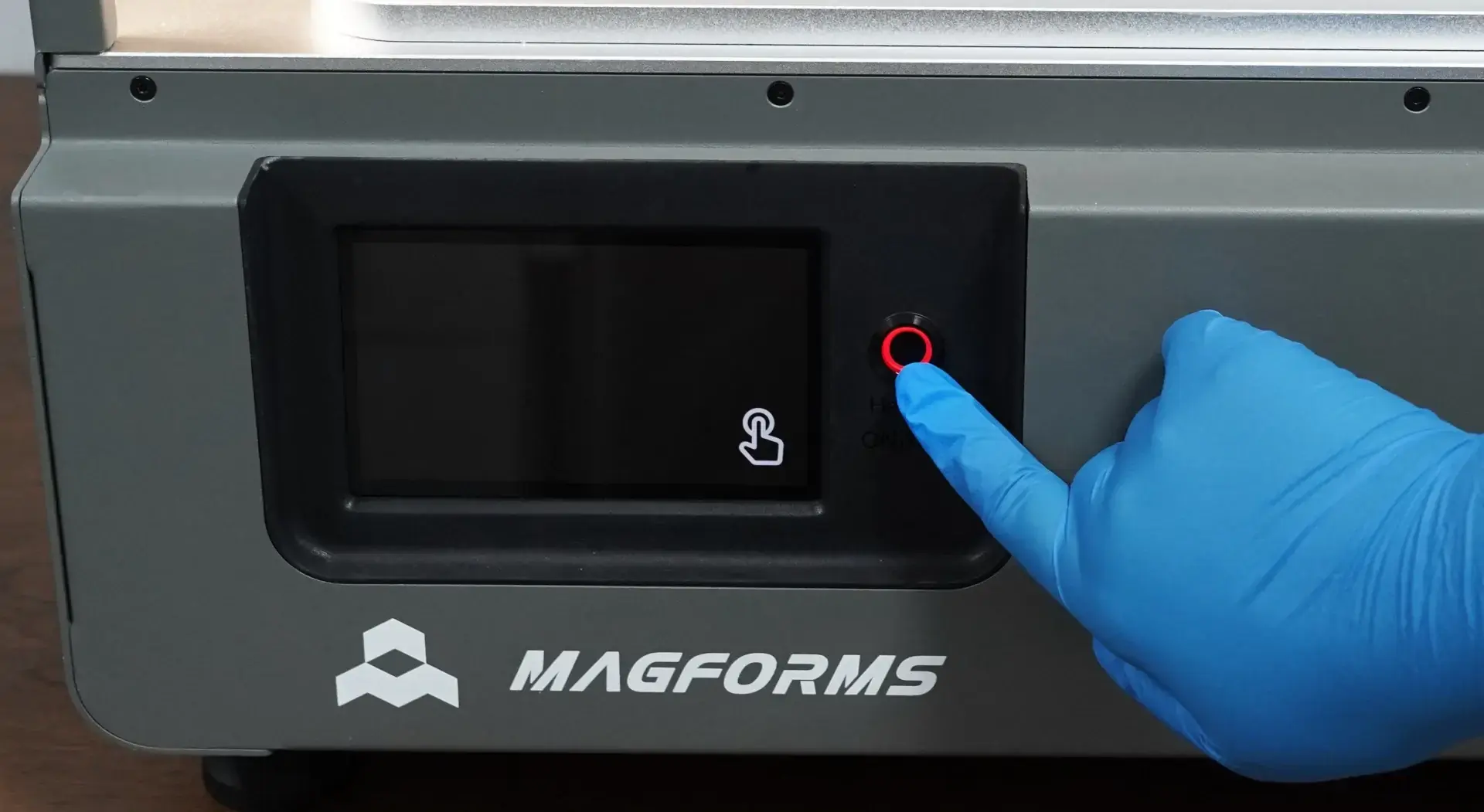
Regular repair plans for the 3D printing machine are needed to make sure that the quality of the output stays high. Checking the level of the build platform once a week keeps the first layer from failing to adhere. Optical path checks once a month ensure uniform light distribution and precise layer curing. By replacing the resin vat every three months, you can keep it free from cured resin residues. The P13 Pro makes these steps easier by having an easy-to-use tablet display that walks workers through each one. This makes training easier for sites that have more than one shift.
Material Handling Best Practices
Photopolymer resins can be sensitive to moisture and contaminants. Exposure to high humidity may compromise curing performance and lead to print defects such as poor layer adhesion or surface imperfections. Storing materials in humidity-controlled environments below 20% relative humidity preserves their integrity. Buyers who buy in bulk should adopt first-in, first-out inventory rotation and seal resin containers immediately after use. Magforms provides thorough storage instructions for each resin formulation, helping businesses avoid material waste and failed prints.
Software Updates and Remote Diagnostics
When you update the firmware, it lets you get better speed and work with more materials over the machine's lifetime. Because the P13 Pro is connected, online tests are possible. This lets Magforms' technology team find problems before they stop production. This form of proactive support is very different from reactive service plans, where equipment breaks down without warning, breaking delivery promises to customers further down the line. Companies in businesses that need to be up and running quickly really value this predictive maintenance feature.
Future Trends in 3D Printing and the Role of the P13 Pro
Emerging Technologies Reshaping Manufacturing
The placement and direction angles of support structures are now optimised by artificial intelligence programs. This cuts down on the amount of material used and the work that needs to be done afterwards. Multi-material powers let you vary the qualities of a single component, which opens up design options that aren't possible with traditional manufacturing. With more technology, additive processes are no longer separate in development areas but are now built right into production lines. With these improvements, additive manufacturing goes from being a niche tool to a standard way to make things.
Supply Chain Implications
Digital warehousing for the 3D printing machine replaces physical inventory for certain component categories. Rather than stockpiling rarely-needed replacement parts, organisations store certified digital files and manufacture on-demand. This model reduces capital tied up in inventory while improving responsiveness to equipment failures. The P13 Pro's reliability and speed make it viable for this application, particularly in aerospace maintenance operations and medical device servicing where component availability directly impacts mission-critical operations.
Scalability for Growing Operations
Organisations investing in additive capacity today must consider tomorrow's expanded requirements. The P13 Pro's open-system architecture accepts custom modules, allowing capability expansion without replacing entire machines. As production volumes increase, facilities can deploy multiple units configured for specialised materials or geometries. Magforms' experience supporting over 300 enterprises globally provides institutional knowledge for scaling implementations efficiently, avoiding the common pitfall of over-investing in excess capacity too early.
Conclusion
The P13 Pro LCD 3D printing machine addresses the fundamental tension between speed, quality, and cost that constrains product development across industries. Its large build volume, dual heating system, and integrated material compatibility solve persistent pain points that undermine competitor equipment reliability. Organisations seeking to compress concept-to-product timelines while maintaining rigorous quality standards find measurable value in this platform. The combination of Magforms' technical support infrastructure, proven stability across demanding applications, and forward-compatible architecture positions the P13 Pro as a strategic asset rather than merely another piece of equipment. Procurement decisions increasingly recognise that true machine value extends beyond acquisition price to encompass total ownership costs, operational uptime, and the flexibility to adapt as business requirements evolve.
FAQ
What materials work best with the P13 Pro for medical applications?
The P13 Pro supports biocompatible resins suitable for surgical guides and dental models, including transparent formulations for aligner bases and high-temperature polymers for sterilisation-resistant components. Magforms provides material certifications documenting cytotoxicity testing and dimensional stability under autoclave conditions. Medical device manufacturers should verify specific resin compliance with their regulatory requirements, as material selection depends on intended use and contact duration with human tissue.
How does the P13 Pro compare to CNC machining for rapid prototyping?
CNC machining excels at hard metals and high-volume production but requires extensive setup and toolpath programming. The P13 Pro, leveraging LCD stereolithography (mSLA), bypasses these preparation phases, enabling same-day turnaround for complex geometries. CNC subtractive processes also waste material as chips, while additive methods use only what the part requires. However, machined aluminium parts typically exhibit superior thermal conductivity and impact resistance compared to resin prints, making process selection dependent on specific performance requirements.
What financing options support bulk equipment purchases?
Magforms collaborates with industrial equipment financing partners offering lease arrangements, deferred payment schedules, and volume discount structures for multi-unit deployments. Procurement teams should discuss their operational scale and budget constraints directly with Magforms' sales specialists, who can structure proposals aligning equipment acquisition costs with anticipated production revenue. Many organisations find that eliminating outsourced prototyping expenses funds equipment payments within twelve to eighteen months.
Partner with a Reliable 3D Printing Machine Supplier
Magforms has supported over 300 enterprises worldwide with integrated 3D printing machine material and equipment solutions backed by 22 patents and extensive industry expertise. Our technical team understands the specific challenges facing automotive, aerospace, medical, and consumer electronics sectors because we have solved them repeatedly across diverse implementations. The P13 Pro represents our commitment to delivering not just hardware, but complete production systems optimised for reliability and performance. Whether your organisation requires small-batch customisation or scaled prototyping capacity, our specialists can configure solutions matching your operational requirements. Reach out to our team at info@magforms.com to discuss how the P13 Pro can transform your product development workflow, request detailed specifications, or arrange an on-site demonstration. We provide comprehensive support from initial assessment through installation, training, and ongoing technical assistance.
References
1. Gibson, I., Rosen, D., & Stucker, B. (2021). Additive Manufacturing Technologies: 3D Printing, Rapid Prototyping, and Direct Digital Manufacturing (3rd ed.). Springer.
2. Lipson, H., & Kurman, M. (2020). Fabricated: The New World of 3D Printing. Wiley Publishing.
3. Bourell, D. L., et al. (2022). "Materials for Additive Manufacturing: A Review of Recent Developments." Annual Review of Materials Research, 52, 419-444.
4. Huang, Y., Leu, M. C., & Fonda, J. (2023). "Additive Manufacturing in the Medical Device Industry: Regulatory Challenges and Quality Considerations." Journal of Manufacturing Processes, 85, 347-361.
5. Attaran, M. (2021). "The Rise of 3D Printing: The Advantages of Additive Manufacturing over Traditional Manufacturing." Business Horizons, 64(5), 637-650.
6. Westerweel, B., Basten, R. J., & van Houtum, G. J. (2022). "Digital Spare Parts Supply Chains and Additive Manufacturing: Opportunities and Challenges." International Journal of Production Research, 60(14), 4332-4352.

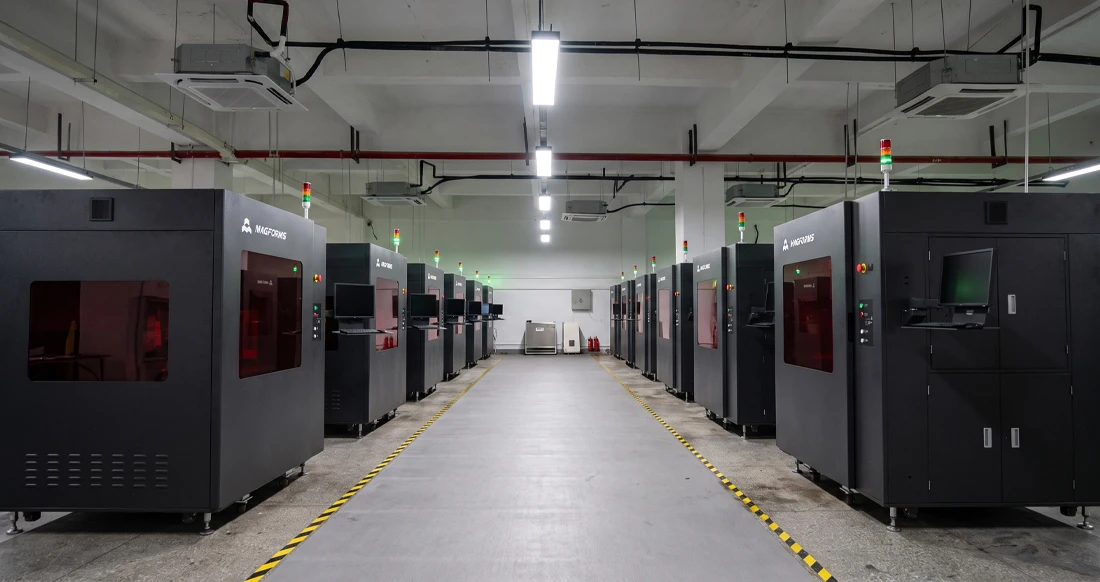
Magforms makes design and manufacture easier.
Popular Blogs
-
 Industry InsightsManufacturing Industry
FDM vs. SLA Printer: Which Technology Is Right for Your Project?
-
 Industry InsightsManufacturing Industry
Top 5 Applications of Industrial 3D Printers in Manufacturing Today
-
 Industry InsightsManufacturing Industry
Why Stereolithography 3D Printers Are Unmatched for Microfluidic Device Prototyping?