How Does the Stereolithography 3D printer P7 Pro Transform Design?
The Magforms P7 Pro stereolithography 3D printer transforms design by delivering 9 µm XY resolution through advanced grayscale adjustment technology, matching DLP-quality output while maintaining exceptional stability across variable production environments. This desktop LCD-based stereolithography (mSLA) system eliminates traditional pain points around precision inconsistency and temperature sensitivity, enabling jewelry manufacturers, dental labs, and product designers to achieve injection-mold surface quality and intricate detailing previously reserved for industrial-scale equipment. By combining P-grade linear rails, intelligent thermal control, and real-time parameter flexibility, the P7 Pro bridges the gap between cost-effective investment and professional-grade production capabilities.
Understanding the Fundamentals of Stereolithography 3D Printing
LCD-based stereolithography (mSLA) represents a core technology in resin-based additive manufacturing, using UV light passing through an LCD masking screen to selectively cure liquid photopolymer into solid cross-sections. This process repeats layer by layer, building three-dimensional objects with dimensional accuracy that surpasses filament extrusion methods. The core advantage lies in achieving isotropic mechanical properties and watertight geometries, critical factors when prototyping fluid-handling components or medical devices requiring biocompatibility validation.
How Stereolithography Works in Practice
An LCD-based stereolithography 3D printer operates by positioning a build platform just below the surface of a resin vat. A UV LED light source projects each layer through an LCD masking screen, selectively curing the resin in the shape of the model's cross-section. After each layer completes, the platform descends by the defined layer thickness—typically between 25 and 150 microns—and a recoating mechanism spreads fresh resin across the build area. This cycle continues until the entire part emerges from the liquid bath, requiring post-processing through solvent washing and UV curing to stabilize material properties.
Material Versatility and Surface Finish Quality
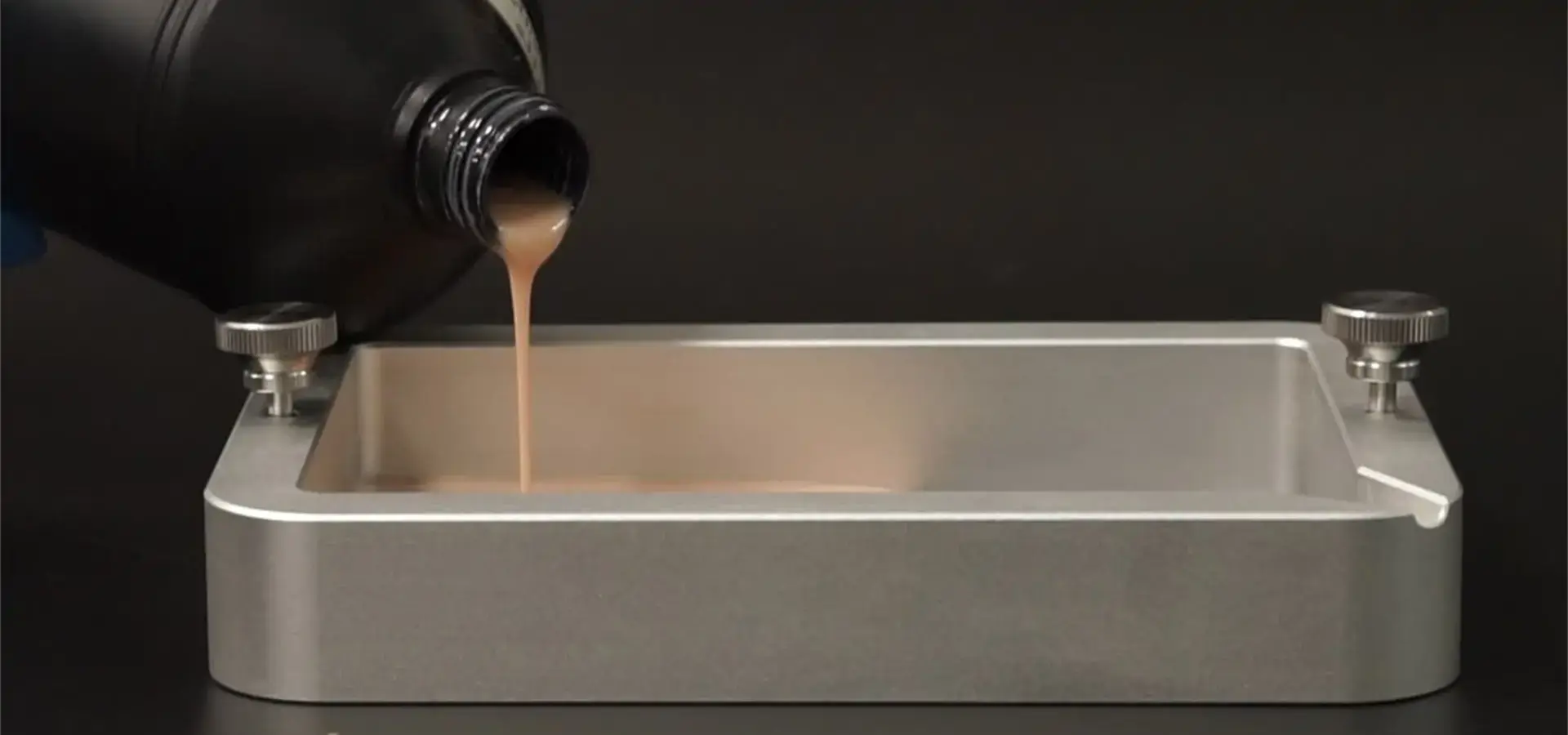
Modern resin formulations extend beyond standard photopolymers to include engineering-grade materials simulating ABS toughness, flexible elastomers for gasket prototyping, and ceramic-infused composites for high-temperature applications. The P7 Pro's material compatibility addresses a longstanding industry frustration: equipment lock-in to proprietary resins. By supporting third-party formulations while optimizing performance with Magforms' in-house developed materials, users gain cost control without sacrificing print reliability or dimensional accuracy within the 0.02mm tolerance threshold.
Comparing mSLA with Alternative Technologies
When benchmarked against Fused Deposition Modeling, stereolithography eliminates visible layer lines and delivers superior surface smoothness, reducing post-processing labor for presentation models. Compared to DLP projection systems, LCD-based stereolithography provides larger build envelopes while maintaining consistent pixel-defined resolution across the build area. DLP excels in high-speed batch curing of small parts, while LCD systems offer stable and cost-efficient production with uniform resolution distribution. The P7 Pro uniquely positions itself by achieving 9 µm effective resolution through grayscale adjustment—rivaling DLP clarity while maintaining the geometric flexibility and continuous surface quality inherent to stereolithography processes.
The P7 Pro: Core Features Transforming Design Efficiency
Magforms engineered the P7 Pro to solve persistent challenges faced by small-batch manufacturers and rapid prototyping teams: inadequate precision for detailed work, environmental sensitivity causing print failures, and limited operational flexibility during production runs. The P7 Pro is an LCD-based stereolithography (mSLA) 3D printer that integrates industrial-grade components into a compact system designed for high-precision resin manufacturing.
Ultra-Fine Imaging Precision Through Advanced Optics
The 6.8-inch 9K monochrome LCD screen delivers 8520 × 4320 resolution with approximately 18 × 18 µm physical pixel dimensions, enabling high-detail reproduction such as skin textures, thread patterns, and micro-engraving features required for jewelry and dental applications. Through grayscale anti-aliasing optimization, the system can achieve improved edge smoothness and an effectively higher perceived XY resolution. P-grade industrial linear rails ensure high-precision Z-axis positioning repeatability, maintaining stable layer alignment during long-duration print jobs, reducing cumulative dimensional deviation commonly observed in consumer-grade motion systems during extended print cycles during multi-hour print jobs. Combined with the Imadjust grayscale optimization algorithm, the P7 Pro achieves effective 9 µm XY resolution—a specification typically associated with equipment costing three to five times more.
Intelligent Thermal Management for Consistent Output
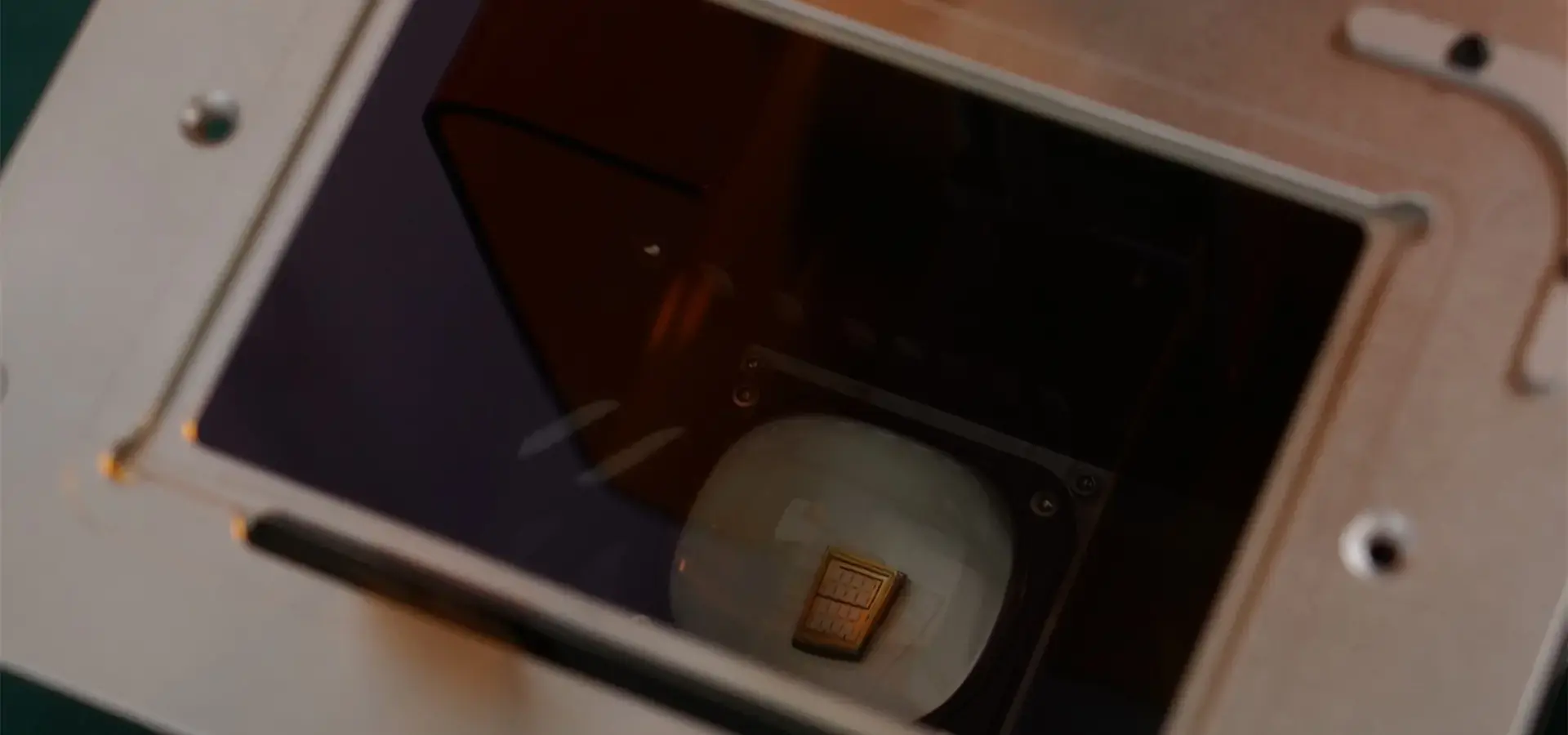
Temperature fluctuations represent a primary cause of layer delamination and warping in resin printing. The P7 Pro's integrated heating system maintains the print chamber at a stable 30℃ regardless of ambient conditions, expanding material compatibility to include resins requiring elevated processing temperatures while preventing viscosity-related flow issues in cold workshops. This thermal stability proves particularly valuable for production environments where seasonal or ambient temperature fluctuations can affect resin viscosity and curing stability where seasonal temperature swings can otherwise necessitate production shutdowns or yield costly failed builds during winter months.
Real-Time Parameter Adjustment During Production
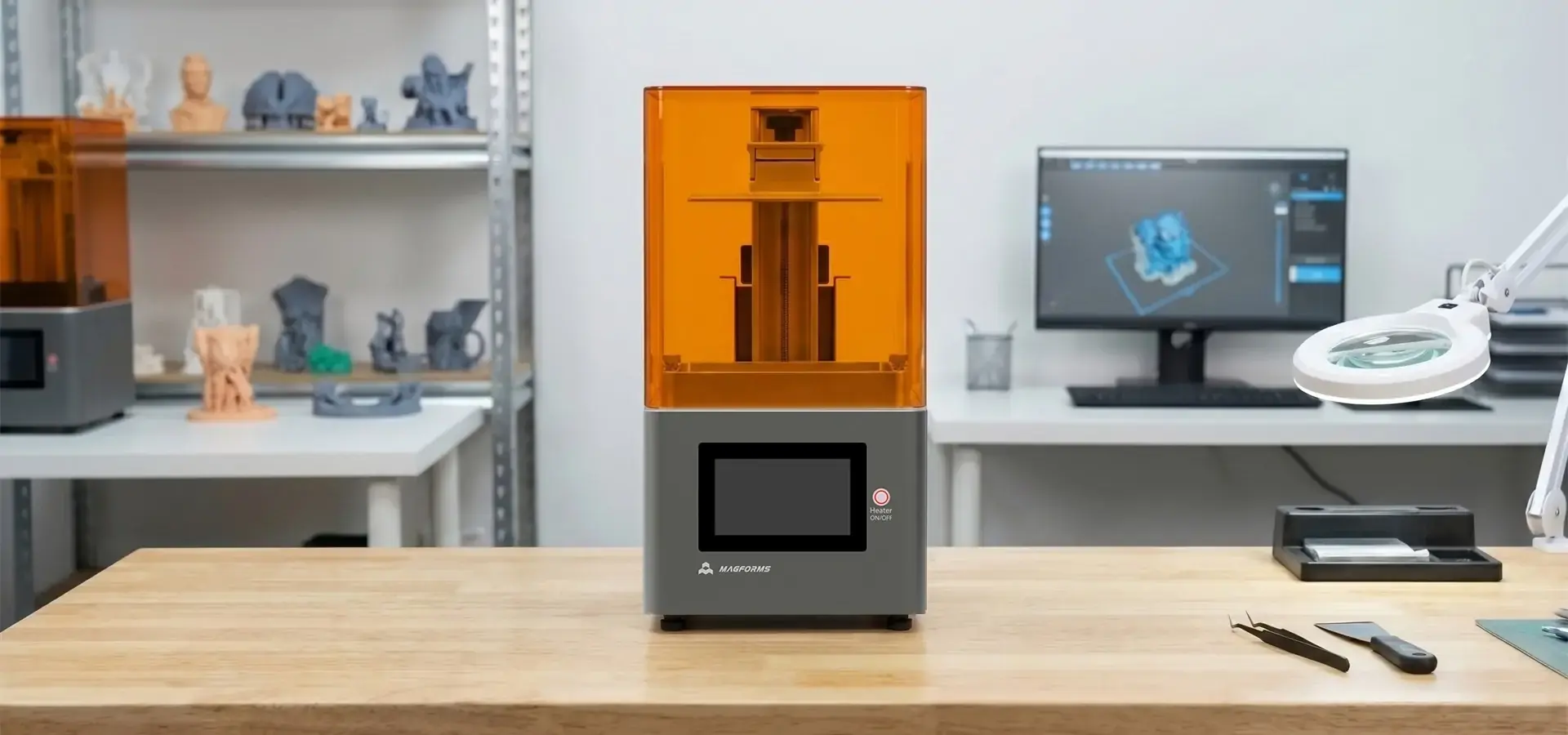
Unlike conventional systems requiring print restarts for setting modifications, the P7 Pro features a 5-inch touchscreen with custom UI enabling live adjustment of exposure times, lift speeds, and layer thickness mid-print. This capability allows operators to compensate for material batch variations or optimize settings based on observed first-layer adhesion, reducing material waste and shortening the iteration cycle when dialing in new resin formulations or complex support structures.
The combination of these features addresses core procurement concerns around total cost of ownership: reducing material waste through higher success rates, minimizing downtime from environmental factors, and accelerating time-to-market through faster design validation cycles. Engineering teams report 30% faster throughput compared to comparable desktop LCD systems when producing batches of detailed components requiring minimal post-finishing.
Solving Common Design and Production Challenges with the P7 Pro
B2B buyers consistently cite three pain points when evaluating additive manufacturing equipment: inconsistent dimensional accuracy across production runs, compatibility restrictions forcing reliance on expensive proprietary consumables, and inadequate technical support causing extended downtime when issues arise. The P7 Pro's design philosophy directly addresses these concerns through hardware robustness, open material architecture, and user-centric operational features.
Versatile Resin Compatibility for Application-Specific Needs
Many stereolithography 3D printer manufacturers enforce closed ecosystems requiring purchase of branded resins at premium prices. The P7 Pro supports industry-standard 405nm photopolymers from multiple suppliers while providing optimized profiles for Magforms' in-house formulations spanning engineering tough resins, castable jewelry materials, and flexible elastomers. This approach reduces consumable costs by 40-60% compared to locked systems while maintaining the tight dimensional tolerances required for functional prototyping and low-volume production.
The full-metal chassis provides thermal mass and vibration damping for the P7 Pro, ensuring stable optical alignment and consistent imaging precision even in active workshop environments. UV-resistant acrylic cover panels enable continuous monitoring without risking premature resin curing, while the flip-up design facilitates quick resin changes between jobs—critical for service bureaus handling diverse client projects with varying material requirements.
Minimizing Downtime Through Intuitive Maintenance Protocols
Equipment reliability directly impacts return on investment for capital purchases. The P7 Pro incorporates user-replaceable components including the FEP film vat liner and LED light source, with maintenance procedures documented through video guides accessible via QR codes on the machine. The monochrome LCD screen demonstrates 2000+ hours of operational lifespan, substantially exceeding RGB screen durability in earlier resin printer generations.
Safety Features for Professional Manufacturing Environments
The printer's operational design meets the demands of production environments where equipment must function reliably without constant supervision. The sealed build chamber prevents resin fume exposure, while the UV-blocking cover eliminates operator eye strain during multi-hour print sessions. Automatic resin level detection prevents dry-running scenarios that damage the FEP film, and power-loss recovery enables job continuation after electrical interruptions—a feature protecting high-value, time-intensive builds from complete loss due to infrastructure issues.
These reliability enhancements translate to measurable business outcomes: reduced scrap rates, predictable production scheduling, and lower total cost of ownership when factoring maintenance intervals and consumable longevity into procurement analysis.
Practical Applications: How the P7 Pro Enhances Industry-Specific Design
The P7 Pro's technical specifications align precisely with requirements in sectors demanding microscopic detail reproduction and dimensional stability under thermal or mechanical stress. Jewelry manufacturers, dental laboratories, precision engineering firms, and consumer electronics prototyping teams represent core user groups benefiting from the printer's capabilities.
Jewelry Casting and Custom Ornament Production
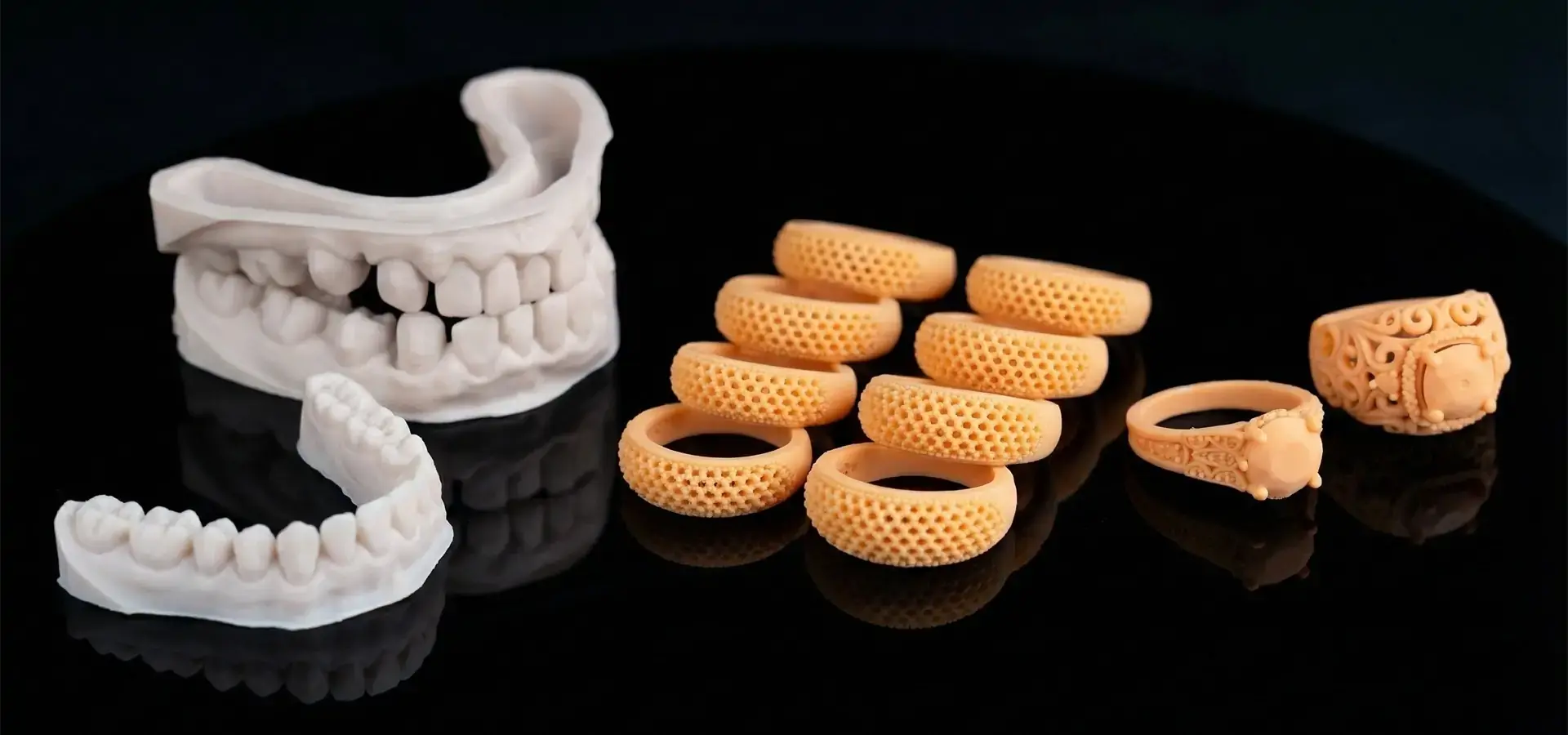
Traditional jewelry design workflows involve hand-carving wax masters—a time-intensive process limiting design complexity and iteration speed. The P7 Pro's 9 µm effective resolution reproduces filigree patterns, gemstone settings, and surface textures with sufficient fidelity for investment casting applications. Castable resins burn out cleanly at 700℃, leaving no ash residue that would create porosity in precious metal castings. A jewelry atelier in Rhode Island reduced master pattern production time from 8 hours per piece to 45 minutes while achieving design details impossible through manual wax work, enabling them to offer customization options that differentiated their brand in competitive markets.
Dental Model and Surgical Guide Manufacturing
Orthodontic aligner production and implant surgical guides require anatomical accuracy within 50 microns to ensure proper fit and clinical outcomes. The P7 Pro's 0.02mm accuracy specification meets these stringent requirements while providing sufficient build volume for full-arch dental models. Biocompatible resin formulations approved for intraoral contact enable direct production of temporary crowns and night guards, expanding service offerings for dental labs beyond traditional model-making into chairside manufacturing support.
Consumer Electronics Prototyping and Fit Testing
Product development teams validating ergonomic designs, button travel, and snap-fit assembly benefit from the P7 Pro's ability to produce functional prototypes with an injection-mold surface finish. A wearables startup used the printer to iterate through 17 earbud design variations in three weeks—a timeline impossible with outsourced CNC machining—enabling them to reach market two months ahead of projections. The smooth surface finish eliminated secondary sanding operations, allowing engineers to conduct user testing with presentation-quality samples directly from the build platform.
Precision Engineering and Tooling Applications
Manufacturers producing low-volume specialty components or custom fixtures leverage the P7 Pro for jig production, inspection gauges, and soft tooling masters. The printer's dimensional stability across the build volume ensures critical dimensions maintain tolerance even for parts approaching the maximum 160mm Z-height capacity. An aerospace subcontractor produces drill guides for composite panel assembly, replacing aluminum fixtures that required six-week lead times with overnight-printed resin alternatives validated for 50+ use cycles.
These application examples demonstrate how the stereolithography 3D printer transforms design workflows by compressing iteration cycles, reducing dependency on external vendors, and enabling customization strategies economically unfeasible through traditional manufacturing methods.
Procurement Considerations: Choosing the P7 Pro for Your Business
Technical specifications matter, but procurement decisions ultimately hinge on total cost analysis, supplier reliability, and strategic fit with existing production infrastructure for a stereolithography 3D printer. Decision-makers evaluating the P7 Pro should assess initial capital outlay against operational cost projections, support ecosystem robustness, and scalability potential as production volumes grow.
Total Cost of Ownership Analysis
The P7 Pro's purchase price positions it competitively against comparable desktop stereolithography systems while delivering specifications typically found in equipment costing substantially more. When calculating TCO over a three-year operational period, consider consumable costs including resin (averaging $80-150 per liter depending on formulation), replacement FEP films ($25-40 per unit with 50-100 print lifespan), and LCD screen replacement ($300-400 at 2000+ hour intervals). Open material compatibility dramatically impacts this calculation: forced reliance on proprietary resins costing $200+ per liter transforms an initially attractive purchase price into a long-term expense burden.
Maintenance requirements remain minimal due to the printer's robust component selection. The full-metal chassis and industrial linear rails demonstrate substantially longer service life than plastic structural elements and budget-grade motion systems prone to backlash development. Magforms' warranty coverage and responsive technical support—evidenced by the company's service to over 300 enterprises globally—provide risk mitigation for capital equipment investments.
Competitive Positioning Against Market Alternatives
When benchmarked against established brands, the P7 Pro delivers comparable or superior specifications at 60-70% of competitive pricing. Formlabs Form 3 units offer similar resolution but enforce expensive proprietary resin cartridges and lack heated build chambers. Anycubic Photon Ultra provides lower initial cost but compromises on accuracy consistency and lacks real-time parameter adjustment capabilities. The P7 Pro occupies a strategic middle ground: professional-grade performance without enterprise equipment pricing, open ecosystem benefits without sacrificing optimized material performance.
Integration with Existing Production Workflows
The printer's compact footprint (compatible with standard laboratory benches) and standard AC power requirements eliminate facility modification costs. File preparation uses industry-standard STL format compatible with all major CAD packages, while the included slicing software supports parameter customization for advanced users without overwhelming operators new to additive manufacturing.
For businesses scaling from initial equipment investment toward small production cells, the P7 Pro's specifications and operational characteristics align with professional service bureau equipment, ensuring process knowledge transfers as operations expand. Magforms' global presence—demonstrated through participation in European and Asian industry exhibitions and Belt and Road Initiative technology transfer programs—provides confidence in long-term parts availability and continued platform development. The company's 22 patents and 30 registered trademarks reflect sustained R&D investment, indicating the P7 Pro represents current technology rather than obsolete designs being liquidated at discount pricing.
Conclusion
The Magforms P7 Pro redefines expectations for desktop LCD-based stereolithography (MSLA) 3D printer capabilities by combining industrial-grade mechanical components, high-resolution monochrome LCD imaging, and stable thermal control systems. Its enhanced perceived XY resolution enabled through grayscale anti-aliasing optimization, stable 0.02mm dimensional accuracy, and temperature-managed print chamber solve persistent pain points around output quality, environmental sensitivity, and material cost control. For jewelry manufacturers, dental laboratories, product development teams, and precision component producers, the P7 Pro accelerates design validation cycles while reducing dependency on external service providers. Procurement managers gain a strategic asset delivering professional-grade results without enterprise equipment capital requirements or proprietary consumable lock-in.
FAQ
1. What post-processing steps are required for P7 Pro printed parts?
Parts require two-stage chemical processing: washing in isopropyl alcohol or TPM solvent to remove uncured resin, followed by UV post-curing for 10-30 minutes depending on material formulation. This stabilizes mechanical properties and ensures dimensional accuracy. Support structure removal occurs after washing using flush cutters, with minimal sanding needed due to the printer's smooth surface finish.
2. Can the P7 Pro handle functional mechanical parts or just visual prototypes?
Material selection determines functional capabilities. Standard resins suit visual models, while engineering formulations provide properties comparable to ABS or polypropylene. Tough resins enable snap-fit mechanisms and living hinges, though designers should account for the resin's lower impact resistance versus injection-molded thermoplastics. The printer's accuracy supports functional testing of assemblies, threaded connections, and sliding interfaces.
3. How does the P7 Pro's 9 µm resolution compare to DLP systems?
The grayscale adjustment algorithm achieves effective resolution matching DLP projection quality while maintaining the advantages of LCD-based stereolithography in scalable build formats and consistent surface formation across large-area exposure. DLP systems flash entire layers simultaneously, offering speed benefits for batches of small identical parts, but the P7 Pro's LCD masking technology, combined with advanced grayscale anti-aliasing, significantly minimizes stair-stepping and pixelation artifacts that can appear on angled surfaces in DLP output.
Partner with a Trusted Stereolithography 3D Printer Manufacturer
Magforms combines deep specialization in resin additive manufacturing with application-driven technical support to deliver integrated 3D printing solutions addressing real production challenges. Our P7 Pro stereolithography 3D printer represents the convergence of precision engineering, open material ecosystems, and intelligent operational design—backed by 22 patents and proven deployment across 300+ global enterprises.
Whether you're establishing in-house rapid prototyping capabilities, expanding service bureau offerings, or validating complex designs before tooling investment, our technical team provides application-specific guidance ensuring optimal equipment configuration and material selection. Contact info@magforms.com to discuss your production requirements and arrange sample part evaluation, or explore detailed specifications and case studies at our resource center. Magforms' commitment to responsive support and continuous platform development means your investment gains value as our material library and software capabilities expand.
References
1. Gibson, I., Rosen, D., & Stucker, B. (2021). Additive Manufacturing Technologies: 3D Printing, Rapid Prototyping, and Direct Digital Manufacturing (3rd ed.). Springer International Publishing.
2. Jacobs, P. F. (1992). Rapid Prototyping & Manufacturing: Fundamentals of Stereolithography. Society of Manufacturing Engineers.
3. Stansbury, J. W., & Idacavage, M. J. (2016). 3D printing with polymers: Challenges among expanding options and opportunities. Dental Materials, 32(1), 54-64.
4. Melchels, F. P., Feijen, J., & Grijpma, D. W. (2010). A review on stereolithography and its applications in biomedical engineering. Biomaterials, 31(24), 6121-6130.
5. Ligon, S. C., Liska, R., Stampfl, J., Gurr, M., & Mülhaupt, R. (2017). Polymers for 3D printing and customized additive manufacturing. Chemical Reviews, 117(15), 10212-10290.
6. Quan, H., Zhang, T., Xu, H., Luo, S., Nie, J., & Zhu, X. (2020). Photo-curing 3D printing technique and its challenges. Bioactive Materials, 5(1), 110-115.

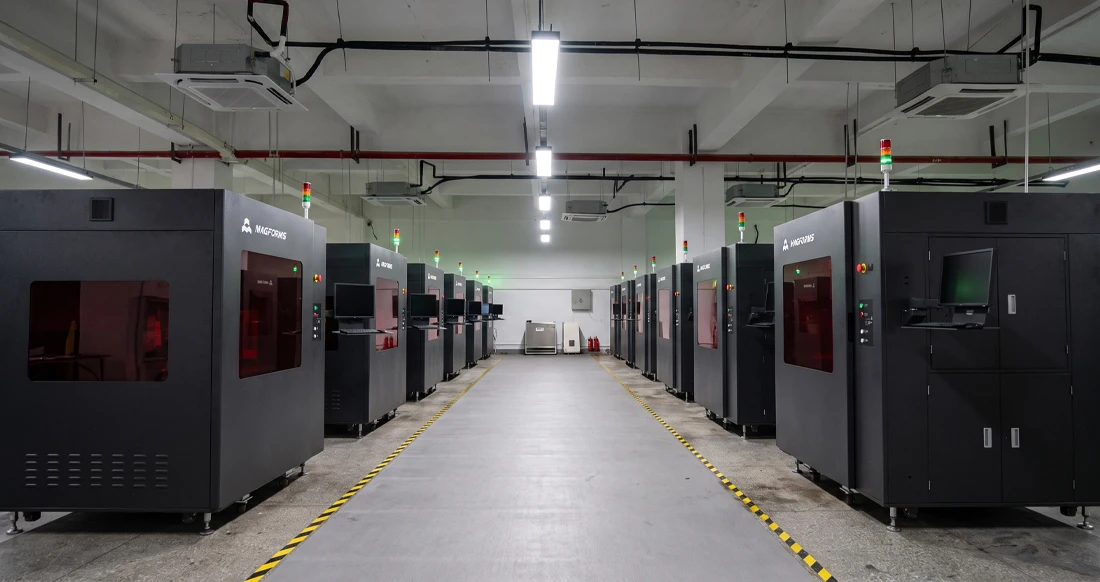
Magforms makes design and manufacture easier.
Popular Blogs
-
 Industry InsightsManufacturing Industry
FDM vs. SLA Printer: Which Technology Is Right for Your Project?
-
 Industry InsightsManufacturing Industry
Top 5 Applications of Industrial 3D Printers in Manufacturing Today
-
 Industry InsightsManufacturing Industry
Why Stereolithography 3D Printers Are Unmatched for Microfluidic Device Prototyping?