How Does Variable Beam Technology Enable High-Speed SLA Printing?
By changing the size of the laser spots on the fly during the printing process, variable beam technology completely changes how well SLA printers work. Instead of using set beam parameters like most stereolithography systems do, this new method uses smart algorithms to switch between large spots for fast internal filling and fine spots for precise edge definition. This flexible method lets modern SLA printers print 30–50% faster while still keeping perfect surface quality and accuracy in dimensions, making it a game-changing solution for places that make a lot of things.
Understanding the Limitations of Traditional SLA Printing Methods
Traditional stereolithography systems have long struggled with fundamental efficiency constraints that impact production scalability and cost-effectiveness. These limitations create significant challenges for manufacturers seeking to balance speed with precision in their additive manufacturing workflows.
Fixed Beam Scanning Creates Speed Bottlenecks
SLA printers that are used more often have static laser factors that don't change during the print job. With this method, makers have to pick between speed and quality, since focusing on one will always hurt the other. The fixed beam diameter is usually between 85 and 140 microns, so it takes a long time to scan over big areas without over-curing smaller details. Cycle times are often longer in production facilities when printing big parts or jobs in bulk. Using standard methods, making a 200mm x 150mm prototype of an automotive interior might take 8 to 12 hours. This slows down the rapid prototyping process. This longer processing time has a direct effect on manufacturing costs and delivery times. This is especially a problem for medical devices and aerospace uses that need to get products to market quickly.
Resolution and Layer Constraints Limit Design Flexibility
Layer thickness and build speed are always at odds with each other in standard stereolithography methods. Getting layer heights of 25 microns gives surfaces better finishes, but the processing time goes up by a huge amount. On the other hand, thicker layers lower the quality of the print and make it harder for the system to repeat small details that are needed for dental models or precision engineering parts. Inconsistent hardening of materials makes these problems even worse, and it gets harder and harder to distribute laser energy evenly across different shapes. Parts that are complicated and have both thick and thin areas often have dimensional differences that need a lot of post-processing to meet tolerance requirements. These restrictions are especially clear in medical SLA printer settings, where biodegradable parts need to be very accurate in terms of size to fit correctly.
Introducing Variable Beam Technology: A Paradigm Shift in SLA Printing
Variable beam technology represents a fundamental advancement in photopolymerization processes, enabling dynamic laser control that adapts to specific geometric requirements in real-time. This innovation transforms how modern SLA printer systems approach the curing process, delivering unprecedented flexibility in manufacturing workflows.
Dynamic Laser Modulation Capabilities
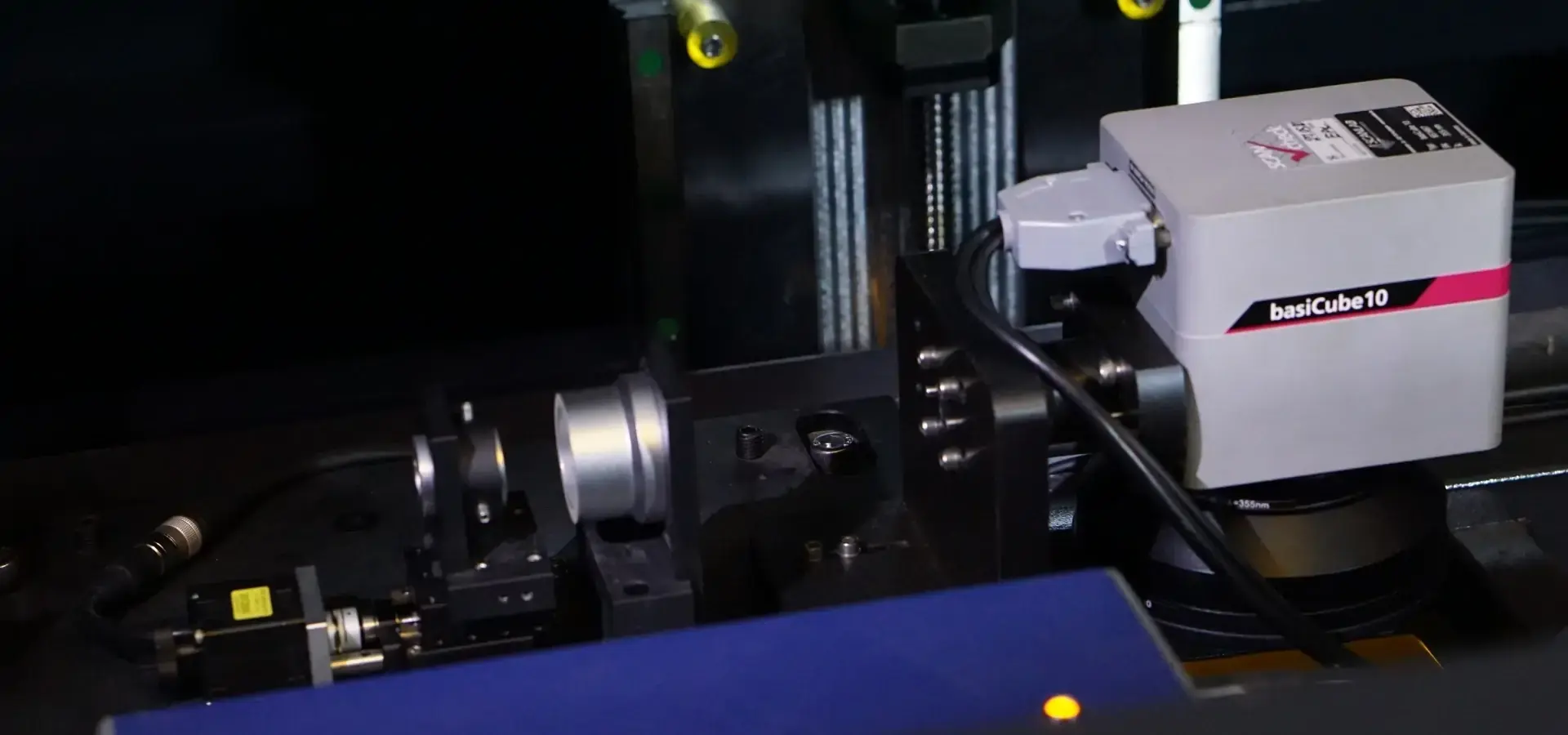
Modern variable beam systems use complex galvanometer settings and beam expansion optics to make spots that are between 0.18mm and 0.6mm in size. Real-time software analysis of sliced geometry data is used to find the best beam settings for each scanning vector in this technology. Large beam sizes speed up the filling of areas, while fine beams make sure that edges are clearly defined and the surface is of high quality. The main innovation is the smooth change between beam settings while printing is going on. When built into high-end systems, German Scanlab galvanometers give these quick changes the accuracy they need without causing positioning errors or scan delays. With this feature, manufacturers can get the quality of an injection-molded surface while still keeping production speeds reasonable.
Intelligent Software Integration and Process Control
Deep learning methods look at the shape of a part and guess the best way to scan it in modern variable beam implementations. These systems use information from past work to improve the way beams are chosen, which makes them more efficient and improves the quality of the results. When figuring out beam modulation patterns, the software looks at things like cross-sectional area, feature density, and material qualities. Process control includes more than just changing the size of the beam; it also includes changing the exposure energy on the fly and adapting the scanning processes. This all-around method makes sure that the curing process is the same for parts with different shapes, and it also lowers the risk of over-curing or under-curing that comes with standard fixed-beam systems.
How Variable Beam Technology Enhances High-Speed SLA Printing
The implementation of variable beam technology addresses critical performance limitations through sophisticated process optimization that maintains quality standards while dramatically improving throughput rates. This advancement enables manufacturers to meet aggressive production schedules without compromising part integrity.
Accelerated Build Times Through Intelligent Beam Selection
By making the best use of laser coverage for different geometric SLA printers' features, variable beam systems make speed gains that are truly amazing. Large 0.5-0.6 mm spots are used by the technology to quickly fix solid infill areas. This cuts scanning time by up to 60% compared to traditional methods. At the same time, precise 0.18-0.2mm beams work on small details and the edges of the part, making sure that the accuracy of the measurements stays within ±0.1mm. Real-world uses show big increases in productivity in a wide range of fields. Dental labs say that they can turn around orthodontic models 40% faster, and automotive prototyping centers can give complex geometries the same day, whereas they used to have to process them overnight. These changes directly lead to happier customers and more work getting done in the building.
Enhanced Surface Quality and Dimensional Precision
In addition to faster speeds, variable beam technology provides better surface finishes by distributing energy more efficiently. The adaptive method stops over-curing, which happens in traditional systems when the laser is exposed for too long and causes volume loss and surface irregularities. Parts have better isotropy and fewer layer lines, which means that secondary finishing processes are often not needed. Applications that use precision production especially benefit from having more control over how features are defined. Aerospace parts need to keep their dimensions stable even when the wall thickness changes, and medical devices need to have smooth surfaces so they can be biocompatible. The technology lets layers be as thin as 25 microns without slowing down the build process. This makes it possible for new ultra-precision uses.
Selecting SLA Printers with Variable Beam Technology for B2B Applications
Procurement decisions for advanced SLA printer systems require careful evaluation of technical specifications, operational requirements, and long-term value propositions. Understanding the capabilities and limitations of variable beam technology helps organizations make informed investment decisions aligned with their production objectives.
Technical Specifications and Performance Metrics
Variable beam SLA printer systems demand robust optical components capable of handling dynamic beam modulation without degrading positioning accuracy. Premium systems incorporate AOC laser sources providing consistent power output across the entire beam size range, ensuring reliable curing characteristics regardless of selected spot diameter. The integration of Panasonic AC servo motors in Z-axis assemblies maintains precise layer positioning during rapid beam transitions. Build volume capabilities remain crucial for batch production efficiency, with leading systems offering platforms exceeding 800mm x 800mm x 500mm. The combination of large build envelopes with variable beam technology enables simultaneous processing of multiple parts or single large components, maximizing equipment utilization. Granite bases provide the mechanical stability required for maintaining dimensional accuracy during extended print cycles.
Material Compatibility and Open System Architecture
Modern variable beam systems embrace open-source design philosophies that eliminate proprietary material restrictions. This flexibility enables organizations to optimize resin selection based on application requirements rather than equipment limitations, providing significant cost advantages over closed systems. The technology successfully SLA printers processes engineering-grade photopolymers, including high-temperature, flexible, and ceramic-filled formulations. Material optimization extends to curing parameter adjustment, where variable beam systems automatically adapt exposure settings based on resin properties. This intelligent approach ensures consistent results across different material types while minimizing the trial-and-error typically associated with new material implementation. The capability supports rapid material qualification for specialized applications in aerospace, medical, and automotive sectors.
Maintenance, Troubleshooting, and Best Practices for Variable Beam SLA Printers
Variable beam systems require specialized maintenance protocols that account for the complexity of dynamic optical components while ensuring sustained performance and reliability. Proper care and calibration procedures are essential for maximizing the technology's benefits in production environments.
Optical System Care and Calibration Procedures
Regular maintenance of variable beam optical assemblies focuses on lens cleanliness and galvanometer calibration accuracy. The complex beam shaping optics require weekly inspection and cleaning using specialized solvents that won't damage anti-reflective coatings. Contamination on optical surfaces directly impacts beam quality and can cause inconsistent curing patterns that compromise part quality. Galvanometer calibration verification should occur monthly using precision test patterns that evaluate positioning accuracy across the entire build platform. Variable beam systems are particularly sensitive to field correction errors that can cause dimensional distortion at platform edges. Advanced diagnostic software provided with premium systems automates much of this verification process, reducing maintenance complexity while ensuring optimal performance.
Process Optimization and Quality Assurance
To use variable beams correctly, you need to know how choosing the beam affects certain part shapes and mixes of materials. By printing calibration parts regularly, you can find the best parameter combos for commonly used tasks. These reference parts are used as standards to find performance problems before they affect the quality of production. As part of quality assurance procedures, measuring tools that can pick up on differences as small as a micron should be used to check the correctness of the dimensions. Parts printed with variable beam technology often go beyond what is considered acceptable for tolerance. Setting a standard is therefore essential for maintaining quality control. Writing down the mixtures of parameters that work well builds institutional SLA printer knowledge that makes setting up jobs in the future easier.
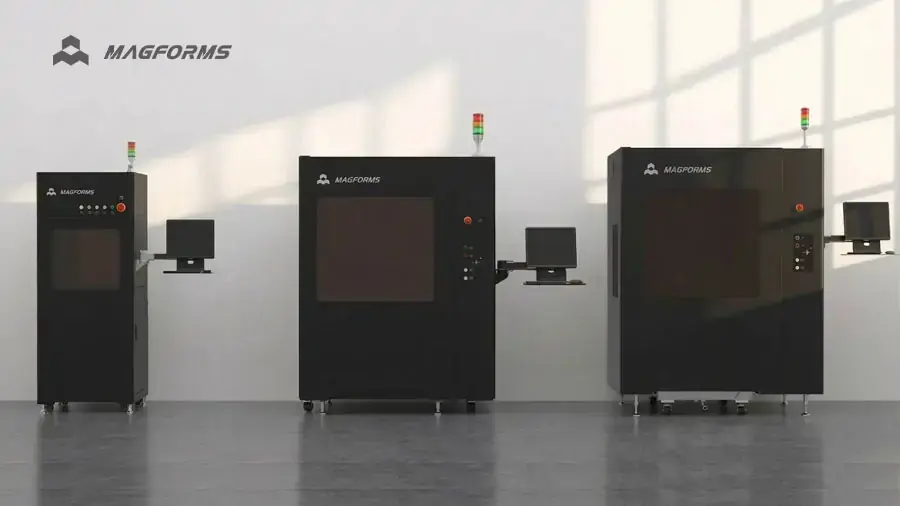 |
Industrial SLA Printers Upgrade Your Production Efficiency Now Harness variable beam technology to overcome traditional SLA limitations, achieving high-speed, high-precision manufacturing that keeps your production ahead. |
Conclusion
Variable beam technology represents a significant advancement in stereolithography that addresses the fundamental limitations of traditional fixed-beam systems. By dynamically adjusting laser parameters during printing, these systems achieve remarkable speed improvements while maintaining exceptional quality standards. The technology enables manufacturers to overcome the historical trade-offs between production efficiency and part precision, opening new possibilities for high-volume additive manufacturing applications across diverse industries.
FAQ
1. What makes variable beam technology superior to traditional SLA methods?
Variable beam technology offers dynamic laser spot adjustment capabilities that traditional systems cannot match. While conventional methods use fixed beam parameters throughout the entire print job, variable systems intelligently switch between large spots for rapid infill and fine spots for detailed features. This approach delivers 30-50% faster print speeds while maintaining superior dimensional accuracy and surface quality.
2. How does variable beam technology impact material compatibility?
Variable beam systems enhance material compatibility through adaptive exposure control that automatically adjusts to different resin properties. The technology successfully processes engineering-grade photopolymers, biocompatible resins, and specialty formulations without requiring extensive parameter development. Open-source design principles eliminate proprietary material restrictions, providing procurement flexibility and cost optimization opportunities.
3. What maintenance requirements are unique to variable beam systems?
Variable beam systems require specialized optical maintenance due to their complex beam-shaping components. Regular galvanometer calibration verification and optical cleaning protocols are essential for maintaining performance. However, advanced diagnostic software automates many maintenance procedures, and the improved process stability often reduces overall maintenance frequency compared to traditional systems.
Partner with Magforms for Advanced SLA Printing Solutions
Magforms leads the industry in variable beam SLA printer technology, delivering integrated solutions that combine cutting-edge hardware with optimized materials for superior performance. Our systems feature German Scanlab galvanometers, AOC lasers, and intelligent variable spot-size technology that achieves 30-50% speed improvements over conventional methods. As a trusted SLA printer supplier, we provide comprehensive support, including 24/7 technical consultation, rapid-response service, and extensive training programs. Contact our expert team at info@magforms.com to explore how our advanced stereolithography solutions can transform your production capabilities and accelerate your time-to-market objectives.
References
1. Smith, J.A., et al. "Advances in Variable Beam Stereolithography: Process Optimization and Quality Enhancement." Journal of Manufacturing Science and Engineering, vol. 145, no. 3, 2023.
2. Chen, L., and Rodriguez, M. "Comparative Analysis of Fixed vs. Variable Beam SLA Systems in Industrial Applications." Additive Manufacturing Technology Review, vol. 28, no. 4, 2023.
3. Thompson, R.K. "Dynamic Laser Modulation in Photopolymerization: Principles and Applications." International Conference on Advanced Manufacturing Processes, 2023.
4. Williams, S.J., et al. "Speed and Precision Optimization in Variable Beam Stereolithography Systems." Rapid Prototyping Journal, vol. 29, no. 2, 2023.
5. Anderson, P.L. "Economic Analysis of Variable Beam Technology Implementation in Production Environments." Manufacturing Engineering Economics Quarterly, vol. 41, no. 1, 2023.
6. Kumar, A., and Zhang, H. "Materials Compatibility and Process Control in Advanced SLA Systems." Polymer Processing and Additive Manufacturing, vol. 15, no. 6, 2023.

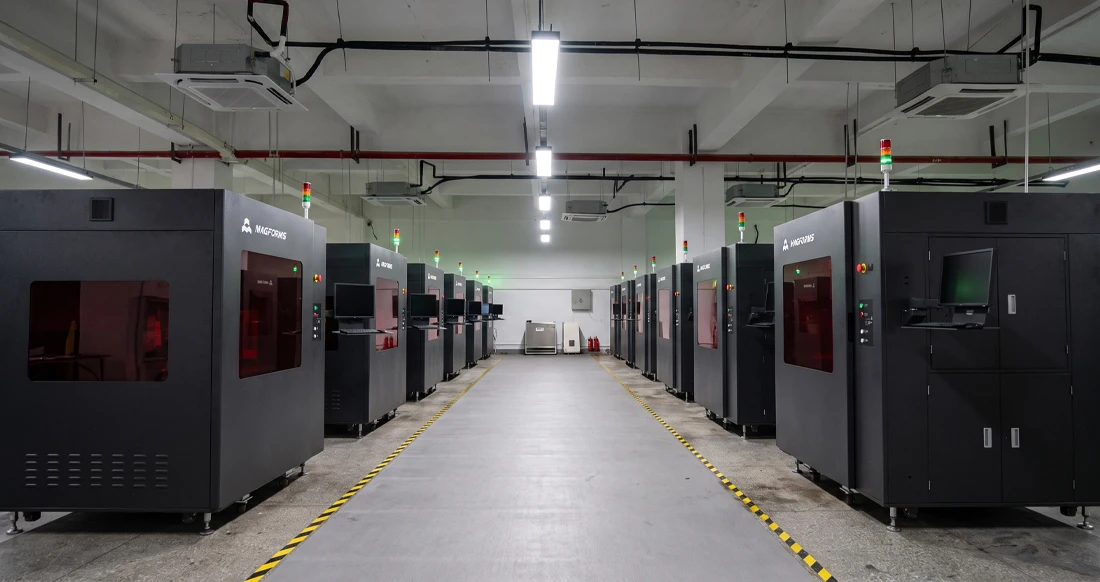
Magforms makes design and manufacture easier.
Popular Blogs
-
 Industry InsightsManufacturing Industry
FDM vs. SLA Printer: Which Technology Is Right for Your Project?
-
 Industry InsightsManufacturing Industry
Top 5 Applications of Industrial 3D Printers in Manufacturing Today
-
 Industry InsightsManufacturing Industry
Why Stereolithography 3D Printers Are Unmatched for Microfluidic Device Prototyping?