How Fast Can a 3D Printing Machine Turn Concepts Into Models?
There are a number of linked factors that affect how quickly a 3D printing machine turns digital ideas into real samples. Modern commercial LCD-based mSLA systems can produce small, high-detail parts in as little as two to four hours, but it can take eight to twenty-four hours to make complicated structures that need a lot of parts. Total turnaround time is directly affected by factors such as layer thickness, part shape, resin viscosity, and post-processing needs. But unlike traditional ways of making things, which take days or weeks to set up tools and make things, modern additive manufacturing systems greatly shorten development processes, allowing for same-day changes for important projects.
Understanding the Speed of 3D Printing Machines
Core Principles Behind Additive Manufacturing Speed
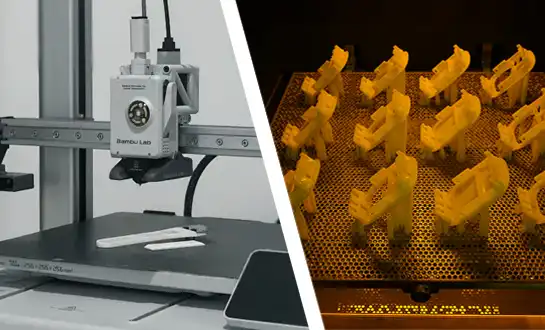
Due to how they are designed to work, different additive manufacturing methods work at different speeds. Fused Deposition Modeling (FDM) extrudes layers of thermoplastic filament, and the printing speed ranges from 40 to 150 mm per second, based on the size of the tip and how the material flows. Stereolithography (SLA) and LCD-based masked stereolithography (MSLA) systems use UV lasers or masked LCD light sources to cure liquid photopolymer resin layer by layer, which enables vertical build speeds typically ranging from 10 to 50 mm/h depending on layer height, exposure settings, and resin chemistry. Selective Laser Sintering (SLS) uses high-powered lasers to sinter powdered materials layer by layer. This method is better for parallel processing because the powder bed itself gives support, so no extra structures are needed. There are different trade-offs with each method. FDM saves money on materials but takes longer to do high-resolution work. For precision applications, LCD-based SLA systems provide smoother surface finishes and higher dimensional accuracy than most FDM platforms while maintaining competitive production throughput. Knowing about these basic technologies helps buying teams match the skills of the tools to the needs of a particular production.
Factors Affecting Turnaround Times in Production Environments
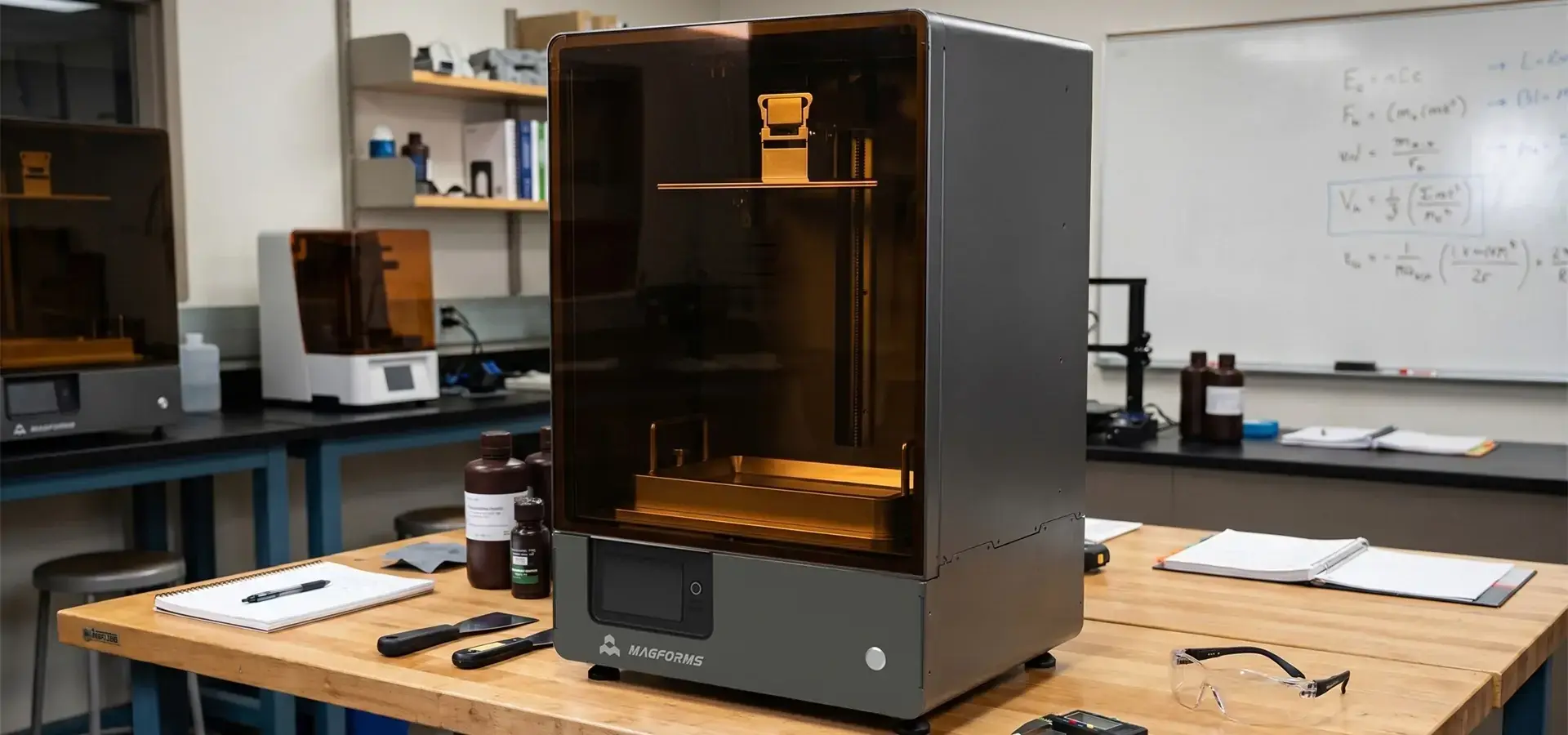
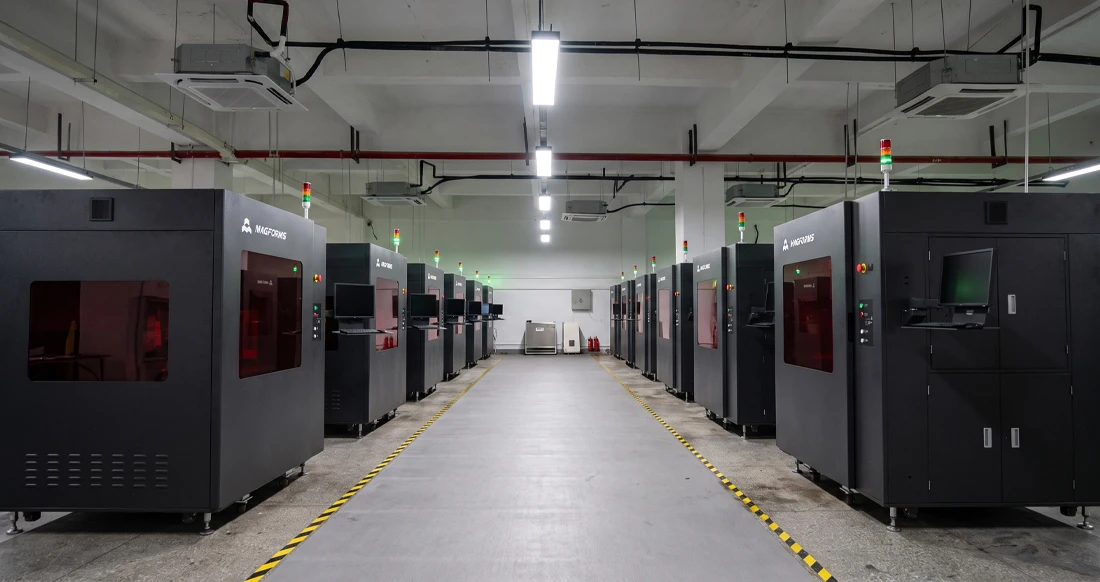
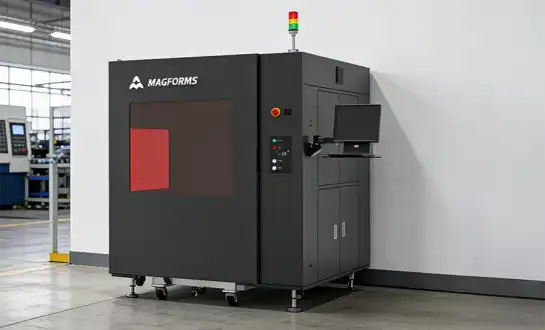
The type of machine is the only variable in the speed equation. Processing time is greatly affected by the qualities of the material. For example, industrial resins with higher viscosity typically require longer exposure and curing times per layer than normal formulas. Part shape adds to the complexity; models with large overhangs need support structures that take longer to print and require more work afterward. The choices for layer height have a direct opposite effect on speed: smaller layers (25–50 microns) make surfaces smoother but take longer to build. Temperature control in the build room affects how well the material cures and how stable its dimensions are. Dual-heating temperature control systems help maintain stable resin viscosity and curing consistency throughout long print cycles, which lowers the number of failures that require expensive repeats. The Magforms P13 Pro has two heating sources that make sure the heat is evenly spread across its 302.4×161.98×380mm build space. This lets production run reliably overnight, even when the weather is changing.
Desktop Versus Industrial-Grade Performance Benchmarks
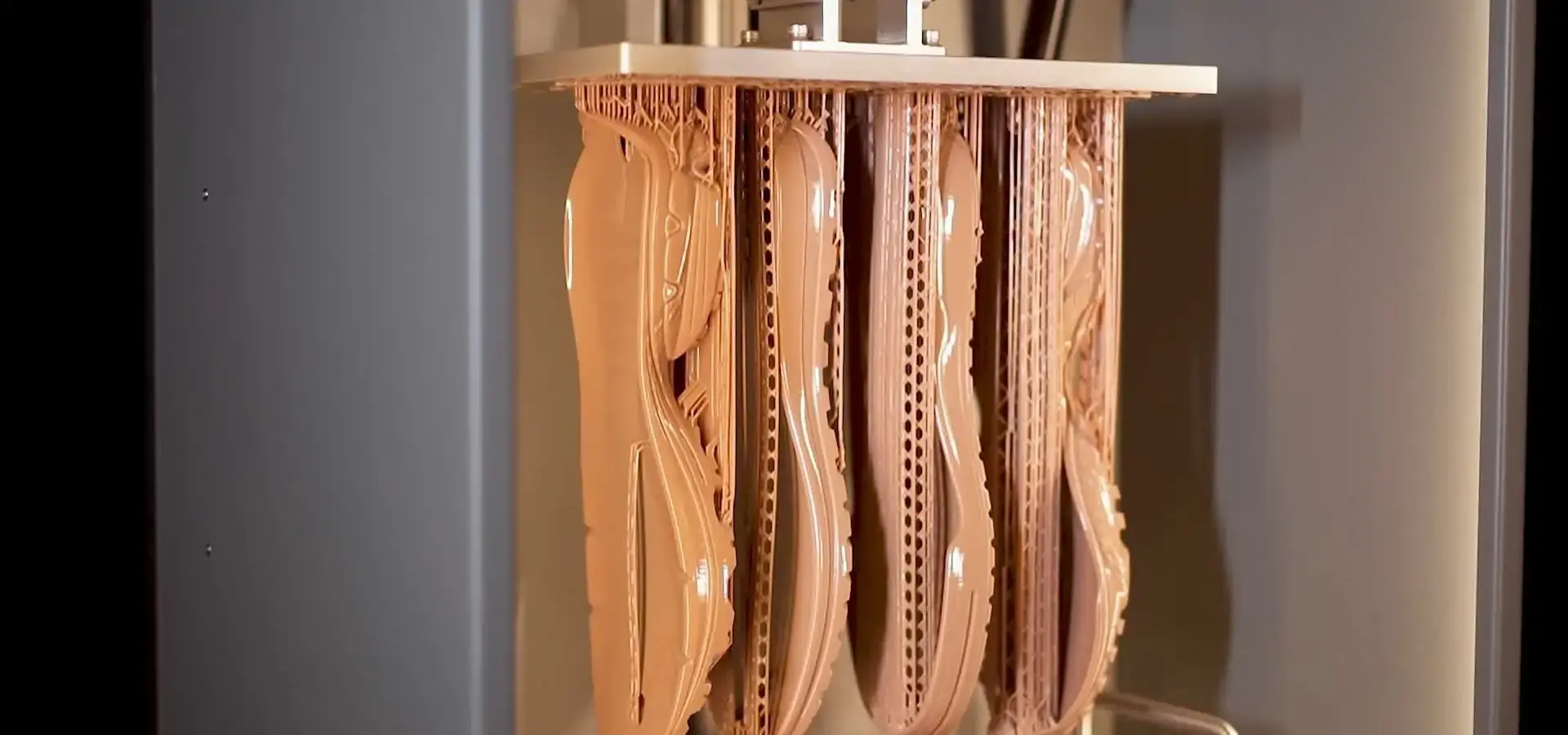
Desktop LCD and FDM printers under $5,000 commonly offer build volumes ranging from approximately 150×150×200 mm to over 250×250×300 mm, depending on the platform architecture and provide sufficient print speeds for rapid small-part prototyping. On these systems, it might take three to five hours to make a 50 mm cube with 100 μm layers. Industrial platforms cost more to buy but offer more capability and output. Large-format LCD-based SLA (mSLA) systems can process multiple parts simultaneously across a single exposure layer. For example, the P13 Pro's large platform can hold three normal shoe molds in a single job, which helps shoe makers get the most out of each batch. Industrial systems also include automation features that reduce operator intervention. Built-in storage lets you print even when you're not connected to the internet, so workers can queue jobs from afar while the machine works by itself. This operating freedom changes the way production schedules are made, especially for service companies that are working on projects for clients in the medical, consumer goods, and car industries at the same time.
Comparing 3D Printing to Traditional Prototyping Methods
Time Efficiency Advantages Over Conventional Techniques
Using traditional modeling methods takes a lot of time and costs a lot of money. For complicated shapes, CNC cutting needs CAM code, tool path generation, and multiple setup processes. A single prototype iteration can take anywhere from two to five days. Before making the first model for injection molding, a mold has to be made, which can take weeks or months based on how complicated the part is. These long steps of planning slow down the growth process. With additive methods, you don't need any tools at all. Engineers can prepare CAD files, slice them digitally, and produce functional prototypes within hours instead of waiting days or weeks for tooling preparation. This speedup is a game-changer for iterative design processes that are popular in consumer goods and car interior development, where quick approval of practical features and aesthetic details gives companies a competitive edge.
Cost-Effectiveness for Low-Volume and Custom Production
Besides speed, additive methods are better for small-batch production because they are more cost-effective. With traditional ways, you can only save money when you make a lot of units, which usually means thousands of units. A single metal plate for a smartphone case could cost between $15,000 and $50,000, which would make it too expensive to make a small number of them. On the other hand, the marginal cost of making more pieces stays pretty much the same. It doesn't matter if you're making one sample or twenty unique tooth aligner bases; the amount of material you use stays the same. This is a benefit that medical device companies use to make surgery guides that are specific to each patient, and aerospace makers use it to test runs of complex link parts.
Case Study: Measurable ROI in Industrial Applications
When a car part seller put in place industrial additive systems, including 3D printing machines, prototype development times went from 14 days (when CNC was outsourced) to 36 hours (when LCD printing was done in-house). This 80% time savings lets the engineering team look at five design versions in the time it took to look at just one. This cut the time it took to get a new car platform to market by six weeks. Compared to samples made of polished aluminum, the cost of materials dropped by 60%. Shipping delays and worries about intellectual property that come with using outside service providers were also eliminated. The measurable benefits went beyond speed. Designers got the courage to try out unusual shapes that were too expensive to make, and in the end, they found a lighter answer that made the vehicle more fuel-efficient. This result shows how fast iteration velocity can lead to benefits other than just tightening up schedules.
Choosing the Right 3D Printing Machine for Fast Prototyping
Technology Comparison for Various Business Scenarios
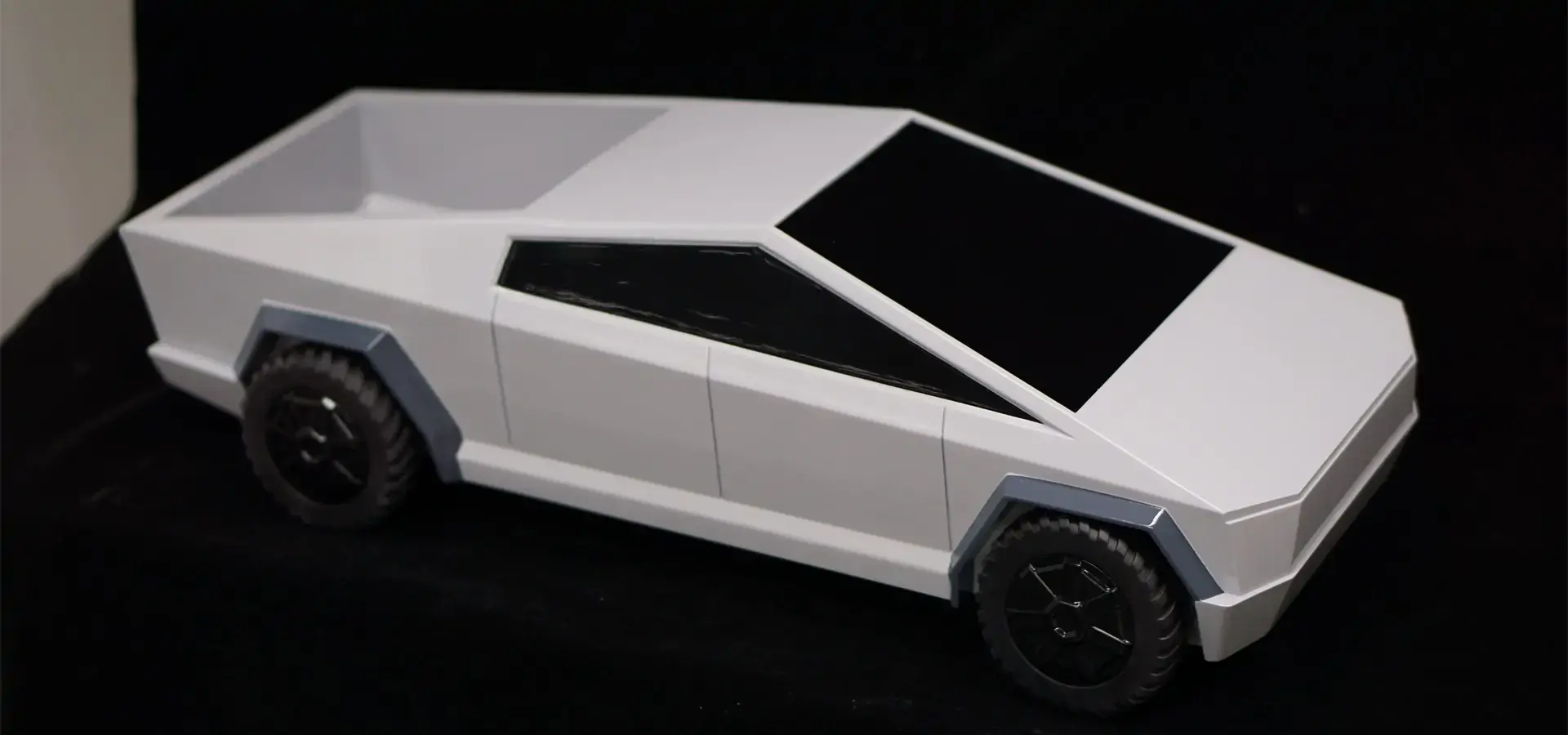
To choose the right additive tools, you need to match the strengths of the technology with the needs of the application. FDM systems are good for testing the functionality of mechanical structures with a moderately rough surface, like when developing cases for industrial controls or fixing parts in place. At prices that most people can afford, these tools can work with a wide range of materials, such as industrial thermoplastics like nylon and polycarbonate. SLA, DLP, and LCD-based MSLA technologies are especially effective in applications requiring smooth surfaces, sharp detail reproduction, and high dimensional precision. Dental labs make crown designs and orthodontic models that need to be accurate to within 50 microns. Cultural and creative design companies reproduce intricate textures and ornamental details that FDM can't do cost-effectively. The Magforms P13 Pro uses large-format LCD-based mSLA architecture to keep quality results across large parts. Layer lines on finished surfaces are almost unnoticeable, which is a big plus for models that will be shown to clients.
Key Machine Features That Accelerate Production Cycles
Several parts of the design immediately improve productivity. Large build sizes make it possible to process many parts at once, which cuts down on the time needed to make each part. With a vertical capacity of 380 mm, the P13 Pro can handle big shoe forms up to their full size in a single process, so you don't have to separate large models. Automated testing systems cut down on the time it takes to set up between jobs. Operators don't have to spend as much time releveling build platforms or changing exposure settings by hand, which makes moving between projects go more quickly. The P13 Pro has intuitive on-device settings that speed up processing by lowering the need for external computers and complicated software. Reliability features keep the output from stopping, which costs a lot of money. Auto-sensing lighting allows operators to monitor print progress in low-light environments without interrupting the curing process or exposing resin to unstable ambient conditions. This may seem like a small improvement, but it stops doors from having to be opened and closed all the time, which can make the chamber less stable. Over the course of a year, these small improvements add up to big savings.
Supplier Reliability and After-Sales Support Considerations
It doesn't matter how good the equipment is if the service system isn't reliable. Technical problems stop all output, so how quickly a seller is an important factor in buying something. People who want to buy something should look at how thorough the guarantee is, how easy it is to get replacement parts, and how long it usually takes for service requests to be answered. Magforms keeps a global technical support team that has been trained through thorough hands-on programs. This way, problems can be fixed quickly across time zones. Our 22 patents and 30 filed trademarks show that we have consistently invested in research and development, which means that our products are reliable. During validation testing, systems are put through thousands of hours of continuous operation. This level of engineering effort keeps unplanned downtime well below the average for the industry. This protects production plans for companies that make medical devices and airplane parts that have to meet strict delivery deadlines.
Optimizing 3D Printing Workflow to Maximize Speed
Model Design Optimization Techniques
Careful CAD planning cuts the time it takes to build by a large amount. Placing parts at the best angles reduces the need for support structures, which cuts down on both print time and work that needs to be done afterward. For non-load-bearing uses, hollowing solid models with appropriate wall thicknesses, typically around 1.5-3 mm depending on geometry and resin type, lowers the amount of resin used and the time it takes to cure without affecting the structure's strength.When you choose the height of a layer, you directly trade off speed for quality. If you use 100-micron layers on prototypes for form and fit evaluation, you can cut print time in half compared to 50-micron settings while still getting good accuracy in the dimensions. Ultra-high resolutions should only be used for final show models or mold masters that need a perfect finish on the outside.
Material Selection Balancing Speed and Performance
Standard photopolymer resins generally cure faster than specialized engineering resins, but they don't have as many functional benefits. When engineering resins are formulated for higher toughness or temperature resistance, they need longer exposure times between layers, which adds 20 to 40 percent to the total time needed. When you know about these trade-offs, you can intelligently match materials, like using fast standard resins for idea models and saving the more expensive materials for trying how well they work. Temperature changes the density and the speed at which the resin cures. By preheating the material to the manufacturer-recommended ranges (usually 25–30°C), you can make sure that it flows smoothly and reacts quickly, and you can avoid incomplete curing or layer adhesion failures that may require the print job to be restarted. The P13 Pro's dual heating system keeps things fixed so that temperature-related problems don't happen, even during long overnight runs.
Maintenance Routines That Minimize Downtime
Minor problems can't turn into failures that stop production if the equipment is serviced regularly. Every 20 to 30 hours, cleaning the optical windows and resin tanks keeps the exposure even and the quality of the parts. Following the manufacturer's instructions for lubricating linear tracks and lead screws helps keep motion accuracy, which has a direct effect on measurement limits. Failures in the middle of a job can be avoided with tank lifespan control. Most LCD resin vats have a limited service life determined by exposure cycles, film wear, and resin chemistry, making periodic inspection and replacement essential for stable print quality. Unexpected downtime can be avoided by keeping track of usage and planning changes to happen during off-hours. Magforms equipment has a high-efficiency air filtering system that protects internal parts from resin vapor and VOC contamination, which extends the time between service intervals.
Advanced Software Tools for Streamlined Operations
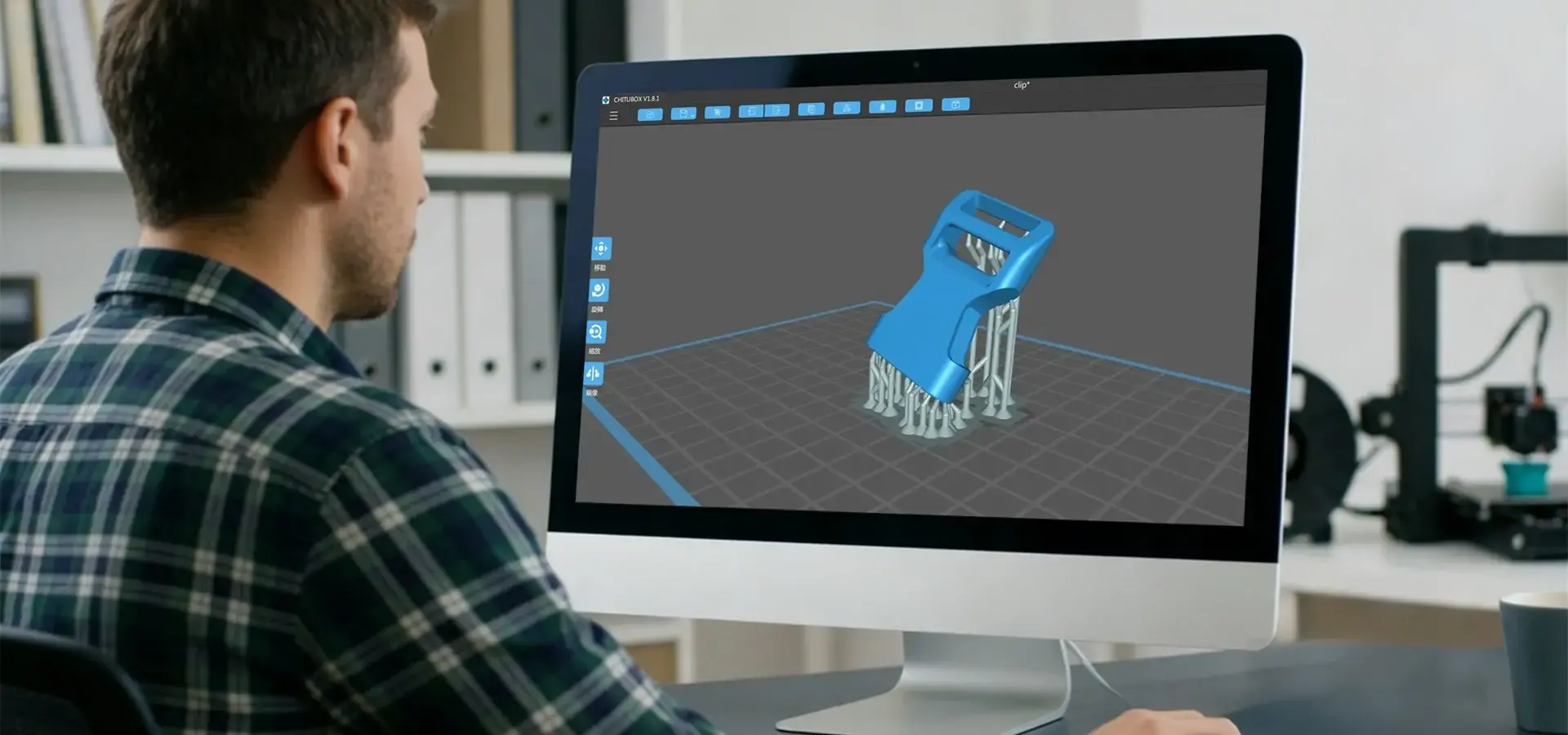
Modern slicing software uses advanced algorithms to optimize support generation, layer exposure, and part orientation to automatically generate support, which reduces the amount of 3D printing machine material used while still ensuring a successful print. Post-processing time is cut down by intelligent placement, which is a big plus when you're making dozens of parts every week. Automated alignment optimization looks at the shape and suggests build angles that meet the needs for speed, quality, and support.CAD interface features make it easier to prepare files. Directly importing native files like STEP and IGES gets rid of conversion mistakes and keeps the design purpose. Cloud-based 3D printing machine management systems let managers keep an eye on jobs and handle queues from afar, so they can get the most out of multiple machines without having to be there in person.
Procurement Considerations for Fast and Reliable 3D Printing Solutions
Evaluating Total Cost of Ownership Beyond Purchase Price
The cost of buying tools at first is only one part of the long-term investment. Consumable costs such as resin, release films, resin vats, and build platforms, add up over the course of an operation's life. Buyers are locked into single-source supply lines by proprietary material environments, which makes it harder to control costs. Magforms uses an open system design that works with both special parts and materials from other companies. This gives them the ability to access better prices and run their business more quickly. Contracts for maintenance services should be carefully thought through. Full coverage, including remote tests, yearly regular maintenance visits, and priority parts replacement, keeps the budget from being surprised. To accurately compare the return on investment (ROI) of different platforms, you should figure out the total five-year owning costs that include products, service agreements, and expected downtime costs.
Importance of Scalable Solutions and Warranty Coverage
As a business grows, it needs tools that can keep up with its growing production needs. Capital investments are protected against failure by modular systems that allow improvements after installation, such as more build volume, more powerful lasers, and automated material handling. The terms of the warranty should cover more than just replacing broken parts. They should also include performance promises for things like accuracy in measurements and dependability. Magforms offers a full guarantee, and our long history of working with over 300 businesses around the world backs it up. Our attendance at big industry shows in Europe and Asia shows that we are committed to the market and that our products have been tested in the real world. Technical training programs help customer teams get the most out of their tools right away, cutting down on the time it takes to learn how to use them, which can delay achieving ROI.
Strategic Partnership with Authorized Dealers
Choosing the right distribution outlet has just as much of an effect on long-term happiness as choosing the right tools. Authorized sellers keep an inventory of factory-trained techs, original substitute parts, and direct lines of contact with research teams. These connections are very helpful when trying to fix complicated problems that go beyond what is normally explained in support documents. When immediate help is needed, regional service networks cut down on the time it takes to get there. Magforms has a global presence, which means that local help is available in most major industrial areas. This lowers the risk of downtime in settings that are very important to the business. We offer both materials and equipment, so there are no worries about compatibility. Our self-developed resins and printers go through a lot of optimization testing to make sure they are accurate in terms of size and durability, which is something that mixed-vendor solutions can't promise.
Conclusion
In additive manufacturing, speed is more than just the raw print velocity. It also includes process efficiency, stability, and shortening the total development cycle. Modern industrial systems, including the 3D printing machine, can turn ideas into real samples in a fraction of the time it would take to do it the old way. This makes it possible for iterative design processes that drive innovation in fields like medicine, engineering, consumer electronics, and cars. When choosing strategic tools, you have to think about how to balance technological skills, operational costs, and the infrastructure for provider support. When companies carefully think about these factors, they can fully take advantage of additive manufacturing's transformative potential. This can give them a competitive edge by speeding up time-to-market and giving designers more freedom. More speed improvements will make the 3D printing machine an even more important tool for making new products as the technology keeps getting better.
FAQ
What 3D printing technology offers the fastest prototype turnaround?
In most professional prototyping environments, LCD-based mSLA and DLP systems provide the best balance of speed, surface quality, and dimensional precision. for precise modeling tasks. FDM machines can build at the same speed for simple shapes, but SLA machines have better surface finish and accuracy in measurements without losing speed. When compared to desktop options, large-format industrial SLA tools can process many parts at once, which greatly cuts the time needed to make each part.
How does regular maintenance ensure consistent printing performance?
Cleaning optical parts, resin tanks, and build platforms on a regular basis stops the quality from slowly dropping, which can cause prints to fail. Lubricating mechanical systems keeps them moving precisely, which is important for getting accurate measurements. Unexpected downtime can be avoided by replacing consumables like tanks and FEP films before they break. All of these practices keep success rates high and output steady over thousands of print hours.
Can small enterprises justify investing in industrial 3D printing machines?
Of course. Even though they cost more to buy than desktop options, industrial systems are more reliable and can handle more work, which changes the working economy. Service bureaus get their money back by charging more for sure, fast service. Product development companies get rid of the costs and risks of IP vulnerability that come with hiring. The P13 Pro's large build volume, high success rates, and easy operation make industrial performance possible for tiny businesses that want to stand out from the competition.
Accelerate Your Innovation Cycles with Magforms Industrial Solutions
Magforms provides unified 3D printing machine options that get rid of the connectivity concerns that come with using products from multiple vendors. Our integrated optimization of LCD printing hardware, exposure parameters, and resin performance enables production speeds that can exceed conventional industrial resin systems under validated operating conditions, while still keeping micron-level accuracy across the P13 Pro's huge 302.4×161.98×380mm build volume. We offer dependability that keeps your production plans safe, with 22 patents protecting new features like dual heating constant-temperature systems and auto-sensing tracking. Our technical team is ready to set up a 3D printing machine that meets your specific throughput and quality needs, no matter if you run a small design lab or are in charge of R&D for a global company. Get in touch with our experts at info@magforms.com to talk about how Magforms can shorten your development times and help you stand out as a reliable provider in your market.
References
1. Gibson, I., Rosen, D., & Stucker, B. (2021). Additive Manufacturing Technologies: 3D Printing, Rapid Prototyping, and Direct Digital Manufacturing (3rd ed.). Springer International Publishing.
2. Ngo, T. D., Kashani, A., Imbalzano, G., Nguyen, K. T., & Hui, D. (2018). Additive manufacturing (3D printing): A review of materials, methods, applications, and challenges. Composites Part B: Engineering, 143, 172-196.
3. Wohlers, T. (2023). Wohlers Report 2023: 3D Printing and Additive Manufacturing Global State of the Industry. Wohlers Associates.
4. ISO/ASTM 52900:2021. Additive manufacturing — General principles — Fundamentals and vocabulary. International Organization for Standardization.
5. Gebhardt, A. (2022). Understanding Additive Manufacturing: Rapid Prototyping, Rapid Tooling, Rapid Manufacturing (2nd ed.). Carl Hanser Verlag GmbH & Co. KG.
6. Campbell, T., Williams, C., Ivanova, O., & Garrett, B. (2020). Could 3D Printing Change the World? Technologies, Potential, and Implications of Additive Manufacturing. Atlantic Council Strategic Foresight Report.

Magforms makes design and manufacture easier.
Popular Blogs
-
 Industry InsightsManufacturing Industry
FDM vs. SLA Printer: Which Technology Is Right for Your Project?
-
 Industry InsightsManufacturing Industry
Top 5 Applications of Industrial 3D Printers in Manufacturing Today
-
 Industry InsightsManufacturing Industry
Why Stereolithography 3D Printers Are Unmatched for Microfluidic Device Prototyping?