How to Choose the Right Budget-Friendly 3D Printer Today?
When selecting a budget-friendly 3D printer, consider printing technology, material compatibility, precise specs, and total cost of ownership. A successful procurement process combines the initial investment with operating efficiency, maintenance needs, and assistance after the sale. If you understand whether LCD resin printing or FDM technology is best suited for your application and look at things like build volume, layer resolution, and proprietary vs. open-material systems, you can make smart choices that will help you reach your production goals and get the best return on your investment without lowering quality standards.
Understanding Budget-Friendly 3D Printers: What They Are and How They Work
Small to medium-sized businesses typically require budget-friendly 3D printers that fall within specific price bands. These systems make digital creation more accessible to everyone by lowering the costs of capital while keeping the same level of functionality for testing and small-batch production.
Defining the Price-to-Performance Landscape
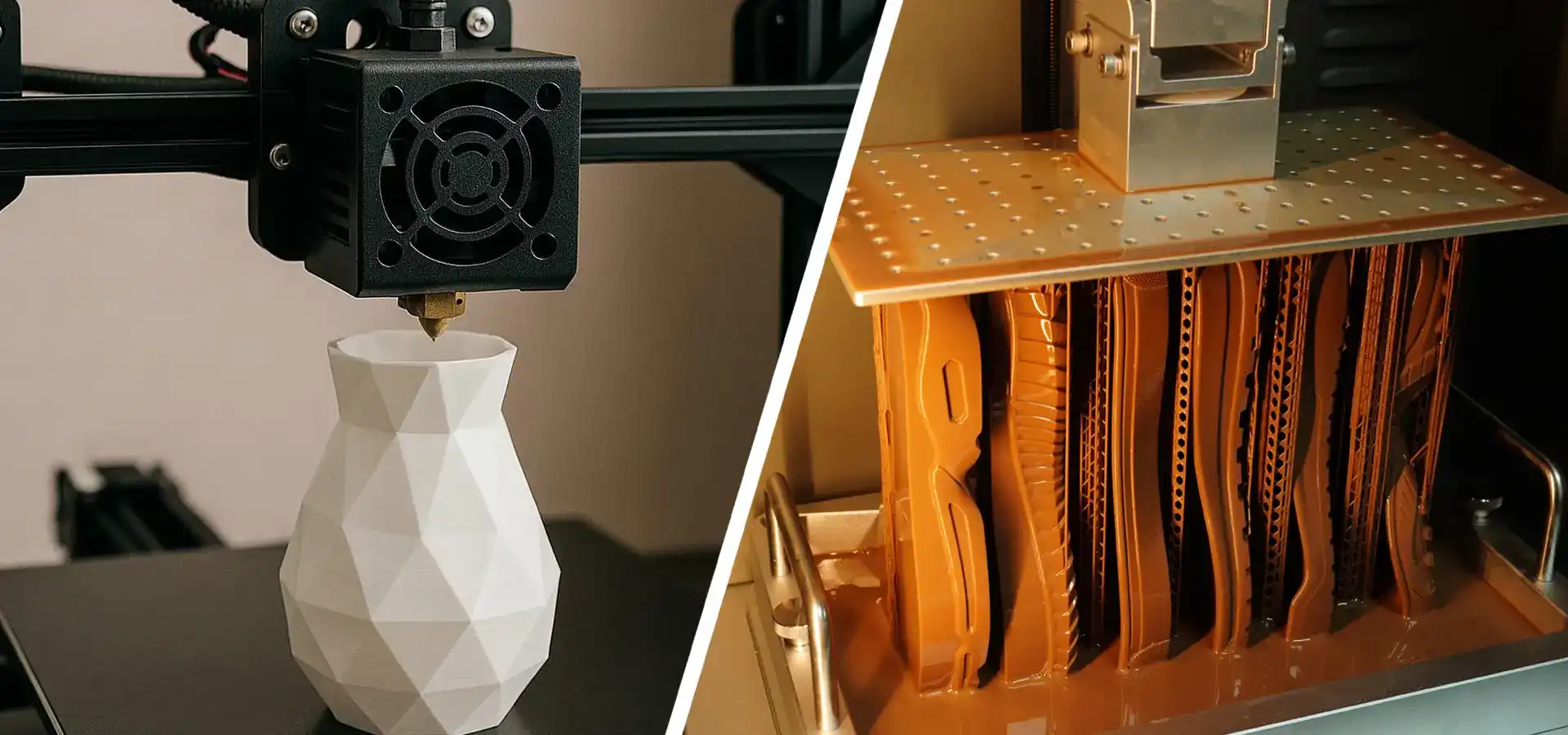
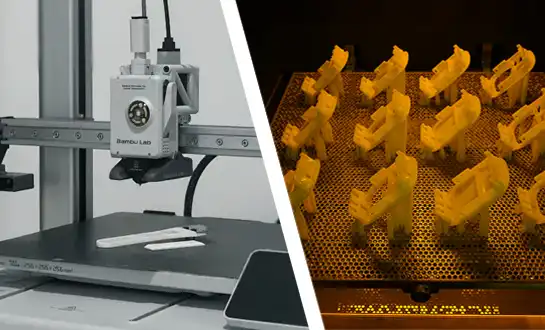
Budget-friendly 3D printers priced below $500 solve important problems in the industry by lowering the high cost of initial capital for small businesses and making learning easier with features like automatic bed leveling and pre-assembled modular gantries. These machines are a viable middle ground between pricey corporate options and do-it-yourself kits. They provide a useful starting point for businesses interested in additive manufacturing. The market is split into two main groups of technologies. Fused deposition modeling systems use thermoplastic filaments that are melted through heated nozzles, often using PTFE-lined filament paths in entry-level systems. This keeps the printing temperature to about 260°C. Therefore, they can be used with common materials like TPU, PLA, and PETG. Modern LCD resin printers use masked stereolithography (mSLA) technology, where high-resolution monochrome LCD panels act as dynamic photomasks while UV LED arrays cure entire resin layers simultaneously. This enables fine-detail printing with XY resolutions typically ranging from 35 to 50 microns.
Core Operational Principles
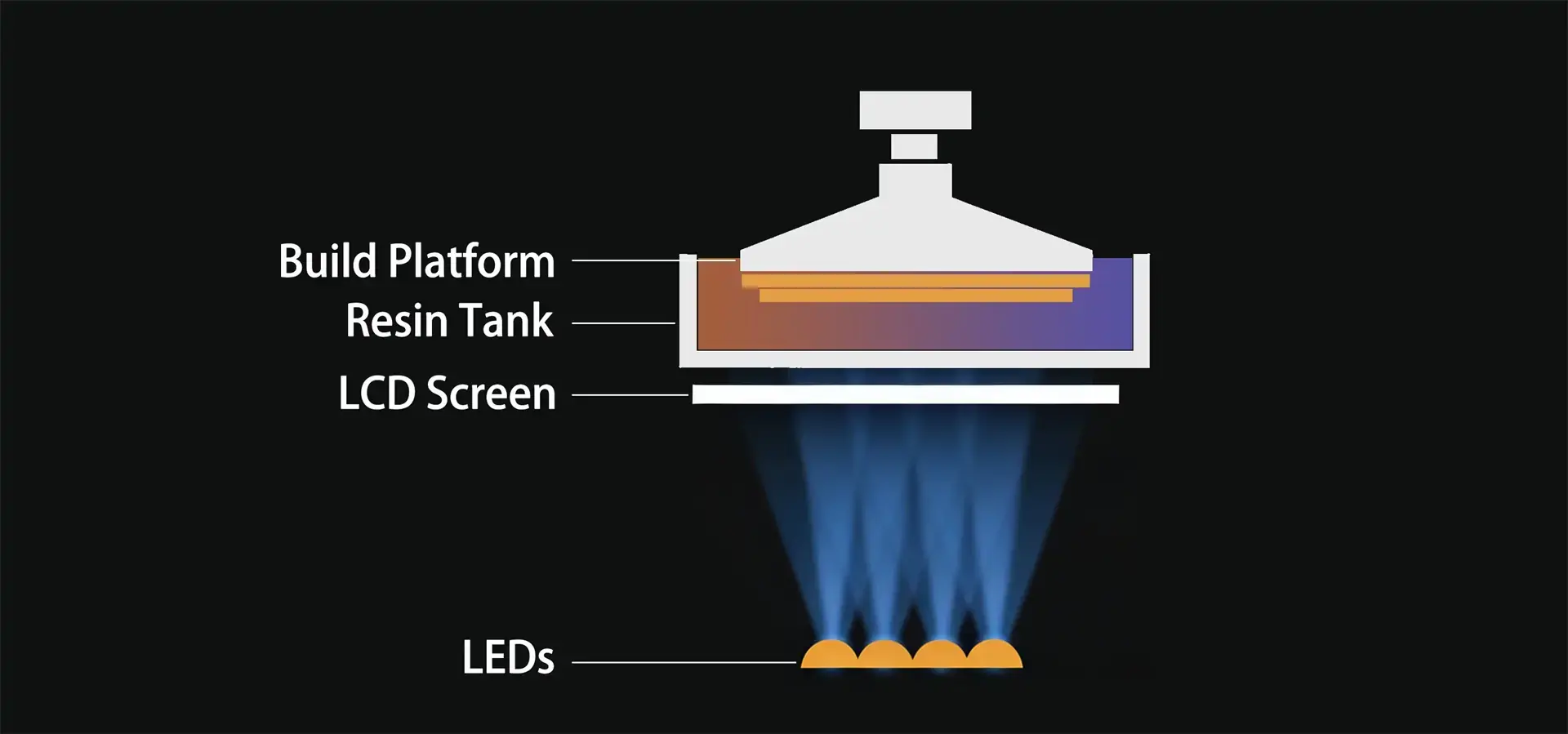
FDM systems create parts by depositing melted thermoplastic material layer by layer and are commonly used for functional prototypes and basic tooling. Entry-level FDM systems are commonly used for functional prototyping and basic tooling applications. In contrast, modern LCD resin printers use monochrome masking screens to cure entire layers at once, enabling significantly smoother surface finishes and finer XY precision, typically between 35 and 50 microns. Monochrome LCD technology also improves exposure efficiency, allowing curing times as low as 1.5 to 3 seconds per layer while extending screen lifespan compared to older RGB panels. These characteristics make LCD-based resin systems especially valuable for applications requiring fine surface quality, dimensional consistency, and detailed feature reproduction, including dental models, jewelry casting, and high-detail prototyping.
Knowing these basic things helps business buyers figure out which printing method will work best for their prototyping or production needs. They also need to be aware of the costs involved and the possible downsides, like machines that aren't as durable or precise as high-end industrial ones.
Key Criteria to Evaluate When Choosing a Budget-Friendly 3D Printer?
To do a good job of procurement, you need to look at important factors that have a direct effect on production results, running costs, and long-term profitability. We've found seven important factors that always decide success in a wide range of workplace settings, especially when picking a budget-friendly 3D printer.
Precision and Surface Quality Standards
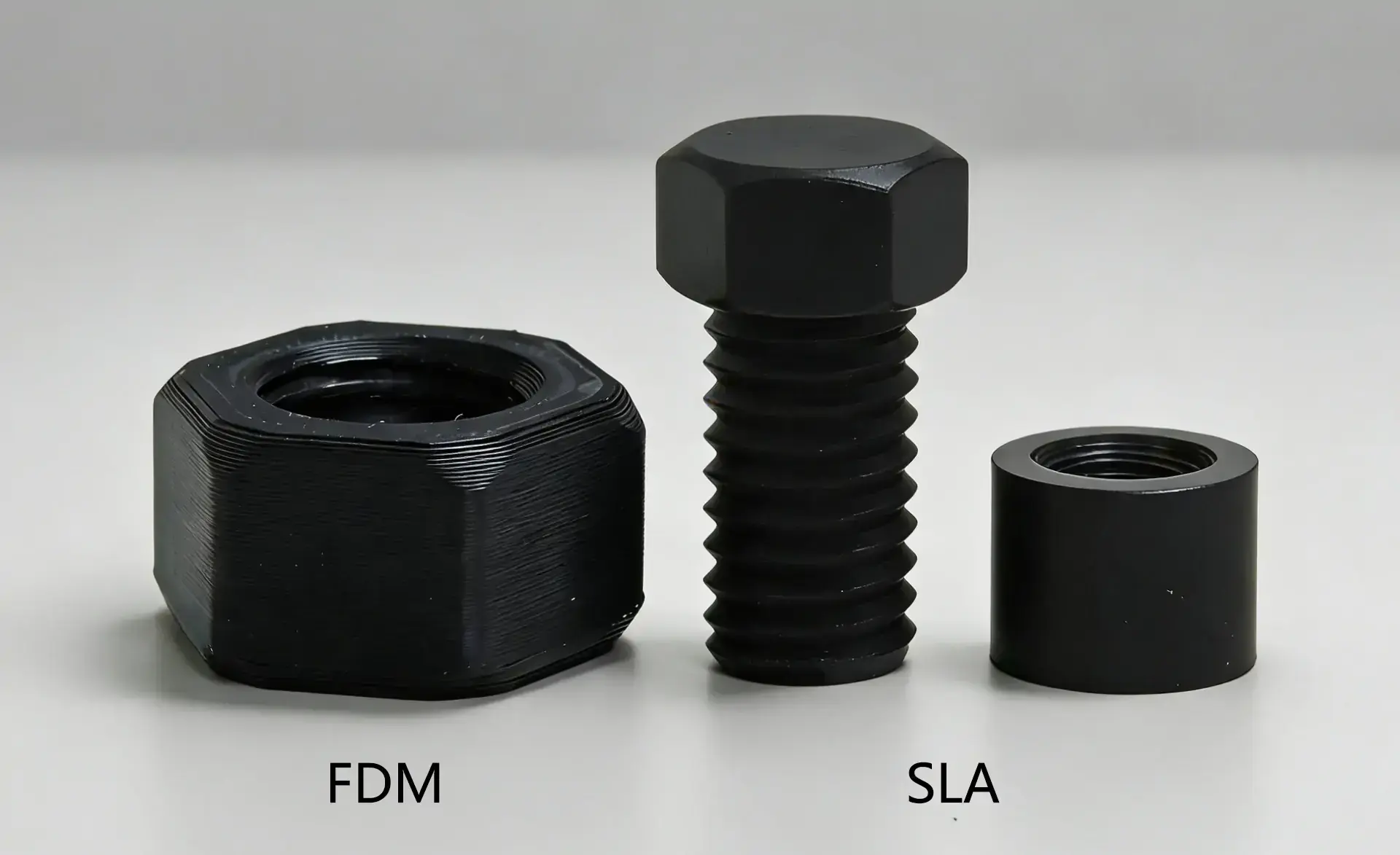
Print quality depends on layer height, accuracy, and surface finish. With layer heights between 0.03mm and 0.05mm, resin systems can make surfaces that are very smooth. This allows for the creation of intricate internal lattices with minimal visible support marks after proper post-processing. With the right tuning, FDM systems can get tolerances of within ±0.1mm, making them good for making useful prototypes and tools. Resin systems typically require light uniformity levels above 80% across the build area, the build plate must be the same size all the way across. This makes sure that the polymerization process is always the same. This is especially important for dental uses that make bases for orthodontic aligners and medical samples for surgical guides, where accuracy has a direct effect on how well patients do.
Material Compatibility and Operational Flexibility
A big problem is that many tools only work with private materials, which makes it difficult to control costs and be flexible with operations. In open-material environments, you can get engineering-grade thermoplastics like nylon and polycarbonate, as well as clear formulas, high-temperature resins, and flexible materials. Instead of being limited by vendor lock-in strategies, this flexibility lets companies choose the best materials based on specific mechanical qualities, chemical protection needs, and thermal performance requirements. Chemical qualities of thermoplastic fibers and photopolymer resins have a direct effect on how well they work in a given situation. PTFE-lined hotends mean that FDM systems can only process materials below 260°C without any hardware improvements. On the other hand, resin systems tuned to the 405 nm wavelength can work with a broad range of standard, ABS-like, and custom formulas made for different industries.
Production Speed and Throughput Capacity
For rapid prototyping and small-batch customization, print speed has a direct effect on wait times. Variable spot-size laser technology and AI-optimized scanning lines can speed up printing by more than 30% compared to the norm, which lets companies meet market needs quickly. In resin systems, monochrome LCD screens cure layers in 1.5 to 3 seconds. This makes it much faster to make high-detail figures, jewelry casting patterns, and dental models. Consider throughput factors such as build volume usage and parallel processing skills, in addition to raw speed. Small businesses use clusters of budget-friendly 3D printers to produce more plastic parts, jigs, and tools. This method of parallel processing keeps expensive industrial tools from having single points of failure and lets the output be scaled up or down easily.
Maintenance Requirements and Downtime Prevention
Traditional equipment often fails quickly and inaccurately, and metal parts are sometimes of lower quality, which wastes materials and causes production delays during group printing. Assessing the level of upkeep difficulty, the time between consumable replacements, and the frequency of calibration can help estimate operations costs and the likelihood of downtime. Being able to fix things through open-source hardware environments makes systems less reliant on closed service networks. Standardized parts in machines allow for repairs and updates to be done in-house, which keeps operations running smoothly without having to wait for vendor help for long periods of time. This is especially helpful for businesses that work from home or need to be able to produce things 24 hours a day, seven days a week.
Warranty Coverage and After-Sales Support Infrastructure
Since these are precision tools that need timely expert help, slow after-sales service has a big impact on production plans. Warranties should protect commercial buyers by covering machine upkeep, software updates, and expert training. Checking the vendor's response time promises, the presence of regional service centers, and the ability to do diagnostics remotely can help lower the risk of output interruption. Magforms has set up a responsive technical support system based on years of experience in the field. This support includes full troubleshooting instructions, help with calibration, and suggestions for optimizing applications. Because our team knows that production downtime directly leads to lost income, quickly resolving support issues is a top business concern.
Total Cost of Ownership Analysis
When evaluating an investment, it's important to look at more than just the original purchase price. You should also think about the costs of replacement parts, energy use, repairs, and possible upgrading paths. By dividing the cost-per-part by the estimated output volume, you can see if the business can really make money. Some high-end foreign brands have expensive proprietary material needs that make them challenging for small and micro businesses to buy. Open-material systems, on the other hand, let you keep costs down over time. Technology obsolescence risks, resale value retention, and flexibility with changing software environments are some of the things that need to be thought about during the lifecycle. Standardized file types and widely used slicing software on machines protect against vendors going out of business and allow for flexible technology stack integration.
These evaluation factors give you a structured way to compare different choices while making sure that technical skills match specific practical needs. In the real world, examples like prototyping car parts, making dental models, and developing consumer electronics show that structured assessment leads to better buying outcomes than price-focused selection methods.
Budget-Friendly 3D Printer Comparison and Market Options
There is a wide range of budget-friendly 3D printers on the market in 2026, with entry-level models priced under $300 and mid-range choices priced below $500. Knowing what the competition is doing helps procurement workers find solutions that fit their budget and output needs.
FDM Technology Market Leaders
Creality has a strong position in the market thanks to models that can handle large build rates and active user groups that help with problems and making changes. Their systems use metal extrusion frames with standard hotend setups that work with PLA, PETG, and TPU materials. Anycubic has similar specs, but their automatic bed leveling features are better, which makes the original setting easier. Flashforge markets its products to schools and design workshops, focusing on making them simple to use and enclosing the build rooms to keep heat from spreading. These companies meet the needs of small product design teams, new 3D printing service providers, and specialized component processing plants that need to make small batches of products and provide customized services. Their flexible and inexpensive equipment works well with limited budgets and allows for useful testing.
Resin System Competitive Analysis
Masked stereolithography systems from well-known brands offer photopolymer drying at a price that most people can afford. When compared to older RGB screens, monochrome LCDs have four times longer working lifespans and faster layer curing times. Dental models, jewelry patterns, and tiny production can all fit in build volumes that are 6 to 10 inches across horizontally. Light uniformity standards above 80% make sure that the polymerization is the same across all build plates. This is crucial for situations where multiple parts need to be the same size within a single build cycle. Single or dual linear rail Z-axis guiding systems maintain high positional stability and fine-detail consistency during vertical motion throughout all vertical motion ranges by reducing wobble. Compared with entry-level FDM systems, LCD resin printers are increasingly preferred in industries requiring fine surface detail, dimensional consistency, and small-feature accuracy.
Technology Selection Decision Framework
Which method to use—FDM or resin—depends on the needs of the product. FDM systems are commonly used for basic functional prototypes and tooling applications that prioritize low material cost and mechanical durability. Non-toxic thermoplastics are better for safety in schools and offices than liquid photopolymers because they don't take up much space and are easy to move around. LCD resin systems provide superior surface smoothness, fine-detail reproduction, and consistent dimensional performance for a wide range of uses, such as dental braces, jewelry casting, and making very detailed models. Because they can make complicated internal geometries without showing any support structures, they are perfect for making medical gadgets and prototypes that look good. Handling wet materials, post-processing workflows such as IPA washing, support removal, and UV post-curing, and ongoing costs for new LCD screens and FEP films are all things that need to be thought about.
Different 3D printing service providers have different uses for their technologies. For example, automotive interior component prototyping, aerospace precision connector validation, medical surgical guide production, consumer electronics shell development, and cultural creative product replication are all uses that require different technologies. It's helpful for procurement teams to match a printer's powers to its most common uses while also thinking about other uses that might be appropriate for hybrid technology methods.
The market offers excellent choices for all of these uses, but choosing the right one depends on a careful look at what the user needs, not just lowering the price. When companies take the time to test new technologies against specific production processes, they always get more satisfied employees and a better return on their business investment.
Practical Guide: How to Use and Maintain Your Budget-Friendly 3D Printer for Optimal Results?
To get the best return on investment, you need to follow the right steps for setup, operation, and upkeep of your budget-friendly 3D printer. This will prevent production delays, which incur costs, and maintain consistent output quality. From working with more than 300 businesses, we've learned what makes operational quality work.
Initial Installation and Calibration Procedures
Taking the surroundings into account is the first step in a proper operation. Thermal drift can't affect the accuracy of measurements when machines are placed on stable, level surfaces that are out of direct sunlight and away from changes in temperature. To get the first layer to stick properly, FDM systems need to be very careful about leveling the bed. Newer automatic bed leveling features make this process easier by mapping the surface with probes. With resin systems, you have to pay close attention to how the build plate is lined up and how the LCD screen is set up. By using standard validation models for exposure test prints, you can find the optimal exposure times for your chosen resin formulas and the temperature of the room. This initial investment in tuning prevents material waste and ensures consistent print success and reduces material waste.
Operational Best Practices for Consistent Quality
Material handling has a big effect on how well prints turn out. Keeping thermoplastic filaments in covered cases with desiccant stops them from absorbing water, which can lead to uneven extrusion and surface flaws. For the best stickiness and curing properties, resin formulations need to be kept out of direct sunlight and kept at a stable temperature between 20°C and 25°C. Print quality and production speed are directly affected by slicer parameter settings and exposure configurations. The choice of layer height strikes a balance between the need for a smooth surface and the time it takes to print. Thinner layers produce smoother surfaces but take longer to make. Support structure placement needs to be carefully thought out so that as little post-processing work as possible is done while keeping the part from deforming during printing.
Preventive Maintenance Protocols
Routine repair stops equipment from slowly losing its ability to do its job and from catastrophic failures that throw off production plans. Regularly checking and cleaning the extruder parts is good for FDM systems. This is done to see if there are any partial clogs or worn PTFE liner tubes that could be stopping the flow of material. Linear motion parts need to be oiled on a regular basis according to the manufacturer's instructions to keep them running smoothly and stop them from wearing out too quickly. When using resin systems, you have to carefully check the LCD screen for pixel loss and change the FEP film when the surface gets scratched or cloudy. These products have a direct effect on the quality of the print job and need to be replaced after a certain number of hours or when they look like they are breaking down. Cross-contamination can change the mechanical qualities and color consistency of materials. Cleaning the resin vats between material changes stops this.
Troubleshooting Common Production Issues
A systematic analysis can fix the clear reasons for print failures. In FDM systems, bad first-layer bonding means that the bed isn't level, the tip temperature isn't high enough, or the bed surface isn't prepared well enough. Too high of a print temperature or not enough retraction settings can cause stringing and oozing between printed features. Resin prints often fail because the support structures aren't strong enough, the exposure times are wrong, or the FEP film isn't intact. Detaching parts during the print process means that the base layer wasn't exposed enough or the build plate wasn't properly prepared for bonding. Layer splitting or delamination is a sign of not getting enough light, which needs longer cure times or stronger LEDs.
Integration Within B2B Procurement Workflows
Setting up standard operating procedures, methods for material qualification, and quality control steps makes additive manufacturing part of larger production systems. Keeping track of the print settings that work well for repeating parts cuts down on setup time and makes sure that results are the same across production runs and operator changes. Technical staff learn how to use machines, do regular repairs, and figure out what's wrong through training programs. This sharing of information keeps things from relying too much on a few people, and it also builds up the organization's skills, which helps keep production going. Schools and colleges that have teams of these printers give students direct access to hardware, so they can test their CAD designs in real time using commonly used educational-grade thermoplastic materials.
With these operating strategies, budget-friendly 3D printers go from being a cheap way to buy things to being reliable production tools that help businesses reach their goals. Having organized methods often results in using the equipment more efficiently and spending less overall compared to companies that see these machines as just easy-to-use gadgets.
Where and How to Procure Budget-Friendly 3D Printers: Deals, Warranty, and Procurement Tips?
The most effective way to maximize your investment in a budget-friendly 3D printer while minimizing business risks is to identify the right procurement methods and secure favorable terms. To get the most value over the lifetime of a technology, strategic sourcing methods use how the market changes to their advantage.
Direct Manufacturer Relationships Versus Distributor Networks
Building direct connections with makers like Magforms gives you access to technical support, custom solutions, and better prices for large orders. Our dedication to open communication with customers and building long-term partnerships is shown by the fact that we serve dozens of countries in the global market and take part in many industry exhibitions. Distributor networks allow for localized support, faster shipping times, and centralized buying from many providers of materials and equipment. When weighing the pros and cons of direct maker prices vs. distributor ease, it's important to look at how many orders you need to place, how much technical help you need, and logistical issues like import duties and regional warranty coverage.
Leveraging Bulk Discounts and Seasonal Promotions
Strategies for buying in bulk lower the cost per unit while making sure that all organizations use the same tools. To get high prices, be clear about how much you want to buy and when. Seasonal sales events, like trade show promos and cuts at the end of the fiscal year, can save you a lot of money, but procurement teams need to make sure that the size of the discounts they offer doesn't make them buy more equipment than they need. If you build connections with your suppliers, you can find out about future sales and new products that might come out with better specs at similar prices. Magforms regularly participates in industry exhibitions in Europe, Asia, and other places. These events give customers the chance to see tools in person and talk directly about prices.
Warranty Terms and Commercial Protection
Warranties that cover everything protect capital investments against manufacturing flaws and early component breakdowns. To assess the level of risk, one must evaluate the duration of the guarantee, the covered components, and the promised service response. For mission-critical production tools where downtime directly affects income generation, extended warranty choices may be worth the extra cost. Knowing what the guarantee doesn't cover keeps you from getting unpleasant surprises. Many contracts exclude quickly used parts, such as nozzles, LCD screens, and FEP films. Instead, they only cover structural and computer pieces. Accurate lifetime cost modeling is possible by making it clear which parts are available, how much they cost, and how long it takes to obtain them.
Logistical Considerations and Delivery Reliability
Shipping prices and delivery times have a big effect on the total cost of the project and the plan for it. Checking the transportation skills, packing quality, and damage claim processes of potential suppliers can help avoid transit-related losses. When buying things from other countries, you have to pay attention to import taxes, the steps needed to clear customs, and make sure that you follow regional safety standards like CE, FCC, and RoHS. Reliable delivery is especially important for businesses that have to plan equipment installations around building preparations, training schedules, and production ramp-up dates. Suppliers' track records for on-time delivery and effective communication during supply chain disruptions guide the selection of suppliers.
Consumables and Accessory Bundling Strategies

Over the life of an item, its ongoing costs for materials and consumables often top its original cost. Negotiating combined prices for filament, resin, spare parts, and extras lowers the cost of consumables per unit and makes the process of buying things easier. Setting up favorite supplier relationships for materials that work with open-system printers gives you control over costs that you can't get with proprietary material environments. By looking at total cost methods that include materials, tools, maintenance, and support services, you can get accurate ROI numbers that help you decide where to put your capital. Magforms' combined supply of materials and equipment eliminates issues that arise when using third-party materials with their own tools. This makes sure that the whole printing process runs smoothly and reliably. We have highly optimized and perfectly matched custom-made materials and printers, reducing dimensional inconsistencies and minimizing unexpected print failures, print flaws, and unplanned downtime.
These buying plans help businesses get the most out of their investments in additive manufacturing while also building ties with suppliers that will help them succeed in the long run. Purchasing managers who use organized sourcing methods always get better results than those who use transactional, price-focused models.
Conclusion
To choose the best additive manufacturing equipment, you need to carefully look at its technical specs, working needs, and overall prices over its entire lifecycle. A successful procurement process combines the need for a small original investment with long-term performance goals, upkeep needs, and the supplier's ability to help. To ensure long-term operational success, you need to know whether FDM or resin technology is best for your mix of applications, check the compatibility of materials and operational freedom, and build relationships with responsive providers. When companies use structured review frameworks, they regularly get better production results, higher machine usage, and lower total cost of ownership, all of which help them reach their strategic business goals.
FAQ
What factors most significantly impact print quality in affordable additive manufacturing systems?
Print quality depends on layer resolution, measurement accuracy, mechanical system rigidity, and calibration accuracy. When the XY resolution is between 35 and 50 microns, resin systems produce a better surface finish. On the other hand, when the bed is leveled and the temperature is controlled properly, FDM systems achieve functional accuracy within ±0.1mm. The material, cutting tool settings, and environment all greatly affect the final part's quality.
How do these systems compare with high-end industrial machines regarding durability and production capacity?
Rather than the hardened steel parts and linear rail guiding found in industrial equipment, budget-friendly 3D printers use cost-effective parts like PTFE-lined hotends, aluminum extrusion frames, and V-slot motion systems. This means that they need to be maintained more often and last less long, but open-source hardware environments make fixes easy, which extends their useful service lives. Their limited production capacity comes from having smaller build sizes and slower print speeds compared to industrial systems. This situation means that they are better for testing and small-batch production than for mass production.
What material compatibility issues should procurement teams consider?
Many budget-friendly 3D printers limit users to copyrighted materials because of bugs in the software or limitations in the way the system works. Such a limitation makes running the system more expensive and limits the types of applications that can be used. When you use an open-material system, you can get thermoplastics and resins from different providers based on price and performance. PTFE-lined hotends in FDM systems limit the highest temperature that can be processed to around 260°C. This means that high-performance industrial thermoplastics can't be used without hardware improvements.
Explore Magforms' Precision Solutions for Your Production Needs
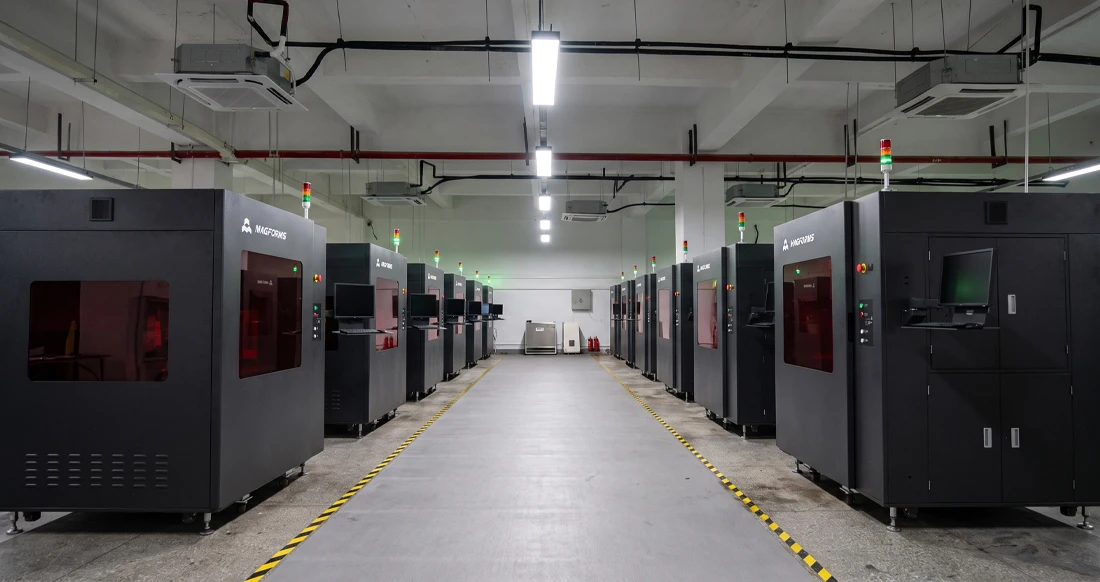
Magforms offers integrated additive manufacturing solutions that include self-developed materials and tools made for fields that need accuracy, stability, and high operating efficiency. With technology that is backed by 22 patents and 30 filed trademarks, our systems are used for medical device development, military component validation, car prototyping, and consumer electronics. Our product portfolio combines industrial SLA systems and high-precision LCD resin printers to support both rapid prototyping and detailed production workflows. We get rid of compatibility problems by matching materials and gear in a way that is deeply optimized. This stops fundamental dimensional changes and unexpected downtime. Get in touch with our technical team at info@magforms.com to talk about your specific needs with a dependable, budget-friendly 3D printer provider who is dedicated to providing full after-sales support, repair services, and technical training courses.
References
1. Gibson, I., Rosen, D., & Stucker, B. (2021). Additive Manufacturing Technologies: 3D Printing, Rapid Prototyping, and Direct Digital Manufacturing (3rd ed.). Springer International Publishing.
2. Wohlers, T., & Campbell, R. I. (2023). Wohlers Report 2023: 3D Printing and Additive Manufacturing Global State of the Industry. Wohlers Associates.
3. Dizon, J. R., Espera, A. H., Chen, Q., & Advincula, R. C. (2020). Mechanical characterization of 3D-printed polymers: State of the art. Progress in Polymer Science, 103, 101221.
4. Ngo, T. D., Kashani, A., Imbalzano, G., Nguyen, K. T., & Hui, D. (2018). Additive manufacturing: A review of material science, technologies, applications, and challenges. Composites Part B: Engineering, 143, 172-196.
5. Stansbury, J. W., & Idacavage, M. J. (2022). 3D printing with polymers: Challenges among expanding options and opportunities. Dental Materials, 38(1), 37-52.
6. Campbell, T. A., Williams, C., Ivanova, O., & Garrett, B. (2021). Could 3D Printing Change the World? Technologies, Potential, and Implications of Additive Manufacturing. Atlantic Council Strategic Foresight Initiative.

Magforms makes design and manufacture easier.
Popular Blogs
-
 Industry InsightsManufacturing Industry
FDM vs. SLA Printer: Which Technology Is Right for Your Project?
-
 Industry InsightsManufacturing Industry
Top 5 Applications of Industrial 3D Printers in Manufacturing Today
-
 Industry InsightsManufacturing Industry
Why Stereolithography 3D Printers Are Unmatched for Microfluidic Device Prototyping?