How to Choose the Right Industrial SLA 3D Printer for Your Business
Choosing the right stereolithography solution can significantly improve manufacturing efficiency, shorten product development cycles, and accelerate time to market. Technical specifications, material compatibility, total cost of ownership, and support infrastructure should all be carefully evaluated before making a purchasing decision. This guide explains how to choose an Industrial SLA 3D Printer that fits your business's operational needs, production volume, material requirements, and accuracy standards, whether you run a startup service bureau, an automotive R&D center, a medical device manufacturer, or an aerospace parts supplier.
Understanding Industrial SLA 3D Printing Technology
How Stereolithography Works
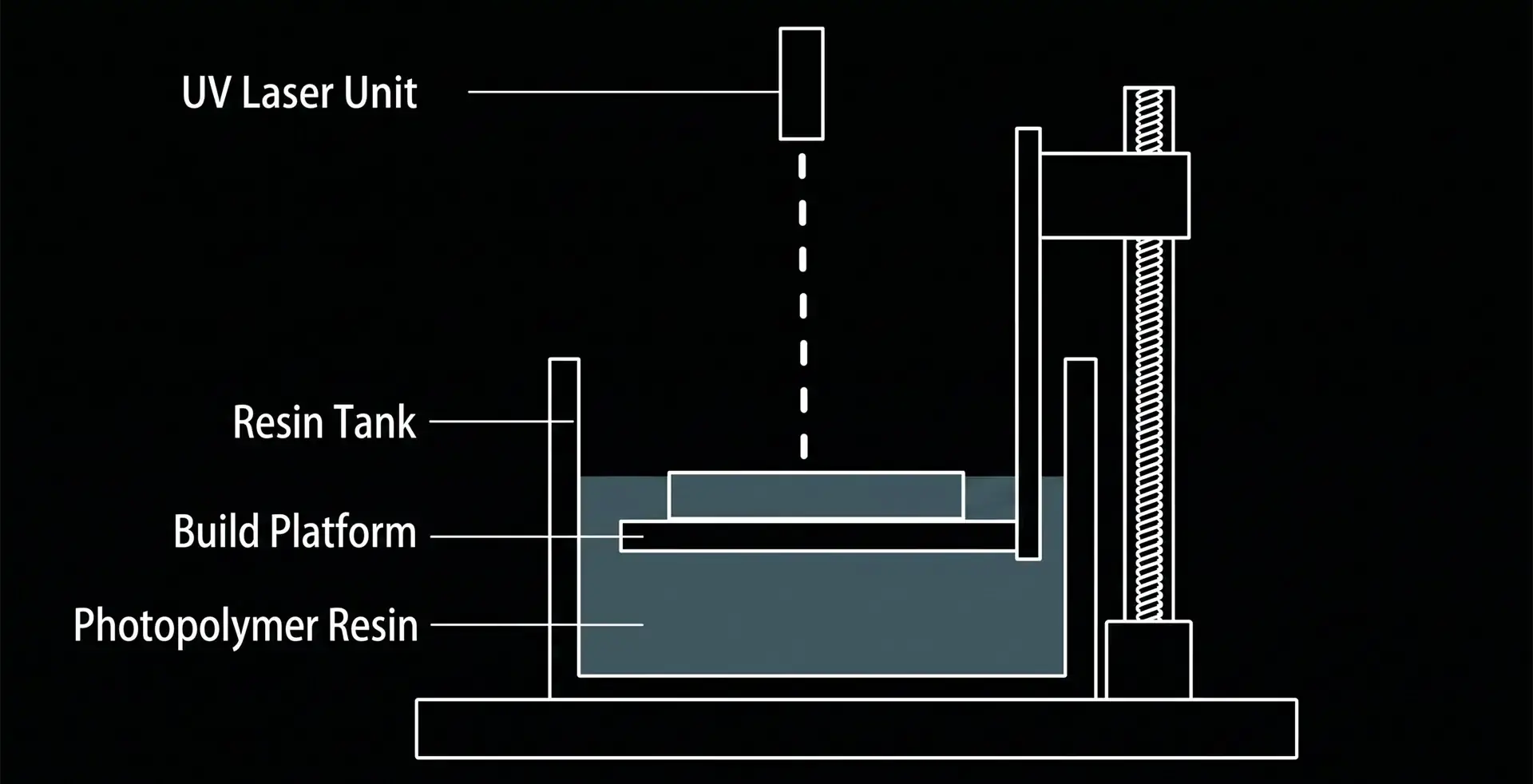
Stereolithography is one of the oldest and most advanced ways to make things with additive manufacturing. An industrial SLA 3D printer uses a UV laser to selectively cure liquid photopolymer resin layer by layer. CAD files guide the laser scanning system to follow the sliced geometry, allowing the laser beam to selectively solidify specific areas of the resin layer. During printing, the build platform moves according to the machine architecture, allowing each cured layer to be recoated with fresh resin before the next exposure cycle. This photopolymerization process produces parts with excellent surface quality and consistent dimensional performance when the material selection, printing parameters, and post-processing procedures are properly controlled.
👉 What is SLA 3D printing technology
Industrial vs. Desktop Systems
Industrial-grade stereolithography equipment is significantly different from consumer desktop resin printers. Industrial SLA systems typically combine solid-state UV lasers with high-precision scanning galvanometers, enabling fast laser movement and precise spot positioning. Some advanced systems can achieve scanning speeds of up to 12 m/s depending on configuration. Thermal management systems help maintain stable resin conditions and improve printing consistency during long production cycles. These systems are designed for continuous production environments and multi-shift manufacturing operations, meeting the high standards of dependability needed in manufacturing settings in the medical, aerospace, and car industries.
Material Versatility
Advanced resin formulations allow SLA materials to be used for more than basic modeling applications. Engineering photopolymers are available with properties such as improved toughness, flexibility, and heat resistance, with some formulations achieving HDT values above 100°C. Transparent resins can be used for applications such as optical prototypes, transparent housings, fluid visualization models, and light-guide prototypes. Stereolithography technology can be used for both prototyping and making things that will be used in real life because it can work with a wide range of materials.
Key Factors to Consider When Choosing an Industrial SLA 3D Printer
Defining Your Application Requirements
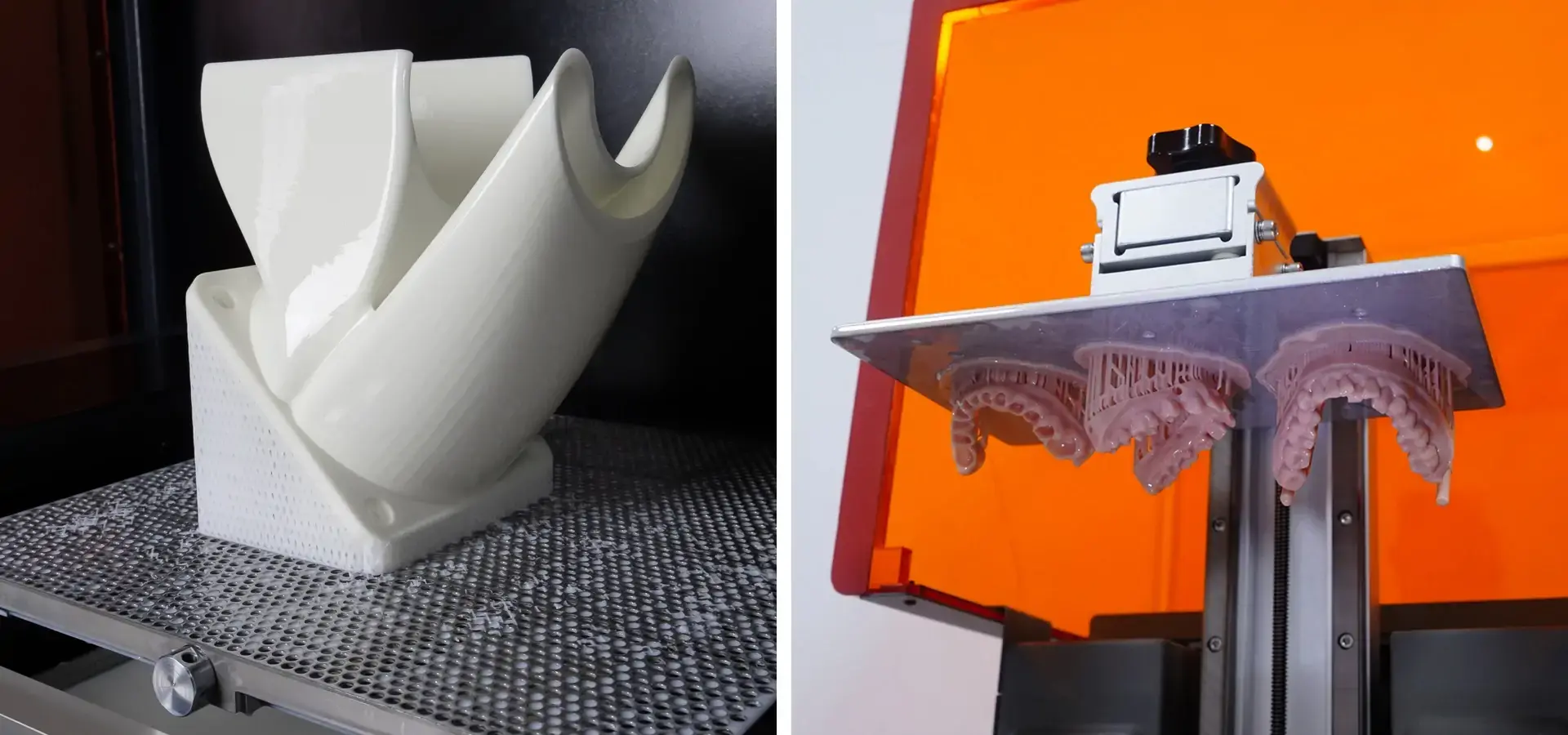
Before making a purchase choice, it's important to know exactly what it will be used for. When working with a wide range of clients, service bureaus need materials that are as compatible as possible and the ability to build different amounts. Automotive teams developing interior components put a high value on surface finish quality and the ability to work with big formats. Dental labs need materials that are safe for living things and quick turnaround times for aligner models. Aerospace applications often require materials and processes that maintain dimensional stability under thermal and mechanical stress. Which technical requirements are most important will depend on your unique use cases, such as prototypes, tools, jigs and clamps, or parts that will be used in the end.
Increase the amount of volume and throughput
The size of the production directly affects the choice of tools. Small design studios producing individual prototypes may work well with compact build platforms, while contract manufacturers and production service providers often require large-format build volumes, typically 500mm or larger depending on application requirements. Variable laser spot technology can improve productivity by using larger laser spots for efficiently curing larger areas while switching to smaller spots for detailed features and precision surfaces. Compared with conventional fixed-spot systems, variable spot-size SLA platforms may significantly improve build efficiency in suitable applications, reducing production time and improving overall workflow efficiency.
Accuracy and Dimensional Precision
Different industries require different levels of dimensional accuracy. Consumer electronics prototypes may prioritize surface quality and overall fit, while aerospace components and surgical guides often require tighter dimensional control and validated accuracy. High-end industrial SLA systems equipped with precision components such as Scanlab galvanometers and stable UV laser sources can achieve highly accurate motion control, with some systems providing micron-level motion positioning precision. Specifications for platform smoothness are also important. Build platform flatness and mechanical stability are important factors for maintaining dimensional consistency across large parts and reducing deformation risks during printing. When checking the accuracy of measurements, make sure that the published accuracy specifications are based on standard testing methods instead of theoretical calculations.
Material Compatibility and Cost Control
There is a hidden cost trap in proprietary material restrictions. Some additive manufacturing platforms use closed material ecosystems, limiting users to specific resin suppliers or approved materials. This may increase consumable costs compared with open-material platforms, depending on material pricing and application requirements. An Industrial SLA 3D Printer that supports a wide range of compatible 355nm resins gives businesses greater flexibility in material selection, cost management, and application-specific development. This open design is especially valuable for R&D teams developing application-specific materials or testing different resin formulations.
Reliability and Component Quality
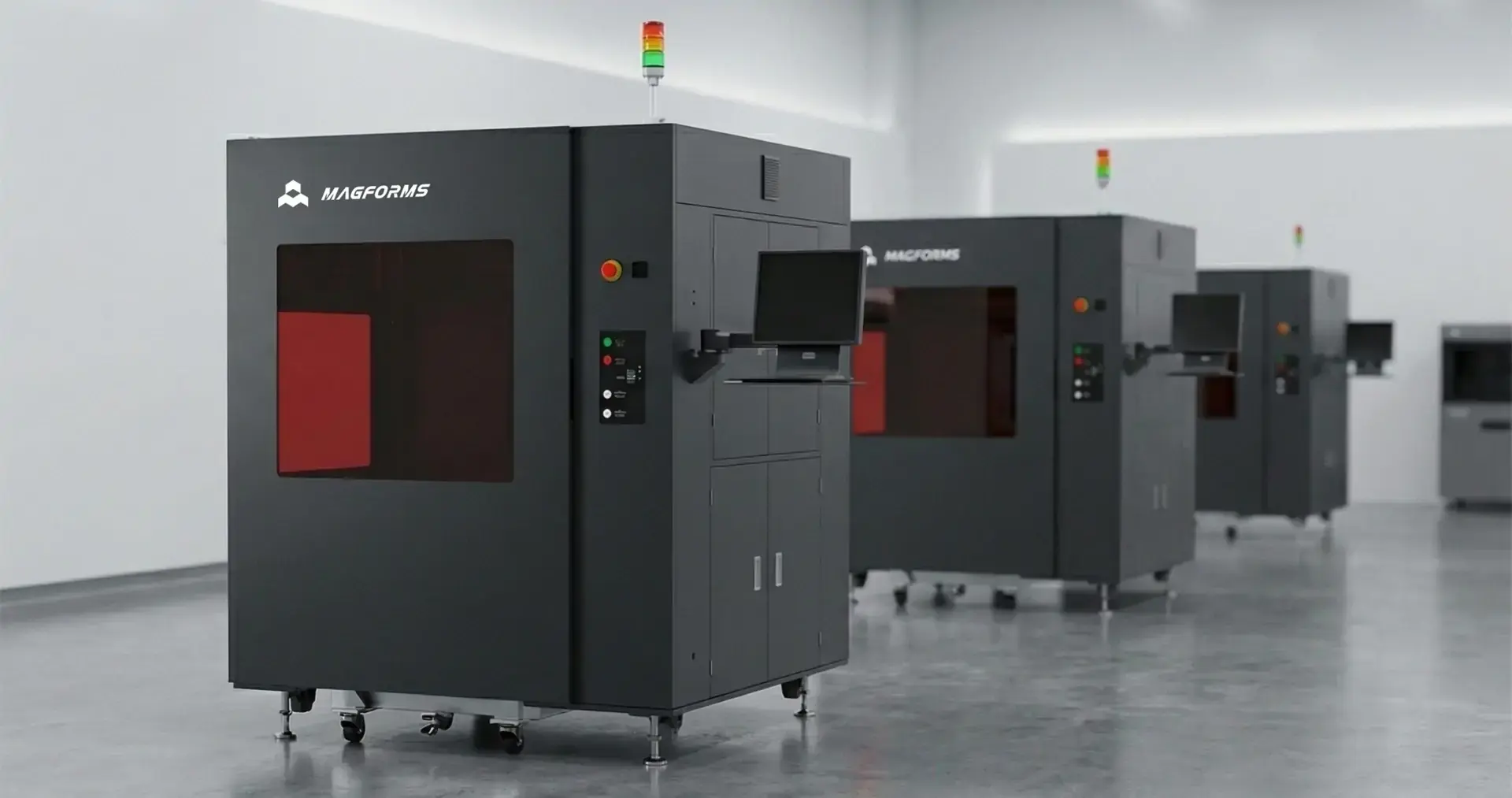
Unexpected equipment downtime can directly affect production schedules, delivery commitments, and operating costs. Long-term operational reliability depends heavily on component quality and system design. Industrial SLA systems often integrate high-quality components such as stable UV laser sources, precision galvanometers, servo motors, industrial electrical components, and linear guide systems to improve motion accuracy, reliability, and long-term production stability. Low thermal expansion structural materials, including precision-engineered machine bases, can help maintain mechanical stability during extended printing operations. A rigid machine enclosure helps protect internal components and reduce environmental vibration effects. When weighing your options, ask manufacturers for information on the specifications of each part and the average amount of time between failures.
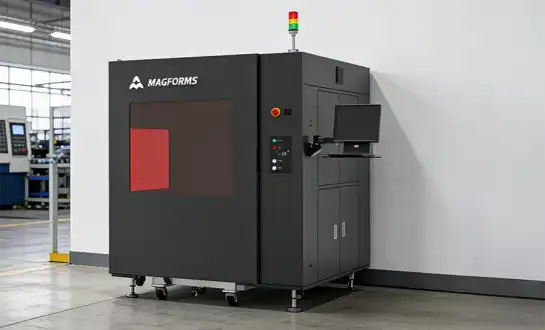
👉 Magforms SL800 industrial SLA 3D printer integrates precision components and large-format printing capability for demanding applications.

Comparing Industrial SLA 3D Printers: What to Look For
SLA vs. Alternative Technologies
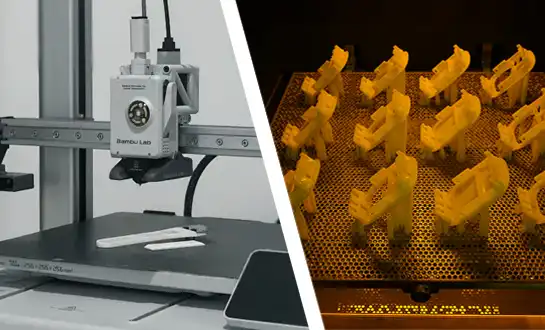
Knowing when stereolithography works best can help you avoid mistakes that cost a lot of money. Compared with Fused Deposition Modelling (FDM), stereolithography generally provides smoother surface finishes, finer feature reproduction, and better suitability for appearance models and precision prototypes. This makes it suitable for high-quality appearance models and investment casting patterns. Selective Laser Sintering (SLS) offers advantages in functional thermoplastic parts and complex geometries without support structures, while SLA typically provides superior surface finish and fine-detail reproduction for visual models and precision applications. Digital Light Processing (DLP) can also achieve high-resolution photopolymer printing, although differences in optical systems, build volume, material ecosystem, and production requirements should be considered when selecting between technologies. When users prioritize smooth surfaces, fine details, complex geometries, and reliable dimensional performance, an Industrial SLA 3D Printer can be an excellent choice for demanding manufacturing applications.
Evaluating Leading Solutions
The industrial SLA market includes established international manufacturers and emerging technology providers offering different approaches in hardware design, material ecosystems, application support, and pricing strategies. Premium systems from established manufacturers may provide mature ecosystems and application support, while some open-platform solutions offer greater flexibility in material selection and customization. Manufacturers from the Asia-Pacific region have increasingly developed competitive industrial SLA solutions, including systems with open material compatibility and flexible application options. When deciding between choices, look at real-life case studies that show how they've been used successfully in your industry. Performance differences that aren't clear from standard sheets can be found through hands-on testing.
Total Cost of Ownership Analysis
The purchase price is only one part of the long-term costs of an investment. Consumable costs (resins, build platforms, recoating blades), maintenance needs (laser calibration, optical cleaning, part replacement), energy use, and lost production during downtime are all part of a full TCO analysis. An Industrial SLA 3D Printer with optimized build efficiency can help reduce labor costs per part and improve overall production throughput. Open material compatibility can provide greater flexibility in resin sourcing and may help reduce long-term material costs depending on application requirements. Modular system designs can simplify maintenance procedures and reduce service complexity. Find the real value leaders by comparing the projected five-year operating costs of each option.
Making the Purchase: Where and How to Buy Industrial SLA 3D Printers
Sourcing Channels and Vendor Selection
Businesses can purchase industrial SLA equipment directly from manufacturers, through authorized distributors, or through specialized additive manufacturing solution providers. Working directly with manufacturers may provide closer application support, customization options, and direct technical communication. Authorised distributors have set up service networks and local support systems. When looking at different providers, make sure that their professional skills go beyond sales and include application engineering help. Ask companies that work in similar fields for customer references. Evaluate vendor responsiveness during the selection process to understand their expected level of technical support and after-sales service.
Negotiating Terms and Service Agreements
The terms of a contract have a big effect on the long-term value of an item. In addition to the base price, you should also talk about how long the warranty covers, how quickly service calls will be answered, whether loaner equipment is available while repairs are being done, and how software upgrades will work. Comprehensive training programs help operators understand equipment operation, material handling, workflow optimization, and routine maintenance procedures. Most of the time, maintenance agreements that include regular checks, preventative service calls, and savings on consumables are a better deal than pay-per-incident plans. For high-volume operations, buyers can discuss service-level agreements (SLAs), including equipment availability targets and application support commitments.
Evaluating After-Sales Support Infrastructure
For complex equipment to work, it needs a strong support system. Check to see if sellers have local service centers that can respond the same day or if they rely on regional hubs that require a trip over several days. With remote diagnostics, technicians can fix problems without having to go to the site, which cuts down on downtime. Vendors with responsive technical support channels and clear service response processes can help customers reduce downtime and maintain stable production. Magforms provides dedicated technical support and application assistance to help customers address equipment operation, material selection, and production workflow challenges. This helps customers maintain production schedules when unexpected issues occur.
Ensuring Long-Term Success With Your Industrial SLA 3D Printer
Maintenance Best Practices
Proactive maintenance keeps the quality of the output while extending the life of the equipment. Daily maintenance routines typically include checking resin levels, inspecting optical components, and verifying build platform conditions. Weekly maintenance tasks include inspecting recoating components and cleaning the resin vat to get rid of bits that are only partly hardened. Regular laser power verification helps ensure consistent energy output and reduces risks related to insufficient or excessive curing. Optical protection covers keep dust from getting on sensitive parts and lowering the quality of the beam. Environmental control systems can reduce the impact of temperature and humidity fluctuations on resin behavior and printing consistency. Keeping track of repair tasks makes people responsible and shows trends that can help you figure out when parts need to be replaced.
Scaling Production Capacity
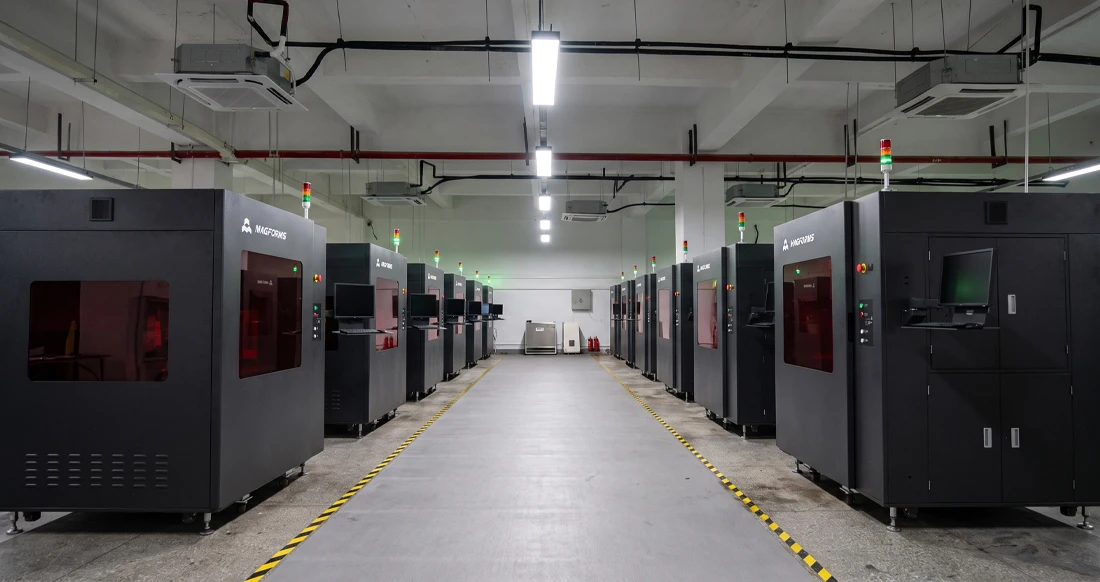
As production demand grows, businesses may need to evaluate whether additional Industrial SLA 3D Printer capacity is required. Strategic growth means looking at bottlenecks to see if adding more equipment, automating tasks, or improving the way things are done will give you the best return on investment. Centralized resin management and automated post-processing workflows can improve efficiency in multi-machine production environments. Software systems that handle print lines on multiple units make the best use of resources while distributing workloads. When increasing output, make sure that the equipment stays the same so that training for operators, the storage of extra parts, and quality control processes are all the same.
Real-World Implementation Success
Automakers use stereolithography to make quick prototypes of complicated panel parts. This cuts the time it takes to validate designs from weeks to days. Medical gadget companies make surgery guides that are tailored to each patient. These guides improve results while cutting down on operating room time. Aerospace contractors make jigs and fixtures that are light and can withstand curing processes at high temperatures. There are some things that all of these approaches have in common that make them work: a full review of the application at the start, full training for operators, connection with current CAD/CAM processes, and partnerships with providers that provide ongoing technical support. Companies that achieve measurable improvements, such as shorter development cycles, reduced tooling costs, and higher first-pass print success rates, demonstrate how properly selected stereolithography systems can support manufacturing innovation.
👉 Explore More Industrial SLA application cases
Conclusion
When choosing an Industrial SLA 3D Printer, businesses should evaluate technical capabilities, application requirements, total cost of ownership, and long-term support capabilities. For buying to go well, the details must be exact and match the needs of the application. Flexible material options help businesses balance performance and cost, while consistent part quality and reliable vendor support contribute to long-term production success. The right stereolithography solution can accelerate product development, improve manufacturing efficiency, and expand design possibilities across industries such as automotive, aerospace, medical, and consumer products.
FAQ
1. What Industries Benefit Most from Stereolithography Technology?
Automotive manufacturers rely on stereolithography for rapid prototyping of interior components and small-batch custom parts. Aerospace companies use stereolithography for complex prototypes, tooling concepts, and validation models that require accurate dimensions and smooth surface finishes. Medical and dental sectors leverage biocompatible resins for applications such as surgical guides, orthodontic models, and medical prototypes. Consumer electronics teams produce functional prototypes with smooth surfaces suitable for usability testing. Cultural creative industries and footwear designers create detailed models that traditional manufacturing cannot economically produce in low volumes.
2. How Does Precision Compare Between SLA and SLS Technologies?
Industrial stereolithography systems can achieve high dimensional accuracy, with actual results depending on machine calibration, resin properties, part geometry, orientation, and post-processing conditions. This precision suits applications requiring tight tolerances and smooth surfaces. Selective Laser Sintering produces durable functional parts using thermoplastic powders, while SLA generally provides smoother surfaces and finer detail reproduction for appearance-critical and precision applications. An Industrial SLA 3D Printer is especially suitable when surface quality, fine details, and dimensional consistency are key priorities.
3. What Maintenance Does an Industrial System Require?
Daily tasks include resin level verification and optical window cleaning. Weekly maintenance involves recoating, blade inspection, and vat cleaning to prevent contamination. Regular calibration and inspection help ensure that laser output and motion systems remain within required operating specifications. Systems using high-quality components such as precision galvanometers and stable laser sources can improve long-term reliability when properly maintained. Optical protection covers and built-in temperature control reduce environmental impacts on print quality. Vendors offering comprehensive training on maintenance procedures help operations teams maximize equipment uptime.
Partner with Magforms for Your Industrial Printing Needs
Magforms stands out as a trusted Industrial SLA 3D Printer manufacturer delivering integrated solutions that combine precision hardware with optimized resin formulations. Magforms industrial SLA systems integrate components such as Scanlab galvanometers, AOC laser sources, and Panasonic servo motors to support precise motion control and stable laser scanning performance. Variable laser spot technology can improve scanning efficiency and reduce production time in suitable applications compared with conventional fixed-spot systems. The open material architecture supports a wide range of 355nm resins, giving users greater flexibility in material selection and application development. With 22 patents, 30 registered trademarks, and proven implementations serving over 300 enterprises across dozens of countries, Magforms provides the expertise and support infrastructure your operation deserves. Magforms provides responsive after-sales support to help customers address equipment operation, application development, and production challenges efficiently. Contact us at info@magforms.com to discuss your specific requirements and request sample parts demonstrating our capabilities for your applications.
References
1. Gibson, I., Rosen, D., & Stucker, B. (2021). Additive Manufacturing Technologies: 3D Printing, Rapid Prototyping, and Direct Digital Manufacturing (3rd ed.). Springer.
2. Jacobs, P. F. (2019). Rapid Prototyping & Manufacturing: Fundamentals of Stereolithography. Society of Manufacturing Engineers.
3. Stansbury, J. W., & Idacavage, M. J. (2016). 3D printing with polymers: Challenges among expanding options and opportunities. Dental Materials, 32(1), 54-64.
4. ASTM International. (2021). ASTM F2792-12a: Standard Terminology for Additive Manufacturing Technologies. ASTM International.
5. Wohlers, T., & Campbell, I. (2023). Wohlers Report 2023: 3D Printing and Additive Manufacturing Global State of the Industry. Wohlers Associates.
6. Kruth, J. P., Leu, M. C., & Nakagawa, T. (2018). Progress in additive manufacturing and rapid prototyping. CIRP Annals - Manufacturing Technology, 67(2), 655-679.

Magforms makes design and manufacture easier.
Popular Blogs
-
 Industry InsightsManufacturing Industry
FDM vs. SLA Printer: Which Technology Is Right for Your Project?
-
 Industry InsightsManufacturing Industry
Top 5 Applications of Industrial 3D Printers in Manufacturing Today
-
 Industry InsightsManufacturing Industry
Why Stereolithography 3D Printers Are Unmatched for Microfluidic Device Prototyping?