Industrial SLA 3D Printer Applications Across Automotive and Medical Industries
Industrial SLA 3D printers have changed the way precise manufacturing is done. This is especially true in the auto and medical industries, where being able to keep up with the competition in terms of size and surface quality is very important. In this stereolithography process, liquid photopolymer resins are selectively cured by a UV laser layer by layer to create complex parts with fine details and high dimensional accuracy. This enables faster product development, customized tooling production, and functional prototype manufacturing for demanding industrial applications. Buyers need to understand how industrial SLA systems fix certain production issues to get a good return on investment (ROI) and make operations run more smoothly.
Understanding Industrial SLA 3D Printing Technology
Stereolithography is one of the most advanced forms of additive manufacturing. It uses a 355nm UV solid-state laser to selectively cure liquid photopolymer resin into solid parts with high precision. Modern industrial SLA systems are very different from desktop resin printers because they feature temperature-controlled build settings, high-power solid-state lasers, and precise galvanometer scanning systems built in. Parts produced by industrial SLA systems typically demonstrate more uniform mechanical properties compared with many extrusion-based processes such as FDM, although final performance depends on resin selection and post-processing conditions. Typical industrial SLA layer thickness ranges from approximately 0.05 mm to 0.25 mm depending on material, application requirements, and print settings.
👉 What is SLA 3D printing technology
How Stereolithography Works in Industrial Settings

A CAD model is cut into thin horizontal layers to start the process. With the help of German Scanlab galvanometers and AOC laser sources, a laser beam maps out the cross-section of each layer on the resin surface. Once each layer is selectively cured, a precision recoating system spreads a new layer of resin across the build area. Panasonic servo motors combined with precision linear guides and motion control systems help achieve highly accurate Z-axis positioning. This cycle keeps going until the whole part is made. After printing, the completed part remains surrounded by uncured resin and requires cleaning and post-curing before final use.
Comparing SLA with Other Additive Technologies
FDM is great for quickly making concepts, and SLS can produce functional prototypes with reduced support requirements because unsintered powder provides natural support during printing. Industrial SLA printers are widely recognized for producing some of the smoothest surfaces and finest details among polymer-based additive manufacturing technologies. The technology enables safe resins that are approved for medical use, clear materials for testing light, and high-temperature formulas that can withstand temperatures above 100°C. Because of its wide material options, SLA is suitable for applications requiring a balance between functional performance and high-quality surface appearance.
Modern Industrial SLA 3D Printer systems now use variable laser spot technology, which changes the beam diameter on the fly while printing. Larger laser spots (0.5–0.6 mm) improve efficiency when curing large-area sections, while smaller micro-spots (0.15–0.2 mm) improve edge definition and fine-feature accuracy. This new idea can significantly improve printing efficiency compared with fixed-spot configurations by optimizing laser exposure strategies. It solves the productivity problems that used to keep SLA limited to low-volume applications.
Key Applications of Industrial SLA 3D Printing in the Automotive Industry
Before spending a lot of money on expensive tools, automotive development cycles need to validate designs several times. This need is met by industrial SLA printers, which can make working prototypes in days instead of weeks that can withstand physical testing and assembly verification.
Rapid Prototyping for Design Validation
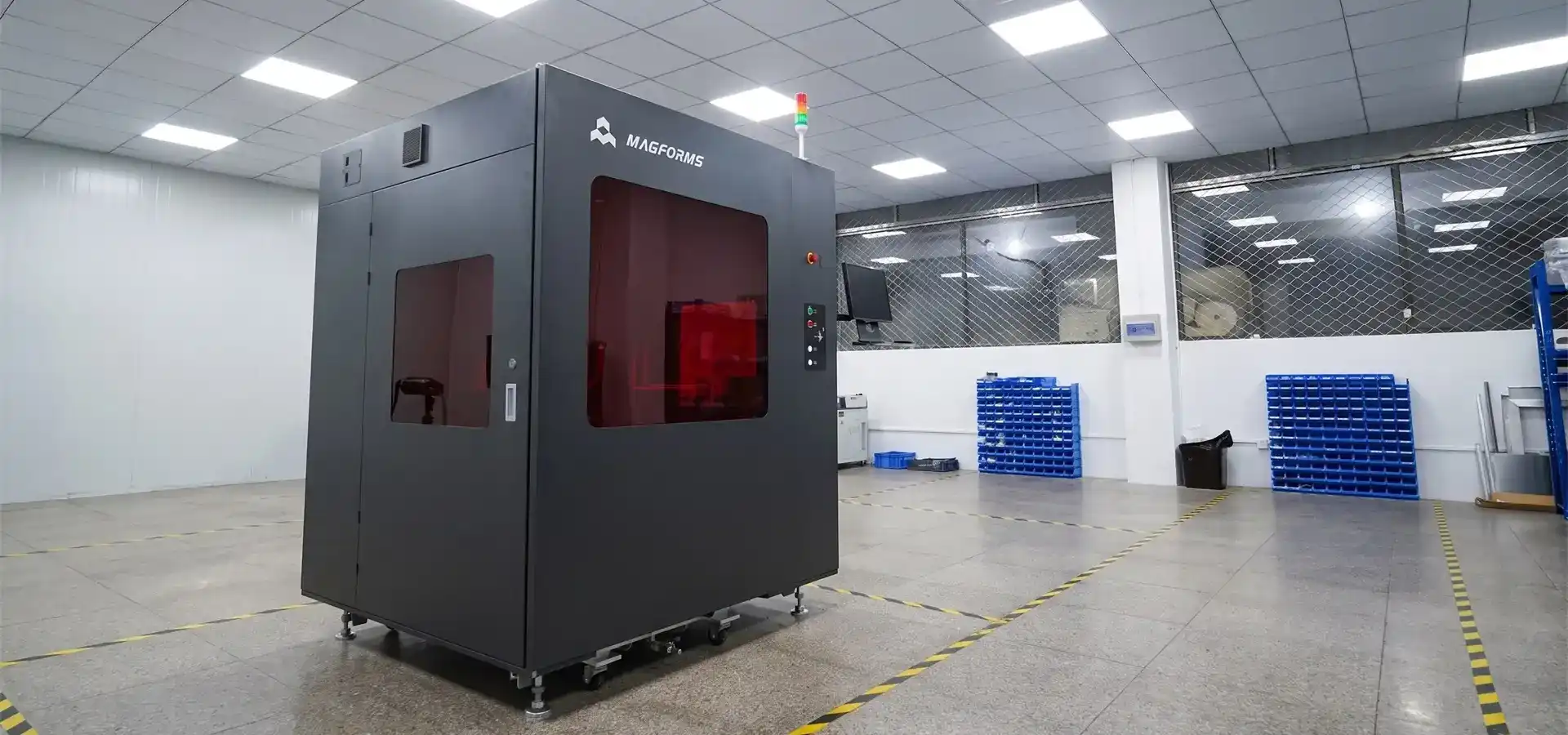
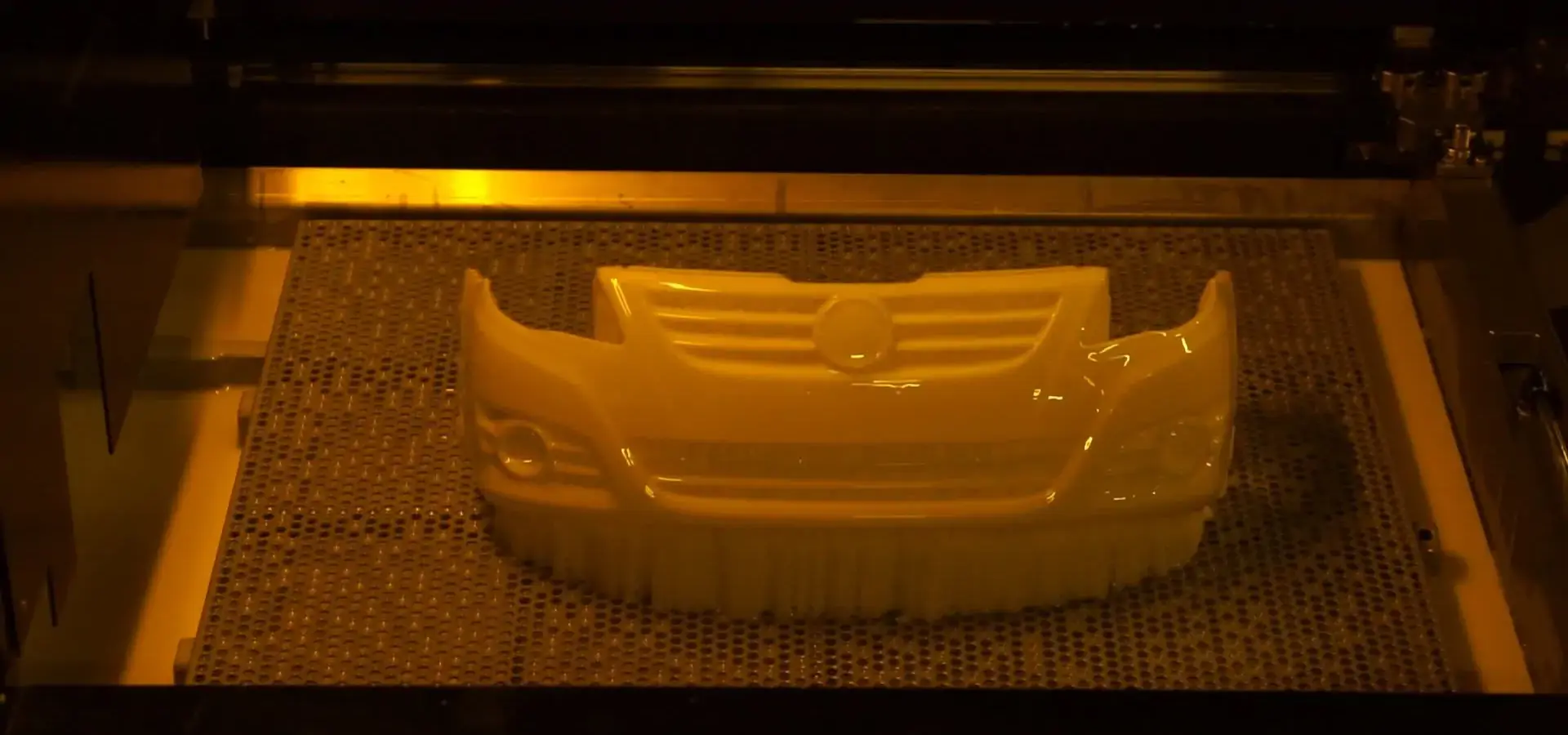
Engineering teams often print panel parts, air duct systems, and custom internal trim pieces to test how well they fit and how well they work. Industrial SLA systems such as Magforms SL800 can achieve dimensional accuracy suitable for demanding prototype and tooling applications, depending on part size, geometry, resin, and process conditions. This level of accuracy reduces costly redesign iterations and tooling modifications during product development. This is especially helpful when making niche car models with limited production runs.
👉 Explore Magforms SL800 Industrial SLA 3D Printer
Tooling Aids and Manufacturing Fixtures
Stereolithography does more than just make prototypes. It also makes jigs, clamps, and inspection tools that make assembly line work easier. In some automotive manufacturing applications, companies have reported significantly shorter lead times and reduced tooling costs by replacing selected CNC-machined fixtures with SLA-printed alternatives. Because engineering-grade resins are stiff, their dimensions stay stable even after being used over and over again. This helps with quality control during production ramps.
Custom and Replacement Parts Manufacturing
SLA's ability to produce replacement parts based on scanned or reconstructed digital models is valuable for restoration and low-volume manufacturing. By scanning an original part and making copies out of strong resins, shops can serve customers without having to meet a minimum order quantity. These uses in the car industry show how industrial SLA technology shortens development times and lowers capital risk. The mix of speed, accuracy, and material choices solves problems that purchasing managers at car suppliers always look at first when they decide where to spend in production.
Industrial SLA 3D Printing Applications in the Medical Industry
Biocompatibility, sterilisation resistance, and patient-specific customisation are all very important for healthcare uses. These needs are supported by industrial SLA printers, which offer certified material options and high dimensional accuracy for producing customized medical models and devices efficiently in small quantities.
Patient-Specific Surgical Planning Models
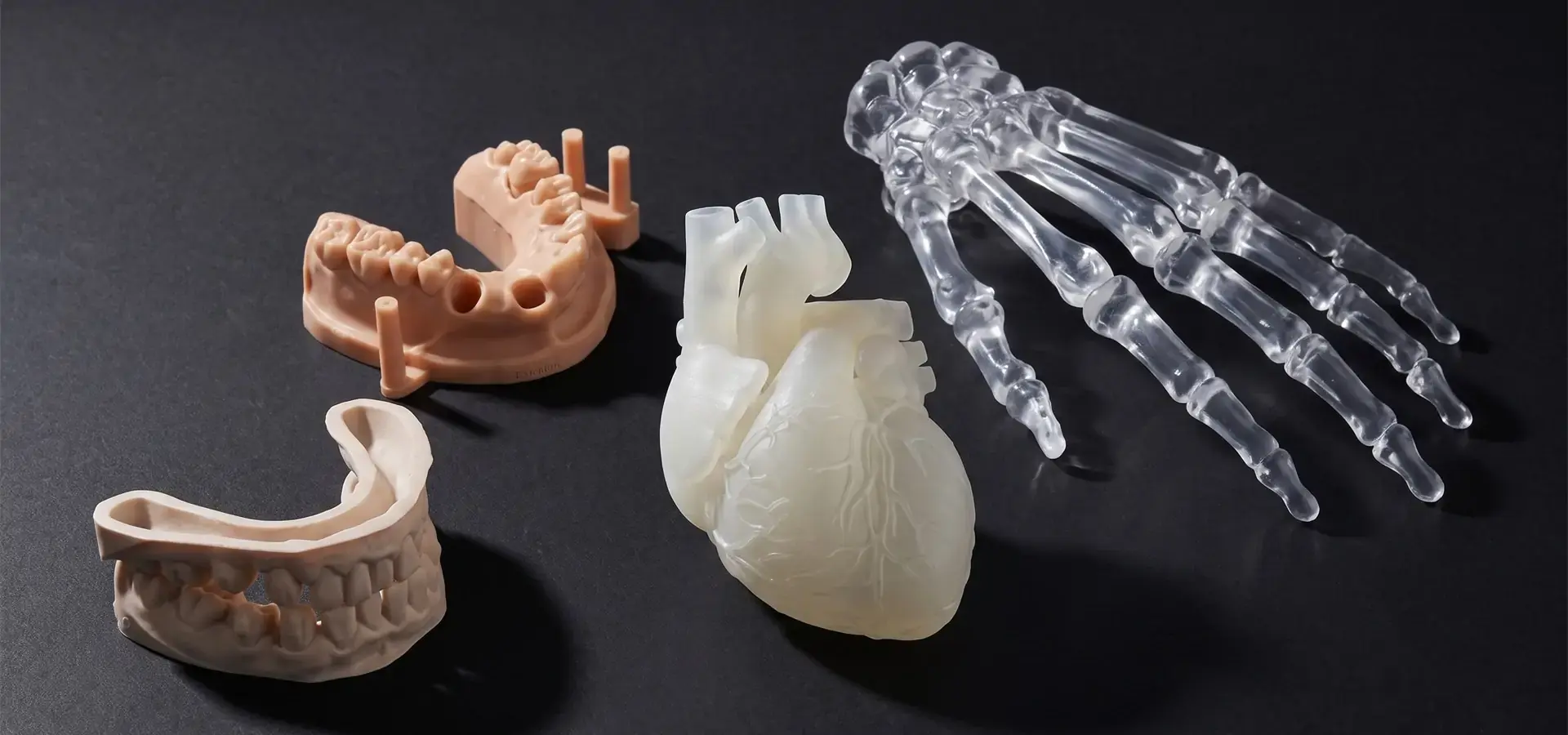
More and more, surgeons use anatomy models made from CT and MRI pictures to practise difficult operations. Overnight, an industrial SLA system can turn DICOM image data into physical models. This lets surgery teams figure out the best ways to do things before they go into the operating room. Clinical studies have reported that patient-specific 3D models can support surgical planning by improving anatomical understanding and helping medical teams prepare procedures more effectively.
Dental Applications and Orthodontics
Dental labs use stereolithography to make models for crowns and bridges, surgical guide templates, and bases for orthodontic aligners. Because SLA parts have excellent surface finish quality, they can significantly reduce visible layer lines and may meet demanding appearance requirements after proper post-processing. Magforms industrial printers work especially well with clear materials, producing clear images with few print errors, which is very important when making custom devices for patients on tight clinic schedules.
Biocompatible Medical Models and Surgical Applications
There are no ways for additively made devices to be regulated in some situations. Industrial SLA can produce medical models, surgical planning tools, guides, and research prototypes using qualified photopolymer materials. The layer-by-layer construction lets you add features that are specific to each patient, like a shape that fits their body and patient-specific geometric features and research-oriented structures for medical development.
When medical device companies look at industrial SLA 3D printers, they should make sure that the resin certifications meet ISO 10993 biocompatibility standards and USP Class VI requirements. Systems that support open material platforms make it possible to try new biomaterials as research progresses. This protects capital equipment investments against changing clinical needs and regulatory settings.
👉 Explore how Industrial SLA technology is applied in real production environments through our Industrial SLA 3D printing application cases
Choosing the Right Industrial SLA 3D Printer for Your Business Needs
When choosing the right stereolithography equipment, you have to weigh the technical specs against the practicalities of the job and your budget. Structured evaluation systems that take into account many choice factors are helpful for procurement managers.
Critical Technical Specifications
Build volume tells you the biggest part that can be made in a single step. It can be anything from 300 mm cubes for lab systems to 800 mm platforms for big auto parts. Laser power and scanning speed have a direct effect on output. For example, new galvanometer systems can scan at 12 m/s and usually work at 6–10 m/s. The accuracy of platform placement, which is achieved by high-precision linear guides like HIWIN parts, affects the tolerances for vertical dimensions and the uniformity of the surface finish.
Material Compatibility and Cost Considerations
Some industrial resin systems use proprietary material ecosystems, which may limit material selection flexibility. Magforms' industrial SLA printers have open resin systems that don't have identification locks. This means that they can work with most 355nm photopolymers on the market around the world. This gives you the freedom to test cheaper alternatives and special formulations as the needs of your application change. Getting rid of seller lock-in has a big effect on long-term running costs, especially for people who use a lot of resin (more than 10 litres a month).
Software Integration and Workflow Efficiency
The iBuild 2.0 control software meets the needs of current users by having clean interfaces, providing an efficient interface for print preparation, build management, and workflow monitoring. Advanced scanning optimization algorithms can improve workflow efficiency and reduce preparation time. Integration with PLM systems and automated support generation cuts down on the need for manual work, so operators can focus on quality control instead of doing the same tasks over and over again to prepare files.
Evaluating Supplier Capabilities
Support after the sale has a big impact on production uptime, even more so than the specs of the equipment. Magforms has a skilled technology team that answers questions within 24 hours and gives full training during installation. Using well-known parts like AOC lasers, Scanlab galvanometers, Panasonic servo motors, and Schneider electrical systems ensures that parts are always available and service doesn't stop. Buyers should make sure that the supplier has experience in the relevant industries and ask for case studies that show how successful implementations have been at similar production scales.
Along with tool skills, financing choices should be thought about for an Industrial SLA 3D Printer. Leasing saves money that can be used for goods and workers, while buying directly saves money in the long run. To make accurate ROI estimates that convince financial partners to buy capital equipment, it's important to know the total cost of ownership, which includes how much resin is used, how often it needs to be maintained, and when to replace consumables.
Maintenance and Quality Assurance for Industrial SLA 3D Printers
Tough upkeep rules and proactive quality assurance steps are needed to make sure that the output quality stays high. Reliability standards in industrial settings are much higher than those in hobbyist settings.
Preventive Maintenance Schedules
Optical systems need to be cleaned every so often so that resin pollution doesn't ruin the laser focus. UV-resistant viewing panels help protect operators while allowing visibility of the build process. It is important to check the edges of recoater blades for wear that could leave resin layers streaky and lead to print errors. Platform mechanisms work better when HIWIN linear guides are oiled at regular intervals recommended by the manufacturer. This keeps the Z-axis moving smoothly and prevents backlash that could damage layer adhesion.
Addressing Common Print Defects
Warping can occur due to insufficient support structures, improper orientation, or internal stress generated during polymerization. Magforms systems release stress during laser scanning because they are built with material knowledge that lowers the risk of warping. Layer delamination is often caused by using the wrong exposure parameters for certain resins. This type of failure can be avoided by keeping the laser power calibrated by measuring the energy density on a regular basis. Temperature control systems built into the resin management system keep it at the right thickness even when the temperature outside changes. This means that print problems caused by yearly temperature changes are no longer a problem.
Quality Control Testing Protocols
Coordinate measuring tools (CMM) or 3D scanning are used to compare printed parts to their source CAD files and make sure they are the right size. Documented inspection records are useful for medical and automotive uses because they make it easy to track and make sure that regulations are followed. Mechanical testing according to ASTM standards—D638 for tensile strength, D790 for flexural modulus, and D256 for impact resistance—proves that parts that have been cured meet the properties listed in the material datasheet. Setting up these testing procedures during the setup of equipment produces standard performance data that can be used to keep an eye on quality over time.
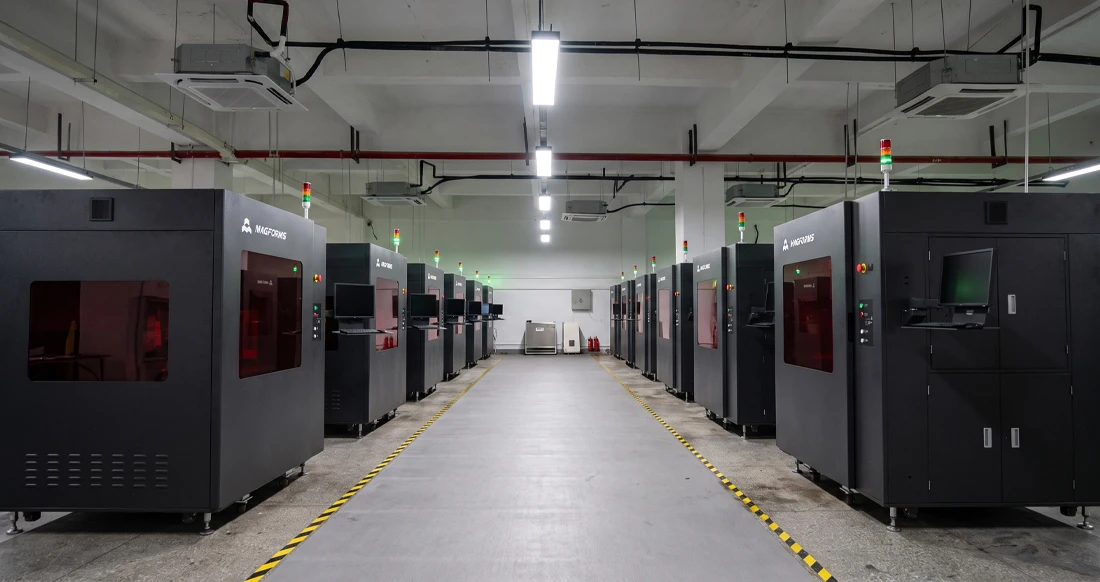
Magforms offers professional service agreements that make sure customers can get spare parts and technical help when problems happen. Because high-quality parts are used—for example, marble platforms to keep stable and 2 mm-thick metal enclosures to reduce vibrations—there isn't much unplanned downtime. When problems do happen, being able to respond quickly keeps the production schedule from being thrown off, which hurts customer trust and revenue streams.
Conclusion
Industrial SLA technology has grown and is now a production-ready option that meets important goals in medical and car manufacturing. Stereolithography is a useful tool for companies that want to mass-customize products and come up with new ideas quickly because it provides high dimensional accuracy, excellent surface quality, flexible material options, and efficient production workflows. When buying commercial SLA 3D printers, it's best for sourcing teams to focus on open material systems, proven component stability, and full provider support. This will give them the most long-term value and operating freedom. The examples in this analysis show real benefits, like shorter development times, lower tooling costs, and more customisable products, that have a direct effect on how competitive you are in tough B2B markets.
FAQ
1. What distinguishes industrial SLA 3D printers from desktop models?
Industrial systems incorporate high-power 355nm UV lasers, precision galvanometer scanners, and closed-loop servo motors that deliver consistent accuracy across large build volumes. They support biocompatible and engineering-grade resins meeting regulatory standards for automotive and medical applications, while providing workflow automation suitable for production environments.
2. How does variable spot technology improve printing efficiency?
Dynamic spot adjustment uses larger beam diameters for rapid infill of interior volumes and switches to micro-spots for detailed surface features. This approach can improve overall printing efficiency compared with fixed-spot systems while maintaining detailed surface quality.
3. What material options exist for medical applications?
Qualified biocompatible resins that meet relevant ISO 10993 or USP Class VI requirements may support applications such as surgical guides and medical models, depending on regulatory approval and intended use. Transparent formulations facilitate optical inspection of internal anatomy models, while sterilizable resins withstand autoclave cycles required in clinical settings.
4. Can SLA parts replace injection-molded components?
For low-volume production runs under several thousand units, stereolithography often proves more cost-effective than tooling investment. High-temperature resins with heat deflection temperatures exceeding 100°C serve functional applications, though material properties differ from thermoplastics and require validation for specific use cases.
Partner with Magforms for Advanced Industrial SLA 3D Printer Solutions
Magforms brings years of additive manufacturing expertise to automotive and medical clients seeking reliable industrial SLA 3D printer technology. Our integrated approach combines proprietary photopolymer resins with precision hardware, eliminating compatibility issues that plague mixed-vendor configurations. The equipment portfolio features internationally recognized components—AOC lasers, Scanlab galvanometers, Panasonic servos—ensuring 24/7 production reliability with industry-leading uptime.
We understand that selecting an industrial SLA 3D printer supplier involves evaluating total operational value beyond initial purchase price. Magforms offers flexible procurement structures, including direct purchase and leasing arrangements tailored to diverse budget requirements. Our professional after-sales team responds to technical inquiries within 24 hours, supported by comprehensive training programs that accelerate operator proficiency. With 22 patents, 30 trademarks, and installations serving over 300 enterprises globally, we deliver proven performance across demanding applications.
Contact our technical consultants at info@magforms.com to discuss your specific automotive or medical manufacturing requirements. We provide sample part testing, detailed ROI analyses, and facility planning support to ensure successful implementation. Whether upgrading existing capabilities or establishing new production lines, Magforms industrial SLA 3D printer systems deliver the precision, speed, and reliability your organization demands.
References
1. Gibson, I., Rosen, D., & Stucker, B. (2021). Additive Manufacturing Technologies: 3D Printing, Rapid Prototyping, and Direct Digital Manufacturing. Springer International Publishing.
2. American Society for Testing and Materials. (2020). ASTM F2792-12a: Standard Terminology for Additive Manufacturing Technologies. ASTM International.
3. Ligon, S. C., Liska, R., Stampfl, J., Gurr, M., & Mülhaupt, R. (2017). Polymers for 3D Printing and Customized Additive Manufacturing. Chemical Reviews, 117(15), 10212-10290.
4. Salmi, M., Paloheimo, K. S., Tuomi, J., Wolff, J., & Mäkitie, A. (2013). Accuracy of Medical Models Made by Additive Manufacturing (Rapid Manufacturing). Journal of Cranio-Maxillofacial Surgery, 41(7), 603-609.
5. Guo, N., & Leu, M. C. (2013). Additive Manufacturing: Technology, Applications and Research Needs. Frontiers of Mechanical Engineering, 8(3), 215-243.
6. International Organization for Standardization. (2019). ISO/ASTM 52915:2016 - Specification for Additive Manufacturing File Format (AMF) Version 1.2. ISO Standards Catalogue.

Magforms makes design and manufacture easier.
Popular Blogs
-
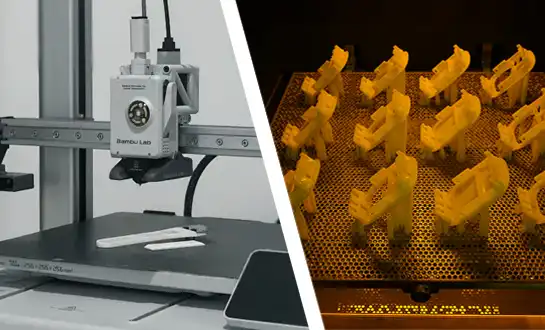 Industry InsightsManufacturing Industry
FDM vs. SLA Printer: Which Technology Is Right for Your Project?
-
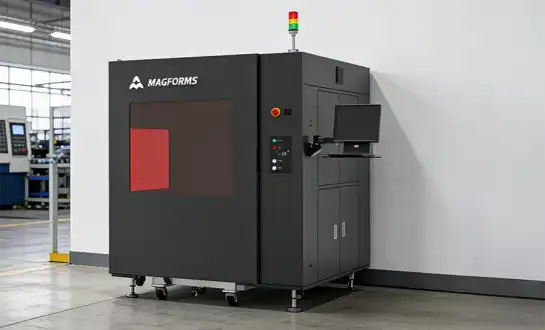 Industry InsightsManufacturing Industry
Top 5 Applications of Industrial 3D Printers in Manufacturing Today
-
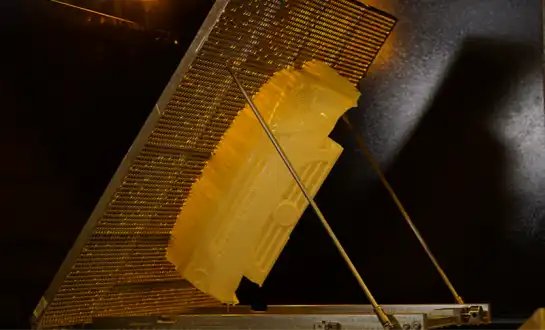 Industry InsightsManufacturing Industry
Why Stereolithography 3D Printers Are Unmatched for Microfluidic Device Prototyping?