Ultimate 3D Printer Buying Guide for Businesses
Additive production is changing quickly, and this has changed how businesses in all fields buy things. A 3D printer is more than just a tool for making things; it's a strategic asset that makes it possible to do things like fast development, custom tooling, and small-batch production in ways that have never been possible before. This detailed buying guide helps procurement professionals make the important choices they need to make when choosing additive manufacturing solutions for their businesses. It covers a wide range of topics, such as technology options, material compatibility, cost factors, and operational efficiency metrics that have a direct effect on return on investment.

Understanding 3D Printing Technology and Its Business Applications
These days, additive manufacturing uses several different technologies, each one made to meet specific needs in the business world. No matter which one you choose, it will affect not only the quality and speed of your production, but also the products and uses your business can explore.
Stereolithography (SLA) Technology for Precision Manufacturing
Laser-cured photopolymer plastics are used in SLA technology to make things with great surface finish and lots of detail. When precise measurements are needed within 0.1 mm, this technology really shines. It's perfect for dental models, jewelry samples, and precision tools. Industrial SLA systems with German Scanlab galvanometers and AOC lasers give consistent results over thousands of production runs. This makes them reliable for large-scale industrial processes.
Professional systems use advanced changeable spot-size laser technology that makes them much more efficient. Large spots of 0.5 to 0.6 mm speed up the filling process inside, while small spots of 0.18 to 0.2 mm make sure that the outlines and fine details are clear. The old trade-off between speed and accuracy has been fixed by this new technology, which makes printing 30–50% faster than before.
Fused Deposition Modeling (FDM) for Versatile Production
FDM technology is still popular because it is cheap and can be used with a lot of different materials. Layer by layer, these 3D printer systems produce thermoplastic strands that can support engineering-grade materials like carbon fiber composites, ABS, ASA, Nylon, and Polycarbonate. FDM printers with heated spaces inside keep high-shrinkage materials from warping, which is important for making sure that working samples and production parts stay the same size.
With dual extrusion, complex shapes can be made using liquid support materials like PVA. This means that support removal doesn't have to be done by hand, which could damage delicate parts. This feature is very useful for making complicated internal channels, overhangs, and parts all in one print job.
Selective Laser Sintering (SLS) for Direct Production Parts
Using precise laser scanning, SLS technology joins polymer powders together to make parts with isotropic strength qualities that are similar to those of injection-molded parts. This technology gets rid of the need for support structures, which lets you make complicated geometries and stacked assemblies that make the best use of the build space. SLS is great at making useful parts for medical, military, and automobile uses where material properties have to meet strict performance standards.

Key Factors to Consider When Buying a 3D Printer for Business Use
To do procurement right, you need to carefully look at expert skills, operational needs, and long-term business goals. The decision framework should find a balance between the needs for current output and the needs for future growth and changes in technology.
Build Volume and Throughput Considerations
The amount of production directly affects the choice of tools. For making prototypes, small design companies might only need desktop computers, but factories need industrial-scale build sizes of up to 300x300x400mm for architectural models or the ability to make a lot of them at once. Large-format SLA systems break standard size limits by allowing the production of oversized working parts in single builds or at the same time for multiple components.
Print speed and post-processing needs must both be taken into account when figuring out throughput. Advanced systems that use deep learning algorithms can improve speed by an extra 20% through better scanning paths and flexible layer strategies, which speeds up the time it takes to get important projects to market.
Material Compatibility and Supply Chain Flexibility
Cost control and supply chain stability are two big benefits of open-source material compatibility. Systems that can only use private materials make operations less flexible and raise long-term costs. Customers can save money on materials and get the right formulas for their needs by using professional equipment that supports multiple plastic brands.
When materials and tools are matched, optimized, and put together, the connectivity problems that come up with mixed-vendor setups are eliminated. Dimensional errors, print flaws, and unexpected downtime that happen because of bad material-machine compatibility can have a big effect on production plans and quality results.
Precision and Quality Requirements
The right technology is chosen based on the accurate needs of the application. When it comes to tolerances, architectural simulation is not the same as medical device prototyping or aircraft component proof. Professional SLA systems can place X and Y with an accuracy of 0.1 mm, which means they can copy fine textures and complicated shapes needed for high-end applications.
Post-processing needs and time-to-market are affected by the level of the surface finish. Systems that provide a surface quality similar to injection molding cut down on finishing steps, which speeds up the delivery of prototypes and lowers the cost of labor. This feature is especially useful for showing clients what they can do and for basic tests.

Popular 3D Printer Brands and Models for B2B Procurement
There are several well-known companies in the industrial additive manufacturing market, and each one has its own benefits in certain application areas. By understanding these differences, you can make smart choices about what to buy that are in line with your budget and business needs.
Enterprise-Grade SLA Solutions
When it comes to accurate manufacturing, professional SLA methods are the best. These 3D printer platforms are made with high-quality parts, like industrial-grade lasers, precision galvanometer systems, and servo motor control systems, that make sure the machines work the same way over long production runs. Using marble bases and precise linear guides reduces shaking and thermal drift, keeping the accuracy of the dimensions even during big builds.
Modern systems have smart process tracking and adaptive control algorithms that change the printing settings in real time to account for changes in the environment and differences in the materials being used. This automation cuts down on the need for human input while keeping the quality of the result constant.
Industrial FDM Platforms
For production settings, high-performance FDM systems have strong mechanical parts, accurate temperature control, and advanced systems for moving materials. Enclosed rooms with active heating keep the stable temperatures needed for industrial thermoplastics, which stops parts from warping and layers from delaminating, which can damage their integrity.
Multi-material features let you make complicated structures with both rigid and flexible parts in a single build. This feature speeds up the creation of prototypes for goods that need different material qualities, like consumer electronics with rigid cases and flexible connectors.
Hybrid and Specialized Systems
New technologies mix several additive manufacturing methods or blend subtractive and additive manufacturing on a single platform. These hybrid systems allow for complicated manufacturing processes, like 3D printing followed by CNC finishing for important surfaces. This makes it possible for more uses while keeping efficiency high.
Practical Guide to Choosing Materials and Managing 3D Printer Operations
Material choice has a big effect on how well a part works, how efficiently it is made, and how much it costs to run. Understanding the qualities of a material and how it needs to be processed can help both the planning and production processes run more smoothly.

Engineering Thermoplastics for Functional Applications
Professional FDM systems come with large libraries of materials, such as high-performance plastics that are perfect for tough jobs. ABS is great for vehicle parts because it doesn't break easily when hit and stays stable at high temperatures. PC, on the other hand, is better for protective housings and light guides because it is stronger and clearer.
Specialty composites made of carbon fiber, glass fiber, or metal bits have better mechanical qualities that are similar to those of common building materials. In many cases, these materials make it possible to make working parts directly, so there is no need to go from making a sample to making production tools.
Photopolymer Resins for Precision Manufacturing
SLA technology offers a wide range of photopolymer formulas that are best for different uses. For visual prototypes, standard resins do a great job of reproducing details, while engineering resins have better mechanical qualities for trying out how things work. Biocompatible mixtures allow use in dentistry and medicine, and high-temperature resins can handle tough service circumstances.
For gasket and seal development, flexible resins with fixed Shore hardness values are used. Castable resins, on the other hand, help make jewelry and metal parts through investment casting processes. This variety of materials makes it possible for single-platform systems to meet a wide range of application needs.
Quality Control and Process Optimization
Handling and storing materials in the same way every time keeps them from breaking down, which can affect print quality and the accuracy of measurements on a 3D printer. Photopolymer plastics need to be kept away from light and moisture, while thermoplastic filaments do better when they are stored in a way that controls the humidity. Using the right material management procedures can increase the shelf life of goods and keep their regular handling properties.
Regular upkeep and calibration plans make sure that the equipment keeps working well for longer periods of time. Professional systems have automatic processes for calibration and predictive maintenance algorithms that keep output quality standards high and reduce unplanned downtime.
Budgeting and Buying: Securing the Best Deal for Your Business
Long-term operating costs and efficiency gains must be balanced with the initial capital investment in order for procurement to be effective. A full study of the total cost of ownership should include the price of buying the equipment, the costs of materials, the costs of upkeep, and the costs of teaching operators.
Investment Analysis and ROI Calculations
Professional additive manufacturing systems are worth the money because they cut down on the cost of testing, speed up the development of new products, and improve the design tools available. Value propositions can be measured when expensive tools aren't needed for low-volume production, and physical complexity that can't be done with standard manufacturing is made possible.
Time-to-market improvements give businesses benefits over their competitors that often outweigh the direct cost saves. Being able to quickly change plans and test ideas without having to wait a long time for production to happen makes product development more flexible and lowers market risk.
Procurement Strategies and Supplier Relationships
If you choose providers with a wide range of support services, you can be sure of long-term success after the equipment is installed. To keep output from stopping, technical support teams offer remote consultations 24 hours a day, seven days a week, and guarantee reaction times. For more complicated problems, being able to get help on-site lowers the risk of downtime even more.
Training programs and ongoing technical education help get the most out of tools and make processes run more smoothly. Companies that offer full application support can speed up the development process and find ways for companies use additive manufacturing more.
Conclusion
To choose the best 3D printer, you need to carefully look at the different types of technology, the needs of the product, and your long-term business goals. For detailed uses, SLA technology offers better accuracy and surface quality, while FDM systems make it easy to use a variety of materials and are cost-effective for practical prototyping. By understanding these trade-offs, you can make smart choices about what to buy that are in line with your budget and business needs. To be successful, you need to choose providers that offer full help, open material compatibility, and a track record of dependability. When you invest in skilled additive manufacturing, you get measured returns like lower development costs, faster time-to-market, and better design tools that give you long-term competitive advantages.
FAQ
What's the difference between SLA and FDM technology for business applications?
Stereolithography (SLA) uses laser-cured liquid materials to make very detailed parts with smooth surfaces. This makes it perfect for dental models and jewelry that need to be precise. FDM (Fused Deposition Modeling) extrudes thermoplastic filaments, which makes it easy to make working prototypes and other engineering projects with a wide range of materials and at low cost. SLA is more accurate and has better surface quality, while FDM lets you use more materials and costs less to run.
How do I ensure a 3D printer meets industrial reliability standards?
For industrial dependability, you need strong mechanical design, precise motion control systems, and parts that have been tested and proven to work well together. Check out systems that have high-quality parts like servo motors, precise linear guides, and computers made for commercial use. Check the data from the continuous operation tests and the failure rate requirements. Pick providers that offer full warranties, quick expert help, and programs for preventative upkeep.
What materials work best for different business applications?
Engineering thermoplastics like ABS, PC, and Nylon are good for making parts that need to last, like working prototypes and production parts. Photopolymer resins are great for precise tasks; standard resins are used to make visual samples, and engineering resins are used to test how well they work. Biocompatible materials can be used in medicine, and high-temperature formulations help with tests in the car and aircraft industries. Think about the power, flexibility, chemical resistance, and temperature tolerance of the material.
How do I calculate the total cost of ownership for business 3D printing?
The total cost includes the initial investment in tools, the cost of materials, the cost of upkeep, the cost of training operators, and the cost of building the facility. Think about the benefits to efficiency, such as lower costs for prototyping, shorter development processes, and no need to buy tools. Find the cost per part by adding up the cost of materials, time spent printing, and labor. For a full study, include prices for energy use, replacement of consumables, and service contracts.
Partner with Magforms for Advanced 3D Printing Solutions
Magforms offers the best SLA technology in the business, which combines accuracy, speed, and dependability for tough business uses. Our systems have German Scanlab galvanometers, AOC lasers, and variable spot-size technology, which lets us print 30–50% faster while still being accurate to the micron level. Magforms has 22 patents, is trusted by more than 300 businesses around the world, offers full technical help, and offers 24/7 online consultations. This means that Magforms can meet all of your additive manufacturing needs. Get in touch with info@magforms.com right away to talk about how our experience as a 3D printer maker can help you speed up output and encourage innovation in your company.
References
1. Gibson, Ian, David Rosen, and Brent Stucker. "Additive Manufacturing Technologies: 3D Printing, Rapid Prototyping, and Direct Digital Manufacturing." Springer Science & Business Media, 2015.
2. Wohlers, Terry, and Tim Gornet. "History of Additive Manufacturing: Wohlers Report 2023 - 3D Printing and Additive Manufacturing Global State of the Industry." Wohlers Associates, 2023.
3. Campbell, Thomas A., Skylar Tibbits, and Banning Garrett. "The Next Wave: Using Digital Fabrication to Customize Products and Processes." Atlantic Council Strategic Foresight Report, 2022.
4. Attaran, Mohsen. "The Rise of 3D Printing: The Advantages of Additive Manufacturing over Traditional Manufacturing." Business Horizons Journal, 2017.
5. Ford, Simon, and Tim Minshall. "Invited Review Article: Where and How 3D Printing is Used in Manufacturing, Assembly and Post-Processing." Rapid Prototyping Journal, 2019.
6. Klahn, Christoph, Bastian Leutenecker, and Mirko Meboldt. "Design Strategies for the Process of Additive Manufacturing." Procedia CIRP International Conference on Manufacturing Systems, 2015.

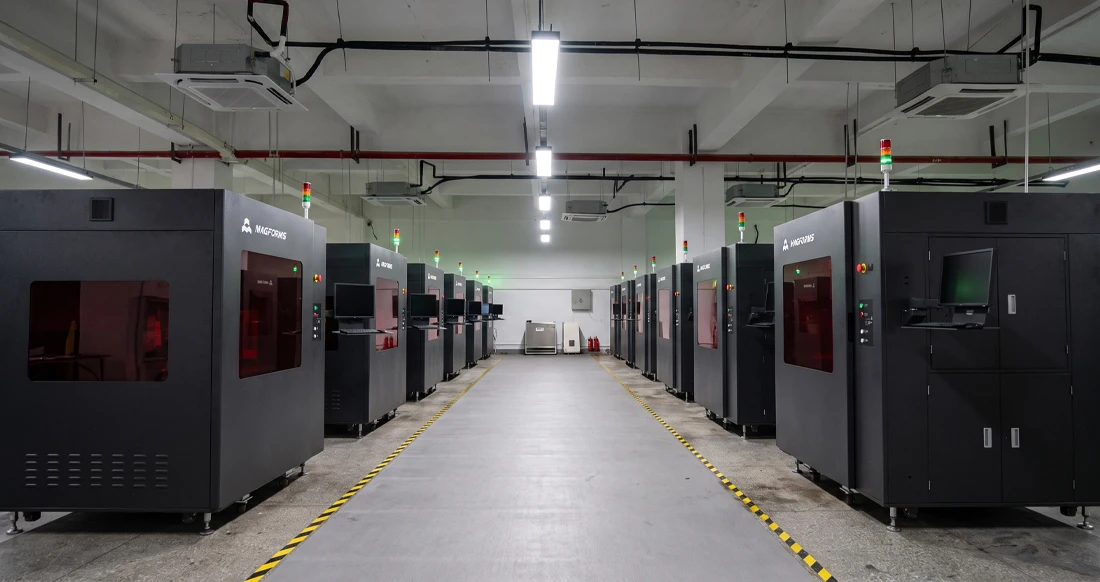
Magforms makes design and manufacture easier.
Popular Blogs
-
 Industry InsightsManufacturing Industry
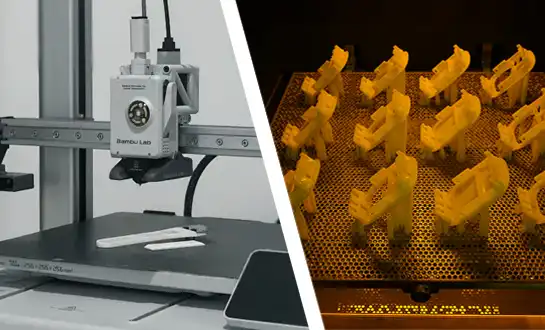
FDM vs. SLA Printer: Which Technology Is Right for Your Project?
-
 Industry InsightsManufacturing Industry
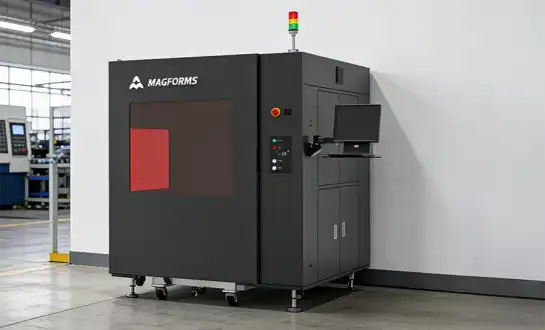
Top 5 Applications of Industrial 3D Printers in Manufacturing Today
-
 Industry InsightsManufacturing Industry
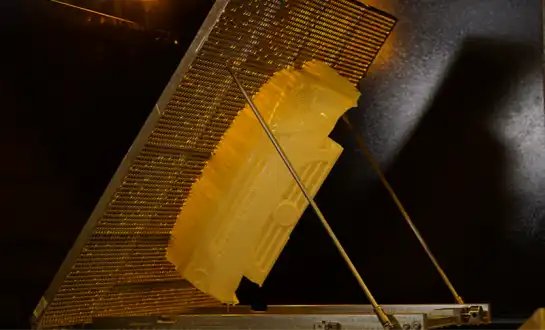
Why Stereolithography 3D Printers Are Unmatched for Microfluidic Device Prototyping?