How to Optimize Prints on a Large Scale Resin 3D Printer?
A methodical approach that includes equipment testing, resin selection, environmental control, and post-processing processes is needed to get the best results from a large scale resin 3D printer. Industrial-scale SLA systems, unlike desktop resin printers, require precise laser calibration and optical consistency, controlled peel forces during layer separation, and strong mechanical systems to keep accuracy at the micron level across large build volumes. Operators can obtain rid of common problems like warping and delamination by fine-tuning exposure parameters, support structures, and maintenance routines. This way, they can get regular, high-quality outputs that meet strict industry standards while cutting down on waste and production cycles.
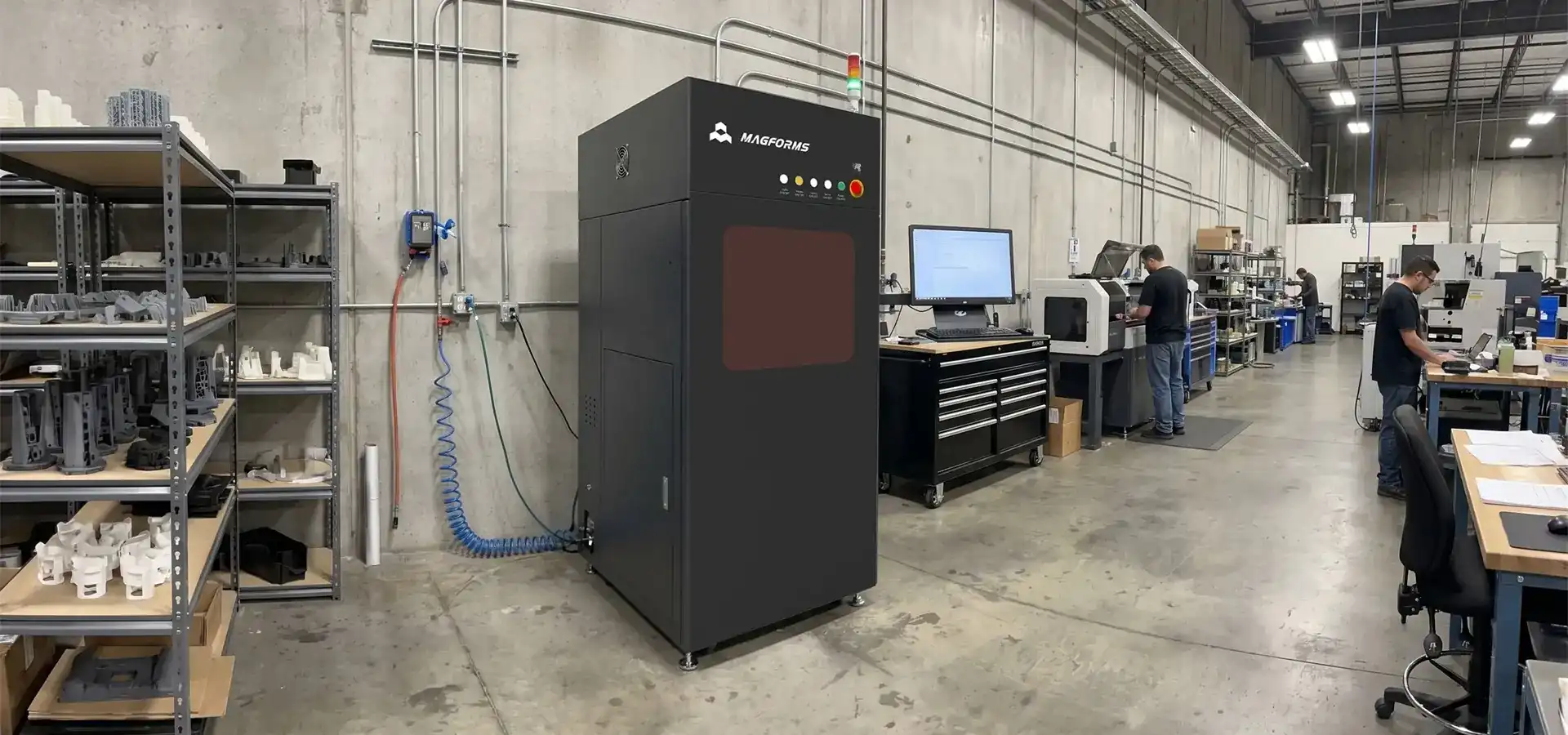
Understanding Large-Scale Resin 3D Printing and Its Challenges
When discussing industrial resin printing, stereolithography (SLA) remains one of the most widely adopted vat photopolymerization technologies for high-precision manufacturing applications that use carefully controlled UV laser scanning systems to cure liquid photopolymer resins. The parts made by these systems have a much better surface finish and are more accurately sized than parts made with standard filament-based methods. Thin resin layers are selectively cured by precision laser scanning, allowing complicated shapes to be built from the bottom up. The layer heights can be as low as 25 to 50 microns. But scaling up this process to handle build sizes larger than 300mm is technically very challenging. It gets exponentially harder to maintain optical consistency across larger build areas. Even small differences in light strength from center to edge can cause uneven curing, which can result in distorted shapes or weak structure zones.
Another big problem is that temperatures change all the time. When the temperature changes, the thickness of the resin changes a lot, which affects how fast it flows and how it cures. Without temperature control, prints that started in the morning might behave very differently from prints that ran all night. Operators and procurement teams in high-volume production settings must always consider these factors.
Why Resin Printing Surpasses FDM for Precision Applications?
In contrast to fused deposition modeling, resin-based additive manufacturing generally provides more uniform mechanical properties than filament-based FDM systems, which generally results in more consistent mechanical behavior across the X, Y, and Z axes than FDM printing. Because of these advantages, resin prints can be used to make useful prototypes that are put through mechanical stress tests, watertight parts for fluid uses, and geometries that are difficult to achieve with traditional filament extrusion systems. The lack of obvious layer lines cuts post-processing time by a large amount, which saves money on labor costs and improves the look of samples that will be shown to clients.
Common Pain Points Facing Procurement Teams
Industrial buyers are often frustrated by how reliable the equipment they buy is. Many high-end machines from foreign brands force users to use their own resin environments, which raises the cost of consumables and limits the machines' ability to be used in different ways. Poorly calibrated laser optics, poorly functioning linear rail systems, and improperly calibrated build platform systems cause inconsistent print results. Such behavior wastes expensive engineering resins and delays production plans. Figuring out these problems helps people make choices about which companies to choose based on how well their products work with both advanced technology and materials.
Identifying Key Bottlenecks in Printing Performance
To get the best output from industrial resin systems, you need to carefully find performance bottlenecks. Failures in printing rarely have a single cause. Instead, they are caused by problems with measurements, handling materials, and the surroundings.
Calibration and Mechanical Precision
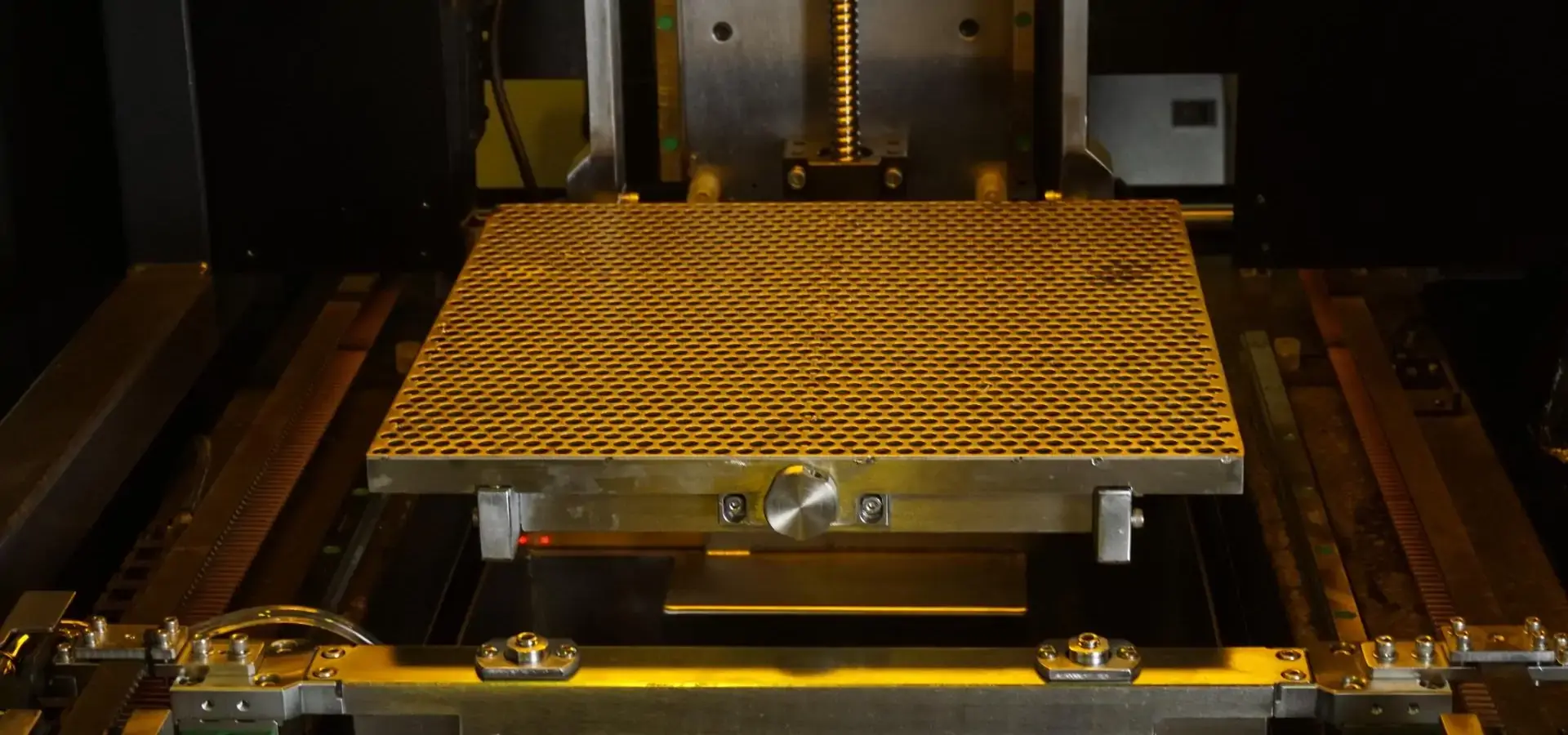
Build plate leveling is the key to making large-format printing work well. Differences of just a few microns between the build plate and the vat surface cause the first layer to stick unevenly, which causes the print to come apart in the middle of its cycle. More advanced systems use automatic leveling sensors or four-point human adjustment, but these need to be checked regularly. Stability of the Z-axis hinges on rigid linear rail systems that can handle the large peel forces that are created when pulling heavy cross-sections over a large area. If these mechanical parts bend or wobble, it means that the measurements are off.
Resin Curing Inconsistencies
Calibration of exposure time is still the most important factor that affects curing depth and interlayer bonding. Underexposure makes layers only partly polymerized, which makes weak areas that are likely to crack. Excessive cross-linking in the resin results in a loss of clarity in small details and an increase in peeling forces. Operators should do regular calibration tests, especially when changing resin formulations or after servicing the laser system. High-viscosity industrial resins, like heat-resistant formulas made to be stable at 230°C, need heated vats to keep their flow properties, which adds another level of complexity.
Environmental Control
Changes in ambient temperature have a direct effect on resin behavior and curing performance. Most photopolymers say that the best temperature range for use is between 20°C and 30°C. When the window isn't open, changes in resin viscosity affect how layers wet and stick to earlier surfaces. Humidity has a greater impact on post-processing curing rooms than on the printing process itself. However, excessive humidity can negatively affect long-term resin storage stability in open vats over time. Facilities without temperature control often experience higher failure rates and inconsistent mechanical properties between print batches.
Following planned repair routines can fix many bottlenecks before they halt output. Cleaning the optical windows, inspecting and maintaining resin vat surfaces, and using laser power measurement tools to verify optical output consistency stop performance from slowly going downhill. These proactive steps cut down on unplanned downtime, which is crucial for service bureaus that have to meet tight client targets for things like car prototyping, dental appliance production, and certification runs for aircraft components.
Proven Techniques to Optimize Print Quality and Efficiency
Learning several interconnected factors is essential to achieving the best quality output while keeping costs low. The connection between the choice of material, machine settings, and post-processing processes decides whether a business can make money or has to do a lot of work over and over again.
Selecting the Right Resin for Your Application
The choice of material has a big impact on how prints turn out. Standard resins are less expensive, but they lack the necessary mechanical properties for function checking. Engineering-grade formulas, such as tough resins that are similar to ABS, high-temperature versions, and materials that can be cast for investment casting, meet the needs of the end use. Flexible resins enable the production of elastic components such as gaskets and shoe midsoles, but they need different exposure settings to keep them from over-curing and losing their flexibility.
Biocompatible plastics are used in medical procedures like surgery guides and dental models, but they need to be certified, and each batch must be closely tracked. Clear materials let you make optical lens prototypes and models that show how fluid flows, but they need careful post-processing to be truly clear. Matching the resin chemistry to the application can help avoid costly rounds of trial and error.
Optimizing Core Print Parameters
Layer height is a trade-off between printing speed and feature resolution. It takes less time to build when the layers are thicker (100 microns), but the surface is less smooth, and the details are less clear. Thinner layers (25–50 microns) can catch fine details and tight dimensional tolerances needed for mechanical fits, but they also make the print take longer. The exposure time must be precisely calibrated to ensure complete polymerization and manageable peel forces. The exact sweet spot depends on the type of resin used, and test prints are needed to find it.
Care should be taken when designing a support system. Overhangs that lack sufficient support sag during printing, while supports that are too high leave marks requiring extensive cleaning. Modern slicing software can automatically create supports, but optimizing by hand saves material and makes the surface smoother. Strategic placement steers marks toward hidden faces or areas that will be machined, reducing the number of touch points on surfaces that can be seen.
The direction of the build plate affects both the success and speed of the print. By tilting parts, the cross-sectional area of each layer is reduced. This reduces peel forces and allows more stable recoating and platform movement. But steep curves require more support material and print height, which makes the whole process last longer. Nesting several parts together makes the best use of the build space, which changes the batch economics for production runs.
Environmental and Operational Best Practices
Keeping the environment stable across print jobs stabilizes resin performance during printing. Vat heating elements or heated build rooms keep the temperature within the range that is required range. This is especially important for materials with a high viscosity. Controlled lighting prevents premature resin curing; even UV light from open windows can initiate polymerization in vats. Protecting material quality means covering machines when they're not in use and using room lighting that has an orange filter.
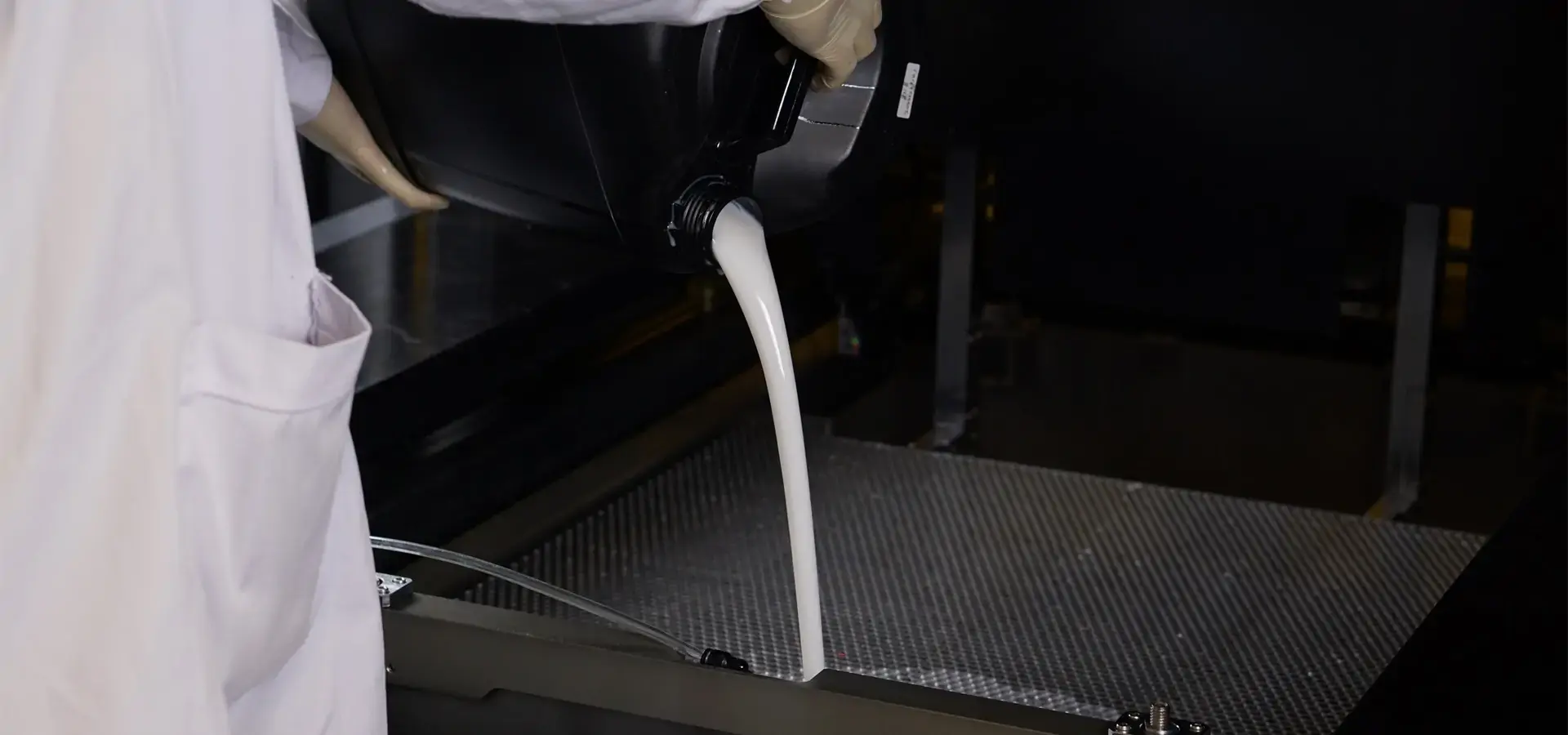
Before printing, properly mixing the resin makes sure that the pigments are spread out and gets rid of any settled particles. Filtering the resin as it is poured into vats gets rid of hardened pieces of failed prints, which stops flaws from happening. Monitoring resin levels stops the vat from running out in the middle of a print job, which would have caused permanent print failures and lost machine time.
These basic steps make the working conditions stable so that large scale resin 3D printers can do their jobs correctly. They are the building blocks of repeatable, high-throughput production that can handle tough industrial tasks when paired with excellent materials and the right settings.
Choosing the Right Equipment for Your Business Needs
Picking out industrial resin printing equipment is a big financial decision that needs careful consideration of both technical specs and operating needs. There are many different choices on the market, from cheap factory units to high-end systems that cost six figures.
Critical Specifications to Evaluate
The build volume directly influences the ability to produce part sizes and the speed of batch production. Systems that are 400x400x500mm can make full-size parts for the inside of cars or groups of dozens of dental braces at once. Details that can be seen are determined by resolution, which is measured in XY pixel size and Z-axis layer thickness. High-end industrial SLA systems utilize precision galvanometer laser scanning systems and advanced optical calibration technologies to maintain consistent dimensional accuracy across large build areas. Advanced laser spot control can achieve feature resolutions as fine as 35 microns.
Layer curing time and Z-axis movement rates affect overall printing speed. SLA systems equipped with high-power UV lasers and optimized scanning algorithms can significantly reduce layer exposure times while maintaining dimensional accuracy. Lift speed after each layer changes overall build time; rapid speeds increase the chance of print separation, while slow speeds add extra time to the cycle that isn't needed.
Machine dependability includes both how well the machine works mechanically and how well its technology works. Linear motion systems made for industrial use, frames that are stronger and less likely to vibrate, and enterprise-level control boards all help keep upkeep to a minimum. Failure rates below 2% are the best in the business because they cut down on wasted materials and plan delays.
Evaluating Total Cost of Ownership
The price of an item is only one part of economic research. The prices of materials are unique. For example, private resin systems charge more ($200 to $400 per liter), while open-platform machines charge only $80 to $150 per liter for third-party formulas. Over three years of running, material savings can make up for the higher costs of buying the tools at the beginning. Consumables like resin vats, recoating components, and laser optical modules need to be replaced from time to time. Understanding the timing and cost of replacements will prevent unexpected budget surprises.
The level of after-sales help has a giant effect on operational uptime. When problems happen, they are less of a problem when there is quick expert support, extra parts that are easy to find, and a lot of training materials. Protecting investments is the job of warranties that cover important parts like optical systems and build plates. Some makers offer on-site service contracts or online diagnostics, which can be helpful for businesses that don't have their own large scale resin 3D printer experts.
Balancing Capabilities with Budget Constraints
Entry-level industrial systems that offer excellent performance at reasonable prices are helpful for new service companies and design offices. These machines have the build rate and resolution needed for a wide range of client projects without needing huge amounts of cash. Mid-range equipment is excellent for established businesses that want to increase their throughput and material freedom. It usually has an open-platform design and can be built more. Premium systems are made for large makers and research centers that need the fastest speeds, highest resolutions, and most reliable systems for mission-critical tasks.
The final choice will depend on how much is expected to be produced, how complicated the parts need to be, and material compatibility requirements. By matching the capabilities of equipment to real, practical needs, you can avoid spending on features that won't be used and make sure there is enough space for future growth.
Industrial Applications and ROI Benefits of Optimized Printing
Large-format resin printing changes the way many industries make things by letting them make changes quickly, cutting down on the cost of tools, and making parts for end use that weren't possible with additive methods before.
Automotive Rapid Prototyping
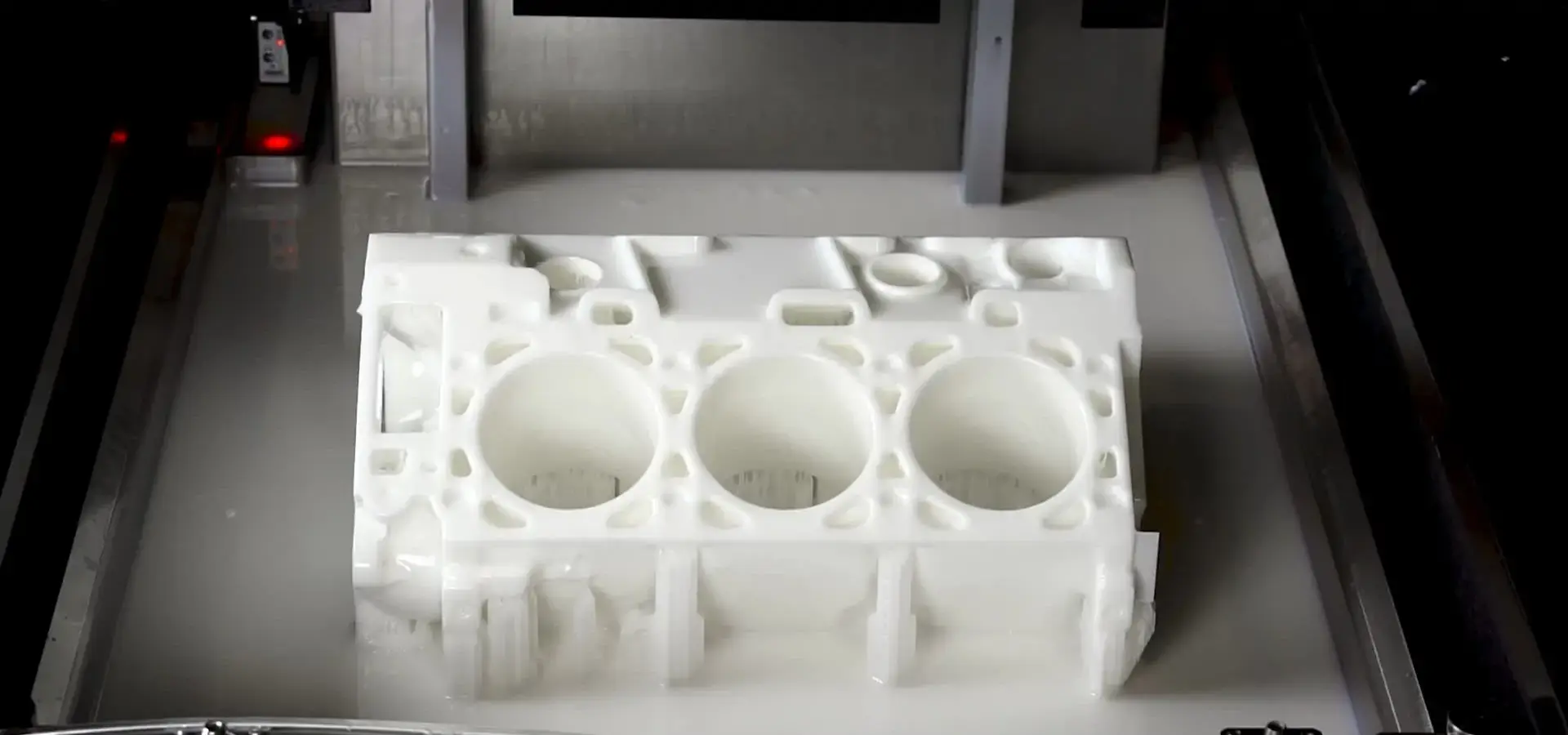
Industrial resin systems are used by design teams to make full-size panel parts, grille kits, and intake pipes out of engineering-grade materials. Being able to print unitary structures gets rid of the assembly gaps that get in the way of structural tests. This lets you check the fit accurately against CAD models. Iterative design processes shorten the time it takes to make a new car platform, from weeks to days. High-temperature resins can stand up to heat testing methods, which proves that designs work in real-world situations.
Aerospace Component Validation
Printers can make complex shapes like ducting systems, mounting brackets, and small, precise joints with an accuracy of ±0.1 mm, which meets ISO 52900 standards for additive manufacturing. Because cured SLA resin parts typically exhibit more uniform mechanical behavior than FDM-printed components, samples can be tested for functionality under mechanical loads. This way, designs can be proven to work before spending a lot of money on CNC cutting or casting tools. When it comes to specialized parts, where standard manufacturing setup costs make low-volume runs too expensive, small-batch production becomes a realistic option.
Medical and Dental Customization
Dental labs make large quantities of aligner casts, crown patterns, and surgical guides that are customized to fit the unique anatomy of each patient. Biocompatible resins make it possible for devices to be sterilized and safe for direct patient touch. In orthopedics, CT scans are used to make patient-specific surgery planning models that improve operative accuracy and cut down on operating room time. Personalized medicine costs have changed a lot since it became possible to make dozens of different parts at once.
Consumer Electronics and Footwear Development
Product designers make prototypes of housings for wearable tech and parts for headphones that can't be made through injection casting because the prices of the tools are too high. Manufacturers of shoes make prototypes of midsole lattice structures that improve padding and energy return. They try different versions of these structures quickly before committing to making production tools. The smooth surface finish cuts down on the work that needs to be done afterward on samples that are ready for use in market testing and investment presentations.
Quantifiable ROI Metrics
When support optimization, laser parameter calibration, and build orientation are properly configured, printing processes can cut material waste by more than 40%. Compared to processes that aren't optimized, production cycle times shorten by 30–50%. This increases output without spending more money. Rework rates go down when parts are of higher quality, which makes customers happier and encourages them to buy again. Processes that use less energy and programs that recycle resin meet sustainability requirements while cutting costs, which makes them appealing to buying teams that care about the environment.
Conclusion
For a large scale resin 3D printer to work best, you need to look at the whole picture, including the choice of tools, the science behind the materials, process control, and operating discipline. Operations that work well combine technical accuracy with cost-effectiveness. They use advanced calibration, stable environments, and strategic parameter setting to get high-quality results that are repeated. Traditional development and bridge manufacturing methods are being replaced by additive manufacturing. Companies that understand these optimization principles can gain a competitive edge by using faster iteration cycles, lower part costs, and better product performance. Putting money into the right tools, training, and process development pays off by increasing output and making the business more sensitive to the market.
FAQ
How often should maintenance be performed on industrial resin printers?
Daily resin cleaning and tank inspection, weekly wear and cloudiness checks on the resin vat surface, and monthly calibration checks should all be part of preventative maintenance plans. A photometer should be used every three months to check the strength of the laser optical output, since the output decreases slowly over thousands of hours. To keep them from wearing out too quickly, linear rails need to be oiled every 500 printing hours. When you switch between different build configurations or after a crash, the build plates need to be leveled again. Following the repair schedules written in the equipment's manuals by the maker keeps problems from happening out of the blue and increases the life of the machine.
Which resin materials work best for high-strength prototypes?
The best mix of strength, impact resistance, and dimensional stability for practical tests is found in engineering-grade tough resins that are made to look like ABS or polycarbonate. High-temperature resins can withstand thermal loads of up to 230°C, making them good for use under the hood of an automobile. Ceramic-filled or glass-fiber-reinforced resins are the strongest and hardest options, but they require industrial SLA systems with reinforced recoating and material handling mechanisms to work with their higher viscosity and roughness. Always make sure that the resin's specs match the needs of the application by trying printed samples for durability before starting production runs.
What causes layer adhesion failures in large prints?
Poor interlayer bonding is usually caused by not enough contact time, which means that the previous layers are not fully cured before adding the next layer. Resin thickness goes up when the temperature outside of the ideal range, which stops it from properly wetting and chemically joining. When resin is contaminated with partially cured debris or materials that don't match, polymerization is slowed down. Too much peel force from fast lift speeds can physically split layers. To figure out what's wrong, you can run exposure calibration tests, make sure the room temperature stays stable, properly filter the resin, and slow down the lift speed until the bonding gets better.
Partner with Magforms for Superior Large-Scale Resin 3D Printer Solutions
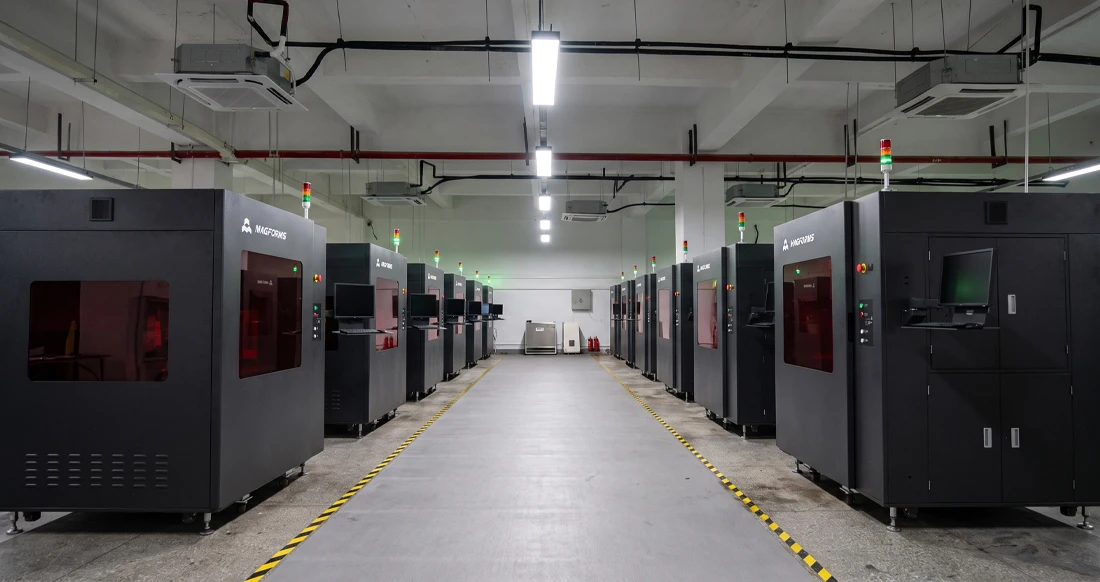
To achieve greatness in production, you need more than just tools. You also need a partner who is dedicated to your success. With 22 patents and 30 filed brands and years of experience working with over 300 businesses around the world, Magforms is a reliable, large scale resin 3D printer maker. Our integrated SLA manufacturing ecosystem combines high-precision laser-based printers with optimized resin formulations. This gets rid of the compatibility problems that come up when third-party materials are used. With variable spot-size laser technology and AI-optimized scanning paths, print speeds are 30% faster without losing accuracy at the micron level. This cuts down on lead times while keeping high quality.
With years of experience in the field, our technical support team gives you full training, quick troubleshooting, and effective maintenance advice to get the most out of your tools. Magforms has solutions that are suited to your production scale and budget, whether you're a new service center or an established aerospace supplier seeking a reliable, large-scale resin 3D printer for sale. Talk to our sourcing experts at info@magforms.com about how our end-to-end additive manufacturing environment can change the way you make things and help you get a faster return on your investment.
References
1. Gibson, I., Rosen, D., & Stucker, B. (2021). Additive Manufacturing Technologies: 3D Printing, Rapid Prototyping, and Direct Digital Manufacturing (3rd ed.). Springer.
2. Jacobs, P. F. (2019). Stereolithography and Other RP&M Technologies: From Rapid Prototyping to Rapid Tooling. Society of Manufacturing Engineers.
3. Lipson, H., & Kurman, M. (2020). Fabricated: The New World of 3D Printing. Wiley.
4. Chua, C. K., & Leong, K. F. (2017). 3D Printing and Additive Manufacturing: Principles and Applications (5th ed.). World Scientific Publishing.
5. Redwood, B., Schöffer, F., & Garret, B. (2018). The 3D Printing Handbook: Technologies, Design, and Applications. 3D Hubs B.V.
6. Geb Understanding additive manufacturing: rapid prototyping, rapid tooling, and rapid manufacturing.pid Manufacturing. Hanser Publications.

Magforms makes design and manufacture easier.
Popular Blogs
-
 Industry InsightsManufacturing Industry
FDM vs. SLA Printer: Which Technology Is Right for Your Project?
-
 Industry InsightsManufacturing Industry
Top 5 Applications of Industrial 3D Printers in Manufacturing Today
-
 Industry InsightsManufacturing Industry
Why Stereolithography 3D Printers Are Unmatched for Microfluidic Device Prototyping?