How to Qualify an Industrial SLA 3D Printer for ISO 13485 Production?
Qualifying an Industrial SLA 3D Printer for ISO 13485 production requires rigorous validation of equipment stability, precision, traceability, and material compatibility. The process encompasses Installation Qualification (IQ), Operational Qualification (OQ), and Performance Qualification (PQ), as well as continuous process validation and documentation. Selecting an Industrial SLA 3D Printer with documented component specifications, reproducible output, and comprehensive technical support can provide a stronger foundation for equipment qualification and process validation within an ISO 13485 quality management system. However, compliance ultimately depends on how the manufacturer validates, documents, monitors, and controls the complete production process throughout the device lifecycle.
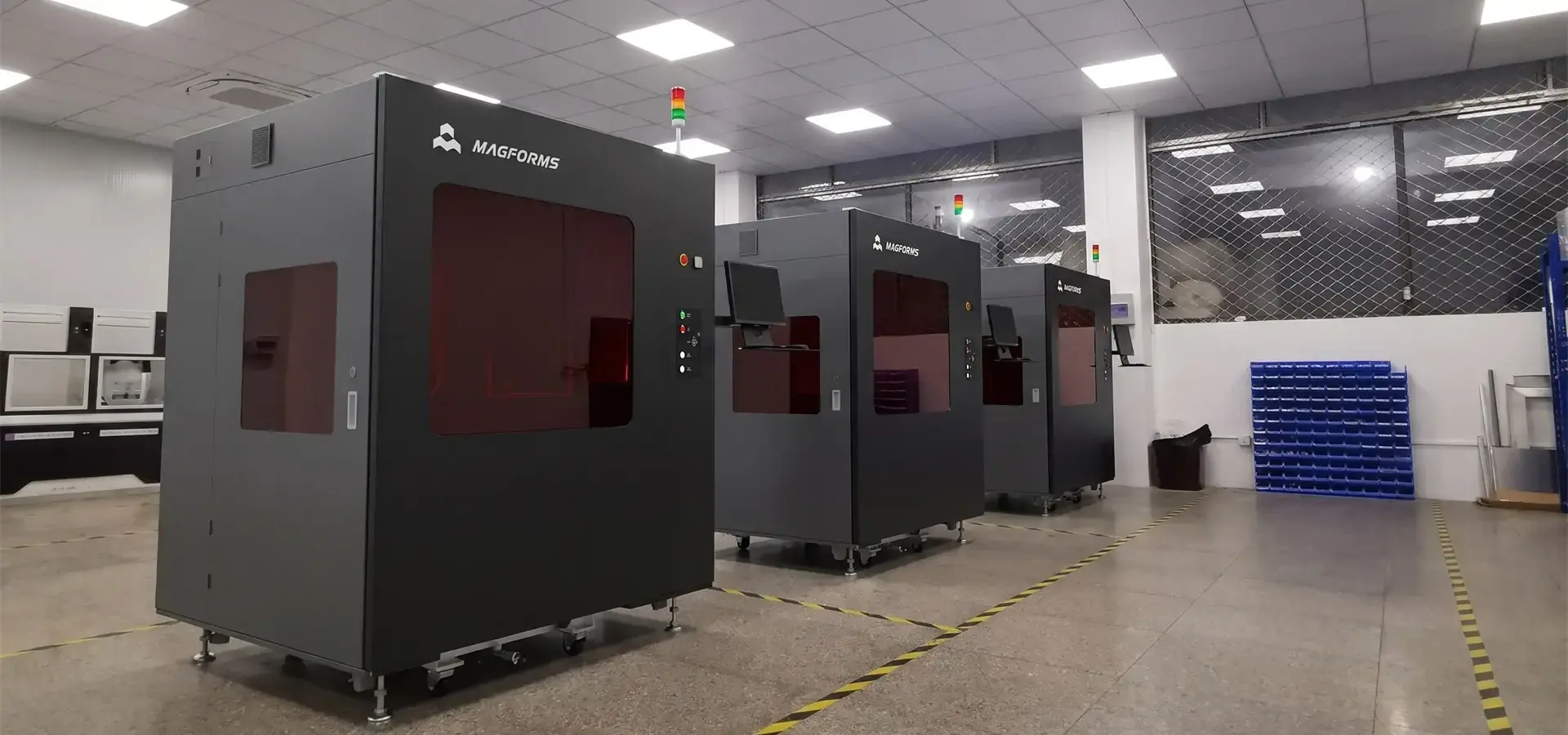
Key Technical Dimensions to Assess When Qualifying an Industrial SLA 3D Printer
Technical requirements directly affect your ability to meet applicable standards for medical device manufacturing. Understanding how machine capabilities relate to regulatory requirements helps purchasing teams make informed decisions that minimize the risk of costly qualification failures.
Precision, Resolution, and Reproducibility
Medical device components may require high dimensional accuracy and consistent part-to-part reproducibility, but the required tolerance depends on the device design, intended use, and applicable product specifications. For qualification purposes, the key is to demonstrate that the printing process can repeatedly produce parts within predefined acceptance criteria. You should verify that the Industrial SLA 3D Printer can repeatedly produce parts within the dimensional tolerance required by your application. Depending on part size and geometry, this may involve evaluating absolute dimensional accuracy for smaller features and proportional tolerance requirements for larger dimensions. This level of accuracy relies on a number of factors that work together, such as the shape of the laser spot, the accuracy of the galvanometer scan, the accuracy of the platform's placement, and the stability of the z-axis. Depending on the optical system and scanning strategy, some industrial SLA platforms may use different exposure or scanning parameters for contours and internal regions. Manufacturers evaluating different industrial SLA 3D printer systems should compare optical performance, build volume, dimensional capability, material compatibility, and long-term process stability. This approach can help balance feature resolution and build efficiency, depending on the specific optical system, scanning strategy, and part geometry. Another important factor is the mechanical stability and flatness of the build platform and supporting structure. Some large-format industrial SLA systems use low-expansion structural bases, such as granite or marble platforms, to improve overall mechanical stability and reduce the influence of thermal or environmental variation. The actual flatness and leveling requirements should be verified against the machine manufacturer's specifications and the dimensional requirements of the intended application. During long print jobs, this structural stability helps prevent part shifting and maintain part geometry throughout the build.
Material Compatibility and Biocompatibility
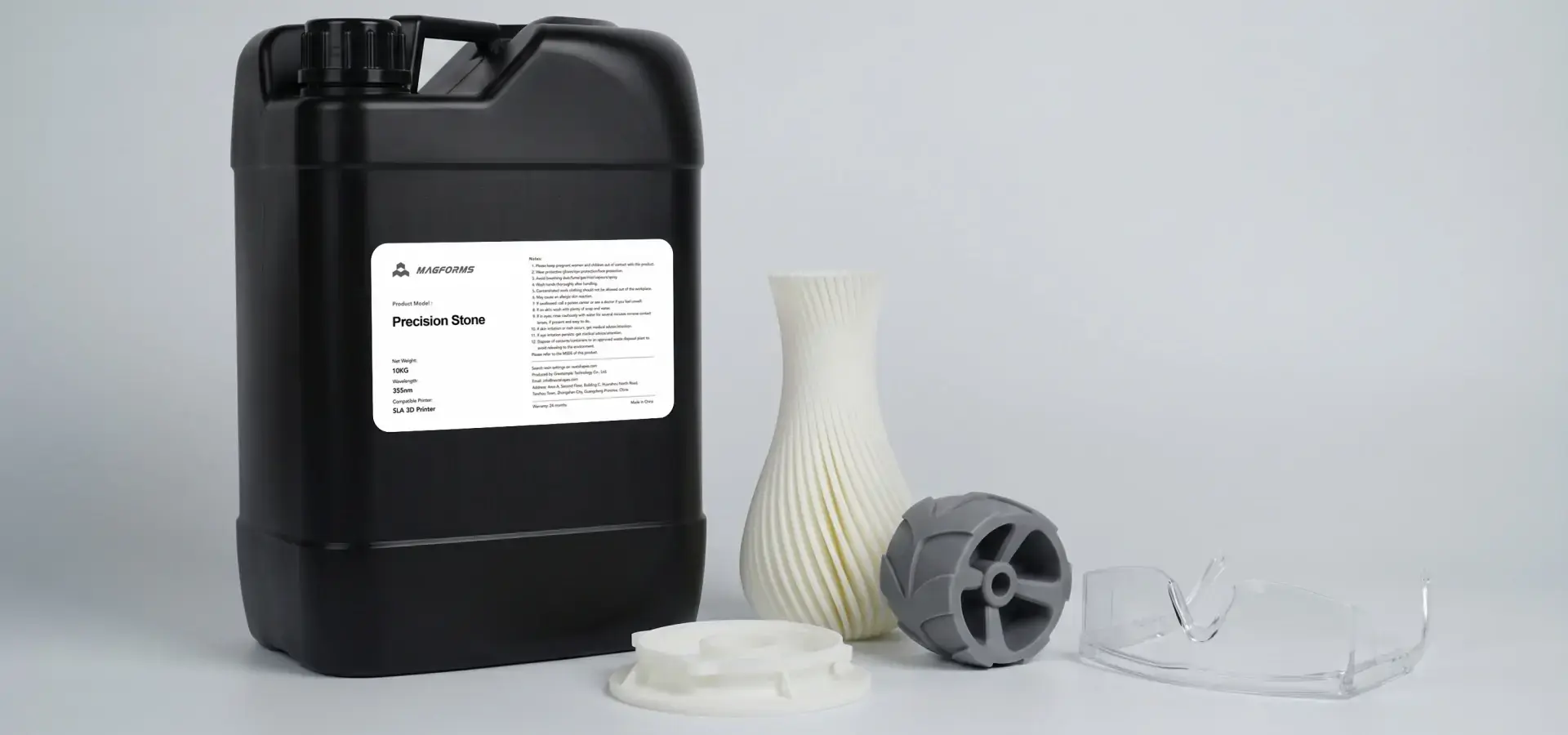
Within an ISO 13485 quality management system, materials used for medical device applications should be appropriately specified, controlled, and qualified for their intended use. For devices involving direct or indirect patient contact, biological evaluation should be performed using a risk-based approach consistent with applicable standards and regulatory requirements, including relevant parts of the ISO 10993 series where appropriate. For medical applications, the selected photopolymer resin should be evaluated according to the intended use of the final device. Depending on the nature and duration of patient contact, the biological evaluation may include endpoints such as cytotoxicity, sensitization, irritation, or other relevant assessments. Open-material systems without proprietary material lock-in can provide manufacturers with greater flexibility when evaluating photopolymer resins from different suppliers. However, every resin and associated printing process should still be qualified for the intended application, rather than assuming that material compatibility alone establishes regulatory suitability. This flexibility allows manufacturers to evaluate materials that meet their specific performance and biocompatibility requirements while potentially improving material sourcing flexibility and cost control. When qualifying materials, manufacturers should verify that curing behavior and resulting part performance remain sufficiently consistent across representative areas of the usable build volume. Resin temperature control can help maintain more consistent viscosity and processing conditions, which may improve recoating behavior and process stability. During material qualification, manufacturers should verify that resin temperature and other environmental conditions remain within the validated processing window to reduce the risk of part-to-part variation.
Production Throughput and Quality Control Balance
Medical device manufacturers are under constant pressure to balance quality control with production speed. Advanced industrial SLA systems may use optimized scanning strategies and process-control software to improve build efficiency while maintaining the process consistency required for qualified production. Any claimed productivity improvement should be evaluated using the actual machine configuration, resin, part geometry, layer thickness, and validated process parameters. High-performance galvanometer systems can support fast and precise laser positioning, helping industrial SLA printers balance scanning efficiency with feature accuracy. The effective production speed, however, depends on factors including scan strategy, laser power, resin properties, hatch spacing, layer thickness, and part geometry. Surface quality in an industrial SLA process is influenced by factors such as layer thickness, laser spot characteristics, scanning strategy, exposure parameters, part orientation, and post-processing. Optimizing these parameters can help reduce visible layer stepping and improve surface finish, potentially reducing the amount of manual finishing required. Improvements in process stability, scanning efficiency, and surface quality can contribute to lower per-part costs and shorter product development cycles. Such benefits are particularly valuable given the lengthy regulatory approval processes associated with bringing a medical device to market.
Step-by-Step Qualification Process: From Installation to Validation
A structured process is required to prepare a stereolithography system for regulated production. Understanding industrial stereolithography technology is an important first step before defining equipment qualification and process validation requirements. This process establishes confidence in the equipment's performance and creates the documentation trail required for regulatory compliance.
Installation Qualification and Environmental Setup
Installation Qualification (IQ) makes sure that your Industrial SLA 3D Printer comes with all of the required parts and is set up correctly according to the manufacturer's instructions. As part of this phase, the environmental controls must meet the needs of the equipment. Environmental conditions should be defined according to the equipment manufacturer's specifications, the requirements of the qualified resin, and the manufacturer's own quality procedures. Temperature and humidity should be monitored where they could affect resin behavior, equipment performance, or process reproducibility. You should document utility connections, verify that the optical protective cover and acrylic glass front door are correctly installed for user safety, and confirm that all electrical components are properly connected and secured. During IQ, your team should verify equipment and component identification, including serial numbers where applicable, to confirm that the installed configuration matches approved equipment documentation and is fully traceable. For IQ, manufacturers should retain relevant equipment documentation, including component specifications, serial numbers, installation records, calibration certificates where applicable, and supplier documentation. Systems using traceable components such as AOC lasers, Scanlab galvanometers, and other documented industrial components can support equipment traceability, but component selection alone does not replace equipment or process validation. This verification step helps ensure that the installed equipment configuration matches approved documentation and that any replacement or service components can be traced through the quality system.
Operational Qualification Procedures
Operational qualification (OQ) demonstrates that the industrial SLA printer operates as intended across its full working range. To do this, all operational parameters must be tested, such as the laser's power output at different settings, the galvanometer's positioning accuracy across the usable build area, the z-axis's repeatability over large travel ranges, and the consistency of the recoater blade during resin leveling operations. During these tests, the mechanical stability and flatness of the build platform should be evaluated against predefined acceptance criteria. The specific tolerance should be based on the equipment design, build size, and dimensional requirements of the qualified application. Calibration activities performed during OQ establish baseline performance data that serve as reference points for ongoing maintenance and verification. OQ acceptance criteria should define measurable requirements for critical operating parameters, which may include build platform positioning and repeatability, resin recoating consistency, liquid-level control where applicable, laser output stability, scan-field accuracy, and optical performance across the usable build area. These measurements establish a foundation for Performance Qualification and help identify equipment or process issues early, before they affect qualification success.
Performance Qualification and Dimensional Verification
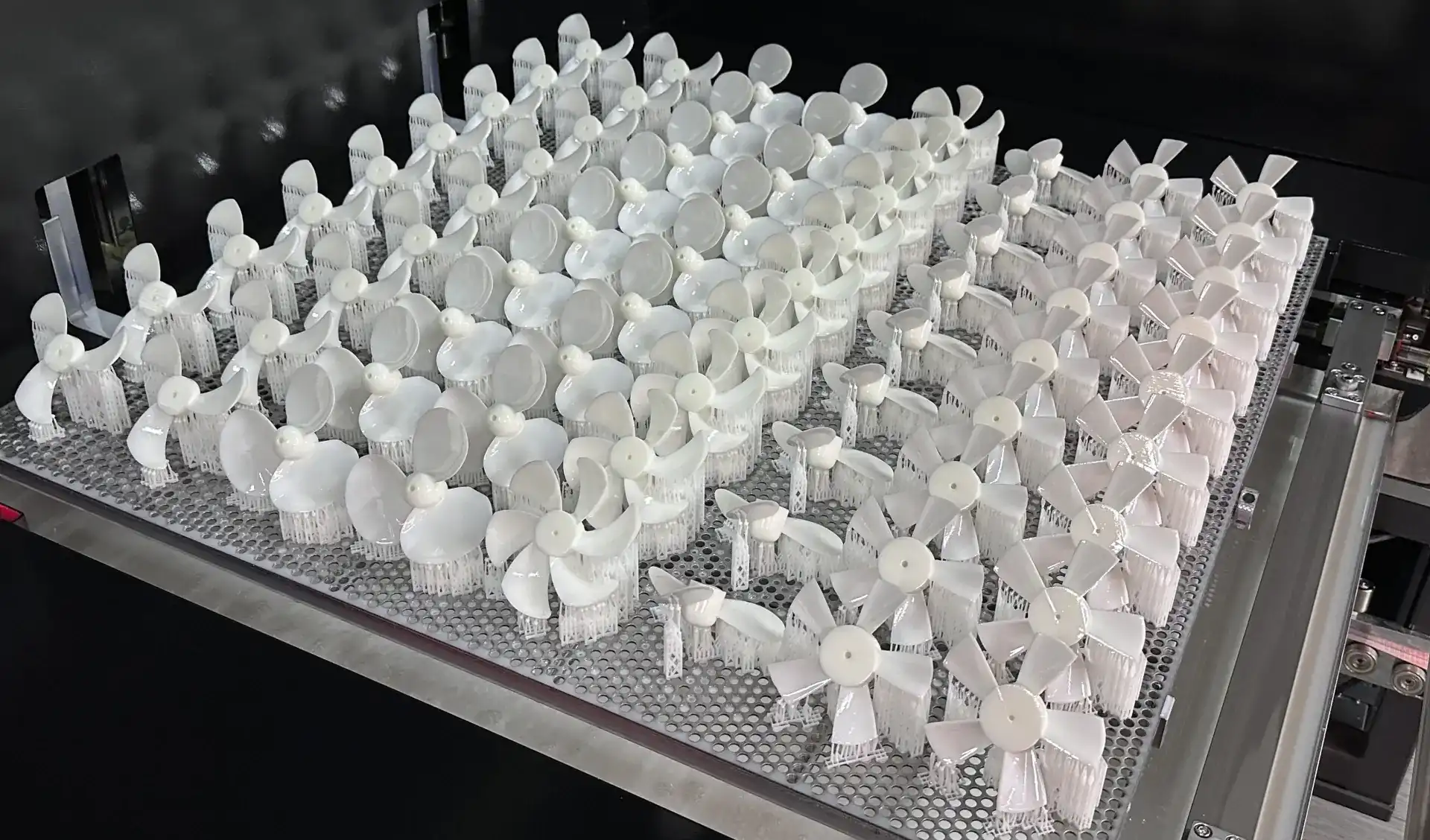
Performance Qualification (PQ) demonstrates that the industrial SLA 3D printer can consistently produce parts that meet predefined quality standards. This is done by printing test objects that are used to check the accuracy of the dimensions, the resolution of the features, the finish on the surface, and the mechanical properties. Representative PQ test parts may include dimensional test artifacts for evaluating accuracy, fine-feature geometries for assessing feature reproduction, and standardized mechanical test specimens. Where applicable, mechanical testing should follow a relevant and predefined test method appropriate for the material and intended application. During Performance Qualification (PQ), manufacturers establish and verify the process parameters required to consistently produce parts that meet predefined acceptance criteria. These parameters may include laser power, scanning speed, layer thickness, hatch spacing, part orientation, and post-processing conditions for each qualified material and application. Once qualified parameters are adopted for production, proposed changes should be assessed through a documented change-control process, with requalification or additional verification performed when the change could affect product quality or process performance. Advanced industrial SLA printers may provide stable optical systems, repeatable motion control, and software tools that support parameter development and process monitoring. These capabilities can help reduce unnecessary trial-and-error during PQ, although the extent of improvement depends on the specific machine, material, and application.
Ongoing Process Validation and Statistical Process Control
After initial qualification, validation is not a one-time event. Statistical Process Control (SPC) methods are used to continuously monitor the process and detect performance drift before it results in products that do not conform to specifications. Control charts or other appropriate statistical monitoring tools can be used to track critical quality characteristics, such as dimensional measurements, mechanical test results, and visual inspection findings. Calibration and verification intervals should be established based on risk, equipment criticality, usage frequency, historical performance, and applicable quality procedures. Measuring equipment, laser output, motion systems, and other critical process controls should be monitored according to a documented maintenance and calibration program. During this phase, professional after-sales support is critical. Clearly defined service response times can help minimize production downtime and support more predictable delivery schedules. Premium Industrial SLA 3D Printer suppliers offer full service agreements that include software updates, advice on how to replace consumables, and technical training that helps operators spot early signs of equipment wear and tear before they affect part quality or regulatory compliance.
Representative Qualification Scenarios and Best Practices
Implementation experiences in the real world can teach us a lot about the difficulties of making stereolithography systems suitable for making medical devices.
Dental Manufacturing: Improving Process Reproducibility Through Environmental Control
A representative dental manufacturing qualification scenario illustrates how environmental control and equipment stability can affect process reproducibility. In this type of application, manufacturers may evaluate dimensional consistency across repeated builds while controlling factors such as temperature, vibration, resin condition, and machine calibration. Initially, they experienced dimensional repeatability issues caused by insufficient environmental control. After implementing tighter environmental controls and vibration management, the manufacturer was able to improve dimensional repeatability across repeated validation builds and establish more consistent process performance. In this type of qualification scenario, equipment reliability and repeatable motion control can play an important role in improving process consistency. Industrial optical and motion-control components, such as Scanlab galvanometers and Panasonic servo motors, can support precise positioning and repeatable machine performance when properly integrated and maintained.
Surgical Instrument Manufacturing: Using Supplier Documentation to Support Validation
In a representative orthopedic device qualification scenario, a printer supplier may provide application data, recommended starting parameters, and material processing guidance to support the manufacturer's validation work. However, supplier data should be treated as supporting evidence rather than a substitute for the manufacturer's own equipment qualification and process validation. Suppliers with relevant material expertise may provide supporting documentation, including available biocompatibility data, mechanical property information, and processing guidance, to support the manufacturer's validation activities. With this head start, the manufacturer could focus internal validation efforts on verifying that the device met specific performance requirements rather than performing general material characterization. In situations where manufacturers need to evaluate an alternative resin supplier, an open-material system can provide additional sourcing flexibility, provided that the new material and associated process are evaluated through the appropriate change-control and validation procedures.
Service Bureau: Managing Multiple Qualified Production Workflows
A 3D printing service provider working with multiple medical device companies has established a qualified production platform capable of supporting several projects simultaneously under different quality systems. They selected industrial SLA equipment known for stability, including systems with 2 mm-thick metal enclosure panels, low-expansion marble platforms, and high-quality HIWIN linear guides designed to support long-term motion stability and repeatable positioning. They set up a validation system that treats each customer project as a separate "product line" with its own set of process factors. To speed up the onboarding of new projects, they used standard equipment qualification documents. The service provider identified predictable equipment performance and a documented preventive-maintenance program as essential because unplanned downtime could affect multiple customer projects simultaneously.
Beyond medical manufacturing, industrial SLA 3D printing applications demonstrate how large-format stereolithography can support industries ranging from automotive prototyping to tooling, design verification, and other demanding production workflows.
How to Choose the Right Industrial SLA 3D Printer for ISO 13485 Production
When buying things for regulated manufacturing environments, you need to carefully look at the technical capabilities, total cost of ownership, and supplier support infrastructure.
Critical Selection Criteria for Regulated Environments
The build volume should be selected according to the size of the intended parts, required production volume, support requirements, resin drainage, and the manufacturer's validated workflow. For batch production of smaller components, a larger build platform may improve throughput, provided that dimensional consistency can be maintained across the usable build area. The printer's resolution and dimensional performance should be evaluated against the most demanding tolerance requirements of the intended medical device. Equipment specifications provide an initial reference, but qualification should confirm actual performance across representative locations within the usable build volume. Equipment specifications provide an initial reference, but qualification should confirm actual dimensional performance across representative locations within the build volume. Material compatibility is an important strategic consideration that extends beyond the initial equipment purchase. Proprietary resin systems with material locks may offer process consistency, but they can also introduce supply chain risks and higher long-term costs. Open-material industrial SLA systems may provide broader flexibility when evaluating photopolymer resins formulated for compatibility with the printer's optical wavelength and processing conditions. Compatibility should be verified through controlled material and process qualification rather than assumed solely from the nominal laser wavelength. Service capabilities should be carefully evaluated. Reputable manufacturers should provide clearly defined service capabilities, including technical response processes, maintenance support, software updates, calibration assistance, and operator training. This responsiveness helps minimize production downtime and avoid missed delivery dates. Support packages that include machine maintenance, software updates, calibration services, and operator training reduce the internal resources required to maintain qualified status. They also ensure that your team has access to experts who can resolve issues promptly.
Evaluating Total Cost of Ownership
When using industrial SLA systems for medical device manufacturing, the purchase price is only one component of total cost. Over the equipment lifecycle, costs such as material consumption, waste rates, post-processing labor, maintenance, and calibration accumulate. High print success rates and lower material waste can be supported by stable equipment, controlled environmental conditions, consistent resin handling, and well-defined process parameters. These factors can contribute to lower per-part costs over time, even when the initial equipment investment is higher. A build platform design that facilitates resin drainage can reduce cleaning time and solvent consumption, resulting in cost savings that accumulate over thousands of production cycles. Energy consumption varies significantly among industrial SLA systems depending on heating efficiency, laser efficiency, and overall system design. Modern industrial SLA equipment may reduce operating costs through improved laser efficiency, thermal management, process stability, and lower maintenance requirements. The actual cost reduction should be evaluated based on energy consumption, maintenance records, material usage, and production throughput under the manufacturer's specific operating conditions. Over long production runs, improvements in energy efficiency, maintenance requirements, and process stability can have a meaningful impact on total operating costs.
Leveraging Supplier Relationships for Compliance Success
Selecting an industrial SLA 3D printer manufacturer with experience supporting customers operating under ISO 13485 quality management systems can help manufacturers better understand qualification requirements and reduce implementation risk. Suppliers familiar with regulated manufacturing can provide equipment documentation, material processing guidance, recommended starting parameters, and application engineering support. These resources can support the manufacturer's qualification activities, but the final validation and approval of the production process remain the responsibility of the medical device manufacturer. Companies like Magforms, which holds 22 patents and works with over 300 businesses globally, offer extensive industry experience to their customers. Their approach, which combines material development and equipment engineering, can support better understanding of material-machine interactions and provide a foundation for application-specific process optimization. Your ability to keep your qualified status across global manufacturing operations is affected by the geographic service coverage. For manufacturers operating across multiple regions, geographic service coverage, remote technical support capabilities, local service resources, and documented technology-transfer procedures should all be considered when evaluating a supplier. This is very important for companies that make medical devices in different countries with different regulatory oversight.
Conclusion
To qualify an Industrial SLA 3D Printer for use within an ISO 13485-controlled production environment, manufacturers need to define equipment requirements, establish appropriate qualification and validation procedures, and maintain ongoing process monitoring and documentation. To be successful, manufacturers should choose printers with documented performance, stable and repeatable operation, appropriate material compatibility, and suppliers capable of providing reliable technical support. The structured qualification process, including IQ, OQ, and PQ stages, generates the documentation required for regulatory compliance and increases confidence in production capability. When appropriately qualified and controlled, industrial stereolithography can support medical device manufacturers in accelerating product development and producing parts with repeatable quality while maintaining the documentation and process controls required by their quality management systems. Partnering with experienced suppliers that understand the unique challenges of regulated production transforms equipment procurement from a one-time transaction into a long-term business relationship that supports operational success.
FAQ
Can Any SLA Printer Meet ISO 13485 Compliance Requirements?
Not every SLA printer is equally suitable for use in a regulated manufacturing environment. A manufacturer must determine whether a specific system can be adequately qualified, controlled, and maintained for its intended application. A manufacturer must determine whether a specific system can be adequately qualified and controlled for its intended application. Industrial equipment with documented specifications, stable performance, traceable components, and reliable technical support can make the qualification process more manageable. Printers equipped with documented industrial components, such as Scanlab galvanometers and Panasonic servo motors, and supported by detailed equipment documentation and component traceability can provide a stronger foundation for equipment qualification and ongoing quality control.
Which Materials Are Essential for Medical Device Manufacturing?
For medical devices involving direct or indirect patient contact, photopolymer resins should be evaluated using a risk-based approach that considers the device's intended use, the type and duration of body contact, and the applicable regulatory framework. Relevant parts of the ISO 10993 series may be used to guide the biological evaluation. Biological evaluation should follow a risk-based approach, with relevant endpoints selected according to the nature of the device and its patient contact. Your Industrial SLA 3D Printer needs to be able to work with medical-grade resins that come from suppliers that can provide appropriate regulatory and technical documentation to support the manufacturer's material evaluation and submission strategy.
How Often Does Calibration Need to Occur?
Calibration frequency depends on equipment usage and applicable regulatory requirements. Calibration and verification frequency should be defined within the manufacturer's quality system based on equipment criticality, usage, historical stability, and risk. Certified reference artifacts such as gauge blocks can be used for periodic performance verification, while more comprehensive calibration and maintenance activities should follow a documented schedule. During periods of intensive production, manufacturers may choose to increase the frequency of performance verification based on risk and historical process data. Equipment with stable historical performance may support risk-based calibration intervals when justified by documented performance data, but any change to the established interval should be controlled through the manufacturer's quality procedures.
Partner with Magforms for Industrial SLA Solutions Supporting ISO 13485 Production
Magforms combines material expertise with industrial additive manufacturing technology to provide stereolithography solutions designed to support controlled and repeatable production workflows. Our industrial SLA systems use documented industrial components, including AOC lasers, Scanlab galvanometers, and Panasonic servo motors, to support stable and repeatable equipment performance. These characteristics can provide a stronger foundation for manufacturers conducting equipment qualification and process validation within an ISO 13485 quality management system. With 22 patents, 30 registered brands, and experience working with over 300 businesses globally, we understand the challenges of medical device manufacturing and how to address them. Our professional after-sales team aims to respond to technical support requests within 24 hours, helping customers address equipment issues and maintain stable production operations. Contact our experts at info@magforms.com to talk about your specific application needs and find out how Magforms can shorten the time it takes to qualify your equipment while lowering the total cost of ownership. You can find case studies and full product details for our industrial SLA 3D printer line at blog.magforms.com, where we maintain our technical information.
References
1. International Organization for Standardization. (2016). Medical devices — Quality management systems — Requirements for regulatory purposes (ISO 13485:2016). Geneva: ISO.
2. Food and Drug Administration. (2017). Technical Considerations for Additively Manufactured Medical Devices: Guidance for Industry and Food and Drug Administration Staff. Silver Spring: FDA Center for Devices and Radiological Health.
3. ASTM International. (2021). Standard Specification for Additive Manufacturing File Format (AMF) Version 1.2 (ISO/ASTM 52915-16). West Conshohocken: ASTM International.
4. Ventola, C.L. (2014). Medical Applications for 3D Printing: Current and Projected Uses. Pharmacy and Therapeutics, 39(10), 704-711.
5. Association for the Advancement of Medical Instrumentation. (2019). Additive manufacturing of medical devices — General principles of software validation, verification and acceptance (ANSI/AAMI/ISO 13485:2016). Arlington: AAMI Standards.
6. Popov, V.V., Muller-Kamskii, G., Kovalevsky, A., Dzhenzhera, G., Strokin, E., Kolomiets, A., & Ramon, J. (2018). Design and 3D-printing of titanium bone implants: brief review of approach and clinical cases. Biomedical Engineering Letters, 8(4), 337-344.

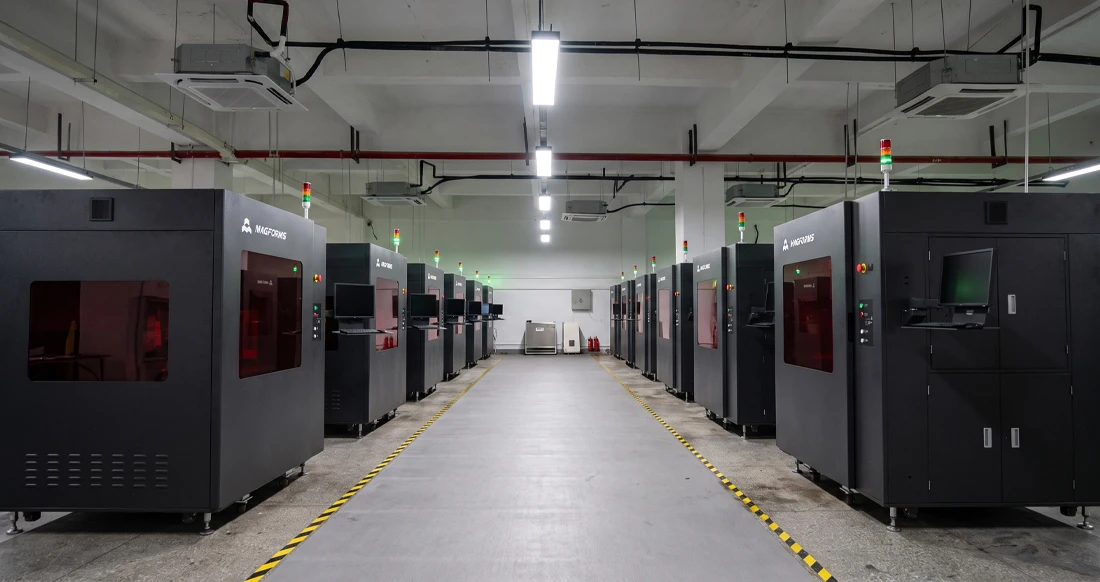
Magforms makes design and manufacture easier.
Popular Blogs
-
 Industry InsightsManufacturing Industry
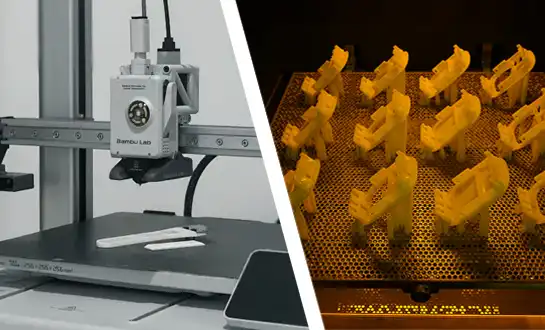
FDM vs. SLA Printer: Which Technology Is Right for Your Project?
-
 Industry InsightsManufacturing Industry
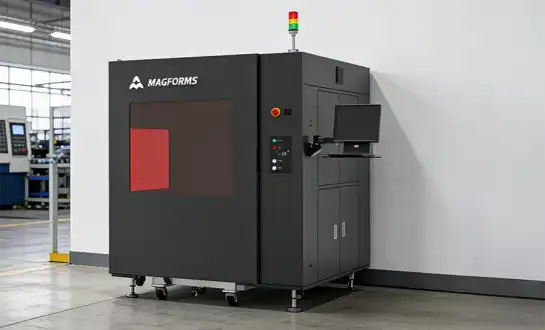
Top 5 Applications of Industrial 3D Printers in Manufacturing Today
-
 Industry InsightsManufacturing Industry
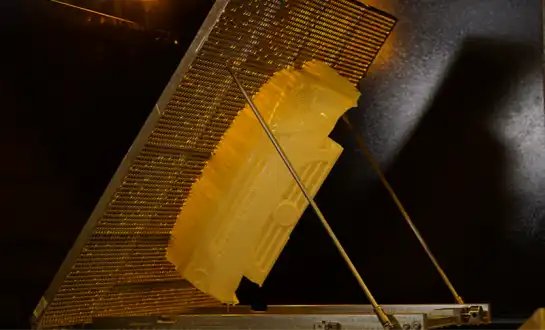
Why Stereolithography 3D Printers Are Unmatched for Microfluidic Device Prototyping?