What's Inside a High-End Industrial SLA 3D Printer?
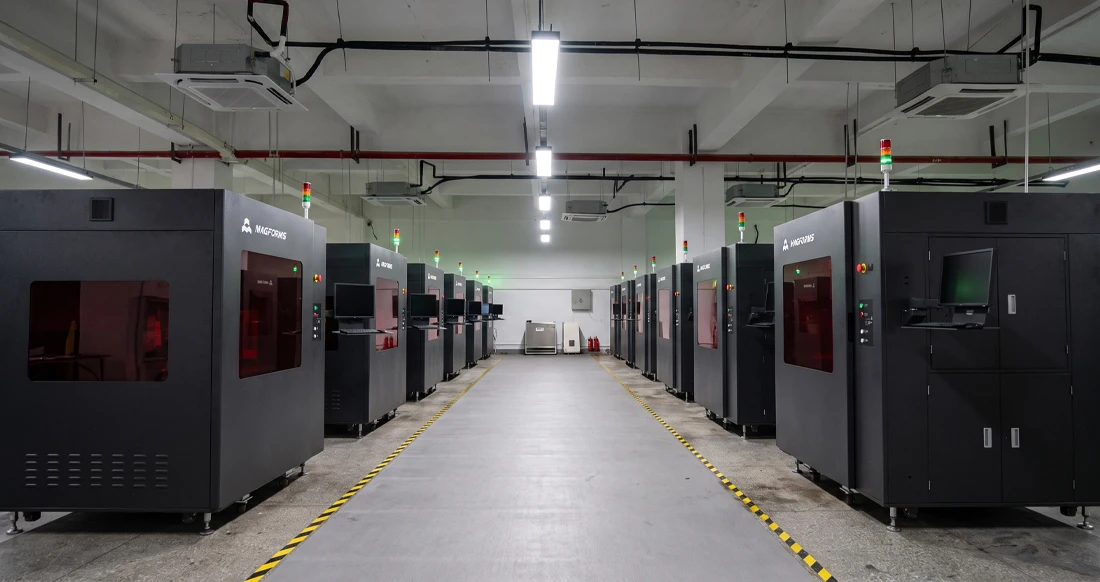
Walking through a professional manufacturing facility, you might wonder what separates an entry-level 3D printer from the powerhouse systems driving aerospace prototyping, automotive R&D, and medical device innovation. A high-end Industrial SLA 3D Printer assembly line integrates precision-engineered hardware, dedicated software, and structured quality-control processes to support high-resolution printing, smooth surface quality, and reliable production performance. Depending on the machine configuration, material, part geometry, and process parameters, industrial SLA systems can support demanding applications in aerospace prototyping, automotive R&D, medical and dental manufacturing, and other high-precision fields. These systems combine internationally recognized components such as AOC lasers and Scanlab galvanometers with controlled resin handling and workflow automation to address key challenges in demanding manufacturing environments.
Understanding the Core Components of a Tier-1 Industrial SLA 3D Printer Assembly Line
A professional Industrial SLA 3D Printer assembly process involves more than assembling individual components. Optical systems, motion systems, resin-handling mechanisms, software, and quality-control procedures must work together to support consistent printing performance.
Precision Laser and Optical Systems
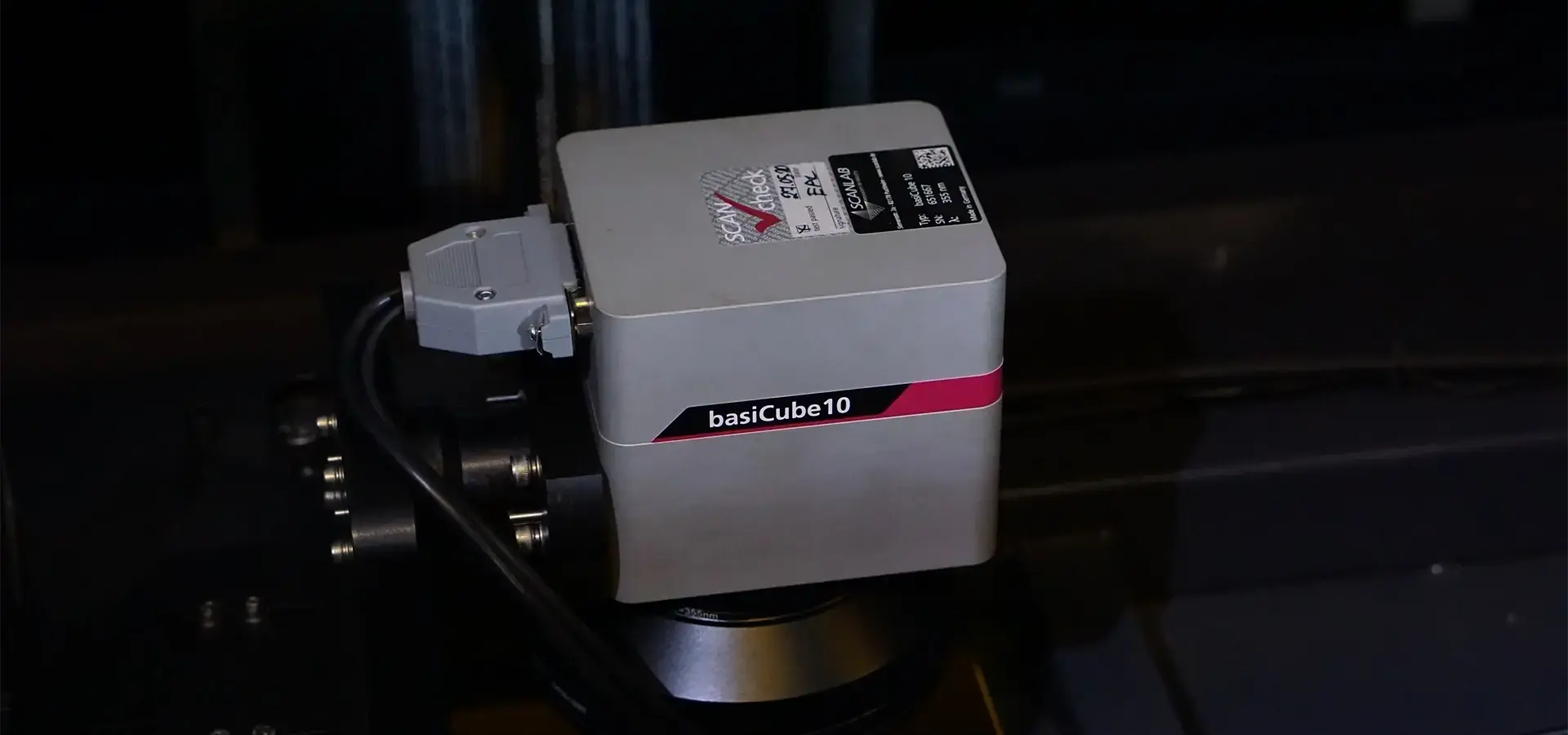
A laser is the most important part of any industrial SLA system. High-performance industrial SLA systems typically use UV lasers operating at a wavelength of 355 nm. For example, AOC laser systems can provide the stable optical output required for controlled photopolymerization and long-duration industrial printing. The laser system works together with high-precision Scanlab galvanometers to accurately direct the laser beam across the resin surface at high scanning speeds. Actual printing productivity, however, also depends on factors such as part geometry, exposure parameters, hatch spacing, layer thickness, and recoating time. A stable laser source, properly designed beam-expansion optics, and precision galvanometer scanning work together to maintain controlled energy delivery across the build area. Consistent beam quality and optical calibration are important for achieving uniform exposure and reducing geometric variation caused by optical distortion. Some industrial SLA systems use variable laser spot or adaptive scanning strategies to balance productivity and feature resolution during different stages of the build. When supported by the optical system, larger laser spots can be used for selected hatch or interior regions, while smaller spots can improve edge definition and fine-feature reproduction. This approach can improve overall productivity by matching exposure conditions to different geometric requirements.
Structural Framework and Motion Control
Long-term machine stability depends heavily on the rigidity, structural design, and alignment of the mechanical system. Depending on the machine design, industrial SLA systems may use rigid sheet-metal structures to improve overall stiffness. For example, Magforms uses machine panels with a thickness of 2 mm or more in selected structural areas to support long-term mechanical stability. These structural components help provide rigidity and a stable reference surface, supporting consistent mechanical alignment during long printing cycles. The Z-axis can incorporate HIWIN linear guides and precision transmission components to support stable and repeatable vertical movement of the build platform. Accurate Z-axis motion is particularly important for large-format builds, although final part deformation also depends on resin behavior, part geometry, support design, and process parameters. Panasonic servo motors can be used in key motion systems to support controlled platform movement and positioning. Combined with the machine's mechanical structure, feedback system, and calibration procedures, the motion system helps maintain repeatable positioning. High-precision motion control contributes to final dimensional performance, but printed-part accuracy also depends on factors such as resin shrinkage, laser exposure, scanning compensation, part orientation, support design, and post-processing. Final dimensional specifications should therefore be evaluated according to the manufacturer's stated machine performance and validated through representative sample testing.
Resin Management and Environmental Controls
Consistent resin conditions are essential for maintaining stable printing performance in industrial SLA production. Industrial SLA systems use resin-leveling and recoating mechanisms to maintain a controlled resin layer before each exposure cycle. Depending on the machine design, a stable and precisely machined reference surface can help maintain consistent layer formation across the build area. Temperature-management systems can help reduce the influence of ambient temperature changes on resin viscosity and flow behavior. Maintaining the resin within an appropriate operating range can improve process consistency, particularly in environments with significant temperature variation. An open-material architecture can provide compatibility with a broad range of commercially available photopolymer resins designed for laser-based SLA systems. However, successful use of third-party materials may still require validation of exposure parameters, curing behavior, viscosity, and process settings. This gives operators greater flexibility to evaluate engineering, transparent, high-temperature, tough, and flexible photopolymer materials based on application requirements. This flexibility can reduce dependence on proprietary material ecosystems, giving manufacturers more freedom to evaluate alternative resins based on performance, availability, and total material cost.
Software Intelligence and Monitoring
Software plays a central role in translating machine capabilities into a controlled and repeatable printing workflow. The Magforms iBuild 2.0 interface is designed to simplify key workflow steps such as slicing, support generation, and print-job management. Advanced industrial SLA software can optimize scanning paths, exposure parameters, and support strategies based on part geometry and process requirements. Features such as efficient hatch generation and path planning can reduce unnecessary laser travel and improve production efficiency, while actual performance gains depend on the specific machine configuration and application. Real-time monitoring can track key operating parameters such as resin level and system status, helping operators identify abnormal conditions before they develop into larger production issues. These integrated components create a cohesive manufacturing environment, combining precise hardware and intelligent software to give procurement teams the reliability they require in industrial SLA 3D printer solutions.
How Does Industrial SLA 3D Printing Work in a Tier-1 Environment?
Buyers can better understand why stereolithography performs well in demanding applications by understanding the fundamentals of the SLA 3D printing process.
Layer-by-Layer Photopolymerization Process
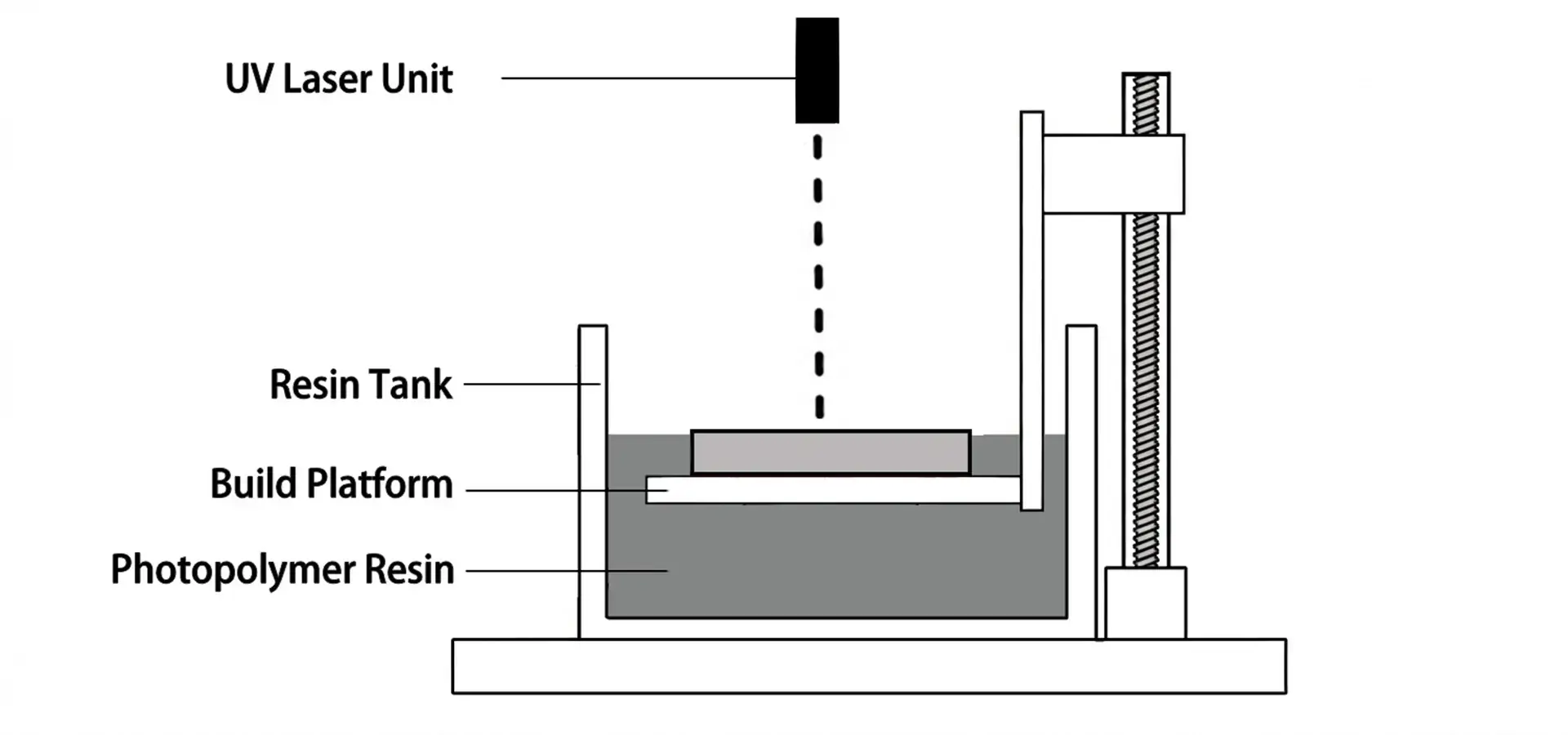
In a laser-based SLA system, a controlled layer of liquid photopolymer resin is prepared on the build surface. A UV laser selectively scans the cross-section of the part, initiating photopolymerization and converting the exposed resin into a solid layer. After each layer is completed, the build platform moves by the specified layer increment, and the recoating system prepares a fresh and controlled resin layer before the next exposure cycle begins. Industrial SLA commonly uses layer thicknesses such as 0.05 mm, 0.10 mm, or other settings depending on the material and required balance between surface quality and productivity. Combined with precise laser scanning, SLA can reproduce fine details, small text, textures, and complex geometries with smooth surfaces that may require less finishing than comparable parts produced with technologies such as FDM or SLS, depending on the application and process settings.
Post-Processing and Finishing Workflow
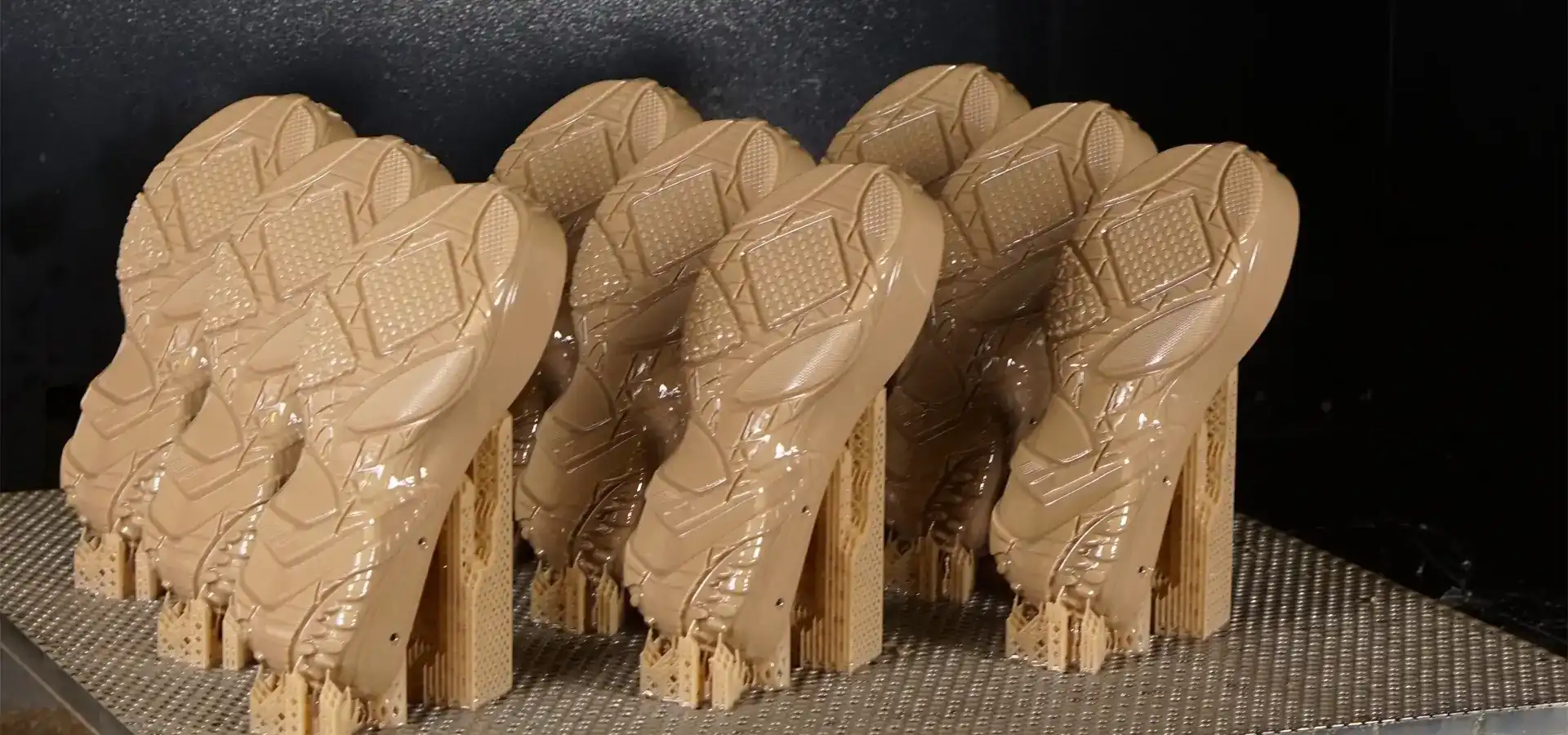
Depending on the machine design, some industrial SLA systems use dedicated platform-handling structures that allow the build platform to be positioned at an angle after printing, helping uncured resin drain back into the resin tank and reducing material loss during part removal. In some machine designs, the build platform can also be repositioned to improve the drainage of residual uncured resin before the washing stage, helping reduce material waste and simplify downstream cleaning. After printing, parts are typically cleaned using a compatible solvent or dedicated washing process, depending on the resin system. They may then undergo post-curing under controlled UV and, where applicable, thermal conditions to achieve the material properties specified for the application. Post-curing further advances the polymerization and cross-linking process, helping the material achieve the mechanical, thermal, and chemical properties specified for the particular resin system.
Material Versatility Across Applications
Industrial SLA systems can process a range of photopolymer materials formulated for different mechanical, thermal, visual, and application-specific requirements. ABS-like and PP-like photopolymer resins can be used for functional prototypes and selected testing applications where properties such as toughness, stiffness, or flexibility are required. High-temperature resins with elevated heat-deflection temperatures can be used for applications such as thermal testing fixtures, molds, tooling, and prototype components exposed to elevated temperatures. Aerospace applications may also include prototypes, tooling, and non-flight-critical components, subject to material qualification and application-specific requirements. Transparent photopolymer materials can be used to produce visual prototypes, fluid-flow models, and selected lens or optical-component prototypes. Final optical clarity depends not only on the resin but also on printing parameters, surface finishing, polishing, and post-processing requirements. For medical and dental applications, appropriately qualified biocompatible materials may be used for applications such as surgical guides, dental models, and selected dental appliances. Regulatory compliance depends on the specific material, intended use, manufacturing workflow, and applicable regional requirements. This material versatility makes industrial stereolithography suitable for applications ranging from concept models and functional prototypes to tooling, patterns, and selected end-use components where material performance and process validation support the intended application.
👉 To see how industrial SLA technology is applied across different manufacturing scenarios, explore our industrial 3D printing application cases.
Industrial SLA 3D Printer vs Competing Technologies: What Sets Tier-1 Lines Apart?
The people who make decisions about purchases have to compare SLA to other additive technologies so that the capabilities match the needs of the application.
Accuracy and Surface Quality Advantages
Industrial SLA is generally known for producing smoother surfaces than powder-bed processes such as SLS. Actual surface roughness depends on factors including resin formulation, layer thickness, part orientation, scanning strategy, and post-processing. Although SLA can reduce the amount of finishing required for many applications, support removal, cleaning, post-curing, or additional surface finishing may still be necessary. FDM can provide strong functional performance and material versatility, but its layer-based extrusion process may require additional optimization or finishing when very smooth surfaces and fine feature reproduction are required. DLP-based printing can offer high productivity by curing an entire projected cross-section at once. However, when build areas become larger, maintaining consistent optical intensity and pixel resolution across the entire projection field can become an important engineering challenge. PolyJet offers multi-material and high-detail capabilities, although its proprietary materials and operating costs can be higher depending on the system configuration and application. Stereolithography is particularly well suited to applications that require fine detail, smooth surfaces, and controlled dimensional accuracy, such as dental models, prototype housings, visual prototypes, molds, patterns, and other precision components. The suitability of SLA should be evaluated according to the specific material and performance requirements of the application.
Throughput and Scalability Considerations
SLS and Multi Jet Fusion are well suited to producing multiple functional parts in a single build without dedicated support structures, making them effective options for batch production and selected production applications. SLA offers a good balance between accuracy and speed. Optimized spot strategies and scan-path planning can improve productivity while maintaining the dimensional and feature-quality requirements of the intended application. Large-format industrial systems such as the Magforms SL800 Industrial SLA 3D Printer, with a build volume of up to 800 × 800 × 550 mm, can produce large parts or multiple smaller components in a single build, helping increase overall batch productivity.
Total Cost of Ownership Analysis
Although high-end SLA systems require significant upfront investment, an open material architecture can reduce long-term operating costs. Operators are not locked into a single vendor for proprietary resins, giving them greater negotiating power and flexibility to source materials at competitive prices. The service life and maintenance requirements of components such as lasers and galvanometer systems should be evaluated according to manufacturer specifications, operating conditions, and maintenance practices. High-quality optical components can contribute to long-term system reliability when supported by appropriate calibration and preventive maintenance. Industrial SLA equipment may also incorporate established electrical and control components, such as Schneider Electric components, together with dedicated UV light sources for applicable post-curing processes. The reliability of the complete system depends on component selection, electrical design, assembly quality, and maintenance procedures. An Industrial SLA 3D Printer can offer a competitive total cost of ownership for low- to medium-volume, high-precision applications when equipment, materials, maintenance, labor, and production efficiency are evaluated together.
Key Factors to Consider When Choosing a Tier-1 Industrial SLA 3D Printer
To choose the right system, you need to make sure that the technology requirements are in line with your business goals and your budget.
Build Volume and Part Size Requirements
Evaluate the average part size and the batch quantity required. Smaller industrial SLA systems, such as 300 × 300 × 300 mm platforms, can be suitable for detailed prototypes and lower-volume applications, while larger 600 mm or 800 mm-class systems provide the capacity needed for large-format components, automotive mock-ups, housings, and batch production. Keep in mind that bigger platforms need tighter limits for flatness. As build platforms become larger, maintaining mechanical alignment and surface flatness becomes increasingly important. Buyers should review the manufacturer's specifications for the relevant machine components and validate large-format performance using representative parts.
Material Compatibility and Application Fit
Evaluate whether the application requires general-purpose photopolymer resins or specialized materials designed for specific mechanical, thermal, biocompatibility, or environmental requirements. Medical and dental manufacturers may require materials with documented biocompatibility, traceability, and application-specific regulatory compliance. Aerospace applications may require materials with specific thermal, flame-retardant, mechanical, or environmental performance characteristics, depending on the intended use and qualification requirements. Using an open-material platform that supports validated third-party resins without proprietary material locks can provide greater flexibility in material selection, testing, and cost management.
Automation and Integration Capabilities
Consider how the system will integrate into your overall workflow. Does the software support common file types such as STL, OBJ, and STEP? For larger manufacturing environments, buyers should also consider whether the system can fit into existing digital workflows for job tracking, production management, and quality documentation. Depending on the production setup, additional automation can include resin handling, build-platform cleaning, material preparation, and other workflow-supporting processes. The appropriate level of automation depends on production volume, part size, and labor requirements.
After-Sales Support and Service Infrastructure
Equipment uptime can have a direct impact on production efficiency, delivery schedules, and overall operating costs. Evaluate the manufacturer's support system, including response time, spare parts availability, remote diagnostics, and on-site service coverage. Magforms provides technical after-sales support with a stated response target of within 24 hours, helping customers address equipment and process issues as efficiently as possible. Actual resolution time may depend on the nature of the issue, spare-parts availability, and whether remote or on-site support is required. Your team can make better use of the system through technical training, application guidance, and ongoing software updates.
When these factors align with business and application requirements, an industrial SLA investment can help shorten development cycles, reduce material waste, and improve consistency in selected manufacturing workflows.
Procurement Insights: Where and How to Buy Tier-1 Industrial SLA 3D Printers
To protect your investment, conduct thorough research before selecting a supplier and agreeing to purchase terms.
Identifying Reputable Suppliers and Manufacturers
Look for manufacturers with an established market presence, verifiable intellectual property, relevant quality-management practices, and documented experience in industrial additive manufacturing. Magforms reports holding 22 patents and 30 registered trademarks. Intellectual property, together with product documentation, manufacturing capability, customer references, and long-term service capacity, can provide useful information when evaluating a supplier's technical and commercial capabilities. Magforms reports serving customers in multiple countries and working with more than 300 businesses worldwide. Buyers can use factors such as international market presence, customer references, industry experience, and service infrastructure as part of their supplier evaluation process. Visiting major additive manufacturing exhibitions and speaking directly with equipment suppliers can also help buyers compare machine capabilities, review sample parts, and evaluate technical support before selecting an Industrial SLA 3D Printer.
Validating Technical Claims Through Samples
Ask for sample parts that will be printed on the target system with the materials you want to use. Measure dimensional accuracy with calipers or a coordinate measuring machine (CMM), inspect surface finish, and, where required, test mechanical properties. Reputable suppliers should be prepared to support this validation process with representative samples, measurement data, and application-specific technical information.
Understanding Pricing and Financing Options
Industrial SLA system pricing varies significantly depending on build volume, laser configuration, automation level, software, installation requirements, and service coverage. Buyers should request detailed quotations based on their required machine configuration rather than relying on broad market price ranges. Operating costs should include resin consumption, material waste, maintenance, replacement parts, labor, energy use, and any required software or service agreements. Resin pricing can vary substantially depending on chemistry, performance requirements, supplier, and purchase volume. For multi-machine deployments, buyers can also discuss volume pricing, phased purchasing plans, financing options, or service agreements with the supplier.
Ensuring Supply Chain Continuity
Ensure that the supplier maintains adequate stock of critical wear parts, such as recoater blades, resin vats, build platforms, and optical windows. Delays in obtaining these parts can cause costly equipment downtime. Buyers should also evaluate the supplier's spare-parts availability, logistics capability, and ability to support their geographic region. Suppliers that provide equipment together with compatible materials, software, and technical support can simplify procurement, reduce the risk of workflow or material compatibility issues, and streamline supply-chain management. These buying considerations can help move the evaluation process from initial interest to a more informed investment decision, ensuring that the selected system supports both immediate application needs and long-term growth plans.
Conclusion
Precision optics, smart automation, strong mechanical design, and open material environments all come together in a Tier-1 Industrial SLA 3D Printer production line. Knowing what's inside, like AOC lasers, Scanlab galvanometers, Panasonic servo systems, and dedicated printing software, helps procurement workers make decisions that are in line with factory goals. These systems can help manufacturers improve dimensional consistency, reduce material waste, shorten development cycles, and support a broad range of prototyping, tooling, engineering, medical and dental, and aerospace-related applications. Final performance and suitability depend on the specific machine, material, process parameters, and application requirements. Companies that work with the right suppliers get not only tools but also a competitive edge in an industrial world that is changing all the time.
FAQ
How does dimensional accuracy compare between industrial SLA and CNC machining?
Depending on the machine, material, part geometry, and process conditions, industrial stereolithography can achieve dimensional performance suitable for many form, fit, and functional evaluations. Buyers should refer to the specifications of the target system and validate critical dimensions using representative parts. SLA is particularly useful for producing complex geometries that may be difficult, time-consuming, or costly to manufacture using conventional subtractive processes. In many workflows, SLA complements CNC machining rather than replacing it.
What is the expected lifespan of the laser in a high-end system?
The expected service life of an industrial SLA laser depends on the laser model, operating conditions, power settings, maintenance practices, and manufacturer specifications. Buyers should request documented service-life and maintenance information for the specific laser configuration used in the target system. Regular laser power verification and calibration can help maintain consistent exposure conditions and stable part quality throughout the operating life of the system. This helps maintain consistent part quality, simplifies production planning, and lowers the total cost of ownership.
Can printed parts withstand outdoor or harsh environments?
UV-stabilized resin formulations and protective coatings applied after post-processing can improve environmental resistance. Long-term UV exposure can cause degradation in many standard photopolymer materials. UV-stabilized resin formulations and protective coatings can improve environmental resistance, depending on the application. For accelerated weathering evaluation, standards such as ASTM G154 may be relevant for assessing the effects of fluorescent UV exposure and moisture on nonmetallic materials. Additional testing may be required for temperature cycling, moisture exposure, chemical resistance, or other environmental conditions. In industrial workflows, SLA is often used for patterns, tooling, prototypes, and other applications where long-term outdoor exposure is not the primary performance requirement.
Partner with Magforms for Your Industrial SLA 3D Printer Needs
Choosing the right Industrial SLA 3D Printer supplier has a direct effect on how well your products turn out. Magforms combines industrial 3D printing equipment design with application-focused material compatibility and technical support to provide integrated SLA solutions for a range of manufacturing and prototyping requirements. Its systems are designed to reduce workflow complexity and provide greater flexibility in equipment and material selection. Our systems use well-known components from around the world, such as AOC lasers, Scanlab galvanometers, Panasonic servos, and Schneider Electric components, which contribute to the stability, repeatability, and precision of the overall system. With more than 300 reported business customers worldwide, 22 patents, and 30 registered trademarks, Magforms supports customers through technical consultation and after-sales service, with a stated initial response target of within 24 hours for support requests. Our open material architecture and easy-to-use iBuild 2.0 software let you meet changing needs, whether you require a compact system for detailed prototype and dental-model applications or a large-format platform for automotive prototyping and industrial manufacturing workflows. To learn more about Magforms Industrial SLA 3D Printer systems, material compatibility, and industrial applications, contact the Magforms team at info@magforms.com or visit the Magforms blog for additional technical resources and application insights.
References
1. Gibson, I., Rosen, D., & Stucker, B. (2021). Additive Manufacturing Technologies: 3D Printing, Rapid Prototyping, and Direct Digital Manufacturing (3rd ed.). Springer.
2. Jacobs, P. F. (1992). Rapid Prototyping & Manufacturing: Fundamentals of Stereolithography. Society of Manufacturing Engineers.
3. Melchels, F. P. W., Feijen, J., & Grijpma, D. W. (2010). A review on stereolithography and its applications in biomedical engineering. Biomaterials, 31(24), 6121-6130.
4. Ligon, S. C., Liska, R., Stampfl, J., Gurr, M., & Mülhaupt, R. (2017). Polymers for 3D Printing and Customized Additive Manufacturing. Chemical Reviews, 117(15), 10212-10290.
5. Quan, H., Zhang, T., Xu, H., Luo, S., Nie, J., & Zhu, X. (2020). Photo-curing 3D printing technique and its challenges. Bioactive Materials, 5(1), 110-115.
6. Stansbury, J. W., & Idacavage, M. J. (2016). 3D printing with polymers: Challenges among expanding options and opportunities. Dental Materials, 32(1), 54-64.

Magforms makes design and manufacture easier.
Popular Blogs
-
 Industry InsightsManufacturing Industry
FDM vs. SLA Printer: Which Technology Is Right for Your Project?
-
 Industry InsightsManufacturing Industry
Top 5 Applications of Industrial 3D Printers in Manufacturing Today
-
 Industry InsightsManufacturing Industry
Why Stereolithography 3D Printers Are Unmatched for Microfluidic Device Prototyping?