How to Reduce Support Marks on an Industrial SLA 3D Printer?
Support marks are one of the common surface quality challenges in stereolithography additive manufacturing. When using an Industrial SLA 3D Printer, visible marks left after support removal can affect cosmetic appearance, surface quality, and post-processing efficiency, especially for high-precision prototypes, functional parts, and low-volume production applications. The good news is that support marks can be significantly reduced through a combination of optimized support strategies, accurate machine calibration, suitable resin selection, and proper post-processing methods. At Magforms, we focus on improving the entire stereolithography workflow, helping manufacturers in automotive, aerospace, medical devices, and consumer electronics achieve consistent surface quality across complex geometries.
👉 What is SLA 3D printing technology
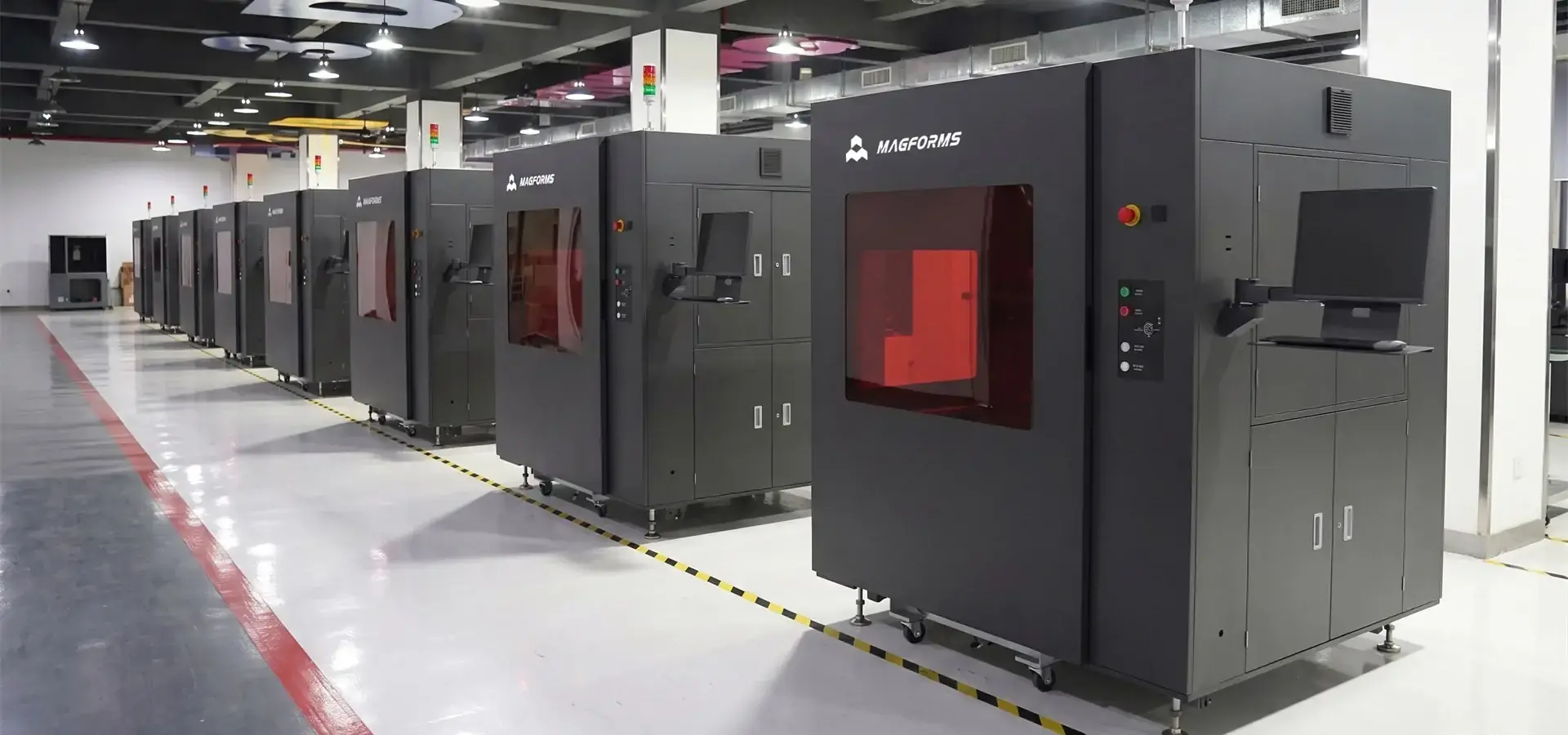
Root Causes and Principles to Minimize Support Marks
To minimize support marks, it is important to understand how photopolymer resin layers bond during laser curing and how mechanical forces during printing and support removal influence surface quality. The visibility of support marks is mainly affected by three factors: support design strategy, printer precision, and resin characteristics.
Support Design Strategy
The main challenge in design is to cut down on touch points without making the part less stable. Engineers can change the support geometry in modern slicing software based on the part's weight, overhang angles, and surface finish needs. Using optimized contact tips with smaller diameters can reduce visible support marks, but the size must be balanced with structural strength to maintain printing reliability.
Magforms printers use advanced support generation algorithms that are built into our iBuild 2.0 software. This lets our software automatically find the best mix between structural stability and minimal surface contact. The system looks at the geometry and offers contact locations that stay away from important areas. This helps reduce manual support editing time and improves workflow efficiency compared with conventional slicing processes.
Printer Calibration and Mechanical Precision
Accurate control of layer thickness, laser exposure, and Z-axis movement directly influences printing consistency and surface quality. When an Industrial SLA 3D Printer maintains high positioning accuracy through a precision servo system, linear motion components, and proper calibration, each layer can be accurately positioned, reducing dimensional variation and surface defects around support areas.
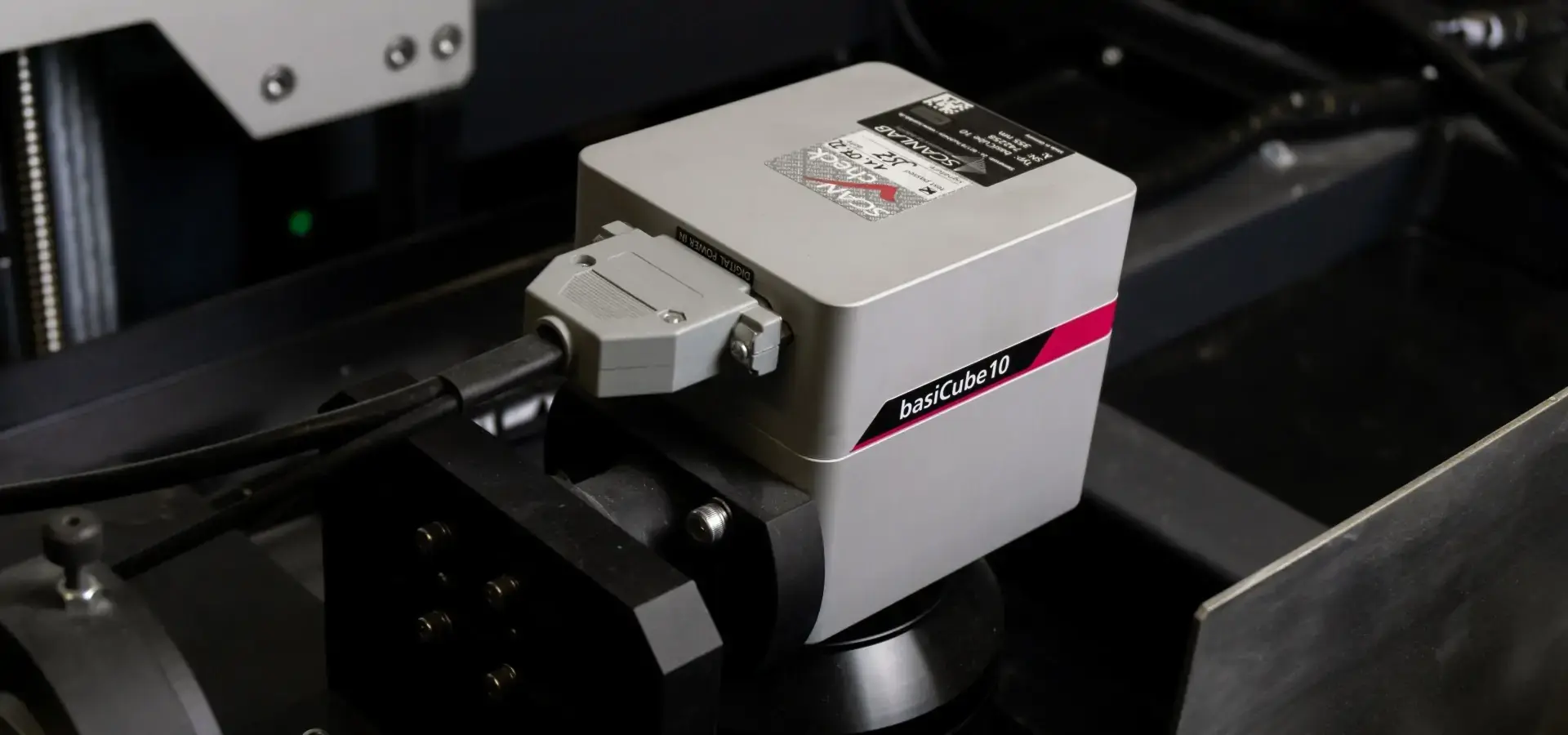
The laser scanning system also plays an important role in curing consistency. High-quality galvanometer systems and stable laser output help maintain uniform energy distribution during scanning, improving detail reproduction and surface consistency around complex structures and support contact areas.
Magforms industrial SLA systems integrate components such as AOC laser sources and Scanlab galvanometer systems to achieve stable optical performance for demanding industrial applications.
Material Selection and Resin Chemistry
The choice of photopolymer resin directly influences support removal behavior and final surface quality. Resin characteristics such as toughness, elongation at break, curing performance, and dimensional stability determine how easily supports can be removed without damaging the part surface. Engineering resins with balanced mechanical properties can provide sufficient strength during printing while allowing cleaner separation between support structures and finished surfaces. Magforms adopts an open material system that supports a wide range of photopolymer resins designed for 355nm UV laser curing. This allows manufacturers to evaluate different formulations based on application requirements, including mechanical performance, appearance, and post-processing needs.
Temperature stability is another important factor in industrial SLA printing. Maintaining a stable resin temperature helps keep viscosity within a suitable processing range, supporting consistent recoating and curing behavior. Magforms equipment incorporates temperature management solutions to help maintain stable resin conditions during production. Consistent resin behavior reduces variations in layer formation and helps minimize excessive bonding between supports and part surfaces.
Effective Techniques to Reduce Support Marks on Industrial SLA Prints
A comprehensive approach that includes high-tech tools, improved methods, and regular upkeep is what makes for better surface quality. Here's how the best manufacturers always get clean results.
Advanced Support Design Tools
Today's planning software does more than just simple auto-support generation. Engineers can now use parameters to control the tip shape, contact width, and penetration depth. Supports with tapered contact points can concentrate separation forces in controlled areas, making removal cleaner and reducing visible marks.
Strategic Part Orientation
Positioning parts correctly is one of the most effective ways to reduce unnecessary support structures. By selecting suitable build orientations, manufacturers can minimize support contact areas, reduce peel forces, and improve resin drainage during the printing process. Common orientations may range from approximately 15° to 45° depending on part geometry, layer height, support requirements, and surface quality expectations. This approach is especially useful for parts with large flat surfaces, complex curves, or internal features. When printing prototypes such as medical device components or aerospace connectors that require precise assembly, strategic orientation combined with accurate platform calibration helps maintain dimensional consistency throughout the build volume.
Post-Processing Techniques
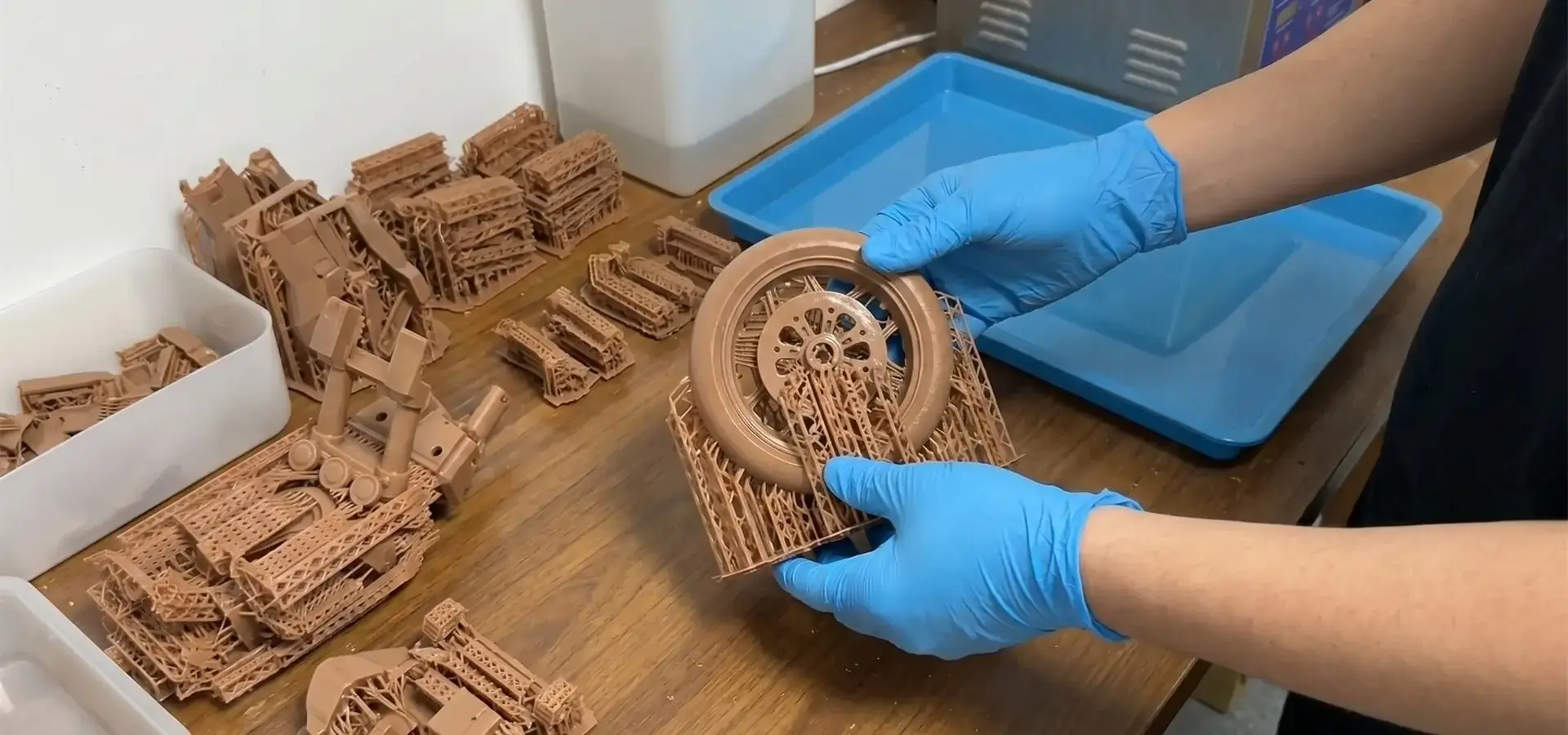
Careful post-processing is still needed even when supports are improved. To reduce tearing, remove the part by hand using flush cutters that are positioned parallel to the surface. Once the support structures are removed, remaining marks can be reduced through progressive sanding.
Some types of resin can lose their texture when they are chemically smoothed with solvent vapor exposure, but the process needs to be carefully controlled to keep the dimensions from changing. On the other hand, UV spot curing can make thin sections stronger near where they used to be supported before they are mechanically finished.
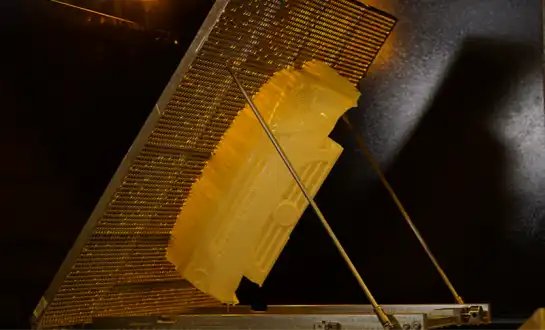
This process is sped up by the Magforms-supported platform design. The platform holder has two support rods on each side that lift the build plate at an angle. This lets the extra resin drain back into the vat quickly. The platform can even be turned upside down to help the water drain faster. This cuts down on cleaning time and keeps uncured resin from getting in the way of removing the support.
Routine Printer Maintenance
Systematic cleaning and calibration procedures are essential for maintaining the mechanical accuracy and long-term stability of an Industrial SLA 3D Printer. Magforms uses precision components such as HIWIN linear guides and industrial motion systems to support smooth Z-axis movement. Regular inspection and maintenance help ensure consistent positioning accuracy and minimize mechanical wear over extended production cycles.
Layer consistency is also influenced by the condition of the recoating system. When recoater components become worn or damaged, resin distribution may become uneven, affecting layer formation and overall print quality. Magforms industrial SLA systems use rigid mechanical structures, including thick metal enclosures and low-expansion machine bases, to improve structural stability during long production runs. This helps reduce the influence of environmental changes and maintain reliable positioning performance.
Magforms provides technical support and maintenance guidance to help customers keep equipment operating within recommended conditions. Regular calibration and preventive maintenance help preserve printing consistency and reduce quality variations over thousands of production hours.
Comparing Industrial SLA 3D Printing Support Strategies with Other Technologies
Understanding how stereolithography compares with other additive manufacturing technologies helps procurement teams select the right solution based on quality requirements, production goals, and application needs.
👉 Industrial SLA 3D Printer types and solutions
SLA Versus SLS (Selective Laser Sintering)
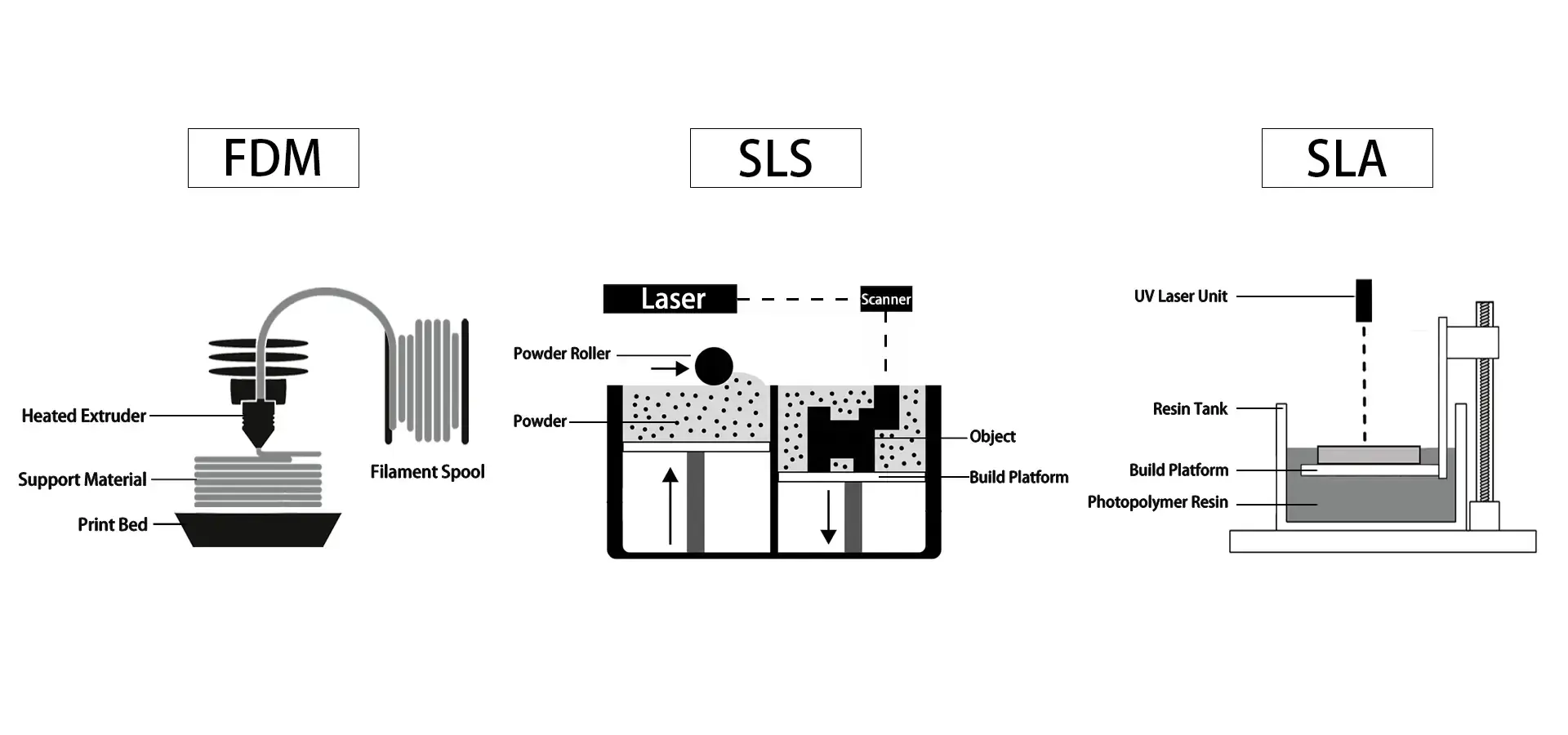
Powdered materials that self-support during printing are used in selective laser sintering, so there is no need for special support structures. This benefit comes with some drawbacks: powder waste stuck in internal channels needs a lot of post-processing work, and SLS surfaces generally require more post-processing compared with SLA. Industrial SLA systems can produce smoother surface finishes directly after printing, reducing finishing requirements for appearance-critical applications.
An Industrial SLA 3D Printer makes surfaces that look better right out of the box, which cuts down on the work needed to finish cosmetic samples and parts that will be used in real life where looks are important. When making housings for consumer electronics or clear optical parts, SLA's smooth sidewalls and ability to reproduce fine details make it clearly better than powder-based methods.
SLA Versus FDM (Fused Deposition Modeling)
Parts are made with polymer casting in fused deposition modeling, which usually needs strong support structures that leave clear marks and layer lines. FDM support structures can leave visible marks and may require additional finishing, especially when complex geometries or fine details are involved.
With stereolithography's liquid resin process, support geometries can be made that are more precise and have smaller contact areas. Our technology for variable laser spots changes between tiny spots (0.1 to 0.2 mm) for supports and curves and bigger spots (0.5 to 0.6 mm) for filling in areas. This approach improves scanning efficiency by balancing fine-detail exposure with larger-area processing requirements.
ROI Considerations for B2B Procurement
Industrial SLA systems may cost more to buy up front than entry-level FDM printers, but the total cost of ownership is much lower. Over the lifecycle of the equipment, less post-processing work, less waste, and faster iteration cycles all add up to savings.
Magforms printers use well-known parts from around the world, like AOC lasers for stable operation 24 hours a day, seven days a week, German Scanlab galvanometers for accuracy, Panasonic servo motors for precision, and Schneider electrical parts for dependability. This component selection strategy helps improve system reliability and reduce unexpected downtime during production. This cuts down on unplanned downtime that messes up production plans and slows deliveries to customers.
Case Studies and Practical Insights from Industry Leaders
Real-life examples show how careful choice of tools and process optimization can lead to measured quality gains in a wide range of manufacturing fields.
Automotive Prototyping Success
A car design company in the Detroit area had trouble with support marks ruining the finish on samples of interior trim. For client presentations, parts had to be almost as good as production quality, but a lot of hand-finishing took days of work each time.
The studio significantly reduced post-processing time after switching to an Industrial SLA 3D Printer with optimized support strategies. Strategically arranging the parts and using 0.15mm micro-spot supports left contact marks that were almost invisible and only needed a light sanding before painting. Time-to-market for new vehicle programs went faster because development cycles went from three weeks to less than ten days.
Medical Device Manufacturing Efficiency
A company that makes medical devices had to reject more than 12% of surgery guide samples because support marks got in the way of important alignment surfaces. Every time a part failed, expensive biocompatible resin was wasted, and surgeon approvals were pushed back.
Rejection rates were significantly reduced after optimizing support placement and improving printing consistency. These strategies included placing contacts only on non-functional areas and making the printer more accurate in its settings. The company reduced material waste and improved production efficiency by minimizing failed prints.
Leveraging Brand-Specific Innovations
Leading makers of stereolithography equipment have come up with their own technologies to solve problems with support marks. Leading stereolithography manufacturers continue to improve support generation, material performance, and workflow automation through different technical approaches. 3D Systems improved resin mixtures by changing how they stick together so that they can be separated more easily. Stratasys set up support generation that is driven by AI and learns from past print data.
Magforms looks at everything by combining knowledge of materials with mechanical skills for tools. We were founded as NextShapes, a company that specialized in 3D printing materials. We know a lot about photopolymer chemistry and how stress changes during laser curing. With this foundation, we were able to make printers that take into account how materials behave during the printing process. This keeps them from deforming too much and makes sure they are more accurately measured.
Our scanning system is optimized through engineering development and practical production feedback to improve printing efficiency and consistency. This makes the system faster by up to 20% while keeping accuracy. This intelligence goes all the way to support generation, where the system finds patterns that used to cause surface flaws and automatically changes parameters.
Conclusion
To get rid of support marks on an Industrial SLA 3D Printer, you need to use a methodical approach that includes smart support design, accurate equipment calibration, the right material choice, and strict post-processing methods. Modern stereolithography systems with improved galvanometer scanning, changeable spot technology, and temperature control make it possible to make surfaces that are of higher quality. Strategic part orientation reduces the need for support, and careful techniques for removal and finishing get rid of any flaws that are left. Automobile, aircraft, medical, and consumer electronics makers can get the tight tolerances and perfect finishes that tough applications need by choosing equipment made with parts that are known all over the world and backed by quick expert support.
FAQ
1. How does adjusting support density affect surface finish quality?
Support density is an important balance between surface quality and structural safety. Increasing density makes part attachment stronger, so failures don't happen during long prints or when shapes are heavy. Too much density, on the other hand, makes more contact points, which means more marks that need to be cleaned up afterward. Modern slicing software figures out the best density based on the shape of the part. The density is usually between 40 and 70%, depending on the overhang angles and cross-sectional area. Placing supports on non-critical areas in a smart way protects the finish quality on the sides that will be seen while keeping the print reliable.
2. Which resins work best for easy support removal?
Engineered resins that are made with controlled shrinking rates and mild elongation at break make it easier for support layers to separate more cleanly. Most of the time, resins that are similar to ABS have a good balance between mechanical strength and support removal. Release agents that lower adhesion at support interfaces are often added to specialized dental resins. Our open material system works with most 355nm resins, so procurement teams can try formulations from different sources and find ones that meet the mechanical needs and surface finish standards of different uses.
3. How often should I calibrate my printer to maintain consistent quality?
How often calibration is done relies on how much is being made and the weather outside. High-volume factories that make things all the time should do basic calibration checks once a week to make sure the platform is level, the recoater blades are in good shape, and the laser is putting out enough power. Every month or every 500 print hours, the galvanometer should be aligned and the optical path should be checked as part of a full calibration. Changes in temperature and humidity speed up mechanical drift, so checks need to be done more often in places where the climate isn't managed. Our skilled after-sales team gives you calibration methods that are specific to your operations. This helps you keep the equipment in factory specs for as long as it lasts.
Partner with a Trusted Industrial SLA 3D Printer Manufacturer
To get a perfect surface with few support marks, you need more than just good tools. You need a skilled partner who is dedicated to your manufacturing success with an Industrial SLA 3D Printer. Magforms uses decades of experience in materials science and precise engineering to make stereolithography systems that always perform better than expected. Our printers have German Scanlab galvanometers, AOC lasers, and Panasonic servo motors built in. This makes sure that the measurements are accurate to within ±0.1mm and the positioning is accurate to within ±8μm. We've proven our skills in 22 patents that protect our innovations, and over 300 companies around the world trust our solutions. These companies use our products in automotive, aerospace, medical devices, and consumer electronics.
Our professional technical support team answers questions within 24 hours, so problems with tools don't stop production. Whether you're a small design studio looking for low-cost accuracy or a large global company needing stability at high volumes, our wide range of tools and knowledge of materials can help you. You can also email our sales team at info@magforms.com to talk about your unique needs. We'll work together to make sure that your additive manufacturing process is optimized so that you can get the high-quality products and efficient operations that your business needs.
References
1. Gibson, I., Rosen, D., & Stucker, B. (2021). Additive Manufacturing Technologies: 3D Printing, Rapid Prototyping, and Direct Digital Manufacturing. Springer International Publishing.
2. Jacobs, P.F. (2020). Stereolithography and Other RP&M Technologies: From Rapid Prototyping to Rapid Tooling. Society of Manufacturing Engineers.
3. Melchels, F.P.W., Feijen, J., & Grijpma, D.W. (2019). "A Review on Stereolithography and Its Applications in Biomedical Engineering." Biomaterials, 31(24), 6121-6130.
4. Stansbury, J.W., & Idacavage, M.J. (2018). "3D Printing with Polymers: Challenges Among Expanding Options and Opportunities." Dental Materials, 32(1), 54-64.
5. Ligon, S.C., Liska, R., Stampfl, J., Gurr, M., & Mülhaupt, R. (2017). "Polymers for 3D Printing and Customized Additive Manufacturing." Chemical Reviews, 117(15), 10212-10290.
6. ISO/ASTM 52915:2020. Standard Specification for Additive Manufacturing File Format (AMF) Version 1.2. International Organization for Standardization.

Magforms makes design and manufacture easier.
Popular Blogs
-
 Industry InsightsManufacturing Industry
FDM vs. SLA Printer: Which Technology Is Right for Your Project?
-
 Industry InsightsManufacturing Industry
Top 5 Applications of Industrial 3D Printers in Manufacturing Today
-
 Industry InsightsManufacturing Industry
Why Stereolithography 3D Printers Are Unmatched for Microfluidic Device Prototyping?