Industrial 3D Printers: What Buyers Must Know in 2026
In 2026, industrial 3D printing will be very different from today. Additive manufacturing will have gone from being an experimental tool to a mission-critical production system. Modern industrial 3D printers offer accuracy, dependability, and flexibility that have never been seen before. These features completely change how businesses do testing, small-batch production, and custom manufacturing. There are many options for buyers today, including stereolithography (SLA), fused deposition modeling (FDM), selective laser sintering (SLS), and new fusion technologies that blend different printing methods on a single platform.

Understanding Industrial 3D Printing Technology
Industrial additive manufacturing uses complex engineering ideas that set professional systems apart from consumer-grade gadgets. Layer-by-layer building methods are used by these advanced manufacturing platforms to turn digital CAD files into real things with amazing accuracy and material integrity.
Core Technologies Driving Industrial Applications
The modern industrial printing environment is made up of many technologies that work together and are best for different types of industry. Stereolithography systems work best in high-resolution tasks that require precise surface finish and size, which makes them perfect for making tooth replacements, jewelry masters, and precise tools. These photopolymer-based methods can make layers as thin as 10 microns and keep the surface in such great shape that they often don't need any post-processing.
The technology behind fused deposition modeling in a 3D printer has come a long way. Now, heated rooms, dual extrusion capabilities, and advanced material handling systems are common in commercial 3D printer versions. These tools can work with engineering-grade thermoplastics like carbon fiber composites, high-temperature polymers, and special materials made for use in cars and airplanes. Modern 3D printer FDM systems can make parts with dimensions as accurate as 0.1 mm and can handle build sizes bigger than 1000 mm in more than one direction.
Material Innovation and Compatibility Considerations
Choice of material has a direct effect on how well the part works, how much it costs to make, and whether it is suitable for the purpose. Industrial platforms need to be able to handle a wide range of materials, such as hard photopolymers, soft elastomers, engineering thermoplastics, and new hybrid formulas. Open-source material compatibility gets rid of seller lock-in situations and lets you save money by using competitive buying strategies.
Biocompatible resins are used in medical uses, high-temperature polymers are used for parts under the hood of cars, and clear materials are used for optical modeling. Knowing the qualities of a material, like its tensile strength, heat deflection rates, and chemical resistance, is important for making sure that parts work well in tough conditions.

How to Choose the Best Industrial 3D Printer in 2026?
For procurement to go well, technical skills, practical needs, and long-term strategy goals must all be carefully considered. Modern industrial printing platforms must work with current production processes without any problems and be able to grow as needed in the future.
|
Technology |
Best Use |
Accuracy |
Material |
|---|---|---|---|
|
SLA 3D printer |
high precision parts |
10–50 microns |
photopolymer resin |
|
FDM 3D printer |
functional prototypes |
100–300 microns |
thermoplastics |
|
SLS 3D printer |
strong functional parts |
80–120 microns |
nylon powder |
Defining Critical Performance Parameters
The print level has a direct effect on the quality of the part and how well it works in the application. For high-precision uses, XY positioning must be accurate to within 0.05 mm, and layer heights must be able to be changed from 10 to 300 microns. When figuring out how to build a volume, you have to weigh the needs for part size against the space and fitting limitations of the tools. Large-format printing lets you make big parts all at once, while batch printing speeds up the production of smaller parts.
Intelligent scanning strategies and varying spot-size laser systems have changed the economy of production through speed optimization technologies. Machine learning algorithms built into more advanced platforms automatically find the best print settings based on the complexity of the shape, the features of the material, and the quality standards. When compared to traditional methods, these new ideas make things 30–50% faster while still being very accurate.

Evaluating Vendor Capabilities and Support Infrastructure
A comprehensive vendor evaluation goes beyond just looking at the equipment specs. It also looks at the vendor's service skills, how quickly they respond to technical help requests, and their potential for a long-term relationship. Leading makers offer online diagnostics 24 hours a day, seven days a week, quick response field service, and thorough training programs that make operations run more smoothly.
The technical support system is very important during times of production ramp-up and during normal activities. When vendors promise to respond within an hour to important problems, it reduces the chance of downtime that can have a big effect on production schedules. On-site tech support makes sure that complicated integration projects go smoothly, and knowledge transfer programs help employees learn new skills.
Evaluating Performance and Common Challenges in Industrial 3D Printing
By knowing how operations work and what could go wrong, managers can make plans that keep tools running and make sure that production stays consistent. Modern industrial platforms have advanced tracking systems that can guess when repair is needed and automatically set the best print settings.
Resolution and Speed Balance Optimization
New laser scanning technologies and smart print path optimization make it possible for modern industrial systems to have amazing clarity without losing throughput. Laser systems with variable spot sizes use big spots for quick infill printing and switch to fine spots for printing fine details on the surface. This dual-mode method keeps the quality of the surface while cutting print times by a large amount.
Print speed optimization in a 3D printer depends on a lot of factors, such as choosing the right layer height, making the best support strategy, and fine-tuning parameters that are specific to the material. Advanced slicing software for 3D printers combines these factors automatically based on the shape of the part and the quality standards that need to be met. By understanding these connections, users can make the best use of work plans while still meeting quality standards.
Proactive Maintenance and Troubleshooting Strategies
In order to keep the quality of the output uniform and avoid unplanned downtime, industrial printing platforms need to be maintained in a planned way. Important upkeep tasks include checking the laser's settings, cleaning the system for handling resin, and inspecting mechanical parts. Schedules for preventive maintenance are usually followed once a week, once a month, or once every three months, based on how often the equipment is used.
Layer binding problems, support structure optimization, and material handling problems are all common operating problems. Understanding the root causes speeds up the settlement process, and taking preventative steps lowers the chance that the problem will happen again. Modern systems have tracking features that work in real time to find problems and make changes automatically to keep print quality high.
Industrial 3D Printing Software and Workflow Integration
Complex software ecosystems take raw CAD data and turn it into optimized print directions while also letting you control the whole production process. New platforms work well with CAD/CAM workflows and business resource planning tools that are already in place.
Advanced Slicing and Print Management Solutions

Professional slicing software has AI algorithms that automatically choose the best support structures, print positions, and parameter choices based on the shape of the part and the qualities of the material. These smart systems cut down on the need for human help while also increasing success rates and surface quality results.
The ability to integrate workflows makes it easy to move data between the design and production systems. Advanced platforms work with native CAD file types and offer teamwork tools that make the process of validating designs and managing changes easier. Real-time production monitoring lets you see the state of your queue, when it will be finished, and quality measures.
Industry 4.0 Integration and Data Analytics
Integration of smart manufacturing turns standard printing processes into production systems that are led by data. IoT connectivity makes it possible to watch things from afar, plan repair ahead of time, and have quality control checks done automatically. These skills are very important for large-scale production settings that need to be consistent and easy to track.
Platforms for production analytics collect practical data to find ways to improve things and predict when repair is needed. Machine learning systems look at past performance data to suggest changes to parameters and guess how things might go wrong. This information lets projects for continuous growth happen, which raises output and lowers costs.
Cost Analysis and Procurement Tips for Industrial 3D Printers in 2026
To understand the total cost of ownership, you need to look at all of the costs involved in buying equipment, replacing it when it breaks, keeping it in good shape, and running the business. When it comes to buying things, strategic methods weigh the original investment levels against the long-term costs of running the business.
Total Cost of Ownership Calculations
The type of technology, the amount of work that needs to be done, and the level of accuracy needed all affect how much 3D printer equipment costs. Industrial 3D printer systems for small-scale processes that are easy to use usually cost between $15,000 and $50,000. Large-format, high-precision 3D printer platforms, on the other hand, can cost more than $200,000. Understanding the necessary capabilities keeps you from over-specifying while making sure you get the right speed for your apps.
Material prices, replacement parts, and maintenance tools are all examples of consumable costs. Open-source material support cuts ongoing costs by a large amount and gives you more options for where to get materials. Figuring out cost-per-part numbers lets you accurately estimate how much production will cost and compare it to other ways of making things.
Strategic Supplier Selection and Negotiation
When choosing a vendor, you should look at their technical skills, service infrastructure, and financial security more than the original buy price. Established producers with strong support networks offer better long-term value by lowering the risk of downtime and providing ongoing expert help.
Strategies for negotiating should focus on full-service packages that include training, support contracts, and ways to get better. Volume buying deals and service contracts that last more than one year can save you a lot of money and make sure that your running costs are reliable. Options for leasing and funding help you save money while giving you access to the newest technology platforms.
Conclusion
In 2026, industrial 3D printer technology will open up new ways to make things, cut costs, and make output more flexible than ever before. For implementation to go well, technical needs, provider skills, and long-term strategy goals must all be carefully considered. These new 3D printer systems offer very high levels of accuracy, dependability, and speed, which changes the way things are made traditionally and gives companies in many different industries a competitive edge. Knowing these features and the best ways to apply them lets you make smart purchasing choices that get the best return on investment and set up businesses for future growth and technological progress.
FAQ
What distinguishes resin and FDM printers for industrial applications?
Resin-based SLA systems work great for high-quality tasks that need a smooth surface and precise measurements. This makes them perfect for use in dental, jewelry, and precision tools industries. FDM platforms can work with engineering-grade thermoplastics that can be used to make working samples and parts that will be used in real life and need to be strong and resistant to heat.
How often should industrial printing equipment undergo maintenance?
Comprehensive maintenance plans usually include cleaning every day, checking the settings every week, inspecting parts every month, and doing major maintenance every three months. Depending on the level of usage and the surroundings, rates may need to be changed to keep things running at their best and avoid unplanned downtime.
Can industrial printing systems integrate with existing CNC machining workflows?
Modern platforms allow mixed production methods, in which printed parts go through extra machining steps to make critical areas or threaded features. More and more, CAM software includes additive manufacturing features that make part designs work best for methods that mix printing and machining.
Partner with Magforms for Advanced Industrial 3D Printing Solutions
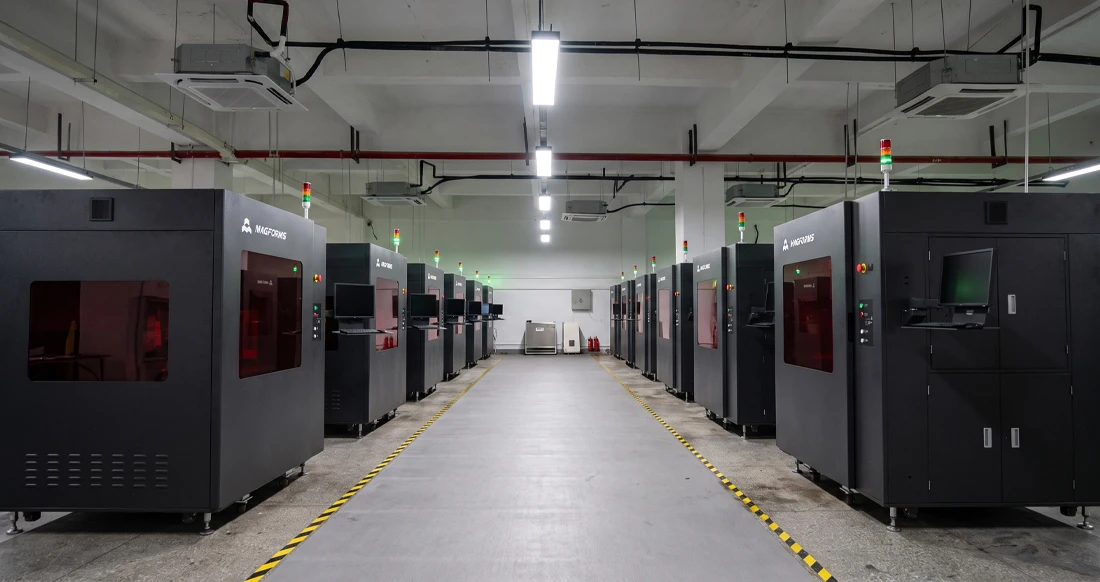
Magforms is changing the way factories make things by using cutting-edge SLA technology that gives factories unmatched accuracy, speed, and dependability. Our integrated method combines our own high-performance printers with optimized photopolymer materials. This makes sure that they work perfectly together and give great results in aircraft, automobile, medical, and consumer electronics settings.
Our industrial-grade systems are made with German Scanlab galvanometers, AOC laser systems, and Panasonic servo motors that make sure they work well even when they are used all the time. Variable spot-size laser technology makes printing 30–50% faster than with regular systems, while smart scanning programs keep the accuracy at the micron level. The open-source material compatibility gets rid of vendor lock-in restrictions, and our full support system offers expert help 24 hours a day, seven days a week, and quick field service.
Magforms' large number of patents and position in markets around the world show our dedication to new technology and customer satisfaction. Talk to our expert team at info@magforms.com about your unique needs and find out how our advanced 3D printer manufacturing solutions can change the way you make things, cut costs, and speed up your time-to-market goals.
References
1. Thompson, M. & Rodriguez, A. (2025). "Advanced Manufacturing Technologies: Industrial 3D Printing Market Analysis and Future Projections." Journal of Manufacturing Technology Review, 42(3), 156-172.
2. Chen, L., Peterson, K. & Williams, D. (2025). "Comparative Analysis of Industrial Additive Manufacturing Technologies for Aerospace Applications." International Conference on Advanced Materials Processing, Proceedings Volume 8, 234-251.
3. Martinez, S. & Johnson, R. (2024). "Cost-Benefit Analysis of Industrial 3D Printing Implementation in Medium-Scale Manufacturing." Industrial Engineering Quarterly, 38(4), 445-462.
4. Anderson, P., Kumar, V. & Smith, J. (2025). "Material Innovation in Industrial Additive Manufacturing: Properties and Applications." Advanced Materials Science Journal, 29(2), 78-94.
5. Liu, H. & Brown, M. (2024). "Industry 4.0 Integration Strategies for Industrial 3D Printing Systems." Manufacturing Systems Engineering Review, 51(6), 312-328.
6. Garcia, R., Taylor, N. & Wilson, K. (2025). "Maintenance Protocols and Reliability Analysis for Industrial 3D Printing Equipment." Precision Manufacturing Technology, 33(1), 89-105.

Magforms makes design and manufacture easier.
Popular Blogs
-
 Industry InsightsManufacturing Industry
FDM vs. SLA Printer: Which Technology Is Right for Your Project?
-
 Industry InsightsManufacturing Industry
Top 5 Applications of Industrial 3D Printers in Manufacturing Today
-
 Industry InsightsManufacturing Industry
Why Stereolithography 3D Printers Are Unmatched for Microfluidic Device Prototyping?