Industrial SLA 3D Printer Cost Analysis: Is the Investment Worth It?
When you buy additive manufacturing equipment, you need to think carefully about the initial costs, the ongoing costs, and the long-term value. An Industrial SLA 3D Printer costs a lot of money, but if you do your research, it can change the way production works in industries like automotive, aircraft, medicine, and consumer electronics. Its high dimensional accuracy, excellent surface quality, and reliable production capability make it suitable for demanding applications across industries. When buyers choose systems based on component quality, material flexibility, production requirements, and service support, the investment can deliver long-term value. By understanding the full cost structure, buying teams can develop more realistic ROI estimates and identify hidden costs that may affect profitability. This study looks at the real costs of adopting SLA technology and gives B2B decision-makers useful information for making this important equipment buy.
Understanding the Industrial SLA 3D Printer Cost Structure
Initial Purchase Price and Equipment Configuration
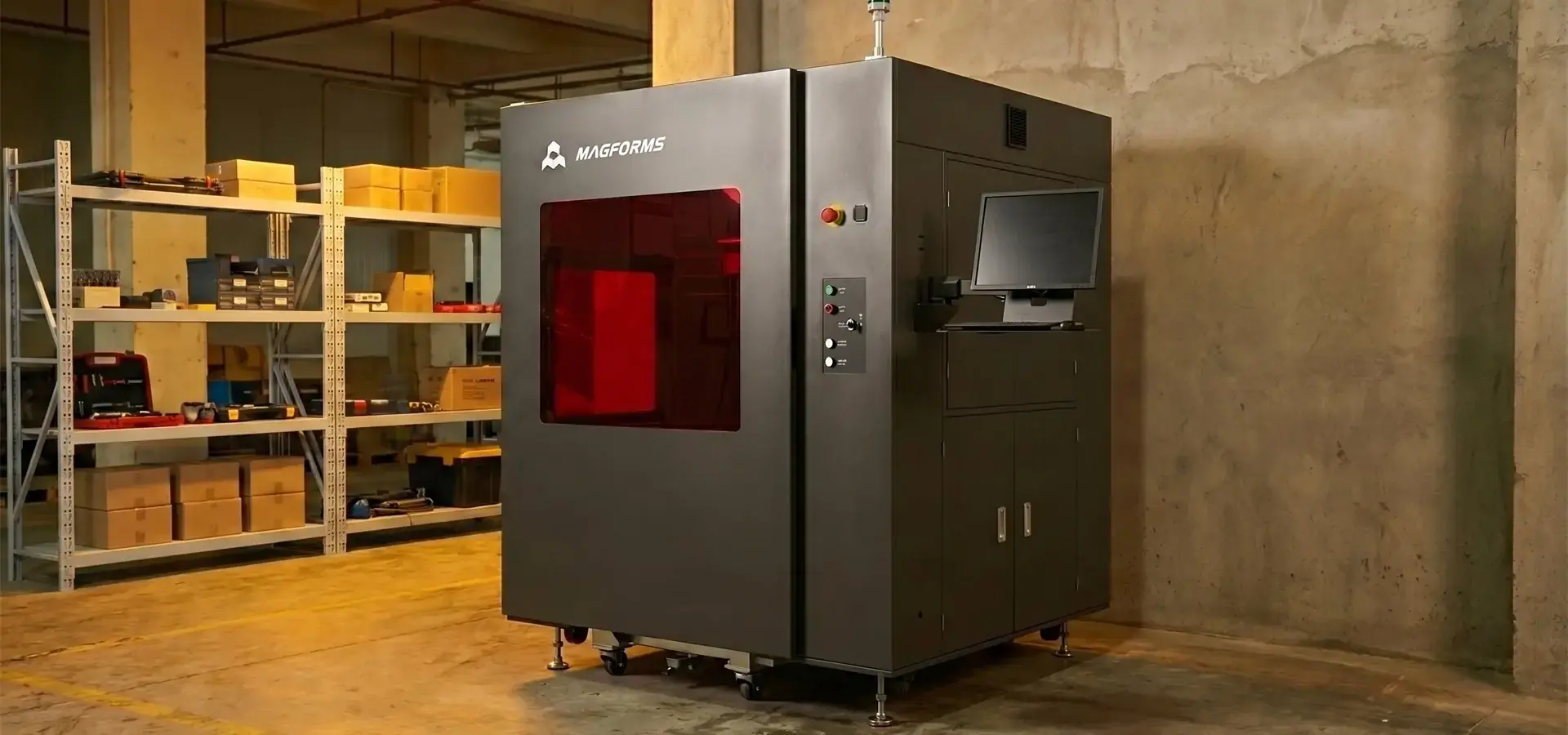
There are more costs than just the base machine price to get an Industrial SLA 3D Printer. Industrial SLA systems typically range from tens of thousands to several hundred thousand US dollars, depending on build volume, laser configuration, automation level, and material management capabilities. The different prices are due to changes in the size of the build, the power of the laser, the accuracy of the galvanometer, and the automation features. Magforms' equipment uses industrial-grade components such as AOC lasers, Scanlab galvanometers, and Panasonic servo motors to support stable motion control and long-term production reliability. This makes the investment worthwhile because the equipment doesn't break down as often, and the quality of the output is always the same. The platform positioning accuracy of ±8 μm and recoater precision below 0.02 mm help maintain consistent layer formation and dimensional stability during printing.
Buyers should also consider additional costs such as installation, initial materials, post-processing equipment, operator training, and facility preparation when calculating the total investment. Small and medium-sized businesses can use industrial-grade stereolithography while keeping their cash flow in check with financing choices like equipment rental or delayed payment plans.
Ongoing Operational Expenses
There are ongoing costs that affect the total ownership economics of an Industrial SLA 3D Printer. The main consumable cost for Industrial SLA 3D Printer operation is photopolymer resin. Resin prices vary widely depending on formulation, performance requirements, certification needs, and supplier selection. Standard resins are good for prototyping in general, but more expensive materials like those made for high temperatures or that are clear cost a lot more. Resin selection should match the printer configuration, application requirements, and desired part performance. Magforms Industrial SLA 3D Printer systems support a wide range of 355 nm photopolymer materials, providing users with greater flexibility in material selection. This lets users find cheap materials and try out new recipes without being limited to just one provider.
Buying replacement parts is another type of cost. Building platforms lasts longer, but they need to be resurfaced at some point. Optical protection systems and UV shielding components help reduce unwanted resin exposure and maintain stable printing conditions. During operation, power consumption varies depending on machine configuration, laser system, heating requirements, and operating conditions. Compared with many traditional manufacturing processes, additive manufacturing can reduce energy consumption for certain low-volume production scenarios. The cost of labour depends on how much is being made, but the iBuild 2.0 software interface simplifies workflow management, parameter adjustment, and printing operation, helping operators improve production efficiency.
Impact of Printing Parameters on Cost Efficiency
Printing speed and accuracy have a direct impact on production costs. Traditional SLA systems typically use galvanometer-based laser scanning, while advanced Industrial SLA 3D Printer models with variable laser spot technology can optimize scanning strategies by adjusting laser spot size according to different printing areas. This approach helps improve productivity while maintaining accuracy. By using larger laser spots for filling large areas and smaller laser spots for detailed contours, variable spot technology balances printing efficiency and surface detail requirements. Advanced scanning algorithms can optimize laser paths and improve printing efficiency by reducing unnecessary movements and improving process consistency.
Gains in speed mean lower labour costs per part and more work that can be done each day. Temperature management helps maintain stable resin viscosity and printing conditions under changing environmental conditions. Stable temperature management helps maintain consistent resin viscosity and printing conditions, which can improve print reliability and reduce failed builds. Industrial SLA 3D Printer systems with optimized optical calibration and motion control can achieve high dimensional accuracy, reducing the need for extensive post-processing in many prototype and tooling applications. Optimized exposure control and scanning strategies can improve surface quality and reduce visible layer effects, helping simplify post-processing requirements.
Evaluating the Benefits and ROI of Industrial SLA 3D Printers
Superior Precision and Surface Quality Advantages
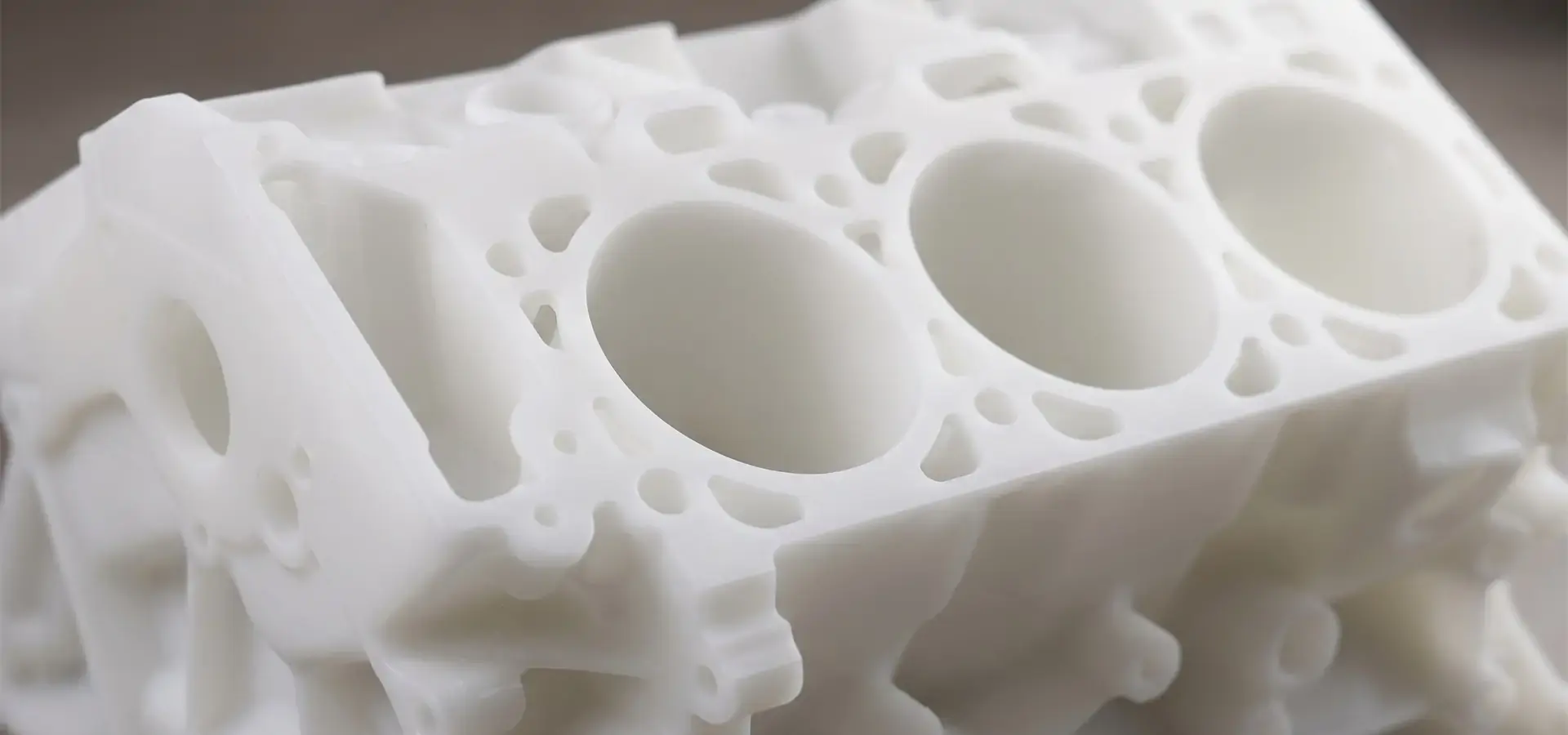
SLA technology is known for producing smooth surface finishes and fine details, making it suitable for applications requiring high visual quality and accurate replication of complex geometries. This capability is valuable for automotive prototypes, medical models, consumer electronics housings, and other applications where appearance and dimensional accuracy are important. After appropriate cleaning and post-processing, parts printed on Industrial SLA 3D Printer systems can be used for assembly verification or as master patterns for silicone moulding. This means that there is no need for any intermediate prototyping steps that slow down product launches.
UV-cured photopolymers used in SLA can provide relatively consistent mechanical properties compared with some layer-based manufacturing methods, although final performance depends on resin formulation, curing conditions, and print orientation. Compared with FDM parts, SLA components generally offer smoother surfaces and finer details, while FDM mechanical performance can vary depending on material selection, extrusion conditions, and layer orientation. This combination of accuracy, surface quality, and repeatability is useful for medical applications such as surgical guides and dental models. It's also useful for testing aircraft parts where the stress distribution needs to match the final production materials. Variable spot technology improves the ability to reproduce fine features such as threads, snap fits, and surface textures, reducing the need for additional machining in many prototype applications. This can significantly reduce development cycles.
Cost Comparison with Traditional Manufacturing Methods

Depending on how complicated they are, traditional injection moulding tools cost $5,000 to $100,000 and take 6 to 12 weeks to make. An Industrial SLA 3D Printer can produce functional prototypes much faster than traditional tooling workflows in many cases. For low-volume production, bridge manufacturing, and frequently changing designs, SLA can be economically attractive because it reduces the need for dedicated tooling. This is especially true when design changes happen in the middle of a project. Automotive companies often use SLA for prototype components, design validation models, and limited-volume parts where dedicated tooling may not be economically practical.
Compared with CNC machining, SLA uses an additive manufacturing approach that can reduce material waste for certain complex geometries. For complex geometries, additive manufacturing can reduce material waste compared with machining from solid blocks, although support structures and post-processing requirements still need to be considered. This can reduce raw material consumption and improve cost efficiency in suitable applications. Assemblies can be printed as single parts, which cuts down on the number of parts needed, the work needed to put them together, and the complexity of the inventory. In high-utilization scenarios, companies may achieve ROI within months to several years depending on application requirements, production volume, labor savings, and workflow improvements.
Real-World Application Case Studies
In dental production workflows, Industrial SLA 3D Printer systems can help laboratories reduce outsourcing dependence and improve production efficiency for orthodontic models. This cut the cost of each model from $45 to $12 and the time it took to make them from five days to eight hours. Savings each year were more than $80,000, and the tools paid for themselves in less than 18 months. The open material system lets different brands of dental resin be tested, which cuts down on costs and improves clinical performance.
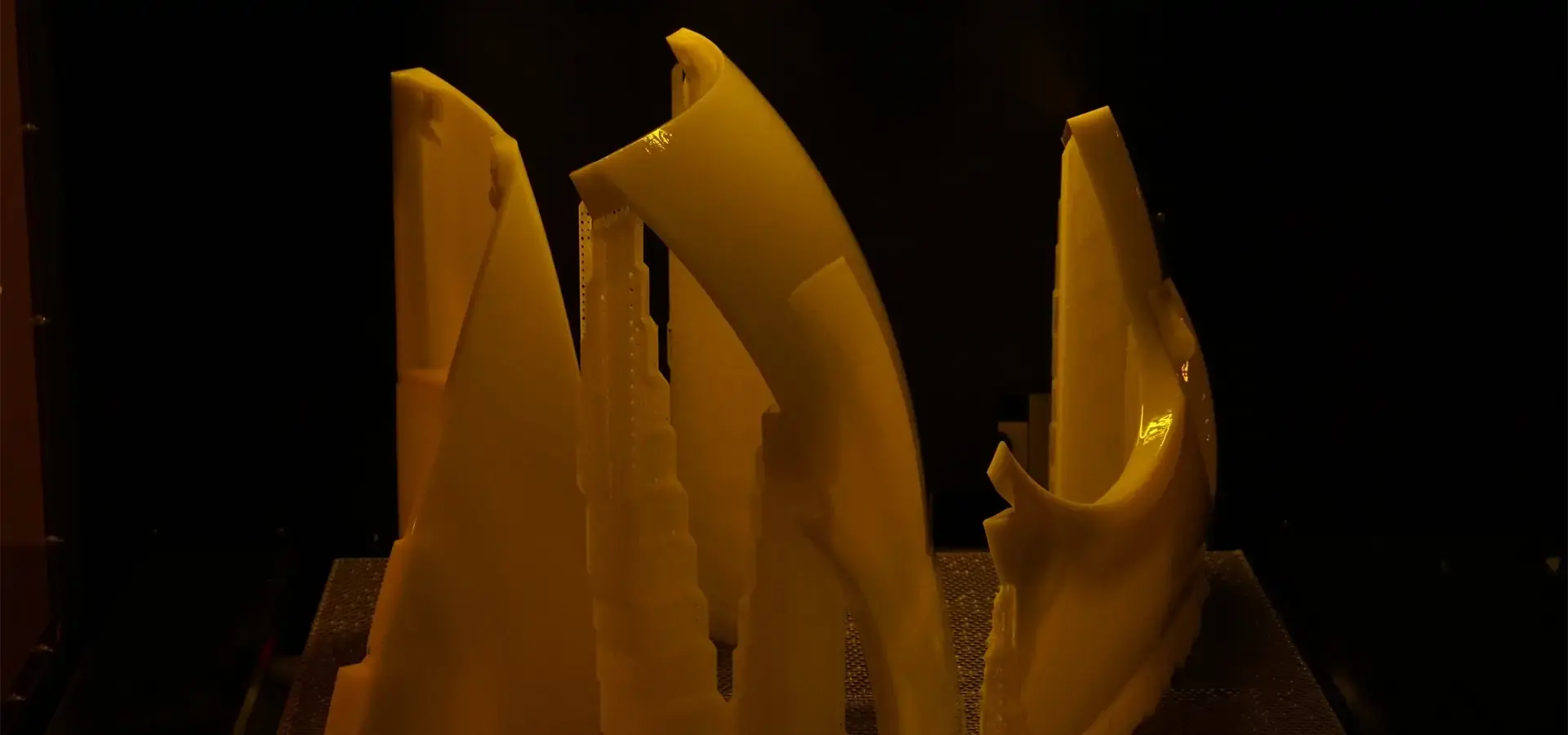
Aerospace suppliers can use SLA for validation fixtures and interior component prototypes, reducing reliance on traditional machining for certain low-volume applications. The self-supporting platform design with curved drainage rods cuts down on resin waste by 25%. The marble platform with flatness standards of 0.2 to 0.5 mm ensured that big fixture bases stayed stable in size while printing. The professional after-sales team offered help 24 hours a day, seven days a week. This kept production from being held up during important certification deadlines.
Footwear companies use SLA technology to accelerate mould development, design validation, and prototype testing. Being able to print clear materials with a high success rate made it possible to test how well translucent shoe designs worked, which led to the creation of new product categories. This led to the creation of mould inserts that could conform to specific athletic footwear needs.
👉 Explore Industrial SLA 3D printing applications
Comparing Industrial SLA 3D Printers: Features, Prices, and Market Options
Leading Suppliers and Equipment Offerings
The industrial stereolithography market includes established global manufacturers and emerging suppliers, offering different solutions based on build volume, material compatibility, automation level, and application requirements. The ProX series from 3D Systems represents industrial stereolithography solutions designed for applications requiring large build volumes, high accuracy, and production-grade reliability. Pricing varies depending on configuration, accessories, and regional factors. It is aimed at large aerospace and automotive applications. Professional resin printing systems such as the Form 3L from Formlabs serve a different market segment focused on large-format prototyping rather than industrial laser SLA production. Its compact footprint and workflow-oriented design make it suitable for prototyping applications where industrial SLA production capacity is not required. However, its workflow and production capacity are positioned differently from large industrial SLA platforms designed for continuous manufacturing environments. Prodways makes systems that can be customised and focus on speed, while the Stratasys Neo line is designed to be easy to use in an office setting.
Magforms designed its line of Industrial SLA 3D Printers to fill in the gaps in these products by mixing high-quality parts with reasonable prices. The combination of Scanlab galvanometers, HIWIN linear guides, and Schneider electrical components supports precise motion control, scanning stability, and long-term operational reliability. For smaller businesses, the open material design and quick after-sales support help them keep costs down. With 22 patents and a foothold in dozens of foreign markets, the company shows that it has the technical know-how to do a wide range of business tasks.
Critical Procurement Evaluation Criteria
Different applications have different build volume needs. Automotive master models, aerospace components, and large functional prototypes often require larger build volumes, depending on part size, orientation strategy, and production workflow. On the other hand, 300–450 mm sizes work well for dental and jewellery uses. To avoid capacity limits, buyers should guess the largest part dimensions, which should include support structures and orientation angles. Magforms' different machine platforms are designed with controlled flatness specifications appropriate for their respective build sizes, helping maintain consistent printing conditions across the build area. This makes sure that even the largest parts are geometrically correct.
Throughput potential depends on laser power, galvanometer performance, resin characteristics, layer thickness, scanning strategy, and part arrangement. High-volume production is easily handled by systems that have 5–10W solid-state lasers and galvanometers that can read at 8–12 m/s. Magforms' AOC laser systems are designed to provide stable laser output during long-duration printing operations, supporting consistent production performance. Another important difference is material compatibility. Closed and open material systems each have different advantages. Open systems provide greater material flexibility, while closed systems may offer optimized material-process combinations. This makes the overall cost of running higher over the equipment's lifetime.
Warranty coverage and the system for after-sales help should be carefully looked at. Standard warranties last for 12 months, but extended service agreements protect you from having to pay for repairs you didn't expect. Magforms provides technical support services designed to help customers reduce downtime and maintain stable production workflows. When compared to makers who rely on foreign transportation for component orders, local spare parts supplies and qualified service techs cut down on downtime.
Financing and Leasing Solutions
Leasing equipment lets people use Industrial SLA 3D Printer technology without using up all of their savings. Leasing structures can help companies distribute equipment investment over time, with payment plans depending on equipment price, financing terms, and regional policies. In many places, operating leases offer tax benefits because payments are seen as expenses instead of capital purchases. Structures that you can lease and eventually own are called "lease-to-own" structures. These are good for growing businesses that aren't sure what their long-term capacity needs will be.
When buyers negotiate orders for multiple units, they can often get 10–20% discounts and better service terms. As service companies grow and open more locations, they use bulk prices to standardise their equipment lines. This makes it easier to train operators and keep track of materials. Custom designs, such as specialised resin vats, extra build platforms, or combined post-processing stations, can be negotiated by manufacturers to improve workflow integration without having to pay a lot of money for upgrading.
Common Challenges and Maintenance Costs of Industrial SLA 3D Printers
Resin Handling and Material Waste Issues
Photopolymer resins require careful handling to prevent contamination and maintain curing characteristics. Expired or improperly stored materials produce parts with compromised mechanical properties and dimensional inaccuracies. An open material system can give users greater flexibility in selecting suitable photopolymer resins based on application requirements, cost targets, and performance needs.
Material waste occurs through several mechanisms. Failed prints consume resin without yielding usable parts, emphasizing the importance of optimized parameters, proper material handling, and reliable process control. Support material consumption varies depending on part geometry, orientation strategy, layer height, and application requirements. Design features such as optimized build platforms and resin drainage structures can help improve resin recovery and simplify post-print cleanup. Proper resin filtering between builds removes cured particles that could cause surface defects, extending vat lifespan and reducing contamination-related failures.
Calibration and Maintenance Requirements
Laser power calibration ensures consistent energy density across the build area. Drift in laser output causes under-curing (weak parts) or over-curing (dimensional inaccuracy). Regular laser calibration and system maintenance help maintain consistent energy delivery and printing accuracy over long-term operation. Scanlab galvanometers paired with AOC laser technology can support stable scanning performance and consistent calibration results when properly maintained through inherent stability, reducing service costs compared to systems requiring quarterly adjustments.
Mechanical components demand periodic inspection. Linear guides and lead screws accumulate resin residue that increases friction and positioning error. Monthly cleaning schedules using manufacturer-approved solvents preserve positioning accuracy. The HIWIN guides specified in robust Industrial SLA 3D Printer designs resist wear during high-Z-axis movements, helping maintain positioning accuracy and mechanical stability during extended operation.
Optical components accumulate dust and resin vapor deposits that scatter laser energy, reducing edge definition and surface quality. The optical protective cover and acrylic front door shield sensitive elements from contamination, while UV-blocking lamps using Philips technology prevent premature resin curing in storage reservoirs. Quarterly optical path cleaning using lint-free materials and appropriate solvents sustains print performance without costly component replacements.
Environmental and Safety Considerations
Appropriate ventilation systems should be considered for Industrial SLA 3D Printer installations to manage resin odors and volatile emissions according to workplace requirements. Appropriate ventilation and filtration systems can help manage resin odors and volatile emissions, supporting safer workplace conditions. Equipment lacking integrated ventilation necessitates external systems costing $2,000-$5,000, while integrated solutions simplify installation and reduce facility modification expenses.
Laser safety protocols prevent eye injury from direct or reflected beam exposure. Properly enclosed industrial SLA systems typically incorporate laser safety mechanisms such as protective housings and interlocks to reduce exposure risks during operation. Compliance depends on system design and applicable regional regulations. The laser safety protection and optical cover features in properly designed systems eliminate hazardous exposure scenarios reducing the need for additional laser safety controls when the equipment meets applicable safety requirements.
Waste resin disposal follows hazardous material regulations in most jurisdictions, incurring disposal fees of $50-$200 per container. Minimizing waste through high print success rates and efficient support strategies reduces both material costs and environmental compliance expenses. UV-curing waste resin before disposal solidifies materials, simplifying handling and reducing disposal costs compared to liquid hazardous waste streams.
Procurement and After-Sales Considerations for Industrial SLA 3D Printers
Supplier Evaluation Across Global Markets
There are many Industrial SLA 3D Printer suppliers in the United States market, and their service infrastructures are also very different. Domestic brands offer fast access to parts and helpful technical support, while foreign names may have more advanced technology but take longer to respond to service requests. Support risks that could leave equipment idle during crucial production times can be reduced by looking at the supplier's financial stability, installed base size, and regional service center locations.
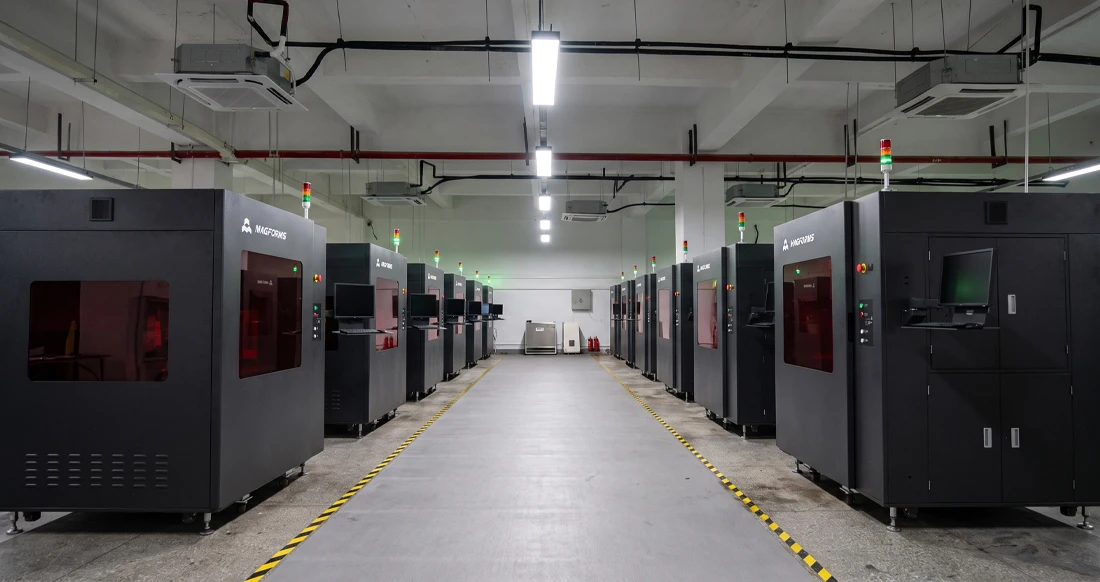
European suppliers put a lot of emphasis on precise engineering and following the rules, which makes them appealing to industries like medicine and aerospace that have high-quality standards. Asian producers are competing more and more on both price and the level of technology they use. Magforms uses its location in dozens of countries and involvement in international trade shows to offer global support skills that are usually only found in large foreign companies, but at prices that are affordable for small businesses.
Total Cost Forecasting and Hidden Expenses
Cost estimates take into account all building services, electricity needs (usually 208-240V single or three-phase), environmental controls, and integrating air. Depending on how ready the building is, site preparation could cost between $3,000 and $8,000. To become proficient with software, material handling, and post-processing processes, operators need 40 to 80 hours of training. This adds up to $2,000 to $5,000 in labour costs during the training time.
How software is licensed varies from one provider to the next. Some companies give you a perpetual license when you buy their products, while others charge between $1,500 and $3,000 a year for access to updates and technical support portals. The iBuild 2.0 control software is easy to use and works quickly. It comes with free lifetime updates, so you don't have to worry about expensive software costs that eat away at your running budgets.
Warranty Terms and Spare Parts Availability
Standard warranties cover flaws in the way the product was made, but not wearable parts like resin vats and wiper blades. Long-term service contracts that cost between $3,000 and $8,000 a year include preventative maintenance visits, priority technical help, and lower prices on parts. These deals are helpful for businesses that have more than one shift or that have to stick to tight production plans where downtime costs a lot of money.
Equipment reliability is based on how readily available spare parts are. Important parts are shipped within 24 to 48 hours by suppliers with regional warehouses, but it may take up to two weeks for international shipments. Magforms' professional and effective after-sales team structure makes sure that problems are solved quickly. They answer customer questions within 24 hours and keep extra parts in stock to avoid production delays that can happen with less-established companies.
Authorised service networks offer techs who have been taught by the manufacturer and are familiar with certain equipment designs. Third-party service organisations may have lower prices, but they might not have access to proprietary testing tools or the right kind of specialised knowledge, which could make the fix take longer. By looking at service coverage during the procurement process, you can set clear goals and avoid surprises when you need help.
Conclusion
An Industrial SLA 3D Printer can deliver strong return-on-investment potential when selected according to application requirements, production volume, and workflow needs. The total cost of ownership includes more than just the buying price. It also includes things like upkeep, repairs, and how efficiently the business runs. Systems equipped with industrial-grade components such as Scanlab galvanometers, AOC lasers, and Panasonic servo motors can support stable operation, accurate motion control, and consistent production performance. The value proposition becomes stronger when the equipment offers flexible material compatibility, responsive after-sales support, and stable performance for continuous production environments. When buying teams carefully look at application needs, throughput demands, and provider skills, they can find solutions that change the way manufacturing works and save money within 12 to 24 months.
FAQ
1. What factors most significantly impact the total cost of owning an Industrial SLA 3D Printer?
Material consumption is one of the major operating expenses for Industrial SLA 3D Printer users, with costs depending on resin type, part geometry, production volume, and workflow efficiency. Reliable equipment performance and optimized printing parameters can help reduce failed builds, material waste, and production interruptions. Maintenance requirements vary with component quality; premium linear guides and galvanometers extend service intervals, lowering annual service expenses compared to budget alternatives requiring frequent calibration.
2. How does SLA compare to SLS and FDM technologies regarding cost and application suitability?
SLA generally provides smoother surface finishes and finer details than FDM, making it suitable for appearance-critical prototypes and detailed models. However, post-processing may still be required depending on application requirements. SLS is commonly selected for applications requiring durable thermoplastic materials such as nylon-based powders, while SLA is often preferred when surface quality, detail reproduction, and transparent resin options are important. FDM materials are often lower in material cost per kilogram, while SLA resin costs vary significantly depending on formulation and performance requirements.
3. Can small and mid-sized enterprises afford Industrial SLA 3D Printer technology through financing options?
Leasing and financing options can help small and medium-sized companies adopt Industrial SLA 3D Printer technology while managing upfront investment. Some suppliers, including Magforms, may provide flexible payment options depending on customer requirements. ROI depends on utilization rate, application value, labor savings, outsourcing reduction, and production requirements. High-utilization scenarios generally provide stronger economic justification.
Partner with a Trusted Industrial SLA 3D Printer Manufacturer
Magforms delivers precision stereolithography solutions combining German Scanlab galvanometers, AOC laser stability, and open material compatibility to improve production efficiency and support better cost management. Our Industrial SLA 3D Printer systems serve over 300 enterprises worldwide across automotive, aerospace, medical, and consumer electronics sectors, backed by 22 patents and responsive 24-hour technical support. Whether you require rapid prototyping capabilities or small-batch production infrastructure, our equipment integrates premium components with user-friendly operation to minimize training time and maximize uptime. Contact our team at info@magforms.com to discuss customized solutions, request detailed specifications for your application requirements, or arrange demonstration sessions showcasing variable spot technology and transparent resin capabilities. We assist procurement decision-makers in evaluating the total cost of ownership, configuring optimal build volumes, and establishing support frameworks that ensure long-term operational success as your industrial stereolithography partner for prototype development, tooling applications, and small-batch production needs.
References
1. Gibson, I., Rosen, D., & Stucker, B. (2021). Additive Manufacturing Technologies: 3D Printing, Rapid Prototyping, and Direct Digital Manufacturing (3rd ed.). Springer.
2. Pham, D. T., & Gault, R. S. (2020). "Cost Modeling for Stereolithography Additive Manufacturing Systems." International Journal of Production Research, 58(12), 3724-3742.
3. Wohlers, T. (2023). Wohlers Report 2023: 3D Printing and Additive Manufacturing Global State of the Industry. Wohlers Associates.
4. Materialise NV. (2022). "ROI Analysis Framework for Industrial Additive Manufacturing Systems." White Paper Series on Manufacturing Economics.
5. American Society for Testing and Materials. (2021). ASTM F2924-14: Standard Specification for Additive Manufacturing Titanium-6 Aluminum-4 Vanadium with Powder Bed Fusion. ASTM International.
6. Schmidt, M., & Pohle, D. (2019). "Total Cost of Ownership Models for Industrial 3D Printing Technologies." Journal of Manufacturing Systems, 52(Part A), 166-177.

Magforms makes design and manufacture easier.
Popular Blogs
-
 Industry InsightsManufacturing Industry
FDM vs. SLA Printer: Which Technology Is Right for Your Project?
-
 Industry InsightsManufacturing Industry
Top 5 Applications of Industrial 3D Printers in Manufacturing Today
-
 Industry InsightsManufacturing Industry
Why Stereolithography 3D Printers Are Unmatched for Microfluidic Device Prototyping?