Top 5 Industrial SLA 3D Printer Brands Compared for 2026
Procurement pros need to know which makers offer the best mix of accuracy, dependability, and long-term value when they are looking for the best industrial SLA 3D printer names in 2026. The top brands are 3D Systems with its tried-and-true ProX series, Formlabs with its scalable Form 4 technology, Stratasys with its innovative Neo platform for multiple materials, Prodways with its French engineering excellence and open material ecosystems, and Magforms, which is becoming a strong competitor with its integrated material-equipment solutions and excellent after-sales support. Each brand caters to a different industry need, ranging from aircraft development to dental manufacturing. It is important to make an informed choice in order to improve production processes and get a clear return on investment.
Introduction
Industrial SLA 3D printing has changed how companies in automotive, aerospace, medical, and consumer electronics industries develop prototypes, production tools, casting patterns, and low-volume end-use parts. Choosing the right stereolithography equipment is important for B2B procurement professionals because it affects more than just print quality. It also affects operational efficiency, material flexibility, and the total cost of ownership. Because the technology cures liquid photopolymer resins layer by layer, it can produce parts with excellent surface finish and dimensional accuracy, especially for complex geometries, prototypes, and low-volume production applications where traditional manufacturing may require longer lead times or higher tooling costs.
This in-depth comparison examines five industrial SLA 3D printer brands that are expected to remain influential in 2026. We look at key technologies, important factors for purchasing, and give production decision-makers suggestions they can follow. This guide gives you the information you need to safely choose providers and make the most of your additive manufacturing investments, whether your company needs high-throughput service bureau equipment, precise medical device tools, or cost-effective development solutions.
Understanding Industrial SLA 3D Printing Technology
The Photopolymerization Process Explained
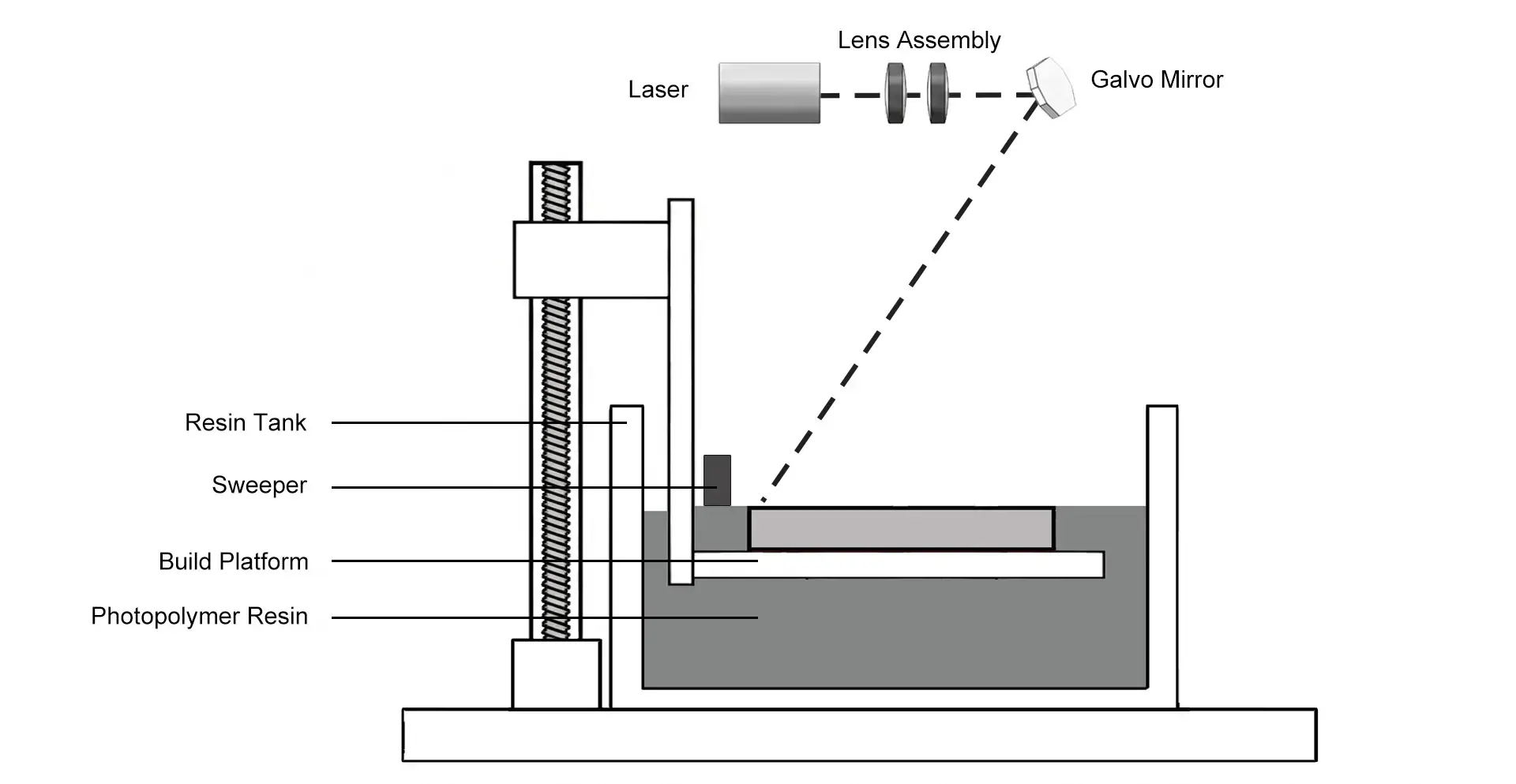
In industrial stereolithography systems, a UV laser beam controlled by precision galvanometer mirrors selectively cures liquid photopolymer resin layer by layer. During the printing process, the build platform is positioned within the resin vat according to the selected layer thickness. A laser beam directed by precision galvanometer mirrors scans the cross-section of each layer, selectively curing the photosensitive resin into solid polymer structures. Once a layer is completed, the build platform moves according to the configured layer thickness, and a recoating system applies a fresh layer of resin across the build area before the next laser scanning cycle begins. This process repeats for hundreds or thousands of layers until the complete part is formed.
SLA technology produces parts with excellent surface quality and high dimensional accuracy. Compared with FDM, which extrudes thermoplastic filaments layer by layer, and SLS, which selectively sinters polymer powder, SLA uses photopolymer resin curing to achieve fine details and smooth surfaces. Final mechanical properties depend on resin formulation, print orientation, and post-processing conditions. The photopolymerization process provides excellent dimensional stability for many detailed geometries, although factors such as resin formulation, curing conditions, and part orientation can influence residual stress and deformation.
👉 What is SLA 3D printing technology
Material Diversity and Application Versatility
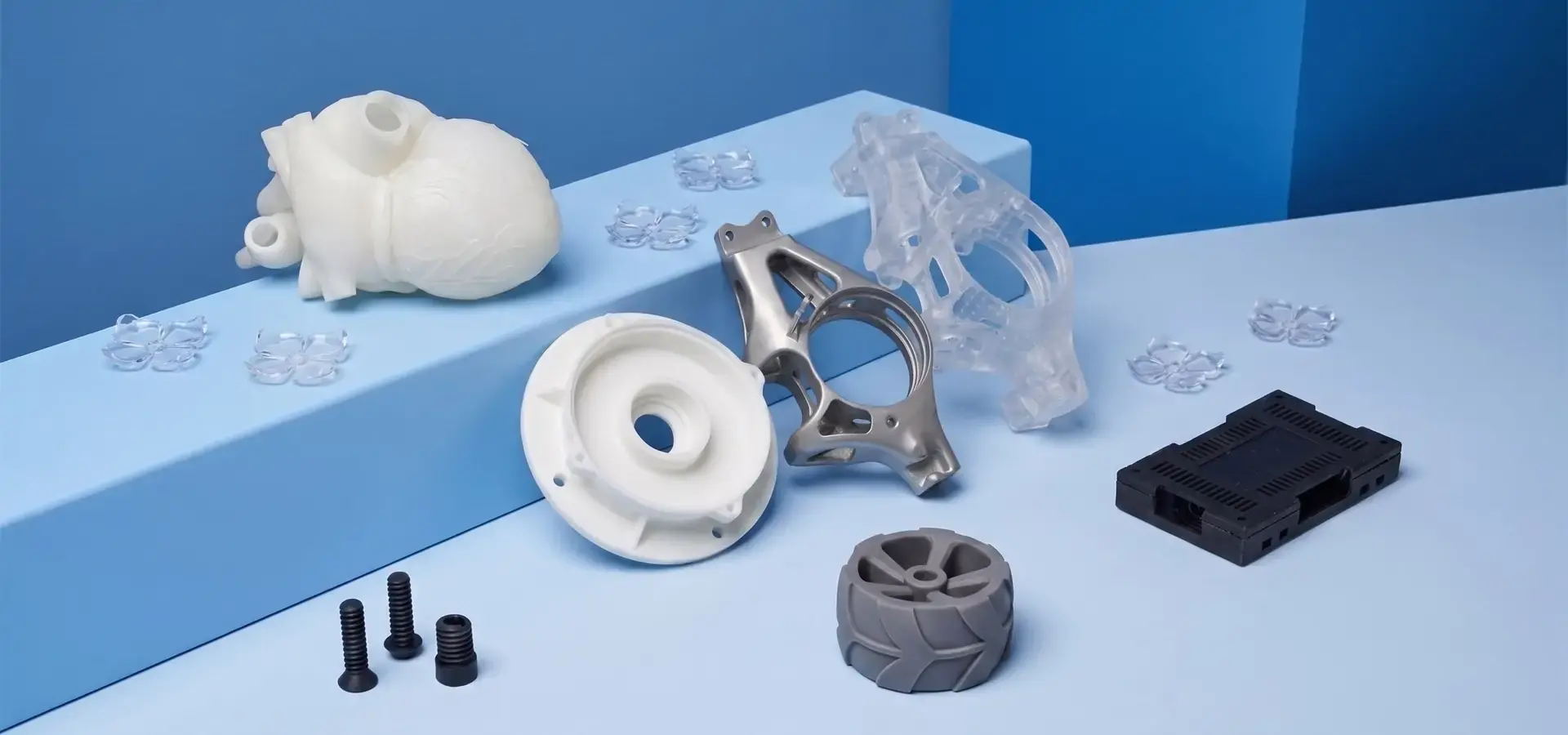
A growing number of engineering-grade photopolymer plastics can be used with modern industrial SLA 3D printers. For functional prototyping, engineering resins can be formulated to simulate selected characteristics of materials such as ABS, polypropylene, or elastomers, depending on application requirements. Specialised materials include clear resins that become optically clear after post-processing, high-temperature resins with heat deflection temperatures above 100°C for demanding applications, bendable elastomers for gaskets and seals, and biocompatible mixtures that are approved for making medical devices.
This material is very flexible, so it can be used in many different areas. Engineers who work on cars make models of dashboards and patterns for casting. Aerospace teams use SLA-printed models, tooling components, and casting patterns to validate complex designs, including parts with complicated geometries and internal features. Surgical guides and aligner models are made in dental labs. Before investing in tools, people who make consumer gadgets try comfortable housing. The one thing that all of these different uses have in common is that the technology can turn digital designs into physical parts with precise geometry and material performance that is useful for production.
Criteria for Evaluating Industrial SLA 3D Printer Brands
Technical Performance Metrics That Matter
When purchasing industrial stereolithography equipment, professionals should prioritize several key technical specifications. Print resolution is evaluated through factors such as laser spot size, minimum feature capability, layer thickness, and dimensional accuracy. Production output is influenced by scanning speed, laser power, galvanometer performance, resin characteristics, and the optimization of printing parameters. The maximum part size and batch production capacity are set by the build volume. Dimensional accuracy standards, which are given as differences between parts that are less than and more than 100 mm, show how reliable an assembly is for practical purposes that need to fit tightly.
Industrial systems are different from desktop units because they have machines that are stable during long print jobs. To keep performance stable during 24-hour production processes, quality makers use strong metal frames, platforms that reduce shaking, and heat management. Another important choice is between open and closed material systems. Proprietary plastic ecosystems may offer better performance but make it harder to control costs, while open platforms allow for more buying options but require more proof.
Total Cost of Ownership Considerations
The price of the tools is only one part of a long-term financial study. Over the life of the printer, operational costs such as resin consumption rates, support structure material consumption, post-processing needs, and energy use add up, sometimes in a big way. Maintenance schedules for parts that wear out quickly, like recoater blades, optical windows, and laser modules, add up to recurring costs that are very different between manufacturers.
The framework for after-sales help should be carefully looked at. When problems happen, quick expert help keeps production from being held up, which costs a lot of money. Manufacturers who care about their customers' success are different from those who only sell tools because they offer full warranties, new parts, and access to application engineering experts. Response times are affected by regional service centers and distributor networks. This is especially true for international purchases, where language barriers and different time zones could make it harder for support staff to work together.
Top 5 Industrial SLA 3D Printer Brands Compared for 2026
3D Systems: Industry Pioneer with Comprehensive Solutions
3D Systems is one of the pioneers of stereolithography technology and has developed industrial additive manufacturing solutions for aerospace, automotive, healthcare, and manufacturing applications. The ProX SLA series is designed for industrial prototyping, tooling, casting patterns, and low-volume production applications. The platform supports a wide range of photopolymer materials, including engineering resins, elastomeric materials, and investment casting materials. The company's Figure 4 platform uses a modular production architecture that allows manufacturers to scale throughput by combining multiple print units with shared workflow management and post-processing systems.
Its strengths include well-established service networks in North America, Europe, and the Asia-Pacific area, as well as vertical integration that includes software, materials, and tools for post-processing. Big companies that need full solutions and want to make sure they have a stable source like this brand. However, the costs of the materials stay high, and third-party resin experiments are limited by the closed ecosystem.
Formlabs: Professional Resin Printing Technology Provider
With its Form 4 platform, Formlabs provides a professional resin 3D printing solution that brings high-resolution photopolymer printing to designers, engineers, and production teams requiring fast iteration and low-volume manufacturing capabilities. The system supports fine layer thickness settings and high-resolution printing suitable for detailed prototypes, functional models, and production aids. It is also priced affordably for small producers and service centers. Low Force Stereolithography technology reduces separation forces during printing, helping improve print reliability and enabling the production of complex geometries with optimized support strategies.
The brand's range of materials is mainly used in dentistry and medicine. Biocompatible resins and casting materials were created through clinical partnerships. Cloud-based fleet control software makes it easier to run multiple machines at once. Formlabs works best for businesses that want easy-to-use features, quick rollout, and lower start-up costs, but it may not be able to produce many big parts at once because of limits on build volume.
Stratasys: Multi-Material Innovation Leader
The Stratasys Neo series applies industrial stereolithography technology for producing large, accurate prototypes, casting patterns, and functional models using photopolymer materials. The Neo series focuses on high-accuracy stereolithography printing, offering large build volumes, smooth surface quality, and reliable production workflows for industrial prototyping applications.
The brand serves automotive and consumer product development teams requiring advanced prototyping solutions. Comprehensive lease programs bundle upkeep and support into one package, which lowers the amount of money needed up front. The investment level of Stratasys equipment reflects its industrial positioning, system capabilities, and integrated support ecosystem. However, companies that only work with one material may find cheaper alternatives.
Prodways: European Engineering Excellence
Prodways, a French company, uses open-architecture and materials science knowledge to improve industrial stereolithography. Prodways' MOVINGLight technology uses a moving digital light projection system to cure photopolymer resin layers efficiently while maintaining high surface quality and dimensional accuracy. The platform supports photopolymer materials optimized for industrial stereolithography processes, with some models offering compatibility with a range of third-party materials depending on configuration. This lets you choose where to get materials without voiding warranties.
You can choose from 300 x 300 x 300 mm beginning models to 600 x 400 x 500 mm production units for your build platform. Its main applications include footwear manufacturing, jewelry production, dental applications, and industrial casting patterns. European manufacturers who value regional supplier relationships and organisations that value material procurement independence like the brand, but North American service infrastructure is still not as developed as competitors.
Magforms: Integrated Material-Equipment Solutions
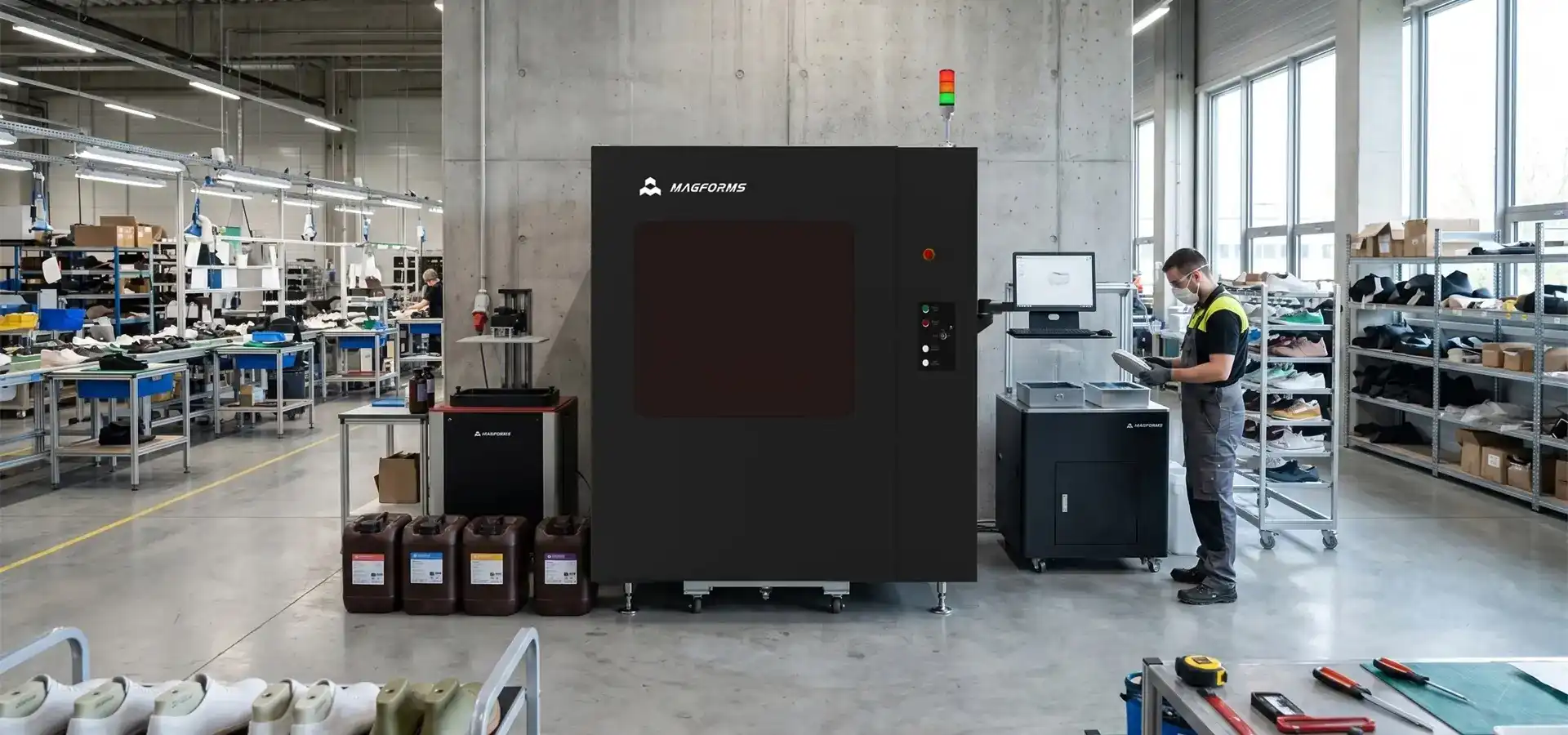
Vertical integration, which combines developing photopolymer resin with making precise stereolithography equipment, is what makes Magforms stand out. This integration allows materials and equipment parameters to be optimized together, improving process consistency compared with systems developed without material-equipment coordination. Magforms industrial SLA systems integrate high-precision galvanometer scanning systems and stable UV laser sources to support consistent performance during demanding production workflows.
The variable spot scanning technology is designed to balance fine-detail printing and production efficiency. The laser spot size can be adjusted according to different printing requirements, using smaller spot sizes for detailed features and larger scanning areas for improving production efficiency in suitable regions. Compared with fixed-spot scanning approaches, variable spot technology can improve scanning efficiency in specific applications while maintaining industrial-level dimensional accuracy when properly calibrated. High-precision servo motion systems help maintain stable platform positioning and repeatable movement during long-duration printing operations.
The equipment architecture stresses long-term stability by using high-quality parts. HIWIN linear guides and precision transmission components support stable Z-axis movement and long-term mechanical reliability. A marble platform with low expansion and 2 mm metal enclosure pieces keeps heat from moving during long builds. Integrated temperature management helps maintain more stable resin processing conditions and reduces the impact of environmental temperature fluctuations. This helps reduce print instability caused by environmental temperature variations.
Magforms' open material system supports a wide range of 355nm-compatible photopolymer resins and doesn't need any special locks or chips for authentication. This adaptability lets users find the best material prices and try out different formulas as the needs of their applications change. The curved platform holder has support plates that let resin drain, which cuts down on cleaning time and material waste during post-processing.
Some safety features are acrylic doors that keep out harmful light, optical covers that keep lasers from shining on things, and UV-blocking Philips lamps that keep sensitive parts safe from damage from outside light. The iBuild 2.0 control software is easy to use and doesn't slow down the system. Mobile optimisation lets you monitor and manage jobs from afar.
Magforms has developed experience in transparent resin applications, focusing on achieving high optical clarity and reliable printing performance through optimized materials and process parameters. They have 22 patents to back this up and work with over 300 businesses around the world. The professional after-sales team promises to respond within 24 hours, which keeps production from stopping, which happens a lot when a company doesn't have a strong support system. Magforms is a great choice for companies that want complete commercial SLA 3D printer options without having to pay a lot more than other brands. They have great tech, knowledge of materials, and great customer service.
Comparative Analysis and Buyer Recommendations
Side-by-Side Brand Performance Matrix
When comparing leading Industrial SLA 3D Printer solutions across key technical specifications, each brand demonstrates different strengths in accuracy, materials, production workflow, and application support. 3D Systems offers a broad range of industrial SLA platforms with large-format options and extensive photopolymer material choices, although these systems are typically positioned toward higher-end industrial applications. Formlabs provides accessible professional resin 3D printing solutions with user-friendly operation, although its build capacity and system architecture target different applications compared with industrial laser-based SLA platforms. Stratasys provides industrial stereolithography systems focused on large-format prototyping, surface quality, and reliable production workflows. Prodways balances European engineering quality with material flexibility. Magforms combines variable spot scanning technology, open material compatibility, and application-focused technical support for industrial SLA users.
Dimensional accuracy varies depending on printer architecture, material selection, calibration procedures, and part geometry. Many industrial SLA systems target tolerances around ±0.1 mm for suitable applications, but buyers should evaluate manufacturer specifications and sample parts under real production conditions. Speed differences often depend on scanning strategy, laser configuration, layer thickness, resin properties, and workflow optimization. Variable spot scanning systems such as Magforms are designed to balance detail resolution and production efficiency. Material compatibility divides brands into proprietary ecosystems offering validated performance versus open platforms providing procurement flexibility. Organizations must weigh immediate material cost savings against potential validation expenses when selecting resin suppliers outside manufacturer-approved lists.
Matching Brands to Specific Industrial Applications
Biocompatible material approvals and regular measurement accuracy are needed to make high-precision medical devices. Formlabs and 3D Systems both keep a lot of paperwork that helps with regulatory applications. Aerospace prototyping often requires large build capacity, dimensional stability, and materials capable of meeting application-specific performance requirements. Large-format industrial SLA systems from manufacturers such as Prodways and Magforms can support these demanding workflows. Open-material systems can provide automotive service companies with greater flexibility when evaluating different resin suppliers and application requirements.
Startup service providers, university research labs, and small product development companies that are trying to stay within their budgets should look at the total cost of ownership, which goes beyond the purchase price. Magforms offers great value by offering competitive equipment prices, open material compatibility, and quick after-sales support that keeps downtime costs to a minimum. Established companies that already have an additive infrastructure may put ecosystem integration at the top of their list of priorities. This way, brands can be made to work with existing software, and workflows will be more efficient, even if the materials cost more.
Strategic Procurement Recommendations
Selecting an Industrial SLA 3D Printer that delivers reliable results starts with clearly defining application requirements, production volume, material performance, and accuracy expectations. Before hiring suppliers, write down the shapes of the parts you want, how many you want to make, how the material should perform, and the level of accuracy you require. Request sample parts produced with application-relevant resins to evaluate surface quality, dimensional accuracy, mechanical performance, and production repeatability. Visual inspection and measurement testing will show you more than what is written on the specification sheets.
Look at the provider's support infrastructure that is important to the sites of your facilities. Long periods of downtime during fixing can be avoided with regional service centers, local dealer networks, and expert support that is available during your business hours. Carefully read the guarantee terms, making sure to note the service times for important parts like lasers and galvanometers that are expensive to repair. To keep long-term operating budgets stable, negotiate service contracts that include calibration, preventative maintenance, and replacement parts.
Consider alternative financing options, such as equipment leasing, to preserve capital for materials, staffing, and production expansion. This way, you can keep your capital for things like supplies and staffing, and the upkeep costs are rolled into monthly payments that you can budget for. Authorised distributors usually set up flexible payment plans that work with budget cycles. When you buy more than one unit, you should talk about group prices and get specialised application tech help during the installation and operator training stages.
Conclusion
Choosing the right Industrial SLA 3D Printer in 2026 requires evaluating technical performance, material compatibility, production requirements, and long-term service support. 3D Systems and Stratasys provide established industrial additive manufacturing solutions for organizations seeking mature equipment ecosystems and comprehensive support services. Formlabs makes professional stereolithography more accessible for smaller businesses and specific medical uses. Prodways provides European engineering with a range of materials. Magforms differentiates itself through integrated resin and equipment development, variable spot scanning technology, open material compatibility, and application-oriented technical support. The best option matches the capabilities of the equipment with the specific needs of the production process and forms relationships with makers that are dedicated to the success of their customers beyond the sale of equipment.
FAQ
1. What drives the total cost of ownership for industrial stereolithography equipment?
Total ownership costs extend well beyond purchase price to encompass material consumption rates, support structure requirements, post-processing labor, and maintenance schedules. Resin costs can vary significantly between proprietary and open-material systems—organizations printing high volumes should calculate annual material expenses based on realistic part production forecasts. Failed prints waste both material and machine time, making reliability metrics crucial. After-sales support quality directly impacts uptime—responsive technical assistance and readily available spare parts prevent extended production stoppages that quickly exceed initial equipment savings from lower-cost equipment options.
2. How does industrial SLA compare with SLS and FDM technologies?
Industrial stereolithography excels in surface finish quality and dimensional accuracy, producing parts requiring minimal post-processing compared to layer lines characteristic of FDM or surface texture from SLS powder. SLA supports transparent, flexible, and specialized photopolymer materials, while SLS uses powder-based materials that provide different mechanical characteristics and application advantages. However, SLS eliminates support structure requirements for complex geometries and processes stronger engineering thermoplastics. FDM often provides lower material costs and simpler operation for many prototyping applications, although performance depends on material selection and equipment configuration. Technology selection depends on application priorities—appearance models often benefit from SLA's surface quality advantages, functional testing often suits SLS, and basic concept validation may justify FDM economy.
3. What should buyers expect when selecting industrial SLA suppliers?
Reputable industrial SLA 3D printer manufacturers provide sample parts demonstrating equipment capabilities with materials matching customer applications. Expect detailed technical specifications including accuracy tolerances, scanning speeds, and build volumes. Transparent material compatibility documentation indicates whether proprietary resins are mandatory or third-party options are supported. Warranty coverage varies by manufacturer and region, with many suppliers offering standard warranties and optional extended service agreements. Authorized distributors should offer local technical support, operator training, and installation assistance. Request customer references in similar industries to verify real-world performance and support responsiveness before finalizing purchase decisions.
Partner with Magforms for Advanced Industrial SLA 3D Printer Solutions
Magforms stands ready to transform your additive manufacturing capabilities through precision industrial SLA 3D printer systems engineered for demanding production environments. Our integrated approach combines photopolymer resin development with industrial stereolithography equipment featuring precision galvanometer scanning, variable spot scanning technology, and optimized dimensional accuracy for demanding applications. The open material architecture supports a wide range of 355nm-compatible photopolymer resins, allowing users greater flexibility in material selection. Magforms SL800 Industrial SLA 3D Printer is designed for large-format industrial applications, featuring an 800 × 800 × 550 mm build volume, precision laser scanning technology, and stable motion control components. The system is suitable for producing large prototypes, casting patterns, product development models, and functional parts that require high surface quality and dimensional consistency.
Whether your organization requires high-precision medical prototyping, automotive casting patterns, or aerospace component validation, Magforms equipment delivers the stability, speed, and surface quality your applications demand. Contact our procurement specialists at info@magforms.com to discuss customized industrial SLA 3D printer configurations, arrange sample part evaluations, and explore flexible financing options tailored to your budget. Join over 300 global enterprises trusting Magforms as their industrial SLA 3D printer manufacturer and experience the performance advantages of truly integrated material-equipment solutions.
References
1. Gibson, I., Rosen, D., Stucker, B., & Khorasani, M. (2021). Additive Manufacturing Technologies (3rd ed.). Springer International Publishing.
2. Stansbury, J. W., & Idacavage, M. J. (2016). 3D printing with polymers: Challenges among expanding options and opportunities. Dental Materials, 32(1), 54-64.
3. Ligon, S. C., Liska, R., Stampfl, J., Gurr, M., & Mülhaupt, R. (2017). Polymers for 3D Printing and Customized Additive Manufacturing. Chemical Reviews, 117(15), 10212-10290.
4. Ngo, T. D., Kashani, A., Imbalzano, G., Nguyen, K. T., & Hui, D. (2018). Additive manufacturing (3D printing): A review of materials, methods, applications and challenges. Composites Part B: Engineering, 143, 172-196.
5. ISO/ASTM 52915:2020. Specification for additive manufacturing file format (AMF) Version 1.2. International Organization for Standardization.
6. Wendel, B., Rietzel, D., Kühnlein, F., Feulner, R., Hülder, G., & Schmachtenberg, E. (2008). Additive Processing of Polymers. Macromolecular Materials and Engineering, 293(10), 799-809.

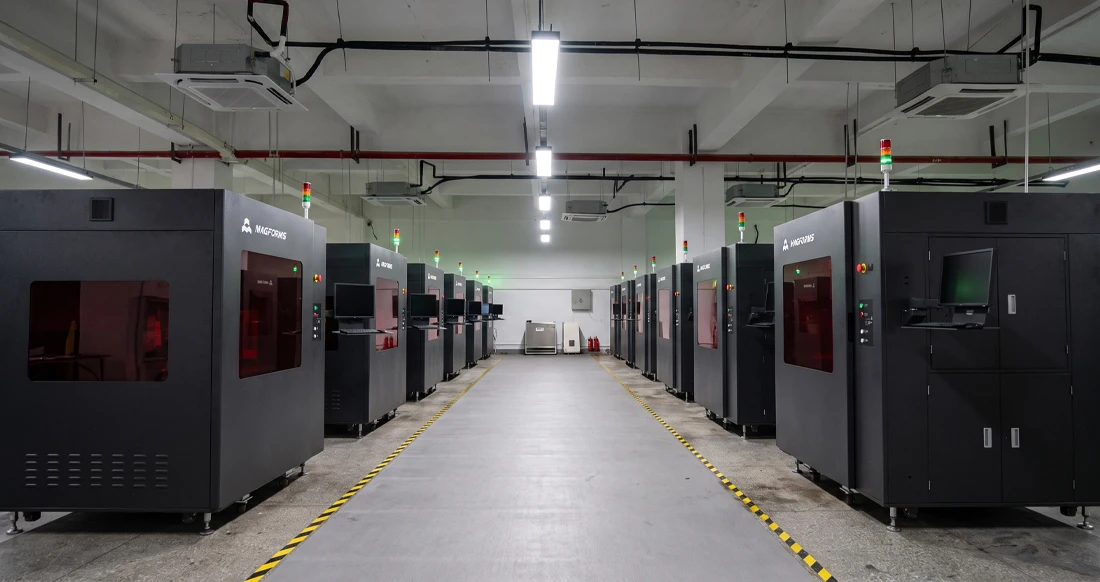
Magforms makes design and manufacture easier.
Popular Blogs
-
 Industry InsightsManufacturing Industry
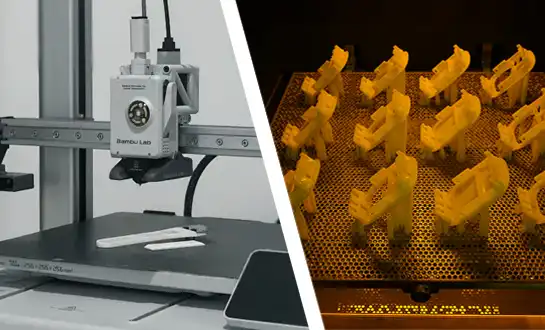
FDM vs. SLA Printer: Which Technology Is Right for Your Project?
-
 Industry InsightsManufacturing Industry
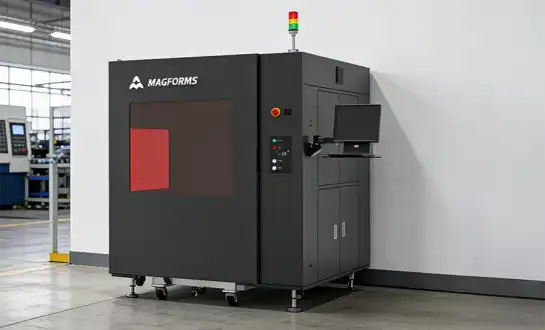
Top 5 Applications of Industrial 3D Printers in Manufacturing Today
-
 Industry InsightsManufacturing Industry
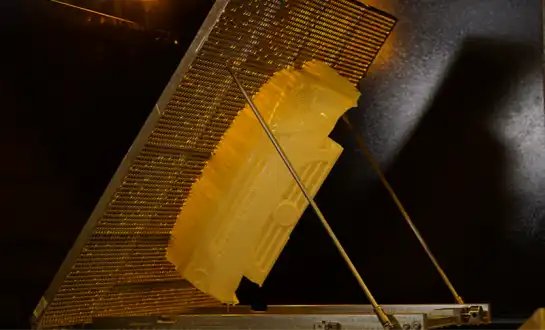
Why Stereolithography 3D Printers Are Unmatched for Microfluidic Device Prototyping?