Industrial SLA 3D Printer Explained: From Resin Curing to Final Output
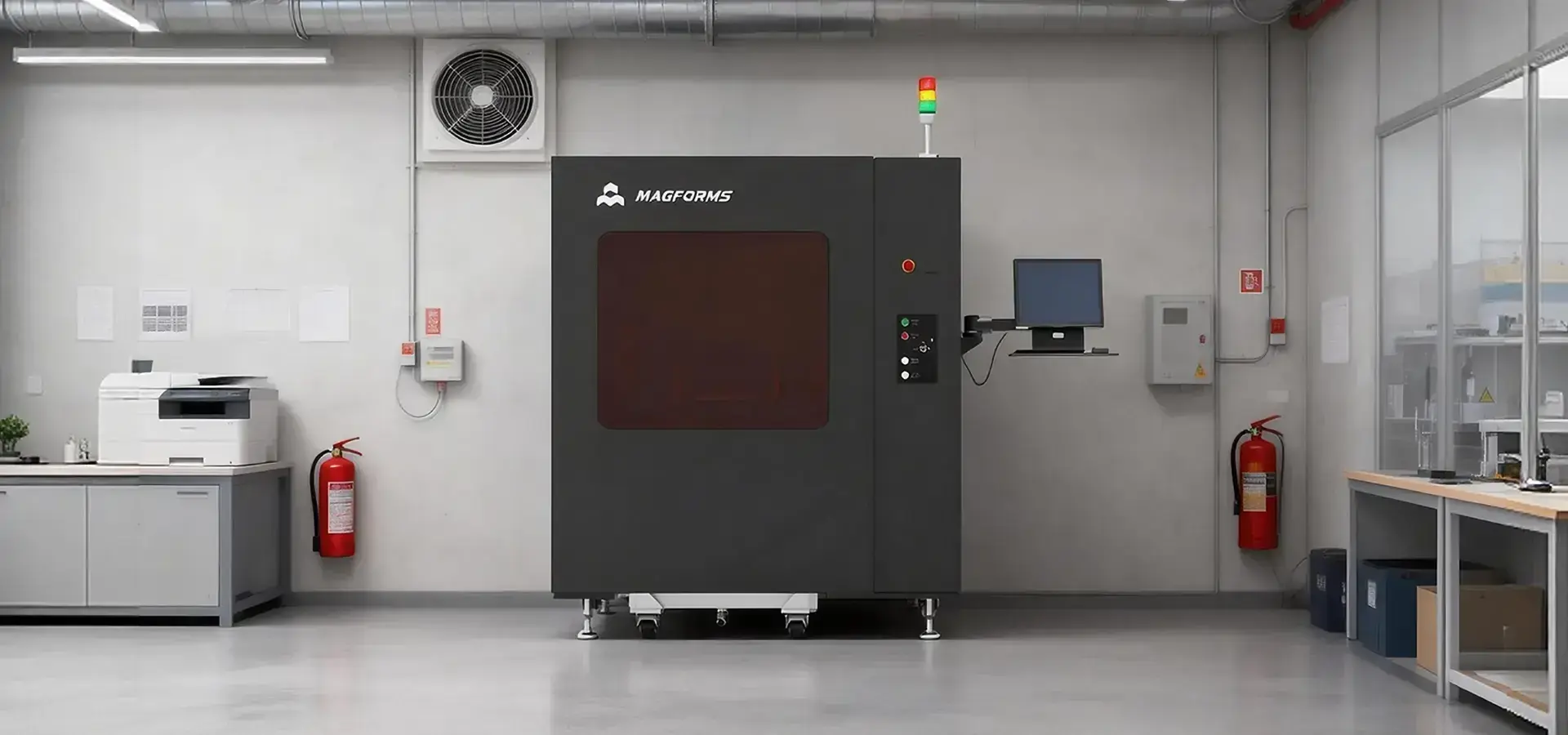
When manufacturers need to transform liquid photopolymer resin into highly detailed prototypes, engineering models, and small-batch production parts, stereolithography (SLA) provides one of the most accurate solutions in additive manufacturing. An Industrial SLA 3D Printer uses advanced photopolymerization principles to produce highly accurate parts with smooth surface finishes that can closely match the appearance requirements of injection-molded components. This technology connects digital design to physical reality, helping businesses accelerate development cycles while achieving high resolution, dimensional consistency, and repeatable results across prototype and small-batch production workflows. It can be used for everything from automotive rapid prototyping to dental customization and aerospace component validation.
Understanding Industrial SLA 3D Printing Technology
The Core Principle of Photopolymerization
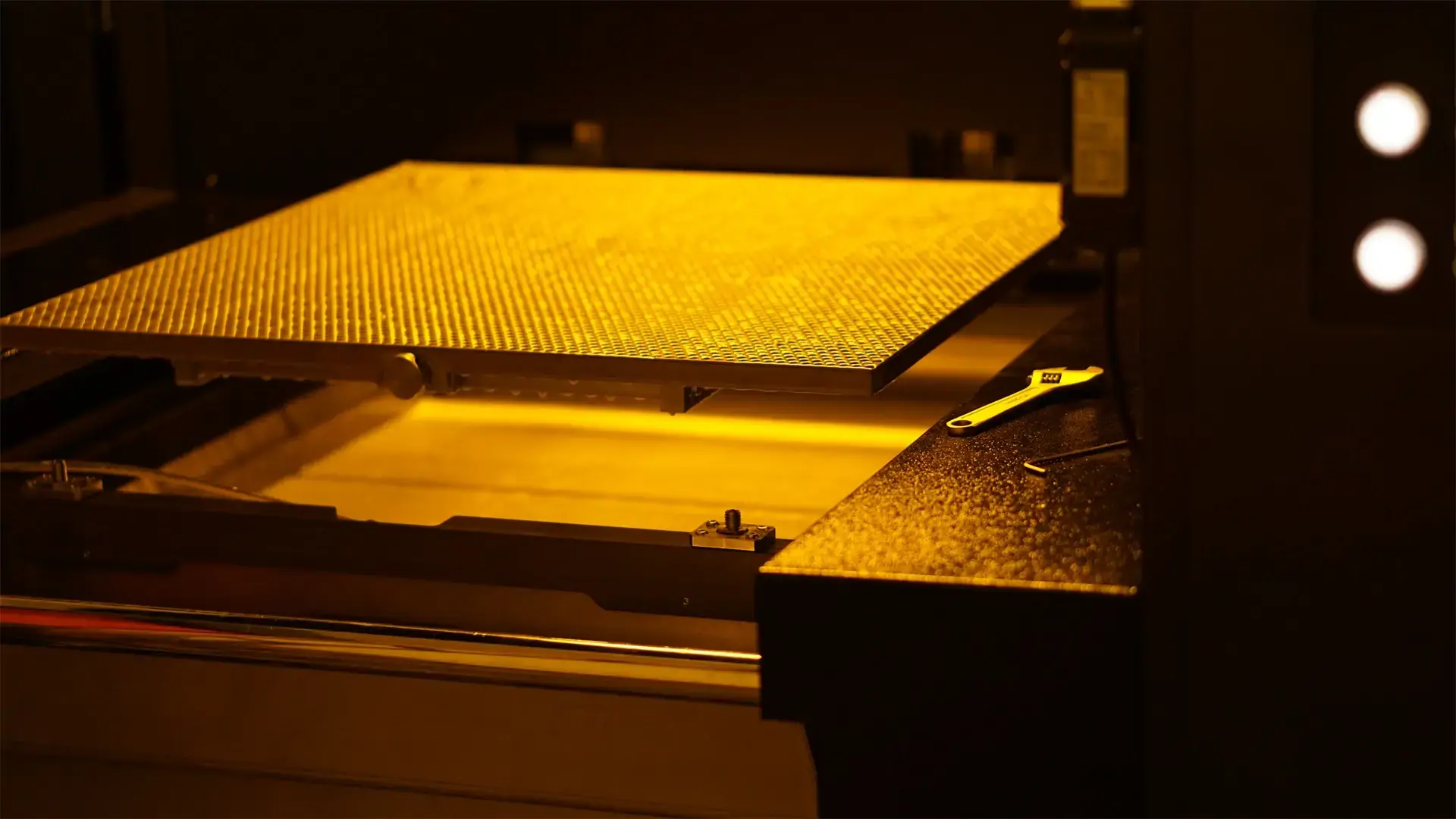
A UV laser selectively traces cross-sectional patterns on liquid photopolymer resin through a process known as stereolithography. When focused UV laser energy, commonly using a 355 nm wavelength in industrial SLA systems, reaches the resin, it initiates photopolymerization and cross-linking reactions that solidify the material layer by layer. Industrial SLA 3D Printer systems typically use solid-state UV lasers combined with precision galvanometer scanning systems. Depending on the optical design and application requirements, laser spot size can be optimized for balancing printing speed, resolution, and surface detail. This variable spot technology allows the printer to dynamically adjust scanning strategies during production, using different laser parameters for efficient area exposure and detailed contour processing.
During printing, industrial SLA systems rely on precise Z-axis motion control and resin management systems to maintain consistent layer formation and dimensional stability throughout the build process. This precise control makes sure that each layer adheres perfectly to the one before it. This controlled process helps produce parts with consistent mechanical properties and high dimensional accuracy. Actual tolerances depend on resin selection, part geometry, layer thickness, calibration, and post-processing conditions.
👉 What is SLA 3D printing technology
Key Components Working in Harmony
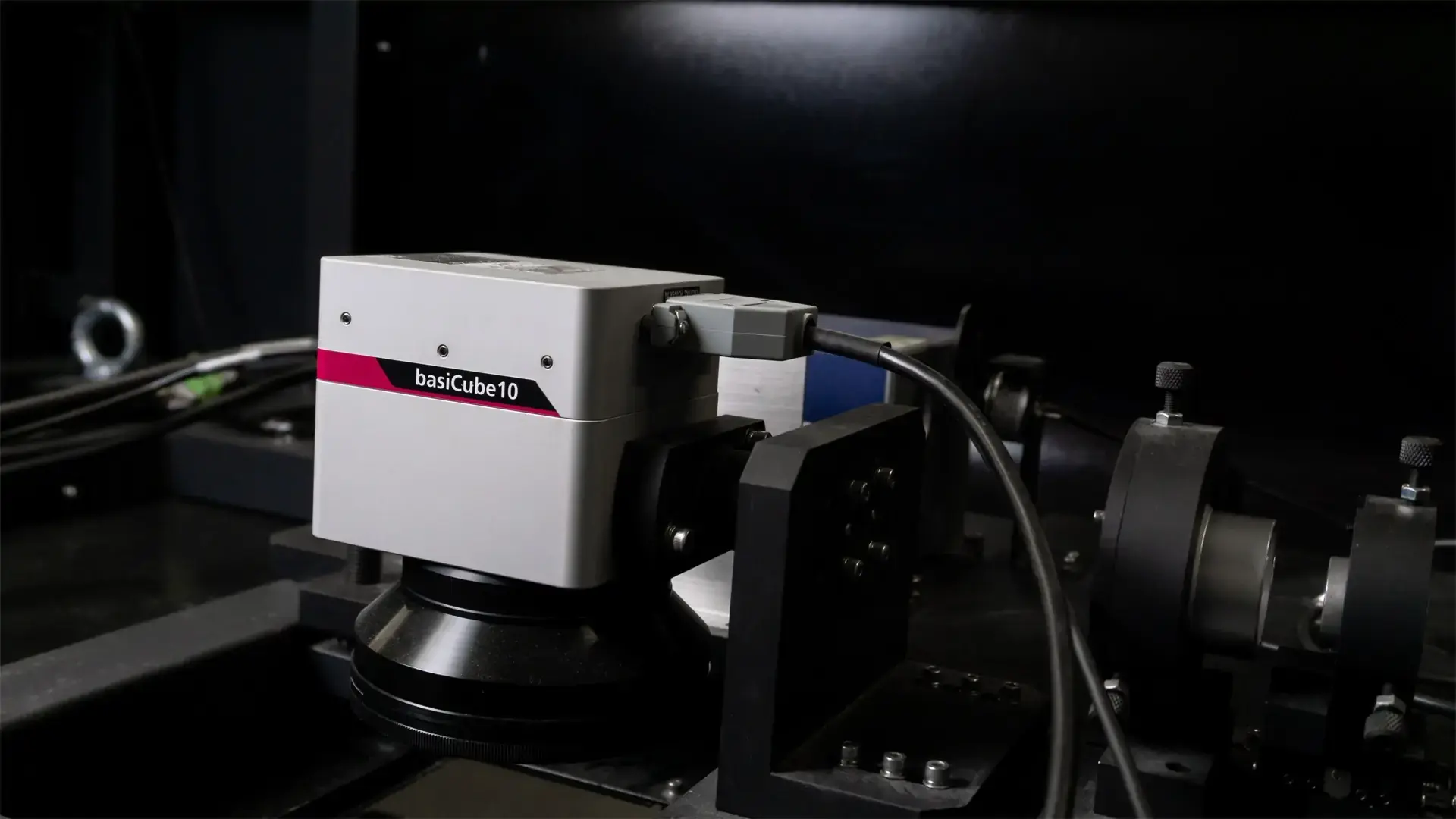
Advanced industrial systems integrate high-quality optical, mechanical, and motion-control components to support reliable long-duration operation. AOC lasers provide stable output power that stays the same during long production runs, and German Scanlab galvanometers work with the lasers to create scanning lines that are very repeatable. The platform, recoater, and Z-axis mechanisms are driven by Panasonic servo motors that provide precise motion control for stable positioning during complex builds. This lets the Z-axis move accurately even when making tall structures. For stable high-Z printing that doesn't damage parts, HIWIN linear guides and precision mechanical components contribute to long-term motion stability and repeatable positioning performance.
A UV-resistant enclosure helps protect operators from laser exposure while providing visibility during printing. Environmental control features also help maintain stable resin performance under changing temperature and humidity conditions. This full integration of high-quality hardware sets the stage for the extreme steadiness that industrial settings need.
Benefits and Applications of Industrial SLA 3D Printers
Precision That Transforms Production Workflows
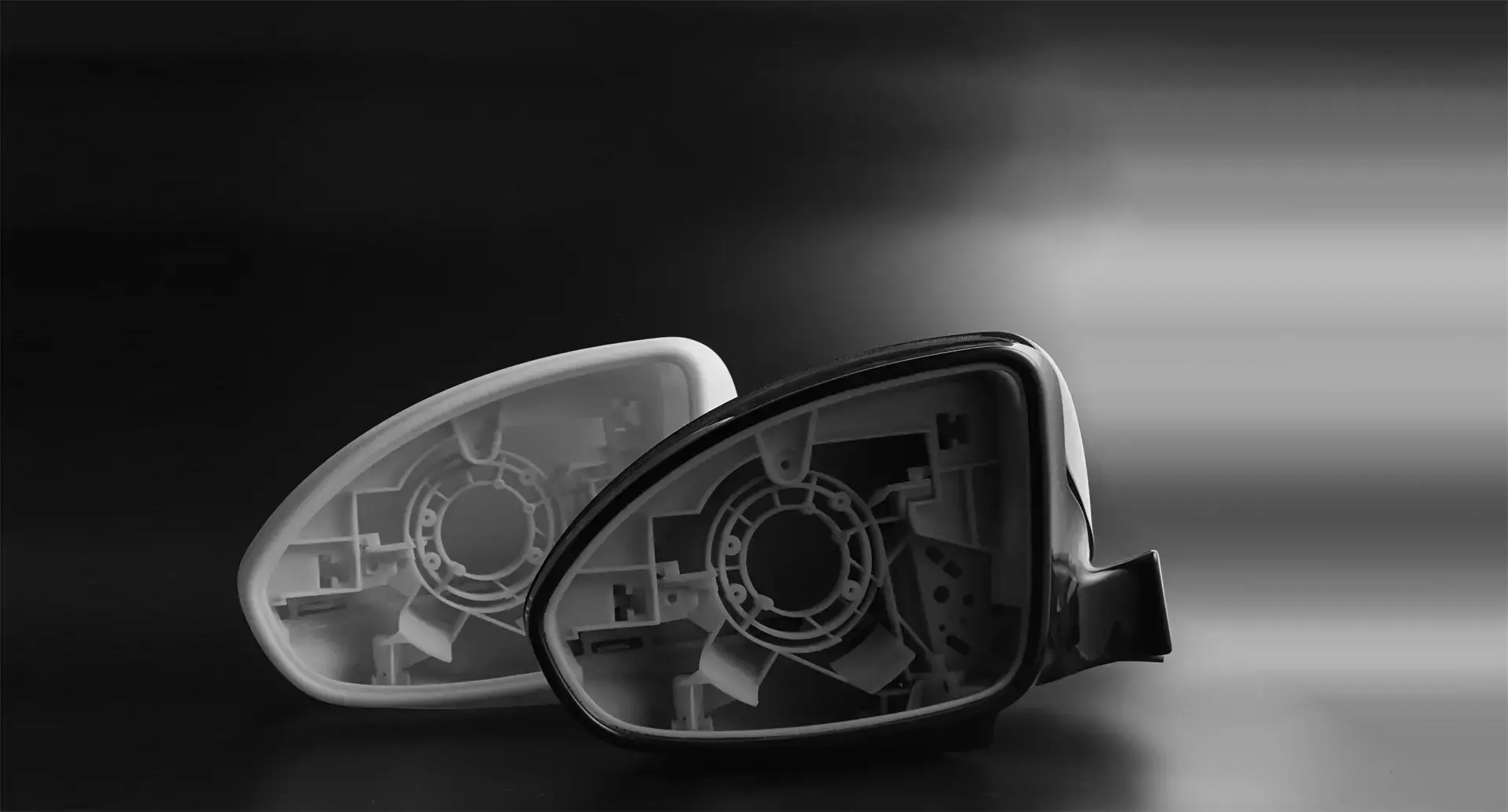
Advanced Industrial SLA 3D Printer systems based on stereolithography technology help manufacturers achieve high dimensional accuracy and smooth surface finishes for demanding applications. Compared with many extrusion-based 3D printing technologies such as FDM, SLA can reduce visible layer lines and minimize post-processing requirements.
The flexibility of the material makes these skills useful in a wide range of situations. Open material systems can support a broader range of compatible 355 nm photopolymer resins, giving users more flexibility in selecting materials for different applications. These include ABS-like resins for practical testing, clear resins for optical parts, high-temperature resins designed for applications requiring improved thermal resistance, including demanding engineering test environments. Users can evaluate different compatible resin options without being limited to a single proprietary material ecosystem.
Real-World Applications Across Industries
Stereolithography is widely used by automotive companies for rapid prototyping of interior components, design verification models, and functional testing parts. The technology shortens research and development (R&D) cycles by allowing teams to validate design changes within days instead of waiting months for traditional tooling processes. Fit-check tests can be done on these printed parts, and they can even be used as molds for vacuum casting or investment casting.
High accuracy and specialized resin options make SLA valuable for aerospace prototyping, tooling, engineering validation, and the production of complex low-volume components. The technology allows for shapes that traditional CNC machining can't easily make, and these capabilities support dimensional verification and engineering evaluation during aerospace development processes.
For personalized health care, the medical and dental fields have adopted this technology. For clear aligner thermoforming and orthodontic applications, dental labs use SLA-printed custom arch models and production aids. Surgical planning teams may use SLA-printed anatomical models and, with validated medical-grade workflows, patient-specific guides for selected orthopedic and implant-related applications. Smooth SLA surfaces can improve cleaning and visualization characteristics for medical models. For regulated medical applications, only validated biocompatible materials and approved manufacturing processes should be used.
👉 Explore Industrial SLA 3D Printer Applications and Case Studies
Consumer electronics developers use SLA technology to quickly produce appearance models, housing prototypes, and internal component validation samples. Being able to make "look-and-feel" models that can be painted, plated, or given a texture lets you see right away if the design looks good during focus group testing, which helps engineering teams shorten design iteration cycles during product development.
Comparing Industrial SLA 3D Printers With Other Technologies
Desktop SLA Versus Industrial Systems
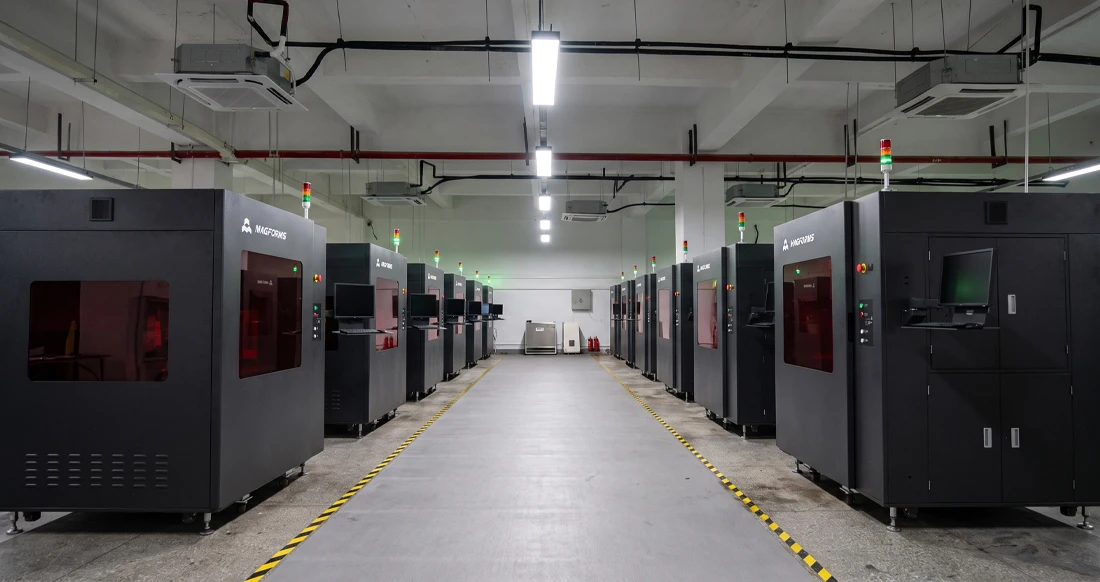
Hobbyists and small companies can use desktop stereolithography units, but industrial platforms are designed for professional production environments where larger build volumes, higher throughput, and consistent process control are required. When compared to desktop systems, industrial systems have much larger build envelopes that can hold parts that are hundreds of millimeters long. They also maintain more consistent dimensional performance across larger build areas through optical calibration and scanning compensation technologies.
The quality of the parts makes a big difference between these levels. Some industrial systems use rigid machine structures and thermally stable components to minimize vibration and dimensional changes during long production cycles. Precision recoater systems help maintain a consistent resin layer thickness, which is critical for stable layer formation and part quality. When printing nonstop for days, these engineering details decide whether production goes easily or has problems with surface defects and changes in size.
SLA Compared to SLS and DLP Technologies
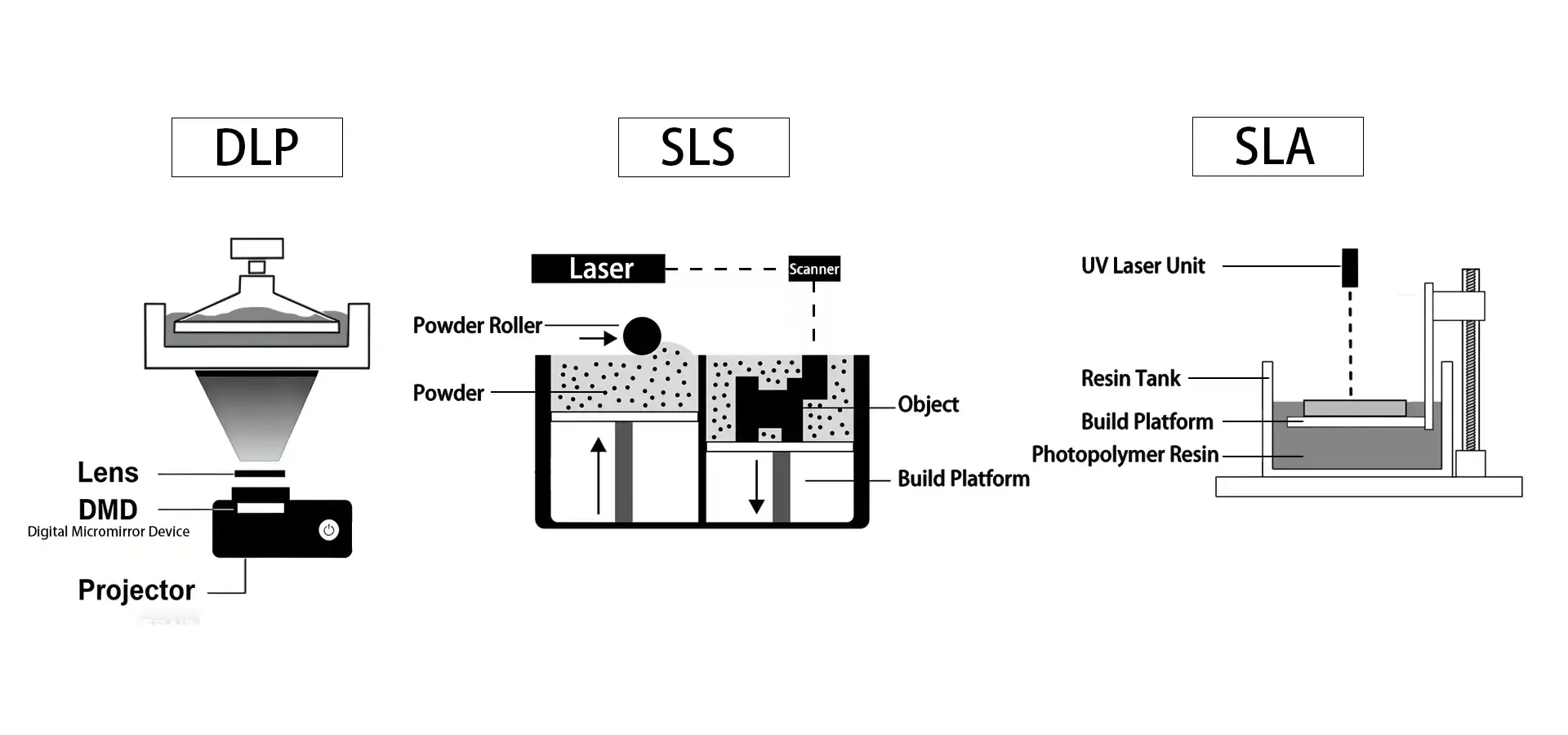
Selective laser sintering (SLS) is widely used for producing functional parts from nylon-based powders without traditional support structures. Industrial SLA 3D Printer systems based on stereolithography typically provide smoother surface finishes directly after printing, making them well suited for applications where appearance, fine details, and precise mating surfaces are important.
Digital light processing cures with a projector instead of a laser, which lets the layers be exposed quickly. But pixel resolution limits the level of detail in features, and because projector resolution is set, bigger build areas either lose detail or need more expensive optical systems. Laser-based stereolithography provides flexible scanning control, allowing manufacturers to optimize laser parameters and maintain consistent detail performance across large build areas when properly calibrated.
Material science factors also play a role in choosing technologies. Both SLA and DLP can use advanced photopolymer resins with different mechanical, thermal, and optical properties. Material performance depends more on resin formulation and curing process than the exposure method alone. SLS materials are strong, but they don't have the clarity and fine surface detail that resin-based systems do.
Procurement Guide: Buying and Maintaining Industrial SLA 3D Printers
Evaluating Total Cost of Ownership
When selecting an industrial SLA 3D Printer, procurement teams should evaluate not only the initial equipment investment but also operating costs, material expenses, maintenance requirements, and long-term productivity. Open material systems can reduce dependence on proprietary resin ecosystems and provide greater flexibility when selecting compatible materials. This lets procurement teams find formulas that meet their technical requirements at prices that are competitive. This adaptability can lower the cost of materials by 30 to 40 percent compared to locked systems and allow testing with special resins made for certain uses.
Through its effect on production downtime and scrap rates, operational efficiency has a direct effect on total cost. The failure rate of systems built with high-quality parts is much lower, which means less unexpected downtime that delays production plans. When looking at different sources, find out how long it usually takes for parts to break down and how quickly replacements can be sent through local distribution networks. Suppliers with regional service networks can usually provide faster technical support and spare-part availability for global customers.
Maintenance Protocols and Support Infrastructure
Preventive care and access to skilled technical help are both important parts of maintenance that work well. Checking that the laser power output stays within the range allowed, looking for contamination in optical parts that could affect the cure depth, and inspecting recoater components for wear or damage is an important maintenance task to ensure consistent resin recoating performance. Systems with repair points that users can reach make these tasks easier and lessen the need for field service trips for regular maintenance.
The quality of help after the sale has a big effect on long-term happiness. Small problems don't turn into crises that stop production when there is a professional support team that provides responsive technical support to help customers resolve operational challenges. Look for providers that offer full technical training programs that teach your employees how to fix common problems, do regular calibrations, and find the best print settings for various materials and shapes.
Software environment issues should also be taken into account. Efficient slicing software and responsive printer control systems can improve operator productivity and reduce workflow interruptions. Mobile-friendly interfaces let you watch and handle jobs from afar, giving you more options for how to oversee production.
👉 Industrial SLA 3D Printer types and solutions
Future Trends and Optimization in Industrial SLA 3D Printing
Emerging Innovations Driving Performance
The field of Industrial SLA 3D Printer technology continues to advance through improvements in automation, process control, and material development. Advanced scanning systems and data-driven process optimization technologies can analyze printing results and help improve scanning strategies and process consistency. By analyzing process data and optimizing exposure parameters, intelligent systems may improve workflow efficiency and printing consistency depending on application requirements. The integration of artificial intelligence and automation can help transform industrial SLA systems into more adaptive manufacturing platforms with improved process monitoring and optimization capabilities.
Another important step forward is variable spot technology. Modern systems can scan 30–50% faster than their fixed-spot predecessors because they actively switch the laser focus between big spots for fast infill scanning and micro-spots for fine details. This is done without affecting the quality of the surface or the accuracy of the dimensions. This flexibility is especially useful when making parts with mixed feature densities, like complicated mechanical systems that have both solid sections and complex latticework structures.
New developments in material science have opened up more uses by creating mixtures that meet specific performance requirements. Advanced heat-resistant resins are being developed for applications requiring higher thermal performance, depending on formulation and testing conditions. This means they can be used in places like under the hood of cars and in thermal testing equipment. Transparent SLA resins can provide optical clarity suitable for prototyping, visualization, and certain functional applications when properly processed. This makes them useful for lighting, fluid visualization, and consumer product development, all of which need appearance-grade transparency.
Strategies for Maximizing System Performance
Organizations get the most out of their investments in stereolithography by using optimization methods. By setting basic print values for commonly used materials, new projects can build on these starting points instead of starting from scratch. Keeping a library of materials with recorded cure depths, mechanical qualities, and successful print settings speeds up job setup and raises the rate of success on the first try.
Regular tuning checks make sure that the system stays at its best even as its parts age naturally. Checking the platform's flatness, the laser spot's circularity across the build area, and the state of the recoater blade on a regular basis can find and stop slow drift before it affects the quality of the part. Many problems that seem to happen all of a sudden actually happen over time. Proactive tracking finds these trends early, when they are easiest to fix, instead of after flaws show up in finished parts.
By using monitor data and usage trends to plan when to replace parts before they break, predictive maintenance methods can be added. Tracking laser operating hours and monitoring output performance can help identify gradual energy degradation before it affects part quality. This method, which is based on data, cuts down on unexpected downtime and makes systems last longer overall.
Conclusion
Stereolithography has grown into an important part of modern manufacturing because it provides the accuracy, surface quality, and material flexibility that are needed for tough jobs. Procurement teams and technical staff can choose systems that meet their output goals and help the company grow if they understand the photopolymerization process, how to integrate components, and best operational practices. As laser control, clever automation, and material science keep getting better, these systems become more useful for developing new products and making specialized goods. This technology is becoming increasingly valuable for businesses seeking flexible production, high-quality prototypes, and specialized manufacturing capabilities through excellent resolution, material options, and process control.
FAQ
What distinguishes an Industrial SLA 3D Printer from desktop models?
High-power solid-state lasers, precision galvanometer scanning systems, larger build platforms, and advanced control systems are key features that differentiate industrial SLA platforms from desktop machines. The build area grows to hundreds of millimeters, and high-quality parts like servo motors and linear guides support highly precise motion control and repeatable positioning performance during the printing process. Industrial machines keep working at the same level even during multi-day production runs. Desktop printers, on the other hand, are better for occasional testing needs because they can only print smaller amounts of parts and don't have to meet as many strict requirements.
How do material compatibility and resin selection impact results?
The mechanical, temperature, and chemical properties of finished parts are directly affected by the qualities of the materials used to make them. For stress testing on working samples, engineering resins with a high tensile strength work well, while flexible versions let you make gaskets and living hinges. Transparent resins are used in optical applications that need to let light through, and high-temperature resin formulations are available for applications requiring improved thermal resistance. Compared to proprietary locked systems, open material systems that allow standard 355 nm wavelength resins give you more buying options and cost control.
What maintenance practices reduce equipment downtime?
Regular checks of optical parts keep them from getting dirty, which can change the regularity of the cure depth. Layer quality is kept up by checking the state of the recoater blades and the flatness of the platform. Laser power output is tracked to catch degradation before it affects the accuracy of the part. Setting up preventive repair schedules based on working hours instead of waiting for problems to happen reduces the number of unplanned stops in production. Having quick access to technical help that fixes problems within 24 hours protects production plans even more from long periods of downtime.
Partner with Magforms for Your Industrial SLA 3D Printer Needs
As a company with 22 patents and 30 years of experience in additive manufacturing, Magforms offers Industrial SLA 3D Printer stereolithography options that combine high-quality tools with the best material formulations. Our systems use AOC lasers, German Scanlab galvanometers, and Panasonic servo motors to make sure they work reliably 24 hours a day, seven days a week, with failure rates that are much lower than the average for the industry. Variable spot technology and optimized scanning strategies improve productivity while maintaining required print quality.
As both a material scientist and an equipment maker, we get rid of the compatibility problems that come up with mixed-vendor methods. This means that we can get higher print success rates, lower scrap costs, and faster production schedules. Our open material approach supports a wide range of compatible 355 nm photopolymer resins, and our own formulas give the best performance in engineering, clear, high-temperature, and flexible uses. Our technical support team provides responsive assistance to help customers solve application and operation challenges.
No matter if you run a 3D printing service center, a car R&D lab, a dental manufacturing facility, or an aircraft component provider, Magforms systems can adapt to your needs and provide the stability, accuracy, and throughput that demanding applications need. Get in touch with us at info@magforms.com to talk about how Magforms Industrial SLA 3D Printer options can help your business make more things and compete better.
References
1. Gibson, I., Rosen, D., & Stucker, B. (2021). Additive Manufacturing Technologies: 3D Printing, Rapid Prototyping, and Direct Digital Manufacturing. Springer International Publishing.
2. Jacobs, P. F. (1992). Rapid Prototyping & Manufacturing: Fundamentals of Stereolithography. Society of Manufacturing Engineers.
3. Ligon, S. C., Liska, R., Stampfl, J., Gurr, M., & Mülhaupt, R. (2017). Polymers for 3D Printing and Customized Additive Manufacturing. Chemical Reviews, 117(15), 10212-10290.
4. Quan, H., Zhang, T., Xu, H., Luo, S., Nie, J., & Zhu, X. (2020). Photo-curing 3D printing technique and its challenges. Bioactive Materials, 5(1), 110-115.
5. Stansbury, J. W., & Idacavage, M. J. (2016). 3D printing with polymers: Challenges among expanding options and opportunities. Dental Materials, 32(1), 54-64.
6. Wendel, B., Rietzel, D., Kühnlein, F., Feulner, R., Hülder, G., & Schmachtenberg, E. (2008). Additive Processing of Polymers. Macromolecular Materials and Engineering, 293(10), 799-809.

Magforms makes design and manufacture easier.
Popular Blogs
-
 Industry InsightsManufacturing Industry
FDM vs. SLA Printer: Which Technology Is Right for Your Project?
-
 Industry InsightsManufacturing Industry
Top 5 Applications of Industrial 3D Printers in Manufacturing Today
-
 Industry InsightsManufacturing Industry
Why Stereolithography 3D Printers Are Unmatched for Microfluidic Device Prototyping?