Understanding the Core Technology Behind Industrial SLA 3D Printer Systems
Using stereolithography technology to transform liquid photopolymer resins into solid parts through controlled laser-induced photopolymerization, Industrial SLA 3D Printers represent an advanced additive manufacturing solution for applications requiring high accuracy, fine details, and excellent surface quality. For B2B buying workers making equipment purchases, it's not just helpful to understand the core technology behind these systems; it's necessary. Compared with traditional manufacturing methods, Industrial SLA systems provide advantages in rapid prototyping, complex geometry production, and low-volume manufacturing where tooling costs and lead times can become limitations. Understanding how Industrial SLA systems work, what makes them different from other options, and how to choose the right one will have a direct effect on your production efficiency and bottom line, no matter if you're the R&D director at an auto company, the production manager in the aerospace industry, or the founder of a new design studio. This guide takes the mystery out of the technology, looks at how it can be used in the real world, and gives multi-industry businesses looking for high-stability, high-precision 3D printing options useful buying advice.
What is an Industrial SLA 3D Printer and How Does It Work?
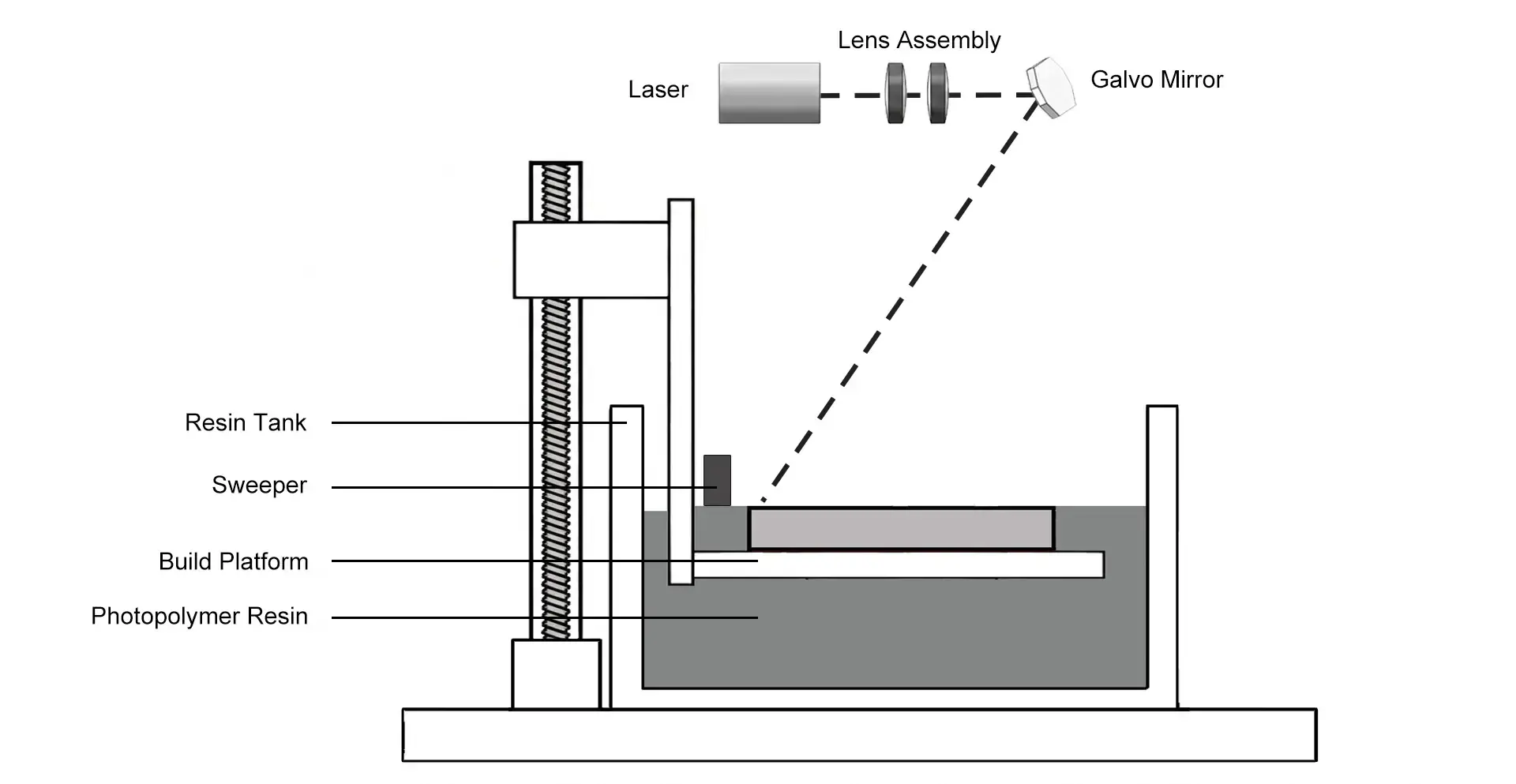
An Industrial SLA 3D Printer is an additive manufacturing system based on stereolithography and vat photopolymerization technology. It uses controlled light energy to cure liquid photopolymer resin layer by layer, producing parts with high dimensional accuracy, fine feature resolution, and smooth surface characteristics. Industrial-grade systems typically incorporate rigid mechanical structures, UV laser sources, and precision galvanometer scanning systems designed to improve repeatability and stability during extended production operations.
👉 What is SLA 3D printing technology
The Core Printing Process
A build platform is positioned inside a vat containing liquid photopolymer resin to begin the printing process. A galvanometer scanning device guides a very precise laser beam across the cross-sectional shape of the part and onto the plastic surface. The laser energy initiates photopolymerization, creating cross-linked polymer structures in the areas exposed to the beam and gradually forming a solid layer. After each layer is completed, the build platform moves according to the machine configuration, creating space for the next resin layer. In many industrial SLA systems, a recoating mechanism helps distribute fresh resin evenly before the next exposure cycle begins. This cycle will keep going for hundreds or thousands of times until the whole part is done.
Some advanced Industrial SLA systems use variable spot technology to dynamically adjust laser spot size during printing, balancing productivity and feature accuracy according to different geometry requirements. Larger spots (0.5–0.6 mm) quickly fill up spaces inside, while smaller spots (0.15–0.2 mm) define outlines and support structures with great accuracy. When compared to fixed-spot systems, this smart method speeds up printing by 30–50% without lowering the quality of the details.
Key Components Driving Performance
The high-quality parts used in Industrial SLA 3D Printers set them apart. High-stability laser systems provide consistent energy delivery, which is important for maintaining reliable curing performance during demanding industrial production environments. German Scanlab galvanometers make sure that the beam is placed precisely and with little drift, so the accuracy stays the same across the whole build area. High-quality linear motion components and servo-driven positioning systems contribute to stable Z-axis movement and repeatable layer positioning. However, final part accuracy depends on the complete system, including optics, mechanics, calibration, materials, and process parameters.
Stability is helped by the design of the machine itself. Industrial SLA systems may incorporate rigid metal structures and thermally stable bases to reduce vibration and thermal deformation during extended printing operations. Temperature management systems help maintain appropriate resin viscosity, supporting consistent recoating behavior and stable printing performance under changing environmental conditions.

Industrial SLA vs Other 3D Printing Technologies: Making the Right Choice
To choose the right additive manufacturing technology, it is important to understand how Industrial SLA compares with other major processes, including Fused Deposition Modeling (FDM), Selective Laser Sintering (SLS), and other vat photopolymerization technologies such as Digital Light Processing (DLP) and LCD-based resin printing.
Technological Principles and Accuracy
Industrial SLA systems use a focused laser beam to selectively cure liquid photopolymer resin. They typically support fine layer thickness settings, often ranging from approximately 0.05 mm and above depending on the system configuration. SLS uses a laser to selectively fuse powdered materials, commonly polymers such as nylon. It is well suited for functional prototypes and end-use parts, especially complex geometries that benefit from support-free production. However, its powder-based process generally produces a different surface texture compared with SLA. FDM uses extruded thermoplastic filament to build parts layer by layer. It offers lower equipment costs and a broad material selection, but visible layer lines and anisotropic mechanical properties may require consideration depending on part orientation and application requirements. DLP uses a digital projector to expose an entire resin layer simultaneously, which can provide high productivity advantages for certain part sizes. However, achievable feature resolution depends on projector resolution, optical design, pixel size, and build area requirements. LCD-based resin printing uses a masked light source and an LCD panel to selectively cure resin layers. It can achieve high throughput at a lower equipment cost, but industrial performance depends heavily on optical uniformity, thermal management, material compatibility, and long-term reliability.
Surface Finish and Material Versatility
Industrial SLA 3D Printers are known for producing parts with smooth surface characteristics compared with many filament-based processes. Depending on resin selection, layer thickness, and post-processing methods, SLA parts can achieve very fine surface quality suitable for applications requiring detailed appearance or precision features. SLS parts generally have a textured surface finish resulting from powder fusion, while FDM parts often show visible layer lines due to extrusion-based deposition. The final surface quality depends on process settings, materials, and post-processing methods. Compatibility with other materials is another thing that sets them apart. Different photopolymer resins optimized for specific UV laser wavelengths can be used in Industrial SLA systems, including clear, high-temperature, flexible, ABS-like, and PP-like materials. Some Industrial SLA platforms support open material compatibility, allowing users to evaluate different resin options based on performance and cost requirements. Closed material ecosystems may provide optimized workflows but can limit material flexibility.
Productivity and Cost Implications
Different technologies have very different production speeds. Advanced Industrial SLA systems may incorporate optimized scanning strategies, adaptive exposure control, or variable spot technologies to balance productivity and detail accuracy. These process optimization technologies can improve printing efficiency by reducing unnecessary exposure movements and optimizing scanning strategies, depending on part geometry and production requirements. SLS is well suited for batch production because parts can often be nested efficiently without traditional support structures. FDM has the cheapest tools, but it takes the longest to make parts of the same size. Procurement experts have to look at the price of the tools, the cost of the materials, the cost of labor for post-processing, the rate of scrap, and the need for maintenance when figuring out the total cost of ownership. In particular, for small to medium production rates where tooling costs would be expensive, Industrial SLA 3D Printers provide a competitive ROI for uses requiring high accuracy and better finishes.
👉 Industrial SLA 3D Printer types and solutions
Benefits and Applications of Industrial SLA 3D Printers in Modern Manufacturing
Industrial SLA technology provides measurable advantages in applications where accuracy, surface quality, design flexibility, and reduced tooling requirements are important factors.
High Precision and Detail Reproduction
Dimensional precision is very important for both working samples and parts that will be used in real life. For sizes up to 100 mm, Magforms' Industrial SLA systems are accurate to within ±0.1 mm, and for bigger features, they are accurate to within ±0.1% × L. This level of accuracy lets you check the structure directly without having to deal with tolerance stacking problems. Variable spot technologies can improve the balance between productivity and feature resolution, helping reproduce detailed elements such as text, edges, and complex surface features when process conditions are properly optimized.
Advanced exposure control strategies can help optimize curing transitions and improve surface quality. However, as with all layer-based additive manufacturing processes, SLA parts may still require appropriate orientation and post-processing when extremely smooth surfaces are required. Due to their naturally smooth surface characteristics, SLA parts often require less surface preparation compared with many extrusion-based printing processes before applications such as painting, coating, plating, or electroforming.
Industry-Specific Applications
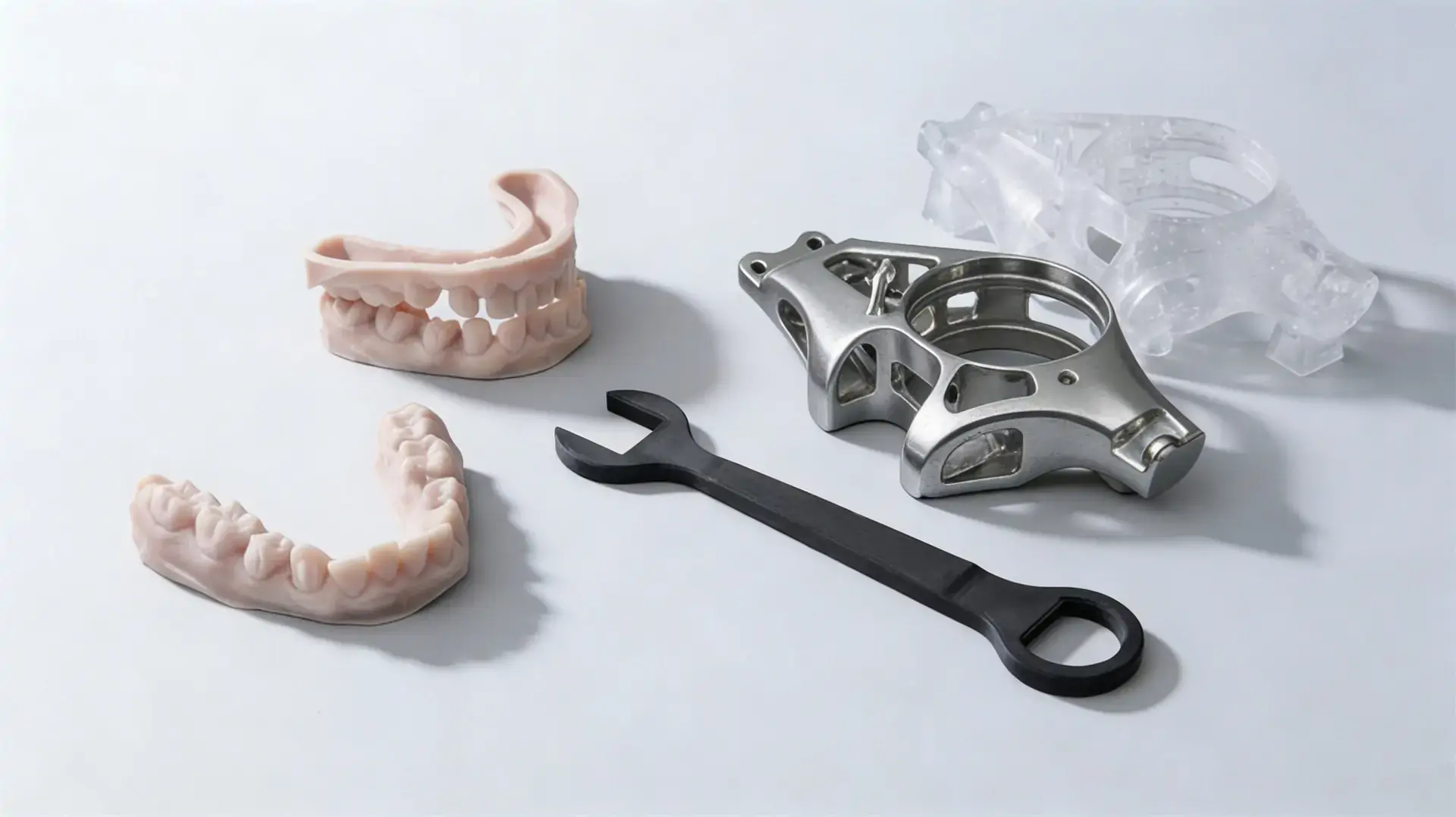
In many fields where accuracy and flexibility are important, 3d systems such as the SL800 Industrial SLA 3D Printer provide a reliable solution for precision prototyping and production workflows. Automotive manufacturers use Industrial SLA systems for rapid prototypes of interior components, design verification models, and low-volume specialty parts. This can shorten iteration cycles compared with some traditional tooling-based workflows. In aerospace applications, Industrial SLA systems are commonly used for prototypes, tooling aids, design verification models, and patterns for downstream manufacturing processes where high detail and dimensional accuracy are required.
The medical and dental fields are great examples of use cases. Dental laboratories commonly use Industrial SLA systems to produce accurate dental models that support workflows such as clear aligner production and orthodontic treatment planning. Based on CT or MRI-derived digital data, medical manufacturers can use SLA technology to produce anatomical models, surgical planning models, and certain medical workflow components. Final clinical applications require appropriate validation and regulatory compliance. Consumer goods businesses make prototypes of earphone shells and housings for smart devices. They do this quickly so that they can keep up with the short product cycles. Cultural creative companies and shoe designers make master designs for casting, decorative models, and shoe casts.
👉 Read more real-world Industrial SLA application cases demonstrate how manufacturers use these systems for prototyping, tooling, and low-volume production.
Scalability and Rapid Turnaround
Industrial SLA methods are suitable for prototypes, functional models, and certain low-volume production applications where precision and surface quality are priorities. When you use stable component selection and smart process control, you can get high success rates. This means that you use materials more efficiently and spend less on waste removal. When compared to traditional manufacturing methods, advanced scanning strategies and process optimization methods can improve productivity and shorten iteration cycles depending on part requirements. This means that new products can be on the market faster, and design iteration processes can be sped up.
Maintenance, Troubleshooting, and Ensuring Long-Term Performance
For Industrial SLA equipment to keep working at its best, it needs to be maintained in a planned way and have quick access to expert help.
Essential Maintenance Routines
Cleaning machines on a regular basis keeps them in good shape and extends their life. Resin vats should be inspected regularly for cured resin particles, contamination, or other debris that may affect exposure quality and recoating consistency. To ensure resin is distributed evenly across the build area, the recoater blade needs to be cleaned and replaced as directed by the manufacturer. Optical parts, like the laser output window and galvanometer mirrors, need to be kept clean from resin splatter and dust. Magforms systems have optical protection covers and front doors made of acrylic glass to keep external contaminants away from sensitive optics.
Calibration of the platform is another important maintenance job. Precision servo-driven motion systems contribute to repeatable positioning, while overall print accuracy also depends on mechanical calibration, optical alignment, material behavior, and process parameters. Adhesion failures and measurement mistakes can be avoided by using dial indicators or automatic calibration processes in the verification process.
Common Issues and Practical Solutions
Inconsistent resin curing can be caused by laser power variation, contaminated optical components, resin condition, or incorrect exposure parameters. These problems can be fixed by replacing old blades and turning on built-in temperature control systems.
Parts come off during printing when the support system fails, losing material and time. This risk is kept to a minimum by using software optimization tools to create good support bases and setting them up so they are properly exposed. When problems happen, a responsive technical support team can help diagnose issues remotely or provide service assistance to minimize unexpected downtime.
Leveraging Vendor Support and Service Contracts
Reliable sellers are different from those who only sell tools because they offer full after-sales support. Regular preventative repair visits, software changes, and access to technical experts who know how to use your applications should all be part of service contracts. Training programs make sure that workers know the best ways to move materials, tweak parameters, and fix common problems. When looking at Industrial SLA 3D Printer suppliers, you should check how big and quick their help system is. If repairs aren't done on time, they could stop production and make it impossible to meet your customers' delivery promises.
How to Choose and Procure the Best Industrial SLA 3D Printer for Your Business
Technical needs, price limits, and long-term operating concerns must all be balanced in order for procurement to go well.
Defining Your Procurement Criteria
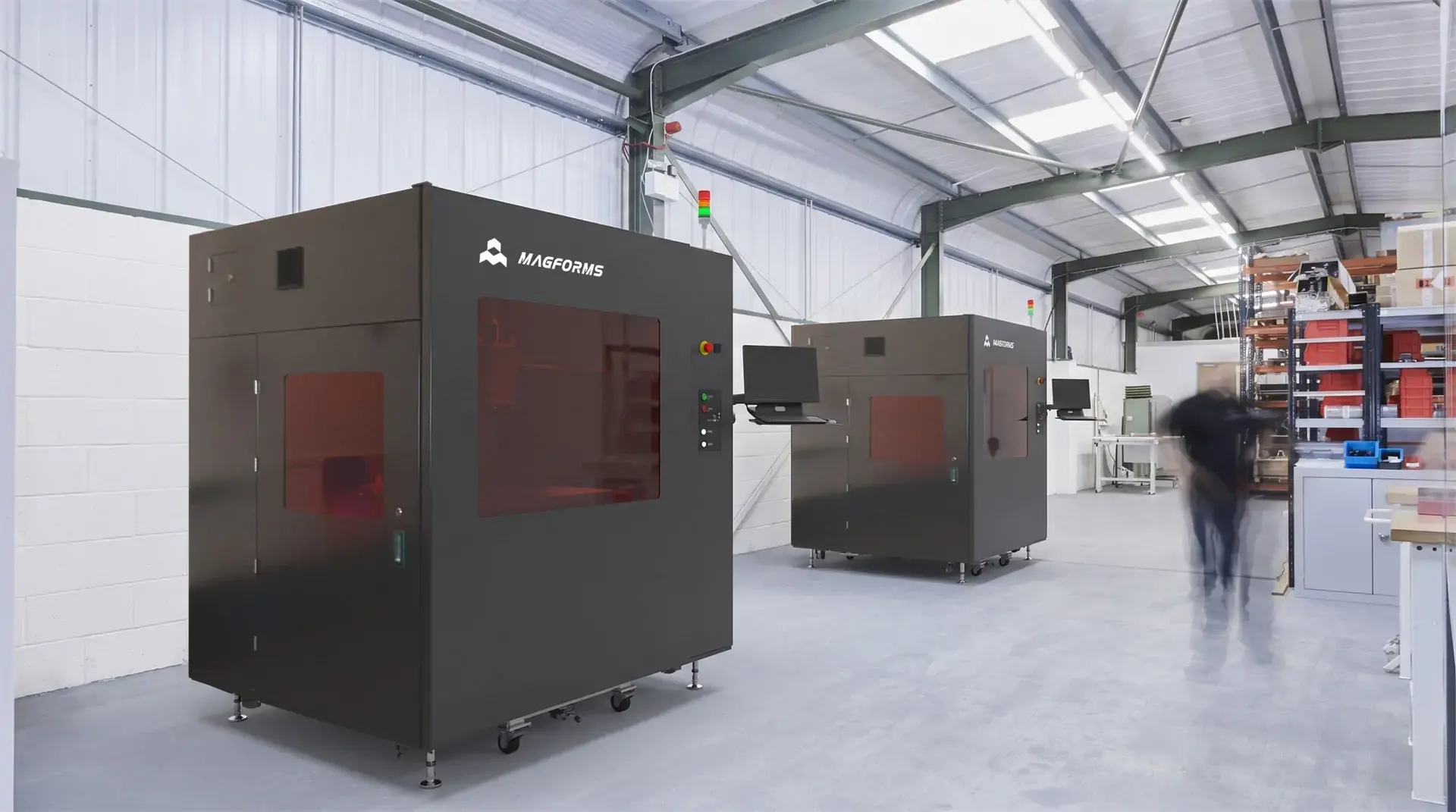
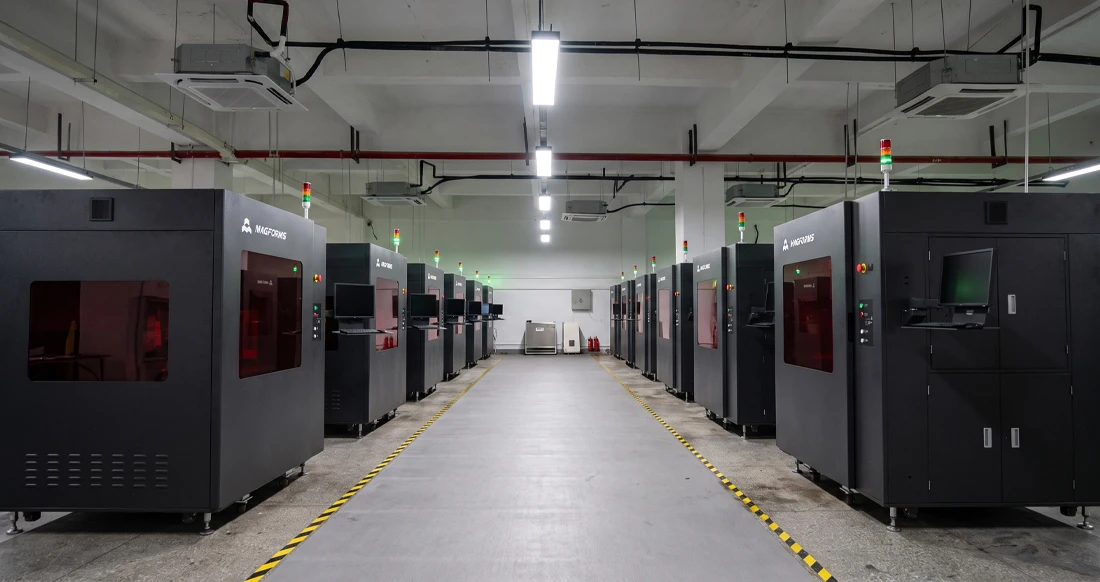
First, evaluate the required build volume based on the largest parts you expect to produce, along with expected production quantity and workflow requirements. Magforms has a wide range of systems, from small Lab300 to SL600 and SL800 platforms that can handle parts that are wider than 600 mm in one direction. Check your tolerance needs against the accuracy standards. Tighter tolerances are usually needed for medical and aerospace uses than for consumer product prototyping.
Care should be taken to make sure that materials are compatible. It's easy to find cheap materials and try out different formulas as the needs of an application change with open material systems that support most 355 nm resins. Proprietary systems limit your operating freedom by locking you into single-supplier prices and a small selection of materials.
Evaluating Supplier Reliability and Support
Long-term happiness with Industrial SLA tools is greatly affected by the track record of the supplier. Magforms works with more than 300 companies around the world. It has 22 patents and 30 registered trademarks, which show that it is constantly coming up with new ideas and protecting intellectual property. Participation in international industry exhibitions and technical events can also demonstrate a supplier’s commitment to market engagement and customer communication.
The integration of material development and hardware optimization can provide additional workflow advantages. Magforms creates photopolymer resins and printing hardware. They work to make formulation and process factors as good as they can be so that there are no compatibility problems in mixed-vendor communities.
When choosing a seller, the technical help infrastructure needs to be carefully looked at. Strong after-sales support can help reduce downtime by providing timely troubleshooting, maintenance guidance, and technical assistance. Training programs help operators become more skilled faster, which shortens the time it takes to learn how to use new tools.
Negotiating Terms and Ensuring Value
When considering Industrial SLA 3D Printer options, look at the total cost structures, which include the price of the equipment, shipping, setup, training, and contracts for ongoing upkeep. Companies purchasing multiple systems or establishing long-term supplier relationships may have opportunities for more favorable commercial terms. Parts replacement and work should both be covered by the warranty, and there should be clear service level agreements that spell out reaction times and fix completion goals.
Capital expenditures can be easier to handle if you have financing choices. This is especially true for small and micro businesses that need to balance investing in tools with their working capital needs. Leasing or payment plans that are spread out over time may help your cash flow while giving you instant access to output tools.
Conclusion
Industrial SLA 3D Printer technology is a powerful way for businesses to make things that need to be precise, have a smooth surface, and work with a wide range of materials. Decision-makers can choose systems that improve production efficiency and product quality by knowing basic operational principles, comparing different types of technology, and reviewing important buying criteria. Long-term equipment value goes beyond the initial purchase price and includes hardware reliability, material availability, software capabilities, maintenance support, and application performance. When businesses buy dependable Industrial SLA platforms, they can quickly meet the needs of the market while still keeping the high standards of surface quality and accuracy that make their goods stand out in a crowded market.
FAQ
What materials work with industrial SLA systems?
Industrial SLA 3D Printers can support a wide range of photopolymer resins, including standard, tough, flexible, clear, high-temperature, and engineering-grade materials depending on system compatibility. Open material systems get rid of seller lock-in, which lets you find materials more cheaply and try them for specific uses without worrying about compatibility.
How does industrial SLA printing compare cost-wise to traditional manufacturing?
For prototypes and low-volume production, Industrial SLA technology can reduce the need for expensive dedicated tooling associated with some traditional manufacturing methods. This can significantly reduce upfront tooling costs in suitable applications. Lead times can often be shortened compared with tooling-based production approaches, depending on part complexity and workflow requirements. When more than a few thousand units are made, standard manufacturing costs become more competitive again. This makes Industrial SLA perfect for testing, customization, and small production runs.
What maintenance practices maximize industrial SLA printer lifespan?
Cleaning the resin vat, inspecting and replacing the recoater blades, protecting the optical components, and checking the platform's settings on a regular basis all keep it running at its best. Temperature control helps maintain stable resin viscosity, which can improve recoating consistency and reduce process variation. Scheduled preventive repair by trained technicians finds wear before it happens, which extends the life of the equipment and keeps the dimensions and surface quality accurate throughout its use.
Partner with a Trusted Industrial SLA 3D Printer Supplier for Reliable Production Solutions
Magforms has been in the industry for decades and offers producers looking for high-performance Industrial SLA 3D Printer systems a way to combine materials and tools in a single package. Our platforms use high-quality parts like AOC lasers, Scanlab galvanometers, and Panasonic servo motors, along with our own variable spot technology and self-learning scanning algorithms. This lets them print 30–50% faster without losing accuracy at the micron level. The open material design supports a broader selection of compatible photopolymer resins, giving users greater flexibility for different applications. In addition, our professional after-sales team provides technical service resources to help customers maintain stable production operations. Magforms can help you with consultations and prices that are specific to your application needs, whether you're growing a new design company or increasing R&D capacity at a well-known aircraft maker. Get in touch with us at info@magforms.com to talk about how our Industrial SLA 3D Printer options can help you make things better and get your ideas into production faster.
References
1. Gibson, I., Rosen, D., & Stucker, B. (2021). Additive Manufacturing Technologies: 3D Printing, Rapid Prototyping, and Direct Digital Manufacturing. Springer International Publishing.
2. Jacobs, P. F. (2020). Stereolithography and Other RP&M Technologies: From Rapid Prototyping to Rapid Tooling. Society of Manufacturing Engineers.
3. Chua, C. K., & Leong, K. F. (2017). 3D Printing and Additive Manufacturing: Principles and Applications. World Scientific Publishing Company.
4. Gebhardt, A. (2019). Understanding Additive Manufacturing: Rapid Prototyping, Rapid Tooling, Rapid Manufacturing. Carl Hanser Verlag GmbH.
5. Pham, D. T., & Gault, R. S. (2018). A Comparison of Rapid Prototyping Technologies. International Journal of Machine Tools and Manufacture.
6. Ligon, S. C., Liska, R., Stampfl, J., Gurr, M., & Mülhaupt, R. (2017). Polymers for 3D Printing and Customized Additive Manufacturing. Chemical Reviews, American Chemical Society.

Magforms makes design and manufacture easier.
Popular Blogs
-
 Industry InsightsManufacturing Industry
FDM vs. SLA Printer: Which Technology Is Right for Your Project?
-
 Industry InsightsManufacturing Industry
Top 5 Applications of Industrial 3D Printers in Manufacturing Today
-
 Industry InsightsManufacturing Industry
Why Stereolithography 3D Printers Are Unmatched for Microfluidic Device Prototyping?