Industrial SLA 3D Printer for Medical Device Manufacturing: A Complete Overview
Stereolithography additive manufacturing is an advanced resin-based 3D printing technology widely used in medical device development and manufacturing applications. Industrial SLA 3D Printer systems can deliver high-resolution parts with excellent dimensional accuracy and surface quality. An Industrial SLA 3D Printer uses photopolymerization technology to selectively cure liquid photopolymer resin layer by layer, creating highly detailed parts directly from digital designs. This enables manufacturers to produce detailed anatomical models, surgical guides, and implant prototypes with smooth surface finishes that can reduce the need for extensive post-processing compared with many traditional prototyping methods. This overview examines how Industrial SLA 3D Printer systems support medical manufacturers in addressing challenges such as rapid prototyping, small-batch production, process consistency, and regulatory documentation requirements. It also talks about important technical factors that affect purchasing decisions.
Understanding Industrial SLA 3D Printing Technology
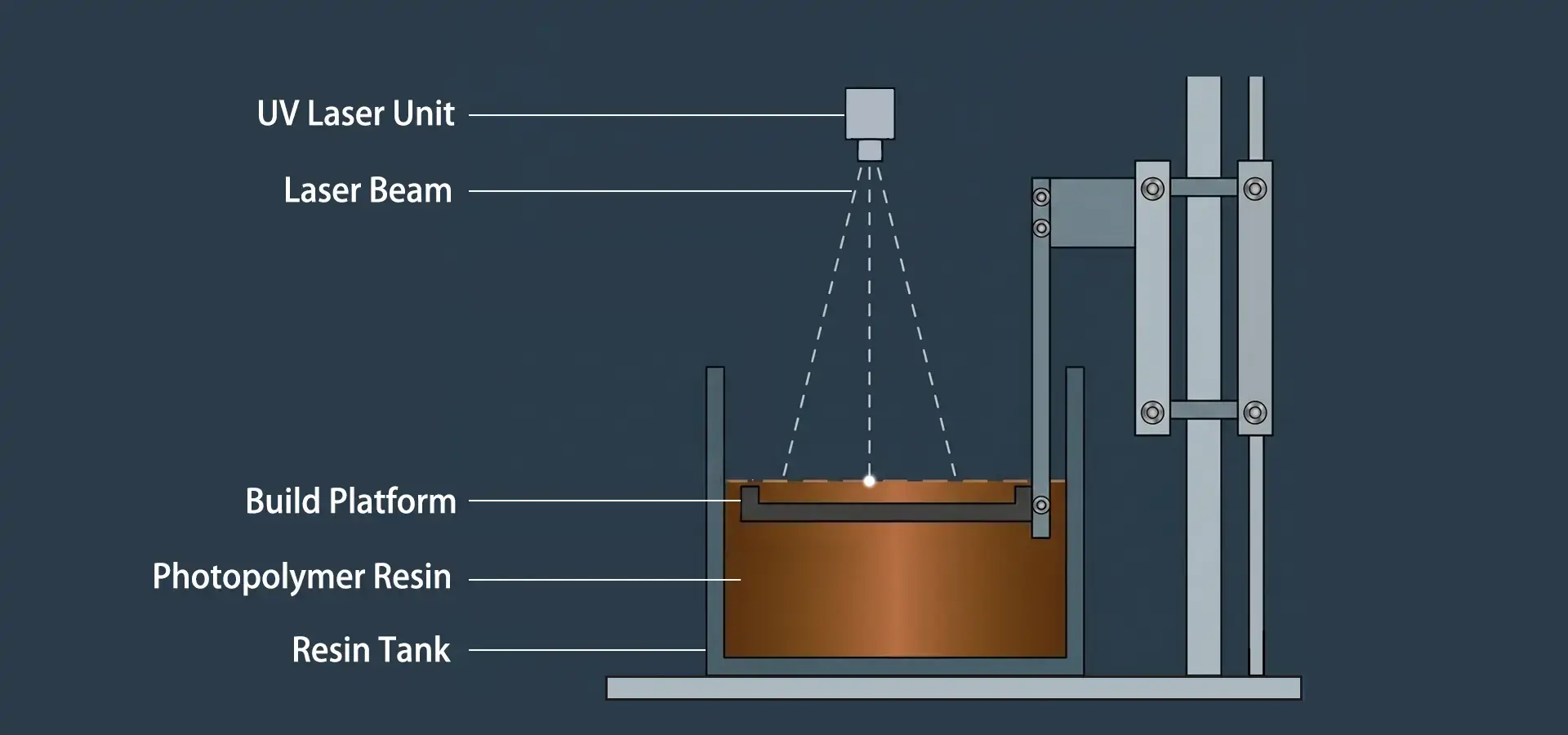
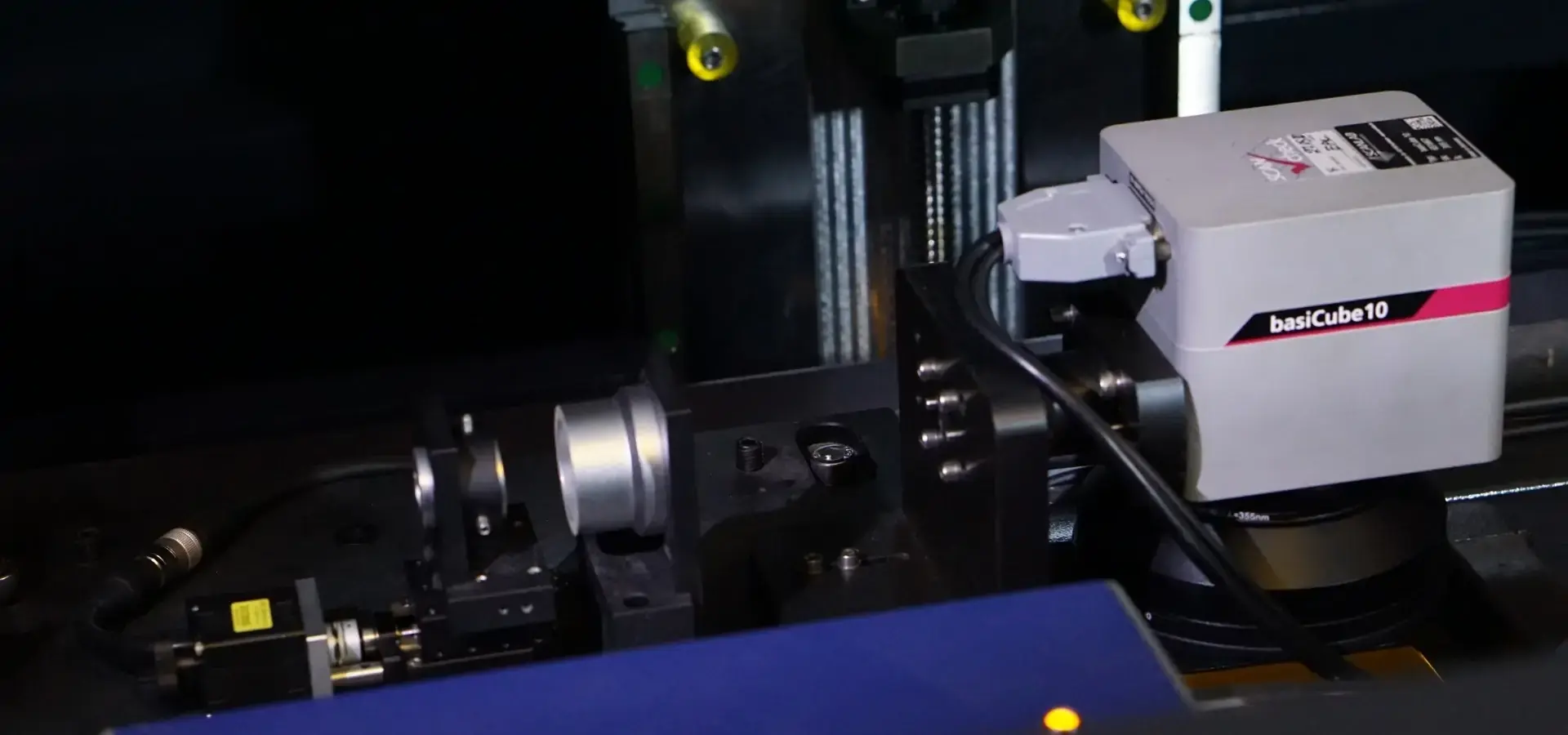
The precise laser-guided photopolymerization process is the foundation of stereolithography technology. Industrial SLA 3D Printer systems typically use a 355nm UV laser controlled by a high-precision galvanometer system to selectively cure photopolymer resin according to the digital model. The main differences between consumer-grade resin printers and industrial SLA systems include optical performance, motion control, process stability, and production capability. High-stability solid-state laser modules, such as industrial-grade laser systems used in production equipment, provide consistent energy output and support reliable operation during extended manufacturing cycles.
The main part of the machine is a build platform that slowly lowers into a resin vat. Lasers controlled by galvanometers precisely scan each layer. High-precision galvanometer systems, including industrial scanning solutions from suppliers such as Scanlab, provide accurate laser positioning and stable beam movement, helping achieve consistent part quality when combined with proper calibration and process control. With proper calibration and process optimization, industrial SLA systems can achieve dimensional accuracy around ±0.1mm for smaller components. This level of accuracy is necessary when making tooth aligner moulds or surgery tools that are custom-made for each patient, because the accuracy of the fit has a direct effect on clinical results.
For medical applications, materials may require biocompatibility evaluation according to relevant ISO 10993 standards, depending on the intended use, duration of contact, and regulatory requirements. Modern manufacturing systems may support open material platforms, allowing manufacturers to select different photopolymer materials, including clear resins for visualization models, engineering-grade resins for functional prototypes, and specialized materials designed for applications requiring higher temperature resistance or specific mechanical properties. Advanced industrial systems may include temperature management features that help maintain stable resin viscosity and printing conditions, improving layer consistency and dimensional stability during long production runs.
Choosing carefully chosen parts that make sure the equipment works consistently is what makes industrial-grade stereolithography equipment stand out. High-precision motion systems using industrial servo motors, such as Panasonic servo solutions, provide stable Z-axis movement and accurate platform positioning throughout repeated build cycles. The recoater mechanism spreads new resin over each layer. Precision-engineered build platforms help maintain surface flatness and provide a stable foundation for consistent printing performance.
The features of a laser spot have a big impact on both speed and fine clarity. When compared to fixed-spot systems, variable spot technology improves productivity by dynamically adjusting laser beam diameter. Smaller spot sizes are used for detailed contours, while larger spot sizes improve scanning efficiency in larger areas. This flexible method cuts down on the time it takes to make complicated surgical guide arrays while keeping clear features on important anatomy points for planning surgery.
Optical safety systems of Industrial SLA 3D Printer keep both users and critical parts safe. Acrylic viewing screens block UV rays that can be dangerous, and interior protection covers keep resin vapour from getting on the galvanometers and focusing optics. Optical safety features, including protective enclosures, UV shielding components, and interlock systems, help reduce operator exposure risks during machine operation.
👉 What is SLA 3D printing technology
Comparing Industrial SLA 3D Printers with Other Industrial 3D Printing Technologies
When setting up production skills, companies that make medical devices look at a number of additive technologies. Selective Laser Sintering (SLS) is suitable for producing strong functional parts, especially with materials such as nylon powders. Unlike SLA, SLS generally does not require traditional support structures because surrounding powder supports the part during printing. However, the surface finish is typically rougher than stereolithography and may require additional post-processing depending on the application. Although Fused Deposition Modeling (FDM) is cost-effective and widely used for prototyping, its layer-by-layer extrusion process typically produces more visible layer lines and may have limitations when extremely smooth surfaces, fine details, or complex anatomical features are required.
Digital Light Processing (DLP) uses a digital micromirror device (DMD) to project patterned light onto the resin surface, allowing an entire layer to be cured simultaneously. It works on the same photopolymerization principles as stereolithography. While DLP systems can achieve high productivity for applications with suitable build sizes, industrial laser-based stereolithography provides advantages in scalable build platforms, precise laser control, and consistent part quality for larger or highly detailed components. This makes it suitable for applications such as producing dental models or surgical guides that require consistent accuracy across larger build areas.
Technology Selection Considerations for Medical Applications
The choice of technology is often based on the requirements for surface quality. Stereolithography makes parts with surface roughness below 1 micrometre Ra. This reduces visible layer lines compared with many extrusion-based printing processes. This is especially helpful when making hearing aid shells that fit each patient perfectly or complicated dental devices that need smooth areas for comfort.
Biocompatibility of the material is another important factor. Certain photopolymer materials developed for medical applications undergo biocompatibility testing according to relevant standards and may be suitable for specific contact scenarios, such as short-term skin contact or other defined medical applications. These specialized materials provide documented technical data that can support medical device manufacturers during regulatory evaluations. However, final approval processes typically require broader device-level validation, risk assessment, and performance testing according to applicable regulatory requirements.
For throughput calculations to work, both the speed of printing and the needs for post-processing must be taken into account. Self-learning scanning methods in advanced stereolithography systems improve the speed of standard systems by up to 20%. These systems do this by optimising toolpaths based on collected print data. When intelligent support generation is used to reduce material waste and make part removal easier, the total production time from preparing the file to finishing the part is cut down by a large amount.
Industrial SLA 3D Printer Applications in Medical Device Manufacturing
Rapid prototyping is one of the most common applications. It lets design engineers evaluate shape, fit, and function in days instead of the longer development cycles often required for traditional moulding or machining processes. During multiple design processes, surgical instrument developers make changes to the handle comfort and how the mechanisms interact with each other. This lowers the development risk and speeds up the time it takes to get the product to market.
Anatomical modelling turns imaging data of a patient into real tools for planning surgery. Cardiovascular surgeons can practise complex procedures using stereolithography models generated from CT angiography data, which accurately represent patient-specific anatomical structures. These physical models can support surgical planning by providing a more intuitive understanding of complex anatomy compared with viewing digital images alone.
👉 Explore how Industrial SLA technology is applied in real production environments through our Industrial SLA 3D printing application cases.
Custom Medical Device Production
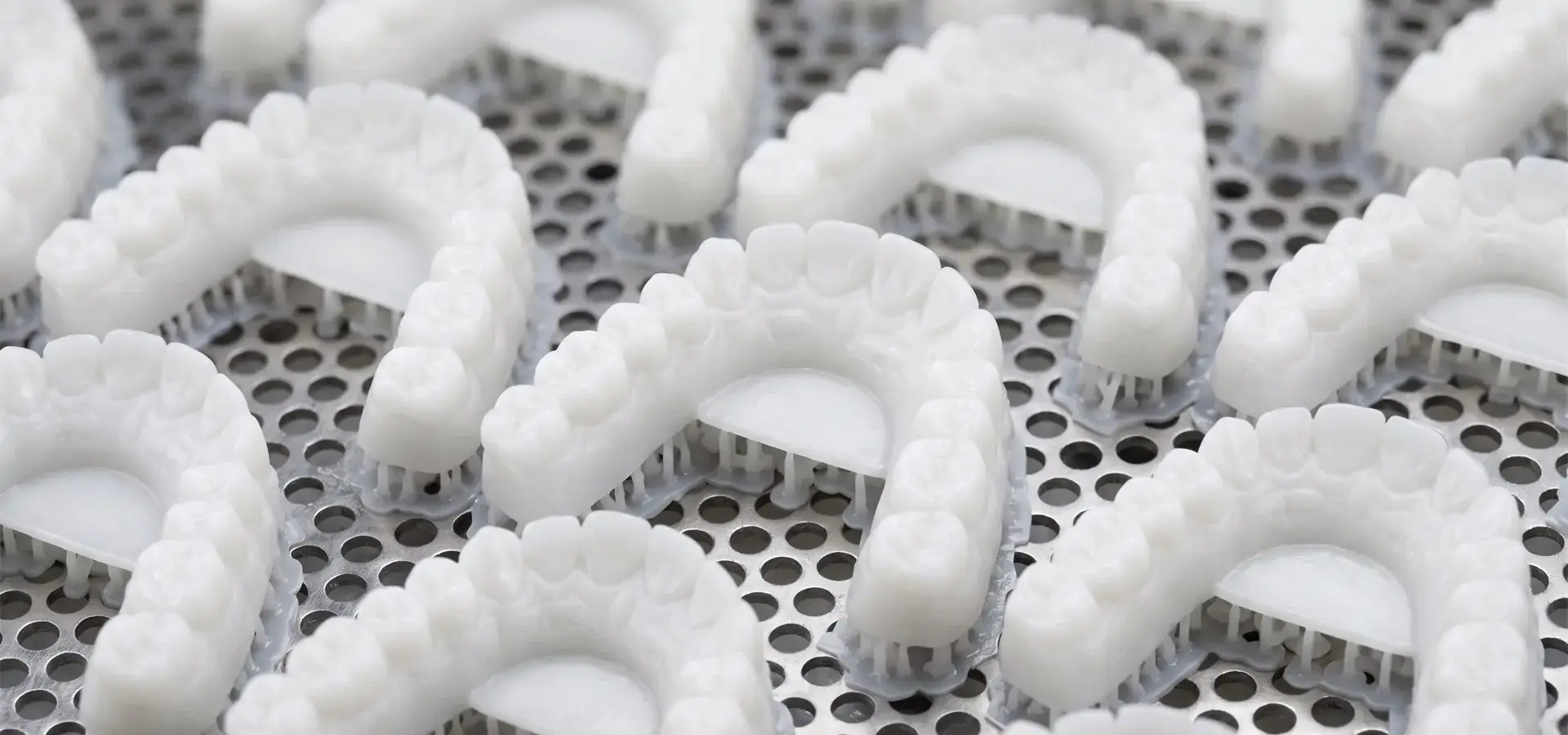
As medicine becomes more personalised, there is a greater need for gadgets that are made just for one patient and can be made cheaply in small numbers. Stereolithography is used by dental labs to make personalised crown and bridge models, orthodontic aligner stage sets, and surgical drilling guides for implant placement. The dimensional accuracy achievable with industrial stereolithography systems can support precise dental workflows, although final fit depends on material properties, design accuracy, calibration, and post-processing conditions.
Hearing aid manufacturers use Industrial SLA 3D Printer systems to produce customized shell prototypes and production components with different patient-specific geometries. Each device needs to be customised to fit the shape of each patient's ear canal, which can be done digitally. These different shapes can be easily processed by industrial stereolithography systems. Variable spot technology improves build efficiency while maintaining the fine surface details required for customized hearing aid components.
Making surgical guides for orthopaedic and dental implant procedures is an example of how the technology has changed medicine. With high dimensional accuracy, these devices are created from pre-operative imaging data to support the transfer of digital surgical plans into physical surgical guides. Stereolithography is an important manufacturing technology for surgical planning and medical device development because it enables the production of patient-specific guides.
Regulatory Compliance and Quality Assurance
Medical device makers have to follow strict rules set by regulators, which means they have to keep detailed records of their production methods. Closed-loop process tracking systems in stereolithography equipment can record important parameters such as laser power stability, recoater positioning accuracy, and layer curing conditions. This information supports production traceability and quality documentation required for medical device manufacturing processes, including compliance activities related to regulations such as FDA quality system requirements, including applicable requirements under 21 CFR Part 820 and related medical device quality regulations.
Another aspect of compliance is material qualification. Manufacturers must conduct validation testing to verify that part properties remain consistent across different material batches when using open material systems and third-party resins. On the other hand, integrated solutions where equipment manufacturers also make compatible resins offer material-machine combinations that have already been tested. This makes qualification paperwork easier and cuts down on the time to production.
Maintenance, Troubleshooting, and Cost Management of Industrial SLA 3D Printers
Scheduling preventive repair helps keep machines running and part quality consistent. As part of daily routines, the resin level is checked, the build platform is inspected for residual resin, and the recoater blade is checked for damage that could lead to layer defects. As part of weekly tasks, optical windows need to be cleaned with lint-free materials and approved chemicals to maintain optical performance, which helps ensure consistent resin curing.
Every month, testing methods make sure that the base is level within certain limits and that the galvanometer is positioned correctly by using standard test patterns. By measuring the laser power output, operators can verify that energy density remains within the validated process window for the selected material. These proactive steps stop performance from slowly dropping, which could affect the accuracy of measurements or the quality of the surface finish over long production runs.
Common Technical Challenges and Solutions
Print failures are often caused by problems with the environment or the way the materials are handled. Changes in ambient temperature can affect resin viscosity, which may influence layer recoating, curing consistency, and overall print quality. Built-in temperature control systems help maintain stable resin viscosity and curing conditions. This stabilises the curing process and can improve print consistency, especially for clear formulations that are sensitive to changes in printing conditions.
Support structure problems during printing are often related to insufficient support strength, incorrect placement, or unsuitable part orientation. Advanced slicing software analyzes part geometry and can generate optimized support structures automatically. This makes it easier to remove the part while still keeping the structure stable during the build process. Operators can quickly review and adjust support strategies through user-friendly slicing software. This cuts down on the waste of materials from failed builds.
Optical system contamination may appear as surface defects or incomplete curing. Beam quality is kept up by checking the protected covers often and replacing them right away if they get scratched or cloudy. Professional after-sales teams that respond within 24 hours keep downtime from lasting too long, which is very important because equipment that isn't working affects production schedules and customer delivery promises directly.
Total Cost of Ownership Analysis
Beyond the original cost of buying tools, medical producers need to think about the continued costs of running their businesses. The price of materials varies depending on the type of resin and supplier. Biocompatible mixtures cost more than other types. Open material systems can reduce dependence on a single material supplier, so buyers can find cheaper options once materials pass internal approval testing. This lowers the long-term cost of consumables.
Cost per part is affected by how well workers do their jobs with the Industrial SLA 3D Printer. Advanced software platforms simplify file preparation, support generation, and build layout optimization, reducing operator workload during production preparation. Post-processing technology, like slanted platform draining that cuts down on cleaning time, makes workers even more productive and speeds up the turnaround time for parts.
Cost certainty is directly linked to how reliable the equipment is. Systems using industrial-grade components, such as Schneider electrical components, Panasonic servo motors, and Scanlab galvanometers, are designed to provide stable operation and reliable long-term performance. Less unexpected upkeep and more successful first prints mean a lower total cost of ownership, even if the initial cost may be higher.
Choosing a Reliable Industrial SLA 3D Printer Supplier for Medical Device Manufacturing
Choosing a supplier is more than just looking at the equipment specs; it's also about how well the partnership will work in the long term. Established suppliers with experience in medical applications can provide technical documentation, material safety data, biocompatibility test information, and process support that may assist manufacturers during device evaluation and validation processes. This knowledge can help manufacturers better understand technical documentation and process requirements related to regulations such as the European Medical Device Regulation and FDA premarket notification processes.
How quickly output problems are fixed depends on the technical help system. Suppliers with specialized after-sales teams and 24-hour technical support can help reduce downtime and improve equipment availability. Remote diagnostics, large inventories of spare parts, and regional service centers all make it possible to get problems fixed quickly, whether they are related to software configuration or the need to replace a component.
Evaluating Supplier Credentials and Capabilities
Patent portfolios and technical developments can demonstrate a supplier's investment in research and innovation capabilities. Suppliers with multiple patents may demonstrate continued investment in research and development and ongoing technology improvement. Participation in international exhibitions and experience across different industries can indicate market presence and application experience.
Offering both materials and tools together has clear benefits for medical makers. When suppliers develop both photopolymer formulations and printing systems, they can optimize material-machine compatibility for specific applications. This gets rid of the problems that come up with mixed-vendor methods. This integration can simplify material qualification and help maintain more consistent results throughout the product lifecycle.
Training programs and professional classes show that a provider cares about the success of their customers after the sale of tools. In-house teams can improve equipment utilization and maintain production quality through comprehensive operator training covering maintenance, software operation, and troubleshooting.
Conclusion
The technology behind stereolithography has developed to support medical device manufacturers with applications ranging from rapid prototyping and tooling to customized and small-batch production. When advanced laser systems, software platforms, and specialized materials work together, they can support applications ranging from rapid prototypes to functional components and production aids. To have a successful implementation, you need to carefully choose your suppliers, paying attention to not only their technical specifications but also their full support infrastructure and regulatory knowledge. As the creation of medical devices speeds up to provide personalised treatment options, manufacturers using stereolithography platforms with flexible material options, high dimensional accuracy, and proven process stability will continue to gain advantages in medical product development.
FAQ
1. What dimensional accuracy can medical manufacturers expect from industrial stereolithography systems?
Many modern industrial systems can achieve dimensional accuracy around ±0.1mm for smaller parts and approximately ±0.1% for larger components under optimized conditions. Precision depends on proper calibration, environmental controls, and material selection appropriate to application tolerances.
2. How do biocompatible resins differ from standard photopolymers?
Biocompatible formulations undergo cytotoxicity, sensitization, and irritation testing per ISO 10993 standards, with documented material safety data supporting regulatory submissions. These specialized resins may support applications involving patient-contacting components when the materials have been appropriately tested and validated for the intended use.
3. What maintenance intervals prevent production disruptions?
Daily resin and platform inspections, weekly optical cleaning, and monthly calibration procedures maintain optimal performance. Suppliers providing 24-hour technical support and comprehensive spare parts availability minimize downtime when component replacement becomes necessary during equipment lifecycles.
Partner with Magforms for Advanced Medical Manufacturing Solutions
Magforms delivers integrated stereolithography solutions combining photopolymer formulations with precision-engineered printing systems designed for medical device development and manufacturing applications. Our equipment incorporates AOC laser modules, Scanlab galvanometers, and Panasonic servo motors, supporting high-resolution printing performance and reliable operation for extended production environments. With 22 patents protecting our innovations and over 300 global clients, we understand the unique challenges medical manufacturers face. Whether you need an Industrial SLA 3D Printer supplier for dental laboratories, surgical guide applications, or implant-related prototype development, our technical team provides responsive support and application expertise. Contact info@magforms.com to discuss your specific requirements and explore how our technology accelerates your path to market.
References
1. Gibson, I., Rosen, D., & Stucker, B. (2021). Additive Manufacturing Technologies: 3D Printing, Rapid Prototyping, and Direct Digital Manufacturing. Springer International Publishing, Third Edition.
2. Huang, J., Chen, Q., & Jiang, H. (2020). "Biocompatible Materials in Medical Additive Manufacturing: Standards and Applications." Journal of Medical Devices, 14(3), 031004.
3. Melchels, F.P., Feijen, J., & Grijpma, D.W. (2019). "A Review on Stereolithography and its Applications in Biomedical Engineering." Biomaterials, 31(24), 6121-6130.
4. American Society for Testing and Materials. (2021). ASTM F2792-12a: Standard Terminology for Additive Manufacturing Technologies. ASTM International, West Conshohocken, PA.
5. Food and Drug Administration. (2017). Technical Considerations for Additive Manufactured Medical Devices: Guidance for Industry and FDA Staff. U.S. Department of Health and Human Services, Center for Devices and Radiological Health.
6. Tofail, S.A., Koumoulos, E.P., Bandyopadhyay, A., et al. (2018). "Additive Manufacturing: Scientific and Technological Challenges, Market Uptake and Opportunities." Materials Today, 21(1), 22-37.

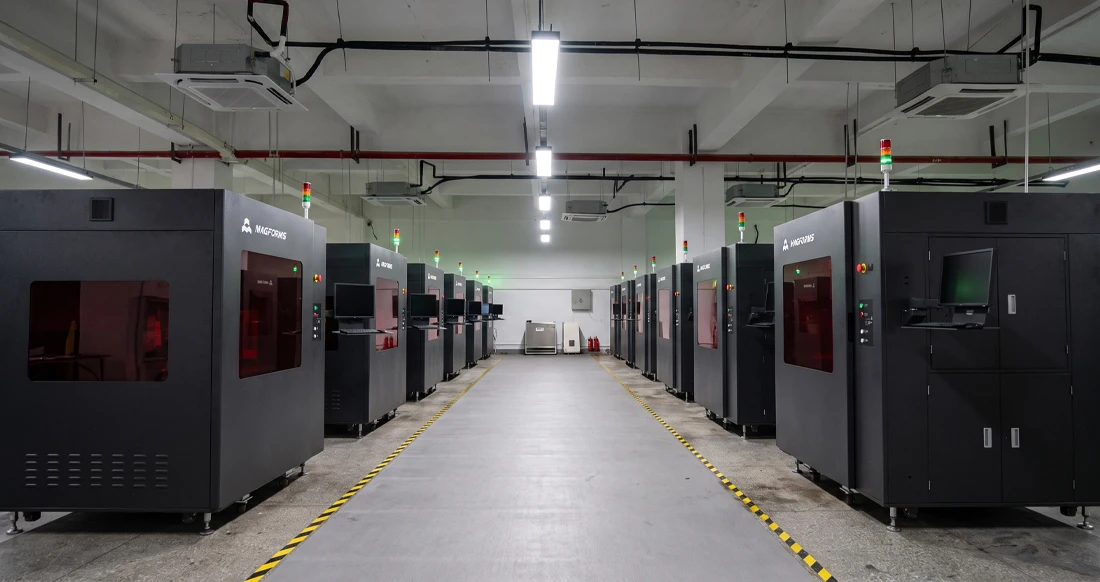
Magforms makes design and manufacture easier.
Popular Blogs
-
 Industry InsightsManufacturing Industry
FDM vs. SLA Printer: Which Technology Is Right for Your Project?
-
 Industry InsightsManufacturing Industry
Top 5 Applications of Industrial 3D Printers in Manufacturing Today
-
 Industry InsightsManufacturing Industry
Why Stereolithography 3D Printers Are Unmatched for Microfluidic Device Prototyping?