Scaling Production with a Large-Format Industrial SLA 3D Printer
When you scale up production, you need more than just more capacity. You also need accuracy, dependability, and efficiency. This is exactly what large-format industrial SLA 3D printers offer, changing how manufacturers approach product development and production in a wide range of fields. Using a 355nm UV laser scanning system, these stereolithography machines selectively cure liquid photopolymer resins layer by layer, producing parts with excellent surface quality and dimensional accuracy. Large-format industrial SLA models, unlike desktop resin printers, can handle significantly larger build volumes, often exceeding 600mm in one dimension. This means that complex structures that used to need multiple parts can now be made in a single piece. This capability reduces assembly requirements while maintaining the high dimensional accuracy and fine-detail reproduction required by industries such as automotive, medical devices, and consumer electronics. Manufacturers who are switching from older methods find that stereolithography is a good compromise between fast development and mass production. It does this without the high costs of tools needed for injection moulding or the design restrictions of CNC cutting.
Understanding Large-Format Industrial SLA 3D Printing Technology
Core Stereolithography Principles
Selective photopolymerization is the foundation of stereolithography technology. In industrial SLA systems, a high-precision UV laser selectively cures liquid photopolymer resin according to the cross-sectional data of a 3D model. A stable laser source, such as an AOC laser integrated in some industrial platforms, provides consistent energy output for demanding production environments. The laser beam is accurately directed across the resin surface through a galvanometer scanning system. High-performance galvanometers control the movement of the laser with high precision, allowing some industrial SLA platforms to achieve scanning speeds of up to 12 m/s while maintaining accurate beam positioning. This precise scanning process determines the shape and details of each printed layer. After one layer is cured, the build platform moves downward according to the preset layer thickness, typically between 0.05mm and 0.25mm. A recoater blade then spreads a fresh layer of resin evenly across the build area, preparing the surface for the next exposure cycle. This process is repeated hundreds or thousands of times until the complete part is formed. Compared with many other layer-based additive manufacturing processes, SLA can produce parts with consistent surface quality and relatively uniform mechanical performance when appropriate resin selection, printing parameters, and post-curing processes are applied.
Modern industrial SLA systems may also incorporate variable laser spot technology, which dynamically adjusts the laser beam diameter during printing. Larger laser spots can efficiently scan broad areas of each layer, while smaller spots improve the accuracy of edges, fine features, and complex surface details. By balancing scanning speed and resolution, this technology helps improve production efficiency while maintaining high-quality part accuracy.
Material Diversity and Performance Characteristics
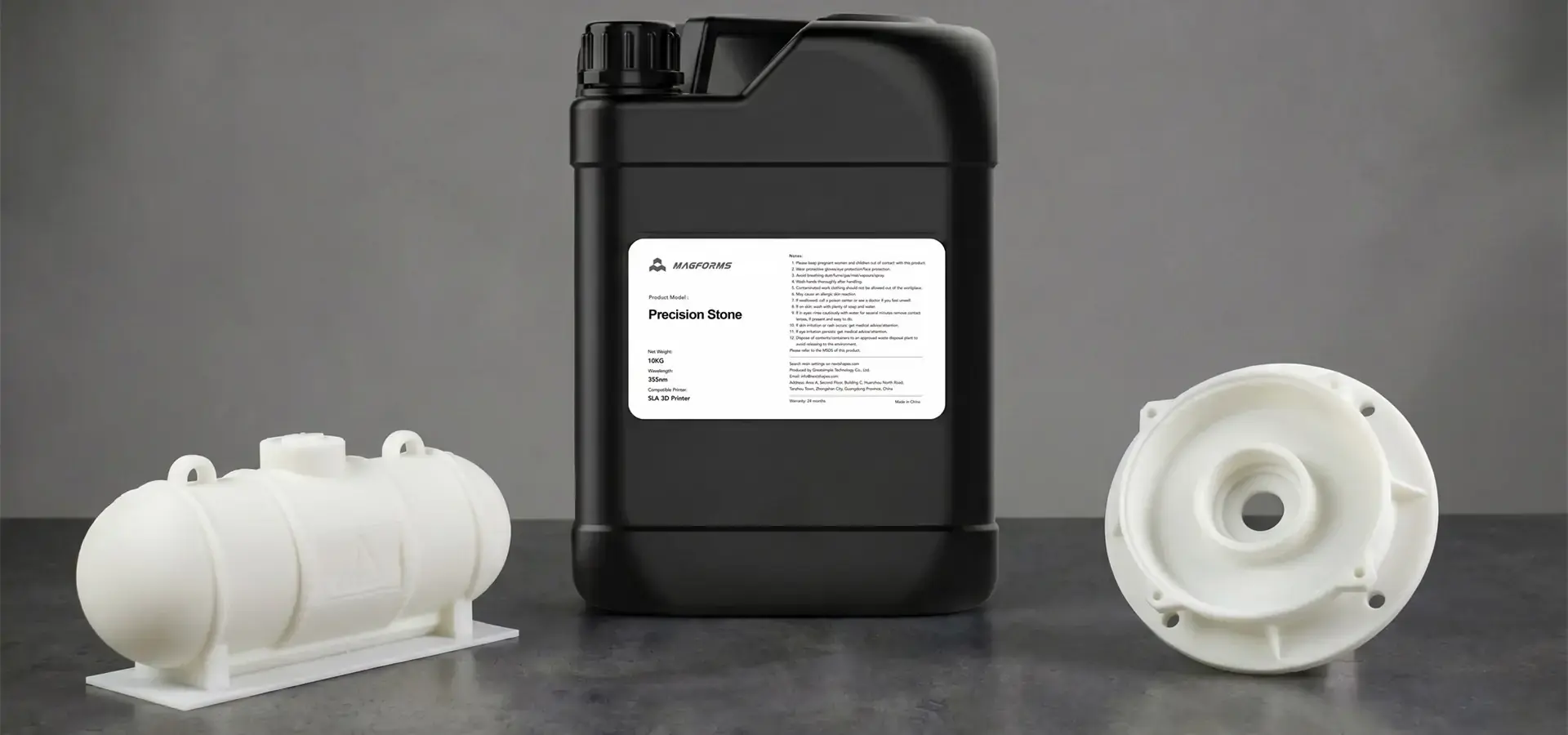
Industrial stereolithography systems typically use UV-curable photopolymer resins compatible with 355nm laser exposure, with formulations optimized for different application requirements. Impact-resistant working prototypes and car interior parts are made from resins that are similar to ABS. Materials that look like PP are flexible enough to be used for living hinges and snap-fit assemblies. High-temperature resins can handle heat deflection temperatures above 100°C, making them good for parts under the hood of cars and aircraft fixings. Light guides, lenses, and medical device housings need to be clear to the eye, which is what transparent resins do. For surgical guides and dental applications, certified biocompatible resin formulations can meet specific regulatory requirements when validated according to applicable standards.
Because the open material design doesn't lock makers into one seller, they can choose resins based on performance needs and cost, not on specific limits. When production needs to be scaled up, this freedom is especially helpful because material costs have a direct effect on the economics of each part across batch runs.
Technology Comparison and Competitive Advantages
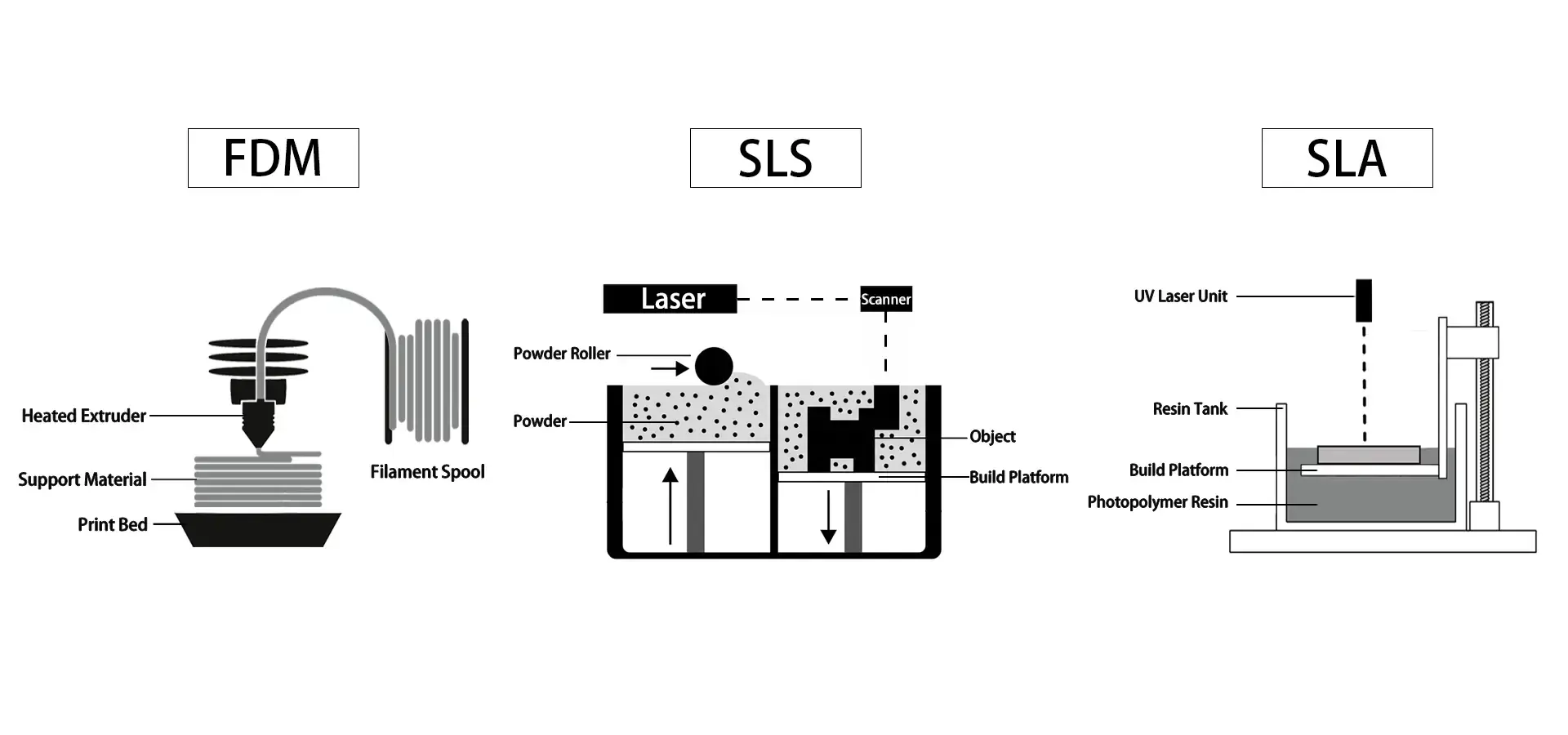
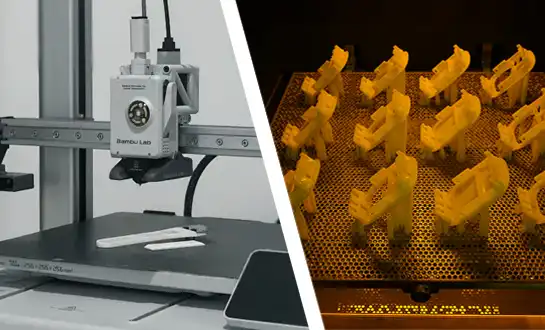
Compared with Fused Deposition Modelling (FDM), stereolithography typically produces smoother surface finishes directly after printing and reduces visible layer lines. SLA parts generally offer better detail reproduction and more consistent surface quality, although final mechanical performance still depends on resin selection, orientation, and post-curing conditions.
Selective Laser Sintering (SLS) is widely used for functional polymer parts with strong mechanical performance and complex geometries. Industrial SLA systems offer advantages when high surface quality, transparency, and fine-detail reproduction are the primary requirements. Digital Light Processing (DLP) is another photopolymerization technology that cures entire layers using projected light patterns. Compared with laser-based industrial SLA systems, DLP performance depends heavily on projector resolution, optical design, and build size requirements. High-quality large-format industrial SLA systems can achieve excellent dimensional accuracy, with typical specifications depending on machine calibration, material characteristics, part geometry, and post-processing conditions.
Why Scale Production Using Large-Format Industrial SLA 3D Printers?
Overcoming Traditional Manufacturing Limitations
CNC machining is very accurate, but it takes a long time to set up and wastes a lot of material, especially when the shape is complicated and has internal channels or organic contours. For injection moulding to work, you need to buy expensive steel tools and wait weeks or months for them to arrive. This means that you can only make money by making a lot of units. These restrictions make it hard for companies that want to come up with new ideas quickly, make customised products, or use small-batch production methods.
Large-format industrial SLA printers significantly reduce the need for traditional tooling, allowing CAD designs to be converted into physical parts much faster than conventional mold-based manufacturing workflows. Design changes that would require expensive changes to the mould can be made through simple software-based design modifications. By getting rid of weak mechanical joints, complex assemblies are combined into a single monolithic structure. This cuts down on the number of parts needed, eliminates the need for assembly labour, and improves the structural integrity.
Speed, Quality, and Economic Efficiency
Modern stereolithography systems use advanced scanning algorithms and optimized process parameters to improve printing efficiency and production consistency. These optimization strategies improve workflow efficiency and production consistency, helping manufacturers reduce operational costs over time. High-precision servo systems, combined with accurate mechanical structures and motion control components, enable precise platform positioning for stable production performance.
When you look at the total cost of ownership, the economic case gets a lot stronger. High print success rates cut down on wasted materials and parts that don't work. A lot of the time, parts don't go through a lot of post-processing before they are put together or tested in the field. Built-in temperature control systems help maintain stable resin viscosity under changing environmental conditions, improving printing consistency. This keeps prints from failing because of changes in the environment, which can happen with less advanced systems.
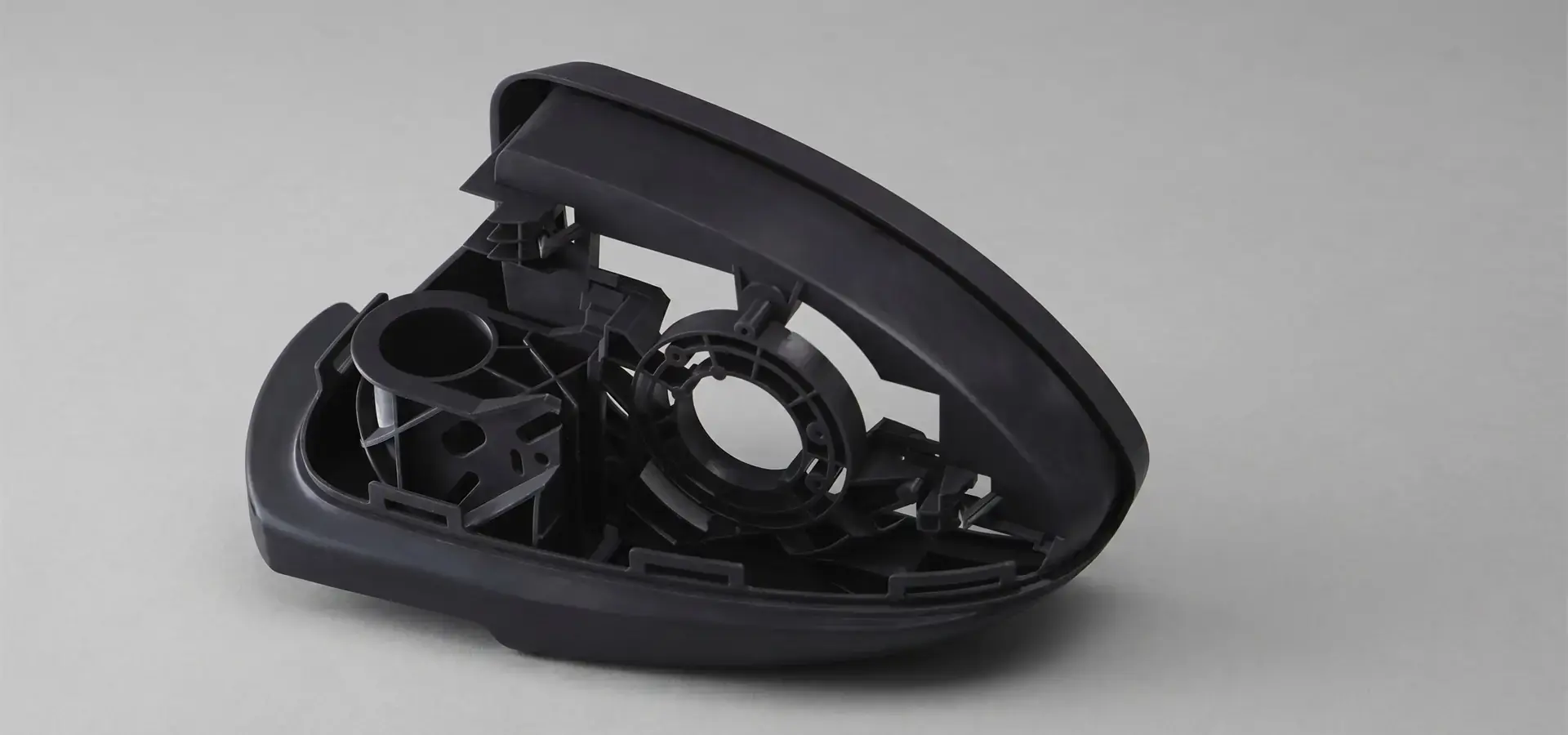
Automakers use these printers to make customised samples of dashboards and internal trim panels. This cuts down on the time it takes to develop new products from months to days. Aerospace makers make complicated links and parts with odd shapes that can't be made cheaply in small quantities using standard methods. Medical technology companies make surgery tools and oral orthodontic models that are unique to each patient. This creates new ways for companies to make money in personalised medicine. Consumer electronics companies quickly try out different designs for smart tech and speaker housings, so they can respond to customer comments more quickly than companies that have to use traditional tools.
👉 Explore industrial SLA applications and customer cases
Choosing the Right Large-Format Industrial SLA 3D Printer for Your Business
Critical Performance Specifications
When purchasing managers look at stereolithography tools, they have to weigh a lot of technical factors against the needs of the business. The highest part size and batch numbers per run are set by the build amount. From dental arches to auto body panels, systems with widths from 300mm to 800mm can handle it all. The system's resolution, laser spot size, optical performance, and process calibration together determine how accurately small details can be reproduced. When detail quality is most important, look for laser spot sizes that can be adjusted down to 0.15mm and layer thicknesses that can be as low as 0.05mm.
Scan speed has a direct effect on how much work gets done. High-performance industrial SLA systems may achieve galvanometer scanning speeds of 6–10 m/s, with some systems reaching higher speeds for large-area scanning applications. Motion positioning precision specifications indicate the accuracy of the mechanical movement system, while final part accuracy also depends on resin properties, calibration, shrinkage control, and processing conditions.
Material compatibility is still very important for operational flexibility. Open resin systems that work with most 355nm formulations keep you from being locked into one vendor and let you save money by buying materials from different companies. Machines that have temperature control built in keep the flexibility of the plastic even when the outside temperature changes. This is very important for factories that don't have climate-controlled production areas.
👉 Industrial SLA 3D Printer solutions
Brand Evaluation and After-Sales Considerations
There are both well-known and new companies in the global stereolithography market, and each one offers something different. The prices of premium names are higher, but they usually come with a lot of support and a history of being reliable. Magforms combines photopolymer material knowledge with industrial SLA equipment development experience, providing integrated solutions for different production requirements. This integrated approach helps ensure better compatibility between materials, hardware, and printing parameters, reducing potential variations caused by mismatched processes.
Long-term dependability and upkeep costs of Industrial SLA 3D Printer depend on the quality of the parts. Internationally known brands are built into the architecture of top-tier systems. AOC lasers have a steady output that meets the needs of constant industrial production. German Scanlab galvanometers provide accurate scanning coordination with little change over time. Panasonic servo motors make sure that movements are quick and accurate, with errors in positioning measured in micrometres. Schneider electrical parts and Philips UV-related optical components contribute to stable exposure and curing performance in industrial SLA systems. Together, these components help manufacturers achieve more reliable and consistent production performance.
The efficiency of production is directly affected by after-sales service. Magforms has a large professional support team that answers questions within 24 hours. This keeps production from being held up for long periods of time, which would be expensive. On-site training, software updates, and preventative maintenance programs make sure that equipment lasts as long as possible and works as efficiently as possible.
Operational Best Practices and Maintenance
To keep a printer working well, you need to pay attention to external factors and changeable parts. When exposed to lasers over and over, resin tanks or vats may experience wear over extended operation and require periodic inspection or replacement depending on usage conditions. Over time, recoater blades wear out, which could cause surface flaws if they are not watched. Optical windows contaminated by resin residue can reduce laser transmission efficiency and should be cleaned regularly.
Implementations that go well set up written maintenance schedules that are in line with what the manufacturer suggests. Laser power adjustment makes sure that the energy level stays the same as the parts age. Follow the steps for levelling the platform and keeping the right Z-axis reference points. Filtration of resin gets rid of particles that could damage the quality of the part. Even though these regular tasks only take a small amount of time, they greatly increase the life of tools while keeping the quality of the output consistent.
Procurement Guide: How to Buy and Implement a Large-Format Industrial SLA 3D Printer
Identifying Reliable Suppliers and Financing Options
Purchasing large-format industrial stereolithography equipment represents a significant investment, with costs varying depending on build volume, configuration, automation level, and support services. To make sure they get genuine parts and a guarantee that covers them, buyers should only buy from authorised dealers or the manufacturer's direct sales channels. Magforms provides equipment to over 300 businesses in a wide range of industries and exports it to over 30 countries through a global delivery network.
Leasing programs and flexible financing options lower startup costs, which improves cash flow for businesses that value access to tools over ownership. Companies that buy in bulk can get better prices when they set up multiple units or create specialised additive manufacturing hubs. Directors of procurement should ask for detailed proposals that include not only the price of the goods being bought, but also the costs of consumables, maintenance contracts, the availability of spare parts, and the terms of the software licence.
Budget Planning and Total Cost of Ownership
When you make a complete budget plan, you include not only the costs of buying the equipment, but also the costs of running it over its entire life. Resin consumption is an important cost factor, although total operating costs also include labor, post-processing, maintenance, and equipment depreciation. When compared to proprietary material requirements that drive up the cost of each part, open material systems that support third-party resins give you more control over costs.
Other budget issues to think about are spare parts supplies, preventative repair services, and replacing parts on a regular basis. High-quality mechanical components, such as precision linear guides and motion systems, can contribute to long-term reliability and reduce maintenance requirements when properly designed and maintained. These systems also last longer between repairs and have lower failure rates. Even though it doesn't use much energy compared to other industrial equipment, it should still be considered for places with a lot of use.
Spending money on training makes sure that workers get the most out of their tools. Full training that includes design optimisation, support generation, print parameter selection, and post-processing methods speeds up learning and cuts down on the time and money needed for costly trial-and-error.
Installation, Integration, and Operational Readiness
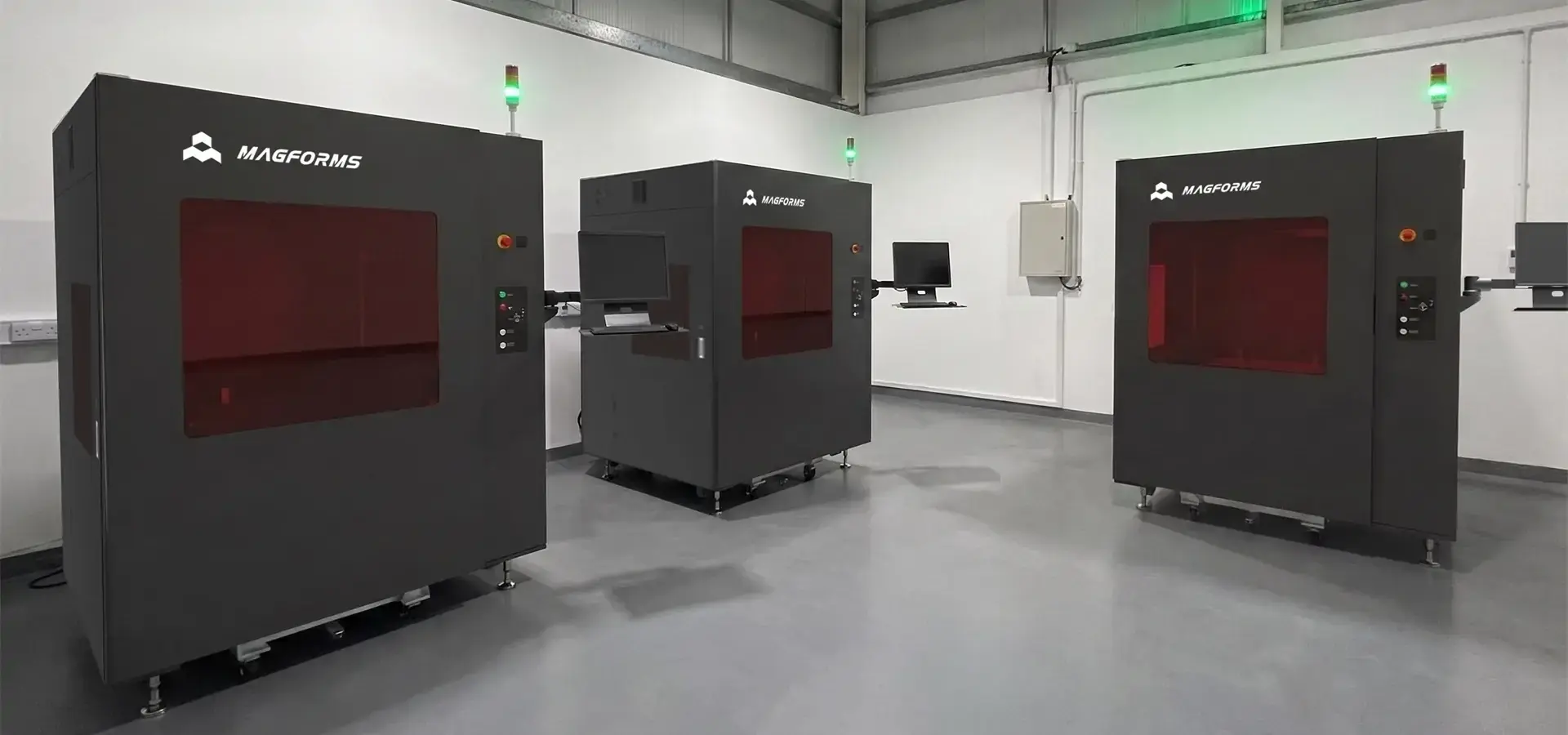
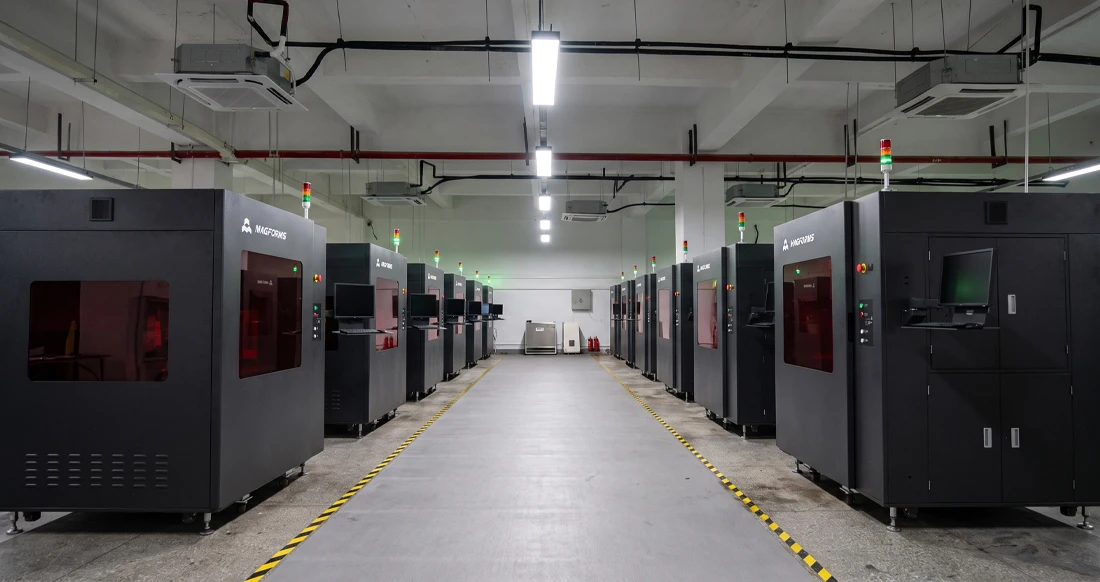
For installation to happen physically, there needs to be enough floor space, environmental controls, and utility connections. Large-format systems take up a lot of space. For example, 600mm and 800mm types need their own floors, plus extra space for material handling and post-processing stations. Ventilation systems help manage odors and airborne compounds that may be generated during resin handling and post-processing operations. This keeps workplaces safe and in line with health and safety rules.
Integration with current industrial tools makes operations run more smoothly. CAD/CAM software interfaces make the process of going from design to production easier. Along with standard methods, production planning tools can also use additive manufacturing. Quality control procedures change to record measurements, mechanical tests, and surface finish information that are unique to stereolithography parts.
Magforms' iBuild 2.0 control software is a great example of user-friendly design. It has clean interfaces that are optimised for use on mobile devices, which cuts down on training time and makes the workflow more flexible. Remote monitoring and job queuing are made possible by seamless network connectivity, which also makes the best use of equipment across multiple shifts.
Maximizing ROI with Large-Format Industrial SLA 3D Printing
Strategic Application Selection
Return on investment materializes fastest when organizations deploy stereolithography equipment against applications where its advantages prove most pronounced. Rapid prototyping remains the traditional use case, compressing design validation cycles from weeks to days while enabling multiple iterations within timeframes previously required for single prototypes. This acceleration delivers competitive advantages in fast-moving markets where time-to-market determines success.
Transitioning from prototyping to end-use production with an Industrial SLA 3D Printer unlocks additional value. Medical device manufacturers produce patient-specific surgical guides as finished goods rather than prototypes. Automotive suppliers fabricate low-volume custom interior components for specialty vehicles. Aerospace contractors manufacture complex tooling, fixtures, and assembly jigs. Consumer electronics brands produce limited-edition product variants without tooling investments. Each application converts additive manufacturing from a development expense into a revenue-generating production capability.
Complex tooling and fixtures represent another high-value application category. Custom grippers, alignment fixtures, inspection gauges, and assembly jigs traditionally required expensive machining or outsourced fabrication. On-demand stereolithography production reduces lead times to hours while enabling design optimization impossible through conventional manufacturing. Consolidated tool designs incorporating conformal cooling channels, ergonomic improvements, and integrated features demonstrate additive manufacturing's unique value proposition.
Process Optimization and Efficiency Improvements
Operational excellence emerges from systematic process refinement addressing both equipment operation and workflow integration. Part orientation profoundly impacts print time, support requirements, and surface finish quality. Angled orientations minimize cross-sectional area per layer, reducing laser scan time while strategically positioning support structures on non-critical surfaces. Software tools automate orientation optimization, though experienced operators fine-tune recommendations based on part-specific priorities.
Support generation algorithms balance ease of removal against structural adequacy during printing. Excessive supports waste material and complicate post-processing, while insufficient structures risk print failures. Variable spot technology enables lighter support structures by applying micro-spots to support elements, reducing material consumption and simplifying removal without compromising build stability.
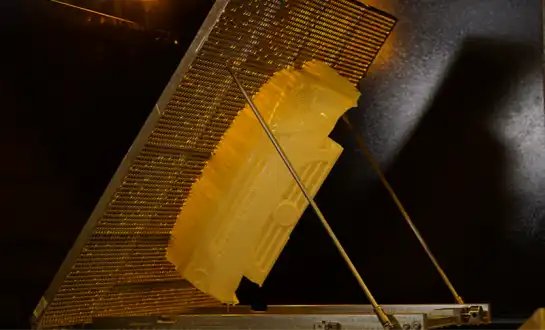
Post-processing automation improves throughput and consistency. Automated washing stations remove uncured resin more effectively than manual cleaning while reducing solvent consumption. UV post-curing chambers with controlled intensity and duration ensure complete polymerization, achieving material data sheet specifications for mechanical properties. Innovative platform support designs facilitate resin drainage, with adjustable rods enabling inverted positioning that accelerates draining and reduces cleaning time.
Long-Term Value and Competitive Differentiation
Beyond immediate production benefits, stereolithography capabilities create strategic advantages sustaining competitiveness over extended periods. Supply chain resilience improves when manufacturers produce critical components internally rather than depending on external suppliers with their own capacity constraints and lead time uncertainties. Digital inventory strategies emerge, storing CAD files rather than physical parts and producing components on demand as needed.
Product customization and personalization capabilities open new market opportunities. Medical providers offer patient-specific devices commanding premium pricing. Consumer brands launch limited-edition variants, testing market response without inventory risk. Industrial customers receive custom-fitted solutions addressing unique operational requirements. Each customization opportunity generates incremental revenue impossible under traditional mass-production paradigms.
Sustainability initiatives increasingly influence procurement decisions and customer preferences. Additive manufacturing can improve material efficiency in many applications by reducing the need for large subtractive processes, although factors such as support structures and process waste should also be considered. Sustainable resin formulations incorporating bio-based or recycled content further enhance environmental credentials, appealing to environmentally conscious customers and meeting corporate responsibility objectives.
Conclusion
Large-format industrial stereolithography printers completely change how production is scaled up. They offer accuracy, speed, and freedom that are unmatched by standard manufacturing. Companies that choose tools after a thorough performance review and from dependable providers with good after-sales support are in the best situation to get the best return on their investment. When high-quality parts, advanced scanning technologies, open material systems, and smart software come together, they make it possible to make things that meet the needs of many industries, from cars and planes to medical devices and consumer electronics. Companies that use this technology get a competitive edge by being able to come up with new ideas faster, cut costs, and make their products stand out more.
FAQ
1. How does dimensional accuracy compare between industrial stereolithography and CNC machining?
CNC machining typically achieves tighter tolerances, often within ±0.02mm for precision work. Large-format industrial SLA systems can achieve high dimensional accuracy, although actual tolerances depend on equipment calibration, resin properties, part geometry, and post-processing conditions. Stereolithography excels with internal cavities, undercuts, and complex organic geometries where CNC struggles or requires multiple setups.
2. What maintenance requirements should buyers anticipate?
Routine maintenance includes resin tank replacement after extended use, recoater blade inspection and replacement, optical window cleaning to prevent contamination, laser power calibration, and build platform leveling. High-quality systems built with premium components require less frequent intervention, with top-tier brands demonstrating significantly lower failure rates through robust component selection like AOC lasers, Scanlab galvanometers, and Panasonic servo motors.
3. Can stereolithography parts withstand demanding environments?
Standard resins exhibit UV sensitivity, requiring protective coatings for outdoor applications. Specialized formulations address specific environmental challenges, including high-temperature resins for thermal exposure, chemical-resistant materials for harsh solvents, and UV-stabilized compositions for outdoor durability. Material selection must align with application requirements, validated through appropriate testing protocols like ASTM standards.
Partner with a Trusted Industrial SLA 3D Printer Supplier for Scalable Manufacturing Success
Magforms stands ready to support your production scaling initiatives with advanced stereolithography solutions combining materials expertise and precision equipment manufacturing. Our large-format industrial SLA 3D printer models incorporate AOC lasers, German Scanlab galvanometers, and Panasonic servo motors, delivering exceptional stability, accuracy, and speed backed by comprehensive after-sales support responding within 24 hours. With 22 patents, 30 trademarks, and a proven track record serving over 300 enterprises globally, we offer the technical foundation and partnership commitment your operations demand. Contact our team at info@magforms.com to discuss your specific requirements, request sample parts demonstrating our capabilities, or arrange equipment demonstrations at your facility.
References
1. Gibson, I., Rosen, D., Stucker, B., & Khorasani, M. (2021). Additive Manufacturing Technologies (3rd ed.). Springer International Publishing.
2. Jacobs, P. F. (2019). Stereolithography and Other RP&M Technologies: From Rapid Prototyping to Rapid Tooling. Society of Manufacturing Engineers.
3. Materialise NV. (2020). Industrial Applications of Large-Format 3D Printing: A Technical Review. Materialise Research Publications.
4. Ngo, T. D., Kashani, A., Imbalzano, G., Nguyen, K. T., & Hui, D. (2018). Additive manufacturing (3D printing): A review of materials, methods, applications, and challenges. Composites Part B: Engineering, 143, 172-196.
5. Thompson, M. K., Moroni, G., Vaneker, T., Fadel, G., Campbell, R. I., Gibson, I., Bernard, A., Schulz, J., Graf, P., Ahuja, B., & Martina, F. (2016). Design for Additive Manufacturing: Trends, opportunities, considerations, and constraints. CIRP Annals - Manufacturing Technology, 65(2), 737-760.
6. Wohlers Associates. (2022). Wohlers Report 2022: 3D Printing and Additive Manufacturing Global State of the Industry. Wohlers Associates, Inc.

Magforms makes design and manufacture easier.
Popular Blogs
-
 Industry InsightsManufacturing Industry
FDM vs. SLA Printer: Which Technology Is Right for Your Project?
-
 Industry InsightsManufacturing Industry
Top 5 Applications of Industrial 3D Printers in Manufacturing Today
-
 Industry InsightsManufacturing Industry
Why Stereolithography 3D Printers Are Unmatched for Microfluidic Device Prototyping?