Industrial SLA 3D Printer vs DLP Systems: Key Differences Explained
When choosing between resin-based additive manufacturing technologies, understanding the fundamental distinctions matters significantly. An Industrial SLA 3D Printer uses a laser to cure photopolymer resin point-by-point with exceptional precision, while DLP systems project entire layers simultaneously using digital light projectors. Both technologies offer high-resolution results, yet they differ substantially in speed, dimensional accuracy, build volume capabilities, and cost-effectiveness. Selecting the right technology depends on your specific production requirements, budget constraints, and desired output quality.
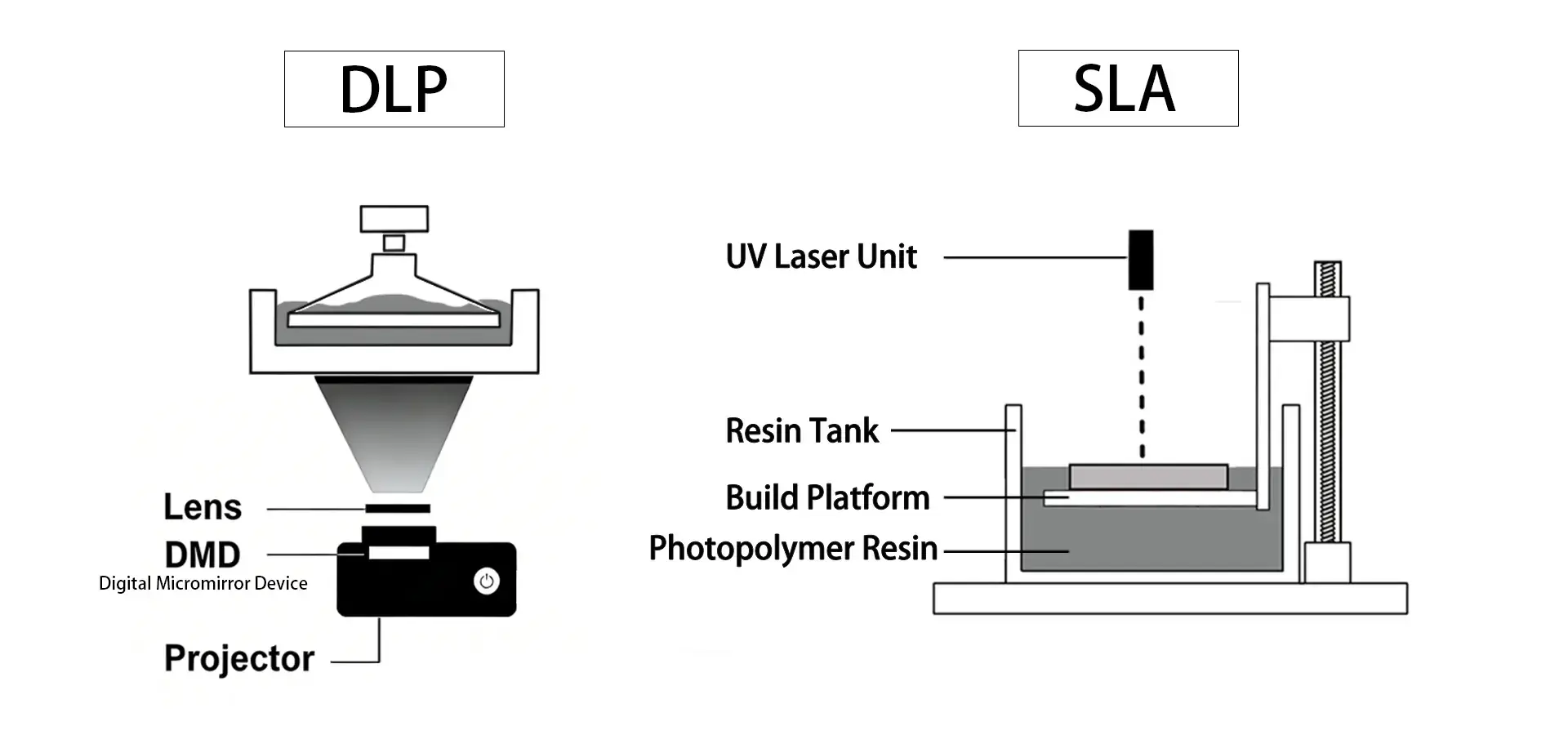
Understanding the Core Technology: How Each System Works
Industrial stereolithography technology operates through laser scanning mechanisms that selectively trace each layer's cross-section according to the sliced CAD data. The laser beam moves across the resin tank in calculated patterns, curing material precisely where needed. This layer-by-layer approach provides precise control over dimensional accuracy and surface finish quality, making SLA suitable for applications requiring detailed prototypes and functional parts.
DLP systems function differently by projecting complete layer images through a digital micromirror device. Depending on the machine architecture, the build platform moves relative to the resin vat while the projector exposes the complete layer image at once. This simultaneous curing process creates unique advantages and limitations compared to laser-based approaches.
Three core technological differences include:
- Light source variation — lasers versus projector arrays
- Curing methodology — point-by-point versus full-layer exposure
- Optical path design — scanning galvanometers versus digital projection optics
Photopolymer resins are formulated for specific curing wavelengths. Industrial SLA systems commonly use 355 nm laser sources, while other resin-based technologies may operate at different wavelengths depending on optical design and material formulation. Material compatibility extends across engineering-grade, flexible, high-temperature, and transparent formulations when systems maintain proper wavelength specifications.
For applications such as aerospace prototypes or medical devices where dimensional consistency is critical, industrial laser-based stereolithography provides excellent accuracy and repeatability, particularly for large and complex geometries. Companies producing smaller parts in high quantities may benefit from DLP’s simultaneous layer exposure. However, when larger build areas or consistent accuracy across the platform are required, industrial SLA systems may provide advantages.
👉 How SLA 3D printing technology works
Precision and Dimensional Accuracy: Measuring Real-World Performance
Accuracy remains one of the most important considerations for technical decision-makers evaluating additive manufacturing systems. An Industrial SLA 3D Printer achieves consistent part accuracy through the combined performance of mechanical positioning systems, laser control, platform stability, resin behavior, and optimized process parameters. These capabilities help produce parts that closely match CAD designs when printing parameters and post-processing workflows are properly optimized.
Typical industrial SLA performance evaluation considers factors such as:
- Dimensional consistency under calibrated printing conditions
- Motion system repeatability
- Long-term production stability
- Accuracy across different part sizes and geometries
DLP systems may experience optical distortion challenges across larger projection areas due to factors such as lens characteristics, pixel distribution, and exposure uniformity. Advanced systems typically compensate through optical calibration and software correction. Parts positioned at different areas of the build platform may experience variations in exposure conditions, making optical calibration and process optimization important for maintaining dimensional consistency. These variations are primarily related to optical projection characteristics, although mechanical accuracy and process control also influence final part quality.
High-quality galvanometer scanning systems paired with stable laser sources help maintain consistent laser spot characteristics and energy distribution during exposure. This combination helps achieve more consistent energy delivery, which can reduce uneven curing effects when combined with optimized resin selection, support strategies, and printing parameters. Maintaining consistent exposure across large build areas requires careful optical calibration. Industrial SLA and DLP systems address this challenge through different optical approaches.
For applications such as surgical guides, orthodontic models, and precision connectors where dimensional consistency is critical, industrial laser scanning technology can provide advantages in accuracy control and repeatability. Production efficiency suffers when dimensional failures require reprinting, wasting both material and time.
👉 Industrial SLA 3D Printer application cases
Speed and Production Efficiency: Real Performance Comparisons
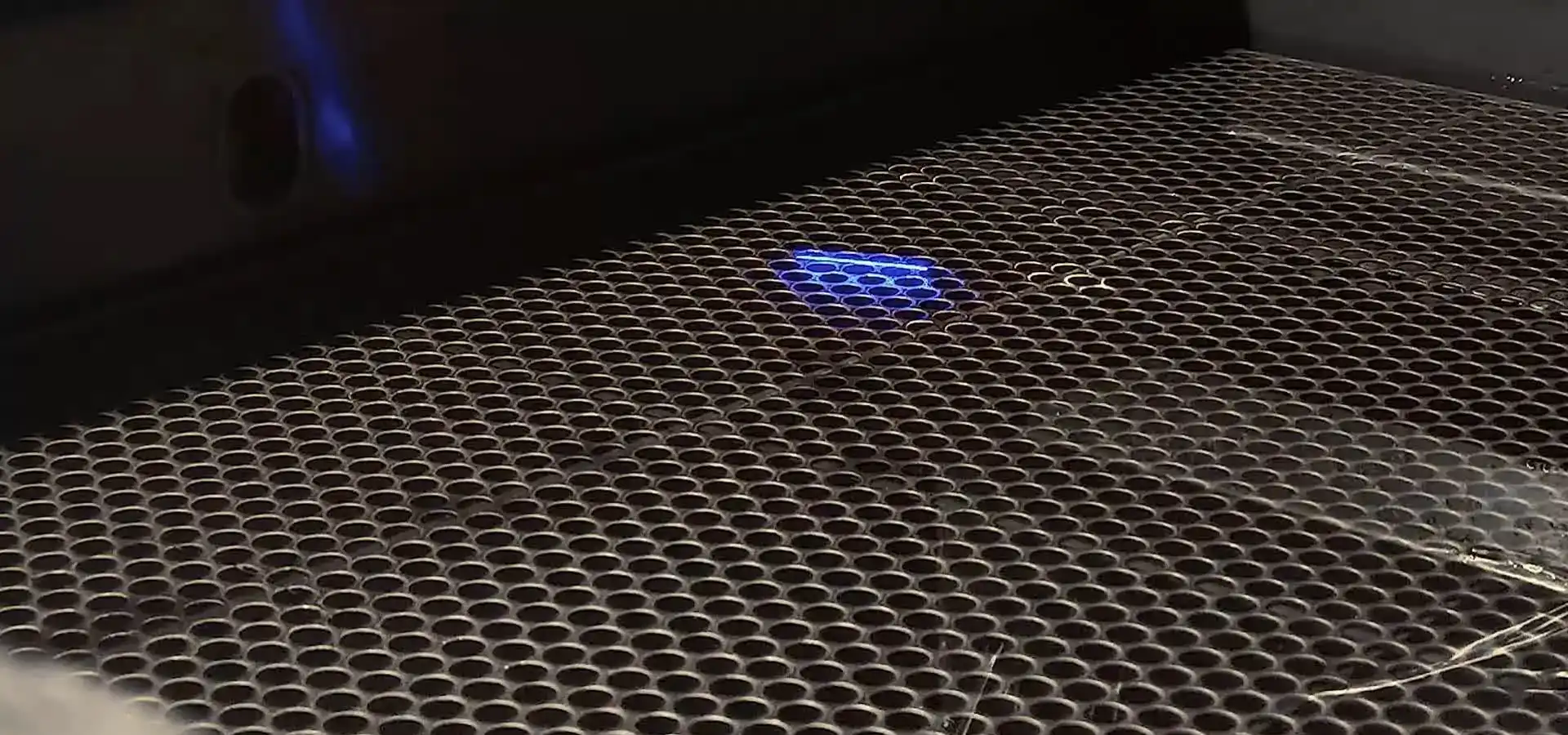
Variable laser spot technology can improve production efficiency in modern stereolithography systems by optimizing scanning strategies for different areas of a part. Larger spots measuring 0.5–0.6 mm scan infill areas rapidly, while smaller 0.15–0.2 mm spots handle support structures and contours. This dynamic adjustment can improve scanning efficiency compared with fixed-spot approaches, although the actual speed improvement depends on part geometry, layer thickness, resin properties, and process settings.
Industrial SLA galvanometer systems can achieve high scanning speeds, with some systems reaching several meters per second. These values refer to laser positioning speed rather than complete part printing speed, which also depends on layer height, scan strategy, resin properties, and part geometry. Advanced scanning software can optimize laser paths and exposure strategies to improve efficiency and maintain consistent print quality across different production conditions.
DLP systems claim faster layer exposure times since entire layers cure simultaneously. However, overall production efficiency depends on more than layer exposure time, including:
- Build volume limitations in certain DLP systems may reduce the number of parts produced in a single build
- Different optical characteristics may require additional calibration or finishing steps for certain precision-critical applications
- Projection-based systems using certain lamp-based light sources may require periodic replacement and recalibration, while newer LED or laser projection systems can reduce this maintenance requirement
Rapid prototyping demands balancing speed with reliability. Equipment downtime from failures negates any theoretical speed advantages. High-stability systems designed for continuous operation can improve production efficiency by reducing failed prints, downtime, and unnecessary material consumption.
If you need consistent output for 3D printing service industry operations handling multiple client projects simultaneously, reliability outweighs raw speed specifications. Automotive manufacturing industry applications requiring iterative design validation benefit more from predictable turnaround times than marginally faster individual prints.
Build Volume and Scalability: Capacity Considerations
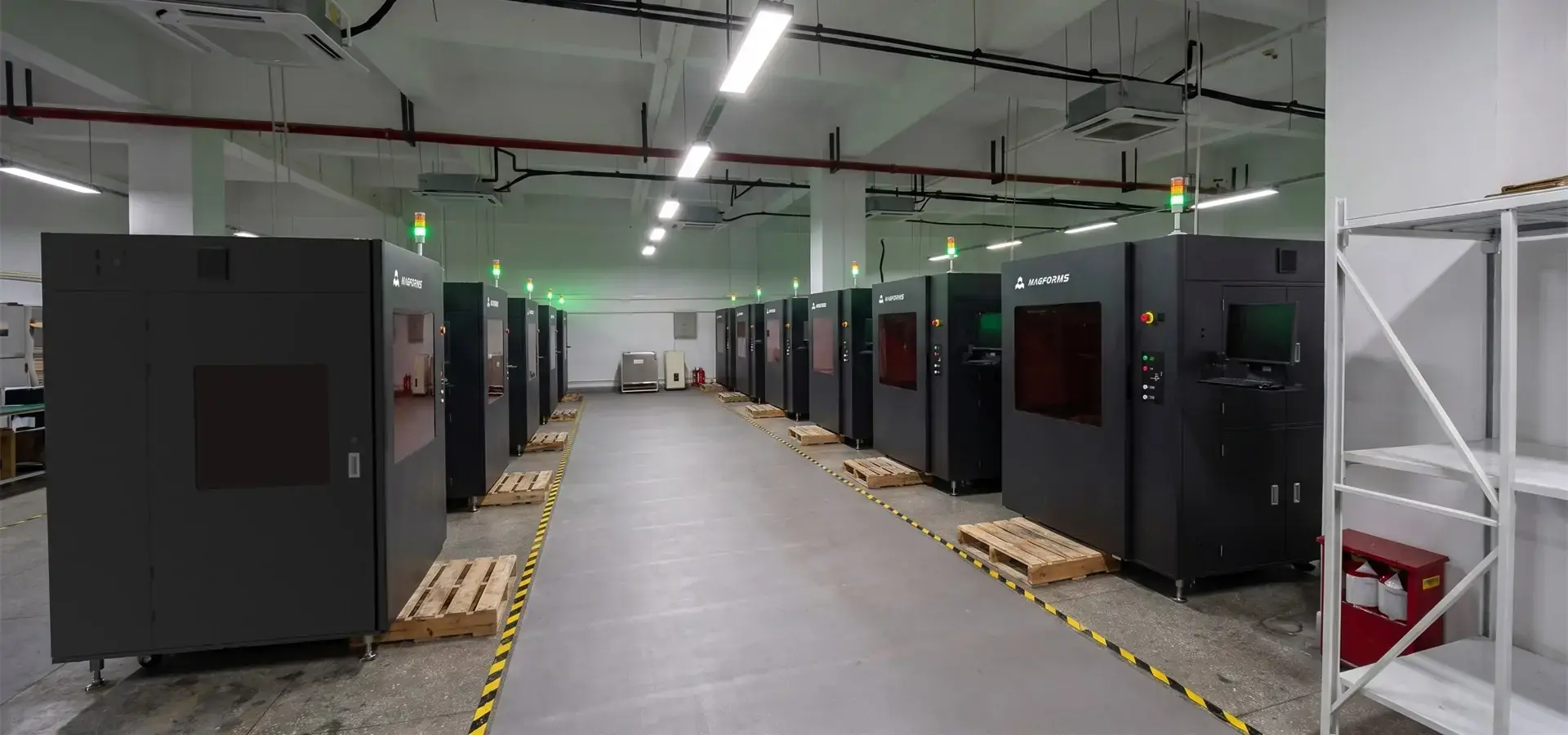
Industrial applications frequently demand larger format capabilities. Industrial SLA 3D Printer systems are available in different build sizes, from medium-format production machines to large-format platforms such as the SL800, which is designed for producing large prototypes, molds, and functional parts requiring high dimensional consistency. Maintaining platform flatness and mechanical stability becomes increasingly important as build volume increases. Industrial systems typically use rigid structures and precision motion components to support consistent printing performance across larger areas.
DLP systems must carefully balance projection resolution and build area. Increasing the exposure area may affect pixel density and feature resolution unless compensated through advanced optical designs or higher-resolution projection systems. A projector with 1920×1080 resolution covering a 150 mm build area provides a different effective resolution than the same projector covering 300 mm.
Low-expansion support structures, combined with precision linear guides and stable Z-axis motion systems, help maintain alignment and reduce mechanical variation during tall builds. These mechanical components maintain consistent performance across extended vertical builds, critical for tall components or stacked multi-part arrangements.
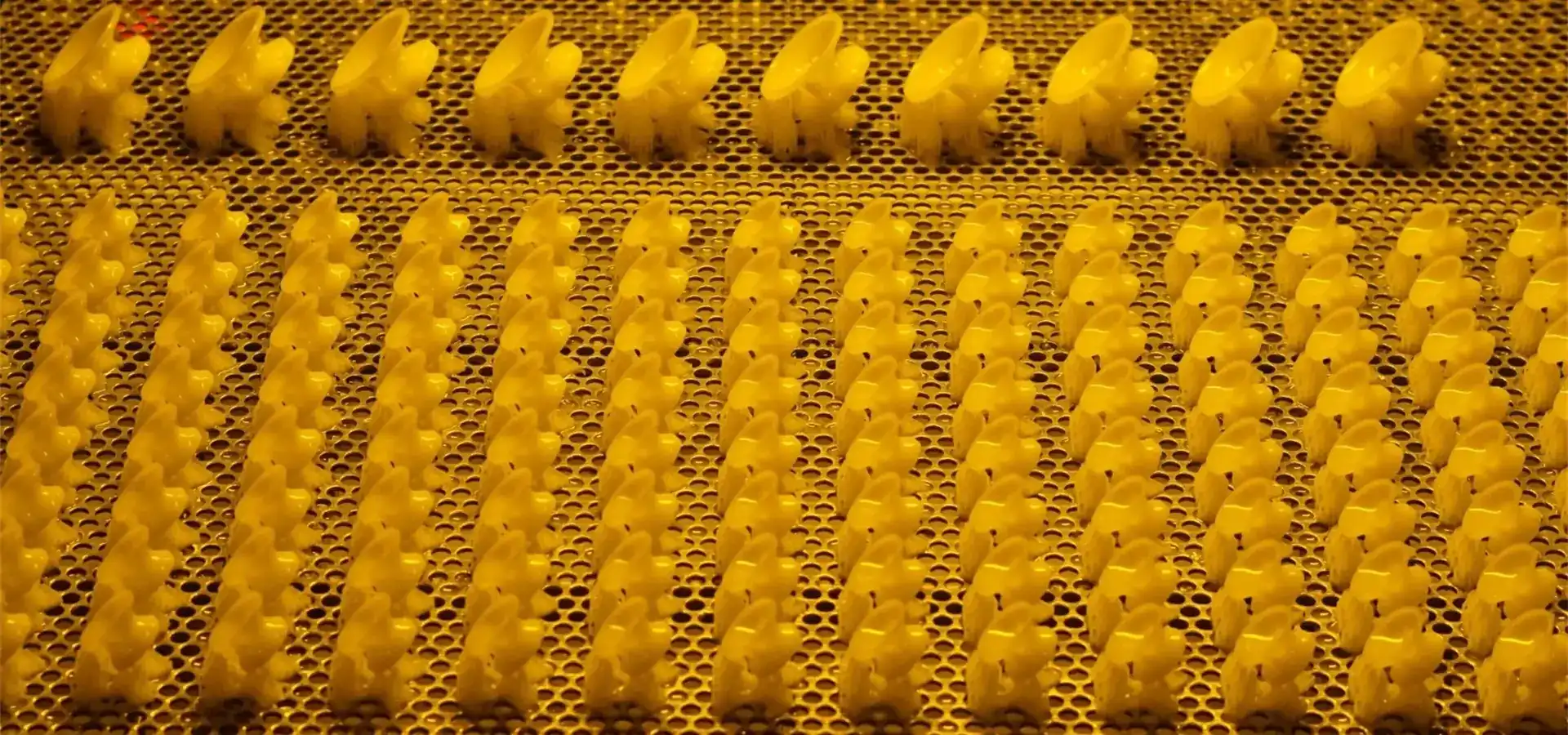
Consumer electronics industry applications often require multiple small parts printed simultaneously. Large-format systems can accommodate multiple components in a single build, improving production efficiency and reducing the need for repeated setup operations.
If you need flexibility, printing both large automotive interior components and small batches of medical device prototypes, scalable systems provide operational versatility. Medium and large manufacturing organizations benefit from equipment that can adapt to changing project requirements and production demands over time.
Material Compatibility and Flexibility: Open Versus Closed Systems
Material compatibility and resin availability are important considerations when selecting an industrial additive manufacturing system. Some additive manufacturing systems use controlled material ecosystems, which may reduce flexibility for users requiring application-specific resin options. This approach may increase material costs and reduce flexibility for users who need application-specific resin options.
An Industrial SLA 3D Printer with an open material architecture can support a broad range of 355 nm photopolymer resins when their curing characteristics are compatible with the system. Open material systems allow users greater flexibility in evaluating different resin formulations without being limited to a single material ecosystem. Users can evaluate engineering materials, transparent formulations, or high-temperature resins based on specific application requirements.
Material compatibility benefits include:
- Potential cost optimization through flexible material sourcing
- Application-specific material selection freedom
- Rapid adoption of newly developed resin formulations
- Reduced inventory complexity for service providers
UV curing behavior depends on resin formulation, wavelength compatibility, exposure parameters, and post-curing conditions. Properly matched 355 nm resins can provide stable curing performance when optimized for the system. Built-in temperature management systems help maintain suitable resin viscosity and curing conditions, improving process stability when environmental temperatures fluctuate.
DLP systems may require resin formulations optimized for specific projector wavelengths, exposure strategies, and optical characteristics. However, many modern DLP systems also support open material options.
For 3D printing service providers serving diverse industries, open material systems can improve workflow flexibility and simplify material selection. Cultural, creative, and footwear/apparel industry users benefit from experimenting with specialized materials for unique aesthetic or functional requirements.
Surface Finish and Detail Resolution: Visual and Functional Quality
Excellent detail reproduction depends on the combination of laser spot control, optical accuracy, resin properties, layer thickness, and optimized printing parameters. Variable spot modules with smaller laser spot sizes provide finer exposure control, helping reproduce sharp edges, surface textures, and complex geometric details. Optimized laser scanning strategies and exposure control help reduce visible layer transitions and improve surface consistency.
Printed parts demonstrate surface quality suitable for:
- Assembly verification with minimal finishing requirements
- Investment casting pattern production
- Presentation models requiring minimal post-processing
- Functional prototypes for consumer electronics housings
DLP systems can produce smooth horizontal surfaces through full-layer exposure. However, curved and angled geometries may require careful orientation, calibration, and resolution management to maintain consistent surface quality. Because DLP systems rely on pixel-based projection, curved surfaces may require optimized resolution settings and software compensation to achieve the desired finish quality.
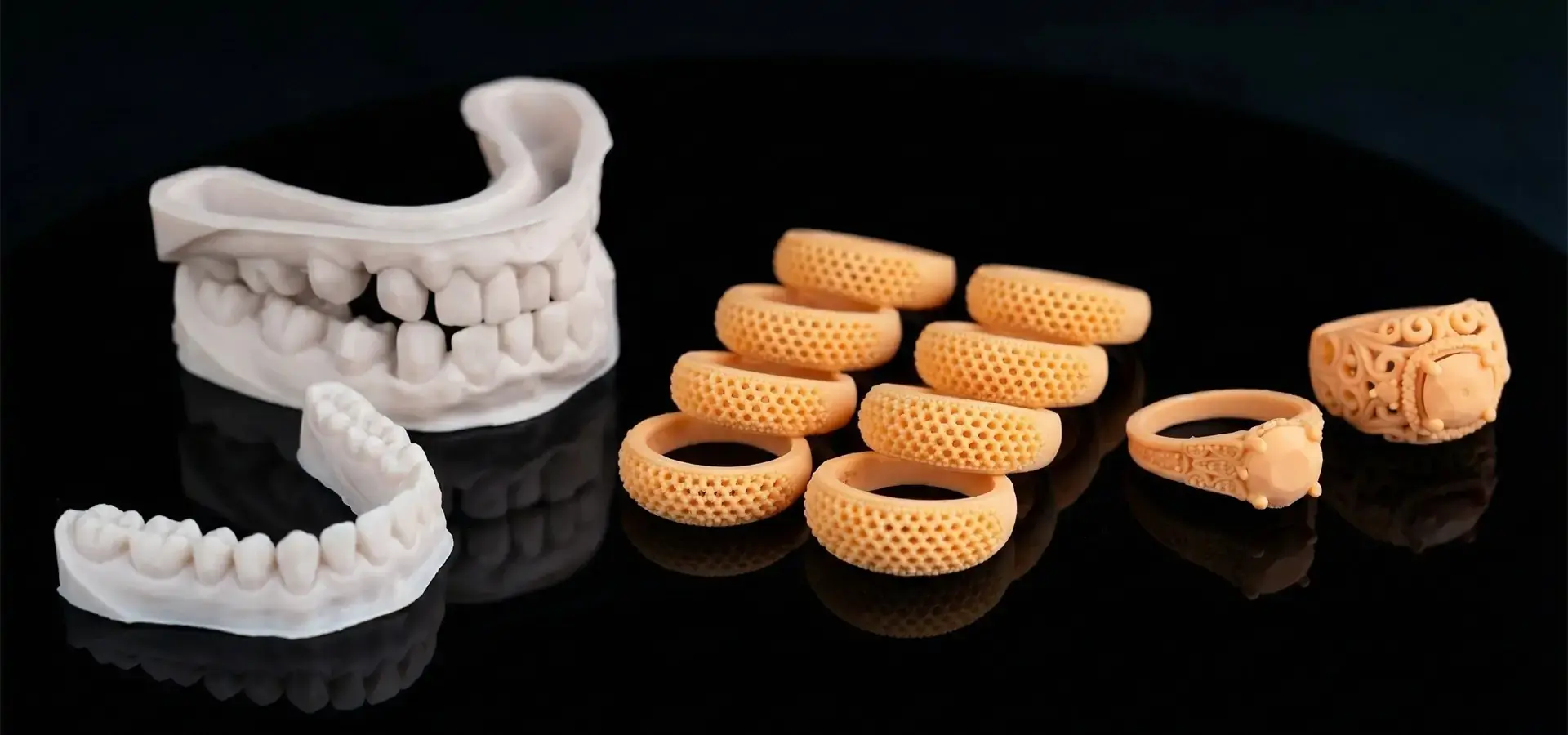
Medical and dental applications often require high surface quality and dimensional consistency, especially for models, surgical guides, and devices manufactured with application-specific material requirements. Orthodontic models and surgical guide applications require controlled post-processing workflows, including cleaning and curing procedures, when specified by the material manufacturer and application requirements. Improved surface finish can reduce post-processing requirements and help lower overall production time.
Surface roughness varies depending on resin formulation, layer thickness, build orientation, exposure parameters, and post-processing methods.
For applications requiring rapid transition from printing to functional evaluation, laser-based systems can reduce overall workflow time by producing parts with high surface quality and dimensional consistency.
Equipment Reliability and Maintenance: Long-Term Ownership Considerations
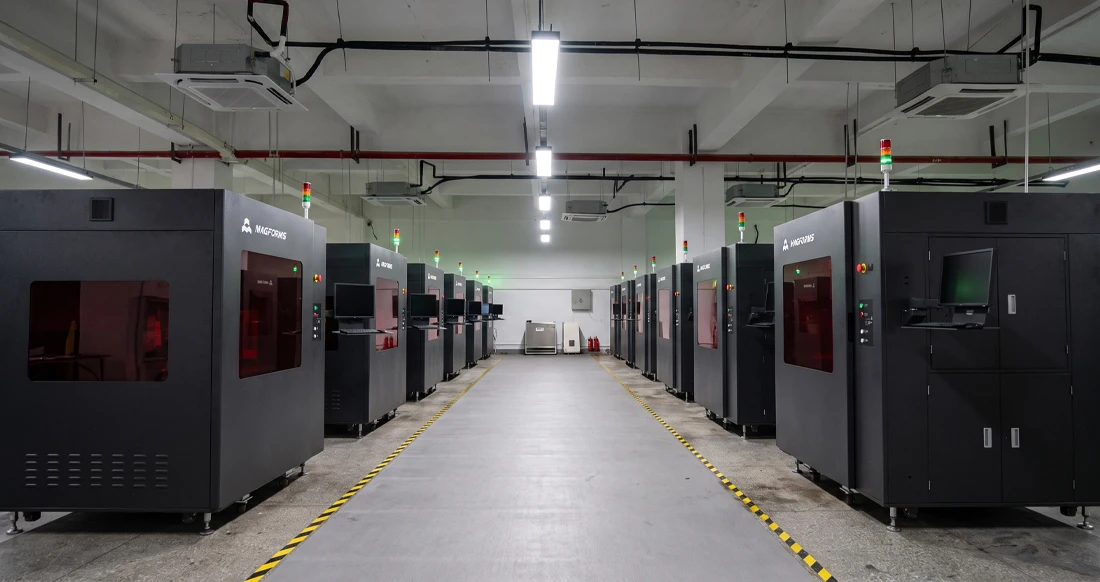
System stability is an important factor influencing real production capacity. An Industrial SLA 3D Printer built with high-quality industrial components can support reliable operation in demanding production environments when properly maintained and calibrated. Key components include:
- AOC laser modules designed for stable optical output during extended industrial operation
- German Scanlab galvanometer systems providing accurate laser positioning and stable long-term scanning performance
- Panasonic servo motors support precise motion control and stable positioning performance within industrial motion systems
- Schneider electrical components ensure reliable power management
- UV protection components help reduce unwanted light exposure and protect sensitive optical and mechanical elements
Robust 2 mm-thick metal enclosure panels combined with optimized internal layouts minimize thermal expansion and vibration interference. These design elements maintain calibration stability across temperature fluctuations and extended operation periods.
Some DLP systems using lamp-based projection sources require periodic light-source replacement and recalibration. Modern LED or laser projection systems may have different maintenance requirements. Optical components in resin-based additive manufacturing systems require appropriate maintenance to prevent contamination and maintain exposure consistency.
Long-term equipment reliability depends on system design, maintenance procedures, operating environment, and technical support quality.
Aerospace field applications cannot tolerate unpredictable equipment failures during critical component validation periods. Professional and efficient after-sales teams responding within 24 hours prevent production delays from minor technical issues escalating into major disruptions.
If you need dependable equipment for small and micro enterprises where downtime directly impacts revenue, reliability specifications matter more than feature lists. University research labs benefit from consistent equipment availability, ensuring student projects and research timelines remain on schedule.
Cost Analysis: Initial Investment Versus Total Ownership Expense
Purchase price represents only the initial consideration in equipment selection. Total cost of ownership encompasses material expenses, maintenance requirements, consumable replacements, and productivity losses from failures.
Entry-level industrial SLA systems provide cost-effective solutions for small product design studios and startup 3D printing service providers. These systems can provide industrial-grade capabilities while offering different investment options depending on production requirements, matching budget constraints while enabling competitive service offerings.
Large-format systems such as the SL800 are designed for manufacturers requiring larger build volumes and higher production flexibility. Higher initial investment is distributed across greater production volume, reducing per-part costs while providing operational capacity matching demand fluctuations.
Total cost of ownership should be evaluated based on equipment investment, material consumption, maintenance requirements, labor input, and production output.
Open material compatibility helps reduce dependence on a single material supplier. This flexibility proves particularly valuable for multinational small and medium-sized traders managing diverse client requirements across regional markets.
If you need predictable operational expenses for accurate ROI calculations, transparent equipment costs combined with open material systems provide financial clarity. Procurement directors evaluating capital equipment investments require comprehensive cost models extending beyond the initial purchase price.
Why Magforms Industrial SLA 3D Printer Stands Out
Magforms delivers comprehensive Industrial SLA 3D Printer advantages, addressing the specific pain points that technical decision-makers and corporate management face when evaluating additive manufacturing investments:
Proven Stability Through Premium Components
- AOC laser systems provide a stable output across continuous 24/7 operation
- German Scanlab galvanometers ensure reliable scanning accuracy
- Panasonic servo motors enable precise positioning with minimal error
- Schneider electrical components deliver consistent power management
- Philips UV protection ensures safe operation for personnel
- Platform flatness tolerances from 0.2 mm to 0.5 mm, depending on model series
- Robust construction with 2 mm metal enclosures and marble platforms
Exceptional Precision for Demanding Applications
- Positioning accuracy within ±8 μm for critical dimensions
- Dimensional tolerance of ±0.1 mm for parts under 100 mm in length
- Variable spot technology: 0.5–0.6 mm for infill, 0.15–0.2 mm for details
- High-quality optical components help maintain consistent laser spot characteristics and exposure uniformity
- Minimal internal stress reduces warping and dimensional deviation
Superior Production Speed
- Galvanometer scanning speeds reach 6–10 m/s in operational ranges
- Variable spot technology improves scanning efficiency by adapting laser exposure strategies to different part features
- Advanced scanning strategies optimize laser paths for improved production efficiency
- High success rates minimize reprinting waste and production delays
Outstanding Surface Quality
- Optimized laser exposure strategies help reduce visible layer transitions
- Micro-spot capability captures fine details and sharp edges
- Minimal post-processing required for functional prototypes
- Surface quality suitable for medical and dental model production requirements when combined with appropriate materials and workflows
Complete Material Freedom
- Open system architecture with no material locks or authentication keys
- Compatible with most 355 nm photopolymer resins globally available
- Freedom to test engineering, transparent, flexible, and high-temperature formulations
- Built-in temperature control maintains optimal resin viscosity
Scalable Build Volumes
- Entry systems for small enterprises and design studios
- Large-format SL800 platform for industrial production applications
- Consistent precision maintained across all size ranges
- HIWIN components enable stable high-Z printing
Intelligent Design Features
- Supported platform design with dual rods for efficient resin drainage
- Optical protective covers prevent dust contamination
- User-friendly iBuild 2.0 software with responsive mobile optimization
- Laser safety protection meets international standards
Exceptional Reliability
- Designed for stable operation with features supporting reliable long-term production
- Thousands of hours of continuous operation testing
- Professional after-sales team responding within 24 hours
- Comprehensive support, including maintenance, upgrades, and training
Integrated Materials and Equipment Solution
- Deep optimization between proprietary materials and hardware
- Eliminates compatibility issues causing dimensional deviations
- Comprehensive understanding of material stress and curing behavior
- One-stop solution from material development through production
Global Expertise and Support
- 22 patents and 30 registered trademarks
- Products exported to dozens of countries, serving 300+ enterprises
- Years of accumulated industry experience and application knowledge
- Extensive commissioning engineer expertise across multiple systems
Proven Performance for Specialized Applications
- Leading transparent resin printing success rates
- Stable printing processes help reduce failed builds and material waste
- Temperature-controlled printing maintains quality consistency
- Parts can be used for assembly verification and functional testing depending on material selection and application requirements
Magforms equipment solutions address key requirements including precision, production efficiency, material flexibility, and operational considerations. Small and medium-sized businesses can select industrial additive manufacturing solutions based on their production scale and investment requirements. Medium and large manufacturing institutions receive the stability, precision, and capacity their production demands require.
The integration of material knowledge and equipment engineering helps reduce compatibility challenges commonly encountered in multi-vendor workflows. This integrated approach can improve workflow consistency, reduce unnecessary waste, and support more predictable production planning — precisely the outcomes procurement decision makers prioritize.
Conclusion
Choosing between resin-based additive manufacturing technologies requires careful evaluation of precision requirements, production volumes, material needs, and long-term operational costs. An Industrial SLA 3D Printer provides high dimensional accuracy, material flexibility, and scalable capacity for demanding applications across aerospace, medical, automotive, and consumer electronics industries. While DLP systems offer advantages for specific applications, industrial laser-based stereolithography provides a strong solution for production environments requiring large build volumes, dimensional consistency, and flexible material options. Understanding these key differences ensures your equipment investment aligns with both current requirements and future growth objectives.
Ready to Elevate Your Production with a Trusted Industrial SLA 3D Printer Manufacturer?
Magforms combines deep industry expertise with cutting-edge technology, delivering Industrial SLA 3D Printer solutions engineered for demanding multi-industry applications. Our integrated materials and equipment approach helps improve workflow compatibility and process stability. With 22 patents, global market presence across 300+ enterprises, and a responsive support team addressing inquiries within 24 hours, we understand the challenges you face. Reach out to our specialists at info@magforms.com to discuss how our open-architecture systems and scalable platforms can optimize your rapid prototyping, small-batch production, or high-volume manufacturing workflows.
References
1. Gibson, I., Rosen, D., & Stucker, B. (2021). Additive Manufacturing Technologies: 3D Printing, Rapid Prototyping, and Direct Digital Manufacturing (3rd ed.). Springer.
2. Jacobs, P. F. (1992). Rapid Prototyping & Manufacturing: Fundamentals of Stereolithography. Society of Manufacturing Engineers.
3. Quan, H., Zhang, T., Xu, H., Luo, S., Nie, J., & Zhu, X. (2020). Photo-curing 3D printing technique and its challenges. Bioactive Materials, 5(1), 110-115.
4. Stansbury, J. W., & Idacavage, M. J. (2016). 3D printing with polymers: Challenges among expanding options and opportunities. Dental Materials, 32(1), 54-64.
5. Melchels, F. P., Feijen, J., & Grijpma, D. W. (2010). A review of stereolithography and its applications in biomedical engineering. Biomaterials, 31(24), 6121-6130.
6. Ligon, S. C., Liska, R., Stampfl, J., Gurr, M., & Mülhaupt, R. (2017). Polymers for 3D printing and customized additive manufacturing. Chemical Reviews, 117(15), 10212-10290.

Magforms makes design and manufacture easier.
Popular Blogs
-
 Industry InsightsManufacturing Industry
FDM vs. SLA Printer: Which Technology Is Right for Your Project?
-
 Industry InsightsManufacturing Industry
Top 5 Applications of Industrial 3D Printers in Manufacturing Today
-
 Industry InsightsManufacturing Industry
Why Stereolithography 3D Printers Are Unmatched for Microfluidic Device Prototyping?