Industrial SLA 3D Printer: The Ultimate Guide to Precision Manufacturing
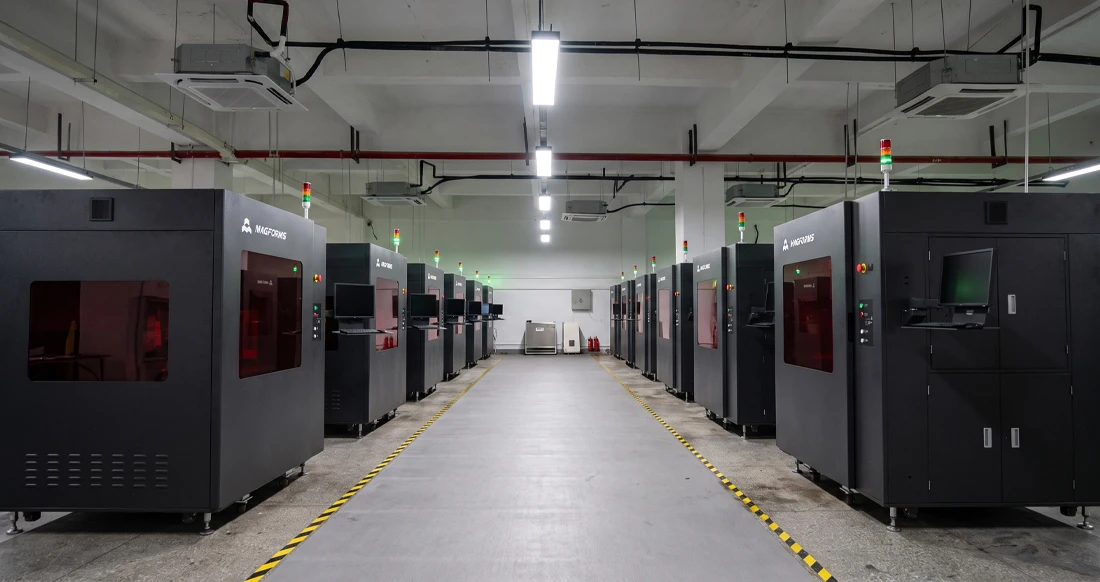
With the arrival of stereolithography additive systems, precision production has moved into a new era. As a high-powered laser selectively cures liquid photopolymer resin layer by layer, an Industrial SLA 3D Printer uses laser-based stereolithography technology to produce parts with high dimensional accuracy and excellent surface quality. Unlike desktop resin printers based on LCD or mSLA technology, these industrial systems feature larger build volumes, industrial-grade components, and enhanced reliability for continuous production environments. This makes them highly suitable for B2B manufacturing environments that require stability, repeatability, and predictable production performance. This complete guide tells procurement workers everything they need to know to evaluate stereolithography technology, put it into use, and get the most out of it in production settings that require precision.
Understanding Industrial SLA 3D Printers: Fundamentals and Benefits
Stereolithography was one of the earliest commercially developed additive manufacturing technologies, and its evolution into industrial-scale systems has transformed how companies approach prototyping and production. The process begins by lowering the build platform into a vat filled with liquid photopolymer resin. The platform is positioned according to the required layer thickness before laser exposure begins. A precise laser scans the cross-sectional pattern of each layer, selectively curing the resin through photopolymerization before the build platform moves according to the configured layer thickness, typically ranging from 0.05 mm to 0.15 mm depending on the application and material. This cycle will keep going until the whole part comes out.
How Stereolithography Technology Delivers Precision
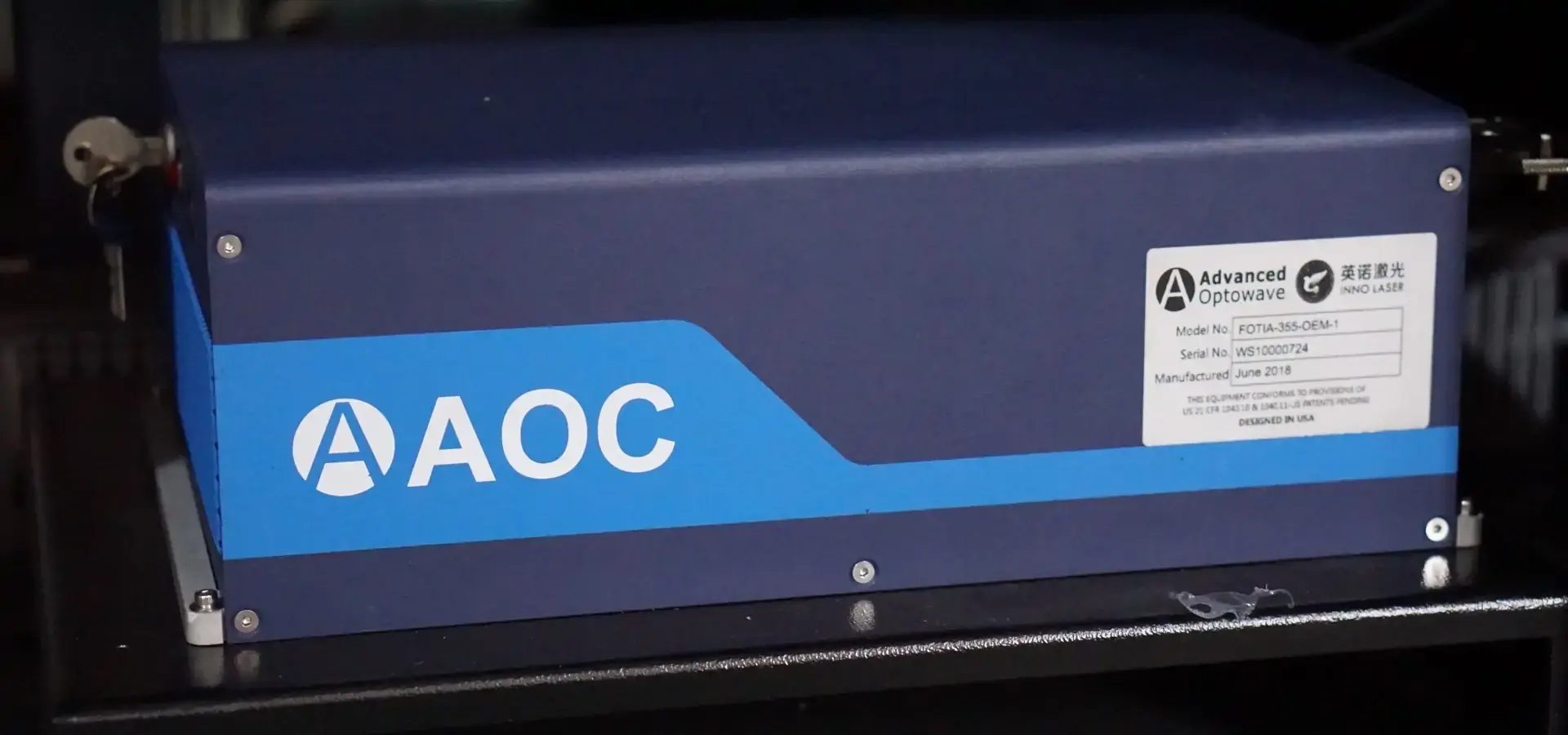
What makes business stereolithography systems different from private ones? The answer lies in how well they are designed and built. High-stability solid-state lasers used in industrial systems, including solutions such as AOC laser sources, provide consistent energy output with calibration systems designed to maintain stable printing performance during long production cycles. When paired with high-performance galvanometer systems such as Scanlab solutions, these systems can achieve scanning speeds and laser positioning accuracy beyond typical desktop resin printers. The galvanometer works together with the laser system to control beam positioning and spot movement accurately, helping maintain consistent feature reproduction and dimensional performance.
In some advanced industrial SLA systems, platform positioning accuracy can reach the micron level, while recoater positioning precision may achieve values such as ±0.03 mm depending on machine design and calibration. All important moves are controlled by Panasonic servo motors, and HIWIN linear guides and precision transmission components improve Z-axis stability and repeatability during large-format printing operations. The machines have metal exterior walls that are 2 mm thick and low-expansion marble bases that keep the geometry stable during long print jobs.
👉 What is SLA 3D printing technology
Material Versatility Opens New Applications
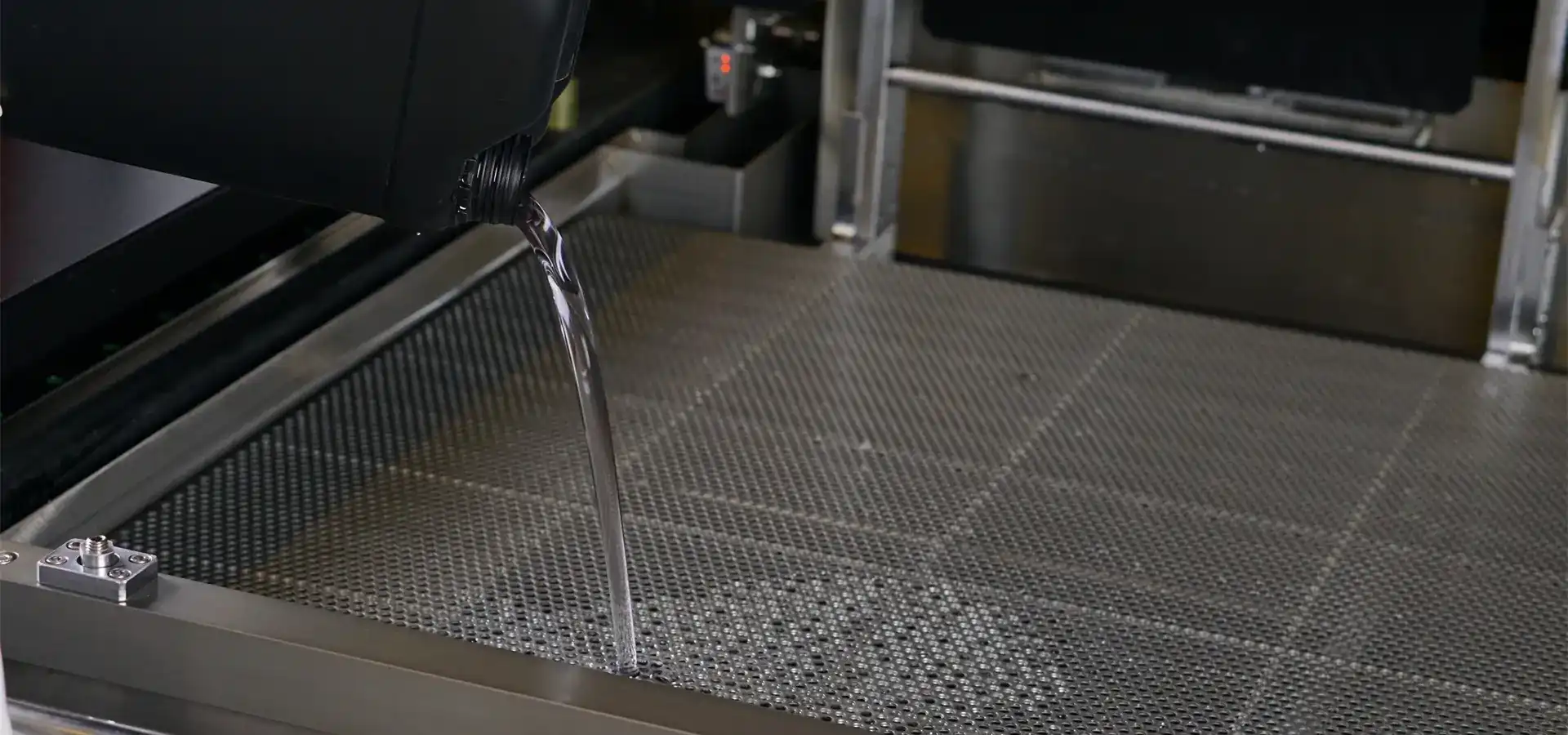
Many modern stereolithography systems adopt open material strategies, allowing users to evaluate and use compatible 355 nm photopolymer resins from different suppliers while reducing dependence on proprietary material ecosystems. Because of this, manufacturers can pick engineering-grade resins, clear materials, high-temperature formulations, flexible compounds, and biocompatible options based on the needs of the application rather than the limitations of the vendor.
Modern machines have temperature control systems that help maintain appropriate resin viscosity during printing. This helps maintain more consistent resin viscosity and printing performance under different environmental conditions. This feature is especially useful for facilities that don't have climate-controlled production areas.
Core Benefits Driving Adoption Across Industries
When businesses use Industrial SLA 3D Printer stereolithography technology, they get a lot of benefits. Many industrial SLA systems specify dimensional accuracy around ±0.1 mm for smaller parts and proportional tolerances such as ±0.1% × L for larger components, depending on machine calibration, resin properties, and part geometry. Because of this level of accuracy, printed parts can often be used for assembly testing, fit validation, and mold design verification, reducing the number of prototype iterations required. When compared to traditional ways of making things, production cycles are much shorter, and some systems improve productivity through variable spot-size laser technology, which allows larger areas to be scanned efficiently while maintaining smaller spot sizes for detailed features.
The surface quality of industrial SLA parts can approach the requirements of injection-molded prototypes in many applications. Sharp edges, complex textures, and small details are all accurately reproduced. Less post-processing is needed, which lowers the cost of finishing while keeping the professional look needed for customer demos and functional testing.
Key Factors to Consider When Choosing an Industrial SLA 3D Printer
Selecting the appropriate stereolithography system requires careful evaluation of multiple technical and operational parameters. The wrong choice can lead to material waste, production delays, and disappointing returns on investment.
Print Resolution and Accuracy Requirements
Print resolution in industrial SLA systems depends on factors such as laser spot size, scanning accuracy, positioning precision, layer thickness, and resin characteristics. These parameters collectively determine how accurately the system can reproduce fine features. Some advanced industrial SLA systems use variable spot-size technology, allowing the laser diameter to be adjusted according to different printing requirements. In systems equipped with variable spot technology, larger laser spots such as 0.5–0.6 mm can improve scanning efficiency in larger areas, while smaller spots around 0.15–0.2 mm can support detailed features and contour accuracy. This adaptability improves production efficiency while maintaining high-detail reproduction capabilities.
Accuracy specifications matter differently depending on your application. Automotive interior components may tolerate slightly wider tolerances than aerospace connectors or dental models. Understanding your tightest tolerance requirements helps narrow equipment options appropriately.
Material Compatibility and System Openness
Proprietary material systems can provide optimized hardware-material integration, while open material platforms offer greater flexibility for users who need broader material choices. Equipment that supports open resin platforms empowers users to test new materials and applications freely, optimize material costs, and avoid vendor lock-in. Compatibility with a wide range of 355 nm photopolymer resins provides access to specialized formulations for applications requiring high-temperature resistance, optical clarity, or specific mechanical properties.
Some manufacturers engineer their printers and resins in tandem, ensuring deep optimization between hardware and materials. This integration helps reduce dimensional variations and printing issues caused by material-process mismatches, creating a more consistent workflow from file preparation through post-curing.
Production Speed and Throughput Capabilities
Scanning speed directly impacts throughput. High-performance galvanometer systems, including solutions from suppliers such as Scanlab, can support high scanning speeds. Actual operating speed depends on machine configuration, laser power, scanning strategy, and application requirements. Advanced scanning software can optimize laser paths through predefined algorithms, improving printing efficiency and consistency across different applications.
Build volume determines part size and batch capacity. Smaller service bureaus might succeed with Lab300 machines offering 300×300×400mm build envelopes, while automotive or aerospace applications often require SL600 or SL800 systems with substantially larger capacities.
Equipment Reliability and Component Quality
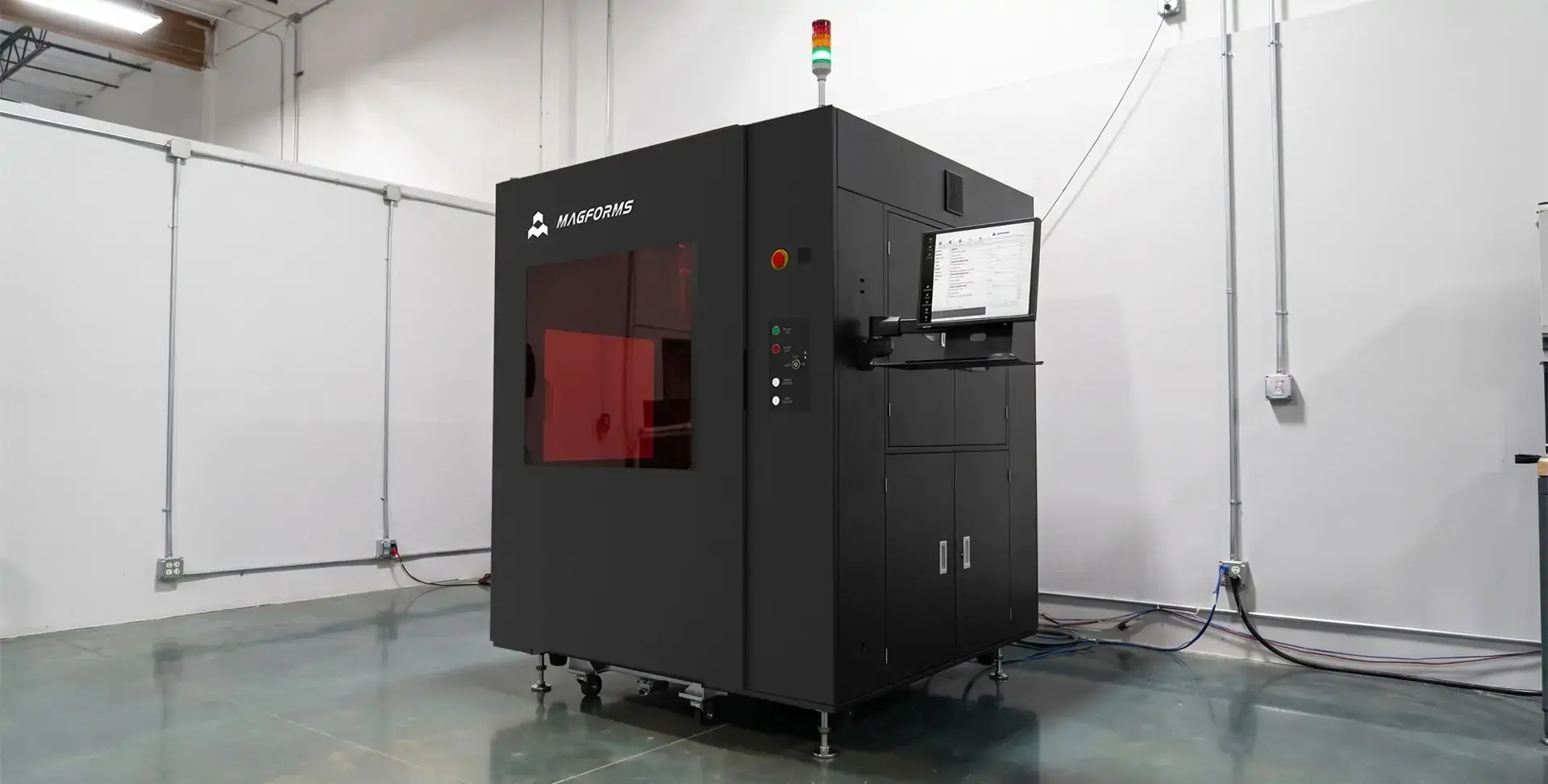
Reliability concerns are a major consideration for many buyers, particularly those burned by equipment with high failure rates. Premium stereolithography systems address this through carefully selected components. Industrial SLA systems often rely on high-quality components from established suppliers. Examples include stable laser sources such as AOC, precision galvanometer systems such as Scanlab, reliable servo motors such as Panasonic, and industrial electrical components from suppliers such as Schneider. For example, Magforms SL800 integrates industrial laser scanning, precision motion systems, and large-format build capability for demanding manufacturing applications.
👉 Explore Magforms SL800 Industrial SLA 3D Printer
Comparing Technologies: SLA Versus Alternatives
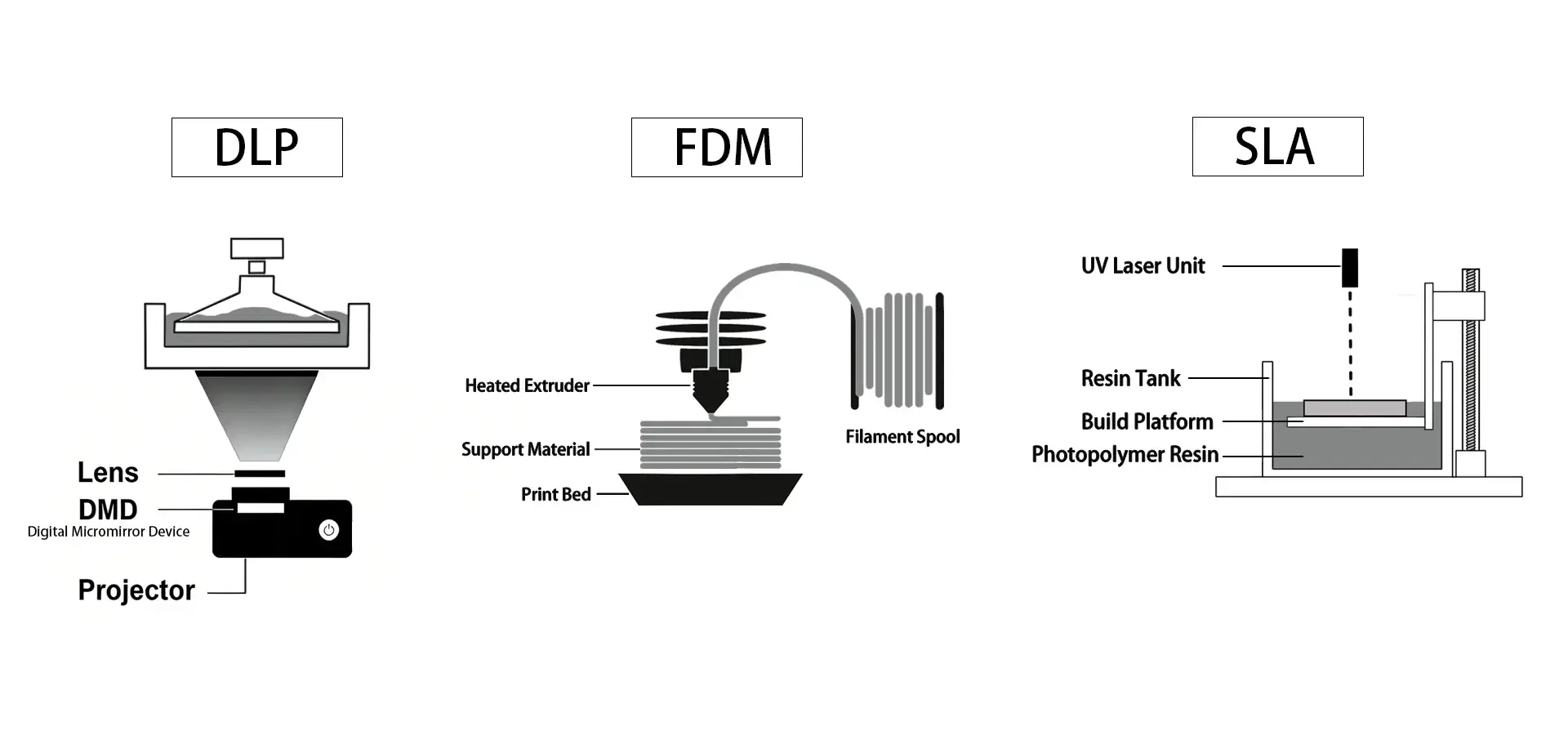
How does Industrial SLA 3D Printer stereolithography stack up against selective laser sintering, fused deposition modeling, or digital light processing? SLA is recognized for excellent surface finish and detail reproduction. Depending on machine configuration, resin selection, and post-processing, industrial SLA parts can achieve very smooth surface quality suitable for prototypes, patterns, and functional components. SLS is widely used for functional nylon parts and complex geometries without support structures, while SLA generally provides smoother surfaces and finer detail reproduction. FDM offers lower equipment costs and broad material availability, but compared with industrial SLA, it typically produces more visible layer patterns and may require additional finishing for high-detail applications. DLP can provide high productivity for certain applications, especially when printing multiple small parts simultaneously. However, industrial SLA systems offer advantages in large-format flexibility, variable laser control, and consistent surface quality across larger build areas. LCD and mSLA resin printers use masked light sources, typically around 405 nm, to cure entire layers simultaneously. Industrial SLA systems use laser scanning technology, commonly with 355 nm wavelengths, providing different advantages in scalability, precision control, and production stability.
Optimizing Industrial SLA 3D Printing for Manufacturing Efficiency
Getting equipment that can do the job is just the beginning. To get the most out of your output, quality, and equipment's life, you need to be disciplined in your work and keep optimising it.
Maintenance Protocols for Sustained Performance
Costly downtime can be avoided with regular maintenance. Every day, you should check the resin levels, the cleanliness of the build platform, and the condition of the recoater blade. As part of weekly tasks, optical windows and protective lenses need to be cleaned, laser power output needs to be checked, and galvanometer accuracy needs to be tested. As part of the machine's monthly maintenance, resin filters are changed, resin vats are deep-cleaned, and diagnostic test prints are run to find drift before it affects production parts.
Special care needs to be taken with optical parts. Dust contamination on optical components can reduce laser transmission efficiency and affect process stability. Regular cleaning and inspection of optical paths are therefore important. Quality systems protect delicate sensors with special covers and doors made of transparent glass that keep parts safe while still letting you see what's going on.
Resin Handling and Storage Best Practices
Photopolymer resins can be affected by environmental factors such as temperature, humidity, and light exposure. Storing resin in dark, temperature-controlled environments helps maintain material stability and extend shelf life. Before using resin, it should be stirred to make sure that the composition is consistent, since pigments can settle in some formulations.
Maintaining appropriate resin temperature during printing is important because viscosity changes can influence recoating behavior, exposure performance, and overall print consistency. Systems with built-in temperature control keep the resin's fluidity at its best, even when the temperature outside changes, which stops print failures caused by viscosity. This trait lowers the reliance on the surroundings and raises the chances of success.
Software Configuration for Precision Outcomes
Modern control software, such as Magforms iBuild 2.0, provides intuitive interfaces for job preparation, monitoring, and production management. The software provides efficient workflow management, allowing operators to prepare, monitor, and optimize printing tasks more effectively.
Support generation algorithms have a big effect on the quality of the parts and the work that needs to be done afterward. Intelligent software reduces the number of support links while still making sure that the structure is properly reinforced during printing. Using the right orientation strategies can cut down on the amount of support needed and the amount of material used, while also improving the surface finish on critical faces.
Hardware Upgrades: Enhancing Capabilities
Think about the features that make the design easy to use and speed up processes. Platforms with two support rods that lift at different angles make it easy for extra resin to drain back into the vat. Some designs let you flip the platform over to make the resin drain even faster. This increases material recovery and cuts down on cleaning time.
Procurement and Supply Chain Insights for Industrial SLA 3D Printers
Strategic procurement decisions account for far more than the initial purchase price. Total cost of ownership, supplier reliability, and after-sales support profoundly impact long-term success.
Evaluating Suppliers and Manufacturers
Working with established manufacturers brings distinct advantages. Companies with established intellectual property portfolios, including patents and registered technologies, may demonstrate ongoing investment in research and development capabilities. Magforms, with 22 patents and 30 trademarks, exemplifies this foundation. Such intellectual property protects investment in proprietary technologies while signaling ongoing development capabilities.
Global market presence indicates proven reliability. Suppliers serving over 300 enterprises across dozens of countries have weathered diverse application challenges and built robust support infrastructures. Participation in international exhibitions across Europe, Asia, and other regions demonstrates a commitment to customer engagement and market development.
Cost Analysis: Initial Investment Versus Long-Term Value
Entry-level industrial systems may tempt budget-conscious buyers, but comprehensive analysis reveals hidden costs. Proprietary material systems may increase long-term material costs and reduce material flexibility, although they can also provide optimized hardware-material integration. Depending on production volume and material consumption, equipment with restricted resin options may result in higher operating costs compared with systems supporting broader material choices.
Failure rates directly impact profitability. Equipment using lower-quality components may experience reduced stability, increased maintenance requirements, and higher operational costs over time. High-reliability systems featuring internationally recognized components—despite higher upfront costs—deliver superior economics through consistent output and minimal downtime.
Warranty Terms and After-Sales Support
Professional after-sales teams separate great suppliers from merely adequate ones. Response time commitments matter tremendously; teams capable of responding quickly to technical inquiries can help reduce production interruptions when issues occur. Large, highly trained support organizations offer technical expertise across diverse applications and troubleshooting scenarios.
Comprehensive support should encompass machine maintenance, software upgrades, and technical training. Suppliers with commissioning engineers experienced across various 3D printing systems bring valuable insights, helping customers optimize operations and avoid common pitfalls.
Logistics and Compliance Considerations
International equipment purchases of Industrial SLA 3D Printers involve shipping coordination, import documentation, electrical requirements, and applicable safety compliance considerations. Reputable suppliers navigate these complexities, ensuring proper packaging that protects sensitive optical and mechanical components during transit. Understanding destination country requirements—including electrical standards, safety certifications, and customs procedures—streamlines delivery and installation.
Financing options broaden accessibility. Bulk purchasing arrangements, leasing programs, and flexible payment terms help organizations balance cash flow constraints with equipment needs. Discussing these options early in the procurement process reveals creative solutions that make advanced technology accessible even within tight budgets.
Future Trends and Innovations in Industrial SLA 3D Printing
Rapid changes are happening in the world of stereolithography, with new technologies offering better features and more uses.
Advanced Materials Expanding Application Horizons
A lot of the new ideas in additive manufacturing come from materials science. With the development of specialized biocompatible photopolymer materials, manufacturers can produce medical models, surgical planning tools, and certain regulated medical components when the materials and processes meet applicable certification requirements. Certain high-temperature photopolymer resins can provide improved thermal resistance, enabling applications such as automotive prototypes, testing fixtures, and industrial components where elevated temperature performance is required.
Transparent photopolymer resins have long been an important application area for SLA technology. Advances in resin formulation and process optimization continue to improve optical clarity and surface quality for applications such as lenses, housings, and visualization models. This feature is useful for prototyping optical parts, making consumer goods, and other tasks that need to see what's inside something.
Eco-friendly products take care of environmental issues while still meeting performance standards. Bio-based resin development aims to reduce dependence on petroleum-based materials while maintaining suitable mechanical performance for targeted applications.
👉 Explore how Industrial SLA technology is applied in real production environments through our Industrial SLA 3D printing application cases.
Automation and Industry 4.0 Integration
Hands-on craft turns into lights-out production when additive manufacturing is automated. In advanced manufacturing environments, robotic part removal, automated platform exchange, and resin management systems can support more continuous production workflows with reduced manual intervention. These features are very important for service companies that do a lot of work and producers who want to use additive processes on a large scale for production.
With Industry 4.0 connectivity, monitoring can be done from afar, maintenance can be planned ahead of time, and production data can be analysed. Systems that report operational parameters in real time let people take action before problems get worse. Data-driven monitoring systems can analyze operational information to support predictive maintenance strategies and identify potential equipment issues earlier. By replacing parts regularly, these algorithms can avoid unexpected breakdowns.
AI-Driven Print Optimization
There are several ways that AI and data-driven technologies can support additive manufacturing workflows. Advanced scanning algorithms optimize laser movement and exposure strategies to improve printing efficiency and process consistency. Advanced support generation algorithms optimize support structures, helping reduce material consumption while maintaining sufficient stability during printing.
Adaptive process control is the cutting edge. Systems equipped with process monitoring capabilities can track factors such as resin temperature, laser output, and environmental conditions to improve process stability. This type of real-time optimization can reduce manual adjustments and support operators in maintaining stable printing conditions.
Supply Chain Transformation
Reliable additive systems make it possible for distributed production to change the way supply chains work. Companies can put tools close to where the customers are, which cuts down on the time it takes to ship extra parts or special parts. This localisation lowers the cost of keeping goods on hand while making it easier to meet market needs.
Another change is the merging of the sources of goods and tools. When manufacturers offer complete solutions that include their own resins and specially designed hardware, they get rid of the need to guess about compatibility while still providing the same level of performance. This integrated approach allows suppliers to provide better compatibility between hardware, materials, and process parameters, helping users achieve more consistent results. It gives users a single point of responsibility and better results.
Conclusion
When choosing an Industrial SLA 3D Printer, you need to pay close attention to the technical specs, the quality of the parts, the fit of the materials, and the stability of the provider. Stereolithography technology provides excellent dimensional accuracy and surface quality for demanding applications in industries such as medical, consumer electronics, aerospace, and automotive manufacturing. Making smart choices means knowing the basics, like how laser systems and galvanometers work, as well as resin chemistry and software optimisation. For long-term success, it's important to look at the total cost of ownership instead of just the original price, make sure that equipment is reliable by using high-quality parts, and work with sellers who offer full support. As automation, advanced materials, and data-driven process optimization continue to develop, companies that carefully invest in proven industrial technology set themselves up well for the changing needs of production.
FAQ
1. What maintenance schedule ensures optimal performance?
Daily checks should cover resin levels and build platform condition. Weekly tasks include optical window cleaning and laser power verification. Monthly maintenance involves resin filter replacement and diagnostic test prints. Following manufacturer maintenance protocols helps reduce unexpected downtime and maintain long-term printing accuracy.
2. How does stereolithography compare cost-wise to other technologies?
Initial equipment investment for stereolithography typically exceeds FDM but remains competitive with SLS. Material costs vary by resin type, but open systems allow optimization. Total cost of ownership favors SLA when surface finish quality eliminates secondary finishing operations.
3. Can these systems handle high-volume production?
Industrial SLA systems designed for continuous operation can support production workflows, especially when combined with appropriate process optimization and production planning. The build platform size determines batch capacity, with larger systems processing multiple parts simultaneously. Optimized workflows and production parameters can help improve throughput over time.
4. What distinguishes industrial from desktop stereolithography systems?
Industrial units feature larger build volumes, enterprise-grade lasers and galvanometers, superior mechanical stability, and components rated for continuous operation. They deliver tighter tolerances, faster speeds, and significantly lower failure rates than desktop alternatives.
Partner with Magforms for Premium Stereolithography Solutions
Magforms delivers integrated stereolithography manufacturing systems combining proprietary resins with precision-engineered hardware. Our Industrial SLA 3D Printer lineup serves over 300 enterprises globally, backed by 22 patents and comprehensive technical support responding within 24 hours. Variable spot technology, Scanlab galvanometer systems, and AOC laser sources contribute to stable printing performance for demanding applications, including aerospace and medical-related prototyping. Unlike suppliers offering generic equipment, we engineer matched material-hardware systems, eliminating compatibility issues.
Our open-platform design supports most 355nm resins, empowering cost optimization, while our proprietary formulations deliver optimized performance. Temperature control systems, optimized scanning algorithms, and Panasonic servo motors contribute to improved process stability and repeatable printing performance. Whether you operate a startup service bureau or manage R&D for a Fortune 500 manufacturer, our team helps specify optimal configurations.
Connect with our specialists to discuss your precision manufacturing requirements. We'll arrange sample testing, provide detailed ROI analysis, and demonstrate how stereolithography technology accelerates your production capabilities. Contact info@magforms.com or visit our facility to experience the Magforms difference. Selecting the right Industrial SLA 3D Printer supplier begins with understanding your application requirements, production goals, and technical expectations.
References
1. Gibson, I., Rosen, D., & Stucker, B. (2015). Additive Manufacturing Technologies: 3D Printing, Rapid Prototyping, and Direct Digital Manufacturing (2nd ed.). New York: Springer.
2. Jacobs, P. F. (1992). Rapid Prototyping & Manufacturing: Fundamentals of Stereolithography. Dearborn: Society of Manufacturing Engineers.
3. ISO/ASTM 52915:2020. Specification for additive manufacturing file format (AMF) Version 1.2. Geneva: International Organization for Standardization.
4. Lipson, H., & Kurman, M. (2013). Fabricated: The New World of 3D Printing. Indianapolis: John Wiley & Sons.
5. Ngo, T. D., Kashani, A., Imbalzano, G., Nguyen, K. T., & Hui, D. (2018). Additive manufacturing (3D printing): A review of materials, methods, applications and challenges. Composites Part B: Engineering, 143, 172-196.
6. Wohlers, T. (2021). Wohlers Report 2021: 3D Printing and Additive Manufacturing Global State of the Industry. Fort Collins: Wohlers Associates.

Magforms makes design and manufacture easier.
Popular Blogs
-
 Industry InsightsManufacturing Industry
FDM vs. SLA Printer: Which Technology Is Right for Your Project?
-
 Industry InsightsManufacturing Industry
Top 5 Applications of Industrial 3D Printers in Manufacturing Today
-
 Industry InsightsManufacturing Industry
Why Stereolithography 3D Printers Are Unmatched for Microfluidic Device Prototyping?