Industrial SLA 3D Printer vs. FDM: Which Technology Wins for Production?
To choose between an Industrial SLA 3D Printer and FDM technology for large-scale additive manufacturing, you need to look at more than just the surface. When B2B procurement managers and technical directors have to make tough choices, the answer lies in accuracy, the ability to use a variety of materials, and the stability of long-term operations. An Industrial SLA 3D Printer uses photopolymerization technology to achieve high dimensional accuracy, excellent surface quality, and consistent production results. This makes it a strong solution for applications such as medical device manufacturing, aerospace component validation, and automotive prototyping where precision and surface quality are critical. FDM has advantages such as lower material costs and simpler operation, while stereolithography addresses production requirements where dimensional consistency, surface finish, and reduced post-processing are important factors affecting ROI. By knowing these differences, producers can choose technologies that help them reach their long-term production goals.
Understanding Industrial SLA and FDM Technologies
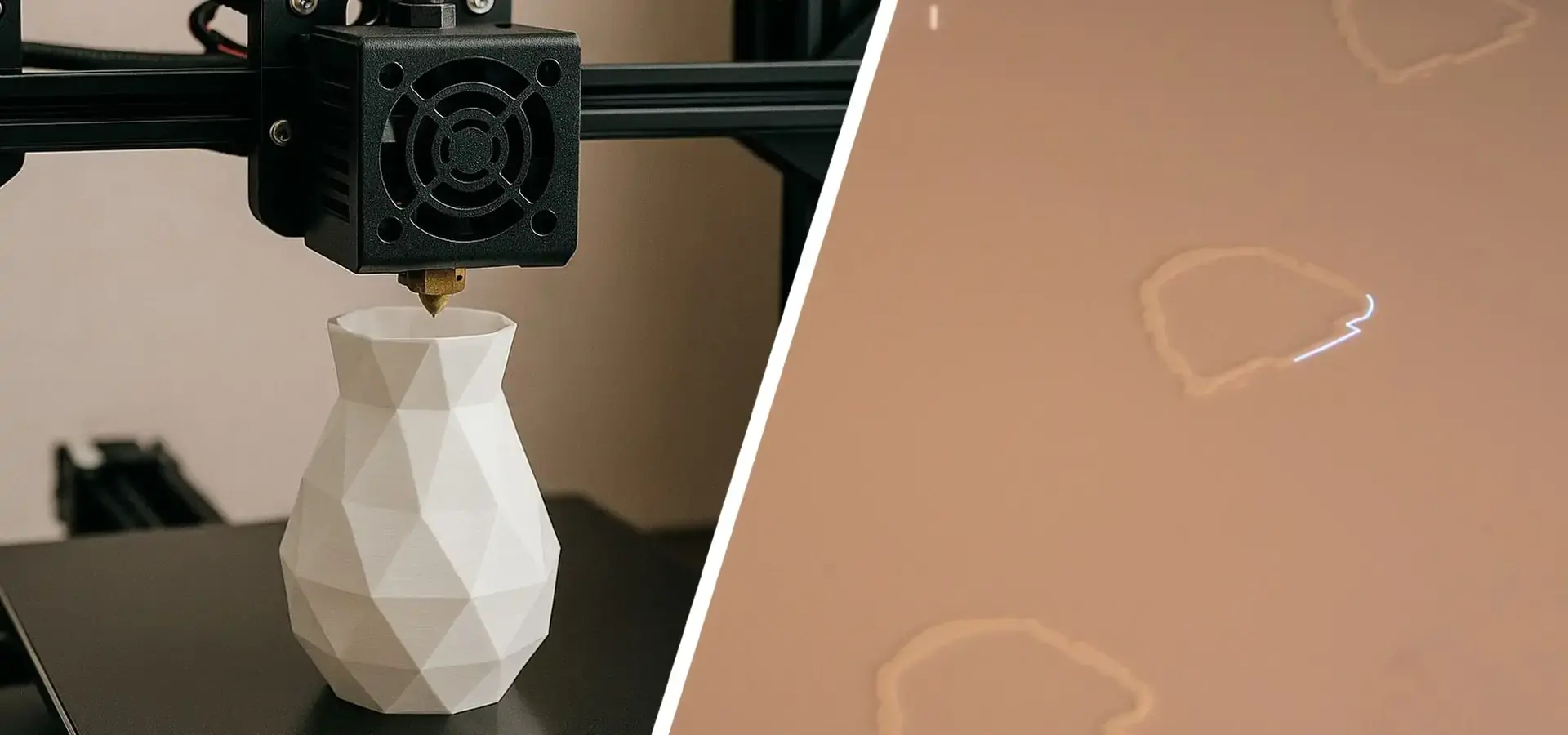
Building things layer by layer is done in very different ways with stereolithography and fused deposition modelling. A controlled laser system is used in stereolithography to selectively cure liquid photopolymer resin, solidifying each cross-sectional layer according to the digital model. This photopolymerization process produces parts with excellent surface quality and generally more uniform mechanical properties compared with extrusion-based processes, although final performance depends on resin formulation and post-curing conditions. The technology uses galvanometer-controlled laser scanning systems that operate at wavelengths around 355 nm to deliver controlled UV energy, activating photoinitiators within specially formulated photopolymer resins.
FDM technology works through material extrusion: heated thermoplastic filament is melted inside a nozzle and deposited layer by layer onto a build platform. As each layer bonds to the one below it, it cools and hardens. Thermoplastics such as ABS, PLA, and nylon are widely available and relatively economical, making FDM attractive for cost-sensitive applications. Compared with resin-based methods, FDM typically involves different post-processing steps, such as support removal and surface finishing, depending on the application requirements. However, the surface finish and accuracy of measurements are usually not as good as what stereolithography can do.
👉 What is SLA 3D printing technology
Core Operating Principles
The Magforms Industrial SLA 3D Printer is engineered differently from desktop resin printers that typically use LCD or mSLA technology. It integrates industrial-grade laser scanning components to support high-precision production applications. A German Scanlab galvanometer system and AOC laser source work together to maintain stable laser scanning performance and consistent energy delivery across the build area. This precise scanning mechanism helps maintain consistent laser energy distribution during curing. Platform positioning accuracy is achieved through the combination of precision motion components, servo systems, and mechanical calibration.
Another important difference is variable laser spot technology. During printing, the system changes the spot size on the fly from 0.15 mm to 0.2 mm to get fine details on supports and contours, and then it grows to 0.5 mm to 0.6 mm for quick infill scanning. This smart modulation boosts printing speed by 30–50% compared to regular SLA systems, while maintaining dimensional accuracy specifications such as ±0.15 mm for parts within 100 mm and ±0.15% × L for larger components, depending on machine calibration, resin selection, and part geometry.
👉 SL800 Industrial SLA 3D Printer
Material Ecosystems and Compatibility
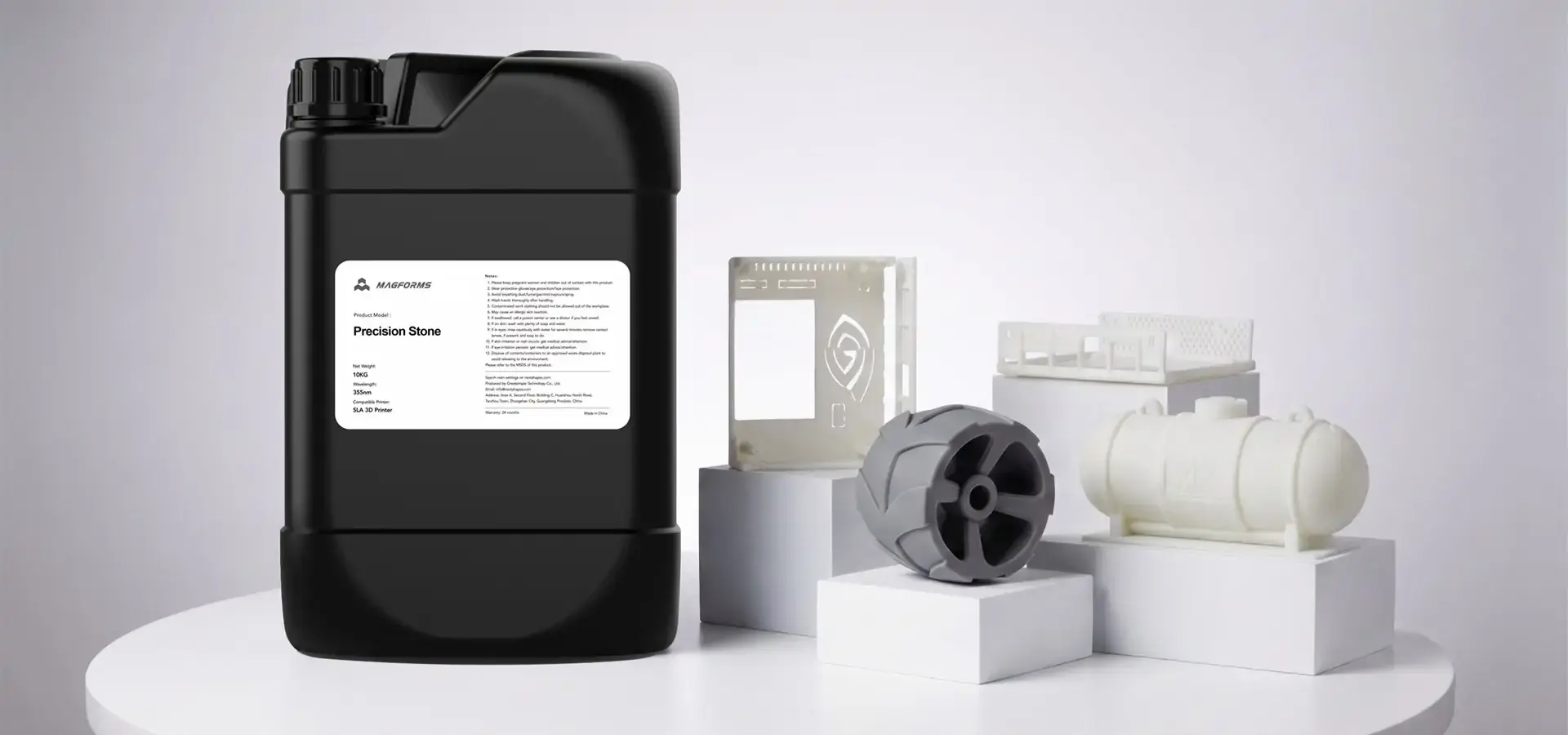
Magforms supports an open material approach designed to be compatible with a wide range of industrial 355 nm photopolymer resins. For industrial stereolithography, the resin chemistry now includes engineering-grade formulations such as impact-resistant ABS-like materials, flexible PP-like resins, high-temperature variants with heat deflection temperatures above 100°C, and clear resins for visualisation purposes. While FDM materials offer advantages in mechanical durability and availability, photopolymer resins generally provide superior surface quality and fine-feature reproduction for precision applications. This is especially true when dental-grade biocompatibility or aerospace-certified material properties are needed.
Performance Comparison: Industrial SLA vs. FDM for Production Needs
The Industrial SLA 3D Printer can print layers with thicknesses between 0.05 mm and 0.25 mm. FDM systems usually work with layer heights of 0.1 mm to 0.4 mm, and the tip width limits the smallest feature size that can be made. This resolution is fine for functional prototyping, but it becomes a problem when trying to copy complex shapes like dental appliances, orthodontic aligner bases, or high-precision electronic enclosures. The mechanical bonding between FDM layers also adds anisotropic properties, which means that parts have different strengths depending on how they were built. This makes it harder to figure out stress and predict quality.
Speed and Throughput Analysis
Production efficiency depends not only on printing speed but also on preparation time, material management, and post-processing requirements. In Magforms systems, the Scanlab galvanometer can scan at up to 12 m/s, but during production runs, it usually works at 6–10 m/s. The scanning control system can optimize laser paths based on process parameters and printing conditions. This makes the system up to 20% faster than competing stereolithography platforms by intelligently planning the routes it uses.
For simple geometries, FDM printers often finish each layer faster. This is especially true when printing big, solid parts that don't need a lot of detail. But the technology has trouble with internal structures, overhangs, and complex support arrangements that are easy for stereolithography to handle. The time it takes to get a build ready is also very different. Resin systems need careful platform levelling and resin tank inspection, while FDM needs regular tip maintenance, bed bonding optimisation, and lots of filament loading processes.
Maintenance and Operational Reliability
Long-term reliability determines whether additive manufacturing equipment can support real production environments or remain limited to occasional prototyping. Magforms solves this problem by choosing the right parts. For example, Panasonic servo motors support precise movement of the build platform and recoater system, while resin management mechanisms and sensors help maintain stable liquid levels during printing. These precise moves keep the quality of each layer stable during long print jobs that last 24 hours or more.
The mechanical structure has 2 mm-thick metal walls for the cage and a low-expansion marble base that keeps its shape even when the temperature outside changes. Taiwanese HIWIN linear guides and lead screws give systems longer life and stop Z-axis locking problems that happen with less sturdy systems. This engineering approach helps improve operational stability and reduce the risk of print failures caused by mechanical instability or inconsistent process conditions. This directly addresses the problem of production delays caused by unplanned equipment downtime.
Industrial SLA and FDM Applications in Manufacturing
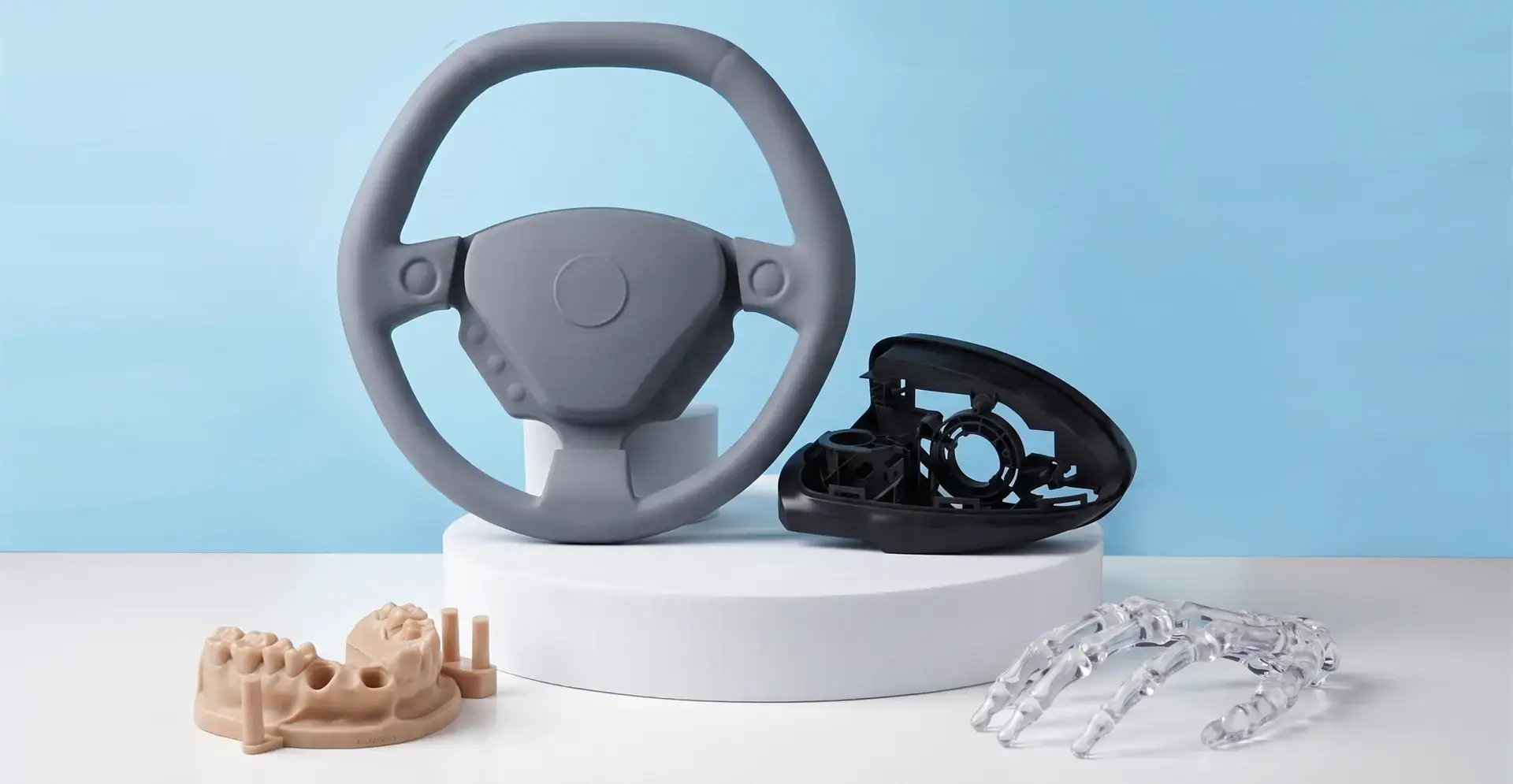
Dental and medical uses make the precision benefits of stereolithography stand out the most. Industrial SLA 3D Printers are widely used in dental laboratories to produce surgical guides, dental models, and orthodontic applications with high dimensional accuracy. The smooth surface finish helps dental professionals create accurate models and reduce manual finishing requirements. Magforms systems can support transparent resin applications, enabling the production of clear visual models and prototypes with smooth surfaces and high detail reproduction. This means that less material is wasted and jobs can be finished faster.
Another area where an Industrial SLA 3D Printer works better than FDM alternatives is automotive prototyping. For testing interior parts, making custom trim pieces, and making special auto parts, the surfaces need to be able to be painted, plated, or viewed directly for visual appeal. Because Magforms' equipment meets such high standards for dimensional accuracy, printed parts can be used for functional testing and assembly verification, reducing the need for some early-stage CNC-machined prototypes.
👉 Explore how Industrial SLA technology is applied in real production environments through our Industrial SLA 3D printing application cases.
Aerospace and Electronics Manufacturing
Precision and good material performance in tough situations are needed for aerospace uses. Photopolymer resins can provide consistent mechanical properties and dimensional stability when properly selected and post-cured for specific aerospace applications. Stereolithography provides advantages for producing complex geometries, lightweight structures, and detailed prototypes that may be difficult or time-consuming to manufacture using conventional methods.
The development cycle for consumer electronics moves quickly, so iterating on prototypes needs to happen in days instead of weeks. It is possible for design teams to make "looks-like, works-like" samples with finished surface layers that can be used for functional testing and focus group testing. Variable spot technology makes it possible to reproduce fine details, like snap fits, text labels, and artistic features, with the accuracy needed for production. This is useful for housings for wearable devices, headphones, and small electronic cases.
Hybrid Manufacturing Workflows
More and more, manufacturers who are looking to the future use both technologies strategically instead of picking just one. FDM is often used to produce larger functional parts such as fixtures, jigs, and assembly tools where thermoplastic durability and cost efficiency are priorities. Stereolithography is used to make precise parts like threaded inserts, sealing surfaces, optical components, and samples that look good. The higher material cost can be justified when surface quality, dimensional accuracy, and visual appearance are critical requirements.
This complementary approach makes the most of the money you spend on additive manufacturing by matching the technology's abilities to the needs of the application. Production planning teams can send jobs to the right system based on the part's shape, the material's requirements, and how quickly it needs to be done. This makes production capacity flexible enough to meet changing customer needs without having to keep expensive extra capacity in either technology.
Making the Right Choice: Factors to Consider for Procurement
Total cost of ownership analysis requires looking beyond equipment purchase price to consumables, maintenance contracts, and operational labor. An Industrial SLA 3D Printer typically requires higher initial investment than many FDM systems because of its precision optical components, laser scanning system, and industrial-grade motion control architecture. Resin material costs range from moderate for standard formulations to premium pricing for specialized engineering grades, while FDM filament remains consistently economical across most material types.
The cost equation shifts dramatically when accounting for labor expenses and part quality consistency. Stereolithography's superior surface finish eliminates or minimizes sanding, filling, and finishing operations that consume substantial manual labor on FDM parts. Optimized temperature control systems, resin management, and laser parameters help improve print consistency and reduce material waste.
Evaluating Supplier Capabilities
The dependability of equipment depends a lot on the technical know-how and support system of the seller. Magforms provides technical support services to help customers resolve equipment and process-related questions efficiently. The company's speed comes from having a lot of experience in the field and technical knowledge gained from making both printing materials and hardware systems.
Using knowledge of materials in the design of equipment gives a big advantage over other companies. Magforms started out as an expert in 3D printing materials, so the engineering team understands the relationship between resin chemistry, laser parameters, scanning strategies, and printing performance. This knowledge shows up in features like the built-in temperature control system that maintains stable resin conditions even when ambient temperature changes, and the greyscale processing methods that make layer lines less noticeable without slowing down the build process.
Financing and Procurement Strategies
When companies buy big pieces of equipment, they often do so through lease agreements, bulk purchase discounts, or phased deployment plans that work with their budgets and production ramp schedules. Magforms works with more than 300 companies around the world and has experience setting up procurement agreements that meet the needs of a wide range of companies. Companies that are looking at getting more than one Industrial SLA 3D Printer machine for centralised service centers or distributed manufacturing networks can save money by buying in bulk and getting standard service contracts, which makes managing their fleet easier.
By letting you choose from a variety of products, Magforms' open material system helps you keep costs down over time. Different resin suppliers can be screened, bulk material orders can be priced competitively, and new formulations can be tested as they come out on the market. This is something that proprietary material authentication systems don't allow. As production volumes rise and material costs become a bigger part of total costs, this freedom to operate becomes more valuable.
Optimizing Industrial SLA 3D Printer Use for Maximum Production Efficiency
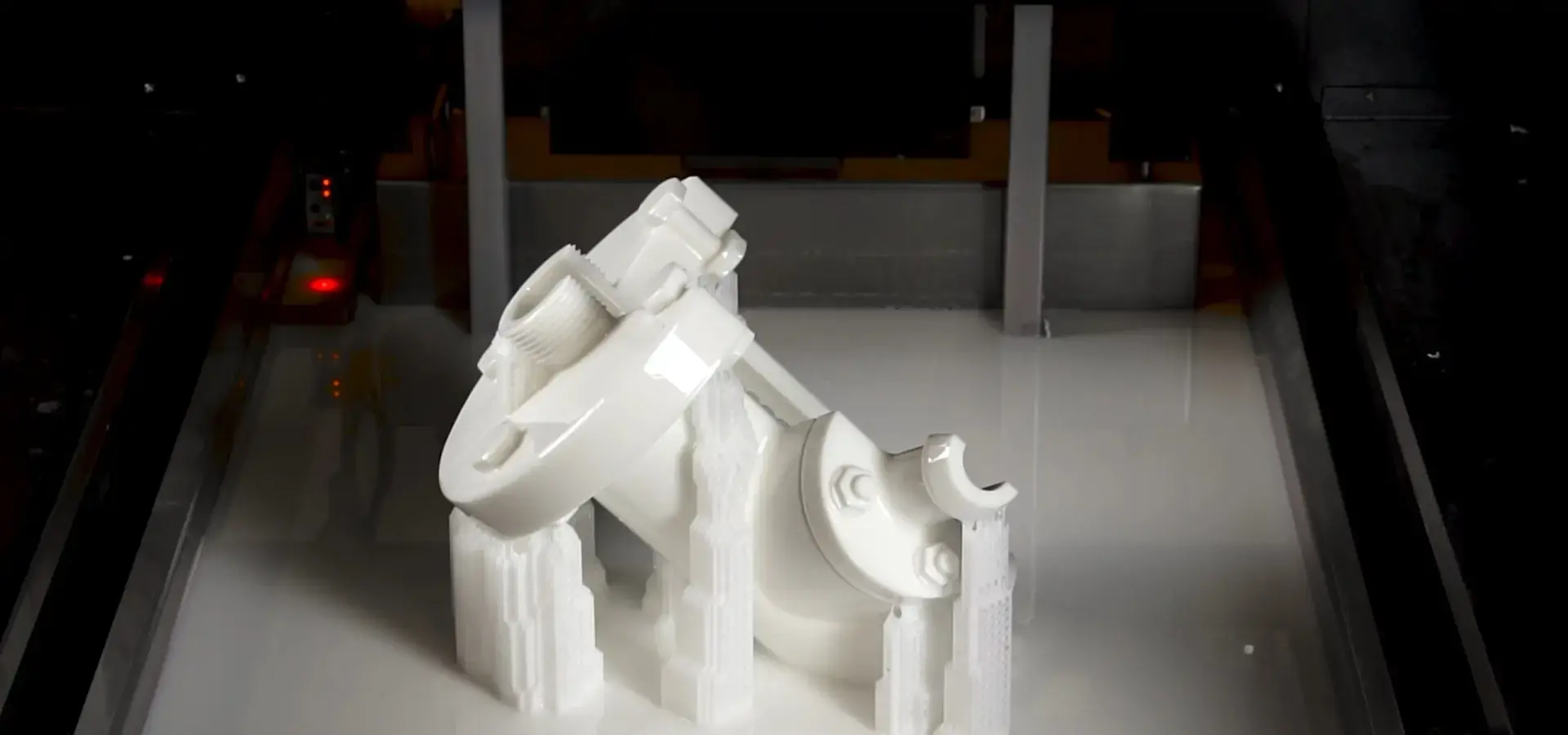
Consistently high-quality output requires strict maintenance rules and process optimisation. The way resin is managed has a big effect on both the quality of the parts and the cost of the materials. Periodic resin filtering can help remove contaminants or partially cured particles, supporting stable print quality during repeated production cycles. The Magforms platform makes this easier because it is easy to use. It has support rods that tilt the build platform so that resin drains quickly, and the platform can even be turned upside down to drain faster after big print jobs.
The iBuild 2.0 control software provides an intuitive interface designed to simplify print preparation, monitoring, and production management. This allows production managers to monitor printing status and improve workflow efficiency. This digital connection helps lean manufacturing by keeping equipment from sitting idle for long periods of time and letting workers respond quickly to shortages of materials or urgent job requests.
Calibration and Preventive Maintenance
Laser power calibration helps maintain consistent energy density, ensuring reliable curing performance throughout the equipment lifecycle. The AOC laser system is designed to provide stable output for demanding industrial production environments. To make sure that the printers' performance stays consistent, they are checked against reference standards on a regular basis. Platform flatness has a direct effect on first-layer adhesion and overall dimensional accuracy. Magforms uses a high-flatness mesh plate design that keeps specifications of 0.2 mm flatness for 300-series machines, 0.3 mm flatness for 450-series units, and 0.5 mm flatness for the large-format 600 and 800-series systems.
Protecting optical parts is very important in production settings where handling, dust, and glue vapours can damage laser optics and galvanometer mirrors. Magforms equipment has an optical protection cover and an acrylic glass front door that create a sealed environment that keeps out contaminants while still letting the operator see and follow laser safety rules. UV-blocking lighting components help provide a safer operating environment during printing and maintenance procedures.
Process Documentation and Continuous Improvement
When it comes to process control, production-grade additive manufacturing needs the same level of strictness as standard manufacturing methods. Standard operating procedures should be used for documenting print parameters, keeping track of material lots, and following protocols after curing. This way, results can be repeated by different operators and production shifts. Magforms printers have a self-learning scanning system that automatically collects performance data. This sets the stage for data-driven process optimisation that gets better over time instead of staying the same.
New developments in robotics and mixed production systems show that additive and subtractive processes will be combined more. With the help of automated part removal systems, internal inspection stations, and robotic post-processing cells, Industrial SLA 3D Printer units that are used alone can be turned into fully integrated production cells that can make things without turning on the lights. Companies that are making plans for multi-year additive manufacturing roadmaps should check to see if their equipment works with these automation technologies. This way, they can make sure that their current investments will support future growth and won't need to be replaced too soon.
Conclusion
For production purposes, choosing between stereolithography and FDM depends on the number of parts needed, the volume of production, and the quality standards, not just the cost of the equipment. An Industrial SLA 3D Printer gives you the best accuracy, surface finish, and stability in size for uses where these factors decide how well the product works or how well it sells. High failure rates, uneven quality, and too much post-processing work are some of the major production problems that this technology solves. These problems hurt industrial efficiency and profit margins. There are some large-scale, cost-sensitive uses where FDM is better, but stereolithography is the better option for companies that value quality, accuracy, and dependability in production settings.
FAQ
1. Which technology offers better dimensional accuracy for production parts?
Stereolithography significantly outperforms FDM in dimensional precision. An Industrial SLA 3D Printer can achieve dimensional accuracy specifications such as ±0.15 mm for parts within 100 mm and ±0.15% × L for larger components, depending on equipment calibration, resin selection, and geometry. This accuracy stems from the laser-based curing mechanism and precision galvanometer control rather than the mechanical nozzle positioning that constrains FDM resolution.
2. How do maintenance requirements compare between these technologies?
Both require regular upkeep, though the specific tasks differ substantially. Stereolithography demands resin filtering, tank inspection, and optical component protection, while FDM needs nozzle cleaning, bed releveling, and filament path maintenance. Magforms systems minimize maintenance burden through component quality—Panasonic servo motors, HIWIN linear guides, and sealed optical assemblies reduce wear and extend service intervals compared with budget-oriented equipment.
3. What are the material cost differences over time?
FDM filament costs less per kilogram than photopolymer resins, though the total cost equation includes waste rates, part density, and support material consumption. The open material system in Magforms equipment eliminates proprietary material markups that can double or triple consumable costs, allowing procurement teams to source competitively priced resins while maintaining quality standards. High first-print success rates further reduce effective material costs by minimizing scrap.
Partner with a Trusted Industrial SLA 3D Printer Manufacturer
Magforms combines 22 patents, 30 registered trademarks, and years of materials expertise to deliver integrated printing solutions that address your specific production challenges. Our Industrial SLA 3D Printer lineup features German Scanlab galvanometers, AOC laser systems, and Panasonic servo motors that ensure high-precision laser control and exceptional operational stability for demanding industrial applications. With global presence across dozens of countries serving over 300 enterprises, we understand the technical requirements and budget constraints facing B2B procurement decision-makers. The open material platform supports most 355 nm resins, eliminating vendor lock-in, while our 24-hour responsive after-sales team prevents costly production delays. Contact our engineering specialists at info@magforms.com to discuss how our Industrial SLA 3D Printer for sale can optimize your manufacturing workflow, reduce prototype iteration cycles, and deliver the dimensional accuracy your applications demand.
References
1. Gibson, I., Rosen, D., & Stucker, B. (2021). Additive Manufacturing Technologies: 3D Printing, Rapid Prototyping, and Direct Digital Manufacturing. Springer International Publishing.
2. Jacobs, P. F. (1992). Rapid Prototyping & Manufacturing: Fundamentals of Stereolithography. Society of Manufacturing Engineers.
3. Ligon, S. C., Liska, R., Stampfl, J., Gurr, M., & Mülhaupt, R. (2017). Polymers for 3D Printing and Customized Additive Manufacturing. Chemical Reviews, 117(15), 10212-10290.
4. Ngo, T. D., Kashani, A., Imbalzano, G., Nguyen, K. T., & Hui, D. (2018). Additive Manufacturing (3D Printing): A Review of Materials, Methods, Applications, and Challenges. Composites Part B: Engineering, 143, 172-196.
5. Stansbury, J. W., & Idacavage, M. J. (2016). 3D Printing with Polymers: Challenges among Expanding Options and Opportunities. Dental Materials, 32(1), 54-64.
6. Wohlers, T., Campbell, I., Diegel, O., Kowen, J., & Mostow, N. (2022). Wohlers Report 2022: 3D Printing and Additive Manufacturing Global State of the Industry. Wohlers Associates.

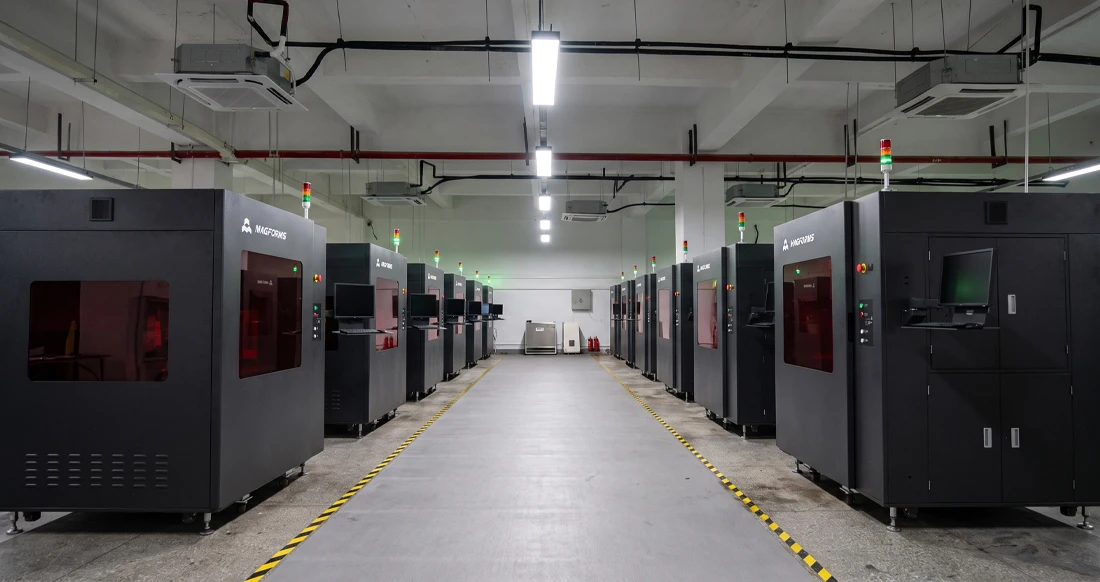
Magforms makes design and manufacture easier.
Popular Blogs
-
 Industry InsightsManufacturing Industry
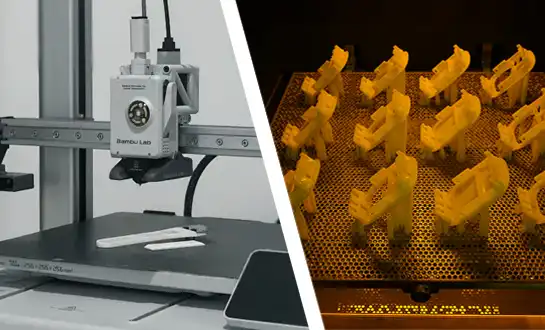
FDM vs. SLA Printer: Which Technology Is Right for Your Project?
-
 Industry InsightsManufacturing Industry
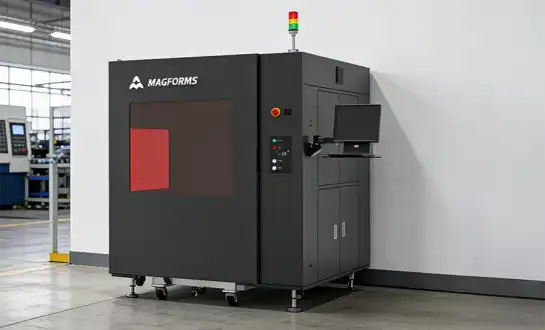
Top 5 Applications of Industrial 3D Printers in Manufacturing Today
-
 Industry InsightsManufacturing Industry
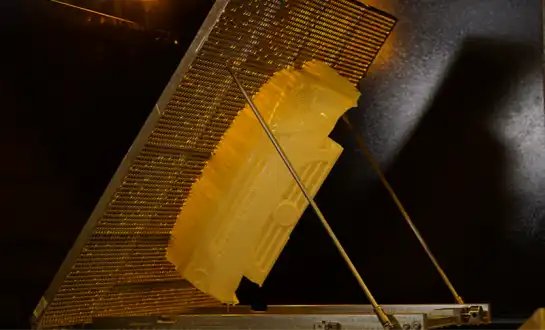
Why Stereolithography 3D Printers Are Unmatched for Microfluidic Device Prototyping?