Industrial SLA 3D Printer vs FDM: Which Technology Is Right for Industrial Use?
Industrial SLA 3D Printer systems and FDM technology are both additive manufacturing solutions used for industrial applications. However, they rely on fundamentally different processes: Industrial SLA 3D Printers use UV laser-based photopolymerization to cure liquid resin layer by layer, while FDM systems build parts through thermoplastic filament extrusion. Which one you choose depends on your production needs. For aerospace prototypes, medical device models, precision tooling, and functional validation parts, Industrial SLA 3D Printer technology provides advantages in surface finish, dimensional accuracy, and fine feature reproduction. FDM technology is often selected for its lower material cost, wide range of thermoplastic options, and ability to produce durable functional prototypes. However, it generally requires more consideration regarding surface finishing and dimensional consistency compared with industrial SLA systems. When technical leaders, R&D managers, and people who make buying decisions know these core differences, they can better match the skills of tools with their real-world needs and budgets.
Understanding the Core Technologies: SLA vs FDM
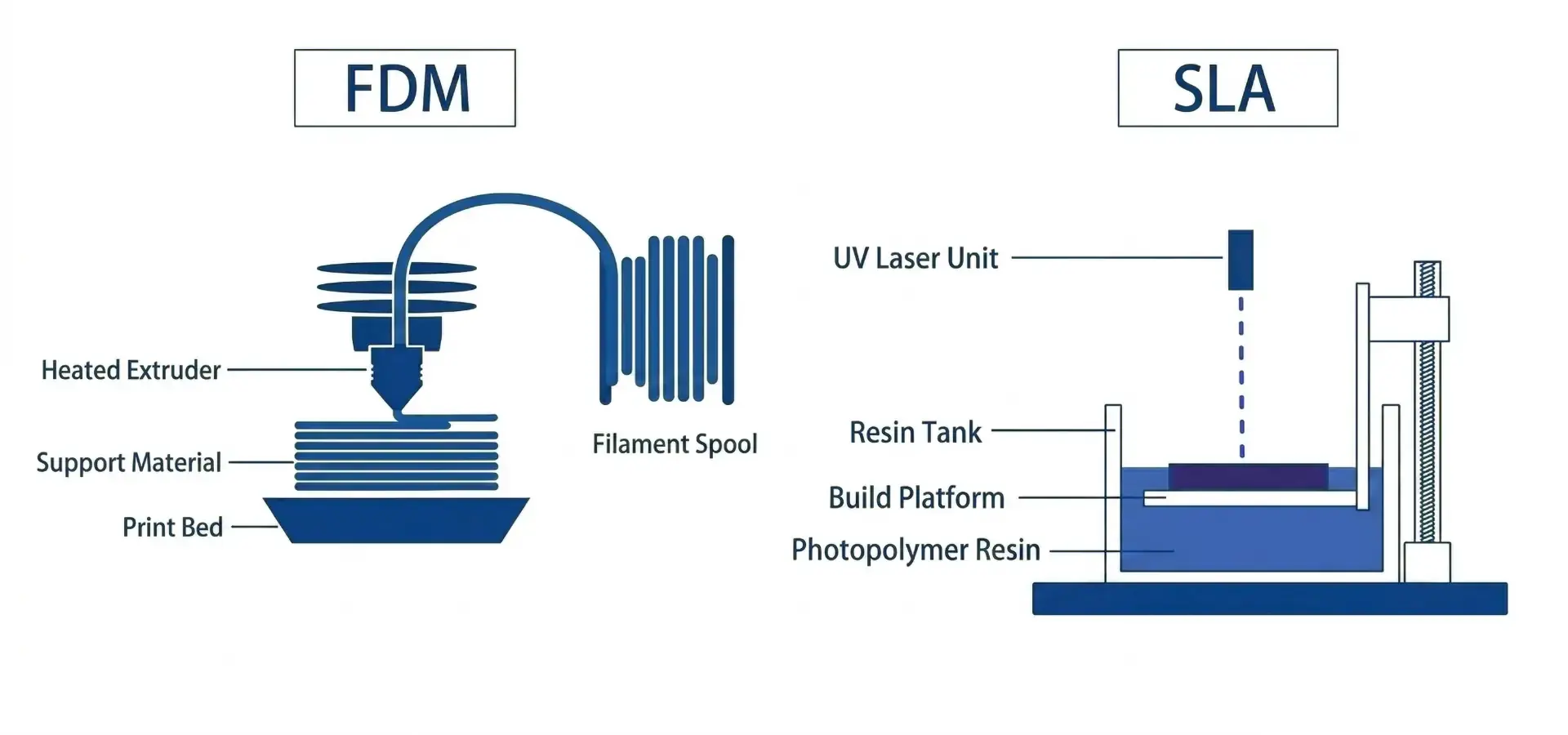
The fundamental distinction between these technologies lies in how they transform digital models into physical parts through different layer-by-layer manufacturing mechanisms.
Stereolithography (SLA) Process:
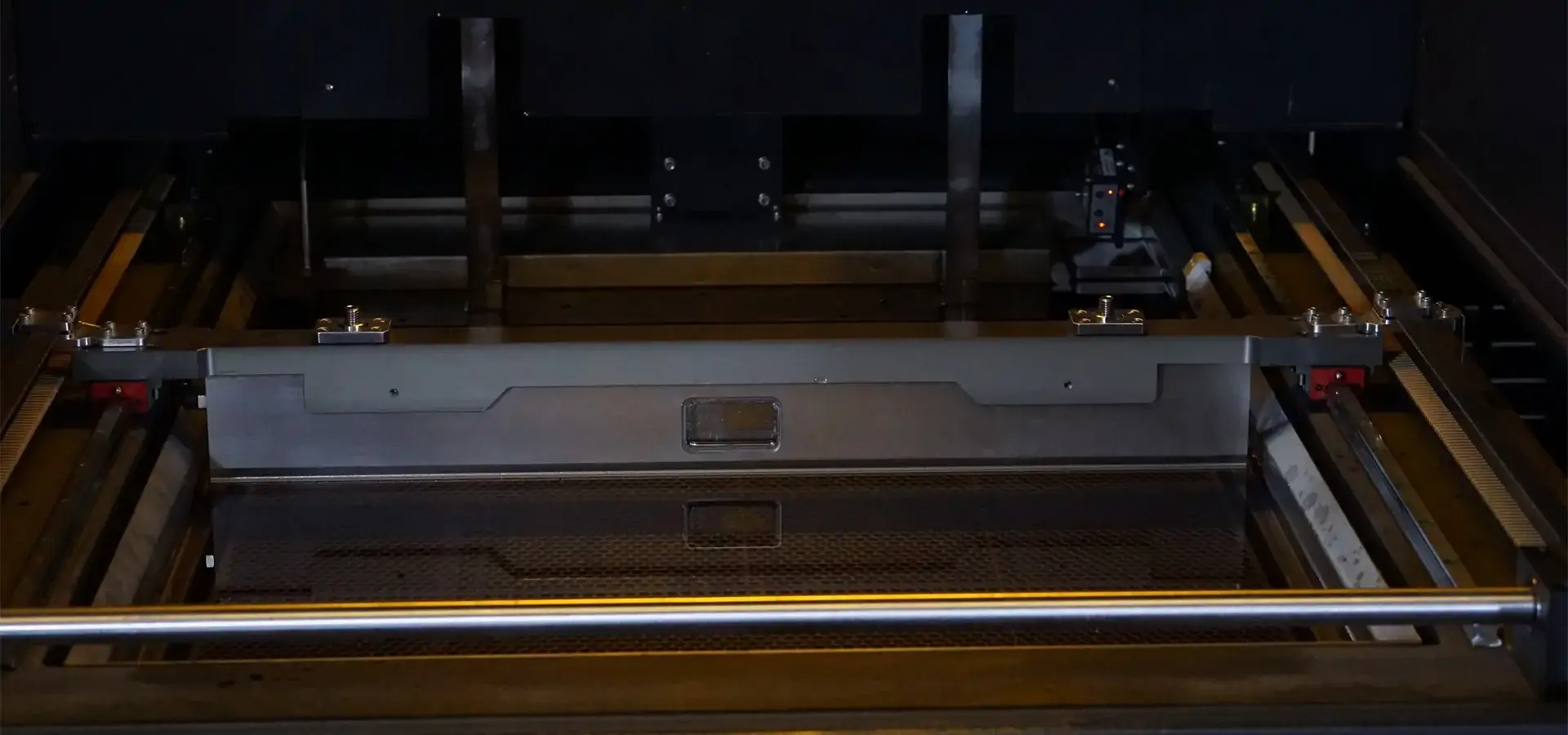
When photopolymer resin is exposed to ultraviolet laser light, it undergoes photopolymerization and cures into a solid layer. This is what an industrial SLA 3D printer does. A precision galvanometer scanning system directs the laser beam across the cross-section of each layer on the resin surface, controlling the curing position with high accuracy. After each layer is cured, the build platform and recoating system work together to create space for the next resin layer. Depending on the machine architecture, the platform may move vertically while a recoater blade or coating mechanism spreads fresh resin across the build area. Typical industrial SLA layer thickness ranges from approximately 50 to 150 microns. This process is done again and again until the whole part comes out.
👉 What is SLA 3D printing technology
Fused Deposition Modeling (FDM) Process:
FDM systems extrude thermoplastic filament through a heated nozzle, depositing material in predetermined paths. The extruder and build platform move along the X, Y, and Z axes depending on the machine architecture, depositing material layer by layer. Layer adhesion occurs as heated material fuses with the previous layer. Typical layer heights range from 100 to 400 microns.
Three Core Differences:
- Material State During Processing: SLA works with liquid photopolymer resin; FDM uses solid thermoplastic filament
- Energy Source: SLA employs focused laser beams for selective curing; FDM relies on thermal energy for melting and fusion
- Precision Mechanism: SLA achieves accuracy through optical scanning systems; FDM dimensional accuracy depends on mechanical motion control, extrusion consistency, thermal management, and material behavior
If you need high dimensional accuracy, smooth surfaces, and reliable reproduction of intricate geometries, Industrial SLA 3D Printer technology is often more suitable. If you prioritize material cost reduction for large, structurally simple parts, then FDM may suffice.
Precision and Surface Quality: Where SLA Excels
Dimensional Accuracy Comparison:
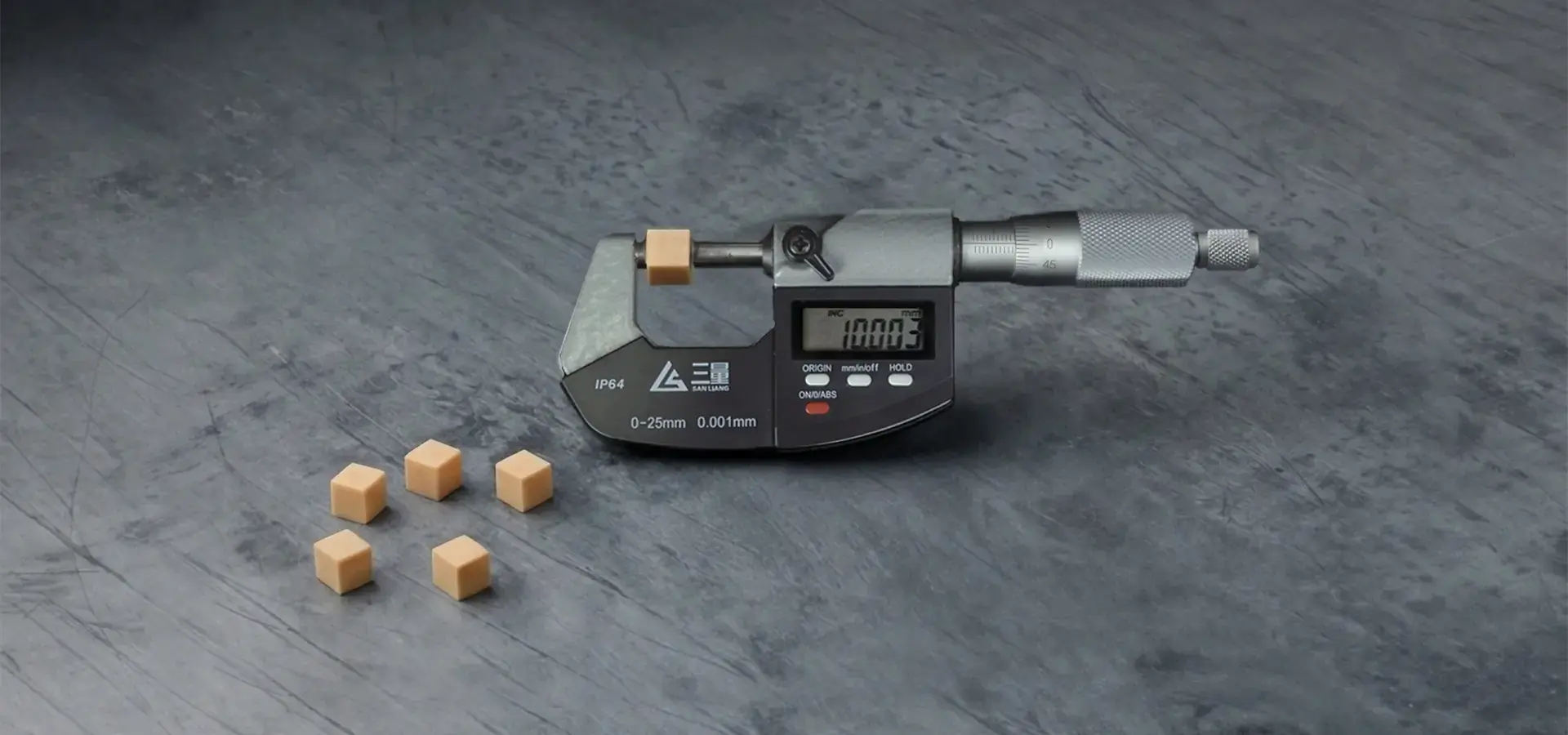
Industrial SLA 3D Printer systems are designed to achieve high dimensional accuracy through precise laser scanning, stable mechanical structures, and controlled resin curing processes. Magforms industrial SLA systems, such as the SL800, are specified to achieve dimensional accuracy of ±0.15 mm for dimensions under 100 mm and ±0.15% × L for larger dimensions, depending on part geometry, material selection, and printing conditions. This precision stems from several technical factors:
- High-precision Scanlab galvanometer systems provide accurate laser beam positioning, supporting consistent curing accuracy during industrial production
- Panasonic servo motors support precise Z-axis movement and stable platform positioning, helping maintain consistent layer placement during printing
- Low-expansion marble platforms help reduce thermal deformation and improve mechanical stability during extended production operation
- Variable spot technology, using smaller laser spots for detailed contour areas and larger spots for efficient filling scans, helps balance surface quality and production speed
FDM dimensional accuracy varies significantly depending on machine design, nozzle size, material properties, and thermal management. In many industrial applications, accuracy is affected by factors such as extrusion consistency, thermal shrinkage, and mechanical calibration.
Surface Finish Quality:
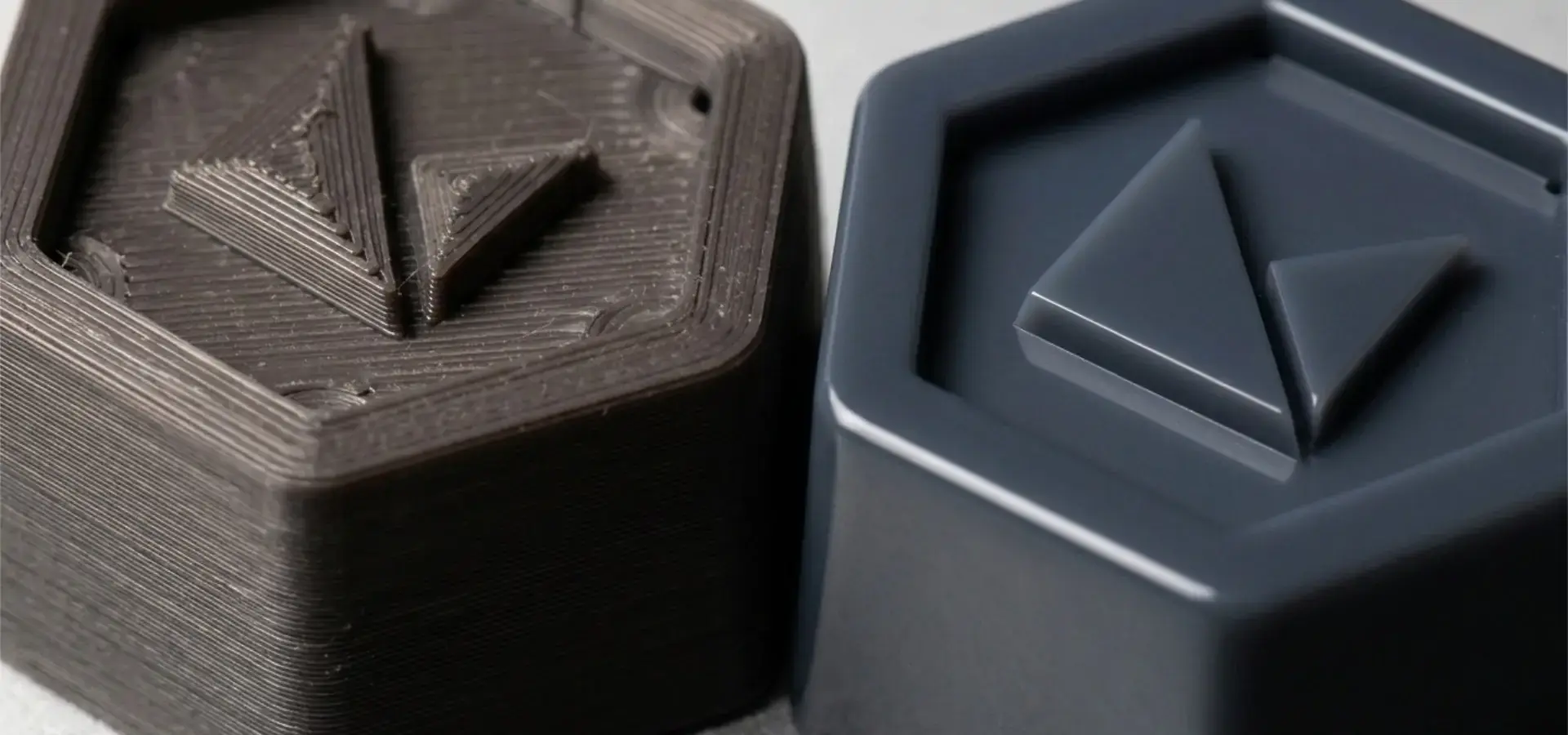
The difference in layer formation methods creates noticeable differences in surface appearance and functional performance. Industrial SLA 3D Printer outputs exhibit smooth surfaces with minimal visible layer lines, thanks to:
- Layer thicknesses as fine as 50 microns
- Advanced laser scanning strategies and exposure control help reduce stair-stepping effects and improve surface consistency
- The controlled resin recoating process helps create uniform layers, contributing to consistent surface quality
FDM parts display pronounced layer lines due to thicker layers (100-400 microns) and the extruded bead's circular cross-section, which creates visible ridges between adjacent toolpaths.
Practical Application Considerations:
In automotive interior prototype applications, Industrial SLA 3D Printer systems can significantly reduce finishing requirements compared with FDM workflows. Depending on part geometry, material selection, and surface requirements, manufacturers may achieve substantial reductions in sanding and surface preparation time. Surface roughness measurements generally show that SLA parts achieve lower Ra values than typical FDM parts, although results depend heavily on layer height, print orientation, resin formulation, and finishing processes.
If you need parts for direct assembly verification or visual presentations without extensive finishing work, then Industrial SLA 3D Printer technology substantially reduces your post-processing workload.
Speed and Efficiency: Breaking Down Production Time
Print Speed Capabilities:
Modern Industrial SLA 3D Printer systems have improved production efficiency through faster laser scanning, optimized build strategies, and larger build volumes. Magforms equipment incorporates:
- Scanlab galvanometers supporting maximum scanning speeds up to 12 m/s (operational speeds 6-10 m/s)
- Variable laser spot technology can improve scanning efficiency compared with conventional fixed-spot approaches by optimizing laser parameters for different regions of a part
- Optimized scanning strategies can improve printing efficiency by reducing unnecessary laser movement and improving build planning
FDM print speed depends on extruder temperature, travel speed (typically 40-150 mm/s), and acceleration limits. Complex geometries require slower speeds to maintain accuracy.
Production Efficiency Factors:
Beyond raw print speed, overall manufacturing efficiency encompasses:
- Setup Time: Industrial SLA 3D Printer systems require resin filling and calibration; FDM needs filament loading and bed leveling
- Support Structure Volume: SLA supports are typically lighter and easier to remove; FDM supports consume significant material
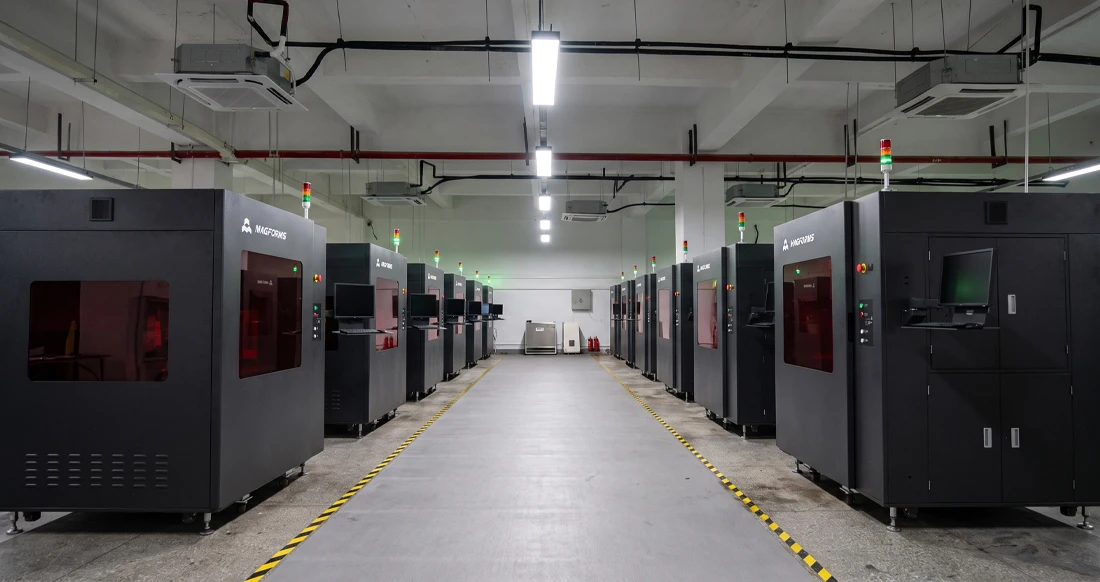
- Batch Printing Capacity: Large-format Industrial SLA 3D Printer models, such as the Magforms SL800, enable batch production of multiple parts while maintaining consistent quality across the build platform
- Post-Processing Duration: SLA parts typically require washing and UV post-curing, with processing time depending on part size, resin type, and curing requirements; FDM parts may require extensive sanding and finishing (hours to days, depending on quality requirements)
Time-to-Part Analysis:
In dental production workflows, Industrial SLA 3D Printer technology can reduce turnaround time by combining faster post-processing with improved surface quality compared with traditional FDM workflows.
If you need rapid prototyping with minimal post-processing for tight development cycles, then Industrial SLA 3D Printer systems deliver superior overall throughput despite potentially longer per-layer printing times.
Material Compatibility and Application Versatility
SLA Material Options:
Industrial SLA 3D Printer technology supports a wide range of photopolymer resin formulations, allowing manufacturers to select materials based on mechanical, thermal, optical, and functional requirements:
- Engineering Resins: Designed for functional prototypes, testing components, tooling applications, and selected end-use parts where material requirements are suitable
- Transparent Resins: Suitable for visual prototypes, light guide validation, fluid visualization models, and applications requiring optical appearance
- High-Temperature Resins: Formulated for applications requiring improved heat resistance, including functional prototypes and selected automotive testing scenarios
- Flexible Resins: Shore hardness ranging from 40A to 95A for gaskets and soft-touch applications
- Castable Resins: Designed for investment casting patterns used in jewelry, dental laboratories, and precision manufacturing applications
- Biocompatible Resins: Materials developed for medical applications may be tested according to standards such as ISO 10993 and used for specific applications including surgical guide prototypes and medical device development, depending on regulatory requirements
Magforms Industrial SLA 3D Printer systems feature open material architecture supporting most 355 nm wavelength resins without proprietary restrictions. This flexibility allows material science teams to test new formulations and optimize costs by sourcing from multiple suppliers.
FDM Material Range:
FDM works with thermoplastic filaments including PLA, ABS, PETG, nylon, and engineering composites. While material costs per kilogram are generally lower than those of photopolymer resins, FDM faces limitations:
- Moisture sensitivity requires dry storage
- Interlayer adhesion variability affecting mechanical properties
- Thermal warping in large parts
- Limited optical transparency options
Industry-Specific Application Fit:
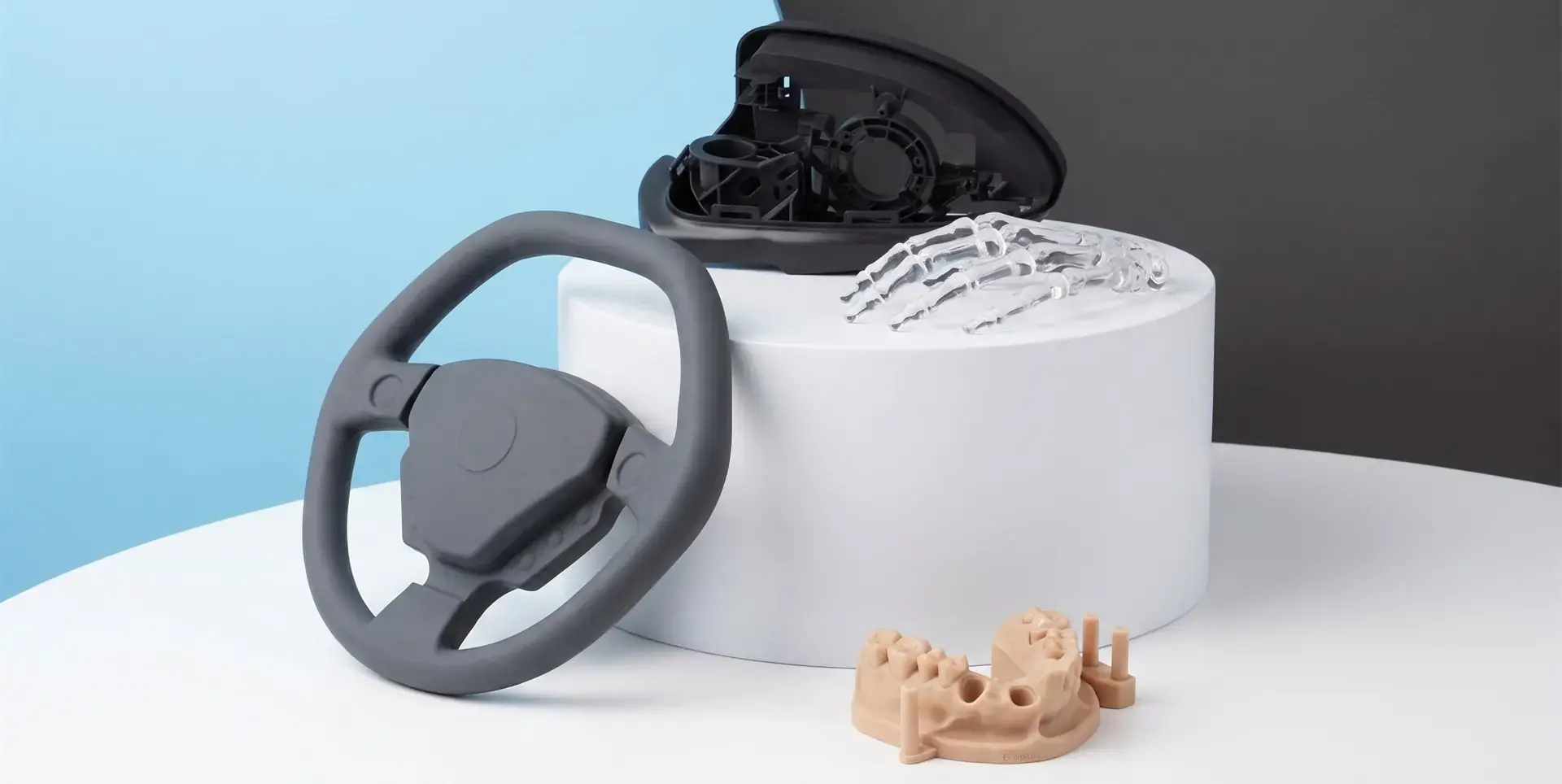
- Aerospace Components: Industrial SLA 3D Printer technology is widely used for aerospace prototypes, complex geometry validation models, and precision components where high dimensional accuracy is required
- Medical Devices: Biocompatible resin options support medical device development, anatomical models, and surgical guide applications when validated for specific requirements
- Consumer Electronics: Fine feature resolution supports intricate wearable device housings and internal structures
- Automotive Prototyping: Selected high-temperature resins can support functional testing scenarios where improved thermal resistance is required; transparent resins validate light pipe designs
If you need specialized material properties like optical clarity or high heat resistance combined with precision, then Industrial SLA 3D Printer technology offers broader application versatility.
👉 Explore how Industrial SLA technology is applied in real production environments through our Industrial SLA 3D printing application cases.
Cost Analysis: Initial Investment vs Operational Expenses
Equipment Investment:
Magforms offers Industrial SLA 3D Printer solutions designed for different production requirements, from professional prototyping environments to large-scale manufacturing applications. Large-format systems require higher initial investment but provide proportionally greater build volumes and production capacity for medium to large manufacturing operations.
Industrial FDM systems often provide lower initial material and equipment costs, but achieving comparable surface quality may require additional post-processing or workflow adjustments.
Operational Cost Components:
- Material Costs: Photopolymer resin typically costs more per kilogram than thermoplastic filament, but several factors narrow this gap.
- Maintenance Expenses: Industrial SLA 3D Printer systems require periodic replacement of resin vats, recoater blades, and optical window cleaning. Magforms equipment uses internationally renowned components (AOC lasers, Scanlab galvanometers, Panasonic servo motors), ensuring extended service intervals and low failure rates.
- Labor Costs: Reduced post-processing time substantially decreases labor expenses. In applications where surface finishing is a major cost factor, Industrial SLA 3D Printer technology can reduce manual finishing requirements compared with traditional FDM workflows.
- Energy Consumption: Energy consumption varies by machine size, heating requirements, operating conditions, and production settings. Industrial SLA systems and industrial FDM systems should be evaluated based on actual workflow requirements.
Return on Investment (ROI) Calculation:
A 3D printing service provider processing high-precision orders across multiple industries achieved ROI within 14 months after deploying Magforms Industrial SLA 3D Printer equipment. Key financial factors included:
- Expanded application capabilities
- Reduced post-processing requirements
- Lower remake rates
- Improved production scheduling flexibility
If you need cost-effective production of high-quality parts where finishing labor represents a significant expense, then Industrial SLA 3D Printer technology often demonstrates superior total cost of ownership despite higher material costs.
Reliability and Production Consistency
System Stability:
Manufacturing operations demand equipment that maintains consistent output quality during extended production runs. Magforms Industrial SLA 3D Printer systems achieve exceptional stability through:
- Premium Component Selection: AOC laser systems provide stable UV laser output, while Scanlab galvanometer systems support precise laser positioning and repeatable scanning performance for industrial applications
- Structural Integrity: 2 mm-thick metal enclosure panels and optimized internal layouts maintain dimensional stability
- Precision Motion Systems: HIWIN linear guides and precision motion components contribute to stable Z-axis movement and consistent layer positioning during large-format printing
- Platform Flatness: Build platform flatness specifications help maintain consistent first-layer curing and part placement during the printing process
Printing Reliability Factors:
In production environments, Industrial SLA 3D Printer success rates depend on factors including resin selection, part geometry, support design, and process parameters. Stable equipment design and optimized workflows help improve printing reliability for demanding applications. This reliability stems from:
- Temperature management systems help reduce resin viscosity fluctuations and improve process consistency
- Adaptive scanning algorithms compensating for material stress release
- Comprehensive calibration protocols ensuring optimal laser focus
FDM systems face more variables affecting success rates: nozzle clogging, bed adhesion failures, filament moisture content, and thermal warping—particularly with engineering thermoplastics.
Quality Control Advantages:
The liquid resin process in Industrial SLA 3D Printer technology avoids some extrusion-related limitations commonly associated with FDM workflows:
- Compared with FDM, Industrial SLA 3D Printer technology reduces issues related to weak extrusion-layer bonding
- Properly controlled SLA processes can provide more uniform material behavior compared with some extrusion-based workflows
- Minimal dimensional variation between identical parts in batch production
Medical and dental manufacturers often adopt Industrial SLA 3D Printer technology to improve dimensional consistency and reduce rework caused by surface quality or accuracy issues.
If you need dependable production equipment with minimal unplanned downtime and consistent part quality for batch manufacturing, then Industrial SLA 3D Printer systems deliver superior operational reliability.
User Experience and Workflow Integration
Operational Simplicity:
Despite sophisticated technology, modern Industrial SLA 3D Printer systems prioritize user-friendly operation. Magforms equipment features:
- Clean Interface Design: iBuild 2.0 software provides an intuitive interface designed to simplify machine operation, build preparation, and workflow management
- Streamlined Workflow: Supported platform design with adjustable rods allows efficient resin drainage—parts can be inverted for faster post-print processing
- Safety Features: Protective covers and UV-blocking enclosure designs help improve operational safety during machine operation
- CAD Integration: Seamless import of standard file formats (STL, OBJ) with automated support generation and build optimization
Learning Curve Considerations:
Technical personnel familiar with additive manufacturing concepts typically achieve operational proficiency with Industrial SLA 3D Printer systems within 2-3 days of hands-on training. Magforms provides comprehensive technical support, including:
- Equipment commissioning by experienced engineers
- Software operation training
- Material selection guidance for specific applications
- Ongoing technical consultation
FDM systems may appear simpler initially, but often require extensive troubleshooting knowledge to address common issues like warping, stringing, and layer adhesion problems.
Post-Processing Requirements:
Industrial SLA 3D Printer workflow includes:
- Part Removal: Detach the build platform and drain excess resin (5-10 minutes)
- Washing: Immerse parts in isopropyl alcohol or specialized cleaning solutions (10-15 minutes)
- Support Removal: Clip away support structures using flush cutters (5-20 minutes depending on complexity)
- Final Curing: UV post-cure chamber exposure (15-30 minutes)
For applications requiring smooth surfaces, SLA post-processing can often be more efficient than achieving similar surface quality through extensive FDM sanding and finishing.
If you need equipment that technical staff can operate confidently with minimal specialized training while maintaining workflow efficiency, then Industrial SLA 3D Printer systems from Magforms balance sophistication with accessibility.
Why Magforms Industrial SLA 3D Printer Stands Apart
Magforms has established itself as a trusted Industrial SLA 3D Printer manufacturer through years of industry expertise and unwavering commitment to customer success. The company's unique position as both a materials specialist and an equipment provider creates powerful synergies:
Integrated Materials and Equipment Optimization:
Unlike companies focused only on hardware, Magforms combines Industrial SLA equipment development with photopolymer material expertise, allowing closer optimization between printing systems and resin performance. When operations use third-party materials that don't match, compatibility problems happen. This combined method gets rid of those problems, making sure that measurements are always correct and cutting down on unplanned downtime. Because the company knows a lot about material science, they can make equipment that works best with a wide range of plastic formulas, from industrial grades to clear and high-temperature types.
Proven Global Track Record:
Magforms has a lot of intellectual property, with 22 patents and 30 registered brands. This helps the company keep coming up with new ideas. Products are used by more than 300 businesses in more than 30 countries, and the company is involved at industry shows in Europe, Asia, and other places. This global market presence shows how flexible and dependable Magforms industry SLA 3D Printer systems are in a wide range of industry settings and uses.
Comprehensive Support Infrastructure:
The company maintains a large, highly professional after-sales team capable of responding to customer inquiries within 48 hours—a critical advantage when production equipment requires immediate attention. Technical support extends beyond troubleshooting to include:
- Software upgrades ensuring access to the latest features
- Application development assistance for new materials
- Regular maintenance protocols maximize equipment longevity
- Professional workshops and technical training programs
Performance Leadership:
Magforms Industrial SLA 3D Printer equipment integrates internationally renowned components while incorporating proprietary innovations:
- Variable spot technology helps optimize scanning efficiency by adjusting laser parameters according to different part regions
- High-precision laser positioning supports demanding aerospace and medical prototype applications
- Extensive reliability testing validates performance during thousands of hours of continuous operation
- Superior transparent resin printing capabilities with high success rates and excellent optical clarity
Open Architecture Philosophy:
Recognizing that material flexibility drives operational efficiency, Magforms Industrial SLA 3D Printer systems feature no proprietary material locks or restrictions. The open material approach gives users greater flexibility to evaluate different resin options and select materials based on application requirements and cost considerations.
Making the Right Technology Choice for Your Operation
The decision between Industrial SLA 3D Printer and FDM technology ultimately depends on your specific requirements, application priorities, and production objectives.
Choose Industrial SLA 3D Printer Technology When:
- Dimensional accuracy and surface finish quality directly impact part functionality
- Complex geometries with fine details require precise reproduction
- Applications demand specialized material properties (transparency, high temperature, biocompatibility)
- Post-processing labor costs represent significant operational expenses
- Batch production requires consistent quality across multiple identical parts
- Direct assembly verification or presentation models need minimal finishing
Consider FDM Technology When:
- Part geometry is relatively simple with large features
- Surface texture and visible layer lines are acceptable
- Material cost per kilogram is the primary purchasing factor
- Applications use common thermoplastics without specialized property requirements
- Production volume is limited to occasional prototyping needs
Evaluation Framework:
Smart procurement decisions balance multiple factors:
- Technical Requirements: Match equipment capabilities to precision, material, and surface finish specifications
- Production Volume: Assess whether throughput justifies equipment investment
- Application Portfolio: Consider whether technology serves a single application or enables diverse project types
- Total Cost of Ownership: Calculate equipment, materials, labor, and maintenance expenses over the equipment lifecycle
- Growth Trajectory: Select technology that accommodates expanding capabilities and production scaling
FAQ
What are the main advantages of an Industrial SLA 3D Printer over FDM technology?
Industrial SLA 3D Printers generally provide advantages in dimensional accuracy, surface finish, and material options for applications requiring detailed prototypes and precision validation. They are ideal for aerospace, medical device prototyping, precision tooling, and applications requiring complex details and minimal post-processing.
Is an Industrial SLA 3D Printer suitable for high-volume production?
Yes. Modern Industrial SLA 3D Printers support batch production with consistent quality, reduced finishing time, and improved workflow efficiency, making them suitable for manufacturing operations that require reliable part production.
What industries commonly use Industrial SLA 3D Printer technology?
Industrial SLA 3D Printer systems are widely used in aerospace, medical devices, automotive prototyping, and consumer electronics due to their precision, fine feature reproduction, and ability to work with specialized materials.
Ready to Upgrade Your Production with Advanced Industrial SLA 3D Printer Solutions?
The additive manufacturing landscape continues to advance rapidly. Industrial SLA 3D Printer technology has overcome early limitations in speed and cost while maintaining superior advantages in precision, surface quality, and material versatility. For operations where part quality directly influences product success—whether aerospace validation, medical device prototyping, or precision tooling—Industrial SLA 3D Printer systems deliver compelling value through reduced finishing labor, higher success rates, and exceptional dimensional accuracy.
We are ready to support your technology evaluation with sample printing, application consultation, and a detailed ROI analysis tailored to your specific operations.
Whether you're a small design studio requiring cost-effective precision or a large manufacturing operation demanding high-volume production capacity, Magforms offers Industrial SLA 3D Printer solutions tailored to your specific needs. Contact the team at info@magforms.com to discuss how their expertise in equipment and materials can transform your additive manufacturing capabilities and production efficiency.
References
1. Gibson, I., Rosen, D., and Stucker, B. (2015). Additive Manufacturing Technologies: 3D Printing, Rapid Prototyping, and Direct Digital Manufacturing, Second Edition. Springer Publishing.
2. Jacobs, P.F. (1992). Rapid Prototyping and Manufacturing: Fundamentals of Stereolithography. Society of Manufacturing Engineers.
3. Chua, C.K., and Leong, K.F. (2017). 3D Printing and Additive Manufacturing: Principles and Applications, Fifth Edition. World Scientific Publishing.
4. Ngo, T.D., Kashani, A., Imbalzano, G., Nguyen, K.T., and Hui, D. (2018). "Additive Manufacturing: A Review of Materials, Methods, Applications and Challenges." Composites Part B: Engineering, Volume 143.
5. Stansbury, J.W., and Idacavage, M.J. (2016). "3D Printing with Polymers: Challenges Among Expanding Options and Opportunities." Dental Materials, Volume 32, Issue 1.
6. Bourell, D.L., Leu, M.C., and Rosen, D.W. (2009). Roadmap for Additive Manufacturing: Identifying the Future of Freeform Processing. The University of Texas at Austin Laboratory for Freeform Fabrication Advanced Manufacturing Center.

Magforms makes design and manufacture easier.
Popular Blogs
-
 Industry InsightsManufacturing Industry
FDM vs. SLA Printer: Which Technology Is Right for Your Project?
-
 Industry InsightsManufacturing Industry
Top 5 Applications of Industrial 3D Printers in Manufacturing Today
-
 Industry InsightsManufacturing Industry
Why Stereolithography 3D Printers Are Unmatched for Microfluidic Device Prototyping?