Is a Fast Resin 3D Printer a Good Choice?
A fast resin 3D printer is a great investment for companies that want to speed up their production times while still keeping the highest level of accuracy. Compared to standard 30–50mm/hour rates, these advanced photopolymerization systems can print at speeds of over 100mm/hour. This makes them very useful for dental labs, jewelry factories, and fast prototyping businesses. The technology makes it possible to turn around complex parts in the same day, when they used to take days to make. This has a huge impact on the speed of work processes in many industries.
Understanding Fast Resin 3D Printing Technology
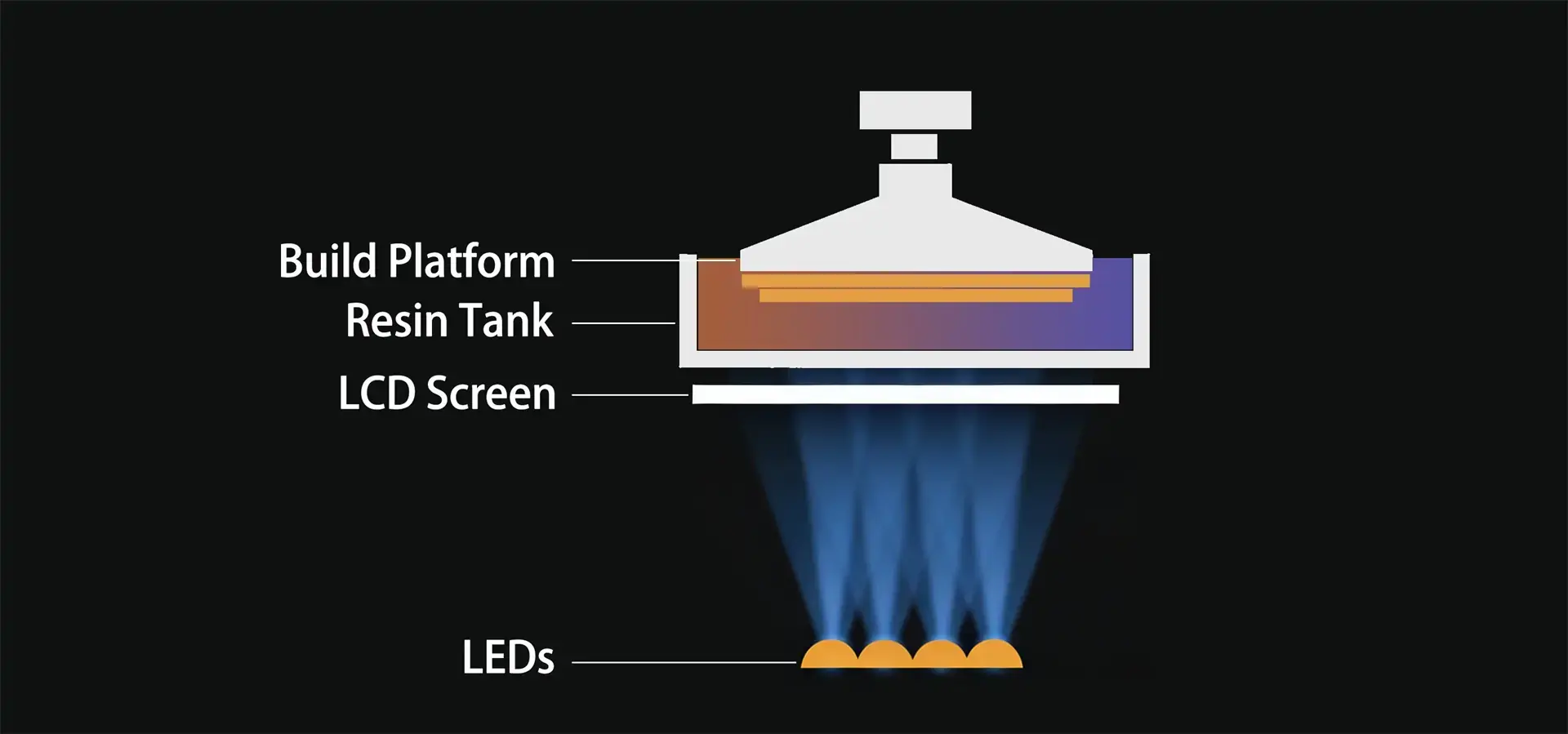
The fast resin 3D printing technology is a big step forward in additive manufacturing. It uses advanced photopolymerization methods to turn liquid resin into solid layers very quickly and accurately. These printers are different from traditional stereolithography systems because they have special parts like high-transmittance LCD screens, improved release films, and closed-loop motor control systems that make layer separation forces and processing delays a lot smaller. The main idea is getting around hydrodynamic problems that have generally slowed down resin printing. Modern fast resin 3D printer systems achieve this through LCD-based masked exposure control and dynamic pixel-level light modulation, enabling rapid layer curing with high-detail accuracy. When compared to traditional methods, this method lets makers keep the accuracy of the dimensions while increasing output by 30 to 50 percent.
Technical Architecture and Performance Specifications
For high-speed resin printing to work technically, a number of important parts must work together. These systems can accelerate the Z-axis up to 100mm/s² and have a positioning accuracy of ±0.01mm, which makes sure that the layers stay aligned even when the system oscillates quickly. The optical systems use COB (Chip on Board) or collimated light sources with high intensity levels of more than 6mW/cm² to rapidly cure standard resins within short exposure times depending on layer thickness and material formulation. Release device technology is a key part of being able to print quickly. Advanced methods use release films that are tension-tuned, like ACF (Advanced Composite Film), which have less surface energy and lower peel forces by up to 50%. This new idea stops layers from coming apart when moving quickly vertically, while keeping the print quality intact.
Material Compatibility and Chemical Integration
How well fast resin printing works depends a lot on how well the materials work together and how well the chemicals are optimized. These systems work best with photopolymers that have been carefully made to have a low viscosity rate of less than 200 mPa·s and better photo-initiator sensitivity. This chemical mix makes it possible for fast reflow and instant polymerization, which is what makes this technology group possible. The choice of material has a direct effect on both print speed and the quality of the end product. For example, engineering-grade resins, clear formulas, high-temperature versions, and flexible materials all need different processes and contact conditions. When procurement workers understand these connections, they can make the best use of the materials they buy and increase the efficiency of production.
Comparing Fast Resin 3D Printers with Other 3D Printing Technologies
When buying, workers look at fast resin 3D printer additive manufacturing choices; they need to carefully think about how fast resin 3D printer technology is compared to SLA, DLP, and filament-based printers. Each technology has its own pros and cons that affect the total cost of ownership, the ability to make more parts, and the quality of the parts that are made. Most of the time, fast resin printing methods work best in situations where both high quality and fast throughput are needed. Traditional laser-based SLA printers can achieve comparable detail quality, but typically operate at lower throughput compared to modern high-speed resin systems, which makes them less useful in production settings where time is of the essence. DLP technology has fast speeds, but it often has lower build numbers, which limits the ability to do batch output.
Speed and Accuracy Considerations
The study of performance shows big changes in how efficiently operations are run. For vertical builds, traditional resin printers work at speeds between 30 and 50 mm/hour. In turbo settings, modern fast resin systems can reach 100 to 170 mm/hour. Reduced work costs, faster project finish, and happier customers for service providers are all direct results of this speed boost. In all systems, accuracy is still a very important factor. Even though they work faster, fast resin systems keep the XY resolution at 20 to 50 microns. This makes sure that quality improvements don't lose their dimensional accuracy. In industries like making medical devices and precise tools, where standards must be kept, this balance is especially useful.
Cost-Effectiveness Analysis
A study of investments shows that fast resin printing technology has strong returns, even though it costs more to buy at first. Because jobs can be finished in a lot less time, tools can be used more efficiently, and money can be made faster. Better organizational margins are also caused by fewer workers being needed for project management and post-processing tasks. The cost of the materials is another important thing to think about. Some private systems limit the materials that can be used, but the best fast resin printers support open material system compatibility, allowing the use of third-party resins, which lets you get materials from several different sources at low costs. This adaptability comes in handy for places that make a lot of things, where the cost of materials has a big effect on making money.
How to Optimize Fast Resin 3D Printer Performance and Maintenance
To get the most out of fast resin 3D printer tools in terms of operating efficiency and service life, you need to know a lot about repair procedures, parameter optimization, and how to avoid problems before they happen. These systems are big investments in capital that need to be run in a controlled way to get the best results. Regular repair is the key to making sure that something works well. Every day, you should clean the LCD screen, check the resin tank carefully, and get the build platform ready. As part of the weekly maintenance, mechanical parts are oiled, the visual system is calibrated, and the surroundings are checked. Deep cleaning processes that happen once a month take care of resin contamination, filter replacement, and full system inspections.
Print Parameter Optimization Strategies
To get the best print quality at high speeds, you have to carefully change the parameters based on the features of the material and the shape of the part. Choices about layer height affect both print speed and the quality of the finish on the surface. Thicker layers shorten the total print time but might make it harder to see small details. Thinner layers improve surface quality but slow down production. Calibration of exposure time is necessary to find the right balance between processing speed and fix depth. Under-exposure makes it hard for layers to stick together and makes measurements less accurate. Over-exposure, on the other hand, a fast resin 3D printer can lead to light bleed and the loss of fine details. Modern fast resin 3D printer systems have automatic calibration processes that make the best use of these factors based on the properties of the material and the environment. The direction of the model has a big effect on both the success rate of printing and the quality of the surface. The right direction cuts down on the need for support structures, speeds up the printing process, and improves the finish on important faces. By understanding these connections, operators can regularly get results that look like they were done by a professional while also increasing output.

Troubleshooting Common Issues
Preventive fixing helps find problems before they get in the way of production. Layer binding problems, measurement errors, and surface quality problems are all common problems. Figuring out the root causes of problems lets you fix them quickly and stops them from happening again, which could hurt the speed of operations. Temperature changes are a common reason why print quality problems happen. Making sure that the temperature stays between 20°C and 25°C helps the glue cure properly and keep its shape. Controlling humidity can also affect how well a material works. For most photopolymer resins, the best humidity levels are between 40 and 60% relative humidity. These environmental conditions primarily affect photopolymer curing behavior and surface stability.
Procurement Insights: Buying Fast Resin 3D Printers for Your Business
To successfully buy fast resin 3D printing technology, you need to carefully consider the technical specs, the supplier's skills, and the overall cost of ownership. The decision-making process should match the powers of the tools with the specific needs of the output, while also taking into account the infrastructure and long-term scalability needs. Important things to look at when judging a printer are its print speed, clarity, build volume, and the types of materials it can work with. These specs for fast resin 3D printer systems vary greatly, so it's important to compare them carefully. Long-term running costs and machine reliability are also affected by things like warranty coverage, expert help available, and the ease of access to spare parts.
Supplier Selection and Support Infrastructure
If you choose makers with good reputations and track records, you can be sure that you will be able to get reliable gear, original tools, and full expert support. Suppliers that have been around for a while usually have better warranties, faster customer service, and bigger stocks of extra parts. These things are especially important in work settings where broken equipment has a direct effect on making money. Global B2B buyers also need to think about shipping costs, how to clear borders, and whether there are local service options. It's common for suppliers with established foreign distribution networks to offer better installation, training, and ongoing upkeep services. Also, chances to buy in bulk and discounts for buying in bulk can have a big effect on the total cost of acquisition for operations with multiple units.
Integration and Workflow Considerations
Choosing the right equipment is only the beginning of a successful application. Workflow integration, operator training, and quality control processes are also important. When using fast resin printing technology, you often need to handle things differently than when using traditional manufacturing methods. This is especially true when it comes to storing materials, post-processing needs, and safety rules. Training programs make sure that workers can use new features correctly and keep quality standards high. Comprehensive training cuts down on operating mistakes, raises the rate at which equipment is used, and increases its useful life through proper upkeep. To help their customers succeed, leading suppliers usually offer both initial training and continued expert education programs.
Future Trends and Strategic Value of Fast Resin 3D Printing in B2B Markets
The fast resin printing business is still changing quickly, thanks to progress in materials science, optical systems, and automating the process. These new developments look like they will make speed gains even bigger, give manufacturers more material choices, and make automation better. This will change the way things are made in many different industries. New resin chemistries offer better mechanical qualities, better biocompatibility, and specific performance traits for tough jobs. High-temperature resins make it possible to make working samples for use in aircraft and the car industry. Biocompatible formulas help with the production of medical devices and dental work. These improvements in materials make it possible for fast resin 3D printer technology to be used in more situations.
Market Adoption and Industry Growth
A study of the industry shows that fast resin printing technology, fast resin 3D printers, are being used more and more in many different areas. Digital dentistry is one of the fastest-growing fields, and chairside printing makes it possible to finish many types of dental work in the same day. In the same way, being able to make multiple casting models in a single build cycle greatly increases the speed of jewelry production. The automotive industry increasingly utilizes fast resin printing for functional prototyping and low-volume production applications. The technology lets component designs be changed quickly, which cuts down on development times and speeds up the time it takes for new car projects to reach the market. In the same way, companies that make consumer goods use these systems to make prototypes of complicated housings and internal structures that need to fit together tightly.
Sustainability and Environmental Considerations
Environmental duty is becoming more and more important in all fields when it comes to buying things. Compared to traditional ways of making things, fast resin printing technology has several environmental benefits. Additive manufacturing doesn't lose materials like subtractive methods do, and digital production cuts down on the need for shipping for prototypes and small batches. Resin recycling technologies keep getting better, which lets you get back and use uncured material from failed prints and support structures. Bio-based resin formulations also lower reliance on materials made from fuel while keeping the performance qualities needed for industrial uses. These changes are in line with companies' efforts to be more environmentally friendly and support responsible buying habits.
Conclusion
Fast resin 3D printing technology is a game-changing financial opportunity for companies that want to speed up their production while still keeping high-quality standards. The technology is very useful for dental labs, jewelry makers, quick development, and precision manufacturing because it can print at speeds faster than 100 mm/hour while still being accurate to the micron level. Some of the strategic benefits are shorter time-to-market, better machine utilization rates, and happier customers because projects are finished faster. As we learn more about materials and how to automate tasks, fast resin 3D printer systems will continue to give makers who value quality, efficiency, and operating flexibility in their production processes a competitive edge.
FAQ
1. What maintenance procedures ensure reliable, fast resin printer performance?
As part of regular upkeep, the resin tank is checked, and the LCD screen is cleaned every day. The machine is oiled, and the optics are calibrated once a week; the filter is replaced, and the cleaning cycle starts again every month. Maintaining equipment on a regular basis helps keep it clean, prevents problems with contamination, and ensures uniform print quality while also extending its useful life.
2. How do fast resin printers compare to filament printers in industrial applications?
Fast resin printers are great for tasks that need fine details and smooth surfaces because they can make layers 10 to 50 microns thick, while filament printers can only make layers 100 to 300 microns thick. For structural applications, however, filament printers offer bigger build volumes and a wider range of materials. This means that the choice of technology depends on the needs of the application.
3. Which industries gain the greatest value from fast resin printing technology?
Digital dentistry, metal making, precise prototyping, and medical device production are the primary beneficiaries. These fields need both high accuracy and quick turnaround times. This is why the speed benefits of fast resin 3D printer technology are so important for improving operating efficiency and customer happiness.
4. What factors should be considered when selecting fast resin printing materials?
When choosing a material, it's important to think about its thickness, how sensitive it is to light, its mechanical qualities, and the needs of the application. Low-viscosity resins (less than 200 mPa·s) allow for faster print speeds, and special versions offer better qualities for tough jobs, like biocompatibility or resistance to high temperatures.
5. How does print speed affect dimensional accuracy in fast resin systems?
Modern fast resin systems keep the accuracy of the dimensions to within ±0.05mm while working at higher speeds. This is made possible by advanced optical systems and exposure settings that are tuned. When you calibrate and optimize the parameters correctly, you can make sure that speed gains don't lower the quality standards needed for precise applications.
Transform Your Manufacturing Capabilities with Magforms Fast Resin 3D Printing Solutions
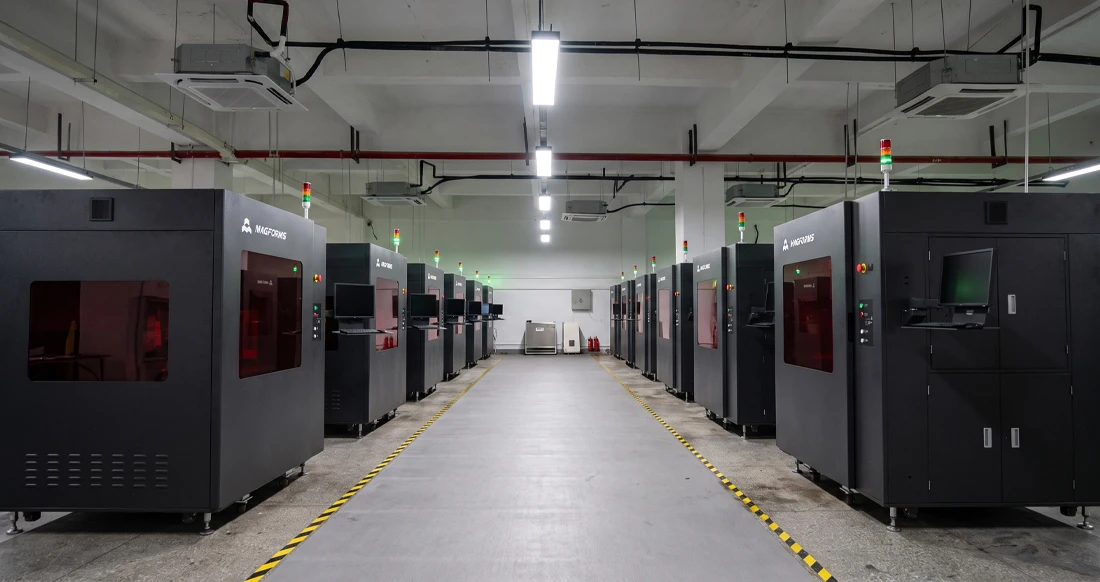
Magforms offers cutting-edge fast resin 3D printer technology that is at the cutting edge and was made for tough industrial uses. Our combined method combines our own tools with materials that have been adjusted to print 30–50% faster while still keeping accuracy at the micron level. Magforms gives your business the dependability and performance it needs with 22 patents, full expert help, and service coverage around the world. Get in touch with our knowledgeable staff at info@magforms.com to talk about unique solutions, get detailed specs, and find out how our fast resin 3D printer maker can help you reach your production goals faster while cutting costs.
References
1. Gibson, Ian, and David Rosen. "Additive Manufacturing Technologies: 3D Printing, Rapid Prototyping, and Direct Digital Manufacturing." Springer Science & Business Media, 2015.
2. Quan, Huan, et al. "Photo-curing 3D printing technique and its challenges." Bioactive Materials 5, no. 1 (2020): 110–115.
3. Melchels, Ferry PW, Jan Feijen, and Dirk W. Grijpma. "A review on stereolithography and its applications in biomedical engineering." Biomaterials 31, no. 24 (2010): 6121-6130.
4. Zocca, Andrea, et al. "Additive manufacturing of ceramics: issues, potentialities, and opportunities." Journal of the American Ceramic Society 98, no. 7 (2015): 1983-2001.
5. Ligon, S. Christian, et al. "Polymers for 3D printing and customized additive manufacturing." Chemical Reviews 117, no. 15 (2017): 10212–10290.
6. Stansbury, Jeffrey W., and Mike J. Idacavage. "3D printing with polymers: Challenges among expanding options and opportunities." Dental Materials 32, no. 1 (2016): 54–64.

Magforms makes design and manufacture easier.
Popular Blogs
-
 Industry InsightsManufacturing Industry
FDM vs. SLA Printer: Which Technology Is Right for Your Project?
-
 Industry InsightsManufacturing Industry
Top 5 Applications of Industrial 3D Printers in Manufacturing Today
-
 Industry InsightsManufacturing Industry
Why Stereolithography 3D Printers Are Unmatched for Microfluidic Device Prototyping?