Is an Industrial SLA 3D Printer Worth the Higher Investment Cost?
An industrial SLA 3D Printer is absolutely worth the higher investment cost when you consider the long-term returns it delivers. While the upfront price may seem steep compared to desktop alternatives, industrial-grade stereolithography equipment pays dividends through superior dimensional accuracy, reduced failure rates, predictable production cycles, and broad material compatibility. For businesses handling precision-critical projects—whether in aerospace component validation, dental model fabrication, or rapid prototyping for consumer electronics—the enhanced reliability and micron-level precision translate directly into fewer scrapped parts, accelerated time-to-market, and ultimately, a healthier bottom line. The real question isn't whether you can afford an industrial SLA system, but whether you can afford the production delays and quality inconsistencies that come without one.
Magforms Industrial SLA 3D Printer: Key Advantages That Justify the Investment
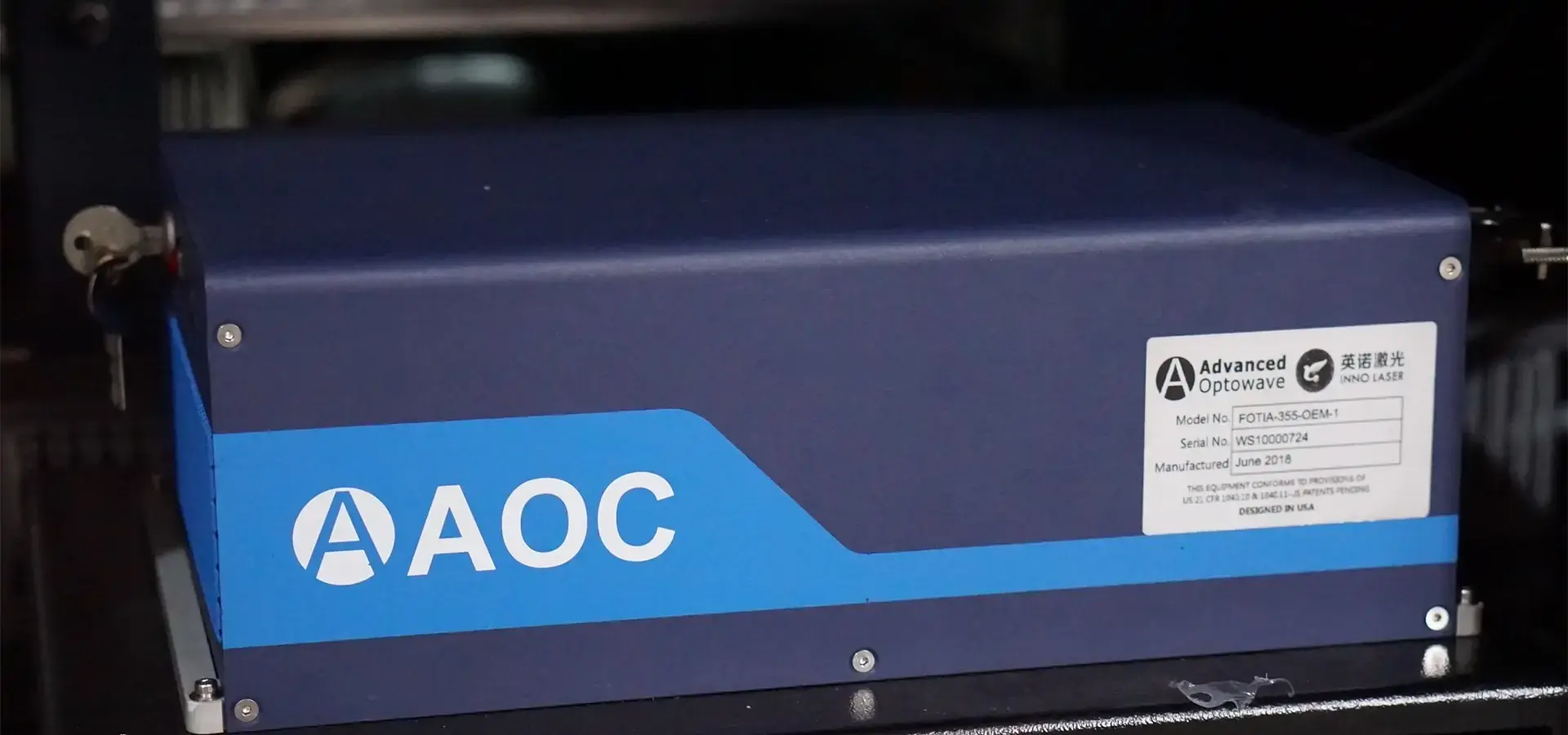
When evaluating whether industrial stereolithography equipment warrants the premium pricing, examining specific technical advantages helps quantify the value proposition:
- Exceptional stability through premium components: AOC laser systems maintain consistent output during 24/7 operations; German Scanlab galvanometers coordinate with lasers to eliminate quality variance; Panasonic servo motors across platform, recoater, and liquid level systems contribute to motion positioning accuracy of up to ±8 μm, helping maintain dimensional consistency during long production runs—eliminating the dimensional drift that plagues equipment using generic stepper motors
- Unmatched dimensional precision: Platform flatness tolerances of 0.2 mm, 0.3 mm, and 0.5 mm help reduce the risk of support detachment and layer inconsistency that can occur on poorly aligned or welded platforms; liquid level positioning accuracy of ±0.03mm ensures uniform layer thickness across the entire build envelope
- Variable spot technology for speed optimization: Intelligent scanning dynamically adjusts laser spots from 0.5-0.6mm for infill regions to 0.15-0.2mm for supports and contours, delivering up to 30-50% productivity improvements on suitable geometries while maintaining surface finish quality; self-learning scanning systems progressively optimize print paths, achieving 20% faster performance versus comparable systems
- Superior surface quality and detail reproduction: Advanced laser scanning strategies and optimized exposure parameters help reduce visible stair-step effects and improve surface smoothness on angled surfaces; micro-spot capability captures fine features, including sharp edges, intricate surface textures, and sub-millimeter geometric details that post-processing cannot recreate
- Open material ecosystem: No proprietary key systems or material locks restrict resin choices; compatibility with a wide range of 355 nm SLA resins enables cost optimization and application-specific material selection without vendor lock-in
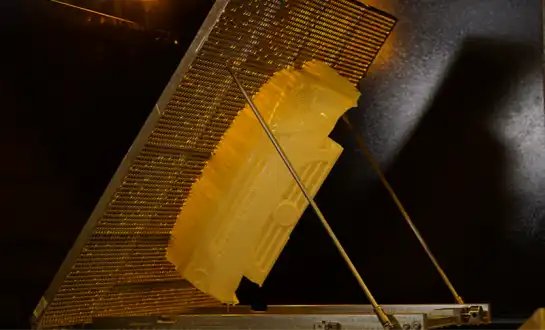
- Operator-friendly design innovations: Dual support rods lift completed platforms at angles for rapid resin drainage; invertible platform orientation accelerates post-print cleanup; supported platform design reduces handling risks during part removal
These advantages compound across production volumes. A service bureau processing 500 parts monthly experiences the benefits multiplicatively—each percentage point of failure rate reduction, each hour of cycle time saved, each material cost optimization accumulates into substantial annual savings that rapidly eclipse the initial equipment premium.
Industry-Specific ROI: Where Industrial SLA Technology Delivers Maximum Value
The worthiness of investing in industrial-grade stereolithography equipment varies significantly by application context. Certain industries extract disproportionate value from the precision and reliability these systems provide.
Aerospace component validation represents an ideal use case. When prototyping small precision connectors or irregularly shaped structural elements, the dimensional accuracy requirements are often significantly tighter than those of conventional concept models, frequently requiring tolerances in the range of ±0.1% of nominal dimensions or better. Traditional manufacturing methods like CNC machining these complex geometries can cost $500-2,000 per iteration with 2-3 week lead times. An industrial SLA 3D printer produces equivalent validation parts for $40-80 in material costs within 24-48 hours. Engineering teams can evaluate five design variations in the time and budget previously required for a single machined prototype.
Dental laboratories processing custom orthodontic devices face relentless volume pressure. A typical practice produces 30-60 aligner models weekly. Desktop SLA printers handling this throughput require constant attention—failed prints discovered at 2 AM disrupt next-day delivery commitments. Industrial systems with proven 95%+ first-print success rates transform this operational stress into predictable production schedules. Lab technicians arrive to complete overnight print jobs rather than scrambling to restart failed batches.
Automotive interior prototyping benefits particularly from variable spot technology. Dashboard components and center console elements often combine large surface areas with fine detail—ventilation grilles, button interfaces, texture patterns. The ability to rapidly fill large volumes with 0.5mm spots while preserving 0.15mm detail resolution in critical areas reduces print times for these parts by 40% compared to fixed-spot systems.
Material Compatibility and the Hidden Cost of Proprietary Ecosystems
One of the most significant yet frequently overlooked factors in industrial SLA 3D printer selection involves material flexibility. Many manufacturers implement proprietary resin systems—sometimes through physical chip-based locks, other times through firmware restrictions—that force users into single-source purchasing.
The financial impact extends beyond the obvious markup:
- Specialized engineering resins from captive suppliers often cost $300-500 per liter versus $120-180 for equivalent open-market formulations
- Limited material options constrain application development—when a client requests high-temperature resistance or specific Shore hardness, locked systems may simply lack compatible options
- Supply chain vulnerabilities emerge when sole-source suppliers face production disruptions or discontinue specific formulations
Industrial platforms offering genuine material openness—verified through testing with multiple third-party photopolymer resins—provide operational flexibility that compounds over equipment lifespan. Technical teams can optimize material selection based on project requirements rather than vendor inventory. Cost-sensitive projects utilize economical general-purpose resins, while specialty applications justify premium materials.
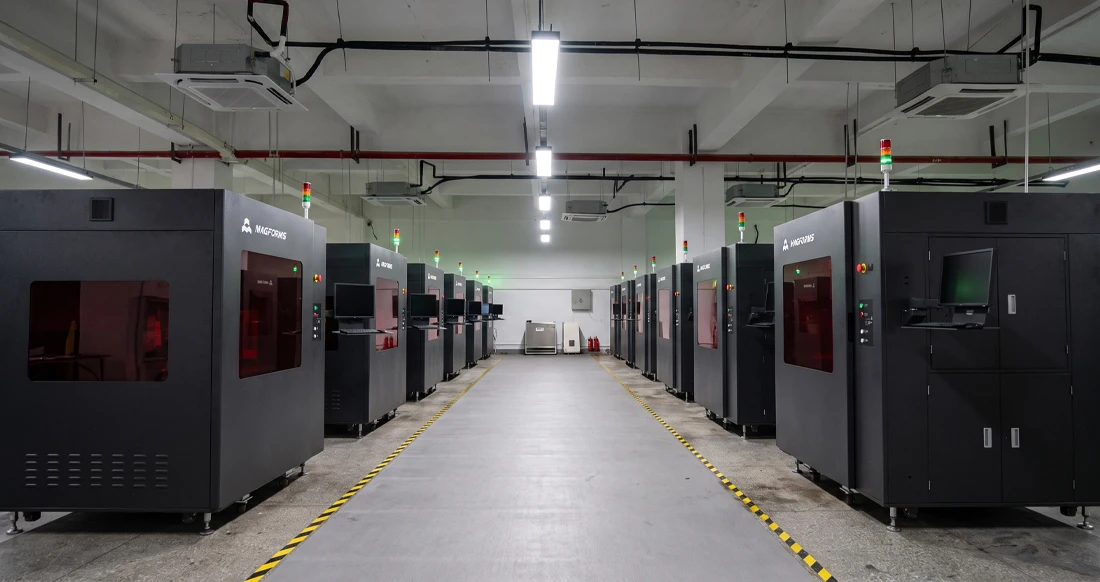
Magforms equipment exemplifies this approach through compatibility with most 355nm photopolymer resins without key-based restrictions. Labs report successful prints using transparent resins, high-temperature formulations, flexible materials, and engineering-grade photopolymers from various suppliers. This versatility proves particularly valuable for service bureaus handling diverse client requirements—the same equipment processes dental models in biocompatible resin during morning shifts and automotive prototypes in high-impact formulations by afternoon.
Real-World Performance: Comparing Desktop Resin Printers and Industrial SLA Systems
Beyond specification sheets, actual production environments reveal the practical differences between equipment classes. A product design studio switching from desktop to industrial SLA technology documented their experience across 90 days:
Desktop system baseline (first 30 days):
- 147 print jobs initiated
- 23 complete failures requiring restarts (15.6% failure rate)
- 31 parts requiring dimensional correction reprints
- Average successful print completion: 8.2 hours for medium-complexity parts
- Total material consumption: 12.4 liters of photopolymer resin
- Operator intervention time: 47 hours, troubleshooting and restarting
Industrial system comparison (days 31-90):
- 312 print jobs initiated
- 11 complete failures (3.5% failure rate)
- 8 parts requiring dimensional correction
- Average successful print completion: 5.7 hours for equivalent parts
- Total material consumption: 22.1 liters (processing 2.1x volume with only 1.78x consumption)
- Operator intervention time: 19 hours
The studio calculated that failure rate reduction alone saved $1,840 in wasted material over 60 days, while the 30% speed improvement added capacity equivalent to hiring an additional technician—without the associated payroll costs.
Surface finish improvements proved equally significant. Consumer electronics clients reported reduced post-processing requirements, with some prototype applications requiring significantly less sanding and surface finishing than before. This eliminated 2-4 hours of manual finishing per part for certain product categories.
Technical Support and After-Sales Service: The Invisible Cost Factor
Even the most reliable industrial equipment occasionally requires technical support. The responsiveness and expertise of manufacturer support teams dramatically influence true operational uptime—a factor that procurement evaluations frequently underweight relative to hardware specifications.
Production environments operating under client deadlines cannot absorb multi-day support response windows. When a galvanometer calibration issue emerges mid-print job, the difference between 24-hour expert support and 72-hour "ticket escalation processes" determines whether delivery commitments are met or broken.
Magforms maintains dedicated technical support teams drawing from extensive commissioning experience across varied equipment platforms. Engineers familiar with both materials science and mechanical systems can diagnose whether print defects stem from parameter settings, environmental factors, or hardware issues. This cross-disciplinary expertise accelerates problem resolution compared to support teams reading scripted troubleshooting guides.
The company's response commitment—addressing customer inquiries within 24 hours—reflects an understanding that industrial production operates on tighter schedules than hobbyist experimentation. Technical training programs help operators maximize equipment capabilities rather than simply addressing failures after they occur.
Beyond reactive support, proactive maintenance guidance extends equipment lifespan. Regular software updates maintain compatibility with evolving CAD integration standards and introduce performance optimizations. Preventive maintenance schedules help operations replace wear components like resin vat films and optical windows before they cause print quality degradation.
Making the Financial Case to Stakeholders
Technical personnel evaluating industrial SLA 3D printer systems often face the challenge of translating performance benefits into financial terms that resonate with procurement decision-makers and executive leadership. Several frameworks help bridge this communication gap.
Total Cost of Ownership (TCO) analysis extends beyond purchase price to encompass:
- Material efficiency: Calculate annual resin consumption at current failure rates, then model a 10-15% reduction through improved reliability
- Labor productivity: Quantify technical staff hours currently spent on print monitoring, failure recovery, and dimensional rework
- Opportunity costs: Estimate additional revenue possible if production capacity is increased 30% without adding personnel
- Quality costs: Document current scrap rates, client rejections, and warranty issues traceable to part quality inconsistencies
Payback period calculation provides concrete timeline expectations. A $45,000 industrial system generating $2,400 monthly savings through combined material efficiency, labor productivity, and capacity gains achieves payback in approximately 19 months—well within typical capital equipment depreciation schedules.
Risk mitigation value addresses less quantifiable but equally important factors. Production bottlenecks that jeopardize client relationships, delivery failures that trigger contract penalties, and quality inconsistencies that damage reputation all carry costs that reliable equipment helps avoid.
When Lower-Cost Alternatives Make Sense
Intellectual honesty requires acknowledging that industrial SLA 3D printers aren't the optimal choice for every situation. Certain use cases genuinely benefit more from alternative technologies or equipment tiers.
Educational institutions focused on teaching fundamental additive manufacturing principles may find desktop systems adequate. Student learning objectives around design-for-manufacturing principles and CAD-to-physical workflows don't necessarily require micron-level precision or 24/7 operational stability.
Early-stage startups in pre-revenue phases conducting initial proof-of-concept work might reasonably defer premium equipment investments until product-market fit validates ongoing production needs. The cash flow implications of significant capital expenditure deserve careful consideration when the runway is limited.
Operations with minimal precision requirements—architectural models, conceptual prototypes, or artistic applications—may not utilize the dimensional accuracy that justifies industrial equipment costs. A 0.3mm tolerance requirement doesn't benefit from equipment capable of 0.1mm precision.
Very low-volume applications processing fewer than 50 parts annually face difficulty justifying the investment based purely on production economics. The per-part cost advantage of industrial equipment requires sufficient throughput to materialize.
These scenarios don't diminish the value of industrial SLA technology—they simply reflect appropriate equipment matching to application requirements. Businesses should honestly assess whether their current and projected needs align with the capabilities premium equipment provides.
Future-Proofing Your Investment: Technology Evolution Considerations
Manufacturing technology investments carry multi-year implications. Equipment purchased today will likely serve production needs for 5-7 years or longer, making future-readiness an important evaluation dimension.
Software compatibility ensures ongoing relevance as CAD platforms evolve. Industrial systems with active development roadmaps—regular software updates, expanding file format support, emerging workflow integrations—maintain utility as design tool ecosystems change. Abandoned platforms running decade-old software eventually create operational friction as newer staff expect modern interfaces.
Material innovation access allows operations to adopt next-generation photopolymer resins as materials science advances. Open-platform systems compatible with commonly used 355 nm laser-based SLA resin systems can utilize improved formulations as they reach the market. Proprietary systems may lag years behind or never gain access to breakthrough materials developed outside their vendor's portfolio.
Production scalability matters even for current small-volume operations with growth ambitions. Equipment that handles today's 100 parts monthly while offering upgrade paths, such as the large-format SL800 Industrial SLA printer—larger build volumes, faster scanning systems, multi-unit control software—protects against premature obsolescence if production needs expand.
Integration Considerations: Fitting Industrial SLA into Existing Workflows
Purchasing decisions extend beyond equipment specifications to encompass how new capabilities integrate with established processes. Several practical considerations influence implementation success.
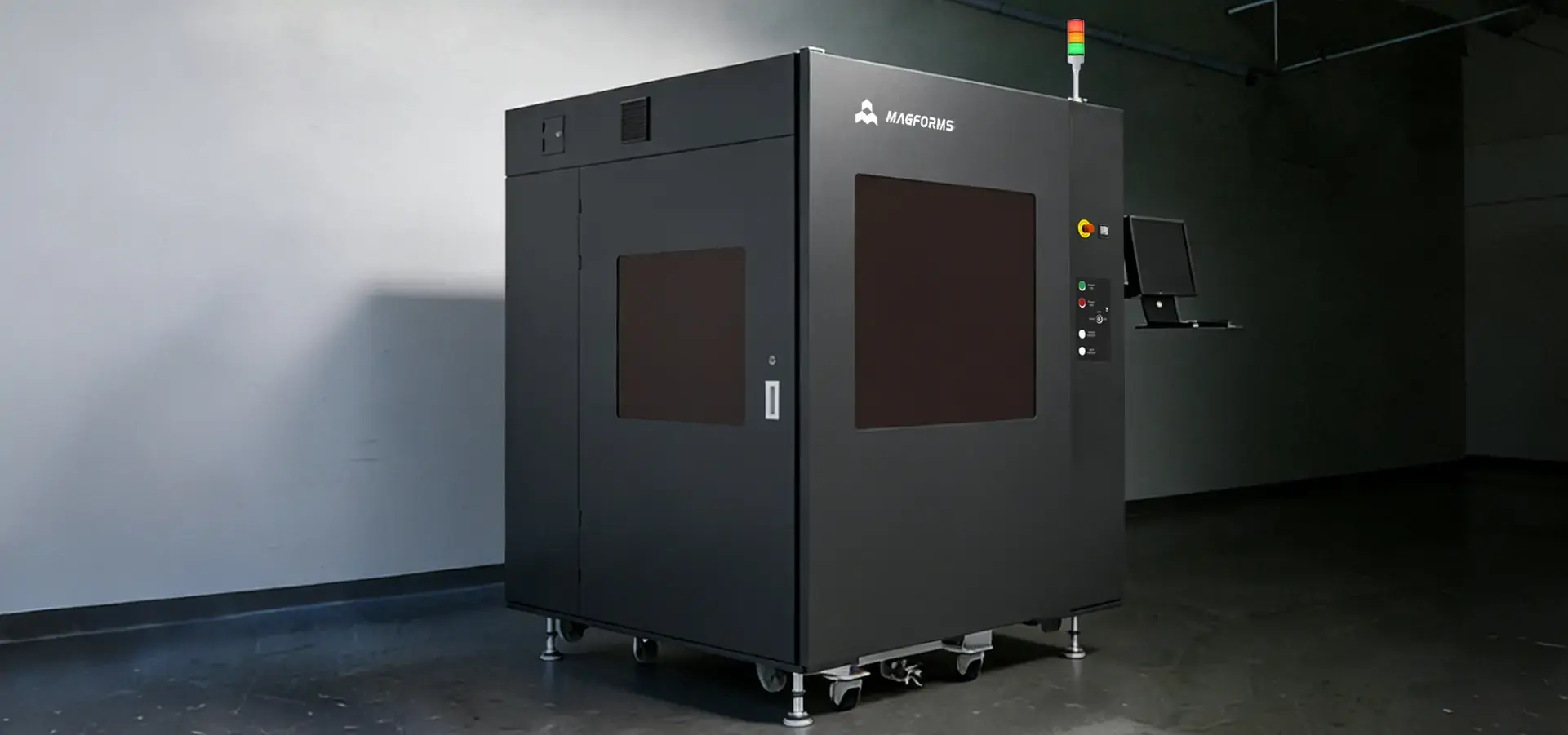
Physical space requirements vary significantly across industrial SLA platforms. Equipment footprints range from compact benchtop-industrial units (600mm × 600mm) suitable for crowded lab environments to large-format systems (1200mm+ footprints) requiring dedicated floor space. Beyond the printer itself, successful operations need space for post-processing stations—wash tanks, UV curing chambers, part finishing areas—and resin storage.
Environmental conditions affect print reliability. While industrial systems include temperature control that desktop units lack, optimal performance still benefits from climate-controlled environments. Spaces with significant temperature fluctuations (>10°C daily variation) or high humidity can impact dimensional accuracy and resin shelf life.
Digital workflow integration determines how smoothly files move from design intent to physical parts. Modern industrial SLA software offers API integration with product lifecycle management (PLM) systems, automated job queuing, and remote monitoring capabilities. Operations with established digital infrastructures should evaluate how prospective equipment fits existing systems rather than requiring parallel workflows.
Skills and training requirements influence implementation timelines. Industrial equipment offers greater capability but also involves more operational variables—laser power optimization, resin parameter tuning, and support structure strategies. Manufacturers providing comprehensive training—both initial commissioning and ongoing application development support—help technical teams develop expertise faster.
Conclusion
An industrial SLA 3D Printer represents a strategic investment that pays returns through multiple channels—reduced failure rates and material waste, accelerated production cycles, superior dimensional accuracy, and operational flexibility through open material platforms. While the initial cost exceeds desktop alternatives, the total cost of ownership analysis reveals that reliability improvements, speed gains, and expanded capabilities typically achieve ROI within 18-24 months for operations processing meaningful production volumes. The decision ultimately depends on your specific application requirements, production scale, and quality standards. Businesses where dimensional precision, print reliability, and production efficiency directly impact client deliverables and revenue generation will find the premium justified. Those with less demanding applications may reasonably conclude that mid-tier equipment adequately serves their needs. Honest assessment of your actual requirements—not aspirational capabilities—guides optimal equipment selection.
Partner with Magforms: Your Industrial SLA 3D Printer Supplier for Precision Manufacturing
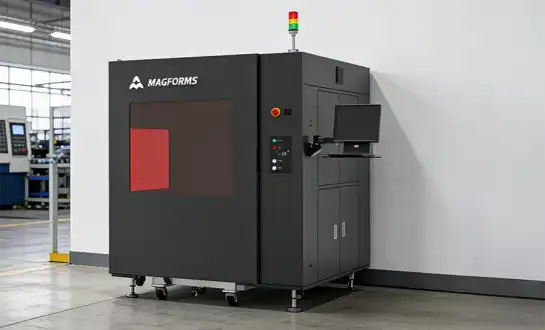
Magforms delivers complete additive manufacturing solutions combining industrial-grade equipment with materials expertise developed across years of real-world application experience. As a trusted industrial SLA 3D Printer manufacturer, Magforms specializes in laser-based stereolithography systems designed for high-precision industrial prototyping and low-volume production applications. The company offers systems featuring German Scanlab galvanometers, AOC laser systems, and Panasonic servo motors, components that help ensure the stability and precision required in production environments. The open material platform supports a wide range of 355 nm SLA resins without proprietary restrictions, giving your technical teams flexibility to optimize costs and applications. With 22 patents, 30 registered trademarks, and equipment serving over 300 enterprises across dozens of countries, Magforms brings proven reliability to your production challenges. Connect with the professional team at info@magforms.com to discuss how integrated materials-and-equipment solutions can transform your rapid prototyping and manufacturing capabilities.
References
1. Gibson, I., Rosen, D., & Stucker, B. (2021). Additive Manufacturing Technologies: 3D Printing, Rapid Prototyping, and Direct Digital Manufacturing (3rd ed.). Springer International Publishing.
2. Jacobs, P. F. (2019). Stereolithography and Other RP&M Technologies: From Rapid Prototyping to Rapid Tooling. Society of Manufacturing Engineers.
3. Ligon, S. C., Liska, R., Stampfl, J., Gurr, M., & Mülhaupt, R. (2017). Polymers for 3D Printing and Customized Additive Manufacturing. Chemical Reviews, 117(15), 10212-10290.
4. Ngo, T. D., Kashani, A., Imbalzano, G., Nguyen, K. T., & Hui, D. (2018). Additive Manufacturing (3D Printing): A Review of Materials, Methods, Applications, and Challenges. Composites Part B: Engineering, 143, 172-196.
5. Stansbury, J. W., & Idacavage, M. J. (2016). 3D Printing with Polymers: Challenges among Expanding Options and Opportunities. Dental Materials, 32(1), 54-64.
6. Quan, Z., Wu, A., Keefe, M., Qin, X., Yu, J., Suhr, J., Byun, J. H., Kim, B. S., & Chou, T. W. (2015). Additive Manufacturing of Multi-Directional Preforms for Composites: Opportunities and Challenges. Materials Today, 18(9), 503-512.

Magforms makes design and manufacture easier.
Popular Blogs
-
 Industry InsightsManufacturing Industry
FDM vs. SLA Printer: Which Technology Is Right for Your Project?
-
 Industry InsightsManufacturing Industry
Top 5 Applications of Industrial 3D Printers in Manufacturing Today
-
 Industry InsightsManufacturing Industry
Why Stereolithography 3D Printers Are Unmatched for Microfluidic Device Prototyping?