The Science Behind Industrial SLA 3D Printer Accuracy and Surface Quality
Industrial SLA 3D Printers use a sophisticated laser-based photopolymerization process to make very precise parts with very good surface quality. Industrial systems, on the other hand, use high-power solid-state lasers, precise galvanometers, and specially engineered photopolymer resin formulations to get accuracy down to the micron level and smooth surface finishes. These abilities come from carefully managing laser spot sizes, layer thicknesses, scanning speeds, and environmental stability. All of these things work together to make sure that the dimensions stay the same, which is important for hard uses in aircraft, medicine, cars, and other fields.
Understanding Industrial SLA 3D Printing Technology
Stereolithography is one of the most reliable and well-developed additive production technologies for businesses that need to be precise. An industrial SLA 3D Printer works by shining a focused laser beam onto the surface of a liquid photopolymer resin. This causes the resin to harden in very specific designs. By building complicated shapes with great detail, one layer at a time, this method turns digital CAD models into real parts.
The Core Mechanics of Laser-Based Polymerization
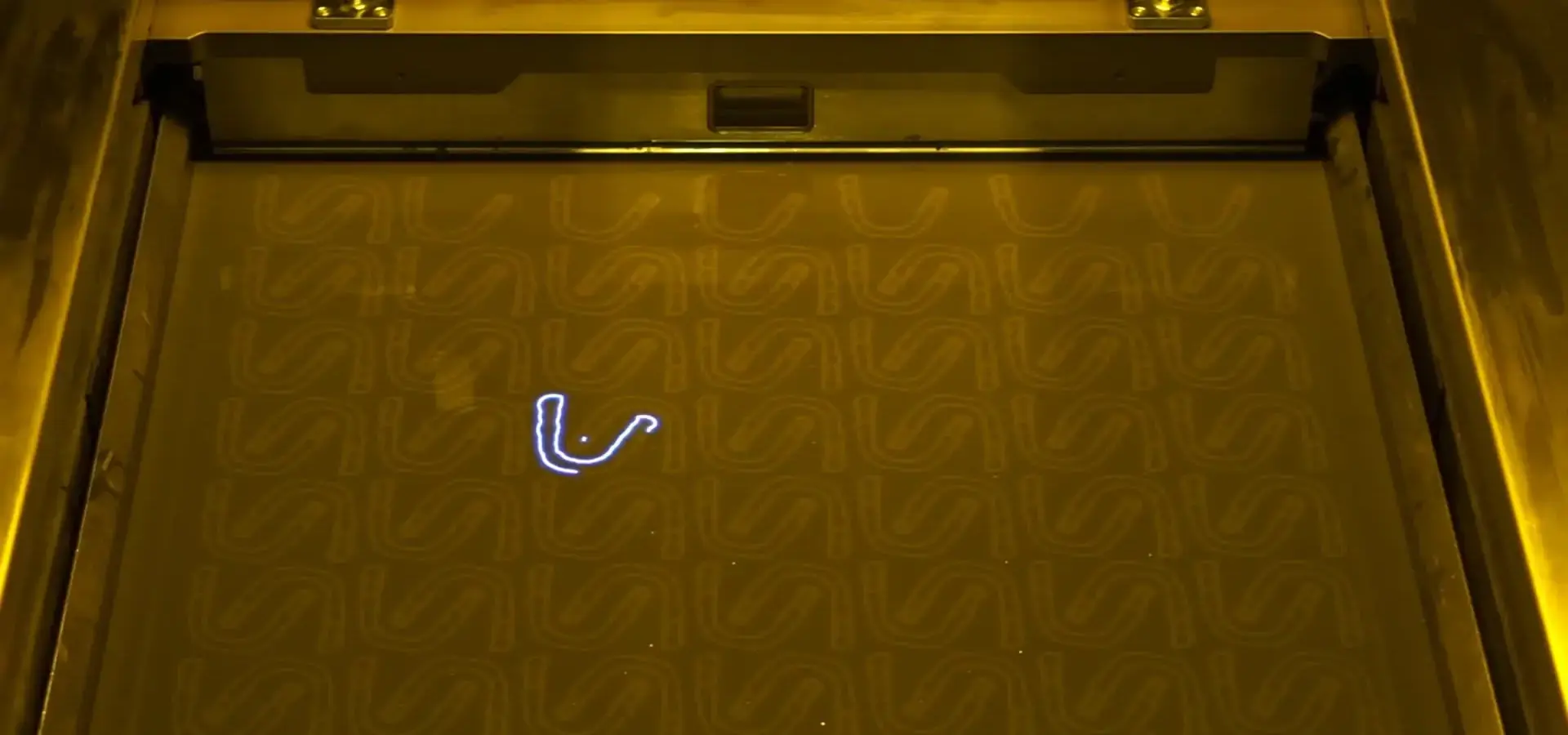
The photopolymerization process is what makes stereolithography work. When the solid-state laser with a wavelength of 355 nm hits the photosensitive resin, photoinitiators inside the material take in the energy and start the cross-linking process. This turns the wet resin into a layer of solid polymer. The base then slowly goes down, and a recoating blade spreads a fresh layer of liquid resin across the build surface to the surface that has already hardened. This process is done again and again until the whole part is done.
Both precision and surface finish are directly affected by how well this polymerization is done. Systems equipped with high-stability solid-state UV laser sources ensure consistent energy output during long production cycles, meeting the needs of industrial production that goes on 24 hours a day, seven days a week. When used with German Scanlab galvanometers, the laser beam moves along optimized scanning lines with very accurate positioning, making sure that each layer follows the digital model exactly.
Material Selection and Its Impact on Part Quality
The choice of material has a big impact on the mechanical qualities and surface features of 3D printed parts. A lot of different photopolymer resins can be used with industrial SLA systems. These include normal, engineering-grade, high-temperature, clear, and flexible resins. Most 355 nm resins work with open material systems, which means you don't have to stick with one seller and your costs go down.
Parts made with high-quality materials and precise laser control have mechanical qualities that are the same everywhere and surface roughness values (Ra) below 1 μm. This level of smoothness is very important for making dental models, surgical guides, and samples for consumer goods, where surface quality and how it feels are just as important as accuracy in size.
Key Factors Influencing Accuracy and Surface Quality
To get better accuracy and finish, you have to carefully optimize a lot of factors that are all connected. When procurement workers know about these factors, they can make smart decisions about what tools can do.
Laser Spot Size and Resolution
The smallest detail that an industrial SLA 3D Printer can make is based on the size and shape of the laser spot. Smaller laser spots, about 0.15 to 0.2 mm, make it possible to print details like sharp edges, fine textures, and thin supports. Larger spots, usually 0.5 to 0.6 mm, make scans of filler areas go faster.
During the printing process, variable laser spot technology changes the size of the spots on the fly, combining speed and detail. With this new technology, systems can print 30–50% faster than with regular fixed-spot SLA printers, without lowering the quality of the surface or the accuracy of the dimensions.
Layer Thickness and Z-Axis Precision
The width of the layers has a direct effect on both how smooth the surface is and how fast it prints. Layers that are 0.05 to 0.1 mm thick make surfaces that are smoother and have fewer stair-stepping effects which increases print time. Although thicker layers speed up production, they may leave layer lines on curvy or sloped surfaces that can be seen.
Accuracy in the Z-axis setting is just as important. With a positioning accuracy of ±8 μm, servo-driven Z-axis systems ensure precise layer alignment that each layer fits perfectly with the one below it. To keep measurement standards, this level of accuracy is very important, especially for parts longer than 100 mm, where accuracy is limited to ±0.1% × L.
Scanning Speed and Path Optimization
Both output and surface quality are affected by the speed at which the galvanometer scans. Scanlab galvanometers can achieve scanning speeds of up to 12 m/s, but most of the time they work at speeds between 6 and 10 m/s. With these fast speeds, print times are cut down by a lot, which makes industrial SLA a good choice for small-batch production and quick prototypes.
Self-learning scanning systems improve performance even more by looking at printed data and making the best scanning paths over time. By gradually making print speeds faster, this flexible intelligence makes the system up to 20% faster than regular machines.
Environmental Stability and Temperature Control
Temperature changes can affect the viscosity of the resin and how it cures, which can cause print quality to be uneven. Built-in temperature control systems keep the resin's flow at the best level even when the temperature outside changes. This keeps prints from failing and makes sure they can be repeated. Facilities that don't have temperature control will benefit the most from this feature.
Machines with strong internal plans, metal enclosure walls that are 2 mm thick, and low-expansion marble bases stay stable over time. These parts of the design keep temperature drift and shaking to a minimum, which are both things that can make measurements less accurate.
Post-Processing and Surface Finishing
The industrial SLA 3D Printer makes parts with great surface quality right after they are made, but they need to be post-processed in order to get their final mechanical properties. These steps include removing the support, washing, and UV post-curing. Platforms with adjustable support rods that are easy for anyone to use let extra resin drain quickly, which cuts down on cleaning time and material loss.
The control software has grayscale processing methods that get rid of the stair-step effect between layers. This makes parts with few or no noticeable layer lines. This feature makes finishing easier and cheaper, so printed parts can be used right away to check how they fit together and make sure the mold design is correct.
👉 Industrial SLA printer categories
Industrial SLA vs Other 3D Printing Technologies: Accuracy and Surface Comparison
When buying, managers look at additive manufacturing choices, they need to think about the pros and cons of each technology. Depending on the needs of the application, the size of the production, and the budget, each way has its own benefits.
SLA vs SLS: Surface Finish and Detail
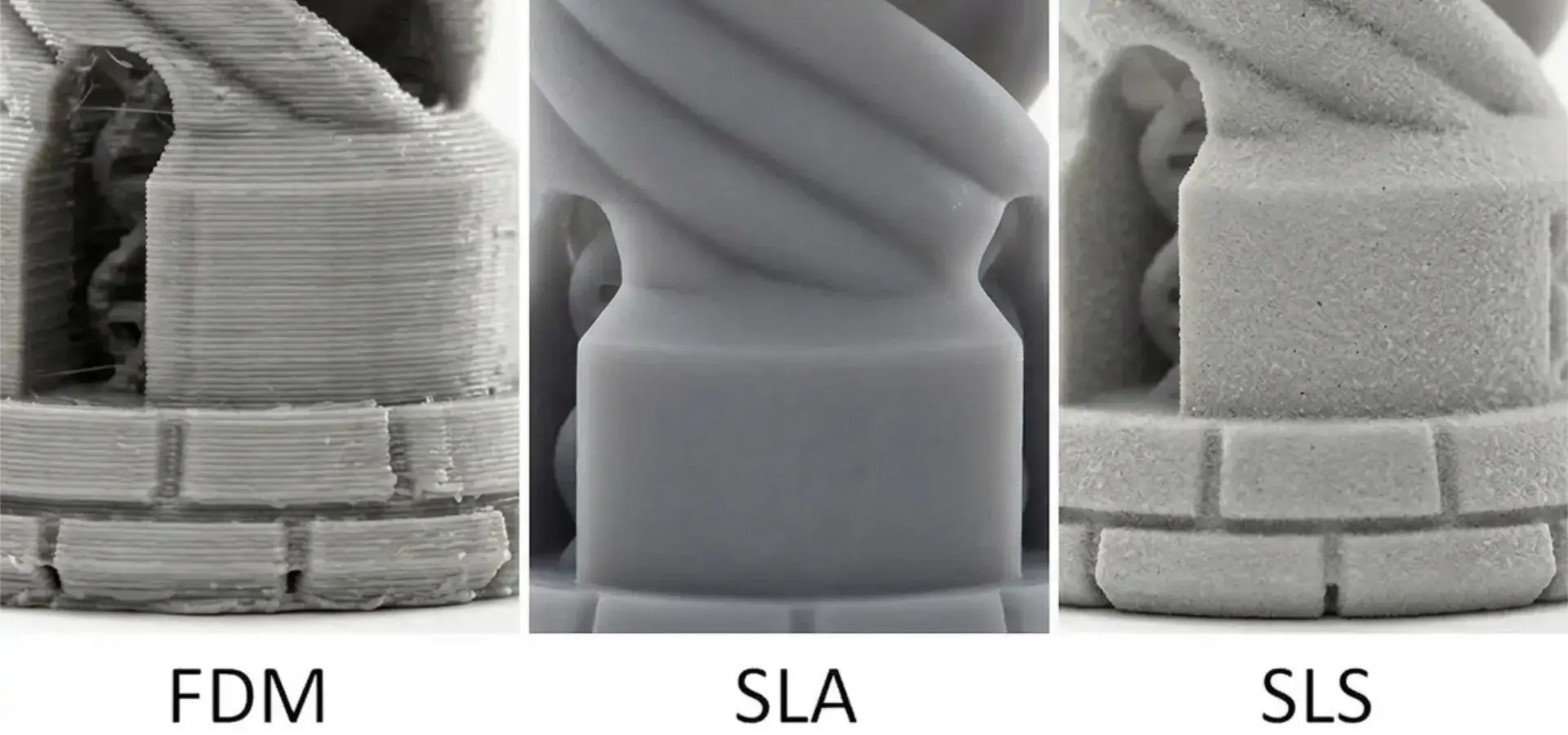
A laser is used in Selective Laser Sintering (SLS) to melt powdered materials together. These materials are usually nylon or other thermoplastics. SLS is great for making strong parts with complicated shapes that don't need any support systems. But because the powder particles are so small, the surface finish is naturally rough, and it takes a lot of work to make the surface smooth.
Stereolithography, on the other hand, makes parts that come out of the printer with smooth, shiny sides. Because of this, an industrial SLA 3D Printer is the best choice for tasks that need to look good and have a smooth surface, like making prototypes for consumer products and dental tools.
SLA vs FDM: Resolution and Dimensional Accuracy
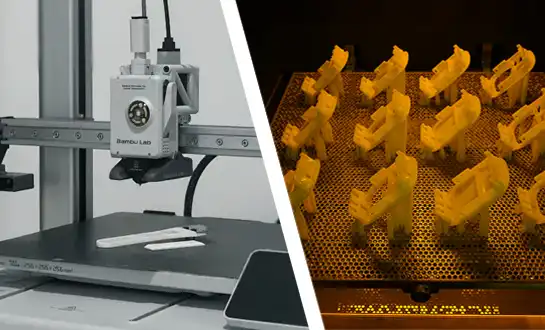
Fused Deposition Modeling (FDM) is a cheap way to make working samples by extruding thermoplastic filament layer by layer. But FDM's layer precision and surface quality are limited by the size of the opening and how the material flows through it. There are a lot of layer lines, and dimensional accuracy is generally lower than SLA systems due to extrusion-based deposition limits.
When it comes to positioning, stereolithography can get as accurate as ±0.03 mm for controlling the amount of liquid and ±8 μm for placing the platform. It can also get smaller resolutions and tighter tolerances. In fields like aircraft and medical devices, where even small errors can hurt part performance, this level of accuracy is essential.
SLA vs DLP: Speed and Build Volume
Digital Light Processing (DLP) uses digital light to fix multiple layers at once, which makes printing small parts faster. DLP systems may experience reduced accuracy at the edges of the build platform due to optical distortion and light uniformity limitations in projection systems.
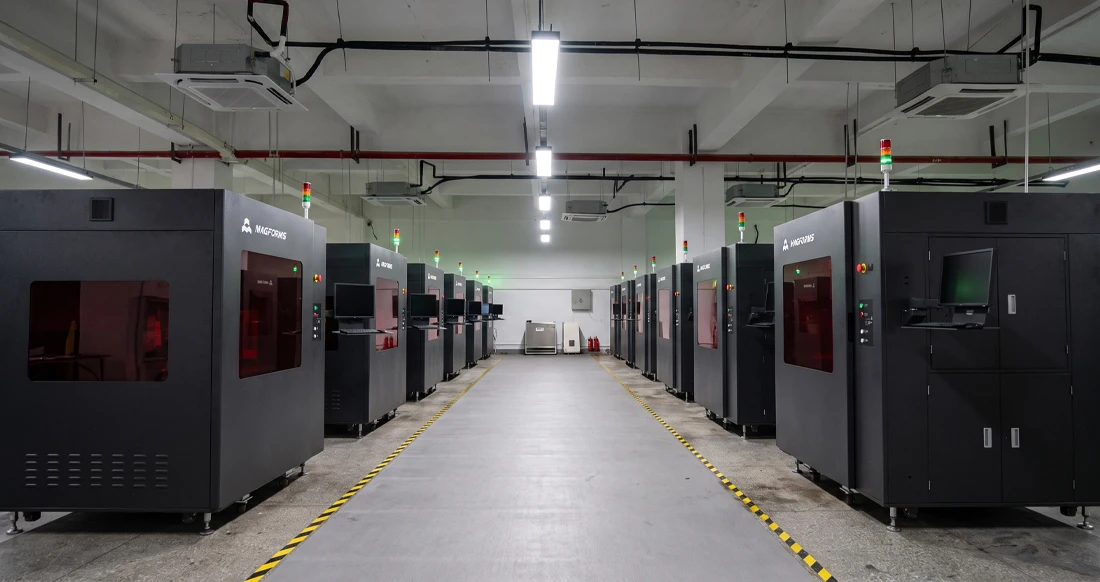
Thanks to precise galvanometers and circular laser spots, an industrial SLA 3D Printer that scans with a laser keeps the resolution the same across the whole build volume. Large-format models can hold big parts, which makes them good for prototyping in the car industry, making casting molds, and mass production of smaller parts.
Real-World Applications and Case Studies Demonstrating Precision and Surface Quality
Stereolithography technology is used in many different fields because it is accurate and flexible. Case studies from real life show how spending in good tools really pays off.
Aerospace: Prototyping Complex Components
For prototype proof, aerospace makers need parts with complex geometries and close tolerances. An industrial SLA 3D Printer can make small, precise joints, brackets with odd shapes, and duct samples that meet strict industry standards. Being able to print parts that are exactly the right size speeds up the design iteration cycle, which lowers the time it takes for new airplane models to reach the market.
Automotive: Rapid Tooling and Functional Prototypes
Stereolithography is used by automakers for fast prototyping of customized dashboards, internal parts, and casting patterns for small-scale production. Because the surface is smooth and the dimensions are very accurate, designers can test airflow, make sure the product fits, and get feedback from focus groups without having to buy expensive tools.
Medical and Dental: Personalized Patient Solutions
Stereolithography is used in dentistry to make unique tooth models, bases for orthodontic aligners, and surgical guides. Specialized resins that are biocompatible and the accuracy of the printing process make sure that every part fits correctly. This improves patient results and cuts down on chair time.
Industrial SLA 3D Printer systems are used by companies that make medical devices to make prototypes of surgical tools, hip implants, and anatomical models that are used to plan surgeries before they happen. The high resolution and smooth surfaces make it easier to sterilize and lower the chance of bacteria getting on them.
Consumer Electronics: Aesthetic and Functional Prototypes
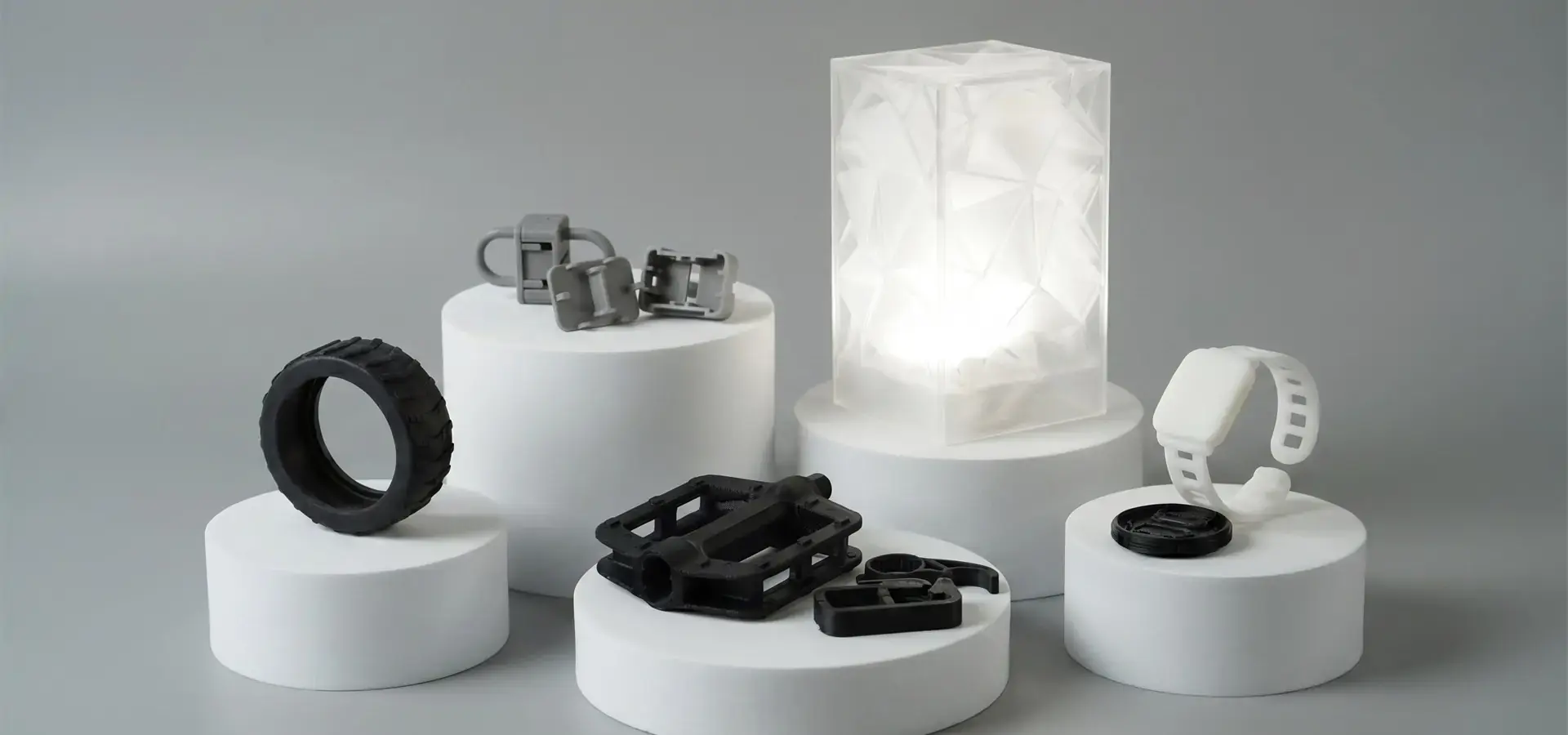
The consumer goods industry needs to be able to quickly change designs and test high-quality samples. With stereolithography, shells, housings, and internal structures for headphones, smart tech, and other small gadgets can be made with great detail and surface finish. These samples can be painted, plated, or textured to make them look like the end product, which lets stakeholders give useful feedback.
Procurement Considerations: Choosing the Right Industrial SLA 3D Printer for Accuracy and Surface Finish
To choose the right tools, you need to look at its technical specs, total cost of ownership, supplier name, and help after the sale. Smart purchasing choices maximize return on investment (ROI) and guarantee reliable performance over the long run.
Assessing Core Technical Specifications
Some important specs for an industrial SLA 3D Printer to look at are the laser spot size, the range of layer thicknesses, the scanning speed, the build volume, and the accuracy of the placement. Systems that have Panasonic servo motors, AOC lasers, and Scanlab galvanometers work better and are more stable. High-flatness mesh plate designs make sure that the resin is always level, which stops print flaws.
Open material systems that don't use private locks make it easy to try out and use new resins, which supports a wide range of uses and cuts down on costs. Being compatible with most 355 nm resins increases the number of materials that can be used and decreases the reliance on a single source.
Evaluating Total Cost of Ownership
Besides the purchase price, you should also think about the costs of repairs, replacement parts, the guarantee, and any downtime that might happen. Production interruptions are kept to a minimum with equipment that doesn't break down often and provides prompt after-sales support. A skilled after-sales team that can react within 24 hours makes sure that technical problems are fixed quickly, which keeps production plans on track.
Magforms' combined supply of materials and tools gets rid of problems with compatibility, which cuts down on wasted materials and unplanned downtime. The total cost of ownership goes down, and buying things is easier when hardware and products work together.
Importance of Supplier Reputation and Support
Suppliers you can trust with a history of delivering quality goods give you faith in the performance and longevity of your tools. Magforms has a strong history of innovation and intellectual property, as shown by its 22 patents and 30 protected brands. Magforms has a strong global market footprint and customer trust because its goods are sent to dozens of countries, and it works with over 300 businesses.
A dedicated after-sales team with a lot of experience in the field makes sure that installation, training, and continued help go smoothly. This type of service is very helpful for reducing downtime and increasing output.
Conclusion
An industrial SLA 3D Printer's accuracy and surface quality come from how well laser technology, material science, mechanical precision, and smart software work together. Procurement professionals can make choices that meet their production goals if they know about the important factors, such as laser spot size, layer thickness, scanning speed, environmental stability, and post-processing. Stereolithography is the best technology for aircraft, automobile, medical, and consumer electronics because it has the best surface finish and most accurate measurements. Buying high-quality tools from reputable sellers will give you long-term dependability, less downtime, and an edge in tough manufacturing settings.
FAQ
What dimensional accuracy can I expect from an Industrial SLA 3D Printer?
Most industrial stereolithography systems can make parts with a level of accuracy of ±0.1 mm for lengths up to 100 mm and ±0.1% × L for longer lengths. High-resolution laser spot sizes, accurate galvanometer scans, and servo motor placement accuracy of ±8 μm make this possible. Calibration, material choice, and environmental limits that are done right all improve precision even more.
How does surface finish compare to injection-molded parts?
Injection molding is still the standard for surface smoothness, but Industrial SLA 3D Printer systems can make parts with surface roughness (Ra) less than 1 μm. SLA parts can look a lot like injection-molded parts with little post-processing like sanding, painting, or sealing. This means they can be used for visual samples and low-volume production.
Can I use third-party resins with an Industrial SLA 3D Printer?
Many industrial systems have open material platforms that don't have proprietary locks. This means that most 355 nm photopolymer resins can be used with them. This gives users the freedom to try out new materials, cut prices, and change as the needs of their applications change. Always check with the equipment maker to make sure that the materials will work well together for the best performance.
Partner with a Trusted Industrial SLA 3D Printer Manufacturer for Superior Performance
Magforms makes sure that every industrial SLA 3D Printer they make is accurate, reliable, and full of new ideas. Our machines use top-notch parts, like AOC lasers, German Scanlab galvanometers, and Panasonic servo motors, to make sure that the accuracy is down to the micron level, the surface quality is top-notch, and the stability is the best in the business. With built-in temperature control, intelligent scanning systems, and open material compatibility that works with most 355 nm resins, Magforms tools help your team get faster response times, lower scrap rates, and lower total cost of ownership. We're ready to help you improve your production process with a skilled after-sales team that responds within 24 hours and provides full technical support. Get in touch with us at info@magforms.com to talk about your unique application needs and find out how working with a top industrial SLA 3D Printer source can change the way you make things.
References
1. Gibson, I., Rosen, D., & Stucker, B. (2015). Additive Manufacturing Technologies: 3D Printing, Rapid Prototyping, and Direct Digital Manufacturing. Springer.
2. Jacobs, P. F. (1992). Rapid Prototyping & Manufacturing: Fundamentals of Stereolithography. Society of Manufacturing Engineers.
3. Melchels, F. P., Feijen, J., & Grijpma, D. W. (2010). "A review on stereolithography and its applications in biomedical engineering." Biomaterials, 31(24), 6121-6130.
4. Stansbury, J. W., & Idacavage, M. J. (2016). "3D printing with polymers: Challenges among expanding options and opportunities." Dental Materials, 32(1), 54-64.
5. Ligon, S. C., Liska, R., Stampfl, J., Gurr, M., & Mülhaupt, R. (2017). "Polymers for 3D printing and customized additive manufacturing." Chemical Reviews, 117(15), 10212-10290.
6. Pagac, M., Hajnys, J., Ma, Q. P., Jancar, L., Jansa, J., Stefek, P., & Mesicek, J. (2021). "A review of vat photopolymerization technology: Materials, applications, challenges, and future trends of 3D printing." Polymers, 13(4), 598.

Magforms makes design and manufacture easier.
Popular Blogs
-
 Industry InsightsManufacturing Industry
FDM vs. SLA Printer: Which Technology Is Right for Your Project?
-
 Industry InsightsManufacturing Industry
Top 5 Applications of Industrial 3D Printers in Manufacturing Today
-
 Industry InsightsManufacturing Industry
Why Stereolithography 3D Printers Are Unmatched for Microfluidic Device Prototyping?