Is the P10 Pro Stereolithography 3D Printer Built for Industrial Demands?
The P10 Pro stereolithography 3D printer is made to meet the needs of businesses. This resin-based system meets important manufacturing needs by ensuring accurate engineering, dependable production processes, and compatibility with a wide range of industrial-grade materials. The machine is accurate to within 0.01 mm in all dimensions, has an industrial-grade Z-axis module with double guide rails, and can print 99% of the time thanks to resin settings that have been optimised. With a build space of 228 x 128 x 250 mm, a quick-release dual-module design, and a clever constant-temperature control system, it can work in settings where quality stability is important, and downtime costs a lot.
Understanding Stereolithography 3D Printing Technology
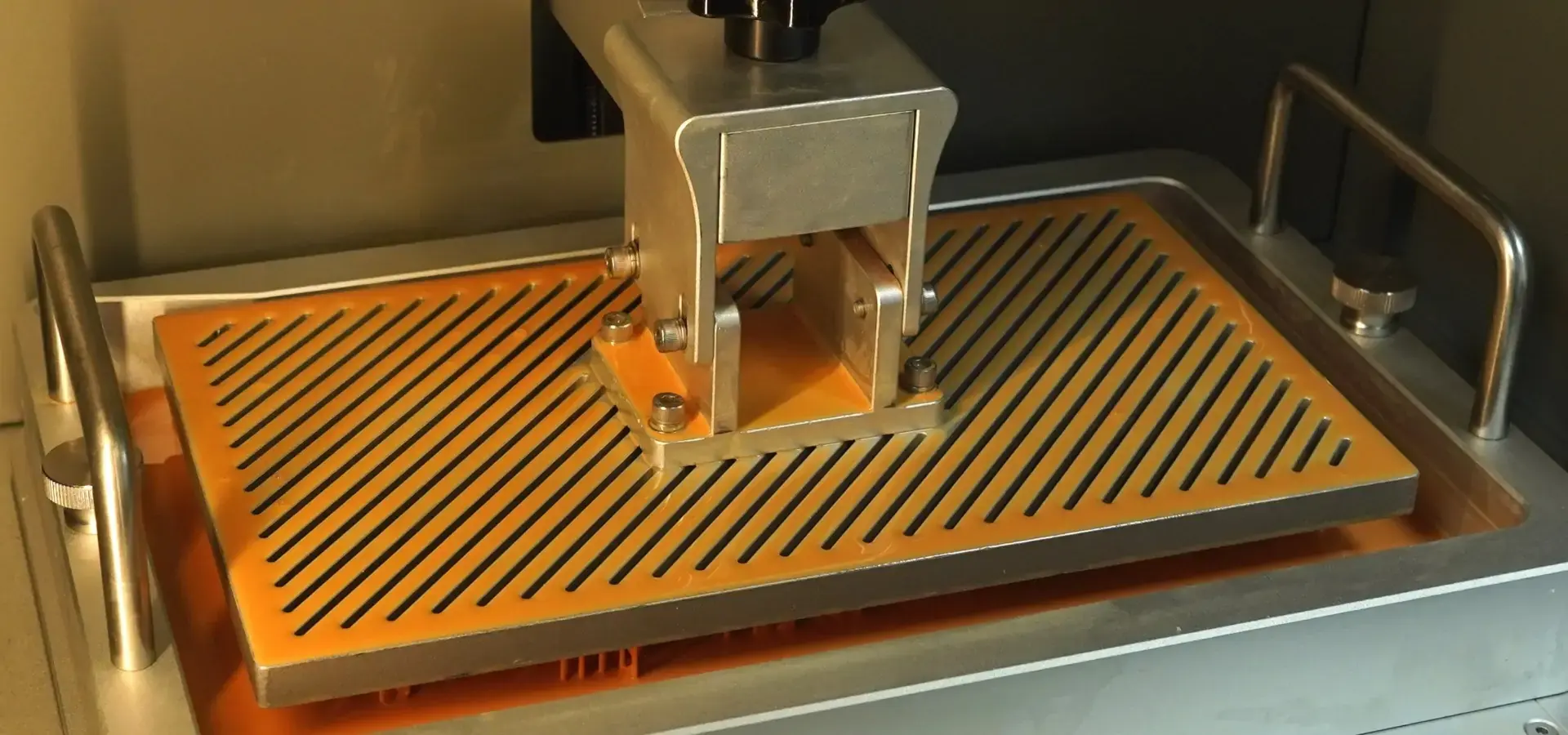
Stereolithography is one of the oldest and most accurate methods used in manufacturing today for additive manufacturing. Through controlled ultraviolet light exposure using an LCD masking system, this technology selectively cures liquid photopolymer resin layer by layer to create solid parts. The LCD panel masks ultraviolet light to project each cross-section of a CAD model onto the resin surface, curing an entire layer simultaneously. This starts a photochemical process that turns the resin into a solid. When a layer is finished, the build platform moves down by a set amount, and new resin runs over the surface that has hardened. This cycle will keep going until the whole thing comes out.
Core Components of Stereolithography Systems
Three important parts must move at the same time for the technology to work. Photopolymerization is driven by a 405nm UV LED light source working together with a high-resolution LCD masking screen that selectively exposes each layer. The resin vat contains the liquid photopolymer and uses a transparent release film, typically FEP, nFEP, or similar fluoropolymer materials, that allows UV light to pass through while reducing adhesion during layer separation. During the printing process, the build platform moves precisely into place and slowly lowers, making sure that each layer adheres correctly to the one below it.
Comparing LCD with Alternative Technologies
Stereolithography 3D printer technology produces parts with smoother surfaces and more uniform mechanical properties than Fused Deposition Modelling. FDM pushes polymer filament out, which makes layer lines that can be seen and lowers the Z-axis strength because the layers are mechanically stuck together. Digital Light Processing (DLP) and LCD-based stereolithography both cure entire layers simultaneously. DLP systems use a digital projector, while LCD systems use an LCD mask over a UV light source. Both technologies offer high productivity, although pixel-based exposure may introduce minor stair-stepping effects on curved surfaces. Compared with filament-based technologies, LCD stereolithography produces smoother surfaces and finer feature resolution, making it well suited for precision prototypes and functional resin parts, and complex shapes can get finishes as good as injection moulding without having to go through extra finishing steps in many cases.
Key Industrial Requirements and Challenges in LCD Printing
Manufacturing environments impose performance criteria that consumer-grade equipment cannot satisfy. Production teams need machines that deliver consistent dimensional accuracy across extended print runs, accommodate engineering-grade materials with specialized properties, and minimize unscheduled maintenance interruptions. The P10 Pro addresses these demands through design choices specifically targeting industrial reliability.
Performance Metrics That Matter
The resolution of a stereolithography 3D printer tells you how well the machine copies small details and surface textures. To keep limits on working parts, XY resolution is typically expected to be below 100 microns for industrial applications, while layer thickness control generally falls within the 25-50 micron range depending on the application. The size of the build determines how efficiently the product is made; bigger platforms cut down on the number of print cycles needed for batch production or can fit bigger samples without having to be cut up. It's not just normal resins that work with other materials; ABS-like resins with enhanced toughness, high-temperature resins with heat deflection temperatures suitable for demanding engineering applications, or Shore A flexibility for gaskets and seals are also compatible.
Operational Challenges in Production Environments
Traditional mSLA methods have a number of problems that slow down the manufacturing process. Dimensional drift can occur due to temperature variation, light-source inconsistency, mechanical wear, or Z-axis positioning errors during extended production runs. This leads to rejected parts and wasted material. Some makers require proprietary materials, which lock customers into expensive resin environments. This makes it harder to control costs and come up with new materials. When precision equipment breaks down, production losses are made worse by slow answers from technical help. This is because every hour of downtime means missed deliveries and less money coming in.
The P10 Pro helps address these challenges through several coordinated design features. Its industrial-grade Z-axis module has high-precision double guide rails and a strong screw system that keep the position of the parts accurate while they are being built. The steel shell construction keeps the temperature stable and the structure stiff, which stops flaws caused by shaking. There are pressure release holes in the build platform that lower the resin resistance during layer separation. This lowers the peel forces that can damage the FEP film or cause the print to fail. Together, these engineering features contribute to a reported print success rate of up to 99% under recommended operating conditions.
In-Depth Evaluation of the P10 Pro Stereolithography 3D Printer
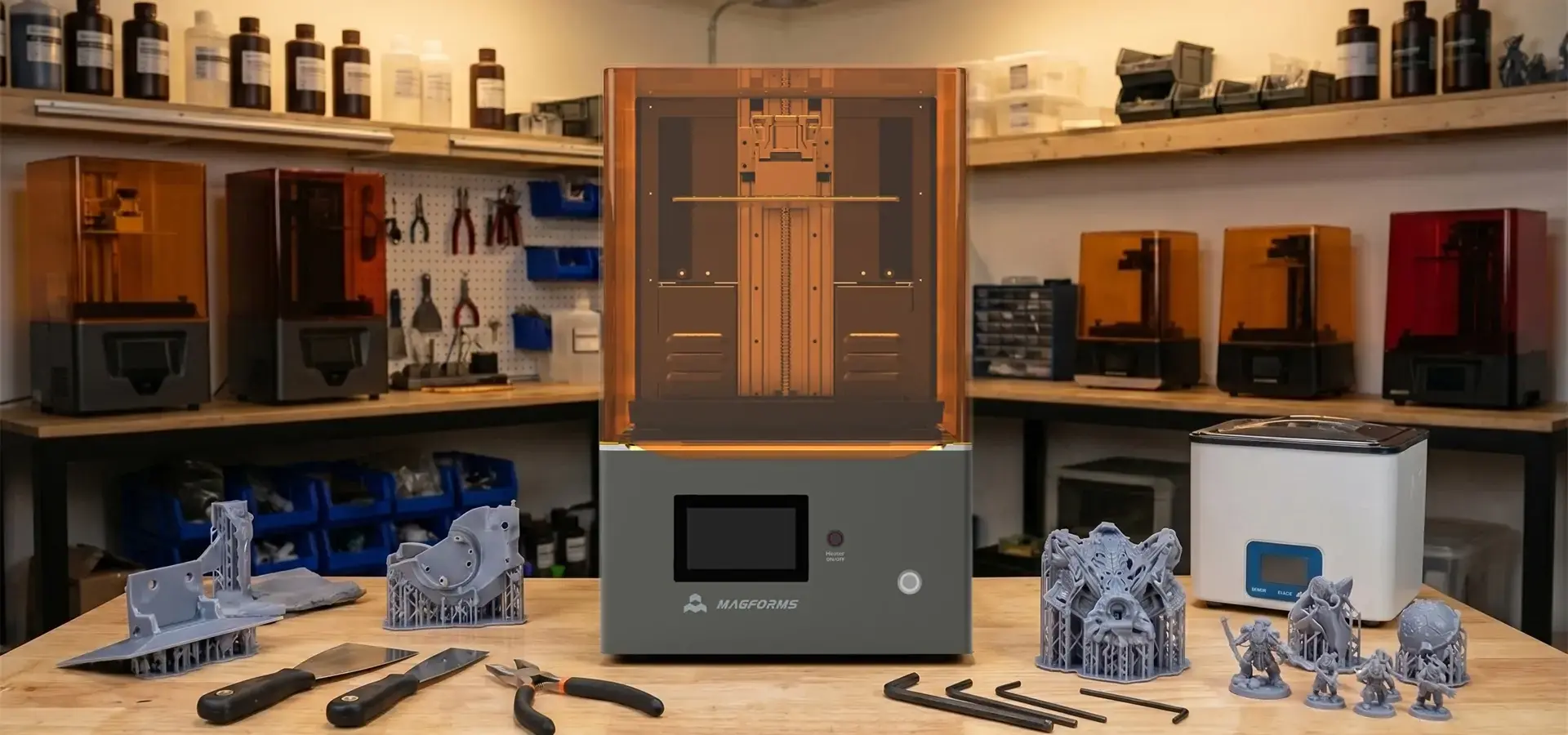
The P10 Pro distinguishes itself through specifications that align with industrial workflow requirements. Its 228×128×250mm build volume stands out among 10-inch-class machines, providing 25-40% more vertical clearance than competing models. This additional height accommodates taller prototypes or allows more parts to be nested vertically, improving batch efficiency.
Technical Specifications and Design Innovations
Several things about the machine show that it was made with industry in mind. The quick-release dual-module design makes servicing easier. The quick-release dual-module design simplifies maintenance and reduces downtime when replacing the resin vat or build platform assembly. This flexible design cuts down on downtime when switching between types of materials or doing regular cleaning. The smart constant-temperature control system maintains the resin within an optimal viscosity range, improving curing consistency and dimensional stability. This is especially helpful when working with industrial resins that can't be printed if the temperature changes outside of certain ranges.
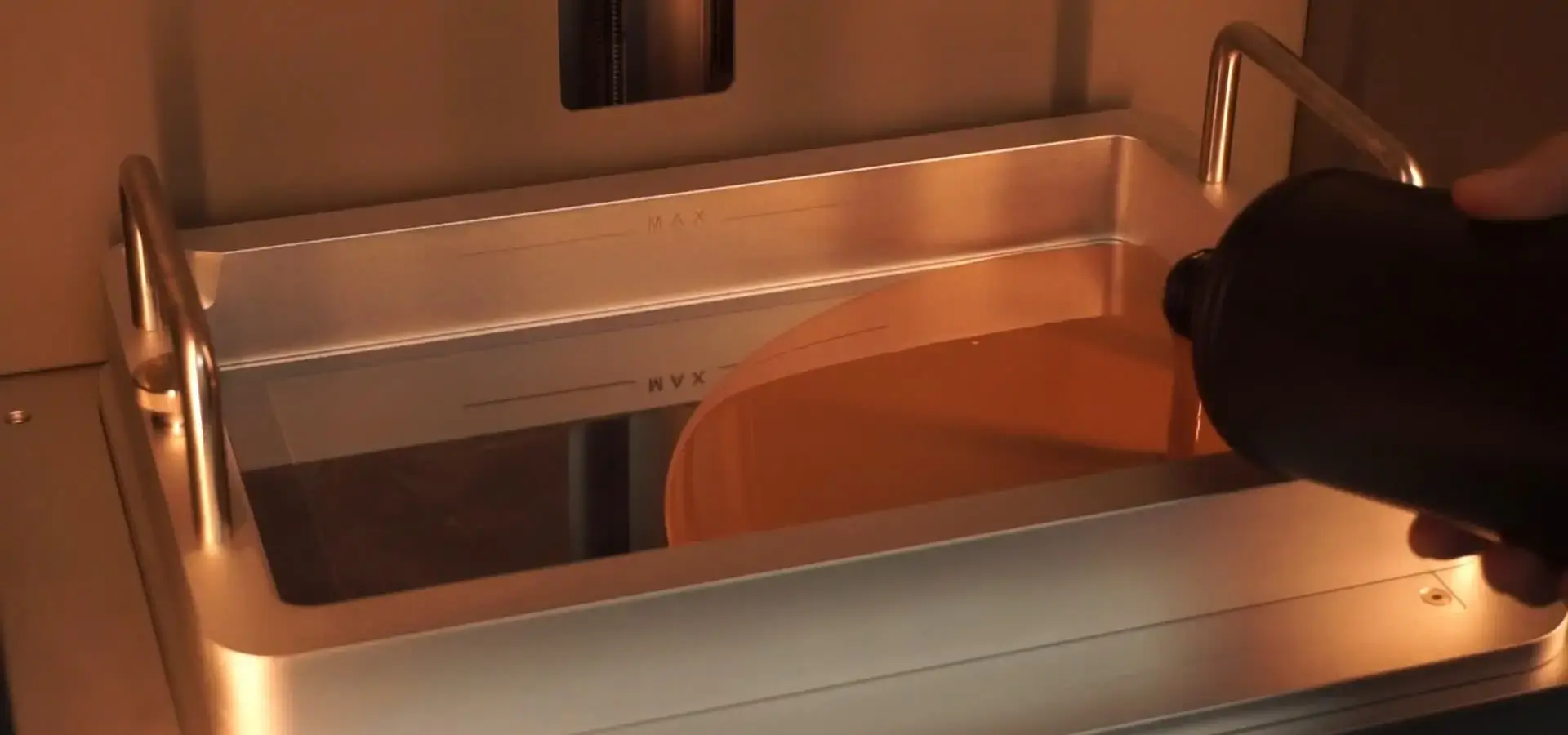
One more useful addition is the combined framed nFEP film. In traditional LCD systems, operators have to cut and stretch FEP sheets by hand, which affects the quality of the prints and takes time from technicians. The pre-framed film is easy to install and doesn't need any positioning changes or tools. Compared with conventional FEP film, nFEP offers lower release force and improved durability. This means that the machines will last longer between replacements and there will be fewer print problems due to film delamination.
Material Compatibility and Resin Performance
Here are the main benefits of this gadget when it comes to material flexibility:
Optimised Resin Parameters: The P10 Pro comes with tested parameter settings for several resin formulas, so you don't have to go through the trial-and-error process that usually comes with third-party materials. The exposure time, bottom-layer exposure, lift speed, retract speed, and light-off delay parameters in these patterns are set to match the photoreactive qualities of each material.
Engineering-Grade Material Support: The system can handle more than just normal resins. It can also handle tough resins for samples that will be put under mechanical stress, high-temperature formulas for testing heat deflection, and clear resins for optical uses or seeing fluidic channels.
Uniform Light Source Distribution: The optical system is designed to provide highly uniform light intensity across the build platform, helping maintain dimensional consistency throughout large print areas. This helps prevent underexposure near the edges of the build area, which can otherwise lead to dimensional inconsistencies or weakened structures.
In direct terms, these benefits solve production issues like wasted materials from failed prints, limited use due to limited material compatibility, and quality issues that may otherwise require destructive testing to identify. The P10 Pro is a good choice for production sites that work with a lot of different materials because its tech is reliable and it can work with a lot of different materials.
Performance Benchmarking
When compared to established competitors, the P10 Pro offers competitive positioning on the price-performance spectrum. Formlabs machines command premium pricing based on their ecosystem integration and user interface refinement, making them less accessible for budget-conscious manufacturing operations. Peopoly systems provide open-material platforms but often require more technical expertise to achieve consistent results. The P10 Pro bridges these extremes—delivering industrial-grade components and verified material profiles at a price point that justifies ROI for small to medium production volumes.
Practical Industrial Applications Enabled by the P10 Pro
Real-world application scenarios demonstrate where stereolithography 3D printer technology creates measurable business value. Production teams leverage the P10 Pro across diverse sectors, each with distinct requirements for accuracy, material properties, and production economics.
Rapid Prototyping in Automotive and Aerospace
Design verification cycles benefit enormously from LCD's combination of speed and accuracy. An automotive component supplier used the P10 Pro to produce customized interior trim prototypes, iterating through five design revisions in two weeks—a timeline that would have required six weeks using traditional CNC machining. The smooth surface finish allowed designers to evaluate aesthetics and ergonomics directly from printed parts without paint or finishing. An aerospace manufacturer validated complex ducting geometry for cabin air systems, identifying interference issues that CAD analysis had missed. The ability to produce complex geometries with minimal post-processing helped preserve the aerodynamic surfaces critical for testing.
Medical and Dental Device Manufacturing
Personalized medicine creates demand for one-off production capabilities. Dental labs utilize the P10 Pro to fabricate orthodontic aligner bases with patient-specific geometries derived from intraoral scans. The high dimensional accuracy helps achieve proper fit while reducing the need for manual adjustment, while the biocompatible resin options meet regulatory requirements for extended oral contact. Medical device prototyping extends to surgical guides that position drill bits or cutting instruments relative to patient anatomy, and to custom orthopedic implant validation models that surgeons use for pre-operative planning. These applications demand accuracy that FDM technology cannot reliably deliver and material properties that standard photopolymers cannot provide.
Tooling and Manufacturing Aids
Production teams create custom fixtures, jigs, and gauges tailored to specific assembly processes. A consumer electronics manufacturer printed soldering fixtures that held PCB components in precise alignment during reflow, replacing aluminum tooling that required three-week lead times and cost five times more per unit. The lightweight resin fixtures simplified operator handling and accommodated rapid design changes as product specifications evolved. Quality control departments print go/no-go gauges and measurement fixtures on-demand, maintaining calibration documentation digitally and eliminating the storage overhead of conventional gauge inventories.
These application areas share common requirements: dimensional accuracy that maintains functional tolerances, material properties suited to application-specific stresses, and production economics that justify internal manufacturing versus outsourcing. The P10 Pro's technical specifications align with these demands across multiple industrial sectors.
Procuring and Maintaining the P10 Pro for Business Use
Successful equipment adoption extends beyond initial purchase decisions to include operational integration and long-term support infrastructure. Manufacturing organizations need clear understanding of total cost of ownership, maintenance requirements, and vendor support capabilities.
Procurement Considerations for Industrial Buyers
Acquiring the P10 Pro involves evaluating several commercial factors. Pricing structures may include bulk purchase discounts for companies standardizing on a single platform across multiple facilities or departments. Financing options through equipment leasing arrangements can preserve capital for other investments while spreading costs across the useful life of the machine. Shipping terms matter for international buyers, particularly regarding customs classification, import duties, and transit insurance for precision equipment. Warranty coverage should specify response times for technical support, replacement part availability, and on-site service options for mission-critical installations.
Maintenance Protocols for Continuous Operation
Routine maintenance determines whether a stereolithography 3D printer delivers its theoretical reliability in real-world conditions. Calibration procedures verify that the build platform maintains perpendicularity to the Z-axis and that the LCD exposure system continues to deliver consistent dimensional accuracy across the build area. These checks should occur weekly in high-utilization environments or monthly in lighter-duty applications. Resin management involves proper storage in opaque containers to prevent premature polymerization from ambient light exposure, filtering to remove cured particles that could create print defects, and disposal following local environmental regulations for chemical waste.
The integrated framed nFEP film simplifies one of the most frequent maintenance tasks. Conventional FEP sheets develop clouding or scratches after 50-200 print hours depending on part geometry and peel forces, requiring replacement to maintain print quality. The P10 Pro's quick-installation film design reduces changeover time to under three minutes, and the more durable nFEP formulation extends replacement intervals by approximately 40% based on comparative testing. This reduces both direct material costs and indirect labor costs associated with maintenance downtime.
Troubleshooting capabilities separate machines that disrupt production from those that support it. The upgraded smart user interaction system provides diagnostic feedback when prints fail, identifying whether the root cause relates to resin properties, support structure design, environmental conditions, or mechanical issues. This accelerates problem resolution and reduces the technical expertise required to maintain print quality.
Conclusion
The P10 Pro stereolithography 3D printer delivers industrial-grade capabilities through purpose-built engineering decisions. Its precision mechanics support dimensional accuracy of up to 0.01 mm under optimized printing conditions, while the 99% success rate minimizes material waste and schedule disruptions. The machine's material compatibility extends beyond commodity resins to engineering polymers that meet application-specific requirements, and the integrated design features reduce maintenance overhead without compromising reliability. Manufacturing organizations across automotive, aerospace, medical, and electronics sectors can leverage these capabilities to accelerate product development cycles, produce custom tooling, and support small-batch production economics that traditional manufacturing methods cannot match.
FAQ
How does the P10 Pro compare to FDM 3D printers for industrial applications?
The P10 Pro stereolithography 3D printer produces parts with excellent surface quality and more uniform mechanical properties than typical FDM parts, although material performance still depends on print orientation and resin selection. FDM printers create layer lines and have weaker Z-axis strength due to the mechanical bonding between extruded layers rather than chemical bonding. The choice depends on application priorities—FDM suits functional parts where surface finish is secondary and material costs must remain minimal, while mSLA serves applications demanding precision, smooth surfaces, and detailed features.
What post-processing do parts from the P10 Pro require?
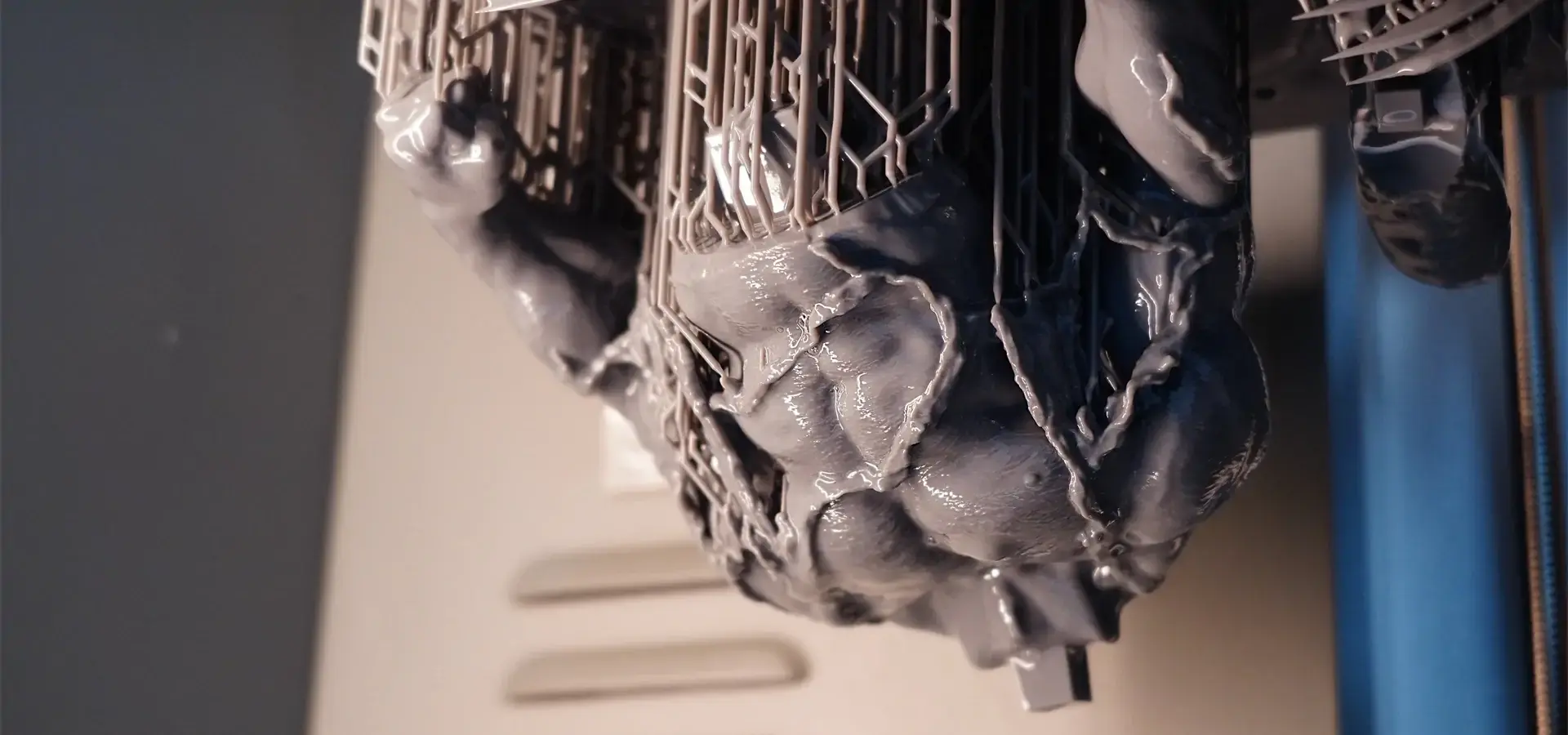
Parts produced by LCD-based stereolithography systems require post-processing, including solvent cleaning and UV post-curing, to achieve their intended mechanical properties and dimensional stability. The washing stage uses Isopropyl Alcohol or alternative solvents to remove uncured resin from surfaces and internal channels. Incomplete washing leaves tacky residue that prevents proper curing. The curing stage exposes parts to UV light in a controlled environment, completing the polymerization reaction and stabilizing mechanical properties. Curing duration varies by resin formulation and part thickness, typically ranging from 15 to 60 minutes.
Can the P10 Pro handle high-volume production?
The machine suits small to medium batch production and prototyping rather than mass manufacturing. The 99% success rate and reduced maintenance requirements support continuous operation, but throughput remains limited by the layer-by-layer build process. Production volumes of 50-500 parts per month align well with the P10 Pro's capabilities, particularly for applications requiring customization or frequent design changes where injection molding tooling costs cannot be justified.
Partner with Magforms for Your Industrial mSLA Needs
Magforms delivers comprehensive stereolithography 3D printer solutions that extend beyond hardware to include optimized resin materials, technical training, and responsive after-sales support. Our P10 Pro combines precision engineering with practical design features that address real production challenges. The integrated materials and equipment approach eliminates compatibility issues that plague mixed-vendor environments, while our decades of industry experience inform technical support that understands your manufacturing context. Whether you're establishing in-house prototyping capabilities or scaling custom production workflows, our team provides consultation to align equipment specifications with your operational requirements. Contact info@magforms.com to discuss how the P10 Pro fits your application needs, explore volume pricing as a qualified stereolithography 3D printer manufacturer, and receive sample parts demonstrating the quality your production demands.
References
1. Hull, C. W. (1986). "Apparatus for Production of Three-Dimensional Objects by Stereolithography." United States Patent 4,575,330.
2. Gibson, I., Rosen, D., & Stucker, B. (2021). Additive Manufacturing Technologies: 3D Printing, Rapid Prototyping, and Direct Digital Manufacturing (3rd ed.). Springer International Publishing.
3. ASTM International. (2021). "Standard Terminology for Additive Manufacturing—General Principles—Terminology." ASTM F2792-12a.
4. Jacobs, P. F. (1992). Rapid Prototyping & Manufacturing: Fundamentals of Stereolithography. Society of Manufacturing Engineers.
5. Stansbury, J. W., & Idacavage, M. J. (2016). "3D Printing with Polymers: Challenges among Expanding Options and Opportunities." Dental Materials, 32(1), 54-64.
6. Quan, H., Zhang, T., Xu, H., Luo, S., Nie, J., & Zhu, X. (2020). "Photo-Curing 3D Printing Technique and Its Challenges." Bioactive Materials, 5(1), 110-115.

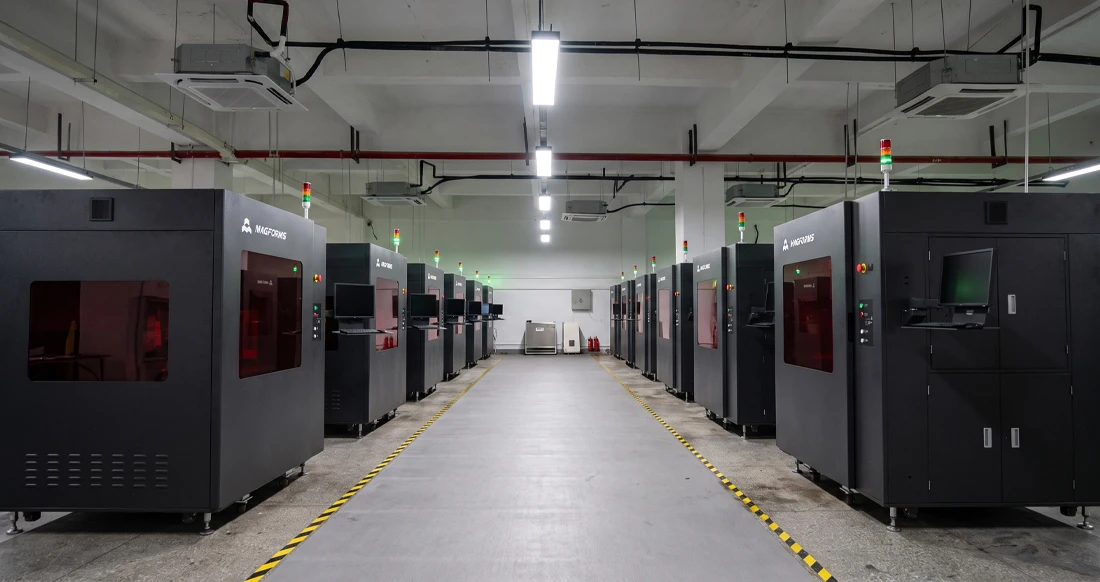
Magforms makes design and manufacture easier.
Popular Blogs
-
 Industry InsightsManufacturing Industry
FDM vs. SLA Printer: Which Technology Is Right for Your Project?
-
 Industry InsightsManufacturing Industry
Top 5 Applications of Industrial 3D Printers in Manufacturing Today
-
 Industry InsightsManufacturing Industry
Why Stereolithography 3D Printers Are Unmatched for Microfluidic Device Prototyping?