What Features Make the Stereolithography 3D printer P10 Pro Unique?
The stereolithography 3D printer P10 Pro stands out in the competitive additive manufacturing landscape by addressing persistent industry challenges: high failure rates, inconsistent precision, material incompatibility, and limited after-sales support. With a 99% printing success rate, industrial-grade construction, micron-level accuracy within 0.01mm, and a spacious 228×128×250mm build volume, the P10 Pro delivers exceptional performance tailored for multi-industry enterprises. This article explores the specific features positioning the P10 Pro as a transformative solution for businesses demanding reliability and precision in resin-based printing.
Understanding the Fundamentals of the P10 Pro Stereolithography 3D Printer
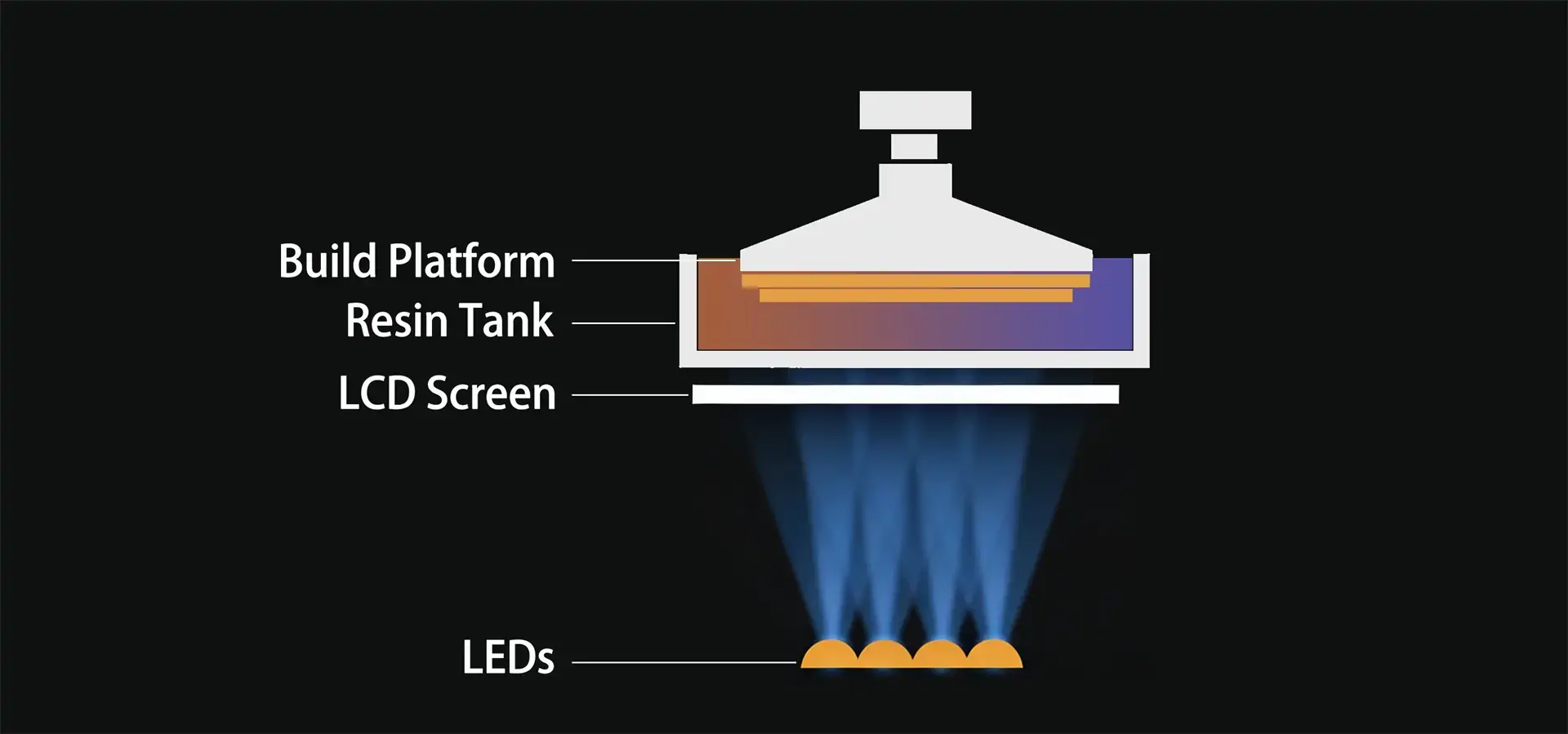
The P10 Pro works by using vat photopolymerization (LCD-based mSLA technology), in which a high-precision UV LED light source passes through an LCD masking screen to cure liquid photopolymer resin layer by layer. Unlike filament-based systems that struggle with surface quality and dimensional consistency, this stereolithography 3D printer produces watertight parts with surface finishes comparable to those of injection‑molded components. A high-intensity UV LED light source combined with a high-resolution LCD exposure system forms the core of the optical engine, enabling precise pixel-level curing across the build platform. This ensures consistent pixel-level exposure across the entire build platform.
An industrial-grade Z-axis module, two linear guide rails, and precise screws make up the heart of the P10 Pro. This mechanical base eliminates vertical wobble, which is critical for maintaining layer alignment during long print jobs. The steel shell construction makes the structure even more rigid, which protects delicate optical parts from the shocks that happen in production facilities. These engineering choices directly address the measurement drift issues common in budget machines during batch production runs.
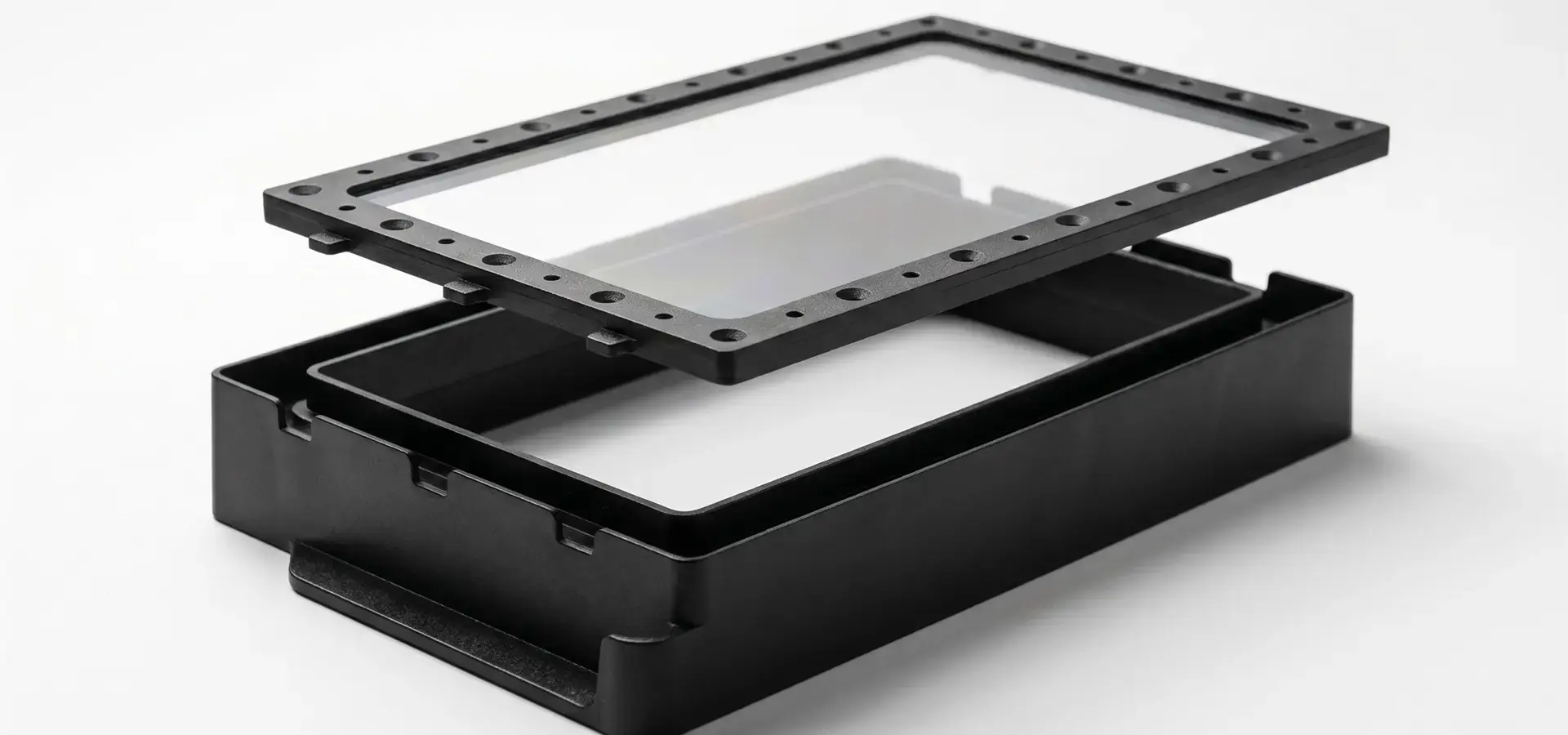
Material handling is also taken into account by designing the resin vats more efficiently. The integrated framed nFEP film has several advantages over traditional FEP: it has better release properties that lower the peel forces during layer separation; it lasts longer, so it doesn't need to be replaced as often; and it's easy to install because it doesn't require cutting or tensioning. Magforms'specially formulated resins work with pre-set print profiles to ensure chemical compatibility, preventing surface delamination, incomplete curing, or other defects. This integrated material and system approach differs significantly from open-platform resin printers, which typically require extensive parameter tuning.
With its intuitive interface and powerful slicing engine, the industrial software suite accelerates process integration. With adaptive exposure control technology, the effective pixel exposure can be optimized based on model geometry and layer requirements, improving detail accuracy and print efficiency. High-resolution pixel control enables fine detail reproduction, while optimized exposure areas improve efficiency for larger solid regions. Optimized slicing and exposure path planning minimize peel-cycle delays and exposure redundancy, improving printing efficiency compared with conventional LCD-based stereolithography systems. Built-in monitoring systems track key printing parameters in real time and alert operators immediately if issues such as resin level, temperature, or mechanical abnormalities occur that may affect print quality.
Unique Technological Advantages of the P10 Pro
The P10 Pro demonstrates engineering refinement addressing pain points documented across 3D printing service bureaus, automotive prototyping shops, and dental laboratories. Traditional equipment suffers from dimensional inconsistencies as hardware components degrade, leading to material waste and production delays during overnight prints. The P10 Pro's construction eliminates these vulnerabilities through deliberate design choices validated across thousands of operational hours.
Unmatched Print Reliability Through Intelligent Platform Design
Pressure relief holes incorporated into the build platform represent a subtle yet impactful innovation. During layer peeling, suction forces between cured resin and the vat film can reach significant magnitudes, particularly for large cross-sectional areas. These forces stress mechanical components and risk part detachment or support structure failure. The relief holes allow trapped resin to escape, equalizing pressure which can help reduce peel forces during layer separation by improving resin flow and pressure balance. Combined with optimized resin parameters and system calibration, the platform is designed to achieve high print reliability in production environments.
Industrial-Grade Durability for Continuous Operation
Production environments demand equipment that can withstand sustained use without performance degradation. The P10 Pro's industrial Z-axis module employs hardened steel components rated for hundreds of thousands of cycles, far exceeding the lifespan of aluminum extrusion systems common in prosumer machines. The steel shell provides thermal stability, preventing expansion-contraction cycles that introduce layer shifting in temperature-fluctuating workshops.
Extended service lifetime directly impacts total cost of ownership calculations. While initial investment considerations matter, procurement directors evaluate equipment replacement frequency and maintenance expenses over five-year periods. The P10 Pro's robust construction minimizes unplanned downtime—precision equipment repairs often require weeks for parts procurement and technician scheduling. Magforms' years of industry experience inform preventive maintenance recommendations, helping customers establish service intervals avoiding disruptive failures.
Expanded Build Volume Without Compromising Precision
The 228×128×250mm build envelope positions the P10 Pro favorably among 10-inch stereolithography 3D printers. This capacity accommodates larger automotive components like dashboard trim sections, permits batch printing of multiple dental models, and enables footwear designers to prototype full-size shoe midsoles. Competitors often sacrifice precision when scaling to larger formats, as optical path lengths introduce distortion and mechanical deflection increases with platform size.
The P10 Pro maintains stable precision control within 0.01mm across the entire build volume through compensated optical systems and reinforced mechanical structures. Double guide rails distribute load evenly, preventing cantilever deflection during Z-axis movements. This consistency proves essential for applications requiring tight tolerances—aerospace connectors with precise thread engagements, medical device components interfacing with regulatory-approved assemblies, or consumer electronics housings matching injection-molded counterparts within microns.
Modular Architecture Simplifying Maintenance and Upgrades
The quick-release dual-module design allows technicians to swap key components without specialized tools or extensive disassembly. Resin vats detach via simple latch mechanisms, facilitating material changes between engineering resins, flexible formulations, or high-temperature variants. Optical modules can be upgraded as LCD or UV LED technology advances, protecting long-term equipment investment.
Intelligent Environmental Controls Enhancing Consistency
An intelligent constant-temperature control system maintains optimal resin viscosity throughout printing. Photopolymers exhibit temperature-sensitive flow characteristics—excessive viscosity impedes smooth coating between layers, while reduced viscosity causes over-spreading, compromising dimensional accuracy. The P10 Pro monitors and adjusts heating elements continuously, compensating for ambient temperature variations common in non-climate-controlled production areas.
More uniform light source distribution ensures consistent exposure across the build platform. Uneven curing creates internal stresses manifesting as warping or microcracking during post-processing. The P10 Pro's optical design delivers intensity variations under 3% across the working area, validated through photometric testing. This uniformity proves particularly valuable for dental applications requiring predictable shrinkage characteristics and medical prototypes where material properties must remain consistent throughout complex geometries.
The high-efficiency air filtration system addresses health and safety concerns associated with resin vapors. Activated carbon filters capture volatile organic compounds released during printing, maintaining air quality below occupational exposure limits. This feature allows installation in shared laboratory spaces without requiring dedicated ventilation infrastructure—important for small businesses and research institutions operating in multi-use facilities.
Comparing the P10 Pro With Other SLA and Resin-Based Printers
Evaluating the P10 Pro against competing technologies clarifies its positioning within the additive manufacturing ecosystem. Each printing method offers distinct advantages; selecting appropriate equipment depends on application requirements, production volumes, and quality expectations.
Stereolithography Versus FDM Technology
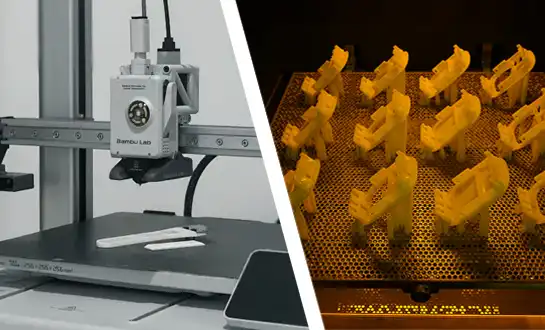
Fused deposition modeling remains popular due to low equipment costs and straightforward operation. However, FDM produces visible layer lines requiring extensive sanding, struggles with overhangs necessitating support removal, and exhibits anisotropic mechanical properties—parts fail along layer boundaries under stress. The P10 Pro eliminates these limitations through its LCD-based mSLA stereolithography 3D printing approach, delivering near-isotropic mechanical properties and a smooth surface finish directly after printing. Automotive designers evaluating aerodynamic prototypes or consumer electronics engineers assessing ergonomic housings gain accurate representations impossible with layer-stacking technologies.
Advantages Over DLP Systems
Digital light processing (DLP) systems cure entire layers using a projected light image, while LCD-based mSLA systems like the P10 Pro use an LCD mask to selectively block or transmit UV light at pixel level, producing highly consistent layer exposure. While both DLP and LCD are pixel‑based technologies, DLP projection can introduce optical distortion or pixel blooming that affects edge definition on curved surfaces. The P10 Pro's high‑resolution LCD masking system provides consistent pixel‑level control, contributing to smoother surface finish and fine detail reproduction—critical for aesthetic prototypes and sealing surfaces. Additionally, DLP systems may experience projector degradation over time, while LCD‑based systems require periodic LCD panel replacement to maintain optimal exposure quality. The UV LED light source in the P10 Pro delivers consistent output with minimal degradation, and the optical path remains stable, ensuring reliable long‑term operation when routine maintenance is performed.
Desktop Versus Industrial Stereolithography
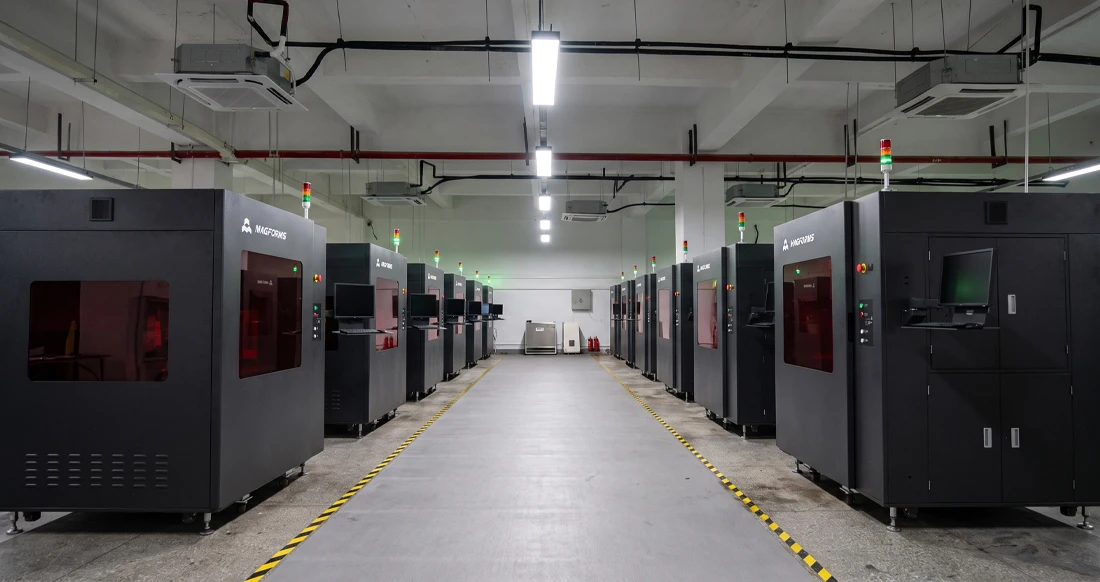
Desktop resin printers democratized high-resolution printing for hobbyists and small studios. These machines utilize similar photopolymerization principles but incorporate plastic frames, smaller build volumes, and consumer-grade components. The P10 Pro bridges the gap between desktop accessibility and industrial reliability—compact enough for laboratory benches yet robust enough for production environments. Service bureaus scaling operations appreciate this balance: desktop machines cannot sustain continuous operation, while large-format industrial systems exceed space and budget constraints for emerging businesses.
Positioning Against Established Brands
Comparing the P10 Pro to offerings from Formlabs and 3D Systems reveals competitive differentiation. Established brands command premium pricing justified by brand recognition and mature ecosystems. However, these manufacturers often lock customers into proprietary resin cartridges priced significantly above market rates—a pain point for cost-conscious operations. Magforms' open-material approach combined with optimized proprietary formulations provides flexibility: customers access competitive pricing while benefiting from validated parameter sets eliminating guesswork. This strategy particularly appeals to procurement directors balancing performance requirements against total operational costs.
Practical Applications and Industry Use Cases of the P10 Pro
The stereolithography 3D printer P10 Pro serves diverse sectors requiring precision, reliability, and material versatility. Real-world applications demonstrate how specific features address industry-specific challenges.
Aerospace and Automotive Rapid Prototyping
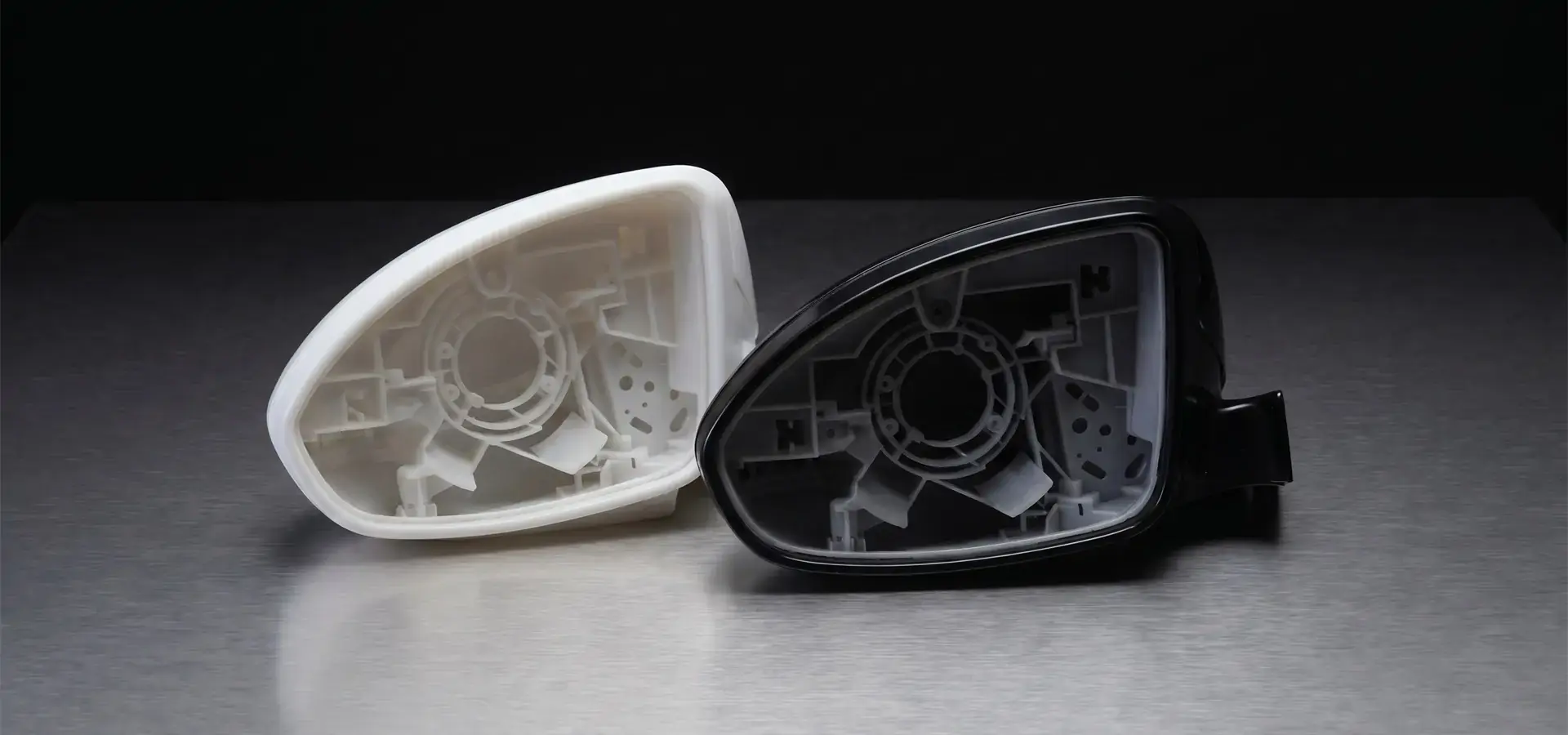
Aerospace component development demands tight tolerances and material traceability. The P10 Pro's 0.01mm precision enables validation of complex geometries like turbine blade cooling channels or lightweight lattice structures before committing to expensive metal fabrication. Automotive teams leverage the large build volume for dashboard prototypes, iterating ergonomic designs and verifying fit with surrounding components. The 99% success rate ensures critical design reviews proceed on schedule without last-minute scrambling to reprint failed parts.
Adaptive LCD exposure control and optimized light masking strategies accelerate iteration cycles—design modifications tested within days rather than weeks waiting for CNC machining or silicone mold tooling. This responsiveness proves decisive in competitive markets where reducing time-to-market by weeks translates to significant revenue advantages. Magforms' 22 patents underpin technological innovations enabling these performance levels, validated through application testing in automotive prototyping environments.
Dental and Medical Device Manufacturing
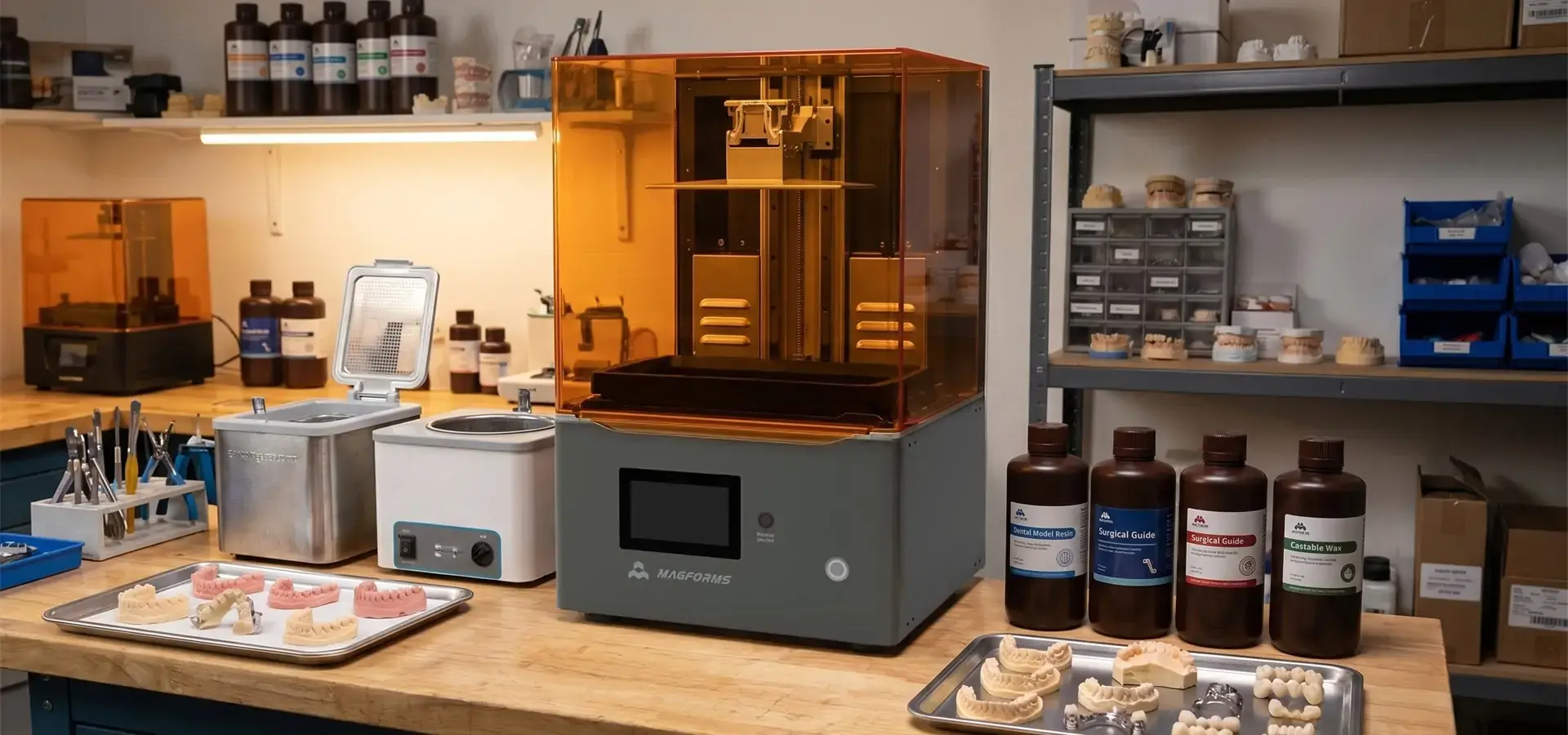
Dental laboratories produce custom aligners, surgical guides, and crown models requiring biocompatible materials and precise dimensional control. The P10 Pro supports specialized resins meeting FDA and CE regulatory standards, with validated print parameters ensuring repeatability across production runs. The nFEP film's non-stick surface prevents model damage during removal, maintaining delicate features like interdental spaces and margin lines.
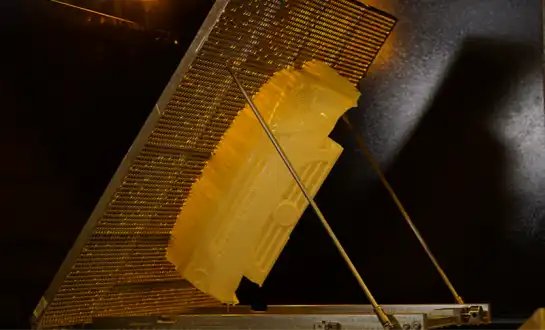
Medical device prototyping benefits from watertight geometries essential for fluid-handling components. Traditional manufacturing methods struggle with complex internal channels found in microfluidic diagnostic devices or drug delivery systems. The P10 Pro produces these intricate paths accurately, enabling functional testing before investing in injection mold tooling. Hospitals and research institutions appreciate the modular architecture—dedicated resin vats prevent cross-contamination between material types, critical for maintaining medical-grade cleanliness standards.
Consumer Electronics and Wearable Devices
The fast-paced consumer electronics industry demands rapid prototyping supporting weekly design iterations. Headphone manufacturers test acoustic chamber geometries, smartwatch developers evaluate ergonomic wrist contours, and accessory designers validate snap-fit mechanisms. The P10 Pro's material versatility spans rigid engineering resins for structural housings, flexible formulations simulating silicone grips, and transparent resins enabling optical component integration.
Batch printing capabilities maximize productivity—multiple design variations or complete assemblies print simultaneously, accelerating comparative evaluations. The intelligent temperature control ensures consistent curing across all models, eliminating the frustration of discovering one variant failed while others succeeded. This reliability matters intensely when coordinating design reviews involving stakeholders across time zones where reprinting delays cascade through project schedules.
Cultural Creative and Footwear Innovation
Art conservators replicate delicate artifacts for museum displays, fashion designers prototype intricate jewelry components, and footwear companies develop midsole geometries optimizing cushioning performance. The P10 Pro's surface finish quality reduces post-processing labor—many applications require only light support removal and brief UV curing. The uniform light source distribution ensures decorative textures and fine engravings reproduce faithfully across production runs.
Footwear applications particularly benefit from the large build volume accommodating full-size shoe lasts. Designers iterate cushioning patterns, test cleat configurations, or develop custom orthotics tailored to individual biomechanics. Material compatibility extends to flexible resins mimicking rubber durometers, enabling functional wear testing before committing to expensive mold tooling for production rubber components.
Procurement Considerations for the P10 Pro SLA 3D Printer
Purchasing decisions extend beyond technical specifications to encompass total cost of ownership, vendor reliability, and long-term support. Magforms addresses procurement concerns through transparent processes and comprehensive service packages.
Transparent Pricing and Flexible Acquisition Models
The P10 Pro pricing reflects its positioning between desktop and large-format industrial systems—accessible for growing businesses while delivering production-grade performance. Magforms offers volume discounts for multi-unit purchases, attractive to service bureaus expanding capacity or research institutions equipping multiple laboratories. Financing options accommodate capital budget constraints, spreading costs across fiscal periods while equipment generates revenue through prototyping services or internal cost savings versus outsourcing.
Procurement managers appreciate detailed quotes encompassing installation, training, and warranty coverage. Hidden costs plague equipment purchases—surprise charges for basic accessories, mandatory service contracts, or proprietary consumables. Magforms provides transparent breakdowns enabling accurate budgeting and lifecycle cost modeling supporting capital approval processes.
Comprehensive Support Infrastructure
Magforms' excellent technical support team draws on years of industry expertise for P10 Pro, troubleshooting issues rapidly through email (info@magforms.com), video conferencing, or on-site visits depending on complexity. Customers receive professional setup ensuring mechanical calibration, optical alignment, and software configuration meet specifications before accepting delivery. Training programs cover operation, routine maintenance, and troubleshooting, empowering staff to maximize equipment utilization.
Preventive maintenance schedules recommend inspection intervals and replacement part stocking strategies, minimizing unplanned downtime. Magforms maintains parts inventory domestically, shipping critical components within days rather than weeks from overseas warehouses. This responsiveness proves essential for production environments where printer downtime halts revenue-generating activities or delays customer commitments.
Global Market Presence and Proven Reliability
Magforms' products serve over 300 enterprises across dozens of countries, with 30 registered trademarks protecting brand integrity and 22 patents securing technological innovations. Active participation in industry exhibitions across Europe and Asia demonstrates ongoing commitment to market engagement and technology advancement. Belt and Road Initiative partnerships facilitate technology transfer and local support networks, important for international customers requiring regional service access.
Verified testimonials from automotive manufacturers, dental laboratories, and aerospace suppliers validate performance claims and service quality. Procurement committees often require reference checks; Magforms facilitates customer connections, enabling frank discussions regarding equipment reliability, support responsiveness, and long-term satisfaction. This transparency builds trust essential for major capital investments.
Material Ecosystem and Operating Flexibility
Unlike manufacturers forcing proprietary consumables, Magforms supports both optimized in-house resins and third-party materials. Validated parameter sets for common engineering, dental, and specialized resins streamline material adoption—customers access competitive pricing while benefiting from Magforms' testing, eliminating trial-and-error waste. This open approach contrasts sharply with competitors using RFID-chipped cartridges or firmware restrictions preventing cost-effective material sourcing.
Operating flexibility extends to software integration. The P10 Pro accepts standard STL and other common file formats, compatible with popular CAD and slicing applications. This interoperability matters for businesses with established digital workflows—forcing software changes disrupts productivity and requires staff retraining. Magforms' approach respects customer investments in existing toolchains while providing advanced features through optional proprietary software for users seeking optimization.
Conclusion
The P10 Pro stereolithography 3D printer distinguishes itself through deliberate engineering addressing persistent industry pain points: a consistently high print success rate across validated applications, industrial construction ensures years of reliable operation, 0.01mm precision delivers demanding tolerances, and thoughtful design choices like pressure relief holes and integrated nFEP film streamline workflows. Magforms' integrated materials-and-equipment approach, backed by 22 patents and serving 300+ global enterprises, positions the P10 Pro as a compelling solution for businesses requiring production-grade performance without enterprise-level complexity. Whether supporting automotive prototyping, dental customization, or aerospace validation, the P10 Pro delivers consistent results, enabling confident decision-making and accelerated development cycles.
The P10 Pro is best categorized as an industrial-grade LCD (mSLA) stereolithography 3D printer, combining high-resolution masked exposure technology with robust mechanical architecture. This positions it between entry-level desktop resin printers and high-end industrial SLA systems, offering a balance of precision, cost efficiency, and operational stability for professional manufacturing environments.
FAQ
1. What resin types does the P10 Pro support?
The P10 Pro accommodates standard, engineering-grade, dental, biocompatible, flexible, transparent, and high-temperature resins. Magforms provides validated print parameters for proprietary formulations, ensuring optimal results while maintaining compatibility with third-party materials, offering procurement flexibility and cost optimization opportunities depending on application requirements.
2. How does the P10 Pro achieve 99% success rates?
The high print success rate is achieved through a combination of mechanical stability, optimized peel-force management, validated resin profiles, and controlled thermal conditions. Thousands of operational hours validate these design choices across diverse production environments.
3. What warranty and support does Magforms provide?
Comprehensive warranty packages cover mechanical and optical components, protecting investment against manufacturing defects. Responsive technical support via email, phone, and video conferencing resolves issues rapidly. Professional installation, operator training, and preventive maintenance guidance ensure customers maximize equipment uptime and lifespan throughout ownership.
Partner With Magforms for Precision Additive Manufacturing Solutions
Magforms, a trusted stereolithography 3D printer manufacturer serving 300+ enterprises globally, invites you to experience the P10 Pro difference. Our integrated materials-and-equipment approach, backed by 22 patents and extensive industry expertise, delivers reliability, precision, and productivity unmatched in its class. Contact our procurement specialists at info@magforms.com to discuss tailored solutions including volume pricing, financing options, and comprehensive training programs. Elevate your prototyping capabilities and production efficiency with technology proven across automotive, aerospace, medical, and consumer electronics applications. Schedule a demonstration today and discover why leading manufacturers choose Magforms for their critical additive manufacturing needs.
References
1. Gibson, I., Rosen, D., & Stucker, B. (2021). Additive Manufacturing Technologies: 3D Printing, Rapid Prototyping, and Direct Digital Manufacturing (3rd ed.). Springer.
2. Jacobs, P. F. (1992). Rapid Prototyping and Manufacturing: Fundamentals of Stereolithography. Society of Manufacturing Engineers.
3. Melchels, F. P., Feijen, J., & Grijpma, D. W. (2010). A review on stereolithography and its applications in biomedical engineering. Biomaterials, 31(24), 6121-6130.
4. Quan, H., Zhang, T., Xu, H., Luo, S., Nie, J., & Zhu, X. (2020). Photo-curing 3D printing technique and its challenges. Bioactive Materials, 5(1), 110-115.
5. Stansbury, J. W., & Idacavage, M. J. (2016). 3D printing with polymers: Challenges among expanding options and opportunities. Dental Materials, 32(1), 54-64.
6. Tofail, S. A., Koumoulos, E. P., Bandyopadhyay, A., Bose, S., O'Donoghue, L., & Charitidis, C. (2018). Additive manufacturing: Scientific and technological challenges, market uptake and opportunities. Materials Today, 21(1), 22-37.

Magforms makes design and manufacture easier.
Popular Blogs
-
 Industry InsightsManufacturing Industry
FDM vs. SLA Printer: Which Technology Is Right for Your Project?
-
 Industry InsightsManufacturing Industry
Top 5 Applications of Industrial 3D Printers in Manufacturing Today
-
 Industry InsightsManufacturing Industry
Why Stereolithography 3D Printers Are Unmatched for Microfluidic Device Prototyping?