P7 Pro Desktop 3D Printer with Large Build Volume Advantages
In the past few years, additive manufacturing has evolved significantly. Desktop 3D printers used to be just fun toys, but now they are necessary tools for production. Now, people who buy things for businesses know that picking the right desktop resin printer isn't just about comparing prices. They also need to look at things like accuracy, heat stability, material compatibility, and reliability in the real world. The P7 Pro is a professional LCD resin desktop 3D printer designed for demanding applications such as jewellery casting, dental model production, and precision prototyping, where dimensional consistency and fine feature reproduction directly impact production quality. Rapid development is being used more and more in fields like medical devices and cars, which has increased the need for home 3D printers that produce professional-grade results at reasonable prices. Smaller businesses haven't been able to compete with bigger ones in the past because of problems like being sensitive to temperature, uneven layer bonding, and limited material choices. The P7 Pro faces these problems head-on with smart engineering and performance that has been tested in a wide range of industrial settings.
Understanding the Significance of Build Volume and Precision in Resin 3D Printing
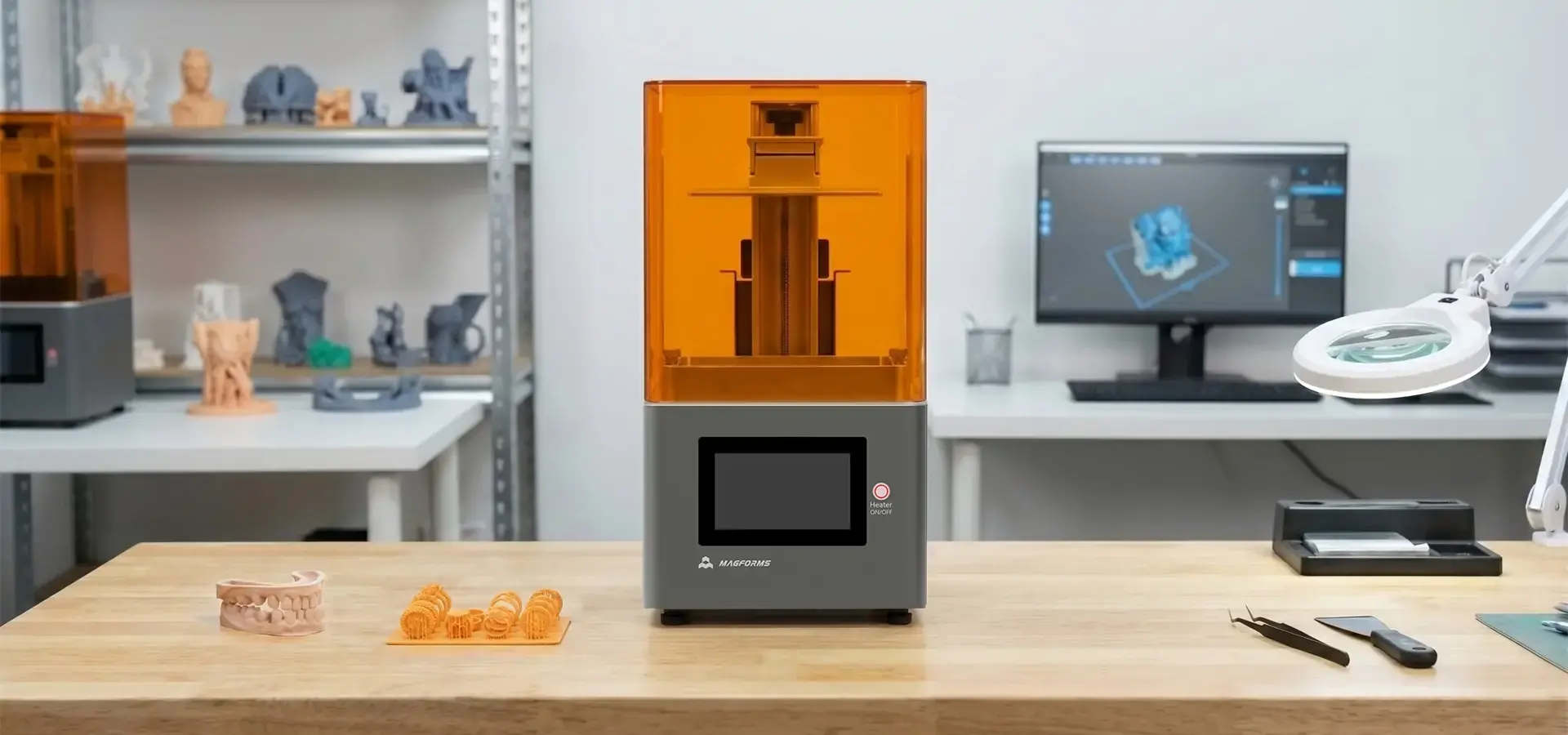
Build volume tells you the biggest item that a printer can make in one job. It has a direct effect on how quickly and easily you can make things. It's not always better to go bigger, but having enough room to build keeps you from having to divide models or do a lot of small runs, which waste time and plastic. The P7 Pro's working area is 153.36 × 77.76 × 160 mm, which is just the right size. It's big enough to hold full jewellery trees, multi-unit dental models, or complex mechanical prototypes, but small enough to fit on normal workbenches without taking up too much floor room.
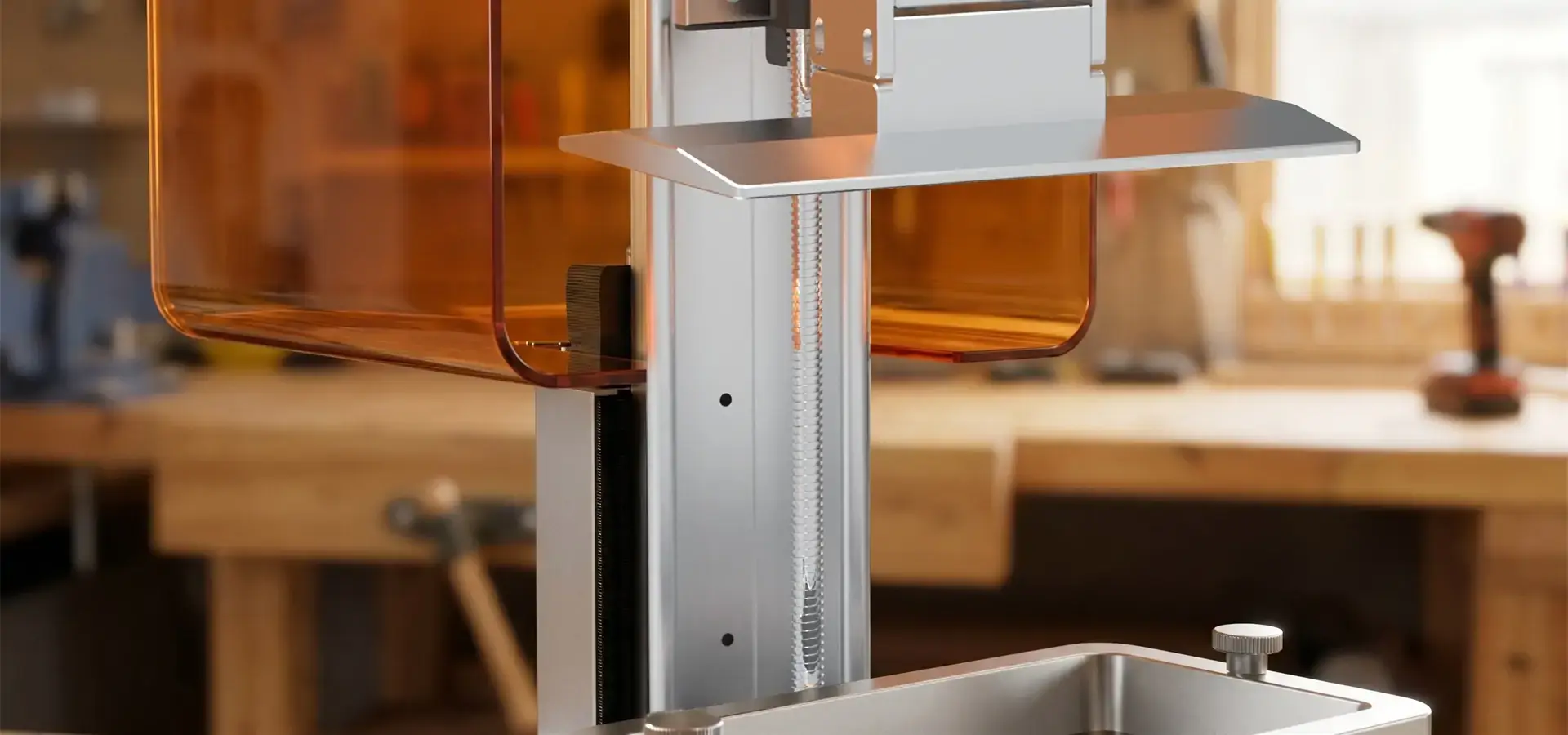
When making useful parts, the link between build volume and printing accuracy is much more important than just simple measurements. To keep the build plate from warping or losing its shape, desktop resin printers need to make sure that the light hits it evenly and that the Z-axis moves smoothly across the whole thing. This problem is solved by the P7 Pro's P-grade industrial-precision linear tracks, which ensure smooth, repeatable motion with minimal backlash. This contributes to highly repeatable layer positioning and dimensional consistency across the build platform, helping produce detailed parts with excellent surface quality and stable accuracy.
Why Micron-Level Accuracy Matters
The Imadjust grayscale optimization algorithm enhances edge rendering and feature definition by intelligently controlling pixel exposure on the 6.8-inch 9K monochrome LCD screen. Combined with the printer's high-resolution optical system, this helps reproduce extremely fine details and smoother surface transitions. This grayscale optimization maximizes the effective utilization of each LCD pixel during resin curing, improving edge sharpness and detail reproduction. This accuracy is needed in fields like jewellery making to catch fine details like texture, pin settings, and delicate work that is hard to do with standard casting methods. In the same way, dental labs need exact copies of preparation margins and contact surfaces to make sure that prostheses fit and work properly.
Temperature Control and Material Versatility
Conditions in the environment have a big effect on how photopolymers cure. Resin density rises when it's cold outside, which makes it hard for layers to stick together, drying to finish, and prints to succeed. This is a problem that many cheap home 3D printers have in the winter or in climate-controlled buildings. The P7 Pro's intelligent heating system maintains the resin chamber at approximately 30°C no matter what the outside temperature is. This means that engineering resins, flexible formulas, and speciality castable compounds that need precise thermal management can be used. With this feature, the printer goes from being a fair-weather tool to a year-round work advantage.
Core Advantages of the P7 Pro Desktop 3D Printer for B2B Users
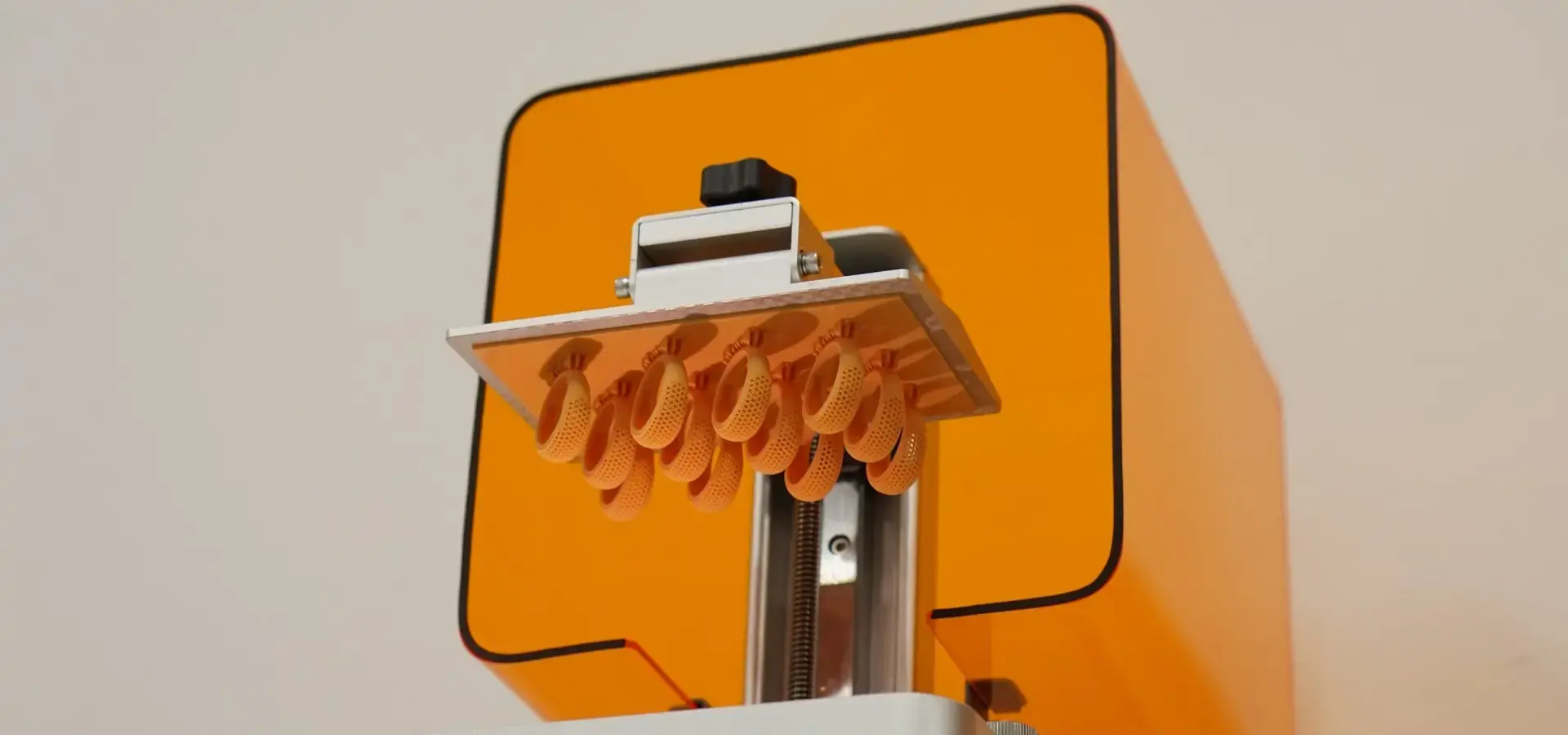
Procurement decisions ultimately hinge on whether equipment delivers measurable operational value. The P7 Pro's design reflects direct input from professional users across multiple sectors, addressing common pain points that impact productivity and profitability.
Exceptional Print Success Rate Through Thermal Stability
Finding failed prints hours into a job is the worst thing that can happen to production plans. The P7 Pro's active heating system keeps the room at the same temperature during long print runs, so problems caused by temperature don't happen. This dependability is especially helpful for service bureaus that have to meet client schedules or makers who leave builds to run overnight without being watched. In many production environments, stable temperature control can significantly improve print consistency while reducing resin waste and failed builds compared with systems lacking active thermal management. Compared to printers without environmental controls, these printers have a lot less resin waste and machine downtime.
Industrial-Grade Components in a Desktop Form Factor
The stiffness of the full-metal body on this desktop 3D printer stops vibration-related artefacts, and the smooth, accurate Z-axis motion needed to capture fine details is provided by P-grade linear rails. The 6.8-inch 9K monochrome LCD features an 8520 × 4320 resolution with an 18 × 18 µm pixel size, enabling exceptional detail reproduction for demanding professional applications, which reproduce fine surface textures and intricate geometries commonly required in jewelry, dental, and model-making applications. The P7 Pro can compete with systems that cost a lot more because it has the same level of mechanical accuracy and visual performance.
User-Centric Operation and Real-Time Adjustability
The 5-inch tablet with a customised user interface lets workers change exposure times, layer thickness, and lift speeds while print jobs are still running, so they don't have to stop and start again. This adaptability lets you quickly find the best settings for trying new resins or making changes for specific part shapes, which cuts down on the cycle of trial and error that can slow down desktop resin printer processes. The UV-resistant glass flip-up cover lets you see clearly to see how the print is going and keeps the resin from drying by chance when it's exposed to light.
Material Freedom and Cost Control
The P7 Pro can work with standard 405nm photopolymers from a number of different sources, unlike private systems that force users to use expensive brand-name resins. This open-material design lets buying teams find cheaper alternatives or special mixtures made for certain uses, like jewelry-making waxes that can be cast, medical device resins that don't harm living things, or tough engineering materials for working prototypes. Lower running costs and more output options are directly linked to material freedom.
Comparing the P7 Pro Desktop 3D Printer with Other Market Solutions
Desktop Resin Versus FDM Technology
Most cheap home 3D printers use filament-based FDM printers, but they can't match the surface finish and fine precision that vat photopolymerization can provide. With the P7 Pro, you can make parts with almost invisible layer lines, so you don't have to do as much work afterward to make FDM prints look good. LCD resin technology is often preferred for applications requiring smooth surfaces, fine details, or transparent components, even though the materials themselves may cost more.
Competitive Analysis Within Resin Printer Segment
The P7 Pro desktop 3D printer is more reliable in all kinds of environments than cheaper plastic printers that don't have active heating. Compared to competitors that cost more, it offers similar accuracy and build volume at a much lower price. The grayscale optimization technology enhances feature definition and edge accuracy, helping the printer deliver detail quality comparable to many higher-end professional resin printing systems. This means that smaller businesses can now produce professional-quality work.
Return on Investment Considerations
B2B buyers need to think about the total cost of ownership, which is more than just the purchase price. When you combine the P7 Pro's stable tools, ability to work with a wide range of materials, and low upkeep needs, you get a good return on investment. For jewellery businesses, improved workflow efficiency and reduced outsourcing requirements can contribute to a faster return on investment, depending on production volume and application needs. For dental labs, the main gain is lower outsourcing costs. The printer can handle a wide range of tasks, from idea models to finished parts, which increases its usefulness compared to machines that are only used for one thing.
Procurement Guide: How B2B Clients Can Source the P7 Pro with Confidence
Evaluating Technical Specifications Against Requirements
Before you buy a home 3D printer, make sure that the equipment's powers match your production needs. The P7 Pro can handle both fast draft prints and very detailed finished parts thanks to its 25–150 µm layer thickness range. The build volume is good for most jewellery casting trees, dental models with multiple units, and small mechanical systems. However, very big parts made of a single piece may need to be segmented. Check to see if the 405nm range is compatible with the plastic formulas that are offered in your business.
Understanding Total Cost Structure
Beyond the printer itself, budget for initial resin inventory, isopropyl alcohol for post-processing, replacement FEP films, and potential resin vat upgrades. Magforms offers comprehensive support packages that include technical training, ensuring staff can maximize equipment capabilities from day one. The robust warranty coverage protects against manufacturing defects, while responsive customer service minimizes downtime should issues arise.
Integration with Existing Workflows
The P7 Pro's standard file format compatibility ensures seamless integration with popular slicing software and CAD platforms. Compatibility with common slicing software and standard file formats simplifies integration into existing design and manufacturing workflows, particularly valuable for service bureaus managing multiple client projects. The printer's compact footprint simplifies facility planning, requiring only standard electrical service and adequate ventilation for resin fumes.
Practical Applications and Industry Use Cases of the P7 Pro Desktop 3D Printer
Jewelry Manufacturing and Casting
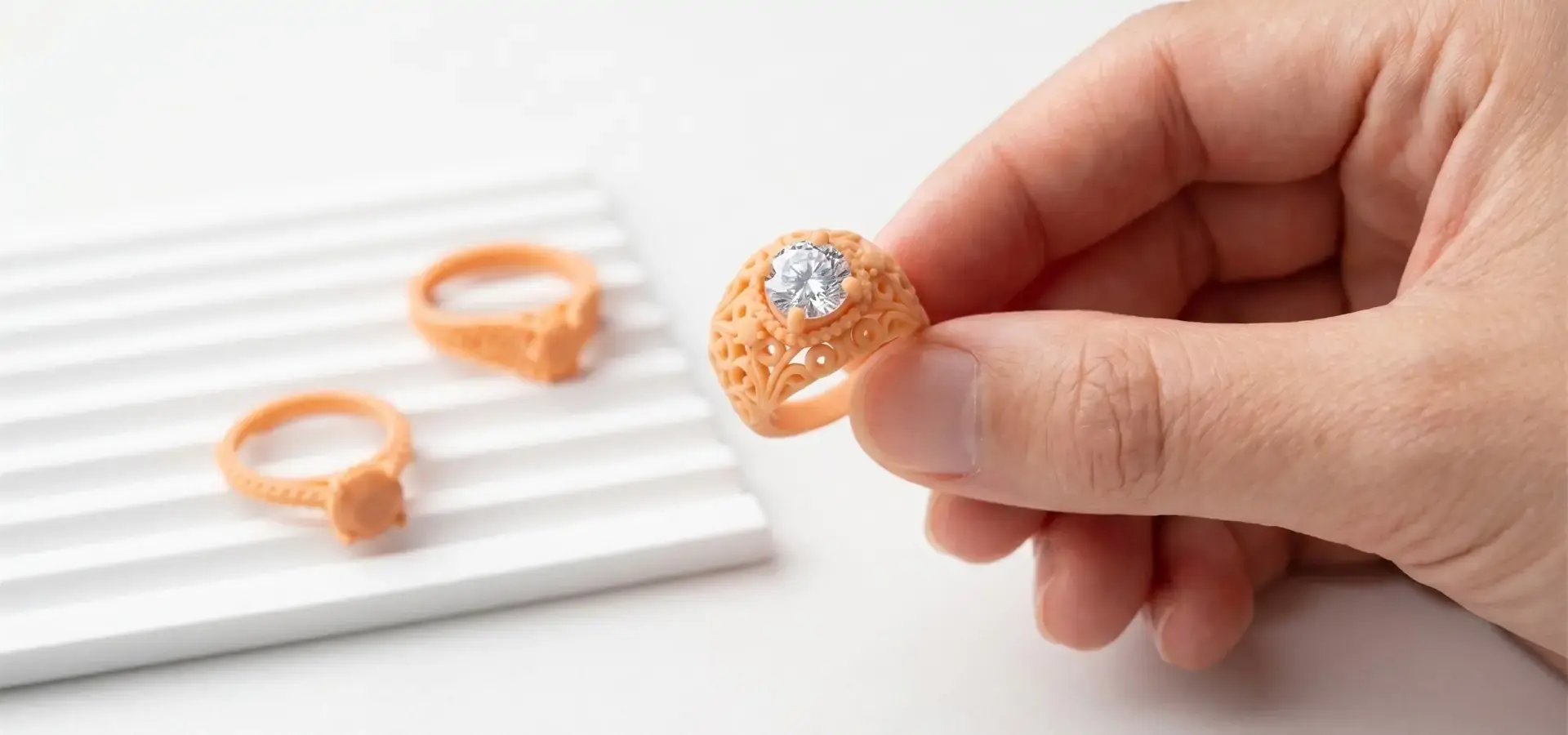
Jewelry designers and casting houses represent ideal users for the P7 Pro's capabilities. The high-resolution LCD system captures intricate surface details, sharp edges, and delicate features that define high-end jewelry pieces. Castable resins burn out cleanly, producing investment molds suitable for precious metal casting with minimal finishing required. Studios report dramatic reductions in time from design concept to wearable prototype, enabling rapid client iterations and personalized customization at scale.
Dental Laboratory Applications
Dental professionals utilize the P7 Pro to produce surgical guides, clear aligner models, crown and bridge patterns, and diagnostic wax-ups. The printer provides the precision typically required for producing detailed dental models, surgical guide prototypes, and orthodontic workflows when used with appropriate certified materials. The ability to print multiple cases simultaneously maximizes lab productivity, reducing dependence on outsourced manufacturing services.
Prototyping for Consumer Electronics and Product Design
Design firms leverage the P7 Pro to create functional prototypes of electronic enclosures, mechanical assemblies, and ergonomic mockups. The combination of fine detail reproduction and material variety enables realistic proof-of-concept models that facilitate client presentations and design validation before committing to expensive tooling. Rapid iteration cycles accelerate development timelines, providing competitive advantages in fast-moving consumer markets.
Educational and Research Institutions
Universities and technical schools increasingly incorporate desktop 3D printers into engineering, design, and materials science curricula. The P7 Pro's professional capabilities expose students to real-world additive manufacturing workflows while remaining manageable within academic budgets. Research applications spanning biomechanics, microfluidics, and materials testing benefit from the precision and versatility offered by LCD resin printing technology.
Conclusion
The P7 Pro desktop 3D printer delivers professional-grade precision and reliability in a compact, accessible platform suited to diverse B2B applications. Through intelligent thermal management, industrial-quality components, and advanced grayscale optimization technology, the P7 Pro delivers exceptional detail reproduction and consistent print quality within a compact LCD resin printing platform. This system addresses core challenges faced by jewelry manufacturers, dental laboratories, prototyping studios, and small-scale production facilities. The combination of practical build volume, material versatility, and user-friendly operation creates a production tool that genuinely enhances operational capabilities rather than merely adding complexity. As additive manufacturing continues reshaping how businesses approach design and production, the P7 Pro represents a pragmatic investment for organizations seeking competitive advantages through advanced yet accessible technology.
FAQ
What materials can the P7 Pro desktop 3D printer process effectively?
The P7 Pro works with all standard 405nm photopolymer resins, including castable waxes for jewelry, dental model resins, tough engineering formulations, and flexible materials. This open-material compatibility allows users to select cost-effective options or specialty resins tailored to specific applications without vendor lock-in.
How does the intelligent heating system improve print reliability?
By maintaining a stable 30°C chamber temperature, the heating system ensures consistent resin viscosity and curing behavior regardless of ambient conditions. This prevents common cold-weather failures like layer separation and incomplete curing, helping improve print consistency and reduce the likelihood of temperature-related failures across a wide range of materials and operating environments.
What maintenance does this desktop resin printer require?
Routine maintenance involves cleaning the resin vat and build plate after each print, replacing FEP films every few liters of resin processed, and periodically cleaning the LCD screen. The robust mechanical components require minimal adjustment, with lubrication of linear rails recommended every few months depending on usage intensity.
Can the P7 Pro handle high-volume production needs?
While designed as a desktop 3D printer rather than an industrial production line, the P7 Pro's reliability and build volume make it suitable for small-batch manufacturing and service bureau operations. Multiple units can be deployed for scalable capacity, with each printer capable of unattended operation through the intelligent heating and monitoring systems.
Sourcing Your P7 Pro Desktop 3D Printer from Magforms
Magforms stands ready to support your additive manufacturing goals with the P7 Pro desktop 3D printer and comprehensive technical expertise. As an established manufacturer with 22 patents and service to over 300 enterprises globally, we provide integrated solutions combining optimized materials and precision equipment backed by years of industry experience. Our technical support team delivers rapid response to inquiries, assisting with material selection, parameter optimization, and workflow integration to maximize your production capabilities.
Whether you operate a jewelry studio requiring castable model precision, a dental laboratory seeking reliable patient-specific manufacturing, or a prototyping facility demanding versatile capabilities, the P7 Pro offers proven performance at competitive pricing. Contact our team at info@magforms.com to discuss your specific requirements, request sample prints demonstrating the P7 Pro’s high-detail LCD printing capabilities, or explore volume pricing for multiple-unit deployments. Discover why businesses across automotive, aerospace, medical, and consumer electronics sectors trust Magforms as their desktop 3D printer supplier for production-critical applications.
References
1. Gibson, I., Rosen, D., & Stucker, B. (2021). Additive Manufacturing Technologies: 3D Printing, Rapid Prototyping, and Direct Digital Manufacturing (3rd ed.). Springer International Publishing.
2. Dizon, J.R.C., Espera, A.H., Chen, Q., & Advincula, R.C. (2018). Mechanical characterization of 3D-printed polymers. Additive Manufacturing, 20, 44-67.
3. Stansbury, J.W., & Idacavage, M.J. (2016). 3D printing with polymers: Challenges among expanding options and opportunities. Dental Materials, 32(1), 54-64.
4. Zuniga, J.M., & Carson, A.M. (2020). Design and additive manufacturing of medical devices. Advanced Healthcare Materials, 9(15), 2000736.
5. Conner, B.P., Manogharan, G.P., Martof, A.N., Rodomsky, L.M., Rodomsky, C.M., Jordan, D.C., & Limperos, J.W. (2014). Making sense of 3-D printing: Creating a map of additive manufacturing products and services. Additive Manufacturing, 1-4, 64-76.
6. Ligon, S.C., Liska, R., Stampfl, J., Gurr, M., & Mülhaupt, R. (2017). Polymers for 3D printing and customized additive manufacturing. Chemical Reviews, 117(15), 10212-10290.

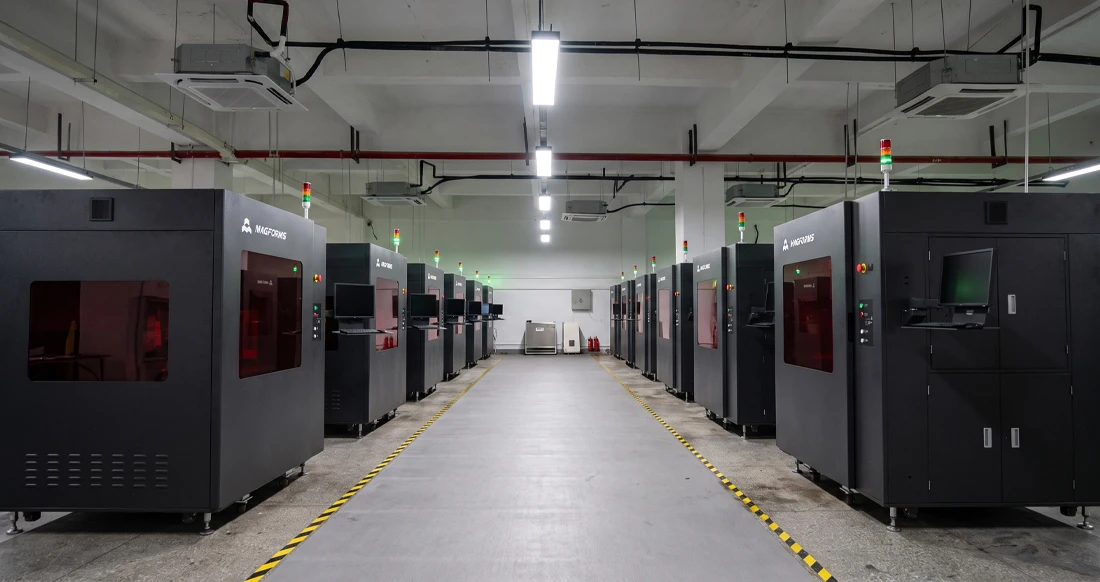
Magforms makes design and manufacture easier.
Popular Blogs
-
 Industry InsightsManufacturing Industry
FDM vs. SLA Printer: Which Technology Is Right for Your Project?
-
 Industry InsightsManufacturing Industry
Top 5 Applications of Industrial 3D Printers in Manufacturing Today
-
 Industry InsightsManufacturing Industry
Why Stereolithography 3D Printers Are Unmatched for Microfluidic Device Prototyping?