Large-Format Industrial SLA 3D Printer: Top OEM Manufacturers
When procurement managers and technical directors search for reliable additive manufacturing solutions, understanding what distinguishes top-tier suppliers becomes essential. Large-format industrial SLA 3D printers represent a specialized segment of stereolithography technology, designed for demanding applications that require large build volumes, dimensional accuracy, mechanical stability, and flexible material options. These systems are widely used for industrial prototyping, tooling, pattern production, and selected low-volume or specialized manufacturing applications. These advanced systems typically use UV solid-state lasers operating at approximately 355 nm, combined with precision galvanometer scanning systems, to selectively cure photopolymer resin layer by layer. For a deeper explanation of how this process works, see our guide to SLA 3D printing technology. Depending on the system configuration, large-format machines may offer build volumes exceeding 600 mm × 600 mm × 400 mm. Leading OEM manufacturers differentiate themselves through integrated hardware-software ecosystems, well-defined material compatibility, and comprehensive after-sales support networks that address the real-world challenges faced by automotive prototyping departments, aerospace manufacturers, and medical device developers.
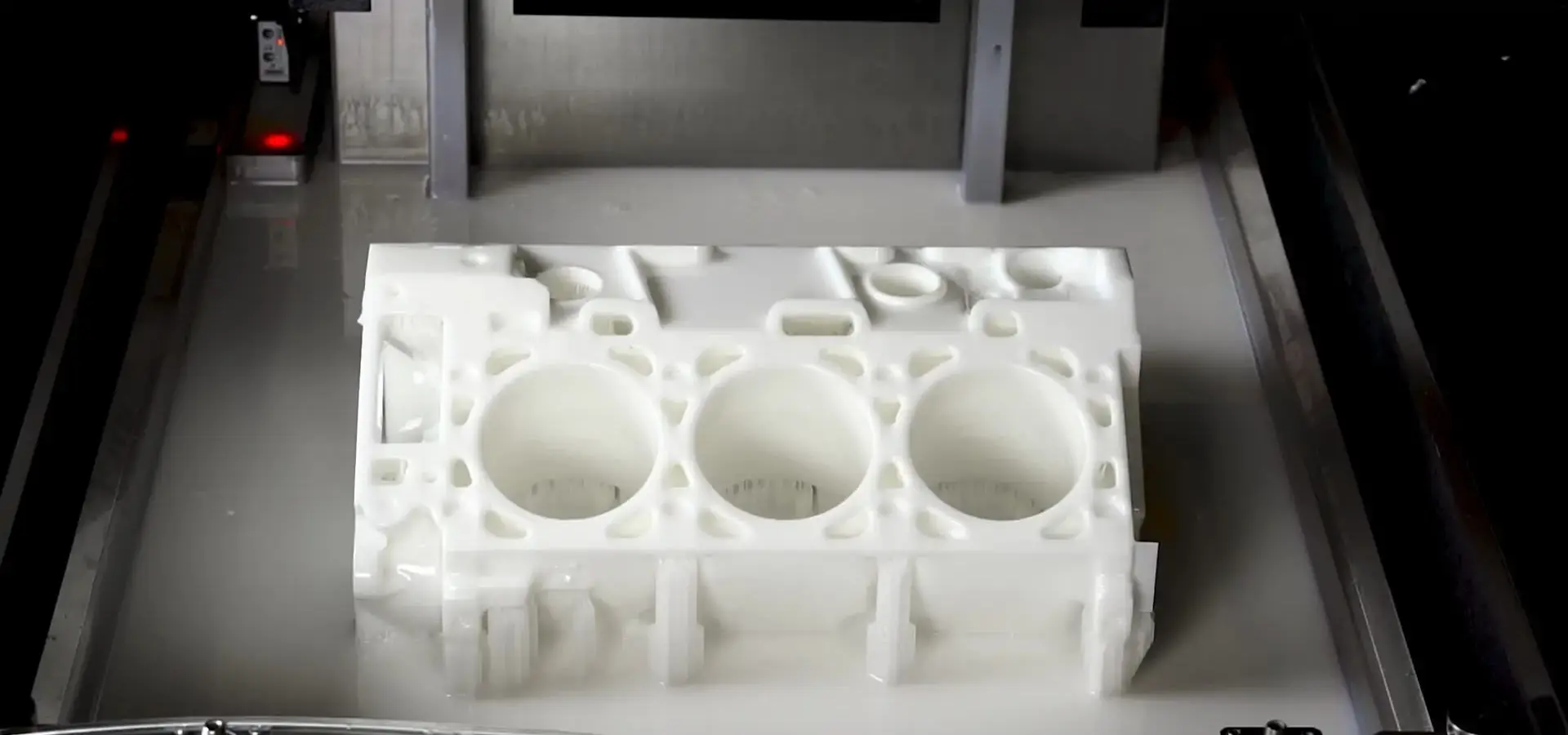
Top OEM Manufacturers of Large-Format Industrial SLA 3D Printers
Choosing an OEM partner requires more than comparing specification sheets. Procurement teams should evaluate component sourcing, system design, technical support capabilities, application experience, and the manufacturer's ability to support equipment throughout its service life. For procurement teams evaluating different machine configurations, understanding the available Industrial SLA 3D Printers is an important first step before comparing individual OEM suppliers.
Magforms: Integrated Materials and Hardware Excellence
Magforms combines photopolymer material development with industrial SLA equipment engineering, allowing material behavior and machine process parameters to be considered together during system development. The company has experience in photopolymer material development and in understanding how curing behavior, polymerization shrinkage, and internal stress can influence part performance. This material and process experience can inform hardware and process design, including scanning strategies and thermal management, helping reduce process variability and support more consistent dimensional performance when combined with appropriate resin selection and build preparation. Magforms' large-format industrial SLA systems use AOC solid-state lasers and Scanlab galvanometer systems to support high-speed and precise laser scanning. Depending on the system configuration, optimized laser spot settings and scanning strategies can balance fine feature definition with efficient processing of larger cross-sectional areas. By adjusting scanning parameters according to part geometry and process requirements, optimized exposure strategies can help improve overall build efficiency while maintaining the required level of feature quality. Under specified process conditions, the Magforms SL800 is designed to achieve dimensional accuracy of approximately ±0.15 mm for dimensions of 100 mm or less and ±0.15% × L for larger dimensions, subject to part geometry, material, process parameters, and post-processing conditions.
Together, these capabilities enable Magforms' Industrial SLA 3D Printers to support demanding prototyping, tooling, pattern production, and specialized manufacturing applications. Depending on the system configuration, resin and process temperature management can help maintain more consistent resin viscosity and curing behavior when ambient workshop conditions fluctuate. The iBuild 2.0 control interface is designed to simplify build preparation and machine monitoring, helping operators manage print jobs and track equipment status more efficiently. Magforms provides technical support with a stated 24-hour response target, helping customers address equipment and process issues more efficiently. The company's experience across industrial applications such as aerospace, automotive, and specialized manufacturing supports its focus on both equipment development and application-specific technical support.
Evaluating Alternative OEM Suppliers
Beyond individual manufacturers, the large-format industrial SLA market includes suppliers with different strengths in build volume, materials, automation, and application support. Some manufacturers focus on maximizing build volume, offering systems designed to produce large prototypes, tooling, patterns, architectural models, and industrial components. Others focus on specialized materials, such as biocompatible resins for validated medical applications or high-temperature photopolymers for engineering and testing applications. When comparing options, procurement teams should evaluate the sourcing and quality of critical components used in the machine. During tall builds, Z-axis positioning stability becomes increasingly important. Wear, mechanical backlash, calibration errors, or insufficient rigidity in the motion system can contribute to layer positioning errors and dimensional variation. The rigidity and structural integrity of the build platform and supporting frame are also important, particularly for large and heavy builds. Poor structural design or inadequate joining quality can contribute to vibration, alignment issues, or mechanical instability. High-quality electrical components can support reliable power distribution and machine operation. Laser output stability, however, depends primarily on the laser source, optical system, power management, and calibration strategy.
Comparing Large-Format Industrial SLA Printers with Other Technologies
Figuring out what stereolithography does better than other additive methods helps match technology to the needs of an application. The comparison goes beyond simple lists of capabilities to include operational realities and the total cost of ownership.
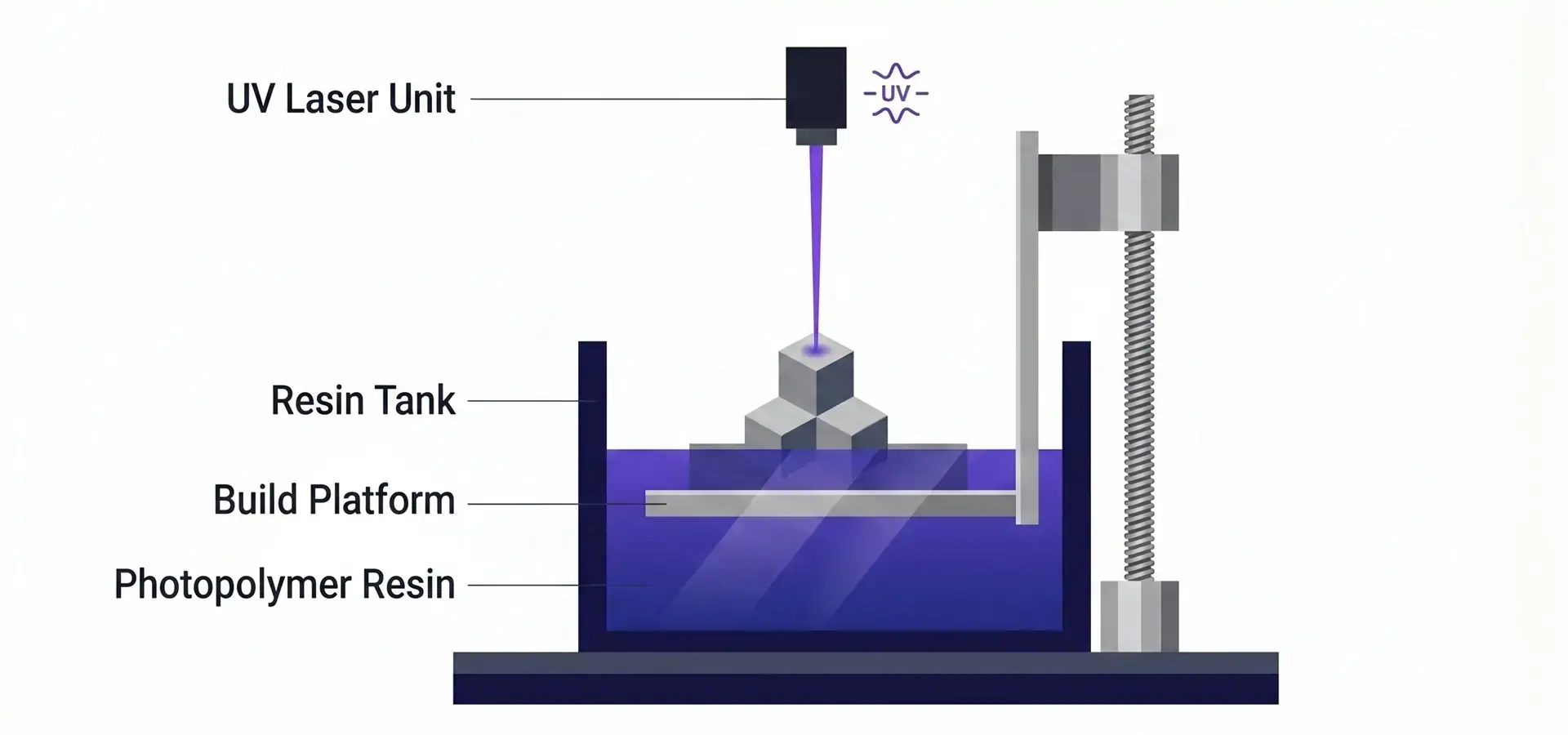
SLA Versus Selective Laser Sintering (SLS)
SLS systems can work with nylon powder without the need for support structures. This makes SLS particularly suitable for complex geometries, including enclosed internal features, as well as functional parts that benefit from the mechanical properties of thermoplastic materials. An Industrial SLA 3D Printer can generally produce smoother as-printed surfaces than SLS, particularly when fine layers and optimized process parameters are used. Actual surface roughness varies with material, layer thickness, part orientation, and post-processing requirements, while SLS parts typically exhibit a more granular surface texture because of the powder-based process. This difference can be important for applications such as appearance models, consumer product prototypes, master patterns for silicone molding, and components where surface finish is a critical design requirement.
Precision Advantages Over FDM Systems
Fused deposition modeling remains a cost-effective option for concept models, functional prototypes, fixtures, tooling, and many production-support applications. When applications require fine surface detail, small features, or smooth prototype surfaces, industrial SLA can be particularly suitable for precision prototyping and pattern production. For example, SLA is commonly used to produce dental models, master patterns, precision prototypes, and other components where feature definition and surface quality are important. With optimized laser scanning and process parameters, an Industrial SLA 3D Printer can produce fine text, detailed surface features, and complex geometries with smooth surfaces. Compared with conventional FDM processes, SLA can offer higher feature definition and reduced visible layer texture for many applications, although actual productivity depends on part geometry and machine configuration.
Hybrid Workflows with CNC Machining
In some manufacturing workflows, additive and subtractive processes can complement each other. When an Industrial SLA 3D Printer is used to produce complex geometries, CNC machining can be applied selectively to critical features such as precision holes, mating surfaces, or reference faces where tighter tolerances are required. This hybrid workflow can optimize manufacturing efficiency by reserving CNC machining for critical features while using additive manufacturing to produce complex overall geometries. Similar production considerations can be seen in real-world applications of the SL800 across automotive, aerospace, and other engineering workflows. See our SL800 industrial application cases for examples of how large-format SLA is applied in practical manufacturing environments.
Procurement Considerations for Large-Format Industrial SLA 3D Printers
When evaluating a major capital investment, procurement teams should consider both initial acquisition costs and long-term operational factors. Total cost of ownership should be evaluated alongside the initial purchase price.
Pricing Models and Budget Alignment
For established production facilities with capital spending budgets, direct equipment purchase remains a common procurement model. Equipment pricing depends on factors such as build volume, laser configuration, automation level, software capabilities, and the overall system configuration. For startups and service bureaus seeking to preserve working capital, leasing or financing arrangements may spread equipment costs over 36 to 60 months, depending on the available financing terms. Buyers purchasing multiple units or deploying systems across multiple sites may be able to negotiate tiered pricing that lowers the cost per unit and gives them priority technical support.
Logistics and Installation Planning
Large-format Industrial SLA 3D Printers are typically shipped in large crates or other protective freight packaging and may require forklifts or other handling equipment during delivery and installation. Installation teams should verify electrical requirements based on the specific machine configuration, including voltage, phase, frequency, and total power demand. Some modern systems incorporate filtration or enclosed process designs that can reduce facility requirements, but installation conditions should still follow the machine manufacturer's recommendations and applicable workplace safety regulations. For international shipments, procurement teams should coordinate customs documentation, import requirements, installation conditions, and electrical compatibility in advance. Experienced OEM partners can help reduce logistical delays by providing the required shipping and installation documentation.
Warranty Coverage and Support Infrastructure
Standard warranties cover mechanical parts for one year, and you can get extra time for laser assemblies and galvanometer systems, which can represent significant replacement and service costs. Response-time commitments can be just as important as the warranty terms themselves. For example, a promise to provide on-site service within 72 hours is useless if replacement parts have to be shipped from overseas warehouses and take several weeks to arrive. Instead of relying only on the language in the contract, buyers should ask for references from other customers in the same or a similar geographic area to make sure they have had good support experiences with an Industrial SLA 3D Printer.
Optimizing Performance and Maintenance of Large-Format Industrial SLA Printers
Achieving reliable print quality is only the first step. Maintaining consistent long-term performance requires planned calibration, preventive maintenance, and continuous process improvement.
Calibration Protocols for Dimensional Accuracy
Regular verification of laser output and exposure performance, using the manufacturer's recommended calibration procedures and measurement tools, helps maintain consistent energy delivery and curing performance. Galvanometer calibration and optical system verification help maintain positioning accuracy across the build area. Resin shrinkage and dimensional variation should be considered during material selection, exposure optimization, part orientation, build preparation, and process compensation. Build platform leveling should be verified using appropriate measurement tools and the manufacturer's recommended procedure. Even small deviations can affect layer consistency, recoating performance, and dimensional accuracy, particularly in large-format builds.

Material Selection and Testing Procedures
Open resin compatibility doesn't mean that qualification tests aren't needed. To find the best laser power, scanning speed, and layer thickness, new or previously unqualified resin materials should be evaluated through test prints using standard features such as thin walls, overhangs, dimensional accuracy features, and standardized test specimens. Documenting validated process parameters creates a repeatable knowledge base that supports process consistency, staff training, and material qualification when formulations or production requirements change.
Preventive Maintenance Schedules
Where the system uses a recoating blade or similar resin-leveling mechanism, regular inspection can identify wear or contamination before it affects resin layer uniformity. Cleaning the resin tank and removing partially cured particles helps reduce the risk of surface defects and process interruptions. Keeping optical components clean helps maintain consistent laser energy delivery, as dust or contamination on lenses and other optical surfaces can affect transmission and exposure uniformity. A structured preventive maintenance program can reduce unplanned downtime and help maintain more consistent equipment performance over long production cycles.
Conclusion
When looking for the right large-format Industrial SLA 3D Printer, you need to carefully consider the technical specs, the level of manufacturer support, and the total cost of ownership. The technology can provide excellent surface quality and dimensional accuracy for a wide range of applications, including automotive prototyping, aerospace development, tooling, pattern production, and selected medical and technical applications. Leading OEM manufacturers set themselves apart through validated material compatibility, reliable component selection, robust process control, and responsive technical support that helps keep production running smoothly. As additive manufacturing continues to change from a tool for testing to a way to make things, relationships with providers that show both technical excellence and customer commitment will decide who has the edge in markets that are becoming more demanding.
FAQ
What resin compatibility should I expect from quality manufacturers?
Compatibility depends on whether a photopolymer resin's photoinitiator system and curing behavior can be effectively matched to the machine's laser wavelength and available exposure parameters. For open-material SLA systems using 355 nm laser sources, many commercially available photopolymer resins may be compatible, but each material should be validated for laser power, scanning speed, layer thickness, curing behavior, dimensional accuracy, and mechanical performance.
Buyers should confirm the level of material and process parameter control available in the software. Adjustable settings can support material development and qualification, while validated material profiles can improve repeatability for established production workflows.
How does printing speed compare across different system sizes?
Large-format Industrial SLA 3D Printers can maintain competitive productivity through optimized laser spot settings, scanning strategies, layer thickness, and efficient build planning. Actual build speed depends on factors such as laser power, part geometry, support requirements, and the number of parts packed into the build volume. Large-format systems can improve overall productivity by producing multiple large or smaller parts within a single build cycle.
Can these systems integrate into existing factory automation?
Depending on the machine and software architecture, Industrial SLA 3D Printers may support network connectivity and integration with manufacturing execution or production management systems. Build preparation software can support job scheduling, build management, and workflow coordination across multiple production jobs. Post-processing equipment, such as automated washing and UV curing systems, may also be integrated into the broader production workflow depending on the available hardware and software interfaces. The level of integration depends on the machine's software architecture, available interfaces, and the facility's existing automation infrastructure.
Partner with Magforms for Advanced Industrial SLA Solutions
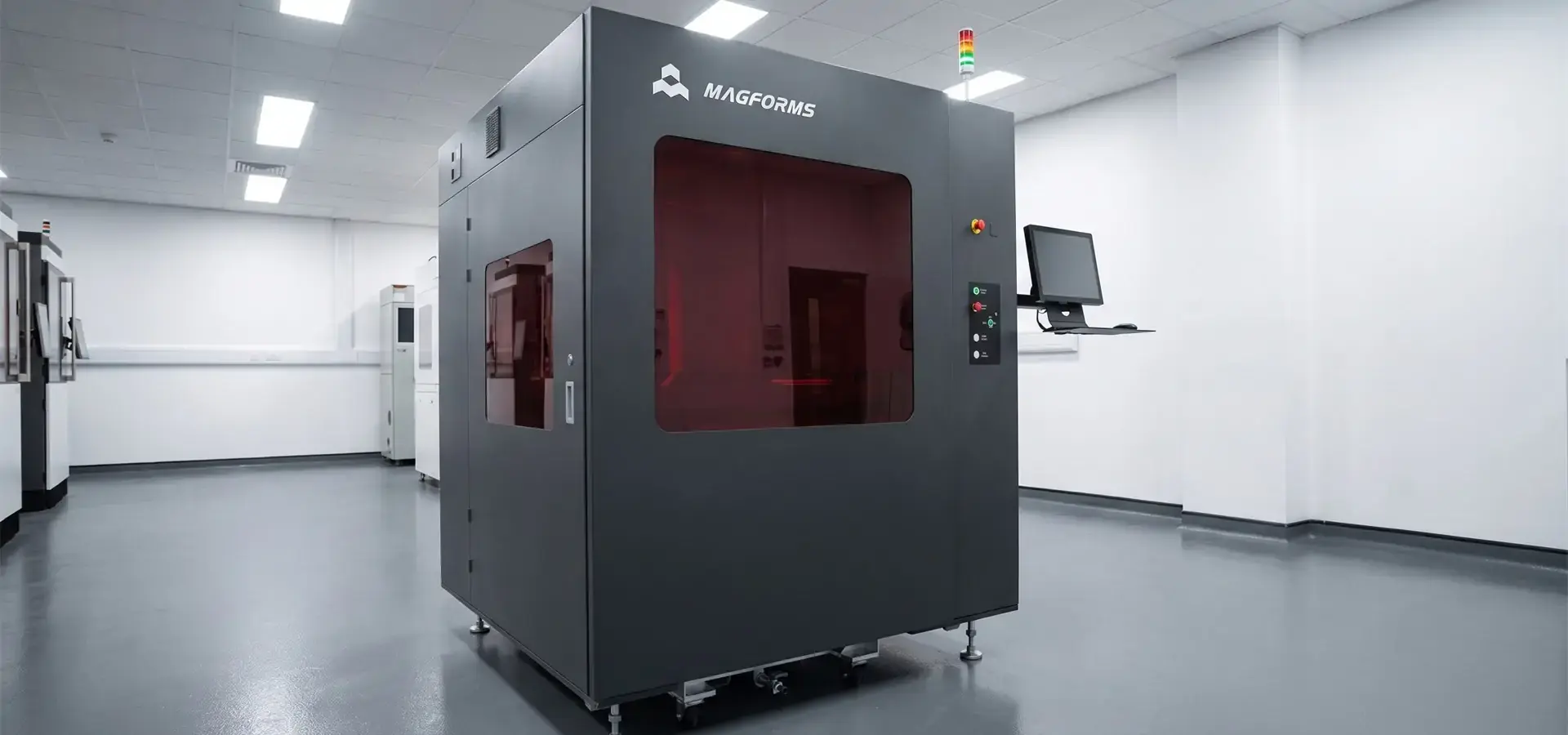
Magforms develops large-format Industrial SLA 3D Printers designed for demanding industrial prototyping, tooling, and specialized manufacturing applications. As a developer of both Industrial SLA 3D Printers and photopolymer materials, Magforms can coordinate machine parameters with material characteristics to reduce compatibility challenges that may affect print quality and dimensional consistency. Our large-format systems combine Scanlab galvanometer systems, AOC solid-state lasers, Panasonic servo motors, and precision optical and mechanical components to support stable and repeatable machine operation. Final part accuracy is determined by the complete printing process, including calibration, material behavior, geometry, and post-processing. The open resin architecture can support a broad range of photopolymer resins that are compatible with 355 nm laser processing, subject to material qualification and process validation. Our technical support team provides a stated response target within 24 hours and offers operator training and remote diagnostic support to help customers address equipment and process issues efficiently. Email us at info@magforms.com to talk about your specific application needs and set up an evaluation of a sample part.
References
1. Johnson, M., & Williams, R. (2023). Additive Manufacturing Economics: ROI Analysis for Industrial 3D Printing Systems. Manufacturing Technology Press.
2. Chen, L., Rodriguez, A., & Thompson, K. (2024). Photopolymer Chemistry and Applications in Stereolithography. Polymer Science Publications.
3. Industrial Additive Manufacturing Association. (2024). Annual Equipment Survey: Large-Format SLA Systems Performance Benchmarks. IAMA Technical Reports, Volume 12.
4. Patterson, D. (2023). Quality Control Protocols for Stereolithography Production Environments. Precision Manufacturing Journal, 45(3), 112-128.
5. Zhang, W., & Mueller, F. (2024). Comparative Analysis of Additive Technologies for Aerospace Component Production. Aerospace Engineering Quarterly, 38(1), 45-67.
6. Global 3D Printing Market Research. (2024). OEM Manufacturer Analysis: Service Networks and Customer Satisfaction in Industrial SLA Sector. Market Intelligence Group.

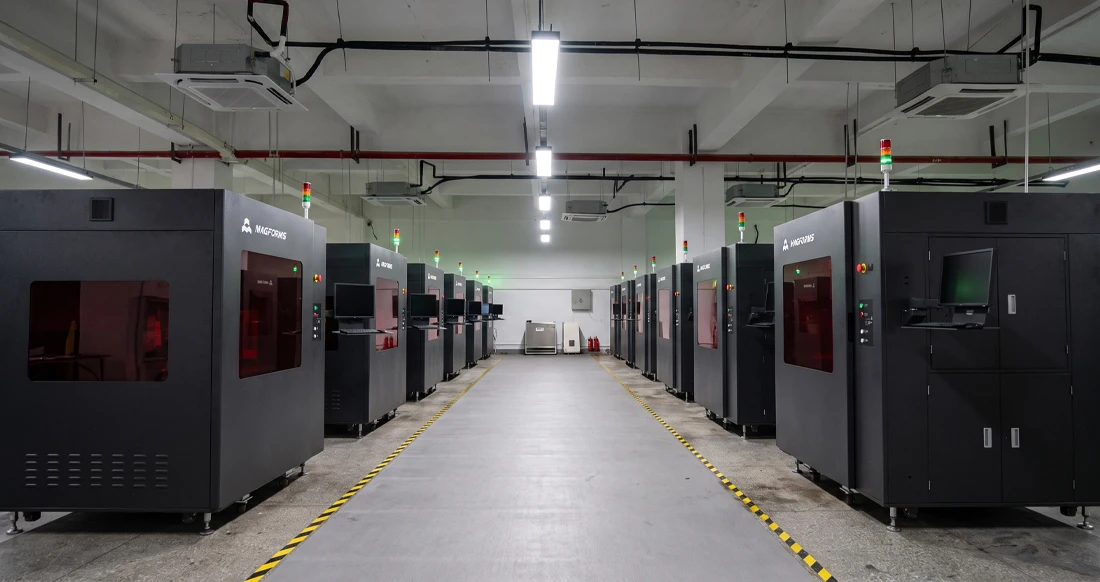
Magforms makes design and manufacture easier.
Popular Blogs
-
 Industry InsightsManufacturing Industry
FDM vs. SLA Printer: Which Technology Is Right for Your Project?
-
 Industry InsightsManufacturing Industry
Top 5 Applications of Industrial 3D Printers in Manufacturing Today
-
 Industry InsightsManufacturing Industry
Why Stereolithography 3D Printers Are Unmatched for Microfluidic Device Prototyping?