Why Choose a High-Speed Industrial SLA 3D Printer for Production?
Choosing a high-speed industrial SLA 3D printer for production can improve manufacturing efficiency by combining high dimensional accuracy with increased production throughput. These advanced stereolithography systems use laser-based photopolymerization to produce detailed, dimensionally accurate parts, while optimized laser-scanning strategies can help reduce printing time compared with conventional SLA approaches. Whether you're managing rapid prototyping for automotive components or producing medical and dental models and prototypes, high-speed SLA technology addresses the need for both speed and quality, helping manufacturers respond quickly to design and production requirements while maintaining dimensional control.

Why High-Speed Industrial SLA Printers Are Essential for Production?
Even though traditional stereolithography systems were known for their accuracy, printing speed and throughput could make it challenging to meet demanding production schedules. Modern high-speed industrial SLA printers address these challenges through improvements in laser scanning, process control, machine stability, and production throughput while maintaining dimensional accuracy.
How Variable Laser Spot Technology Improves Printing Speed
Dynamic or variable laser spot-size control can improve the balance between printing speed, feature resolution, and surface quality in industrial SLA printing. Larger laser spots can be used for larger areas where fine feature resolution is less critical, helping increase scanning efficiency. Smaller laser spots can be used for contours, fine features, and other areas where higher resolution is required. This adaptive scanning strategy can improve printing efficiency compared with fixed-spot approaches while maintaining the required balance between surface quality and dimensional accuracy. Magforms states that its optimized laser spot technology can improve printing speed by up to 30–50% under specified conditions. Galvanometer scanning speed is one factor that affects SLA throughput, but actual printing speed also depends on laser power, scan strategy, layer thickness, resin characteristics, geometry, and exposure requirements.
Software Optimization Improves Printing Performance
Modern Industrial SLA 3D Printer systems increasingly use software-based process optimization to improve scan paths, exposure parameters, and printing efficiency. These software-based optimization functions can help manufacturers refine process parameters and improve printing efficiency for different materials and part geometries. Exposure settings can be adjusted according to resin characteristics and part geometry to help control curing behavior, dimensional accuracy, and layer bonding.
Tangible Production Benefits
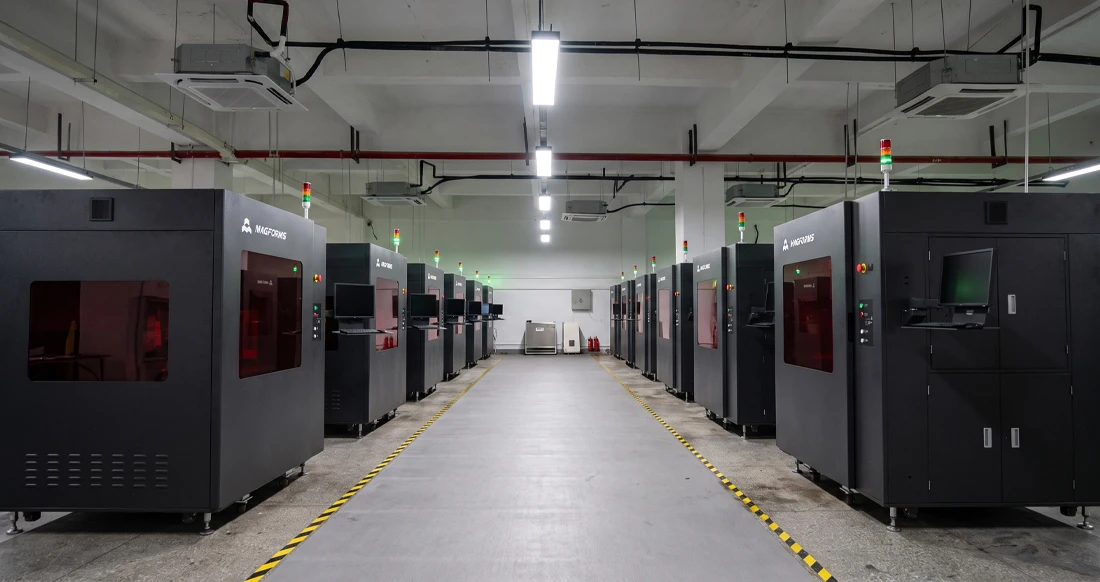
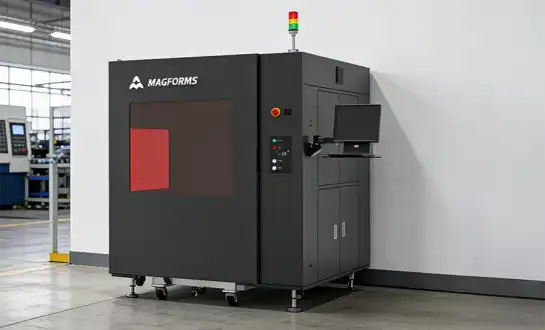
Faster printing can directly affect production efficiency. Shorter product development cycles allow manufacturers to make design changes more quickly and accelerate time to market. It can make small-batch production more practical by reducing or eliminating the need for dedicated tooling in applications where injection molding would require significant upfront investment. Shorter print times can reduce machine operating time per build and may contribute to lower production costs, although total energy consumption also depends on machine configuration and post-processing requirements. The production value of these systems lies in maintaining consistent dimensional accuracy while increasing throughput. For the SL800, Magforms specifies dimensional accuracy of ±0.15 mm or ±0.15% × L, depending on part size. This means that increased throughput can be achieved while maintaining the dimensional accuracy required for the application. Industrial SLA systems can use established components for laser scanning, motion control, electrical systems, and machine structure to support long-term operational stability. For example, the SL800 integrates an AOC laser, German Scanlab galvanometer, Panasonic servo motors, and a rigid machine structure. These design features can support stable operation in demanding production environments and help reduce the risk of unplanned downtime.
Comparing High-Speed Industrial SLA with Other 3D Printing Technologies
Before making a purchase choice, you need to know where industrial SLA 3D printer systems are better than other additive manufacturing methods and where there are trade-offs.

SLA Versus FDM: When Precision Matters
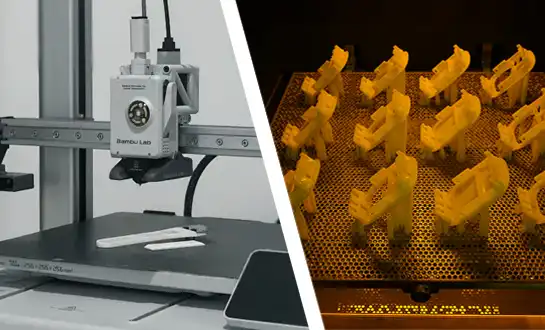
Fused deposition modeling (FDM) is widely used for concept models, tooling fixtures, and functional prototypes, while Industrial SLA 3D Printers generally provide finer feature reproduction and smoother surface finishes. Layer-by-layer filament extrusion in FDM can produce visible layer lines, and additional finishing may be required when a smoother surface is needed. SLA parts generally provide smooth surfaces and fine feature reproduction, making them well suited to visual inspection, assembly evaluation, and functional prototyping after the required post-processing steps. Dimensional stability depends on the specific material and printing process in both technologies, although SLA can offer advantages in fine feature reproduction and surface quality for certain geometries. This can be particularly useful for parts with thin walls or complex geometries where fine feature reproduction and surface quality are important.
SLA Versus SLS: Balancing Speed and Material Options
Selective laser sintering benefits from a self-supporting powder bed, which can eliminate the need for dedicated support structures for many geometries. SLS systems, on the other hand, generally require cooling and powder removal after printing, and their parts typically have a rougher surface finish that may require additional finishing depending on the application. High-speed SLA can provide competitive throughput for applications that prioritize surface quality, dimensional detail, and large-format photopolymer printing, while SLS remains advantageous for many functional thermoplastic applications. For very large production builds, SLS may be advantageous for certain thermoplastic applications, while large-format SLA systems such as the SL800 provide an 800 × 800 × 550 mm build volume for producing large parts or multiple components in a single build.
Total Cost of Ownership Considerations
In addition to the initial capital investment, procurement managers need to look at how much consumables cost, how much maintenance is needed, and how efficiently the business runs. Advanced SLA equipment has open material systems that let you get resins from more than one source. This reduces dependence on a single material supplier and gives manufacturers more flexibility when comparing material cost and performance. SLA post-processing typically includes support removal, washing, and UV post-curing, while SLS generally requires powder removal and may require additional surface finishing. The actual post-processing time depends on part geometry, material, and production requirements. Preventive maintenance, timely servicing, and spare-parts availability can help reduce unplanned downtime and support more consistent production utilization. These practices can support more consistent production utilization and reduce the risk of unexpected interruptions. The key is to fit the technology to the needs of the job. SLA is often well suited to applications that prioritize fine details, dimensional control, and smooth surface finishes, while SLS can be advantageous for functional thermoplastic parts and complex geometries that benefit from powder-bed support.
Practical Applications and Use Cases of High-Speed Industrial SLA Printers
Modern stereolithography systems are useful in many different types of manufacturing, as each type of manufacturing can benefit from the unique features these printers offer.
Automotive Prototyping and Custom Components
Automotive companies use Industrial SLA 3D Printers to make quick prototypes of panel parts, interior parts, and unique trim pieces for specific models of cars. Compared with traditional CNC machining or low-volume injection molding, producing dimensionally controlled prototypes directly from CAD data can shorten R&D iteration cycles, depending on part size, geometry, material, and post-processing requirements. Fit, form, and function testing can be performed by design engineers using parts that represent the intended production geometry. This helps them find problems with assembly before they spend a lot of money on expensive tools. Custom lighting bezels, air vent components, and complex panel parts can be produced with high-speed SLA systems for subsequent assembly and real-world testing after the required post-processing. See real-world industrial SLA applications to understand how these systems are used in demanding production environments.
Aerospace Precision Parts and Prototypes
The aerospace industry needs parts that meet strict requirements for material certifications and size tolerances. Advanced SLA technology can be used to produce small components with complex internal channels, lightweight mounting brackets, and housings with geometries that may be difficult or costly to machine conventionally. Parts are tested thoroughly, and CAD models are checked against printed samples before they are made of metal. The mechanical properties of fully cured photopolymers depend on the material formulation, build orientation, exposure conditions, and post-curing process. For aerospace applications, these properties should therefore be validated for the specific material and intended use.
Medical and Dental Customization

Dental labs use SLA systems to produce patient-specific models, orthodontic applications, and surgical planning guides where detailed feature reproduction and dimensional accuracy are important. Printed anatomical models can help clinicians visualize complex anatomy and support preoperative planning, although the clinical benefits depend on the specific application and workflow. Some photopolymer resins are specifically formulated and certified for biocompatible applications, but their suitability for temporary crowns, bridges, or other medical and dental applications depends on the material's certification and the validated printing and post-processing workflow. When dental labs work on dozens of cases every day, high turnover is important because speed directly affects service capacity.
Consumer Electronics Rapid Iteration
The consumer goods business depends on quick design processes and new ways of looking at things. Wearable device housings, earbud samples, and smartwatch cases need to look good and fit perfectly around the internal parts. High-speed industrial SLA printers let product designers quickly produce physical models for evaluating ergonomics and assembly tolerances during frequent design iterations. The smooth surface finish produced by these systems can reduce finishing requirements before models are presented to focus groups or at trade shows, depending on the application. This can shorten the time required to move from a digital design to a physical prototype.
Cultural Creations and Footwear Innovation
In addition to its technical uses, SLA technology is also used in the creative industries to copy art and make fashion prototypes. For educational displays, museums and cultural organizations can use SLA to create detailed replicas of fragile artifacts and other objects. Designers of shoes and accessories print shoe molds and samples of accessories to test the look and structure of the items before committing to standard production. The availability of flexible photopolymer resins can also support prototyping of products that require greater flexibility or elastic behavior, provided the selected material meets the application's requirements. This closes the gap between digital image and physical reality. To keep these demanding applications running consistently, preventive maintenance, appropriate laser calibration, and proper resin handling are important for maintaining stable output quality from an Industrial SLA 3D Printer.
Procurement Guide: Choosing and Buying High-Speed Industrial SLA 3D Printers
To choose the best tools for your work setting, you need to carefully look at a lot of different technical and business factors.
Critical Technical Specifications
One of the first specifications to evaluate is build volume. Platforms range from approximately 300 mm-class systems for smaller applications to large-format systems such as the SL800 Industrial SLA 3D Printer, which provides an 800 × 800 × 550 mm build volume. Platform flatness standards are very important. Platform flatness and stability are important considerations for large-format SLA because platform condition and machine stability can affect layer formation and dimensional consistency during long builds. Adjustable layer thickness allows manufacturers to balance feature detail, surface quality, and printing time according to the requirements of the application. How compatible a resin is affects how flexible it can be used and how much it will cost in the long run. From a procurement perspective, open systems that support compatible 355 nm photopolymers provide greater material flexibility, while closed ecosystems typically limit material selection to approved suppliers. Make sure that the printers you're considering can support the specific material formulations required for your applications, such as high-temperature materials for functional testing, transparent resins for optical prototypes, and flexible polymers for gaskets and seals.
Evaluating Stability and Support Infrastructure
Uptime and total cost of ownership are influenced by component quality, machine design, maintenance requirements, and the availability of technical support and spare parts. The SL800 uses components such as a Scanlab galvanometer, AOC laser, and Panasonic servo motors as part of its laser-scanning and motion-control architecture. A rigid machine structure and precision marble platform are designed to support mechanical stability and consistent positioning during large-format printing. Infrastructure for after-sales help is often more important than the price of the product itself. Manufacturers that provide responsive technical support, thorough operator training, and readily available spare parts can help reduce production interruptions. Magforms has a professional after-sales team that can do remote diagnostics and quick on-site service.
Financial Considerations and ROI
The total cost of acquisition includes more than just buying the machine. It also includes installation, training, building requirements, and ongoing supplies. Financing options and leasing agreements help spread out the cost of capital while keeping cash flow for running the business. Figure out the true economic viability by figuring out the cost of each part, taking into account the amount of resin used, the time needed for post-processing, the wear and tear on the machine, and the rate of scrap. Hard savings, like fewer hardware costs and outsourcing costs, and soft benefits, like faster development processes and better design iteration, should both be included in return on investment measures. When evaluating a replacement for conventional development methods or a new additive manufacturing service, manufacturers should calculate ROI based on their actual equipment utilization, labor costs, material consumption, outsourcing costs, tooling requirements, and production volume.
The best procurements involve talking directly with experienced sellers who know exactly what you need for your application and can suggest the best configurations instead of just pushing their highest-margin goods.

Conclusion
High-speed Industrial SLA 3D Printers can be a valuable production solution for manufacturers that require dimensional accuracy and high throughput. The technology has grown past the limitations that came with early adoption. It now supports production-oriented workflows through improved machine stability, software-based process optimization, and broader material compatibility. Modern stereolithography systems offer precise dimensions and high-quality surfaces that lead to shorter development cycles and better product outputs, whether your business is focused on automotive prototyping, medical and dental models, or consumer electronics development. The important thing is to choose equipment that has a lot of support and has been used in demanding production settings before.
FAQ
What advantages do high-speed industrial SLA printers offer over traditional models?
High-speed systems use variable laser spot technology to change the size of the beam while printing, using bigger spots for filling in spaces and smaller spots for fine details. This approach can improve printing efficiency while maintaining the dimensional control required for the application. Magforms states that its optimized laser spot technology can improve printing speed by up to 30–50% under specified conditions. Software-based process optimization can help manufacturers refine scanning strategies and process parameters for different part geometries and materials. High-performance galvanometers support rapid laser positioning, while actual SLA printing speed depends on laser power, scan strategy, exposure requirements, layer thickness, resin properties, and part geometry. This can increase potential part throughput compared with fixed-spot approaches, depending on the application and process parameters.
How do I choose between printers for small-batch versus mass production?
Small-batch operations value adaptability and material compatibility, and they prefer open systems that don't need special resin locks to work with a wide range of tasks. A build volume in the 300–450 mm class may be sufficient for many small-batch applications, depending on typical part size and production requirements. Larger platforms in the 600–800 mm range, stable laser and motion-control systems, appropriate resin temperature management, and reliable after-sales support can all become important considerations for high-throughput production. After-sales support becomes increasingly important at production scale, where responsive technical assistance can help reduce the impact of costly downtime.
What maintenance practices sustain optimal printer performance?
Regular laser power and calibration checks help maintain consistent exposure conditions across the build platform. The inspection interval should follow the printer manufacturer's maintenance recommendations and actual operating conditions. Checking the resin vat for cured resin particles, contamination, or film formation can help prevent print defects. Inspection of the optical path and galvanometer system, together with appropriate maintenance of the linear guide and Z-axis motion system, helps maintain stable positioning and printing performance. Software updates may also improve scanning strategies, process control, and workflow efficiency when supported by the machine manufacturer. Establishing a preventive maintenance schedule with your supplier can help reduce unplanned downtime and support longer, more consistent equipment operation.
Partner with Magforms for Industrial SLA 3D Printer Excellence
Magforms develops Industrial SLA 3D Printers and provides integrated equipment and material solutions for industrial applications. Magforms holds 22 patents and has developed additive manufacturing solutions for industrial applications. Our systems feature an open material architecture that supports most 355 nm resins, German Scanlab galvanometers paired with AOC lasers, and Panasonic servo systems, while avoiding proprietary resin lock-in. This gives manufacturers greater operational flexibility when selecting materials and production workflows. Our industrial SLA systems use optimized laser spot technology, with printing speeds improved by up to 30–50% under specified conditions compared with conventional SLA approaches. This technology has been deployed across more than 300 enterprise installations worldwide. Another important advantage is our support infrastructure, which includes technical support 24 hours a day, 7 days a week, thorough application training, and process optimization consulting based on years of experience in materials science. Our after-sales team provides technical support to help customers troubleshoot equipment, material, and process issues and minimize production interruptions. Our experience across North America, Europe, and Asia includes applications such as automotive prototyping, medical and dental models, footwear, and aerospace prototyping. Email our apps engineering team at info@magforms.com to talk about your particular production needs. We'll evaluate a sample part using your CAD files and recommend an appropriate configuration based on factors such as printing speed, build volume, material compatibility, and total cost of ownership.
References
1. Gibson, I., Rosen, D., & Stucker, B. (2021). Additive Manufacturing Technologies: 3D Printing, Rapid Prototyping, and Direct Digital Manufacturing (3rd ed.). Springer.
2. Jacobs, P. F. (2020). Stereolithography and Other RP&M Technologies: From Rapid Prototyping to Rapid Tooling. Society of Manufacturing Engineers.
3. Gebhardt, A. (2019). Understanding Additive Manufacturing: Rapid Prototyping, Rapid Tooling, Rapid Manufacturing. Carl Hanser Verlag.
4. ASTM International. (2021). ASTM F2792-12a: Standard Terminology for Additive Manufacturing Technologies. ASTM Committee F42 on Additive Manufacturing Technologies.
5. Bártolo, P. J., & Mitchell, G. (2019). Stereolithography: Materials, Processes and Applications. Springer Science & Business Media.
6. Ligon, S. C., Liska, R., Stampfl, J., Gurr, M., & Mülhaupt, R. (2017). Polymers for 3D Printing and Customized Additive Manufacturing. Chemical Reviews, 117(15), 10212-10290.

Magforms makes design and manufacture easier.
Popular Blogs
-
 Industry InsightsManufacturing Industry
FDM vs. SLA Printer: Which Technology Is Right for Your Project?
-
 Industry InsightsManufacturing Industry
Top 5 Applications of Industrial 3D Printers in Manufacturing Today
-
 Industry InsightsManufacturing Industry
Why Stereolithography 3D Printers Are Unmatched for Microfluidic Device Prototyping?