Purchase Guide: Industrial SLA 3D Printer Essentials
Selecting the right Industrial SLA 3D Printer can significantly influence how manufacturers approach prototyping, product development, and low-volume production. With high-resolution laser scanning and controlled layer-by-layer curing, these stereolithography systems selectively cure liquid photopolymer resin using a UV laser. Their ability to produce detailed features, smooth surfaces, and accurate prototypes makes them suitable for demanding industrial applications. For procurement professionals evaluating solutions for automotive component prototyping, dental model fabrication, or aerospace part validation, understanding the core capabilities distinguishes a strategic investment from a costly misstep. This guide walks through technology fundamentals, application benefits, selection criteria, and cost considerations, empowering decision-makers to identify systems that deliver consistent results and support long-term manufacturing goals.
👉 To understand the process in more detail, explore our guide to how SLA 3D printing works.


Key Benefits and Application Areas of Industrial SLA 3D Printers
Exceptional Resolution and Surface Quality
Industrial SLA 3D Printer systems can produce fine features, smooth surfaces, and complex geometries with high dimensional fidelity, making them particularly suitable for applications where appearance and detail are important. With appropriate process parameters and post-processing, SLA parts can achieve surface quality suitable for appearance prototypes, master patterns, and detailed functional models. Surface quality and feature resolution also depend on the stability of the motion and scanning systems. Motion-system stability depends on the combined performance of the servo system, mechanical transmission components, linear guides, and machine calibration. In industrial SLA systems, high-quality motion components and a rigid, stable machine structure help maintain consistent layer positioning, while a well-calibrated laser and galvanometer system supports accurate scanning across the build area. Optimized laser scanning strategies, appropriate layer thickness settings, and controlled post-processing can reduce visible layer stepping and improve overall surface quality. However, the final finish still depends on part orientation, geometry, resin properties, layer thickness, and post-processing requirements. These capabilities are particularly valuable for applications such as dental models and thermoforming tools, detailed consumer electronics prototypes, and dimensional validation of complex connectors and housings used in engineering and defense-related manufacturing.
Cost-Effective Small-Batch Manufacturing
For injection molding, tooling costs alone can reach tens of thousands of dollars or more, depending on part size, complexity, material requirements, and production volume. Because SLA does not require traditional injection molds or dedicated tooling, it can reduce upfront costs for prototypes, customized parts, and low-volume production. The economic advantage is especially significant when production volumes are too low to justify conventional tooling, although the cost per part still depends on material consumption, build utilization, labor, and post-processing. Automakers can use this advantage to shorten prototype development cycles by producing and evaluating design iterations without waiting for traditional tooling. Studios and manufacturers working with sculptures, cultural products, and artistic objects can reproduce complex geometries digitally without relying on traditional hand-carved masters.
Diverse Industry Applications
Medical device developers can use SLA to produce anatomical models, surgical planning models, and prototype components for design evaluation. Applications involving patient-specific devices or clinical use require appropriately validated materials, controlled workflows, and compliance with relevant regulatory requirements. Aerospace and engineering teams can use SLA to prototype complex connectors, housings, and components with internal features that may require multiple machining operations or complex fixturing when produced with conventional CNC processes. Consumer electronics companies can produce prototypes of device housings with integrated clips, snap-fit features, and other functional details. These prototypes allow engineers to evaluate fit, assembly, and design details before committing to larger-scale production. Depending on part size, geometry, layer thickness, and material, SLA can convert digital designs into physical parts within hours or days, helping teams accelerate design validation and development cycles.
👉 See how industrial SLA technology is being applied across different production environments in our industrial 3D printing application cases.

How to Choose the Right Industrial SLA 3D Printer?
Resolution, Build Volume, and Speed
Procurement teams need to match printer specifications with their actual production and application requirements. Industrial SLA systems are available in a range of build volumes, from compact platforms for detailed prototypes to large-format systems designed for automotive, tooling, and full-scale product development. Procurement teams should evaluate usable build volume, machine rigidity, platform flatness, and dimensional accuracy requirements based on the size and geometry of their target parts. Many industrial SLA systems support adjustable layer thickness settings, commonly from 0.05 mm to 0.15 mm, allowing users to balance build time, surface quality, and feature detail. Scanning efficiency is influenced by factors such as laser power, galvanometer performance, scanning strategy, hatch spacing, part geometry, and layer thickness. Buyers should compare actual build times using representative part files rather than relying solely on nominal speed specifications.
Component Quality and Reliability
High-quality industrial SLA systems often integrate proven components from established suppliers to support long-term reliability and reduce the risk of unplanned downtime. High-quality linear guides and transmission components improve Z-axis stability and repeatability during long builds, which is especially important for tall or large-format parts. Industrial SLA workflows may also include reliable electrical systems and dedicated post-curing equipment to support consistent machine operation and controlled post-processing. Buyers should verify the function and specification of each component rather than relying solely on brand names. Some industrial SLA systems use reinforced sheet-metal enclosures and high-mass, dimensionally stable base structures to improve overall rigidity and reduce the influence of vibration during printing. Buyers should request component brand lists and warranty terms to assess long-term reliability.
Software Ecosystems and Integration
Compatibility between CAD, build-preparation, and machine-control software is essential for an efficient workflow. Modern control software, such as iBuild 2.0 where available, can simplify job preparation and machine operation while supporting functions such as build monitoring and remote status checking. Temperature-control systems can help maintain a more stable resin-processing environment, particularly in facilities where ambient temperature fluctuates. Stable operating conditions can reduce viscosity variation and improve process consistency, although optimal settings depend on the resin and printing parameters. Procurement managers should evaluate software update frequency, compatibility with commonly used CAD and additive manufacturing file formats, integration with existing workflows, and the availability of APIs for custom automation where required.
Comparative Brand Analysis
While some established SLA ecosystems rely on proprietary or tightly controlled material platforms that can limit material choices and raise long-term operating costs, other industrial SLA manufacturers offer open-material systems that allow users to evaluate compatible third-party resins based on performance, application requirements, and cost. By comparing response times for after-sales issues, the availability of spare parts, and professional training programs, you can find partners who are dedicated to keeping production interruptions to a minimum. Ask for sample parts to be printed on potential machines to evaluate dimensional accuracy, surface quality, and material performance under conditions relevant to the intended application.
👉 Buyers comparing different Industrial SLA 3D Printer systems should first evaluate build volume, laser configuration, motion systems, material compatibility, and intended applications.
Procurement and Cost Considerations
Total Cost of Ownership
Initial purchase costs can vary significantly depending on build volume, laser and scanning configuration, automation features, software capabilities, and the overall system design. Smaller-format industrial SLA systems may be suitable for service bureaus, product development teams, and design studios that require industrial-level performance without the footprint or capital investment of a large-format platform. Large-format systems are commonly used by research centers, automotive manufacturers, and engineering groups that need to produce large parts or consolidate multiple prototypes into a single build. In addition to the initial machine purchase, buyers should account for resin consumption, consumable components, scheduled maintenance, calibration requirements where applicable, post-processing equipment, labor, and potential downtime when estimating annual operating costs. Preventive maintenance programs and access to timely technical support can help reduce the operational impact of unexpected downtime.
Sourcing Channels and Negotiation
Authorized distributors may provide warranty coverage, local service, and operator training, while direct purchases from manufacturers may offer advantages in pricing or technical communication. Rental programs allow companies to evaluate equipment performance before committing capital, reducing risk during pilot production. When requesting a quotation, clearly define expected production volume, part size, material requirements, accuracy targets, and intended applications so suppliers can recommend an appropriate configuration. To protect your investment, negotiate terms for spare parts inventory, included software upgrades, and extended warranty periods.
Maintenance Best Practices

Keeping the machine environment clean and following the manufacturer's maintenance procedures can help protect optical components from contamination. Any cleaning or adjustment of enclosed laser and optical systems should be performed according to the equipment manufacturer's recommended procedures. Periodic calibration of the galvanometer and scanning system can help maintain geometric accuracy across the build area by correcting factors such as scan position, scale, and distortion. Calibration requirements and intervals should follow the manufacturer's recommendations. Resin-handling and consumable replacement requirements vary by machine design and material. Users should monitor resin condition, contamination, optical surfaces, recoating components, and other consumables according to the manufacturer's maintenance guidelines. Responsive after-sales support can help minimize production disruptions when technical issues require professional assistance. Maintaining clear service and maintenance records can help operators track component life, identify recurring issues, and plan replacement or servicing before problems affect production.
Technical Support and Enhancing Printer Performance
Software Compatibility and Workflow Integration
Industrial SLA systems should integrate effectively with existing CAD, PLM, and production workflows. Efficient workflows depend on reliable data exchange between CAD, build-preparation, and machine-control software. Support for commonly used additive manufacturing file formats, such as STL, OBJ, and 3MF or other workflow-specific formats, should be evaluated based on the software ecosystem. Advanced build-preparation software can automatically generate support structures and provide tools for optimizing part orientation, resin drainage, and support removal, reducing the amount of manual adjustment required. Cloud-based job tracking allows operators to monitor the printing process remotely and receive alerts when jobs finish or errors occur. Buyers should also review software licensing terms, including the number of concurrent users or installations permitted within the organization.
Troubleshooting Common Print Defects
Layer adhesion problems can result from incorrect exposure parameters, unsuitable scanning settings, improper resin handling, material aging, or operating conditions outside the recommended range. Warping in large, flat areas can result from factors such as insufficient support, unfavorable part orientation, polymerization shrinkage, residual stress, or unstable processing conditions. Sticky surfaces after printing may result from residual uncured resin, insufficient washing, or incomplete post-curing. The correct workflow depends on the resin manufacturer's recommended washing and curing procedures. Experienced service teams typically diagnose print defects by systematically reviewing material condition, machine status, environmental factors, part orientation, and process parameters. With access to detailed troubleshooting guides and instructional videos, in-house operators can resolve minor issues independently, allowing technical support resources to be reserved for more complex machine or process problems.
Training and Certification Programs
Comprehensive training should cover machine operation, software workflow, material handling, safety procedures, part preparation, support generation, post-processing, and routine maintenance. Teams can practice support generation, orientation optimization, and post-processing methods through hands-on sessions that address real application scenarios. Training or certification programs can help demonstrate that operators have completed standardized instruction, supporting more consistent machine operation and production procedures. Ongoing training updates can help users stay current as software features, machine functions, or resin formulations evolve. During the procurement process, buyers should ask for details about the training curriculum, delivery format, and the availability of refresher or advanced training.

Conclusion
Before buying an Industrial SLA 3D Printer, procurement teams should carefully evaluate technical specifications, component quality, material compatibility, software workflow, service capability, and total cost of ownership. High-quality components such as precision galvanometers, reliable servo systems, and stable laser-scanning assemblies can contribute to consistent printing performance for demanding applications in medical development, consumer electronics, aerospace, and automotive engineering. Open-material compatibility can also give users greater flexibility when selecting commercially available photopolymer resins based on performance, application requirements, and cost. By matching printer capabilities with actual production needs and thoroughly evaluating potential suppliers, procurement professionals can identify additive manufacturing solutions that support faster development, lower tooling requirements, and long-term operational value.
FAQ
What Differentiates Industrial SLA Systems from Desktop Models?
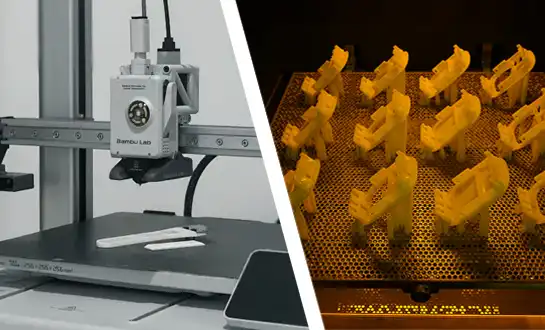
Industrial SLA machines typically use more robust mechanical structures, industrial-grade motion systems, precision laser-scanning components, and larger resin-handling systems designed for demanding and repeated production workflows. Their advantages often include larger build volumes, higher throughput, greater process consistency, and more comprehensive service and maintenance support. Desktop resin printers may use laser-based stereolithography or LCD-based masked photopolymerization, depending on the technology. They generally have smaller build volumes and may offer fewer industrial automation, monitoring, or service features, although capabilities vary significantly by model. Desktop systems can be effective for prototyping, research, design, and certain low-volume applications, but industrial systems are generally better suited to larger parts, higher throughput, more demanding operating environments, and workflows that require stronger process consistency and service support.
How Does SLA Compare with FDM and SLS for Industrial Use?
Stereolithography can produce smoother surfaces and finer feature detail than many FDM processes, particularly when thin layers and appropriate post-processing are used. However, layer stepping may still be visible depending on part orientation, layer thickness, geometry, and finishing requirements. SLA is often selected when surface quality, fine detail, and visual appearance are important, while SLS is commonly used for functional parts requiring nylon-based materials, good mechanical performance, and complex geometries that benefit from powder-supported printing. Technology choice depends on material type, part geometry, and post-processing requirements.
Which Resin Materials Suit My Application?
For functional testing, engineering resins that have properties similar to ABS are used. Transparent or translucent resins can be used for applications such as visual prototypes, fluid-flow models, and components that require light transmission. High-temperature or specialty resins may offer improved thermal resistance, while applications involving sterilization require materials that have been specifically tested and validated for the intended sterilization method. To determine whether a resin is suitable for a specific application, review the material data sheet for properties such as tensile strength, elongation, heat deflection temperature, and other application-specific performance requirements.
Partner with Magforms for Your Industrial SLA 3D Printer Needs
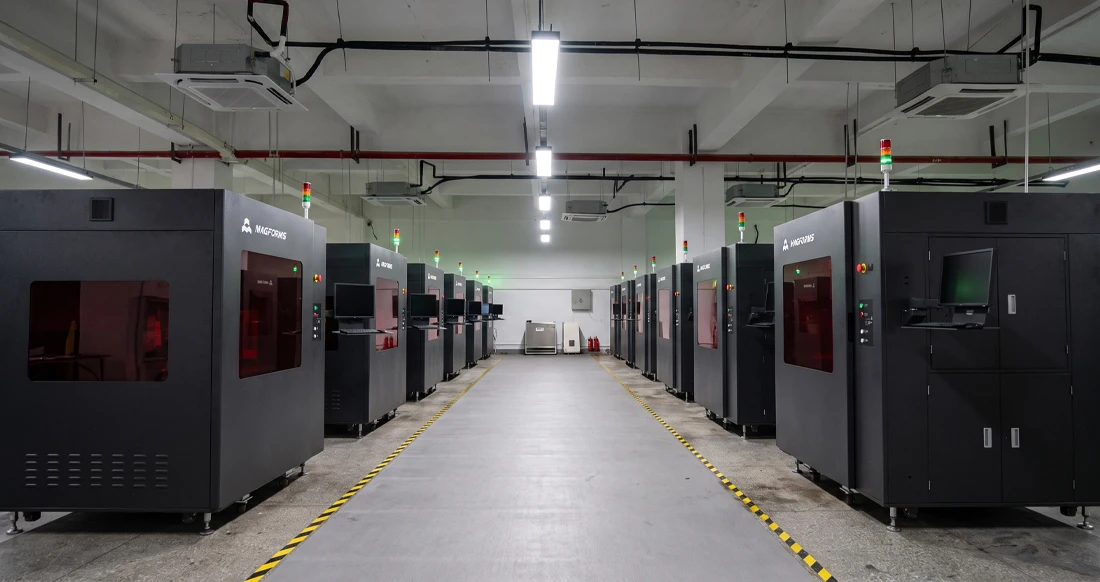
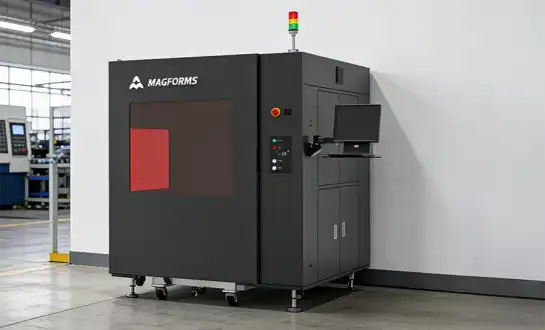
Magforms supports industrial additive manufacturing with high-precision SLA systems designed for stable performance and broad material compatibility. For manufacturers requiring a large-format platform, the SL800 Industrial SLA 3D Printer combines an 800 × 800 × 550 mm build volume with a precision laser-scanning and motion-control system designed for large prototype and low-volume production workflows. Our open-material approach allows users to evaluate compatible commercially available 355 nm photopolymer resins based on application requirements, material performance, and cost. Selected Magforms industrial SLA systems integrate AOC lasers, Scanlab galvanometers, and Panasonic servo motors to support stable laser scanning, controlled motion, and consistent printing performance. Our experience is supported by more than 22 patents, 30 registered trademarks, and a global customer base serving more than 300 businesses. Our quick-response after-sales team and comprehensive training programs help ensure smooth operation from installation through ongoing production. Our technical experts provide personalized recommendations tailored to your workflow, whether you are a new service bureau evaluating industrial SLA 3D printer options or an established manufacturer expanding prototyping or low-volume production capacity. Contact Magforms at info@magforms.com to discuss your requirements, request sample parts, or arrange a live demonstration.. Find out how working with a reliable Industrial SLA 3D Printer company can speed up innovation and lead to a measurable return on investment.
References
1. Gibson, I., Rosen, D., & Stucker, B. (2015). Additive Manufacturing Technologies: 3D Printing, Rapid Prototyping, and Direct Digital Manufacturing. Springer.
2. ASTM International. (2021). Standard Specification for Additive Manufacturing File Format (AMF) Version 1.2. ASTM F2915-20.
3. Jacobs, P. F. (1992). Rapid Prototyping & Manufacturing: Fundamentals of Stereolithography. Society of Manufacturing Engineers.
4. Ligon, S. C., Liska, R., Stampfl, J., Gurr, M., & Mülhaupt, R. (2017). Polymers for 3D Printing and Customized Additive Manufacturing. Chemical Reviews, 117(15), 10212–10290.
5. Melchels, F. P. W., Feijen, J., & Grijpma, D. W. (2010). A review on stereolithography and its applications in biomedical engineering. Biomaterials, 31(24), 6121–6130.
6. Wohlers, T., & Gornet, T. (2016). History of Additive Manufacturing. Wohlers Report 2016: 3D Printing and Additive Manufacturing State of the Industry.

Magforms makes design and manufacture easier.
Popular Blogs
-
 Industry InsightsManufacturing Industry
FDM vs. SLA Printer: Which Technology Is Right for Your Project?
-
 Industry InsightsManufacturing Industry
Top 5 Applications of Industrial 3D Printers in Manufacturing Today
-
 Industry InsightsManufacturing Industry
Why Stereolithography 3D Printers Are Unmatched for Microfluidic Device Prototyping?